Are Your Sitting Habits Breaking Your Expensive Office Chair?
Why high-end chairs fail early—and how to make them last
By the Furniblog Editorial Team·July 31, 2026·5 min read
That Comfortable Position Is Torture for Your Chair
Sitting cross-legged, perching on the edge, hanging off the armrests—these instinctive postures feel natural, but they place stress on chair components in ways engineers never anticipated. If you've invested in a quality ergonomic chair only to experience wobbling, sagging, or broken parts sooner than expected, your sitting habits may be the culprit.
Office chairs may look simple—just something to support your weight—but they're precisely engineered systems. How and where you distribute your weight determines whether components wear gracefully over years or fail prematurely in months.
How Chairs Are Actually Designed to Be Used
The ANSI/BIFMA X5.1 Standard
The primary North American safety and durability standard for office seating, ANSI/BIFMA X5.1, assumes a user weight of approximately 275 pounds (125 kg) and prescribes cyclical load tests for every major component—seat pan, backrest, armrests, and base. Crucially, these tests assume loads applied centrally and vertically.
For example, armrests must withstand roughly 169 pounds-force (77 kg) applied to their weakest point for one minute. But this test uses a vertical, centered load applied briefly—not the repeated, angled stress of someone levering their full body weight onto one armrest corner to stand up.
Engineering Reality: Eccentric Loads
Gas cylinders and tilt mechanisms are optimized for loads centered over the chair's central axis. When your center of gravity shifts away from that axis—whether forward, backward, or to the side—you introduce bending moments (eccentric loads) that the piston seals and pivot points weren't designed to handle continuously. Repeated eccentric loading accelerates seal wear, frame fatigue, and mechanism slop.
Four Common Habits That Shorten Chair Lifespan
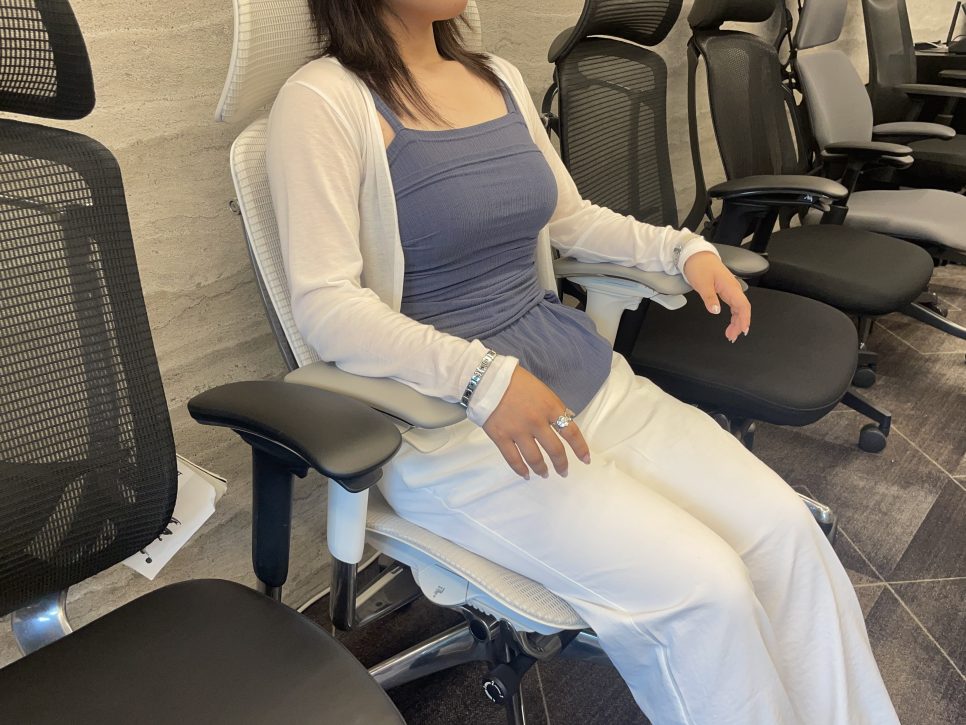
Case 1: Sitting Cross-Legged on the Seat
The habit: Pulling both feet up onto the seat pan and crossing your legs.
What it stresses: Gas cylinder, tilt mechanism pivot
Why it's a problem: Your weight shifts off-center and toward the rear or side of the seat pan, creating a bending load on the gas cylinder shaft. Standard durability tests assume vertical, centered loads. Repeated off-axis stress can degrade piston seals faster, leading to cylinder sag or seat wobble well before the chair's expected lifespan.
Better alternative: If you want to elevate your legs for comfort, use a separate footrest or ottoman rather than the seat itself. This keeps the chair's load centered and gives you better postural support.
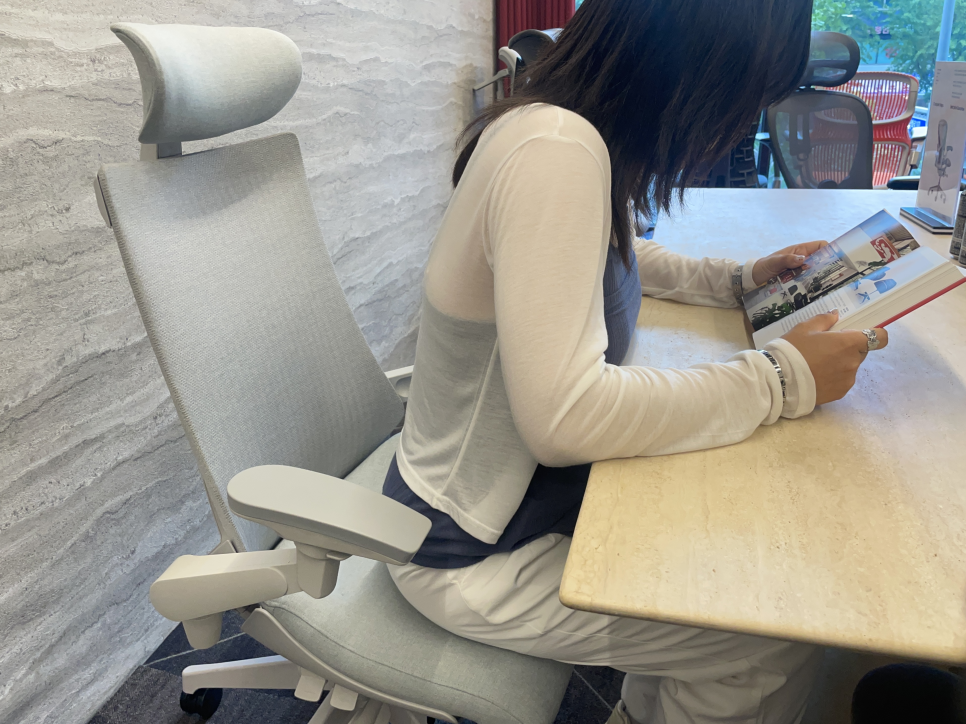
Case 2: Perching on the Front Edge
The habit: Sitting only on the front few inches of the seat with your back unsupported—common during meetings or moments of concentration.
What it stresses: Front edge of seat frame, seat foam or mesh, tilt mechanism
Why it's a problem: Load concentrates on a small area at the seat's leading edge, accelerating compression of foam or mesh in that zone. More importantly, your weight is no longer over the tilt mechanism's pivot point, so the backrest can't function as designed. Research consistently shows that unsupported sitting increases spinal load—bad for your back and your chair.
Better alternative: Sit all the way back so your hips touch the backrest. This distributes your weight evenly across the seat pan and allows the lumbar support and tilt mechanism to do their jobs.
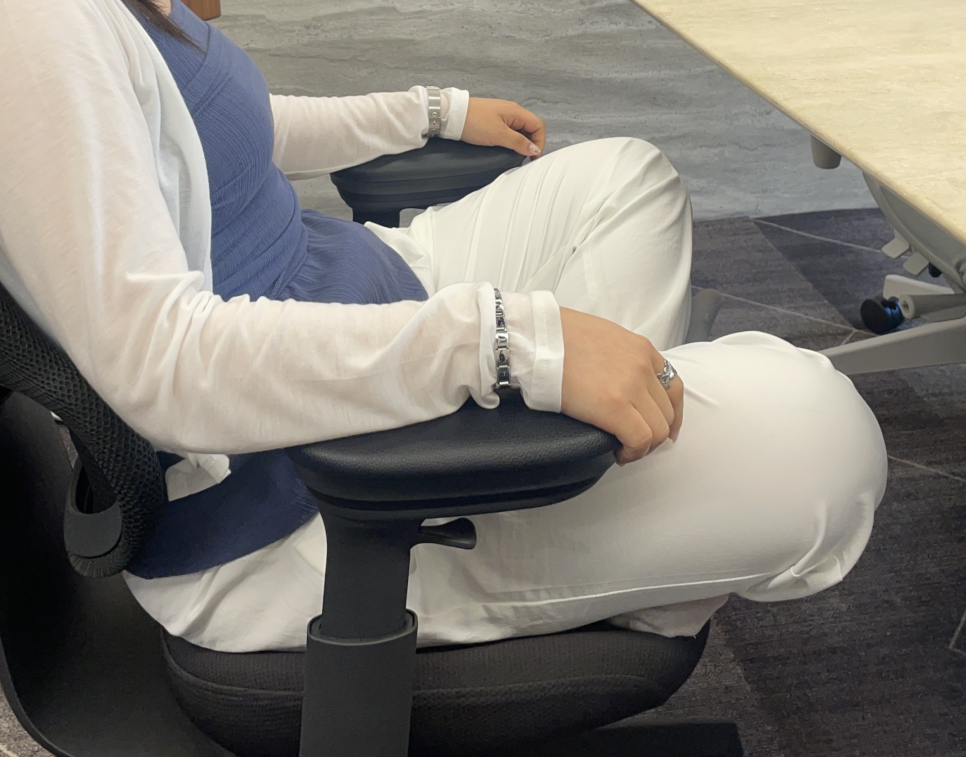
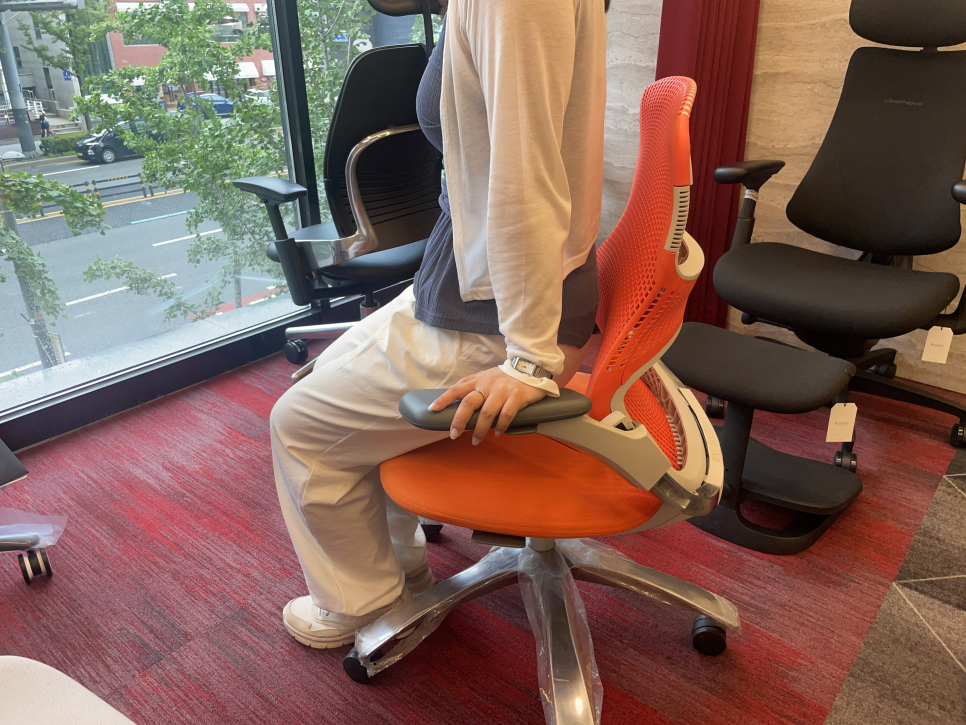
Case 3: Pushing Off Armrests to Stand
The habit: Using one armrest as a lever to push yourself up from the chair, often applying your full weight to the outer corner.
What it stresses: Armrest bracket, armrest-to-seat attachment points
Why it's a problem: While BIFMA testing confirms armrests can handle significant one-time loads, they're not designed for repeated high-force levering at the ends. Daily cycles of this stress can cause fatigue cracks in brackets or loosen mounting hardware.
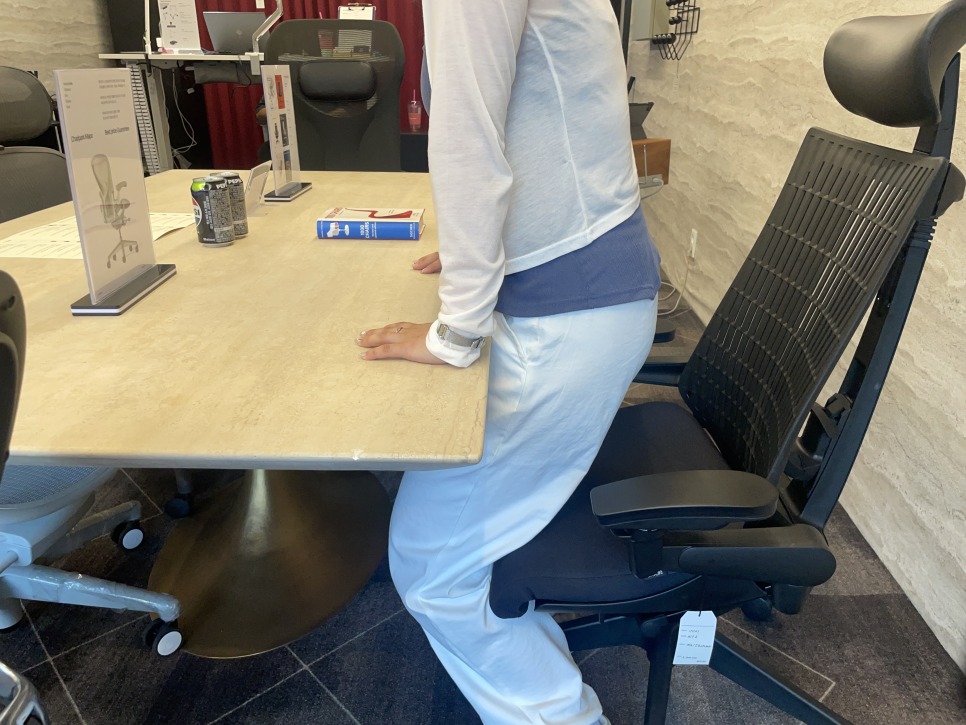
Better alternative: Push off your desk edge or the seat itself when standing. Your armrests will thank you.
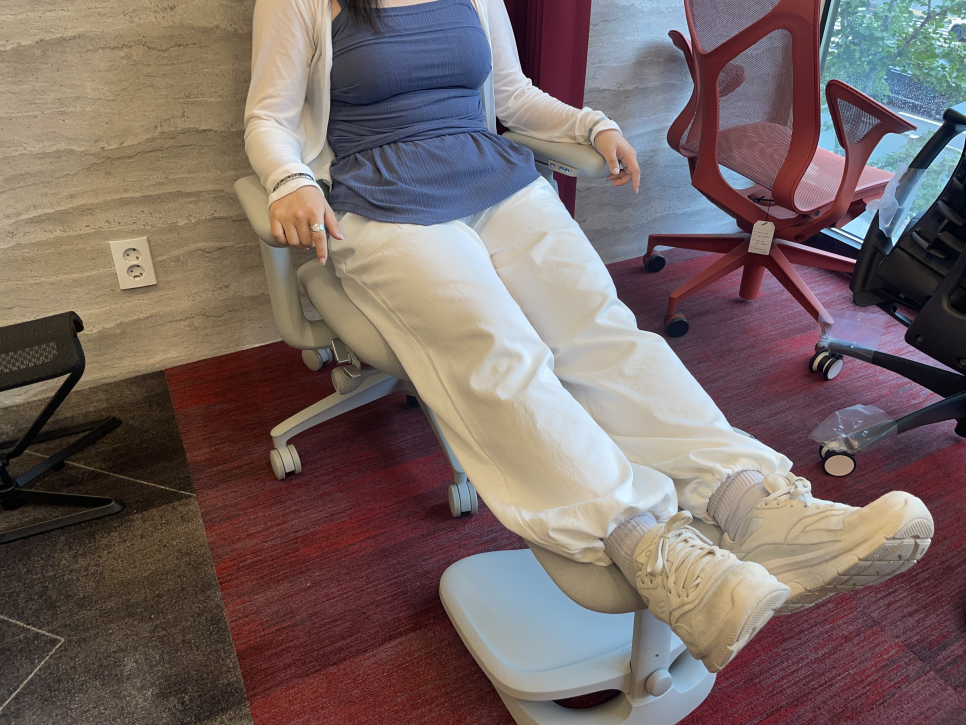
Case 4: Reclining with Feet on Desk
The habit: Leaning all the way back and propping your feet on your desk—the classic "executive" pose.
What it stresses: Tilt tension spring, recline lock mechanism
Why it's a problem: Lifting your legs shifts your center of gravity dramatically rearward, forcing the tilt spring to support loads and angles it wasn't calibrated for. Repeated overextension can permanently weaken the spring, leading to a backrest that won't hold tension or won't lock reliably.
Better alternative: If you want to recline comfortably, choose a chair designed for deep recline—ideally one with an integrated leg rest or footrest—so your weight remains balanced within the mechanism's design envelope.
The Real Issue: Loads Beyond Design Intent
High-quality office chairs rarely fail because they're weak. They fail because users repeatedly apply forces in directions and magnitudes the design never anticipated. A $1,200 chair isn't indestructible—it's optimized for specific use cases.
The single most effective way to extend the life of any chair, regardless of price, is to use it the way it was engineered to be used: sit deep in the seat, keep your weight centered, let the backrest support you, and treat armrests as arm supports, not grab bars.
Finding a Chair That Fits Your Real Habits
Of course, ideal posture is easier said than maintained. If you know you tend to sit cross-legged, perch forward during calls, or shift around frequently, look for chairs with reinforced frames, generous tilt ranges, and robust mechanisms built to tolerate some variability.
Chairs like the Steelcase Leap V2, Herman Miller Embody, and Haworth Fern are designed with flexible, forgiving geometries that accommodate a wider range of movement. And if you're serious about foot elevation, consider pairing any task chair with a proper ergonomic footrest rather than improvising with your seat pan or desk.
Your chair is a tool, not a piece of indestructible furniture. Treat it within its design limits, and it will support you comfortably for many years. Ignore those limits, and even the best engineering will give way to the physics of misuse.
Furniblog may earn a commission from links in this post, at no extra cost to you. See our affiliate disclosure.