Best Office Chairs for Petite Users: 4 Expert Picks for Small Body Types
Feet dangling? Shoulders aching? How to choose ergonomic chairs that actually fit.
By the Furniblog Editorial Team·July 31, 2026·6 min read
Why Most Office Chairs Don't Fit Small Body Types
High-end ergonomic chairs are typically designed around Western average body dimensions. That leaves many petite users struggling with feet that don't reach the floor, seat pans that compress the back of the knees, and armrests positioned too far apart.
The result? Many people with smaller frames either settle for uncomfortable compromises or resort to footrests and cushions to make an ill-fitting chair barely usable.
But it doesn't have to be that way. By understanding four critical fit factors—popliteal clearance, seat depth, armrest width, and frame height—you can find a chair that truly works for your body. Let's break down each problem and the chairs that solve them.
Problem 1: Popliteal Clearance—The Space Behind Your Knees
When you sit fully back against the backrest, there should be about two to three fingers' width of space between the front edge of the seat and the back of your knees (the popliteal area).
If that gap doesn't exist, the seat edge will continuously compress the blood vessels and nerves behind your knee, leading to leg numbness, tingling, and poor circulation.
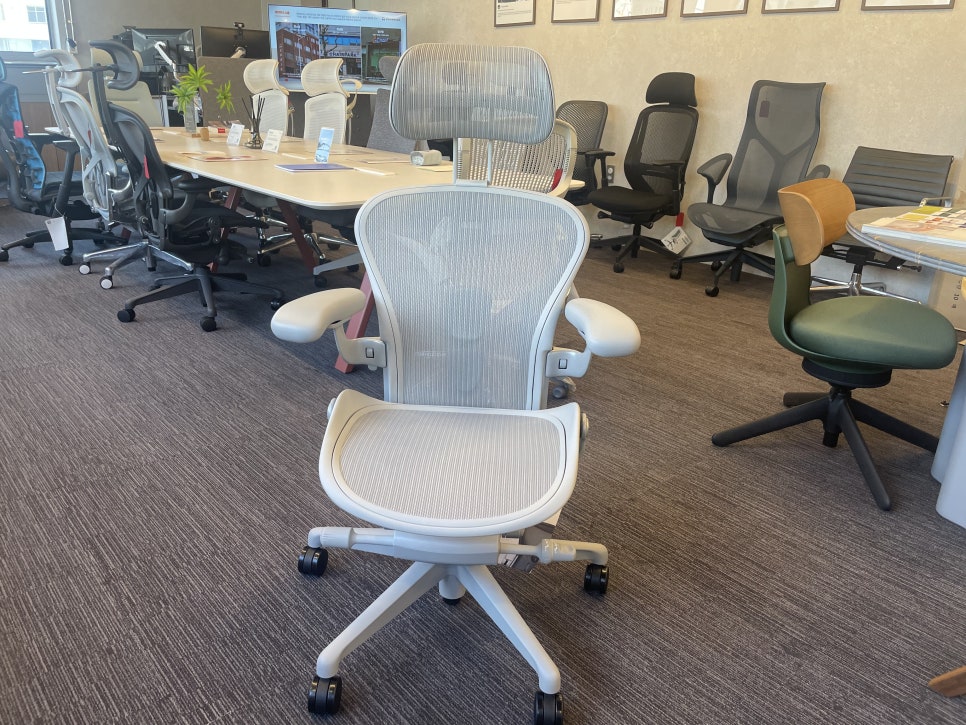
The challenge? Even with popular models like the Herman Miller Aeron, the vast majority of available inventory—both new and used—is Size B (Medium). This pushes many petite buyers to squeeze into a Size B even when they need a Size A, ignoring this crucial clearance requirement.
Herman Miller Aeron Size Guide
Size | Seat Depth | Recommended Height |
|---|---|---|
A (Small) | ~41.6 cm (16.4") | 4'8"–5'4" (142–163 cm) |
B (Medium) | ~43 cm (16.9") | 5'2"–6'0" (157–183 cm) |
C (Large) | ~48 cm (18.9") | 5'10"–6'6" (178–198 cm) |
Note: The difference between Size A and B is only about 1.4 cm, but at the popliteal threshold, that small difference matters enormously.
The Solution: Herman Miller Aeron Size A
The Herman Miller Aeron Size A is the only version of this iconic chair with a minimum seat height that drops to approximately 37.5 cm (14.8 inches). Combined with the shortest seat depth in the lineup, it's one of the few high-end mesh chairs that allows users around 5'4" (165 cm) to sit with their back fully supported, feet flat on the floor, and no popliteal compression.
Problem 2: Seat Depth Adjustability—Beyond Fixed Sizing
Even when you choose the right size, a fixed seat depth can't accommodate individual body proportion differences. The real solution is adjustability.
Most Western ergonomic chairs offer multiple sizes, but within each size, the seat depth is locked. Japanese manufacturers, by contrast, often build slider mechanisms directly into the seat pan, allowing each user to fine-tune depth by several centimeters.
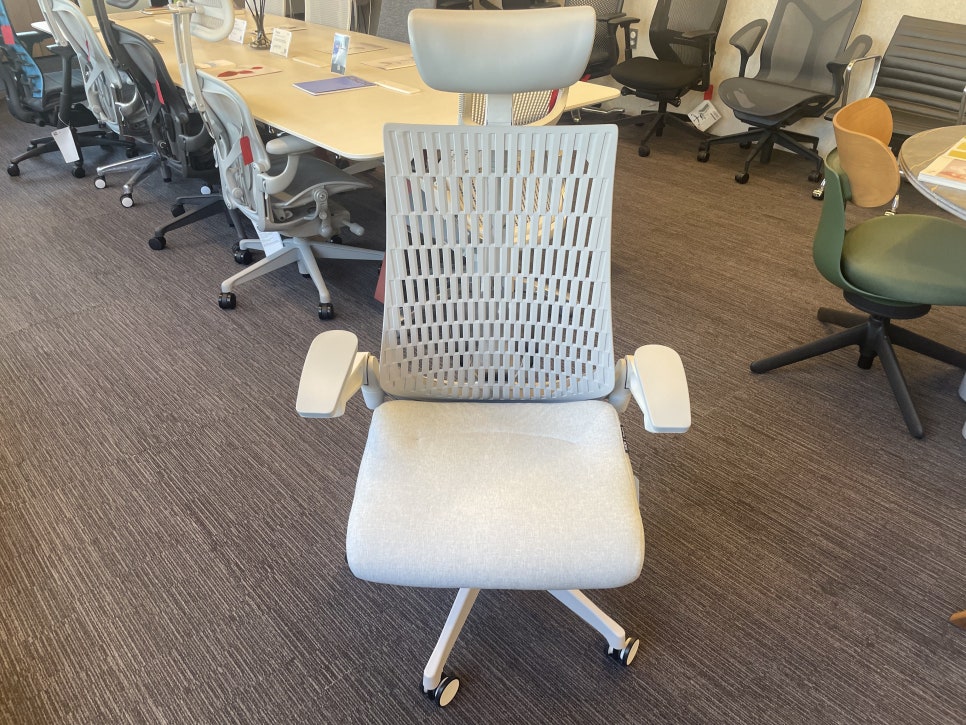
The Okamura Sylphy offers approximately 5 cm (2 inches) of seat depth adjustment via a simple lever-operated slide. On top of that, it includes a forward tilt function that angles both the seat and backrest 10 degrees forward, preventing your pelvis from sliding forward and maintaining proper lumbar support.
It also features a body curve adjustment—levers on both sides of the backrest that let you narrow or widen the curvature of the back support to match your torso width, a particularly valuable feature for petite users who find standard backrests too wide.
The Solution: Okamura Sylphy
With its 5 cm seat depth slider, 10-degree forward tilt, and adjustable backrest curvature, the Okamura Sylphy is built for fine-tuning. This level of adjustability is especially valuable for smaller body types that fall outside the "average" range most chairs are designed for.
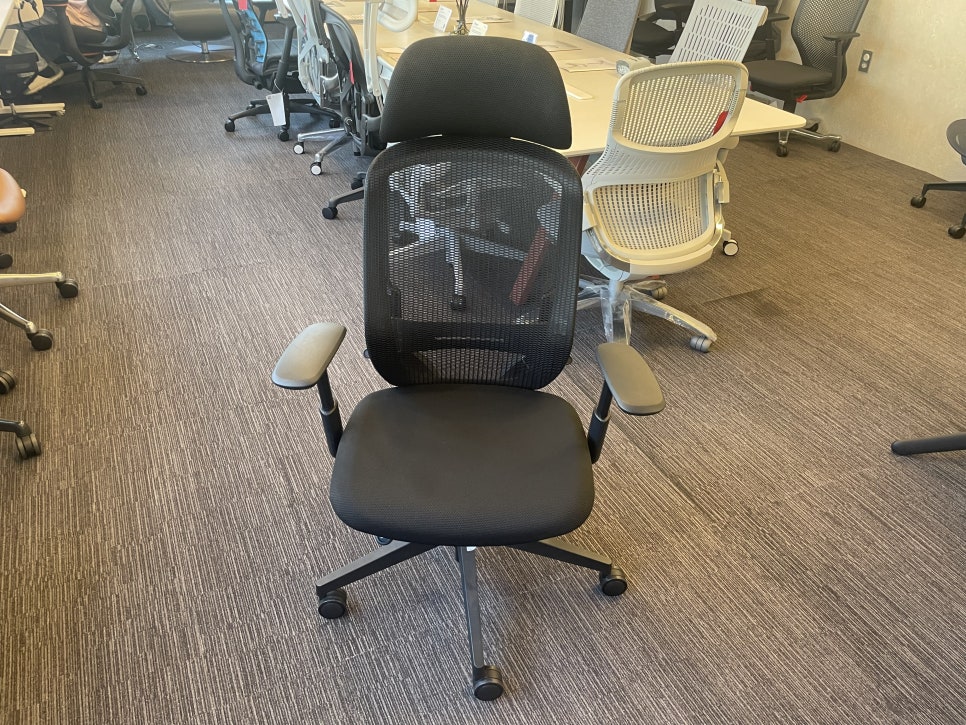
Also consider: The Itoki ACT2, which uses a slightly forward-angled seat pan to achieve a similar pelvic-anchoring effect even without a dedicated forward tilt mechanism.
Problem 3: Armrest Width and Upper Trapezius Strain
If the gap between your armrests is wider than your shoulder width, you'll have to hold your arms out to the sides while typing. This forces your upper trapezius muscles into constant tension, leading to shoulder tightness, neck pain, and even tension headaches.
The problem isn't that you have narrow shoulders—it's that most 4D armrests can't narrow enough. Standard 4D arms typically rotate about 20–30 degrees inward, but their starting width is calibrated for average or larger body types. For petite users, even the "narrowest" setting is still too wide.
What matters is how far inward the armrests can pivot.
The Solution: Itoki ACT2
The Itoki ACT2 features a 4D Link Arm system that rotates up to 20 degrees inward and 10 degrees outward—offering greater inward range than typical symmetrical 4D arms.
Just as importantly, the ACT2 uses a side frameless backrest design. The backrest edges are arched and free of rigid side frames, so when you bring the armrests inward, they don't collide with the backrest structure. This allows the arms to tuck closer to your body naturally and comfortably.
Problem 4: Frame Height and Cylinder Range—No Floating Feet or Protruding Frames
Even after dialing in seat depth and armrest position, you're not done. If your feet still dangle in mid-air, or if the top of the backrest frame juts awkwardly above your shoulders, the fit still isn't right.
Many chairs come with standard gas cylinders that don't drop low enough for shorter users. Even at the lowest setting, feet may not reach the floor.
The most reliable fix is to specify a low-profile (short) gas cylinder at the time of purchase. If you've already bought the chair, invest in a quality footrest—one with angle adjustment and a non-slip surface to keep your ankles mobile and supported.
There's one more issue: many ergonomic chairs feature a fixed headrest or thick frame at the top of the backrest. For petite users, this frame often sits at an awkward height—right at the shoulder blades or upper back—where it can dig in or interfere with natural posture.
The Solution: Knoll Generation
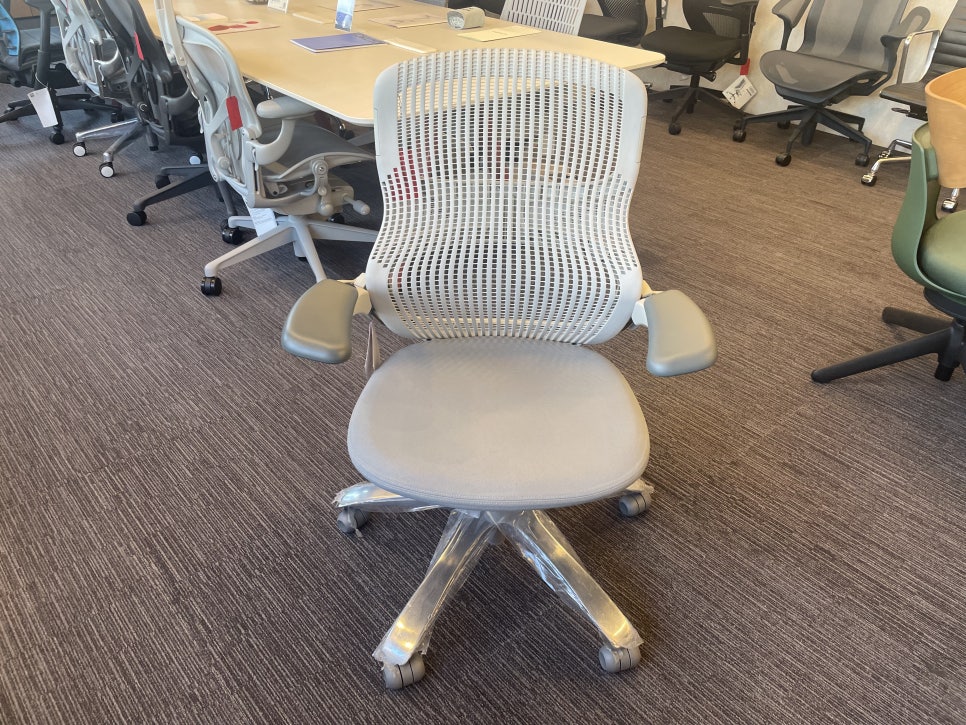
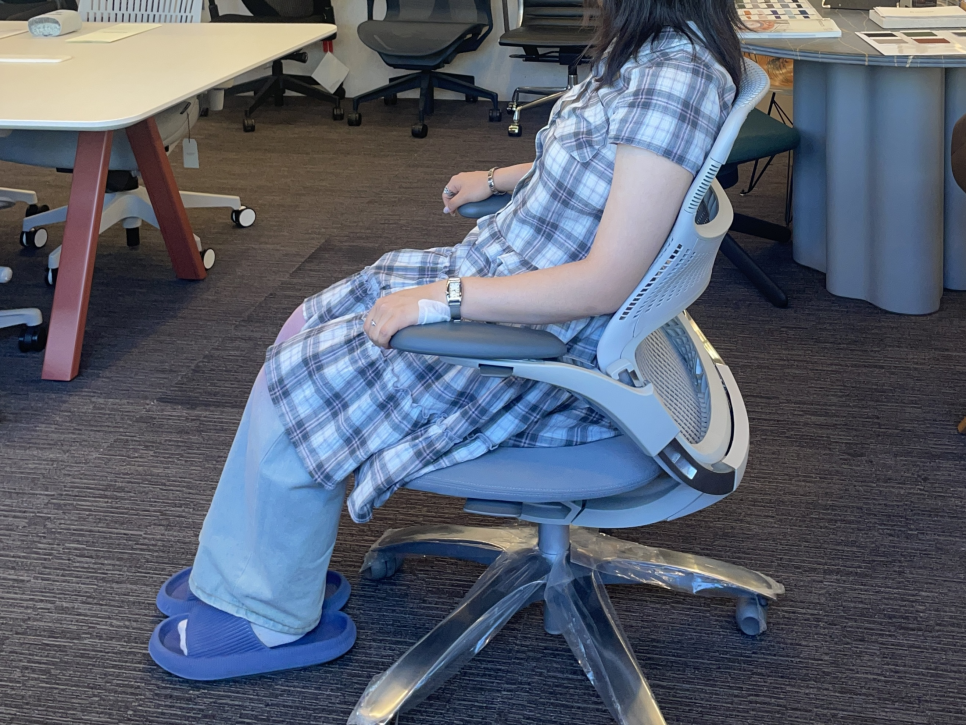
The Knoll Generation eliminates this problem entirely with its frameless Flex Back design. The entire backrest is made from a single elastic material with no rigid top frame or headrest. It flexes naturally to match your body, so there's no hard edge or structural element that can hit you in the wrong spot, regardless of your height.
Summary: Four Problems, Four Chairs
Problem | Recommended Chair | Key Feature |
|---|---|---|
Popliteal compression | Lowest seat height and shortest seat depth for proper knee clearance | |
Fixed seat depth | 5 cm seat slider + forward tilt + adjustable backrest curvature | |
Wide armrests / shoulder strain | 4D Link Arm with 20° inward rotation + frameless backrest sides | |
Protruding frame / headrest | Frameless Flex Back—no fixed upper structure to interfere with fit |
Final Thoughts: Try Before You Buy
Body proportions vary widely, even among people of similar height. Torso length, leg length, shoulder width, and sitting habits all affect how a chair fits.
Whenever possible, sit in the chair before you commit. Check for that crucial gap behind your knees. Adjust the seat depth and armrests. Make sure your feet reach the floor and the backrest supports you without any frame edges digging in.
If you can't visit a showroom, look for retailers with flexible return policies—and don't hesitate to request a low-profile gas cylinder if the standard one doesn't bring the seat low enough.
Ergonomics isn't one-size-fits-all. For petite users especially, the right chair isn't about compromise—it's about finding the design that was built with your body in mind.

Furniblog may earn a commission from links in this post, at no extra cost to you. See our affiliate disclosure.