Beyond Pinterest: 6 High-Caliber Interior Design Reference Sites You Need to Bookmark
Discover where designers find spatial inspiration that algorithms can't replicate
By the Furniblog Editorial Team·July 10, 2026·4 min read
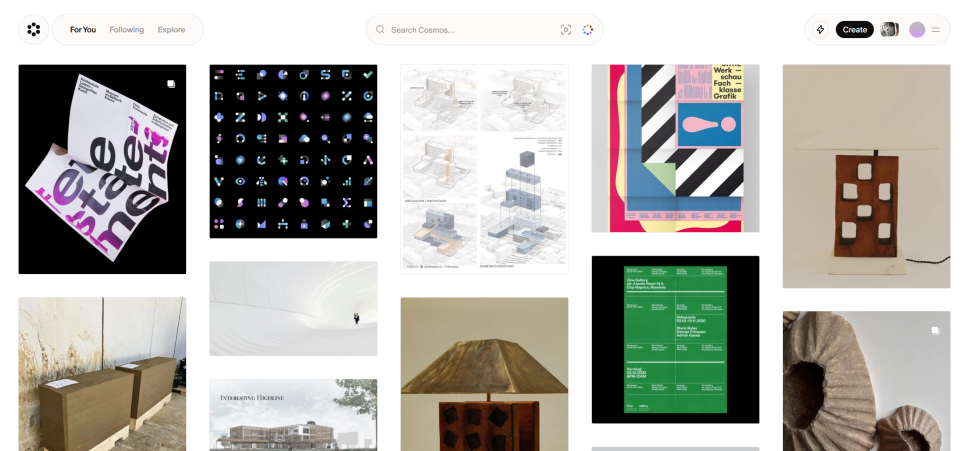
If you've ever found yourself scrolling through Pinterest wondering "isn't there something else out there?" you're not alone. While Pinterest remains convenient, spending too much time within the same algorithmic loop can leave your taste feeling homogenized—trapped in an echo chamber of similar images.
Today we're sharing six lesser-known but exceptionally curated sites that deliver genuinely sophisticated spatial references. From AI-assisted discovery platforms to architect-focused archives and minimalist design showcases, these resources offer the kind of depth that helps you develop a true design vocabulary. Bookmark them all and choose the right tool for each creative challenge.
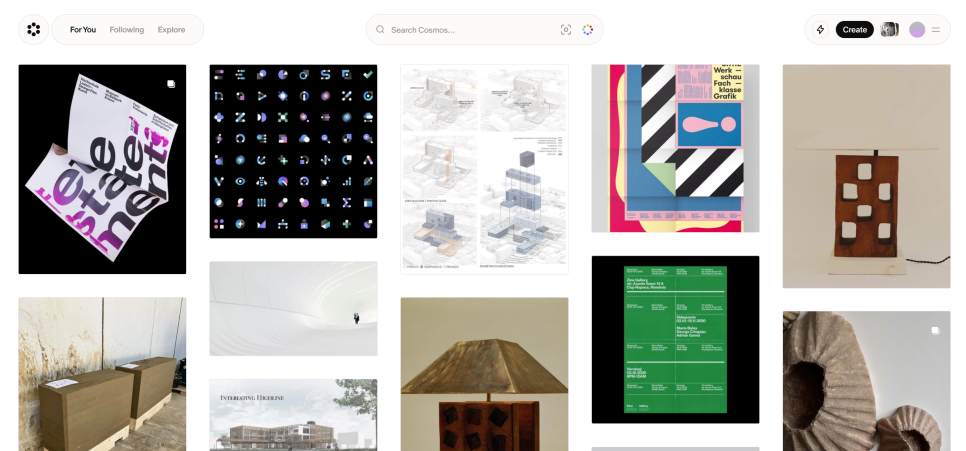
1. Cosmos – Your Personal Digital Garden of Visual Inspiration
cosmos.so
Cosmos introduces a unique concept called the "Digital Garden." The platform uses images you save as seeds, continuously recommending related visuals that grow increasingly aligned with your personal aesthetic the more you use it.
What makes Cosmos particularly valuable for interior reference hunting is that it goes beyond surface-level "pretty room" curation. The algorithm learns to recognize the atmosphere, materials, and even lighting direction in spaces you frequently save, surfacing images with a visual intelligence Pinterest simply can't match.
Best used when: You're still defining your spatial direction—start exploring in the Discover tab and let your preferences emerge organically.
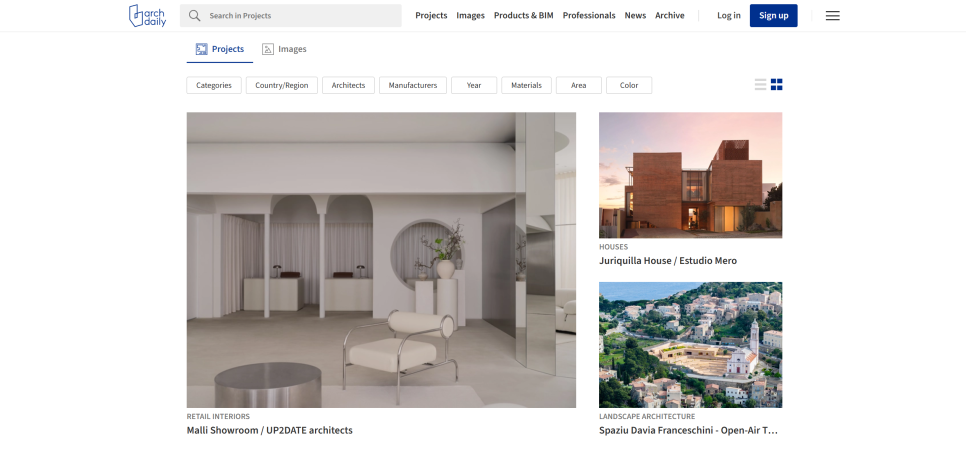
2. Archdaily – Understanding the 'Why' Behind Beautiful Spaces
archdaily.com
Archdaily is the world's most widely referenced architectural media platform. Unlike typical image galleries, it provides architect interviews, design rationale, process documentation, and even floor plans alongside project photography.
This context is invaluable. One of the most common reasons interiors feel awkward is that people borrow attractive elements without understanding the underlying logic of proportion and circulation. Browsing Archdaily develops your ability to read space—to understand why certain room proportions feel right, how materials interact, and how architectural decisions create emotional impact.
Best used when: You're working out floor-to-wall-to-ceiling ratios or wrestling with material combinations that need to feel cohesive.
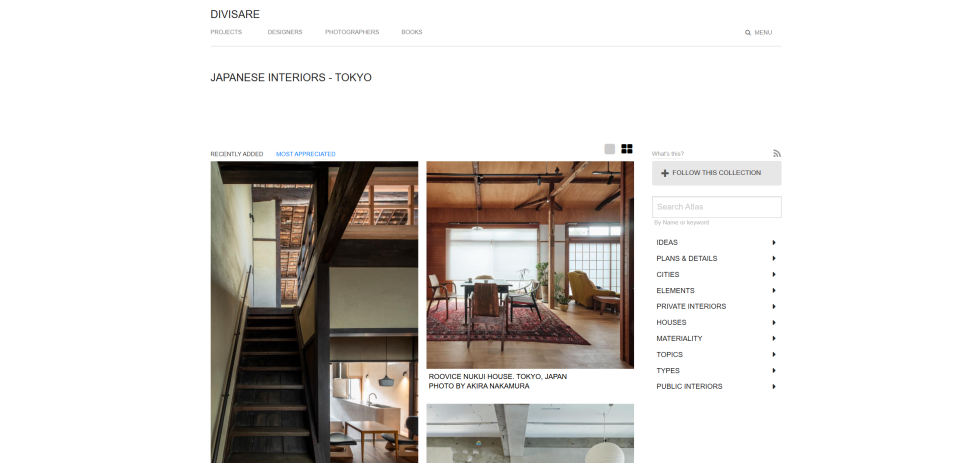
3. Divisare – Pure Architecture, Zero Noise
divisare.com
Divisare offers almost no text. Just images. This minimalism is its strength.
Free from advertising and excessive commentary, Divisare presents a pure visual archive where your eye can rest while your taste sharpens. The collection leans heavily toward European and Japanese residential and public architecture, making it ideal for identifying the common grammar of spaces that simply look right.
If you're drawn to Scandinavian or Japanese minimalism, Divisare is especially valuable—you'll find dozens of projects that share a visual language you can study and adapt.
Best used when: You're creating a mood board and need to establish an overall tonal direction before diving into specifics.
4. Leibal – When Less Really Is More
leibal.com
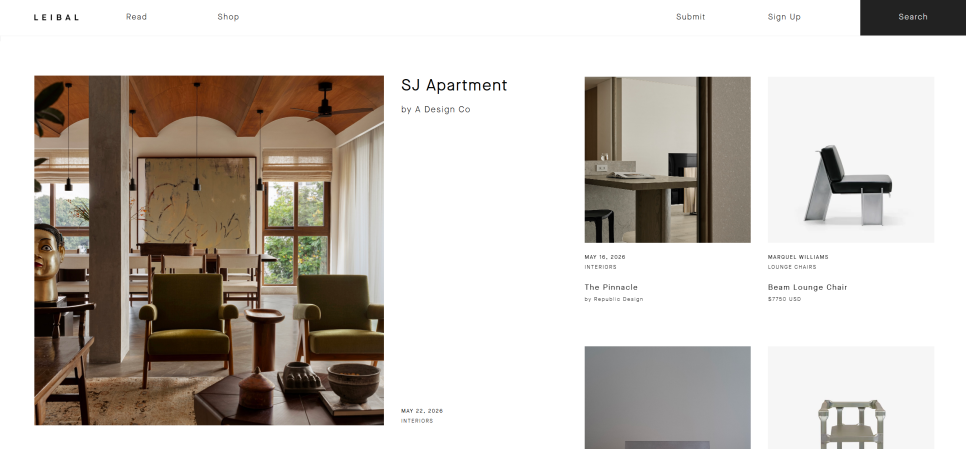
Leibal specializes in minimalist design curation. Furniture, lighting, and interiors are carefully selected to showcase only what's essential—no excess, no clutter.
This focus makes Leibal particularly helpful if your goal is "buy less, look better." The site excels at desk setups and home office inspiration, and its searchable database of individual pieces makes it a great jumping-off point when you're thinking, "Where can I find a chair that feels like this?"
Best used when: You're selecting a statement furniture piece or hunting for that perfect 10% accent object in the 60-30-10 design rule.
5. 5OSA – Asian Architecture That Feels Like Home
5osa.com
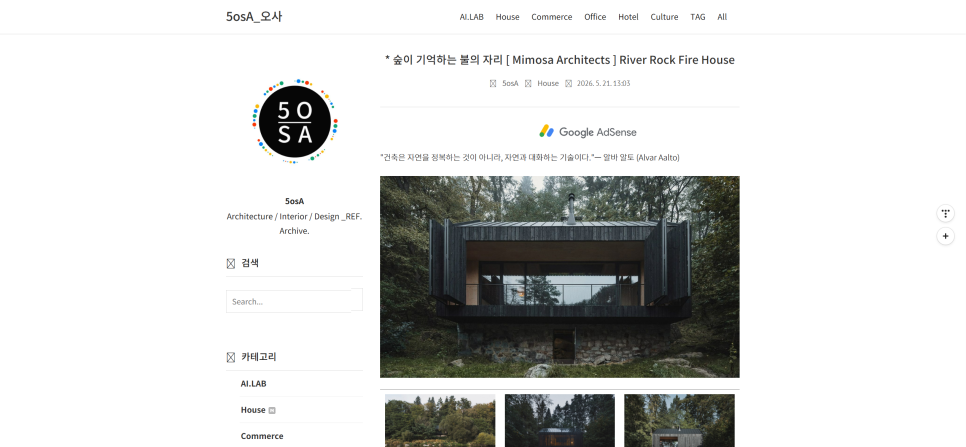
5OSA curates contemporary architecture from across Asia—Korea, Japan, China, and Southeast Asia. Unlike Western-focused archives, the projects here are designed for similar climates, living patterns, and spatial constraints you might actually face.
This makes 5OSA far more practical for real-world application. You'll find strategies for maximizing spatial volume in compact floor plans, examples of how window placement transforms light quality, and details that work within the realities of Asian residential contexts.
Best used when: You need references that reflect the scale, climate, and living culture of East Asian homes rather than European villas or American lofts.
6. Follow the Creator – From Magazine Feature to Studio Archive
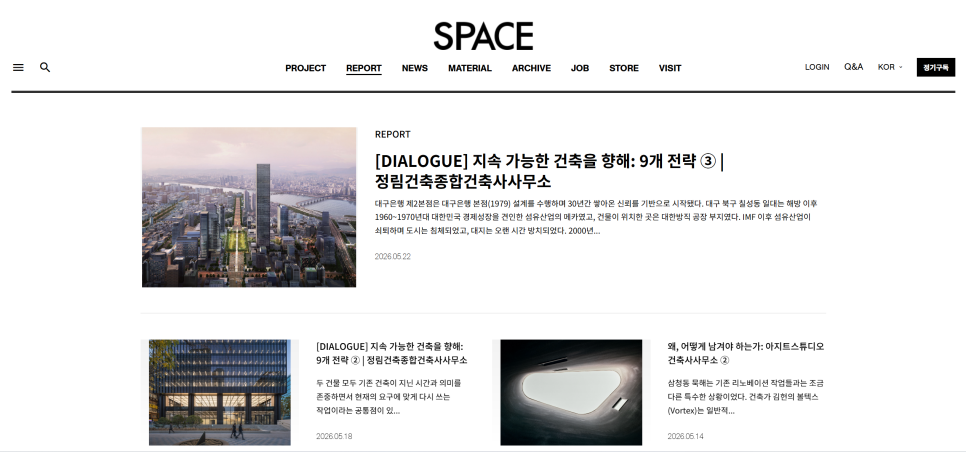
When you discover a space you love in a design magazine—whether Wallpaper*, Monocle, Elle Decor, or similar publications—take one more step: search for the architect or interior studio behind it.
Their official website will archive many more projects than ever appear in print. Following a single designer's body of work reveals a consistent aesthetic philosophy and design language—the kind of coherent vision algorithms can't piece together for you. This is how you build a truly personal reference library.
Best used when: You want to move beyond scattered inspiration and understand the deeper structure of your own taste.
Building Your Own Design Language
Great references aren't just collections of attractive images. They help you articulate why you're drawn to certain spaces, materials, or proportions. Each of these six resources serves a distinct purpose, and using them strategically will help you develop a confident, personalized spatial vocabulary.
Bookmark them, explore slowly, and watch your design intuition deepen over time.

Furniblog may earn a commission from links in this post, at no extra cost to you. See our affiliate disclosure.