Bringing Office Chairs Into the Living Room: A Plantscaping Match Guide
How to choose ergonomic seating that complements plants and home interiors
By the Furniblog Editorial Team·July 8, 2026·3 min read
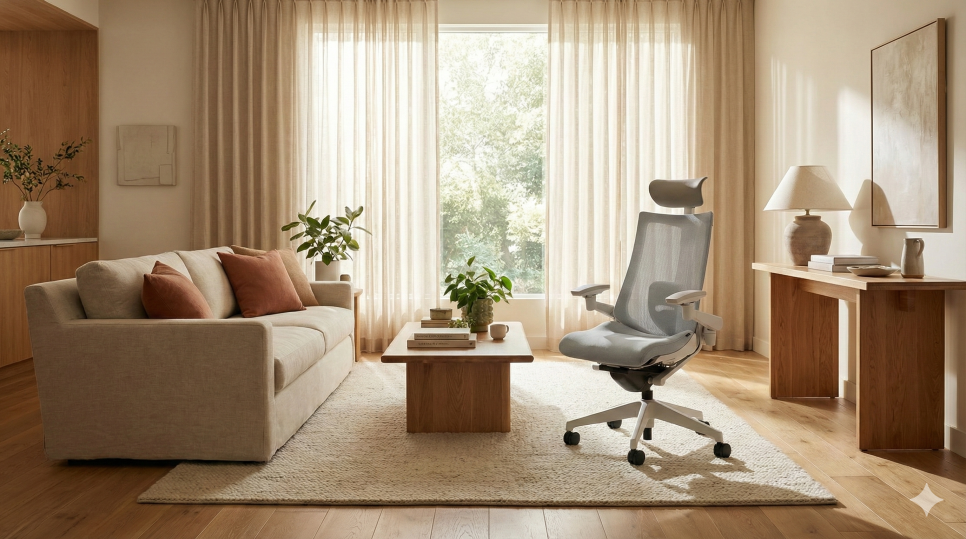
More of us are opening laptops in the living room these days. Dining chairs hurt your back after an hour, and sofas—comfortable as they are—wreck your posture.
That's why many people are now bringing office chairs into the living room.
But here's the thing: a living room isn't a study. Drop a purely functional task chair into your carefully styled space, and it can break the atmosphere instantly. If you want ergonomic support that also complements your plantscaping and interior design, focus on just three factors.
Color: Choose 'Air Tones' Over Black for Living Spaces
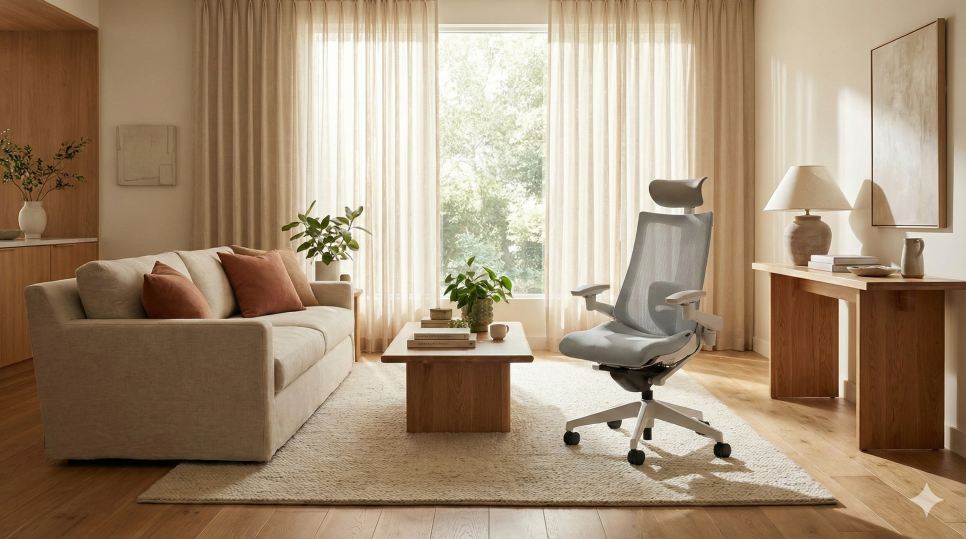
In a living room, the moment a chair's color stands out too much, the whole space can feel like an office.
Here are three safe tonal directions:
Wood or beige living rooms: Light gray, taupe, sand beige
White or gray modern living rooms: Charcoal, matte black (not overly glossy), silver or gray frames
Plant-filled living rooms: Neutral tones (gray and beige) let greenery pop and maintain balance
One more tip: white chairs look beautiful in photos, but in a lived-in living room, they're surprisingly stressful to maintain. Slightly toned-down neutrals hold up much better over time.
Material: Texture Matters More Than Breathability in Plantscaped Rooms
The biggest clash with plants? Shiny, plasticky finishes.
That's usually why an office chair looks out of place in a living room—it's all about the material.
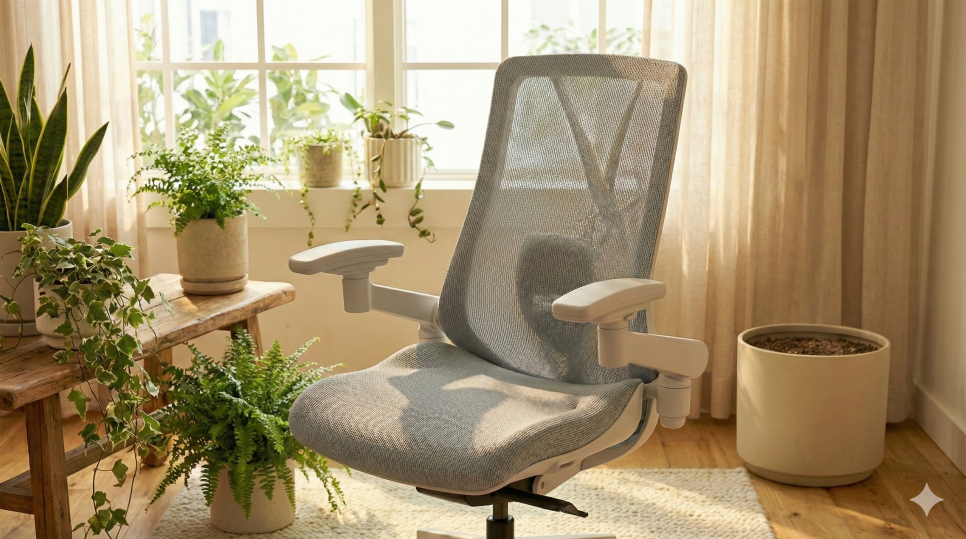
If you're choosing mesh: Look for matte-finish mesh rather than glossy, reflective weaves. It blends more naturally.
Fabric or soft-touch upholstery: These pair beautifully with the organic textures of plants and read as "living room furniture," not office gear.
Leather or leather-like materials: These add luxury and sophistication, but in plant-heavy spaces they can feel visually heavy. If you go this route, choose lighter tones—taupe or tan—to keep things balanced.
Bottom line: in a living room, how the chair looks when it's empty matters just as much as how it feels when you're sitting in it. If it looks natural when no one's using it, you've nailed the living room fit.
Silhouette: If the Backrest Dominates, It's Wrong for the Living Room
In a living room, the chair is always in view. If the backrest is too tall or the frame too chunky, the space starts to feel cramped.
Look for chairs with these characteristics:
Slim, clean-lined frames
Backrests that aren't excessively tall (so they don't block sightlines)
Arms and bases that don't scream "machinery"
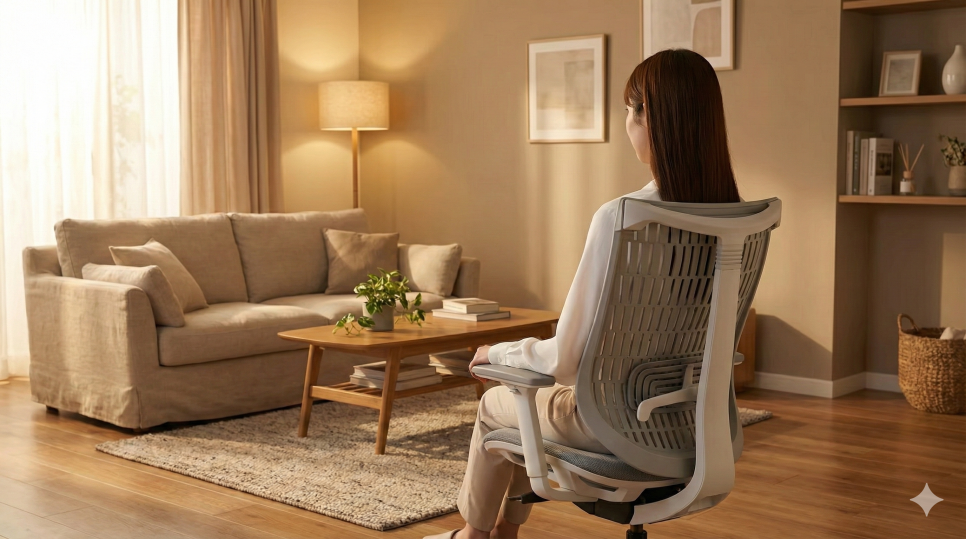
Headrests are a personal call in living rooms. They're comfortable, but they can amplify that "office" vibe. For living room use, it's often better to start without one and add it later if you find you need the support.
Final Thoughts
Bringing an office chair into your living room isn't about importing work into your home—it's about creating a space that protects your body while you live your life. Get the color, texture, and silhouette right, and you'll improve both your posture and your interior in one move.
Whether you're working from the couch corner or reading by the window, the right ergonomic chair can support you without disrupting the calm, plant-filled atmosphere you've worked hard to create.
Furniblog may earn a commission from links in this post, at no extra cost to you. See our affiliate disclosure.