Budget Chair Every 2 Years vs. Premium Chair for a Decade: The Real Cost Breakdown
Why calculating annual cost—not sticker price—reveals the smarter choice
By the Furniblog Editorial Team·July 13, 2026·5 min read
When shopping for an office chair, price is usually the first thing we notice. A chair in the $200 range feels accessible and low-risk. A premium model priced over $1,000 can feel like a leap of faith.
But office chairs aren't a one-time purchase you forget about—they're part of your daily work environment, like your desk or monitor. You'll spend hours in them every day, often for years. That's why judging a chair purely by its upfront cost misses the bigger picture.
The real question isn't "How much does it cost?" but rather "How much does it cost per year, and how well does it support me over that time?"
In this guide, we'll break down a common dilemma: Is it smarter to replace a budget chair every couple of years, or invest once in a premium chair and use it for a decade?
Think in Annual Cost, Not Sticker Price
A $200 chair obviously costs less upfront than a $1,200 chair. But the initial receipt doesn't tell the whole story.
What matters more is how many years that chair will actually serve you well. If your $200 chair starts sagging, wobbling, or causing discomfort after two years, you'll likely need to replace it. If that cycle repeats, the true cost adds up quickly.
On the other hand, a higher-priced chair that remains comfortable and functional for ten years or more spreads its cost across far more days of use. When you divide the purchase price by its lifespan, the annual cost can be surprisingly reasonable—and often comparable to the replace-every-few-years approach.
Scenario 1: Replacing a Budget Chair Every 2 Years
Let's assume you buy a $200 chair and replace it every two years. Over a decade, that means five purchases:
$200 × 5 chairs = $1,000 total cost over 10 years
Annual cost: $100 per year
At first glance, $100 per year doesn't sound bad. But this calculation leaves out hidden costs: the time spent researching and buying a replacement, disposing of the old chair, assembling and adjusting the new one, and re-adapting your posture and comfort each time.
More importantly, budget chairs often begin to degrade noticeably before the two-year mark. Foam compresses, mesh sags, mechanisms loosen, and ergonomic support weakens. During those months of declining performance, your comfort, posture, and productivity may already be suffering.
Scenario 2: Buying a Premium Chair Once and Using It for 10 Years
Now let's assume you invest $1,200 in a premium ergonomic chair designed to last a decade or longer:
Total cost over 10 years: $1,200
Annual cost: $120 per year
That's only $20 more per year than the budget-and-replace strategy—roughly 55 cents per day.
For that small difference, you get a chair engineered for long-term comfort: better lumbar support, more durable materials, smoother and more precise adjustments, and construction designed to maintain its performance year after year. You also avoid the hassle and waste of repeated replacements.
When the annual cost difference is this narrow, the choice becomes less about budget and more about experience: would you rather spend a decade replacing chairs, or a decade sitting comfortably in one great chair?
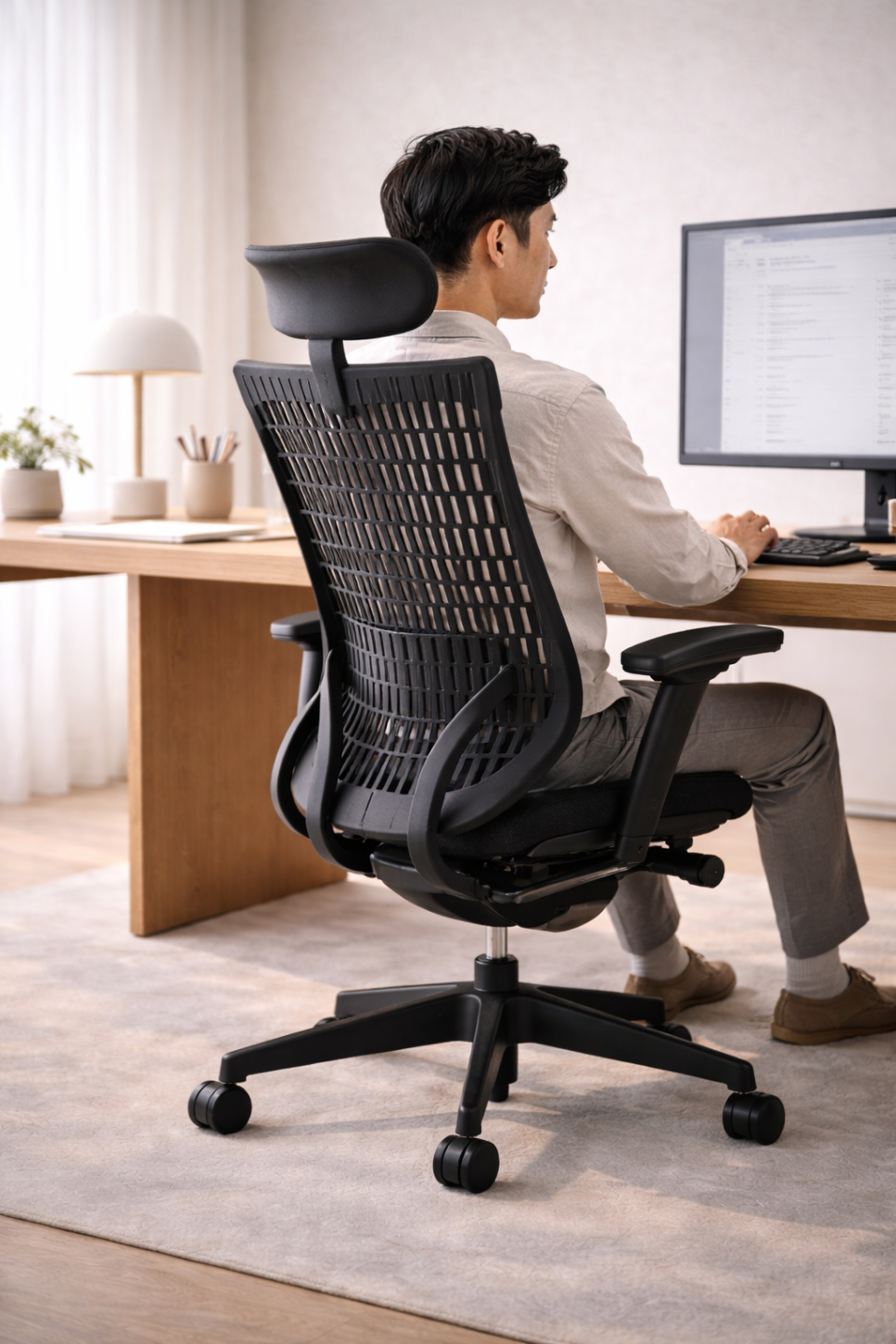
What You're Really Paying For in a Premium Chair
Office chairs aren't like appliances you use occasionally. You sit in them for hours every day—working, studying, thinking, creating. The quality of that experience compounds over time.
Here's what often separates budget chairs from premium models:
Durability: Premium chairs use higher-grade foam, mesh, and mechanisms that resist wear.
Ergonomics: Thoughtful design supports your spine, reduces fatigue, and adapts to different postures throughout the day.
Adjustability: Precision controls for seat height, depth, armrests, lumbar support, and recline let you dial in a custom fit.
Longevity: Components are built and tested for years of heavy use, not just initial comfort.
Budget chairs can feel fine at first, but common issues emerge faster than you'd expect: seat cushions flatten, backrests lose tension, armrests wobble, and tilt mechanisms become stiff or uneven. Meanwhile, a well-made chair from brands like Steelcase Gesture, Herman Miller Aeron, or Haworth Fern is designed to perform consistently for a decade or more.
When Does a Budget Chair Make Sense?
Not everyone needs a $1,200 chair. If you sit for only an hour or two per day, or if your chair use is light and intermittent, a well-chosen budget or mid-range model may serve you perfectly well.
But if you work from home full-time, spend most of your day seated, or experience regular back, neck, or shoulder discomfort, the calculus changes. In those cases, a premium chair isn't a luxury—it's a tool that directly affects your health, focus, and long-term comfort.

The Bottom Line: Your Chair Is an Environment, Not an Expense
Office chairs shouldn't be judged like disposable goods. They're part of the infrastructure of your daily life. The right chair can reduce pain, improve posture, and make long work sessions more sustainable. The wrong chair—or a worn-out one—can do the opposite.
When you shift your perspective from "What does this cost today?" to "What does this cost per year, and how does it perform over time?", premium chairs start to look much more reasonable. In many cases, they cost about the same annually as repeatedly replacing cheaper models—but deliver a vastly better experience along the way.
If you sit for several hours a day, think of your chair as an investment in your workspace, your posture, and your well-being. Calculate the annual cost. Consider the lifespan. And choose accordingly.
A great chair doesn't just help you get through the day—it helps you work better, feel better, and stay healthier for years to come.

Furniblog may earn a commission from links in this post, at no extra cost to you. See our affiliate disclosure.