Reviews
Can a "Diet Chair" Really Help You Burn Calories While Sitting? The Kokuyo Ing Review
This active-sitting chair claims to boost core strength and burn extra calories daily
By the Furniblog Editorial Team·June 25, 2026·6 min read
Why Your Office Chair Might Be Sabotaging Your Fitness Goals
If you spend eight or more hours a day sitting, your chair isn't just a piece of furniture—it's a lifestyle factor that shapes how your body moves (or doesn't move) throughout the day.
You might be tracking calories, adjusting your diet, and hitting the gym on weekends, yet still seeing sluggish progress on the scale. One factor that's easy to overlook? The sheer number of hours you spend sitting completely still.
The problem isn't just sitting itself—it's sitting in a way that keeps your body totally inactive for hours on end. Most chairs lock your body into position. The Kokuyo Ing, however, is designed to keep you subtly moving even while seated.
How Sitting Habits Affect Your Basal Metabolic Rate
When most people start a diet, they focus on cutting calories. But the daily energy equation has three parts:
Basal metabolic rate (BMR): Energy burned at rest, accounting for 60–70% of daily expenditure
Activity thermogenesis: Energy burned through movement and exercise, about 20–30%
Dietary thermogenesis: Energy used to digest food, roughly 10%
Diet matters, of course. But the more practical question isn't just "how little can I eat?" It's also:
How often do I move throughout the day?
Is my body completely stationary while sitting?
Are my core and lower back muscles constantly resting?
If your total energy expenditure drops, even a strict diet yields diminished results. For office workers, remote professionals, and students sitting six or more hours daily, how you sit during those seven to eight hours may matter more than one hour at the gym.
That's why interest is growing in ergonomic chairs that encourage natural movement, not just passive support.
What Makes the Kokuyo Ing a "Diet Chair"?
360-Degree Gliding Mechanism
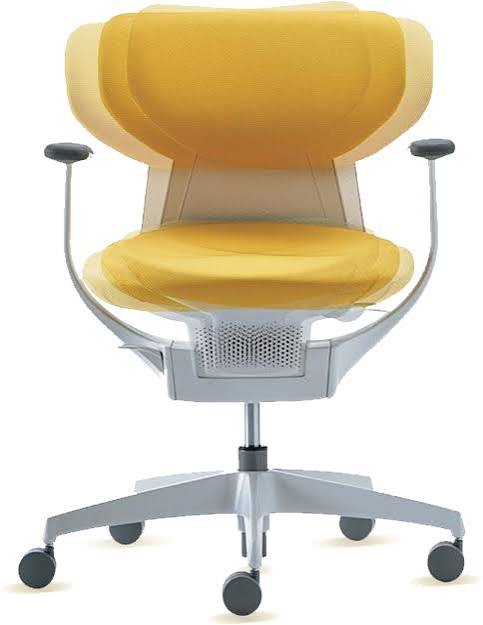
The core feature of the Kokuyo Ing is its 360-degree gliding seat. Traditional chairs lock your torso and hips in place. The Ing's seat, by contrast, moves fluidly in all directions—forward, back, side to side, and diagonally.
The principle is similar to sitting on a Swiss ball or balance ball: your body makes constant micro-adjustments to stay balanced. Unlike an actual balance ball, however, the Ing integrates this instability into a stable office chair frame, so you can work comfortably without wobbling off.
According to Kokuyo's own materials, the 360-degree gliding mimics the engagement you'd get from a balance ball, activating back and core muscles even while seated. In that sense, the Ing isn't simply a "comfortable chair"—it's designed to turn sitting time into slightly more active time.
Is Kokuyo a Reputable Brand?
If you haven't heard of Kokuyo, here's the quick version:
Japan's top-selling office furniture brand by revenue
Official sponsor of the 2024 Paris Olympics
Over 60 years of ergonomic research and manufacturing
Global presence in Korea, Singapore, Australia, and beyond
Kokuyo sits in the same premium tier as Herman Miller and Steelcase, but remains less known in Western markets. Think of it as a well-kept secret among ergonomic enthusiasts.
How the Ing Supports Your Lower Back
The Ing's lumbar support works differently than the protruding lumbar pads found on most "back-support chairs." Instead of pushing firmly against one spot on your spine, the Ing encourages your spine to find its natural S-curve as you shift your weight.
Kokuyo explains that the 360-degree gliding, combined with what they call "3D Posture Support," distributes your body weight and reduces forward sliding, helping maintain proper seated posture without a traditional bulging lumbar cushion.
In other words, the Ing doesn't force your back into position. Instead, it keeps your core and lower-back muscles gently engaged, making it easier to maintain a healthy spinal curve naturally.
Research-Backed Benefits
A 2009 study published in the Korean Journal of Clinical Electrophysiology (Lee Dong-geol et al.) found that after four weeks of exercise on an unstable surface:
Abdominal muscle strength improved significantly (p < 0.001)
Back extensor strength improved significantly (p < 0.001)
Overall balance ability showed statistically significant gains
The Kokuyo Ing applies this same principle to an office chair, allowing you to reap similar benefits passively throughout your workday.
Real Calorie-Burn Estimates
According to internal research by Kokuyo, sitting in the Ing for six hours a day, five days a week, burns additional calories compared to a static chair. Here's how that adds up, translated into food equivalents over time:
Food Item | Equivalent Extra Burn | Who Benefits Most |
|---|---|---|
Beer (draft pint) | ~6 beers | Anyone who wants to offset post-dinner guilt |
Slice of cake | ~2.6 slices | Late-night snackers |
Rice ball (onigiri) | ~4.9 balls | Those seeking progress without strict dieting |
Sources: Kokuyo internal research; Lee Dong-geol et al., Korean Journal of Clinical Electrophysiology, 2009
Diet vs. Gym vs. Chair: A Realistic Comparison
Let's be honest about what actually sticks:
Method | Effectiveness | Sustainability | Realistic? |
|---|---|---|---|
Strict diet | High | Low (stressful) | △ |
Gym membership | High | Low (most quit in 3 months) | △ |
Kokuyo Ing chair | Moderate (but consistent) | Very high (you sit daily anyway) | ✔ Best |
Weight management isn't a three-month sprint—it's about changing the habit you practice eight hours a day. The Ing makes that habit work for you instead of against you.
Who Should Consider the Kokuyo Ing?
This chair makes the most sense if you:
Track your calories carefully but aren't seeing the scale move
Have a gym membership you rarely use (or quit after a month)
Work remotely or at a desk for six or more hours daily
Want to raise your basal metabolic rate without adding workout time
Prefer to manage weight without diet-related stress
Where to Try the Kokuyo Ing in Person
The Ing feels noticeably different the moment you sit down. The gentle movement can feel unfamiliar at first, but after five minutes, most people don't want to go back to a static chair.
If you're in South Korea, you can try the Kokuyo Ing (and compare it to other high-end ergonomic models) at Chair Park showrooms in Seoul and Goyang—no appointment necessary.
Final Thoughts: Your Chair Is Part of Your Fitness Routine
Weight management isn't just about what you eat or how often you exercise. For anyone sitting eight hours a day, the chair itself becomes a variable in the energy equation.
The Kokuyo Ing won't replace the gym or a healthy diet, but it can turn passive sitting time into active, calorie-burning time—without requiring any extra effort on your part.
If you've been stuck on a plateau despite "doing everything right," it might be time to rethink not your meals or your workout plan, but the chair you're sitting in all day.
For more ergonomic office chair reviews and guides, explore our recommended ergonomic chairs on Amazon or browse our full chair catalog.
===BODY===
Furniblog may earn a commission from links in this post, at no extra cost to you. See our affiliate disclosure.