Couple Chair Combinations for a Shared Home Office
How to choose two different chairs that suit each partner—and still look great together
By the Furniblog Editorial Team·July 14, 2026·5 min read
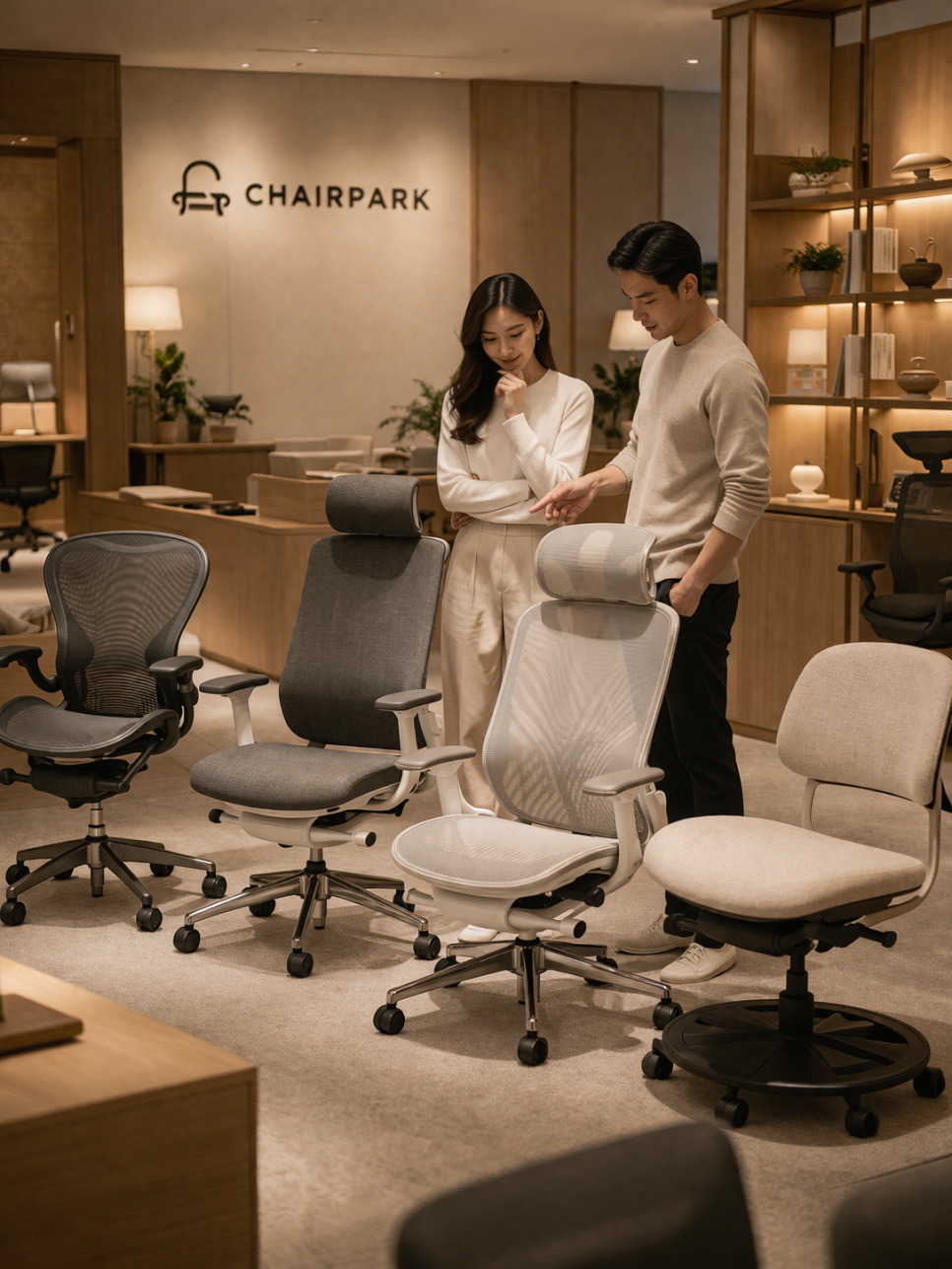
Why Couples Don't Need Matching Chairs
More couples than ever are sharing home offices—working side by side, reading, or focusing on their own projects in the same room. But when it comes to furnishing that space, one question always comes up: do we need the same chair?
The short answer is no. In fact, insisting on identical chairs can be a mistake. Even when you share a workspace, your bodies, work styles, and sitting habits are likely very different. One partner may sit for eight-hour stretches and need maximum lumbar support; the other might pop in and out, preferring a chair that encourages movement.
The real goal isn't sameness—it's harmony. Two chairs can be different models and still look like they belong together, as long as they share a visual language: similar tones, materials, or silhouettes. Done right, a mismatched pair can feel more sophisticated and intentional than two identical seats.
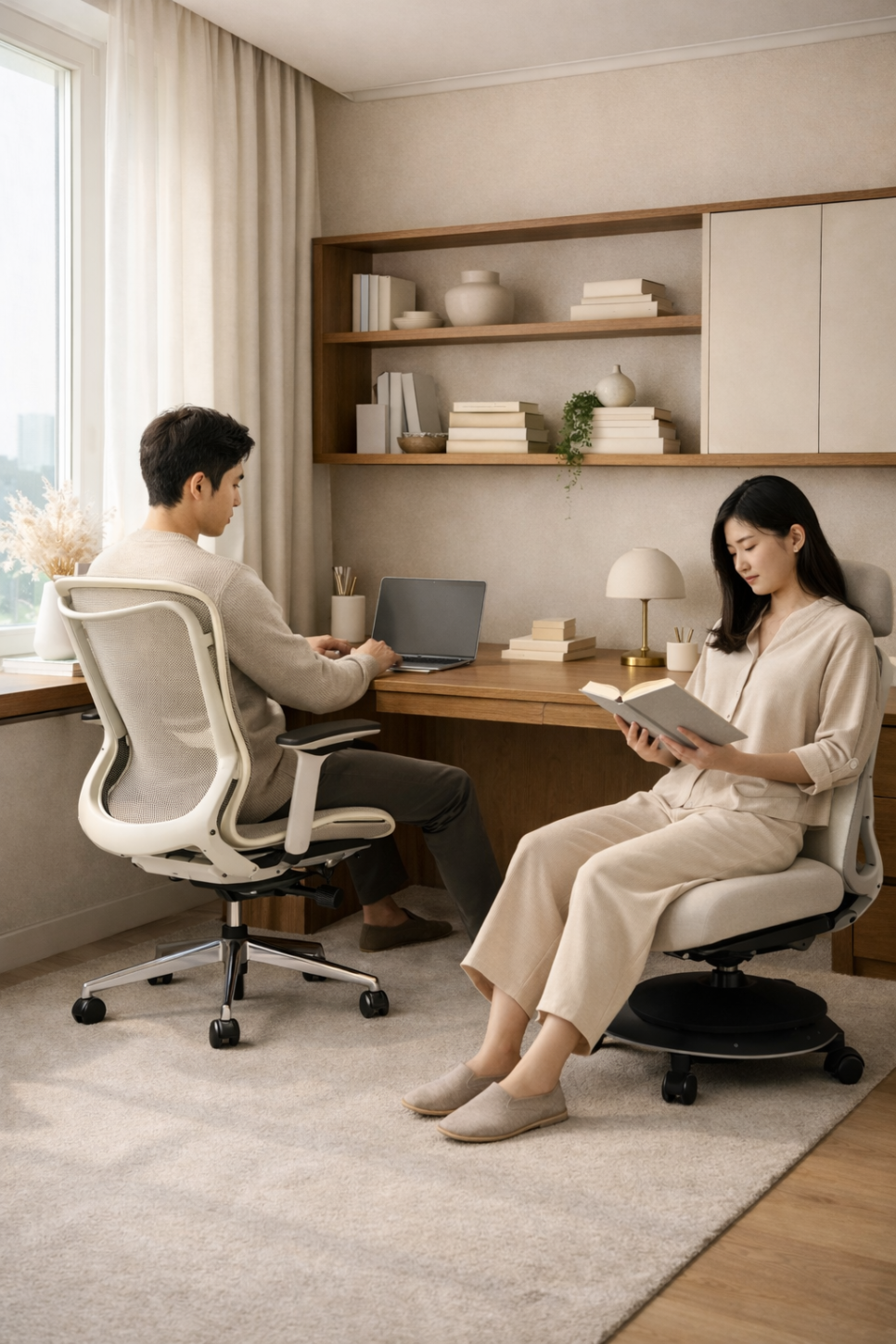
How to Choose Chairs for a Shared Office
Before you start shopping, consider these three factors:
1. How Long Each Person Sits
If one partner works a full remote day and the other uses the space occasionally, their chair needs will be drastically different. The all-day sitter needs serious ergonomic support; the occasional user can prioritize flexibility and aesthetics.
2. Sitting Style and Movement
Does one of you sit still and upright for hours? Does the other shift positions constantly, lean back, or cross their legs? Chairs that accommodate different posture styles—static vs. dynamic—will make a big difference in long-term comfort.
3. Room Aesthetic
Is your office warm and wood-toned, minimalist and white, or sleek and modern? The chairs should complement the space without clashing. Think about frame finish, upholstery color, and overall presence.
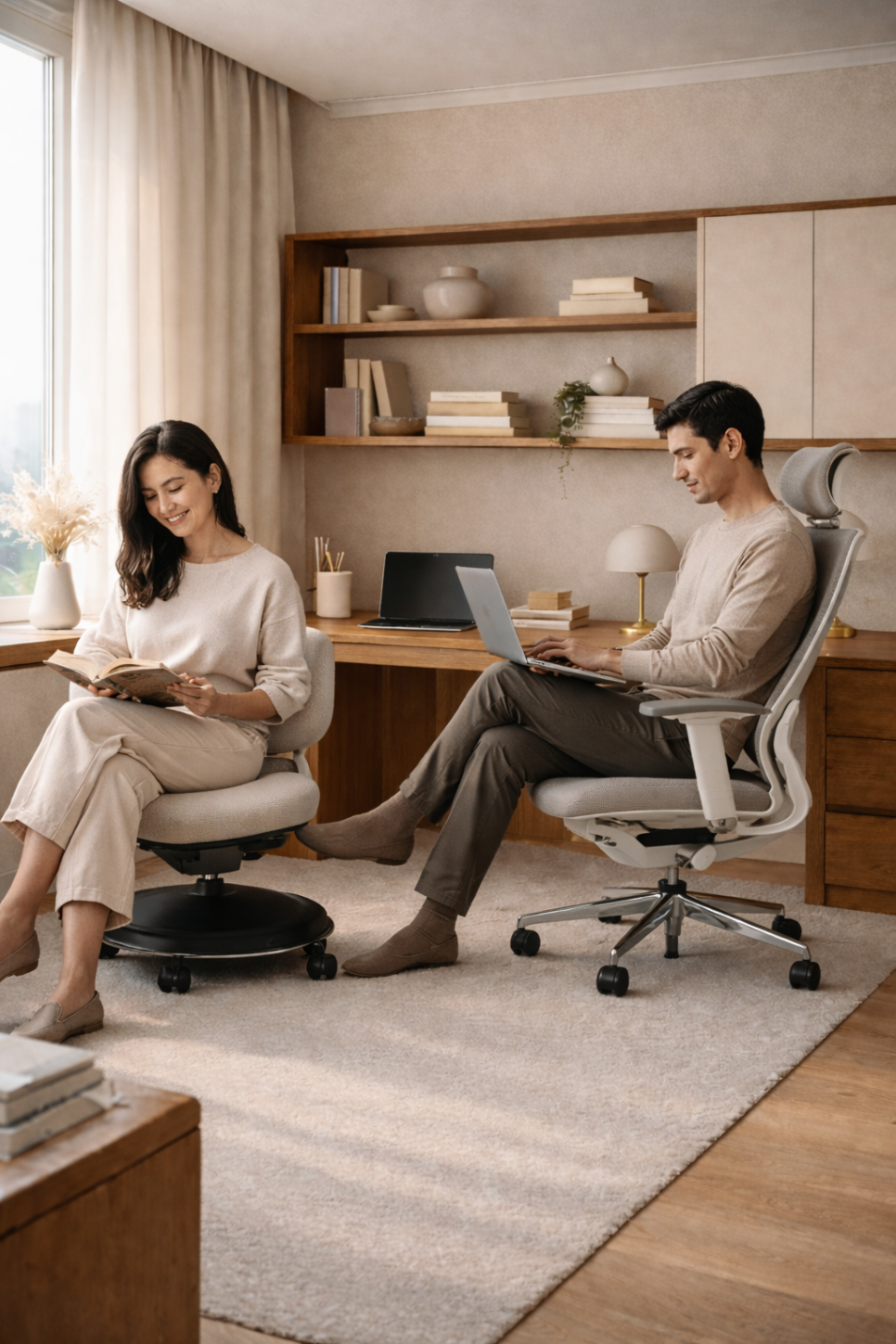
Recommended Couple Chair Combinations
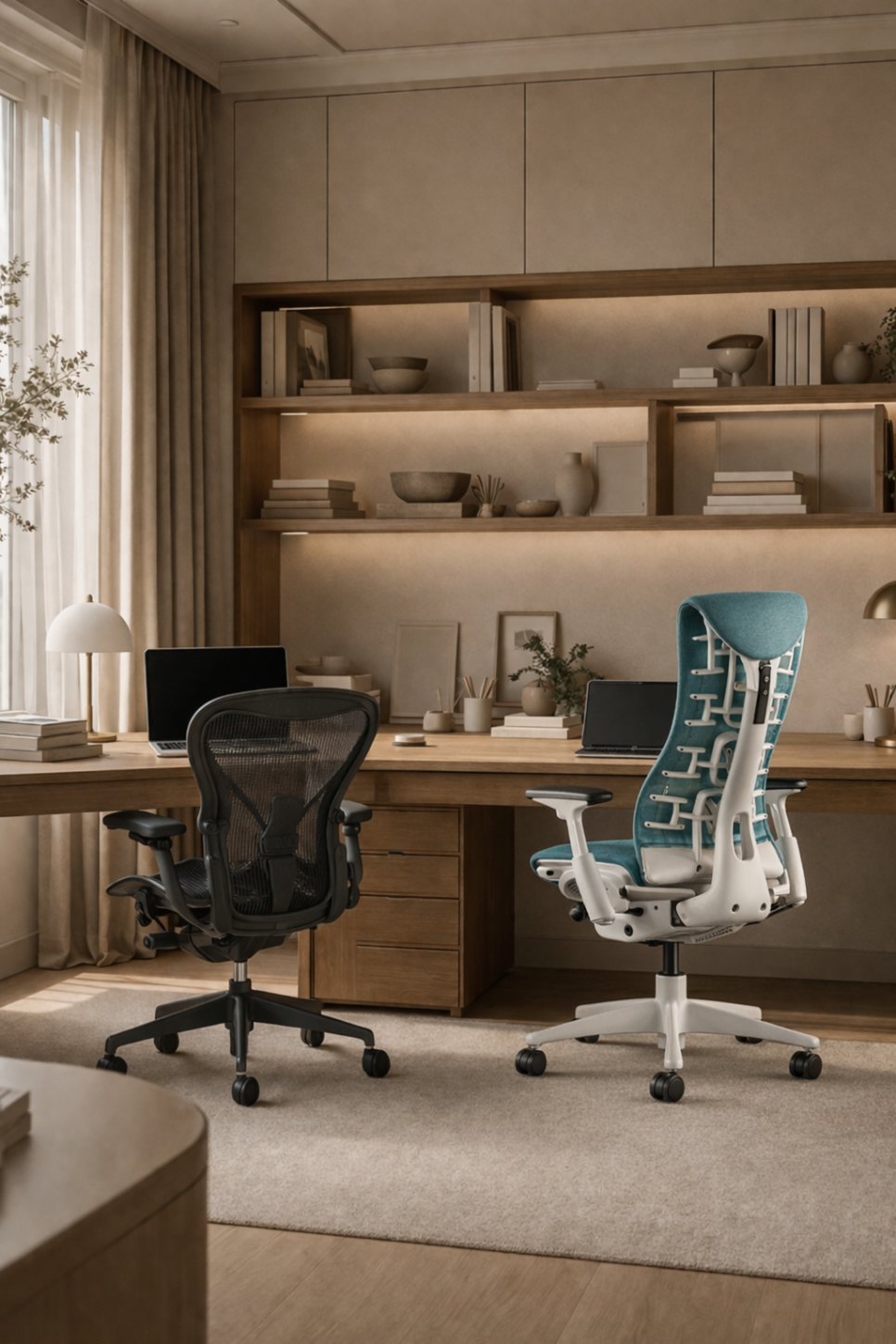
For Two Full-Time Remote Workers: Aeron + Embody
If both of you log serious hours at your desks and prioritize performance, pairing the Herman Miller Aeron with the Herman Miller Embody is a smart move.
The Aeron has a structured, no-nonsense presence—ideal for someone who values precision and postural support. The Embody, by contrast, has a softer, more enveloping feel. It's still a high-performance chair, but with a bit more give and visual warmth. Together, they create a balanced, professional look without feeling overly corporate.
This pairing works especially well when one partner wants firm, mesh-backed support and the other prefers a more cushioned, body-hugging seat.
For Design-Conscious Couples: Contessa II + ACT2
If you want ergonomic chairs that don't scream "office," consider the Okamura Contessa II paired with the Itoki ACT2.
The Contessa II is elegant and sculptural, with a refined silhouette that elevates any room. The ACT2 is more understated but equally functional, with clean lines and a lighter visual weight. Together, they strike a sophisticated balance—one chair anchors the space, the other complements without competing.
This combo is ideal for couples furnishing a newlywed apartment or a multipurpose room where the office needs to feel like part of the home, not a cubicle.
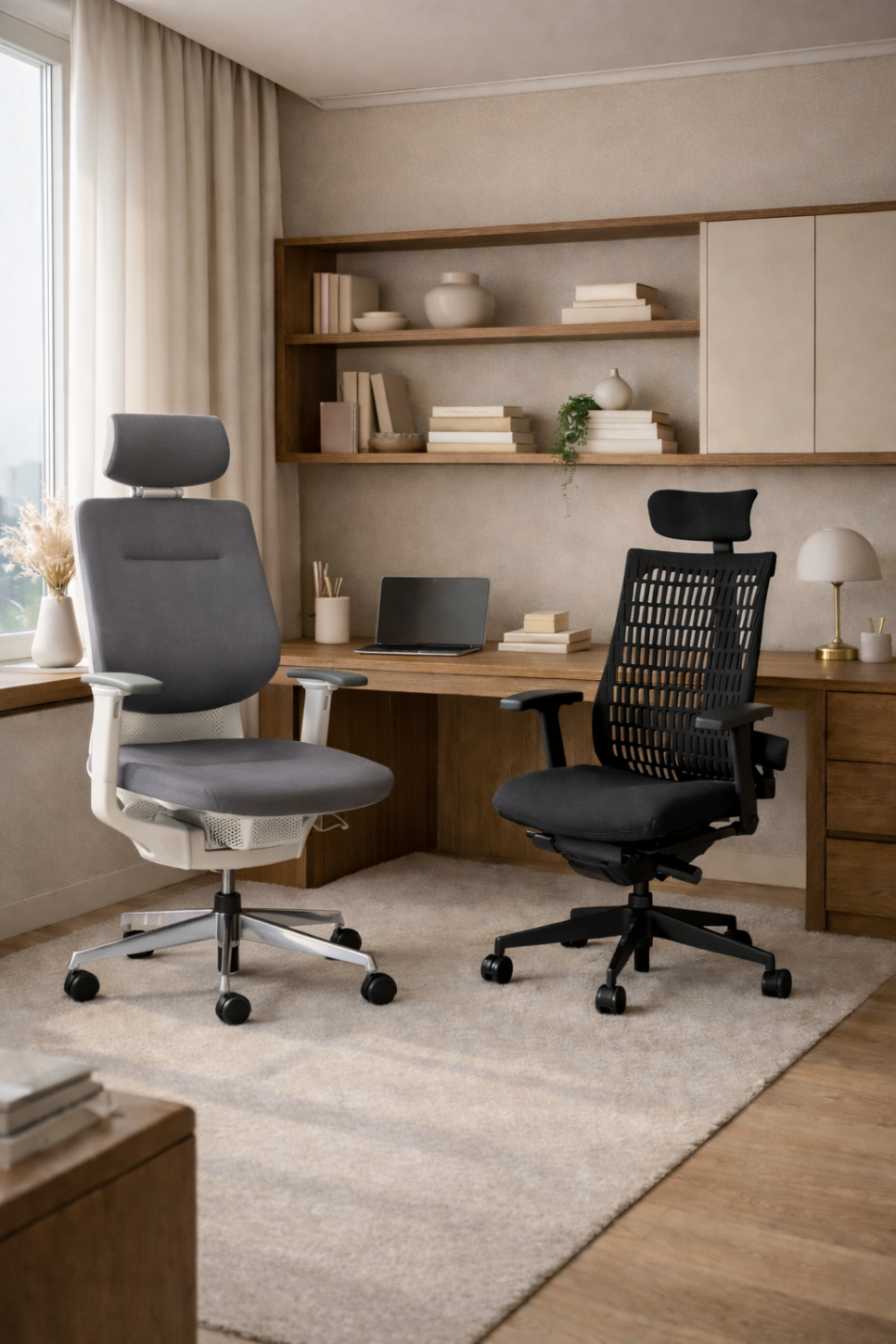
For Different Sitting Styles: Ing + ACT2
If one of you fidgets and shifts while working, and the other sits still and focused, try pairing the Kokuyo Ing with the Itoki ACT2.
The Ing is designed for movement—its floating seat encourages micro-adjustments and active sitting, perfect for someone who can't stay still. The ACT2, meanwhile, offers steady, reliable support for someone who prefers a more traditional seated posture.
Despite their differences, the two chairs share a contemporary, uncluttered look that works well in a shared space. One partner gets dynamic flexibility, the other gets stable comfort—and the room feels cohesive.
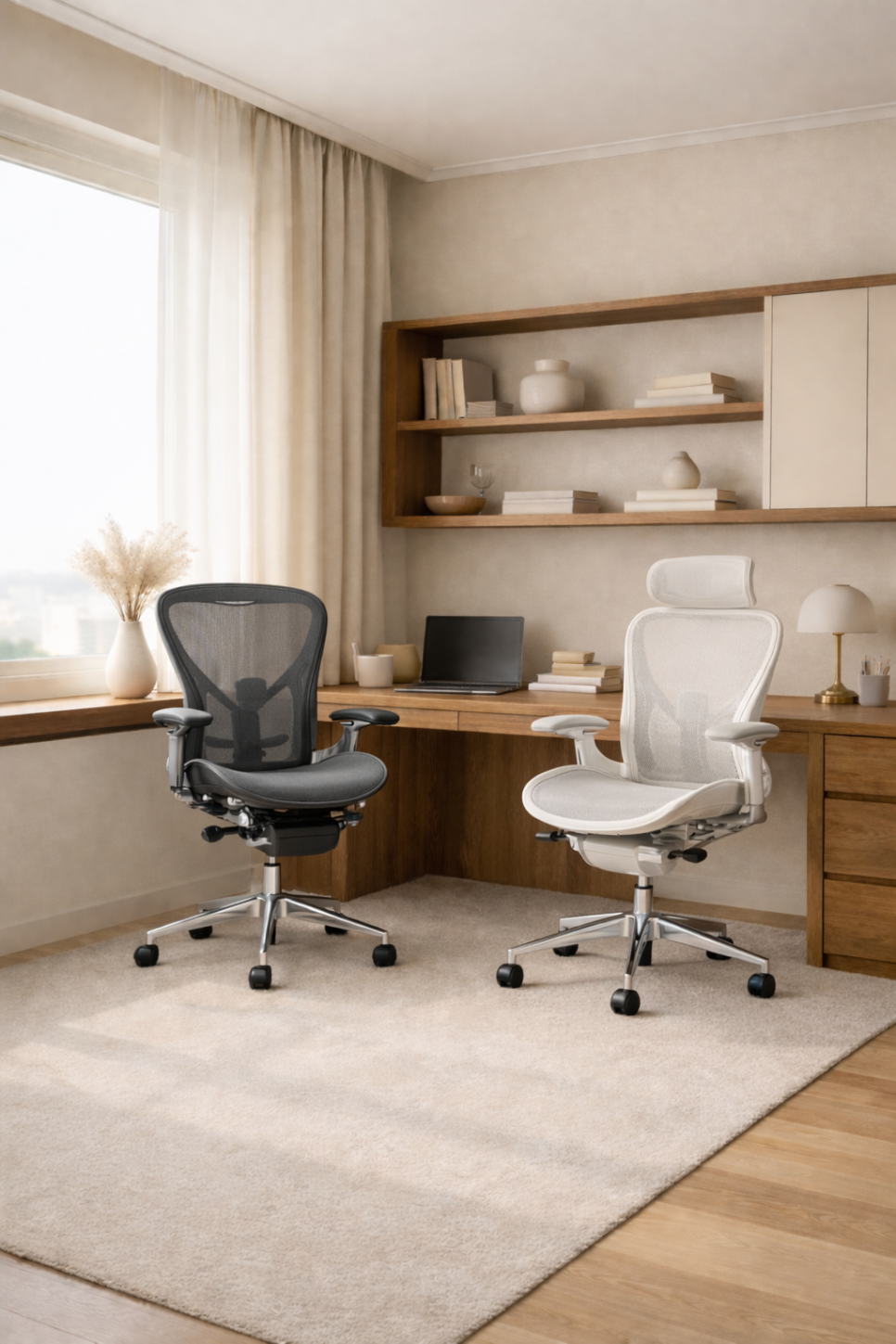
For a Unified Look: Same Model, Different Colors
If you and your partner have similar body types and work habits, matching chairs can absolutely work—but consider varying the color or finish to add subtle personality.
For example, choose the same frame and features but pick different upholstery tones: a charcoal seat for one, a light gray or beige for the other. This maintains visual continuity while giving each person a sense of ownership over their space.
It's a small detail, but it prevents the room from feeling too uniform or hotel-like.
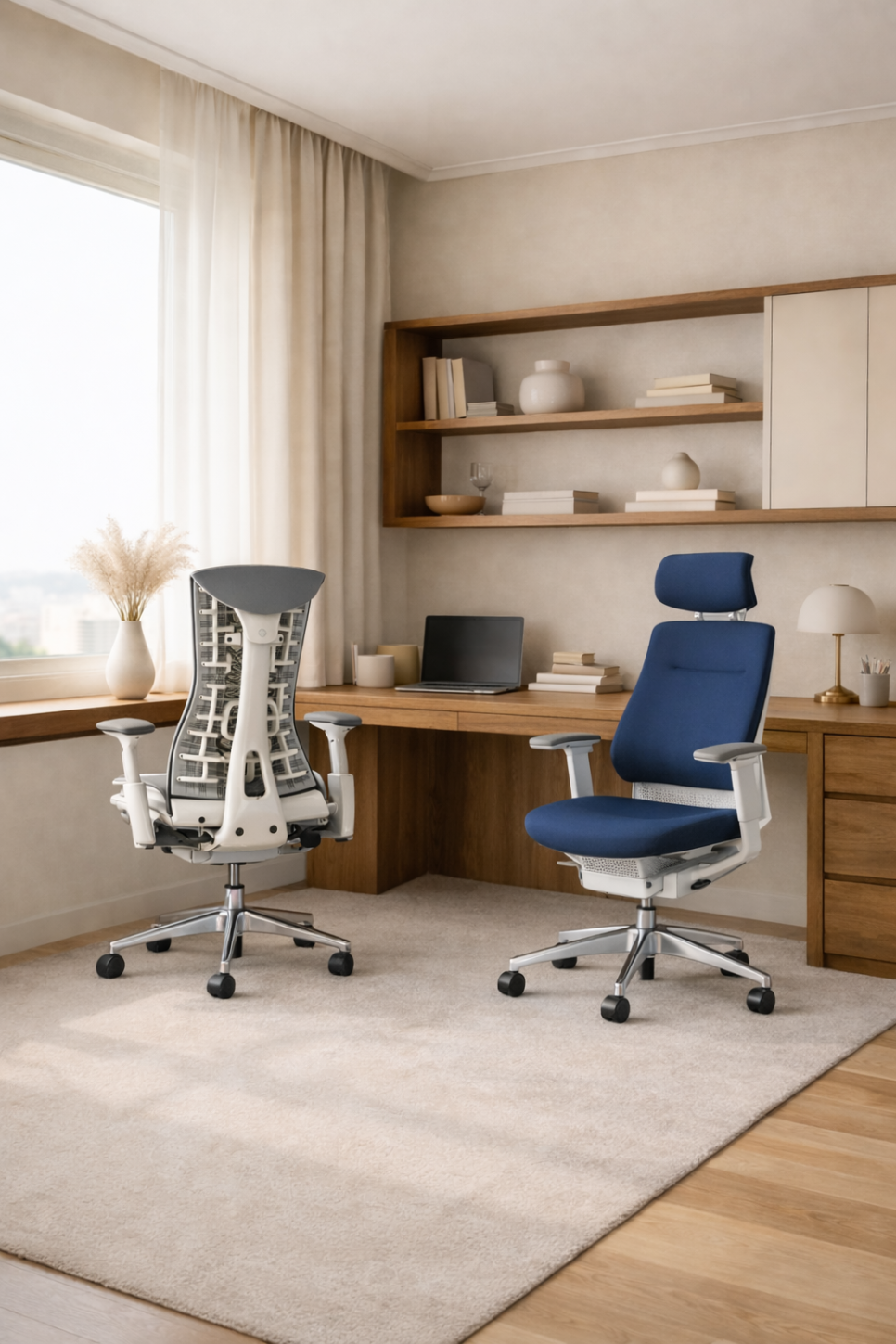
For a Relaxed, Lived-In Office: Embody + Ing
Not every home office needs to look like a boardroom. If your space doubles as a reading nook or creative studio, pair the Herman Miller Embody with the Kokuyo Ing.
The Embody brings calm, cushioned support; the Ing adds a playful, flexible energy. Together, they create a workspace that feels productive but also welcoming—somewhere you'd actually want to spend time.
This pairing works especially well when one partner does focused work (writing, coding, design) and the other uses the space for lighter tasks like browsing, sketching, or video calls.
It's Not About Who Gets the "Better" Chair
Choosing chairs for a shared office isn't a competition. It's about recognizing that comfort is personal, and that two people can have different needs without sacrificing style or cohesion.
The most successful couple chair pairings aren't necessarily the most expensive or the most matchy-matchy—they're the ones that respect each person's body and habits while contributing to a room that feels intentional and complete.
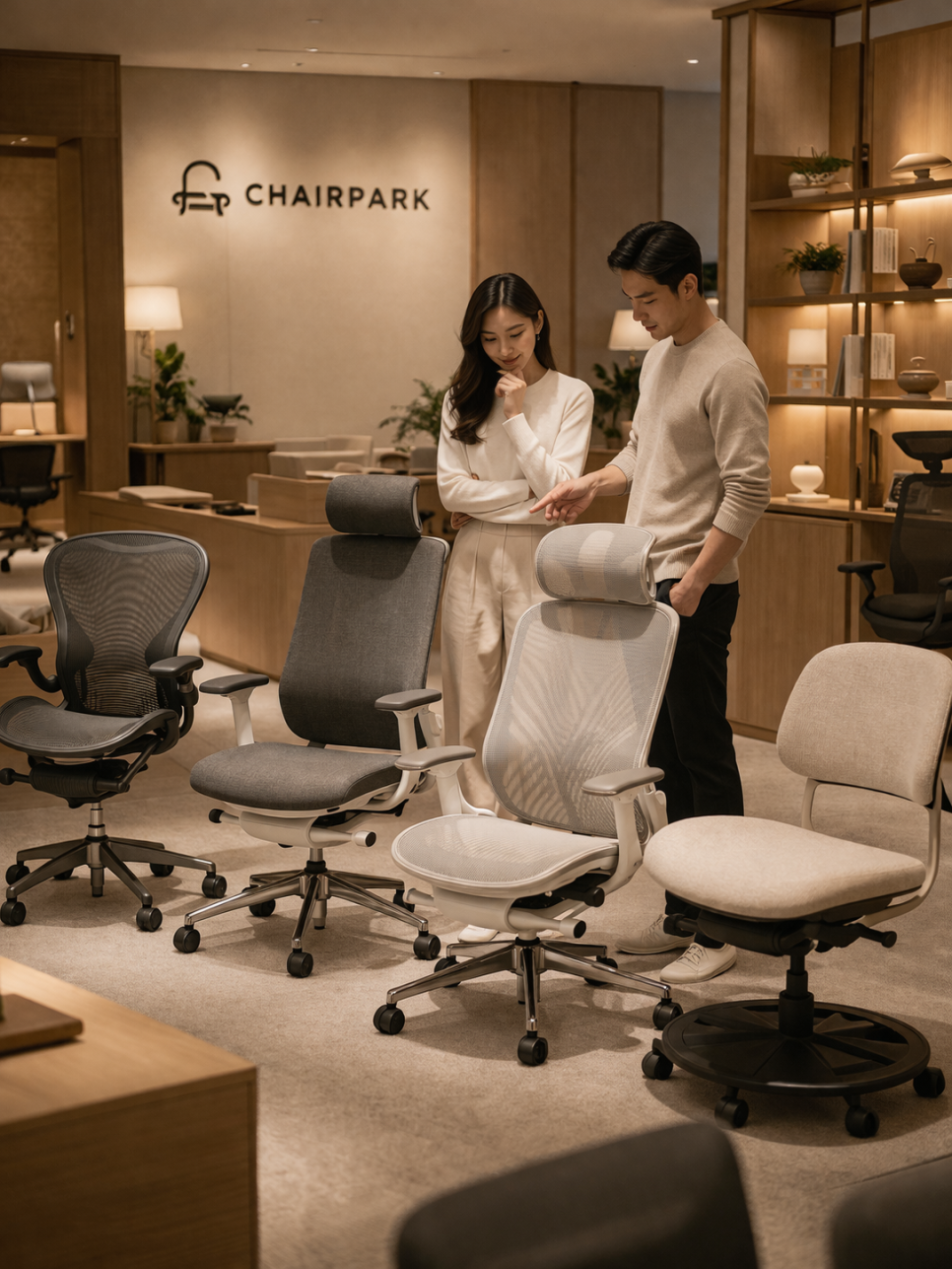
Take your time. Sit in the chairs together if possible. Pay attention not just to how each one feels, but how they look side by side. The right combination will feel obvious once you see it in context.
Final Thoughts
A shared home office is more than a place to work—it's a space where two lives, rhythms, and routines overlap. The chairs you choose should reflect that. They don't need to match perfectly, but they should make sense together.
Whether you go for two high-performance task chairs, a mix of static and dynamic models, or two variations of the same design, the key is balance: between function and style, between individual preference and shared aesthetic, between working hard and feeling at home.
Furniblog may earn a commission from links in this post, at no extra cost to you. See our affiliate disclosure.