Herman Miller Aeron vs. Kokuyo Ing Cloud: Two Philosophies of Mesh Seating
One holds you firmly in place. The other flows with every movement you make.
By the Furniblog Editorial Team·July 10, 2026·5 min read
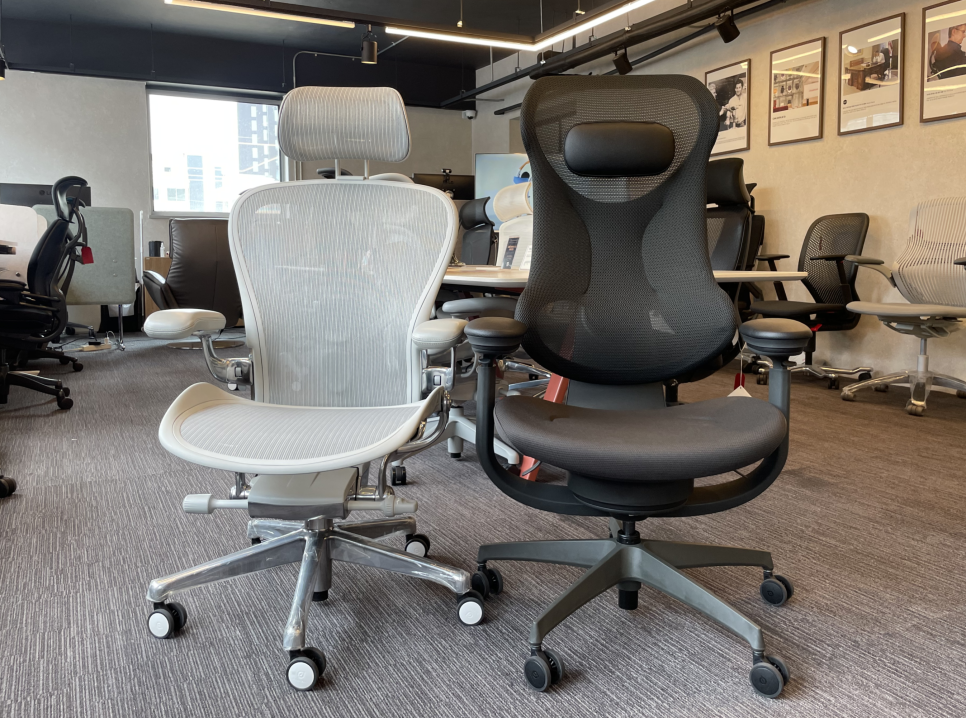
Two Icons, Two Philosophies
The Herman Miller Aeron is legendary—a design icon that rewrote the rules of office seating when it debuted in 1994 and remains the benchmark for ergonomic chairs. But venture into any chair enthusiast forum and you'll find a surprising number of people who find the Aeron… uncomfortable.
Is the chair flawed? Not at all. It's a question of philosophy.
The Aeron is engineered to hold your body in optimal posture. The Kokuyo Ing Cloud, by contrast, is designed to follow your body wherever it goes. Both are premium mesh task chairs. Both excel at what they do. But the sitting experience could not be more different.
The Aeron's Strength: Structured, Precision Support
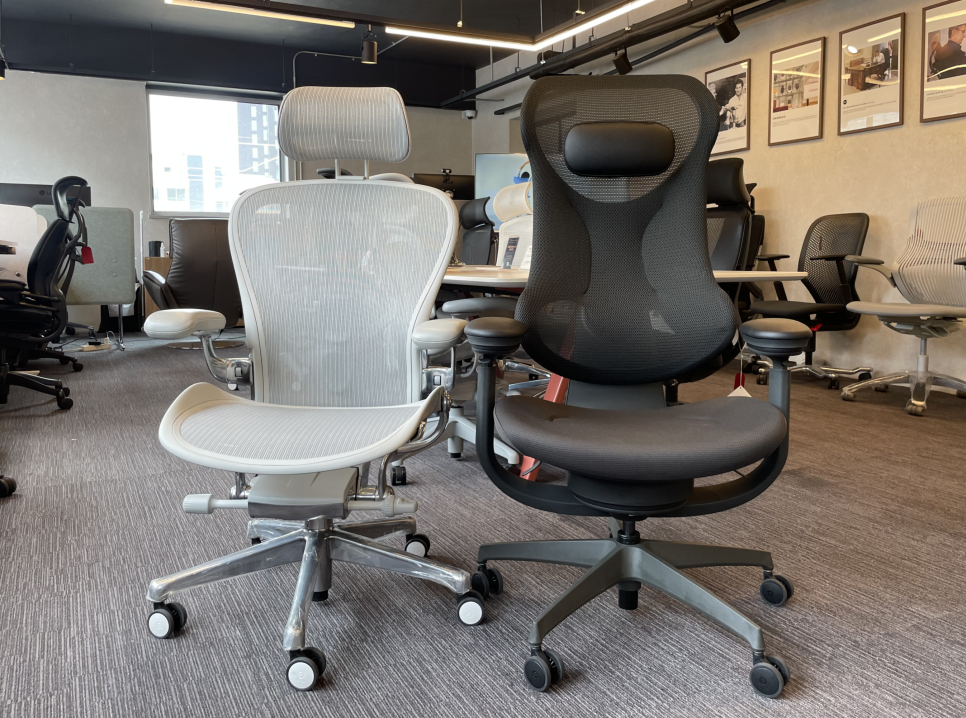
First released in 1994 and remastered in 2016, the Aeron has sold millions of units worldwide. It became the visual shorthand for Silicon Valley startups and remains many people's dream chair.
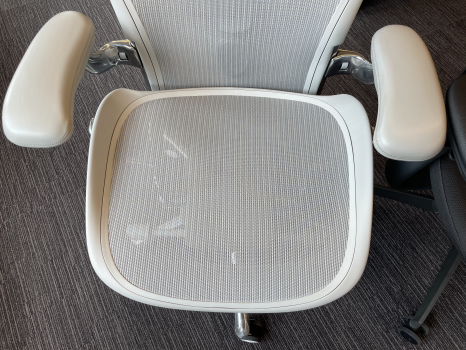
The Aeron's identity is rooted in its firm, structured support. A die-cast aluminum frame holds the mesh taut across the backrest and seat pan. The 8Z Pellicle mesh—co-developed with DuPont—divides into eight zones of varying tension to distribute your weight precisely where it's needed. The PostureFit SL pads cradle your lumbar spine and sacrum from below, guiding you into textbook-correct posture.
In short, the Aeron is a chair that shapes your posture rather than simply accommodating it.
Why Some People Find It Restrictive
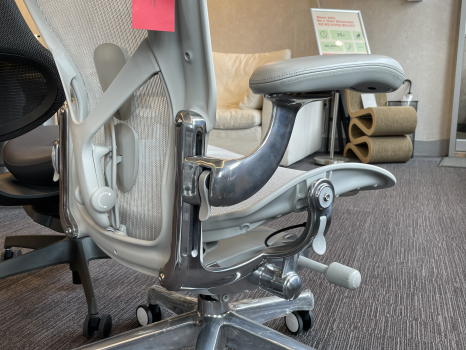
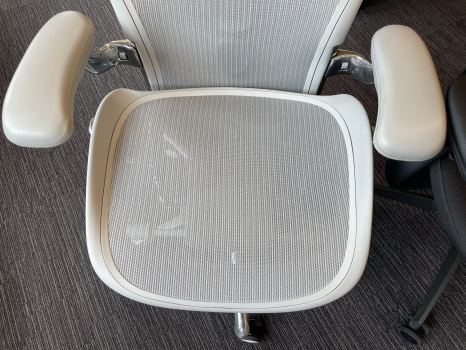
This firmness is a feature, not a bug—but it won't suit everyone. The rigid side frames of the backrest can feel intrusive if you shift around a lot, cross your legs, or lean to one side. The firm front edge of the seat pan can press into your thighs if the sizing isn't right for your body.
This isn't a design flaw. The Aeron is meant to discourage slouching and poor posture. Its structure is intentional. But intention and comfort aren't always the same thing.
If you work in a disciplined, upright posture for long periods and appreciate firm, unambiguous support, the Aeron—properly sized (A, B, or C) and adjusted via its Harmonic 2 tilt and fully articulating arms—is still one of the best chairs money can buy.
The Ing Cloud's Answer: Gravity-Driven Freedom
Kokuyo took a different approach. Their premise: sitting itself isn't the problem—staying frozen in one position is. The solution? Let the chair move with you.
After years of R&D, Kokuyo launched the Ing series in 2017 with a 360-degree gliding seat. The Ing Cloud, released in late 2025 after eight years of development, is the third and most refined iteration. It targets programmers, engineers, and anyone who spends long hours glued to a screen. The name says it all: sitting on the Ing Cloud feels like floating on a cloud.
Three Key Innovations
1. Triple Gliding Mechanism
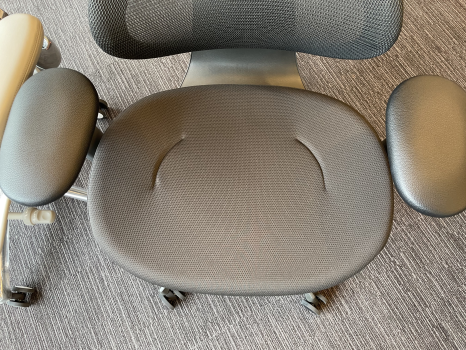
The seat pan, backrest, and armrests all move independently and simultaneously. The seat glides forward, backward, and side-to-side (with two lockable ranges via a left-side lever). The backrest responds to micro-movements in your spine. The armrests follow your arms as you type. No matter where your body goes, the chair gets out of the way.
2. Gravity-Powered Movement (No Springs)
This is the most radical feature: the triple gliding system runs on gravity alone, with no springs. Kokuyo's proprietary 3D Ultra AutoFit mechanism redistributes pressure fluidly in real time, so the chair becomes one with your body. Kokuyo describes it not as "sitting" but as "wearing" the chair.
3. Frameless 3D Hammock Mesh
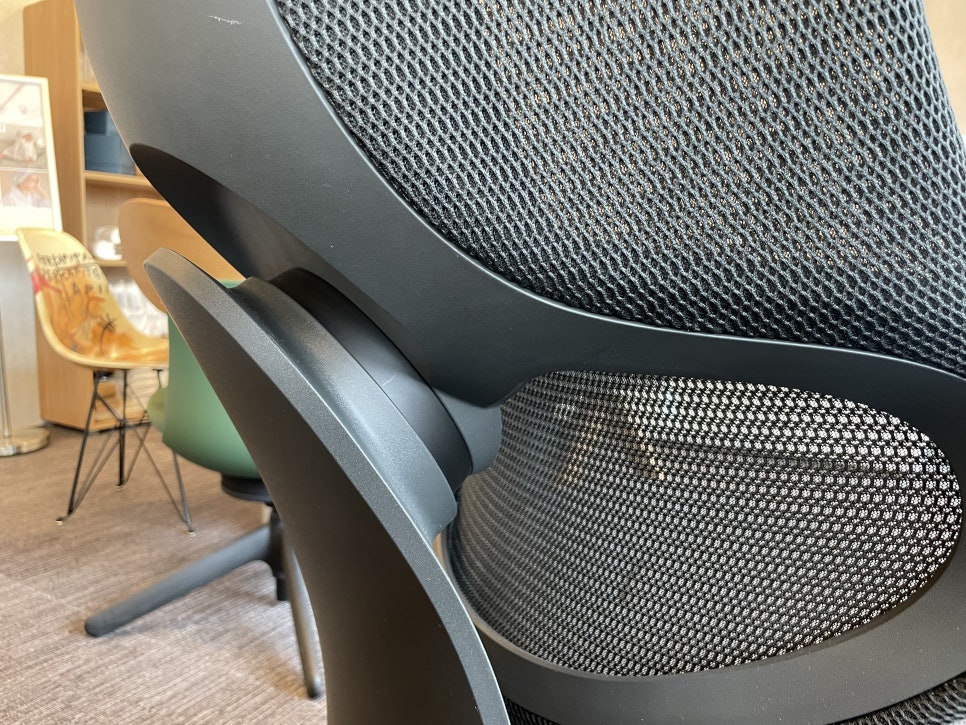
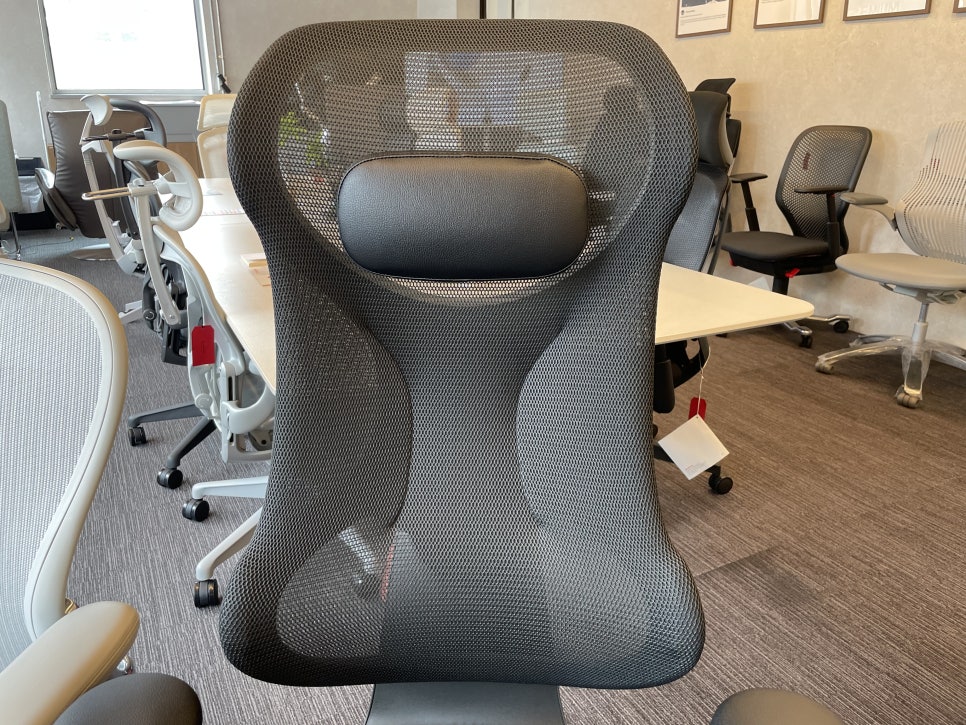
Most mesh chairs have a rigid frame around the backrest that can dig into your shoulders or arms. The Ing Cloud eliminates the side frames entirely. Its 3D hammock-style mesh wraps around your back like fabric, leaving your shoulders and arms completely free. Add a height-adjustable headrest (70mm range) and you have head-to-hip freedom of movement.
If the Aeron holds your posture in place, the Ing Cloud lets your posture roam free.
Head-to-Head Comparison
Feature | Herman Miller Aeron | Kokuyo Ing Cloud |
|---|---|---|
Design Philosophy | Holds posture firmly | Follows movement fluidly |
Frame | Rigid aluminum exoskeleton | Frameless backrest sides |
Mesh Technology | 8Z Pellicle (8 tension zones) | 3D hammock mesh |
Movement | Harmonic 2 tilt | Gravity-based triple glide |
Lumbar Support | PostureFit SL (structured pad) | 3D Ultra AutoFit (pressure distribution) |
Sizing | A, B, C (three sizes) | One size, auto-adjusting |
Approx. Price (KRW) | ~2,840,000 won | ~3,450,000 won |
This is not a question of better or worse—it's a question of character.
Which Chair Is Right for You?
Choose the Aeron if you:
Work in a stable, upright posture for long stretches and prefer firm, structured support
Enjoy fine-tuning your chair and selecting the right size for your frame
Want a proven classic with decades of real-world validation
Choose the Ing Cloud if you:
Shift positions frequently and need freedom to move your shoulders, arms, and torso
Spend hours coding, designing, or writing and dislike feeling "locked in" by your chair
Have been bothered by mesh chair frames digging into your body in the past
The Bottom Line: Try Before You Buy
Does your body need to be held in place, or does it need room to breathe? At roughly $1,900 USD for the Aeron and $2,300 USD for the Ing Cloud, this isn't a decision you can make from a spec sheet.
These are two of the most thoughtfully engineered mesh chairs on the market—but they serve fundamentally different users. If you have access to a showroom where both are available, spend time in each. Your body will tell you which philosophy fits.
For more on the Aeron's design legacy and ergonomic features, explore our full Herman Miller Aeron review. And to learn more about Kokuyo's motion-first approach, see our Kokuyo Ing Cloud product page.
Furniblog may earn a commission from links in this post, at no extra cost to you. See our affiliate disclosure.