How to Choose an Ergonomic Chair by Height and Weight: A Body-Type Guide
Why the same chair feels different—and how to find the one that actually fits you
By the Furniblog Editorial Team·July 7, 2026·8 min read
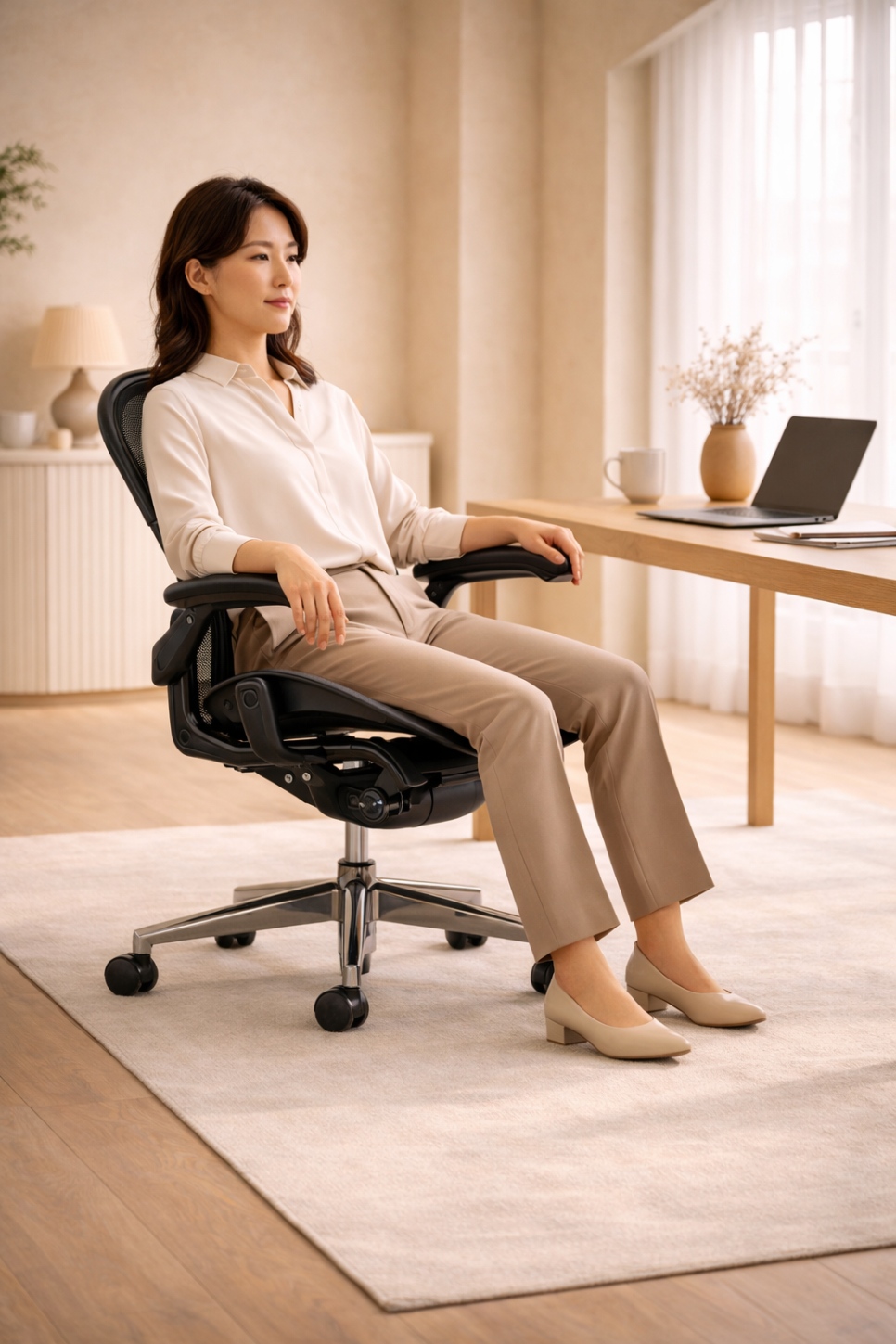
The Questions We Hear Every Day
When helping people choose a high-end ergonomic chair, we hear the same concerns again and again:
"I'm tall—which chair will fit me?"
"I'm petite, and most chairs feel oversized."
"Does my weight mean I need a bigger chair?"
These questions share a common assumption: that height and weight alone determine which chair is right for you.
But in reality, chair fit is far more nuanced. It's not just about your overall size—it's about how your body is proportioned and how the chair supports you when seated. Two people who are both 5'7" can have vastly different torso lengths, thigh lengths, hip widths, and shoulder breadths. That's why the same chair can feel perfect for one person and awkward for another.
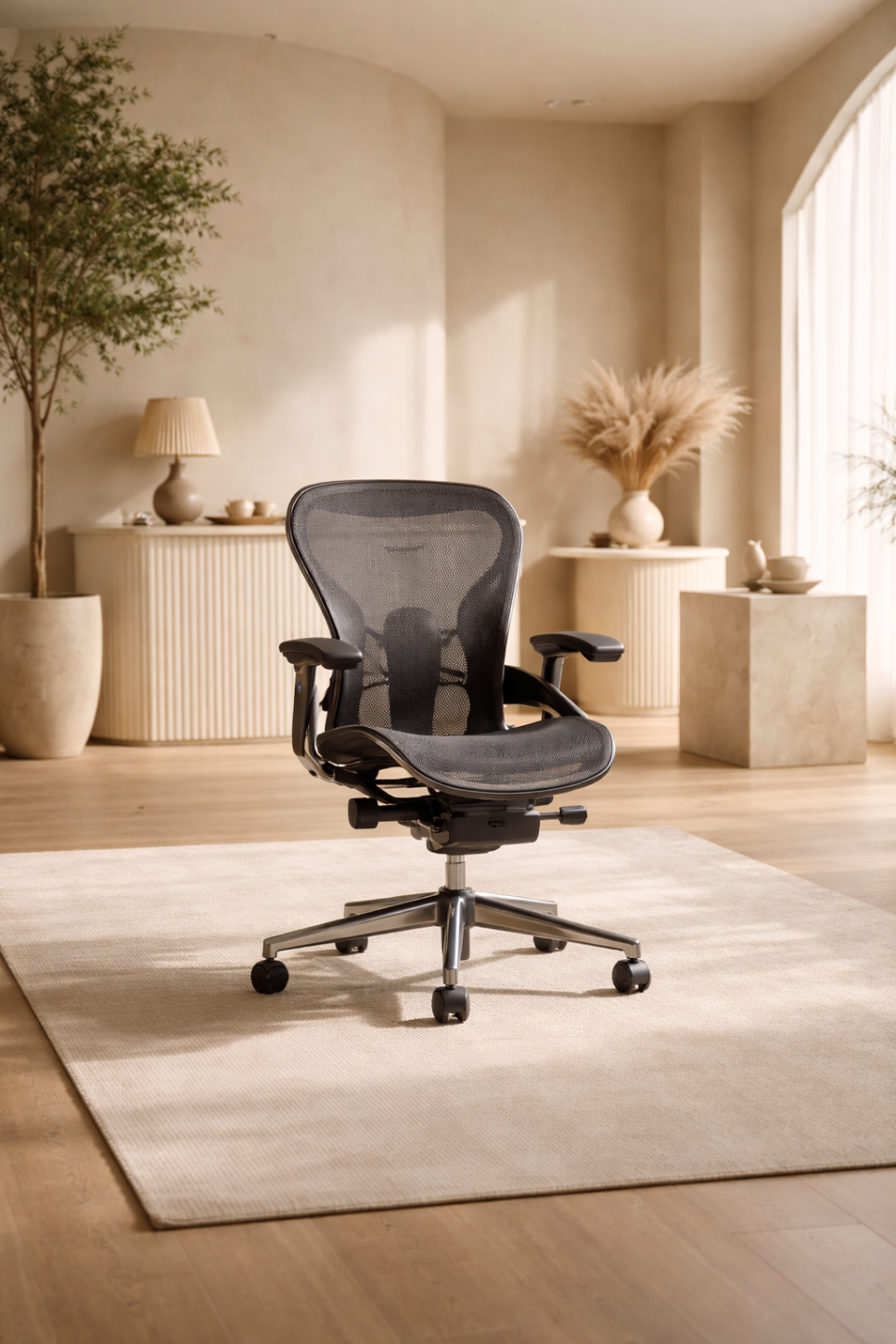
The Real Chair Selection Formula: Five Factors That Matter More Than Size
Height and weight are useful starting points, but they don't tell the whole story. When evaluating whether a chair truly fits your body, focus on these five criteria:
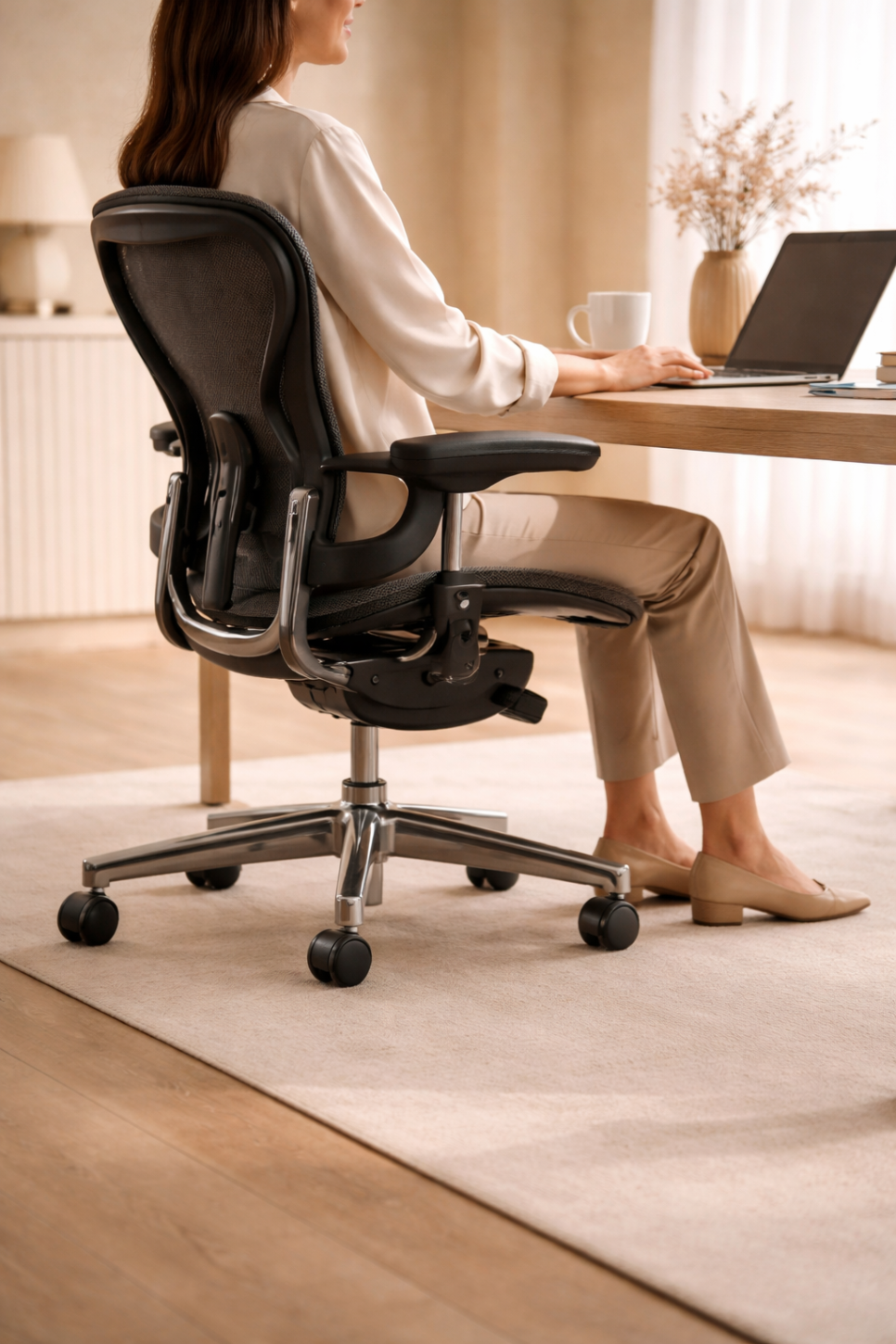
Do your feet rest comfortably flat on the floor? If your feet dangle or you have to tiptoe, the chair is too high.
Is there clearance behind your knees? If the seat pan presses into the back of your knees, it's too deep.
Does the lumbar support align with your lower back? The support should hit your natural lumbar curve, not float above or dig into your mid-back.
Can you adjust the armrests without shrugging your shoulders? Armrests that force your shoulders up cause neck and shoulder tension.
Do your hips and thighs feel comfortable after prolonged sitting? Pressure points or a cramped feeling are signs of poor fit.
If a chair passes all five tests, it's a good match for your body. If it fails even one, you'll feel discomfort over time—no matter how prestigious the brand.
What Taller Users Should Prioritize
If you're tall, pay close attention to seat depth and backrest height. A seat that's too shallow will leave your thighs unsupported; a backrest that's too short won't support your shoulders and upper back.
What Smaller Users Should Prioritize
If you're petite, focus on minimum seat height and seat depth. A seat that's too deep will force you to sit forward, eliminating lumbar support. A seat that won't lower enough will leave your feet dangling.
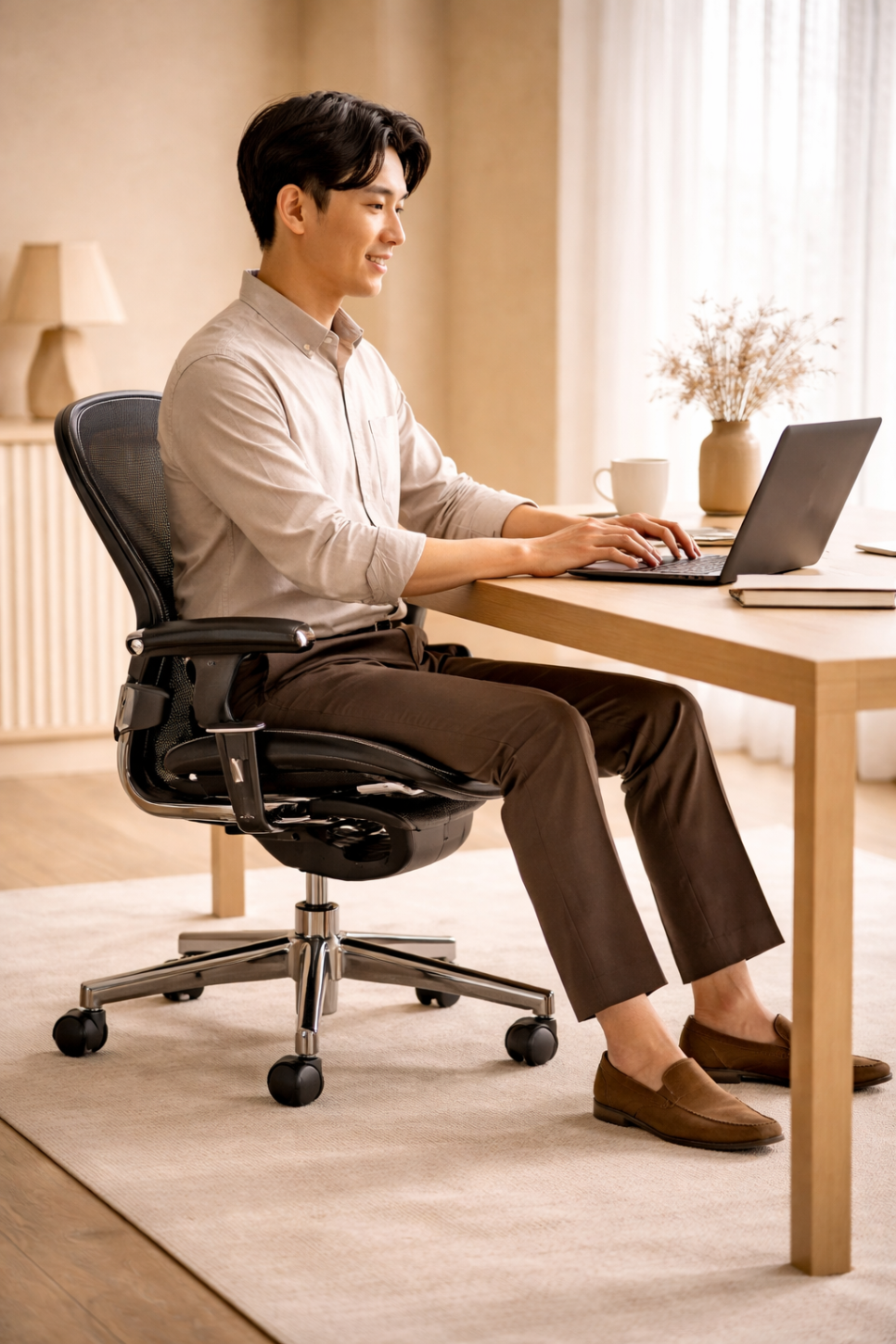
Chair Recommendations by Body Type: Men
Men, on average, have broader shoulders, longer torsos, and longer thighs than women. This doesn't mean you need the biggest chair—it means you need to check that the chair's proportions match your proportions.
5'7" and Under / 130–165 lbs
This range offers the widest selection. Most ergonomic chairs will accommodate you comfortably, so your choice comes down to personal preference and work style.
If you spend long hours focused at a desk and want stable, balanced support, the Herman Miller Aeron is an excellent choice. Its mesh design keeps you cool and supported without feeling too soft or too firm.
If you prefer a smoother, more luxurious recline and a slightly softer feel, consider the Okamura Contessa II. It strikes a nice balance between work posture and relaxed leaning.
For users who value fine-tuned adjustability and precise upper-back support, the Itoki ACT2 is a strong contender, especially for detail-oriented desk work.
5'9"–5'10" / 155–185 lbs
This is where chair differences start to become more noticeable. You're no longer "average" in the strict sense, and seat depth becomes more important—especially if you have longer thighs.
The Aeron remains a top pick here. Its structured mesh and adjustable lumbar keep your posture stable throughout the day.
The Contessa II is especially popular in this range. It feels spacious without looking bulky, and users often describe it as the sweet spot between support and comfort for all-day use.
If you tend to shift positions frequently rather than sit still, take a look at the Kokuyo Ing Cloud. Its 360-degree gliding seat encourages micro-movements that keep your body engaged and reduce stiffness.
5'11" and Taller / 165 lbs and Up
This is where chair fit becomes critical. Many popular chairs simply aren't designed with taller users in mind, and you'll notice it immediately: the seat feels short, the backrest doesn't reach your shoulders, or your knees extend past the seat pan.
The Herman Miller Embody is a standout choice for larger frames. Its wide, flexible backrest supports your entire torso, and the seat is deep enough to accommodate longer thighs. It's designed for people who sit all day and need a chair that adapts to them, not the other way around.
The Aeron is still viable here, but make sure to try it in person. If you have broad shoulders or long legs, double-check that the seat depth and width feel generous, not tight.
The Contessa II also scales well for taller users. It doesn't look oversized, but it offers the proportions and support that larger bodies need.
Quick summary for men:
5'7" and under: Aeron, Contessa II, ACT2
5'9"–5'10": Aeron, Contessa II, Ing Cloud (if you move a lot)
5'11" and up: Embody, Aeron (size C), Contessa II
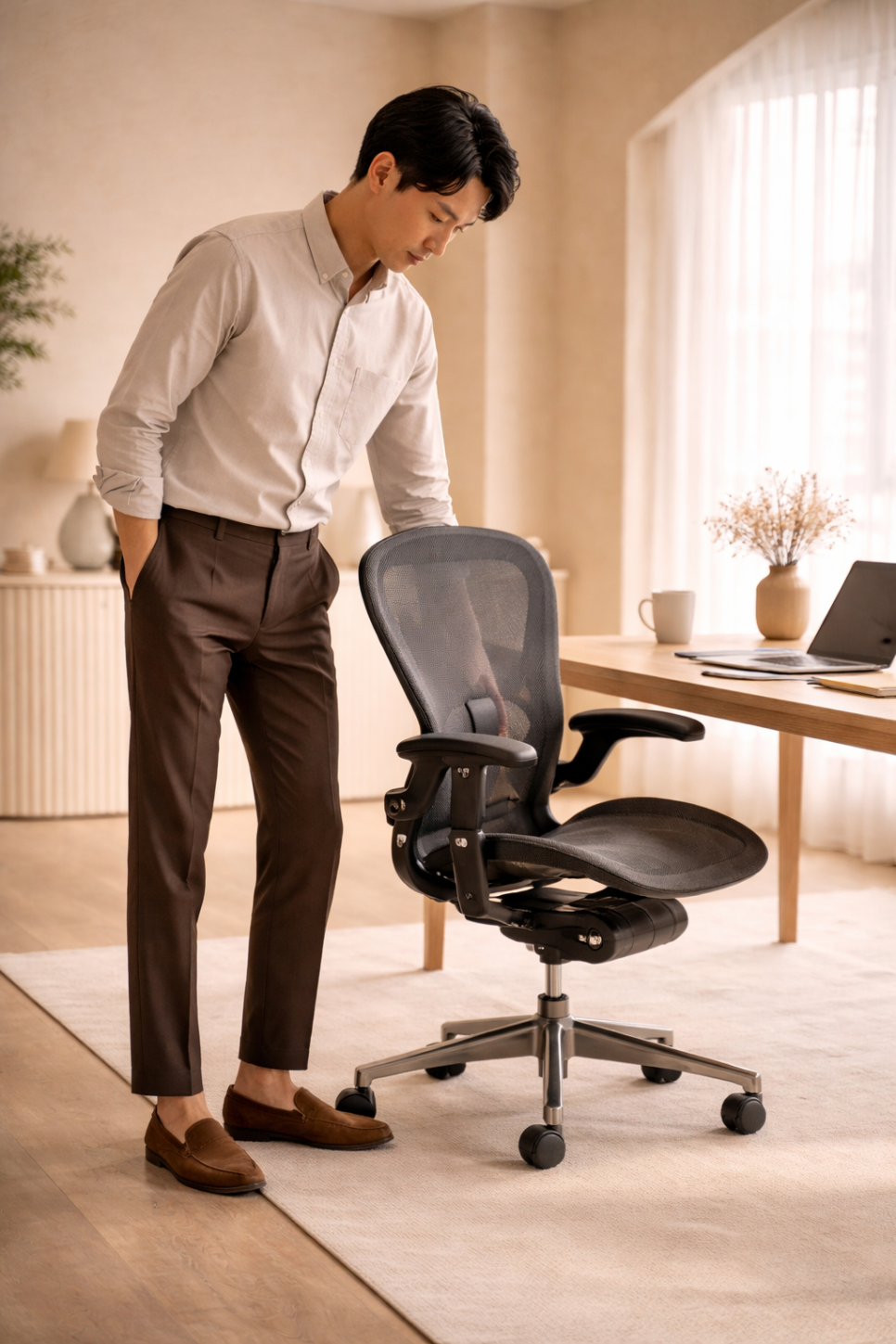
Chair Recommendations by Body Type: Women
Women, on average, have smaller frames, shorter thighs, and narrower hips than men. That means the most important factors are often minimum seat height and seat depth. If the seat is too deep, you can't sit all the way back, and lumbar support becomes useless.
5'3" and Under / 100–120 lbs
In this range, resist the temptation to choose a chair based on looks or brand prestige. Focus ruthlessly on fit.
The Herman Miller Aeron (size A) is a favorite among petite users. Feet reach the floor, the seat depth is manageable, and the lumbar support actually contacts your back when you sit all the way in.
When testing chairs in person, sit all the way back and check that there's space behind your knees. If the seat pan presses into your calves, the chair is too deep.
5'4"–5'6" / 110–145 lbs
This is the most common range for women, and it's also where you have the most flexibility in chair choice.
The Aeron remains a reliable baseline: supportive, breathable, and stable for long work sessions.
If you want a softer, more enveloping feel—especially for long sitting sessions—the Embody is worth trying. It feels more plush than the Aeron, but it's still structured enough to support good posture.
The Contessa II is a popular choice among women who want a chair that looks elegant in an office or home setting while still delivering serious ergonomic performance.
For those who prefer to move while sitting—rocking, shifting, leaning—the Kokuyo Ing Cloud offers a more dynamic experience. It's especially appealing if static sitting feels stiff or tiring.
5'7" and Taller / 135 lbs and Up
Being a taller woman doesn't mean you should automatically choose a "women's chair." In fact, many taller women find that mid- to full-size ergonomic chairs fit them better.
In this range, treat your body type similarly to a 5'9"–5'10" male frame. The Aeron, Embody, and Contessa II all scale well and provide the shoulder width, backrest height, and seat depth that taller users need.
Don't assume that because you're a woman, you need a smaller chair. If your torso is long or your shoulders are broad, a larger frame will feel far more comfortable.
Quick summary for women:
5'3" and under: Aeron (size A)
5'4"–5'6": Aeron, Embody, Contessa II, Ing Cloud (if you move)
5'7" and up: Aeron, Embody, Contessa II
Why Gender Matters Less Than You Think
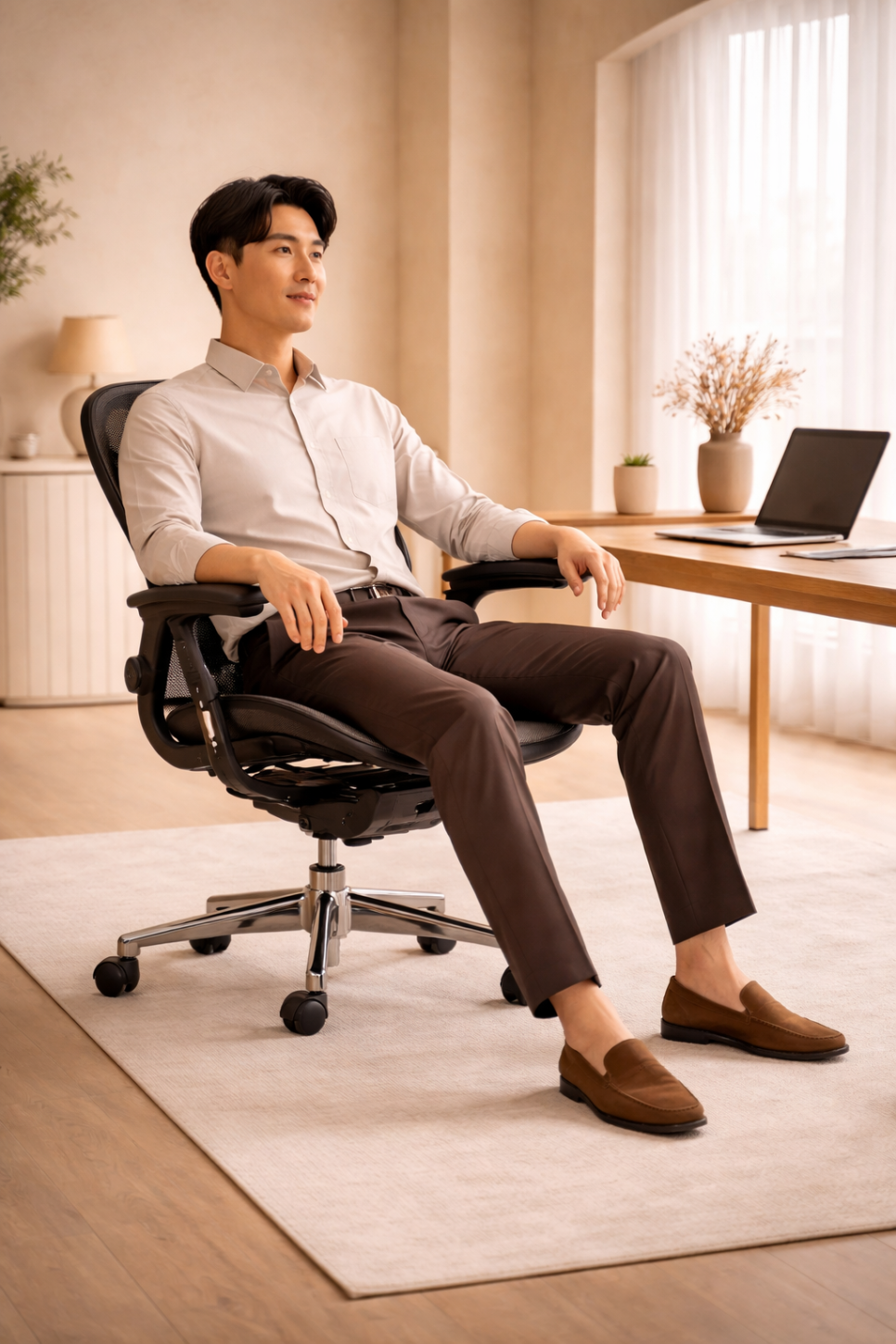
Ergonomic chairs aren't gendered products. There's no "men's chair" or "women's chair"—only chairs that fit your body or don't.
What does differ by gender, on average, are the dimensions that matter most:
Men should pay closer attention to shoulder width, torso length, and thigh length.
Women should prioritize minimum seat height, seat depth, and whether the lumbar support actually makes contact.
But exceptions abound. A 6'0" woman may need the same chair as a 6'0" man. A 5'5" man may need the same considerations as a 5'5" woman. Let your body—not assumptions—guide your choice.
The Bottom Line: Test Before You Buy
Height and weight are useful, but they're just the beginning. The real test comes when you sit down and ask yourself:
Do my feet rest flat on the floor?
Is there clearance behind my knees?
Does the lumbar support touch my lower back?
Are my shoulders relaxed when I use the armrests?
Can I sit here for two hours without discomfort?
If the answer to all five is yes, you've found your chair.
Two people with identical height and weight can have completely different experiences with the same chair. One might love the Aeron, while another feels more at home in the Embody. A third might prefer the Contessa II, and a fourth might thrive in the Ing Cloud.
That's not a flaw—it's a feature. High-end ergonomic chairs are designed to accommodate a wide range of body types and sitting styles, but they do it in different ways. The key is finding the one that accommodates you.
The best chair isn't the one that looks the best or costs the most. It's the one your body feels good in, hour after hour, day after day.

Furniblog may earn a commission from links in this post, at no extra cost to you. See our affiliate disclosure.