How to Deep-Clean Your High-End Office Chair Like a Pro
Detailing-grade maintenance tips to extend your ergonomic chair's lifespan
By the Furniblog Editorial Team·July 8, 2026·4 min read

There's a common mistake among owners of high-end ergonomic chairs: they assume that because they paid top dollar, these chairs are indestructible and require nothing more than regular use. But after five years of daily sitting, the reality is sobering. The mesh weave harbors a cocktail of skin cells, fine dust, and snack crumbs—a veritable dust trap that diminishes both hygiene and performance.
If you've owned a premium chair like the Herman Miller Aeron, Steelcase Leap V2, or Herman Miller Embody for several years, it's time to go beyond surface cleaning. This guide provides detailing-grade maintenance techniques that can extend your chair's lifespan by five years or more.

Why Wiping With a Cloth Isn't Enough
Simply running a wet wipe over your chair doesn't clean it—it often just smears dirt around and pushes grime deeper into crevices. High-end chairs have complex geometries, multiple materials, and moving parts that each demand targeted care. Think of this process less like dusting and more like auto detailing: systematic, component-specific, and thorough.
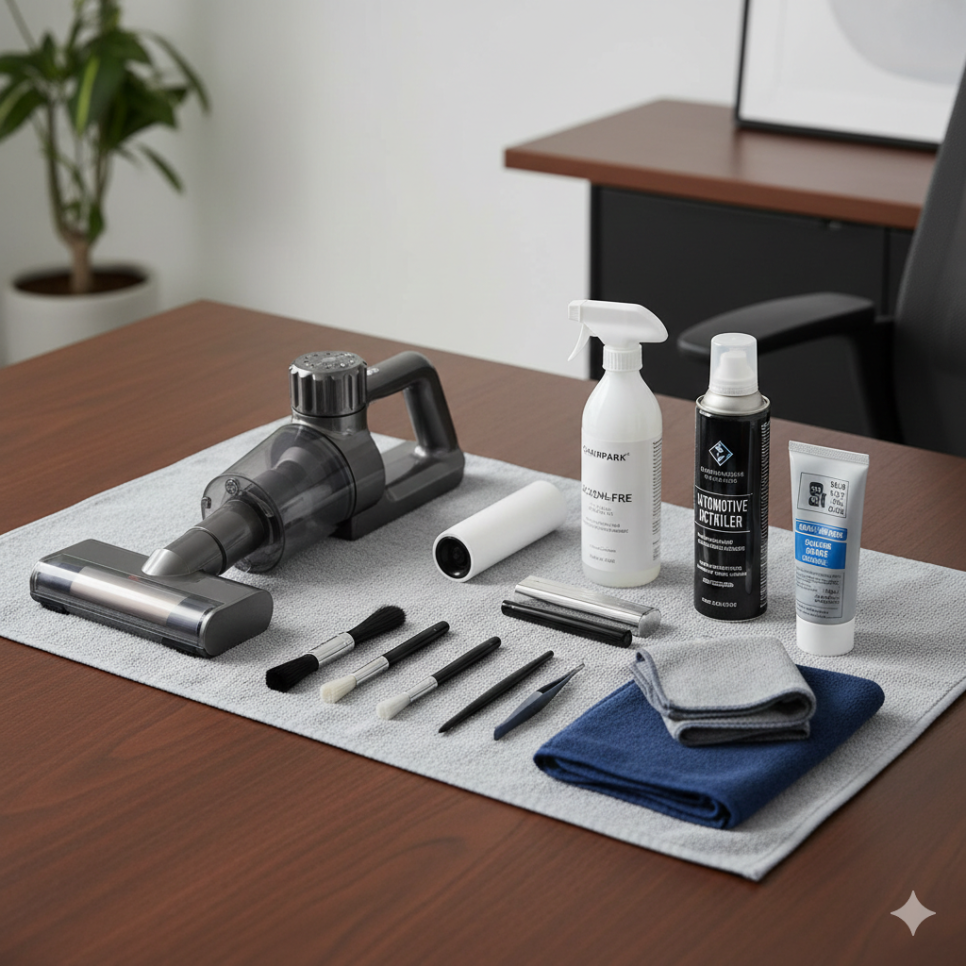
Component-by-Component Deep Cleaning
1. Mesh Upholstery: Tap and Extract
The biggest enemy of mesh chairs is the microscopic debris that lodges itself between the woven fibers. Over time, this buildup reduces breathability and can even compromise the mesh's structural integrity.
What you'll need: Handheld vacuum with brush attachment, fabric lint roller, compressed air canister (optional)
The process:
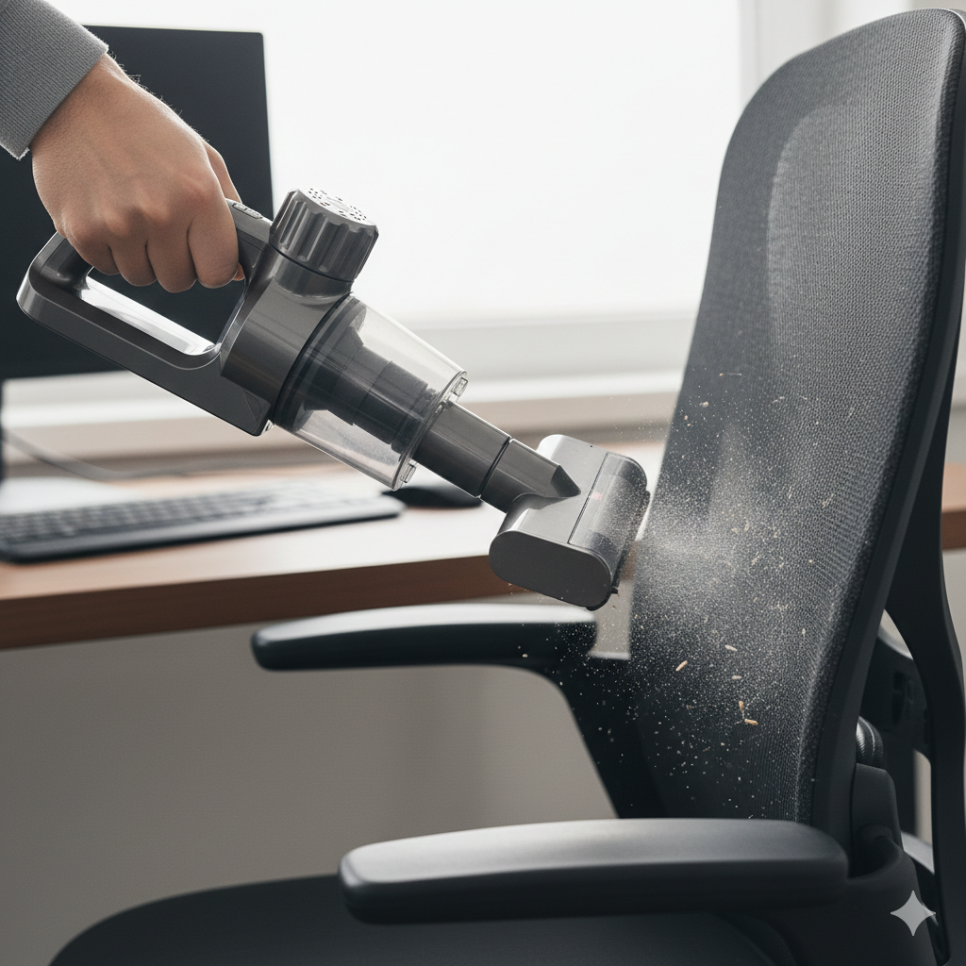
Gently tap the back of the mesh with a clean towel or use short bursts of compressed air to dislodge trapped particles
Use the vacuum's brush tool to follow the grain of the mesh, pulling dust out rather than pushing it in
For stubborn lint and fibers, follow up with a lint roller
Critical warning: Avoid steam cleaners on mesh. The high heat can deform the elastic fibers that give the mesh its supportive tension, permanently compromising the chair's ergonomic properties.
2. Frame and Base: Remove Oils for Lasting Shine
Aluminum and high-grade polymer frames accumulate fingerprints and skin oils over years of adjustment and handling. Left untreated, these oils oxidize and cause permanent discoloration.
The technique:
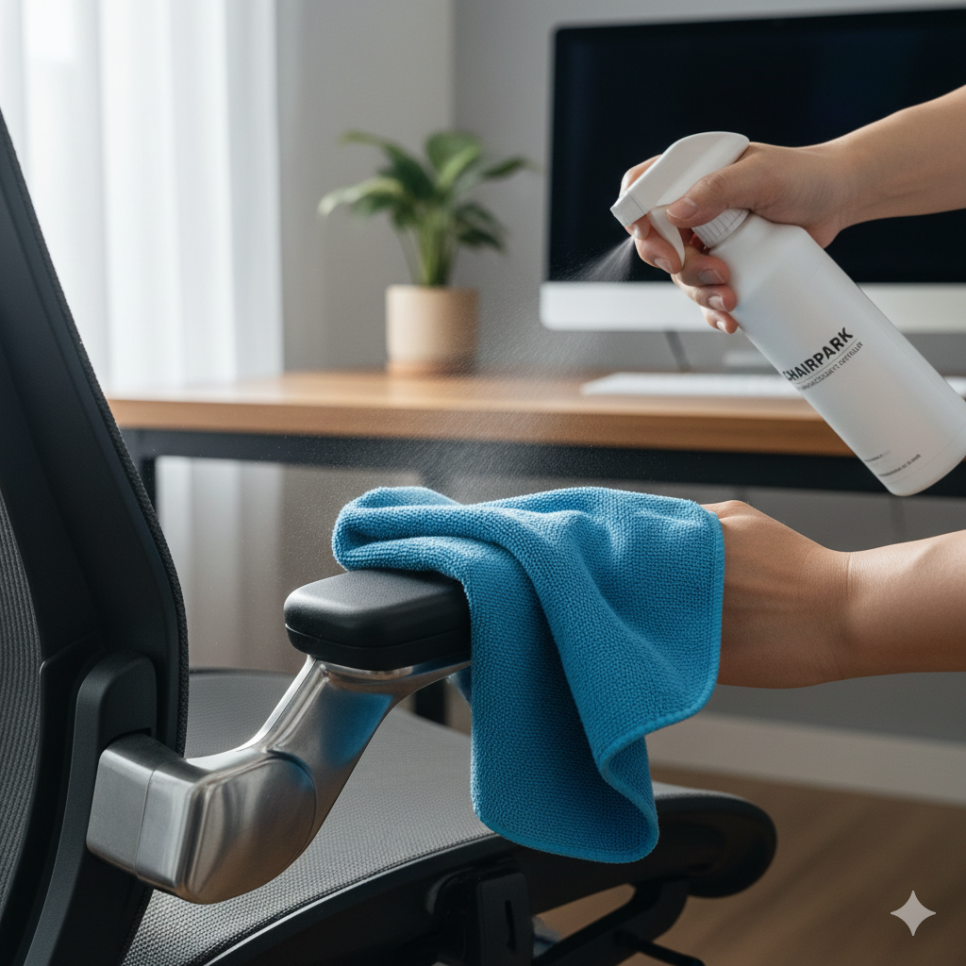
Apply a small amount of alcohol-free cleaner to a microfiber cloth—never spray directly onto the chair
Wipe down all frame surfaces, armrests, and the base structure
Buff with a dry microfiber cloth
Pro tip: Automotive interior detailing products work exceptionally well here. Many contain anti-static agents that repel dust, keeping your chair cleaner longer between maintenance sessions.
3. Cylinder and Casters: Silence the Squeaks
After five years, many chairs develop that telltale creak when you sit down or roll across the floor. This isn't a sign of structural failure—it's usually just accumulated grime and depleted lubrication in the moving parts.
Caster maintenance:
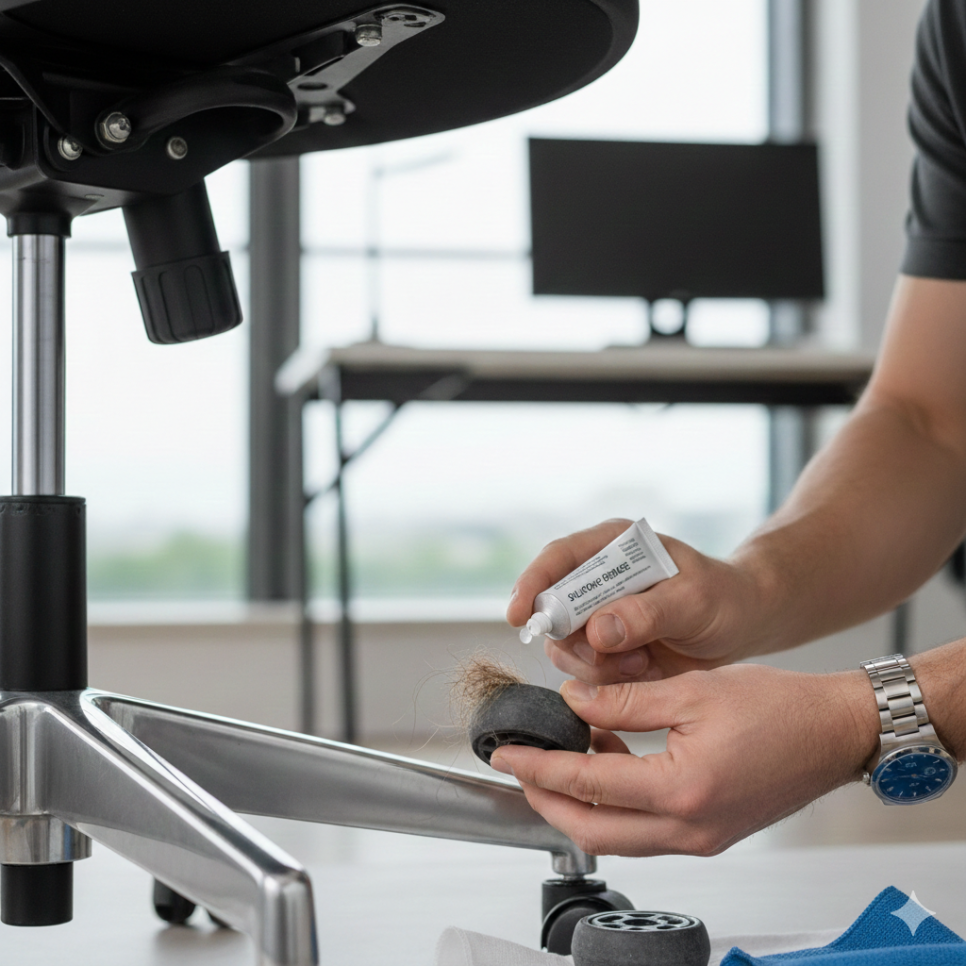
Remove each wheel (most pull straight out or require a flathead screwdriver)
Extract hair, threads, and compacted dust from the wheel axle and housing
Wipe down the wheel bearings before reinstalling
Cylinder lubrication:
Wipe down the exposed portion of the gas cylinder (the chrome post beneath the seat)
Apply a small amount of white lithium grease or silicone spray—not WD-40
Work the chair up and down several times to distribute the lubricant
Important: WD-40 is a solvent, not a long-term lubricant. It strips away existing grease and offers only temporary relief. For lasting results, use proper grease or silicone-based lubricants designed for mechanical joints.
Recognizing When Maintenance Becomes Repair
Even with meticulous care, some issues signal that components have reached the end of their service life. Here's how to diagnose common problems:
Symptom | Likely Cause | Solution |
|---|---|---|
Mesh sagging or loss of tension | Fiber fatigue and elasticity loss | Check warranty; seat pan replacement typically needed after 7-10 years |
Chair won't stay raised | Gas cylinder seal failure | Replace the pneumatic cylinder (universal parts available) |
Armrest wobble | Loosened internal hardware | Tighten all bolts with appropriate hex key; check for stripped threads |
Maintenance Frequency for Long-Term Performance
For chairs in daily use (8+ hours), consider this schedule:
Weekly: Quick vacuum of mesh surfaces, wipe armrests
Quarterly: Deep mesh cleaning, frame detailing
Annually: Full disassembly cleaning of casters, lubrication of all moving parts, bolt check
Every 3-5 years: Professional inspection or manufacturer service (if available)
The Bottom Line
Owning a premium ergonomic chair is an investment in your health and productivity, but that investment only pays dividends if you maintain it properly. A Steelcase Gesture or Humanscale Freedom can easily last 15 years with proper care—or start deteriorating noticeably after just five with neglect.
Take a moment right now to look under your chair. Check the casters, inspect the mesh, and test for any unusual sounds or resistance. A few hours of detailing-grade maintenance today can add years of comfort tomorrow.
Your high-end chair was engineered for longevity. Make sure your maintenance routine lives up to that standard.
Furniblog may earn a commission from links in this post, at no extra cost to you. See our affiliate disclosure.