Knoll Tulip Chair by Eero Saarinen: Design Icon with One Leg
How a visionary architect eliminated the "slum of legs" beneath the dining table
By the Furniblog Editorial Team·July 10, 2026·5 min read
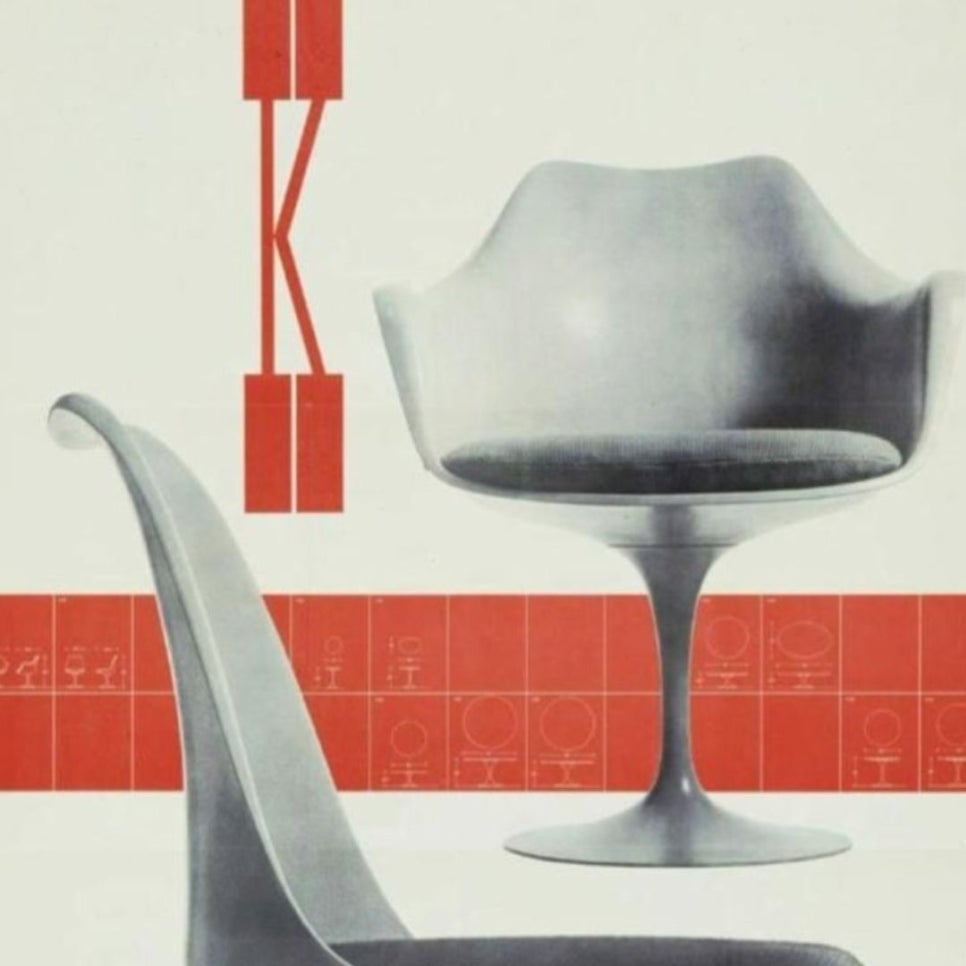
The Masterpiece Built on a Single Leg
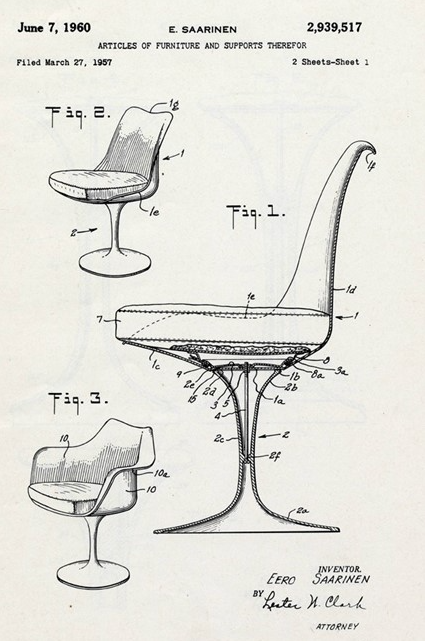
When it comes to Mid-Century Modern interiors, few pieces carry the iconic weight of the Knoll Tulip Chair. Designed by Finnish-American architect Eero Saarinen and launched by Knoll in 1957, this chair transcends furniture—it's a sculpture that belongs in a gallery as much as in your dining room.
The Tulip Chair earned a MoMA Design Award in 1969 and remains part of museum collections worldwide. Its fluid, organic form epitomizes the marriage of curves, new materials, and restrained color that defines Mid-Century Modern design. But behind its serene silhouette lies a fascinating story of obsession, compromise, and innovation.
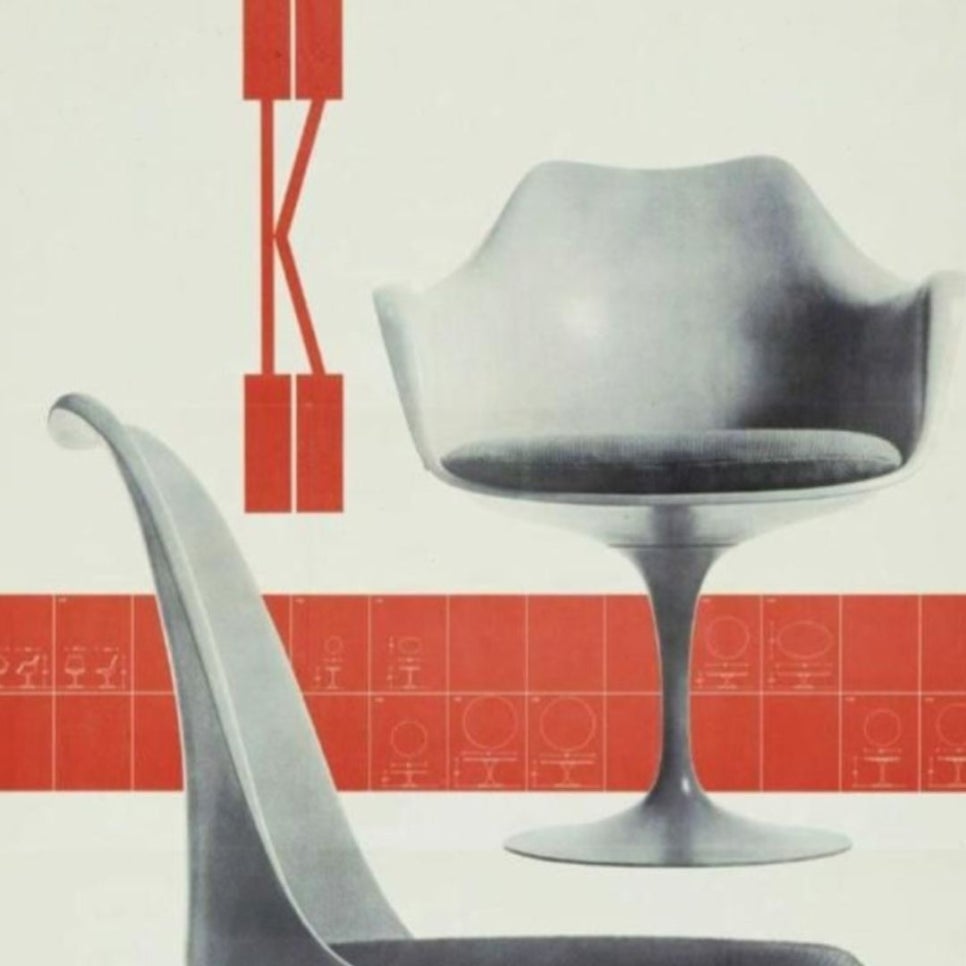
Saarinen's Mission: Eliminate the "Slum of Legs"
Eero Saarinen was troubled by a problem most of us overlook: the visual chaos beneath a dining table. Looking down at a typical setup, he saw a tangle of table legs and chair legs—what he famously called a "slum of legs."
"The underside of typical chairs and tables makes an ugly, confusing, unrestful world. I wanted to clear up the slum of legs. I wanted to make the chair all one thing again."
— Eero Saarinen
This wasn't a passing annoyance. Saarinen spent roughly five years on the problem, producing hundreds of sketches, building dollhouse-scale room models, and hand-sculpting full-size prototypes from clay—a medium he knew well from his early training as a sculptor. He tested early versions in his own dining room, observing family and friends as they sat, moved, and lived with the chairs.
According to Knoll's archives, Saarinen's ambition was clear: chairs had been made with four legs, three legs, even two—but never one. He was determined to create the world's first true single-pedestal chair. The result was initially called the Pedestal Group, but its tulip-like bloom quickly earned it a more poetic name.

The Beautiful Compromise: One Material, or Two?
Here's where the Tulip Chair's story gets especially interesting. Many assume the chair is molded from a single material in one seamless piece. In reality, it's a brilliantly disguised hybrid—and that "failure" became part of its genius.
Saarinen's original vision was to cast the entire chair in fiberglass-reinforced plastic, achieving true material unity. But during testing, the lightweight plastic pedestal base couldn't support the weight of a seated person; prototypes kept snapping at the stem.
Faced with this engineering limit, Saarinen made a pragmatic decision: the upper shell (seat and backrest) would remain molded fiberglass-reinforced plastic, while the pedestal base would be cast aluminum—a much heavier, stronger material. To preserve the visual illusion of a single material, the aluminum base was coated with Rilsan (a polyamide finish) and color-matched precisely to the shell.
The result? A chair that looks like one continuous form but is actually a marriage of two materials. Even the Metropolitan Museum of Art notes in its collection description: "Though it appears to be a single material, the seat is plastic and the stronger base is aluminum." This elegant camouflage is a testament to Saarinen's uncompromising eye and Knoll's manufacturing precision.
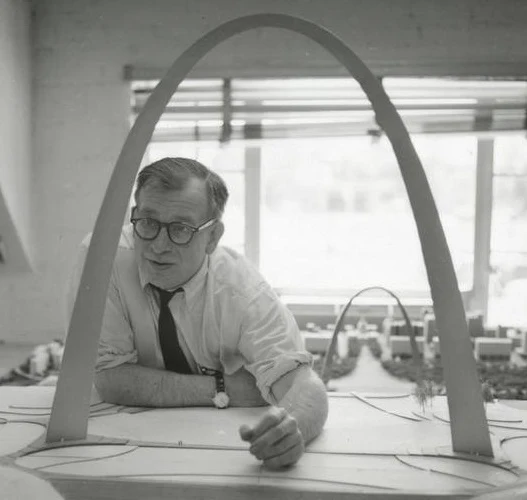
Tulip Chair at a Glance
Designer | Eero Saarinen |
|---|---|
Manufacturer | Knoll |
Year Introduced | 1955–56 design, 1957 production |
Shell Material | Fiberglass-reinforced plastic |
Base Material | Cast aluminum with Rilsan coating |
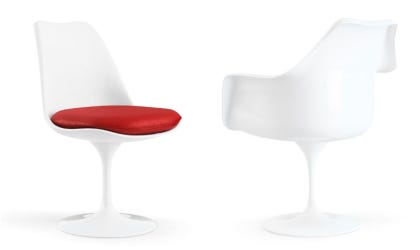
Available Finishes | White, black, platinum (base); various upholstery options for seat cushion |
Configurations | Armchair, armless (side chair), swivel and fixed base |
Award | MoMA Design Award, 1969 |
Why the Tulip Chair Works in Any Space
Dining Rooms
The Tulip Chair was born for the dining table—especially round tables. Pairing these chairs with a pedestal dining table creates the clean, uncluttered underspace Saarinen dreamed of. The lack of traditional legs makes the room feel lighter, more spacious, and visually calm. If you've ever stubbed your toe navigating a forest of chair legs, you'll immediately appreciate the difference.
Living Rooms and Studies
A single Tulip Chair can anchor a corner, reading nook, or entryway. Add a bold cushion—think mustard yellow, cobalt blue, or burnt orange—and you've created an instant focal point. The chair's sculptural presence means it works beautifully as a standalone object, requiring little else to complete the look.
The Space Age Aesthetic
With its smooth, unbroken curves and futuristic silhouette, the Tulip Chair is often associated with Space Age design. It evokes optimism, innovation, and the mid-20th-century fascination with new materials and forms. That makes it perfect for anyone building a retro-futuristic or atomic-era inspired interior.
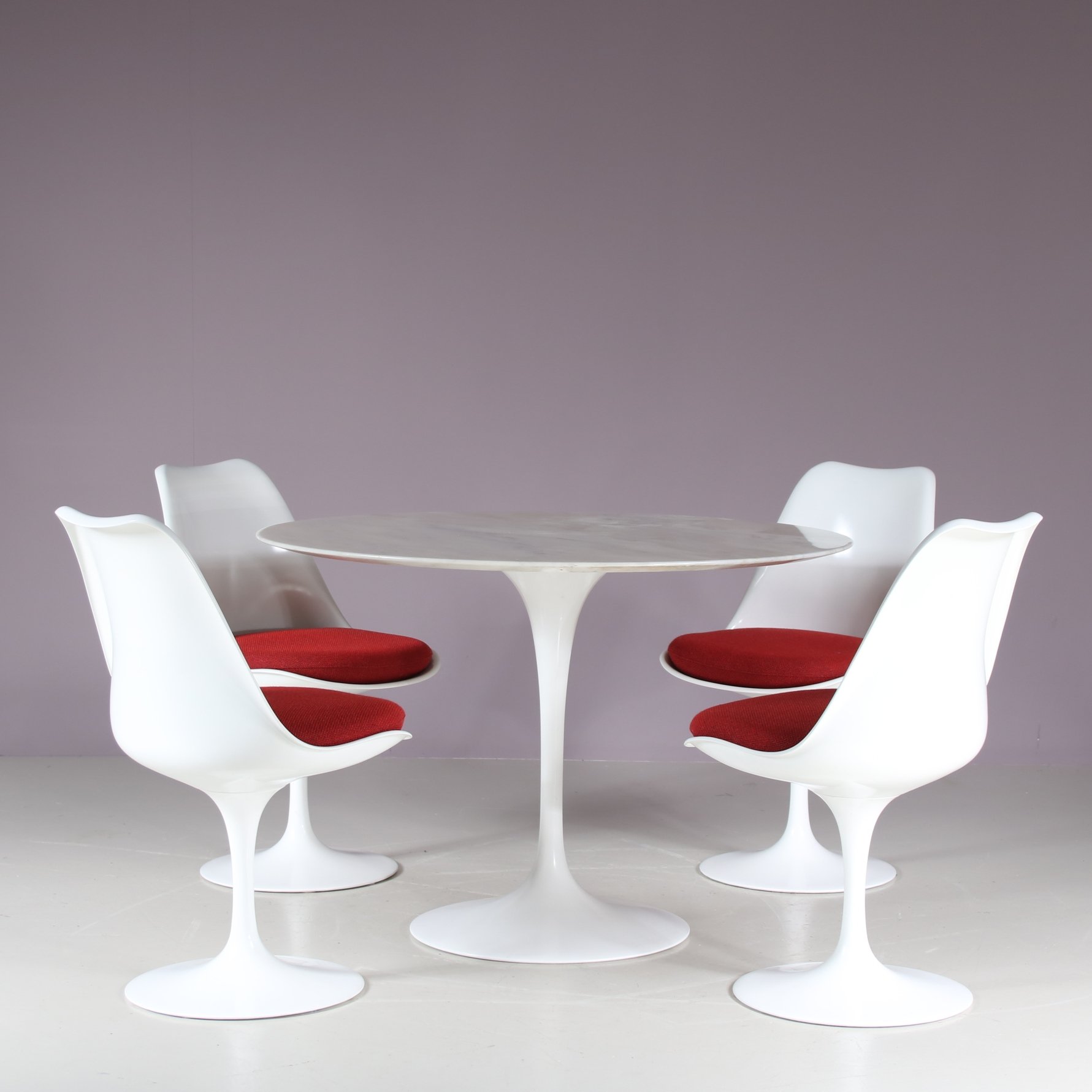
How to Spot an Authentic Knoll Tulip Chair
The Tulip Chair's fame has spawned countless replicas and knockoffs. Prices vary wildly, so knowing how to identify a genuine Knoll original is essential if authenticity and longevity matter to you.
Key Authentication Points
Knoll logo and Saarinen signature: Authentic chairs feature the Knoll trademark and Eero Saarinen's signature embossed on the underside of the seat and base. No signature? Red flag.
Base weight: Genuine bases are solid cast aluminum and noticeably heavy. Replicas often use lightweight plastic, hollow metal, or thin plating.
Rilsan coating quality: The finish on an original base is smooth, uniform, and durable. Cheap copies may have uneven paint, visible seams, or coatings that chip easily.
Proportions and curves: The flow from pedestal to seat is a precise, elegant curve. Knockoffs often get the proportions slightly wrong—the seat may sit too high, the stem too thick, or the flare too abrupt.
Ultimately, photographs can only tell you so much. The surest way to distinguish a real Tulip Chair from a replica is to see it, sit in it, and feel the quality in person.
A Design That Transcends Trends
More than six decades after its debut, the Tulip Chair remains a cornerstone of modern furniture design. It's a chair that solved a problem, pushed material boundaries, challenged manufacturing norms, and—most importantly—created beauty that endures.
Saarinen may not have achieved his dream of a true single-material chair, but in compromise he found something better: a design so cohesive and confident that the illusion became the reality. The "slum of legs" is gone. In its place stands a pedestal—and on it, a work of art you can sit on.
For more iconic seating from the same era, explore the Knoll Womb Chair, the Herman Miller Eames Lounge Chair, or the Fritz Hansen Egg Chair—each a masterpiece in its own right.
Furniblog may earn a commission from links in this post, at no extra cost to you. See our affiliate disclosure.