Knoll Tulip Chair by Eero Saarinen: The Story Behind a Mid-Century Icon
How a single-pedestal design became the solution to the "slum of legs"
By the Furniblog Editorial Team·July 6, 2026·5 min read
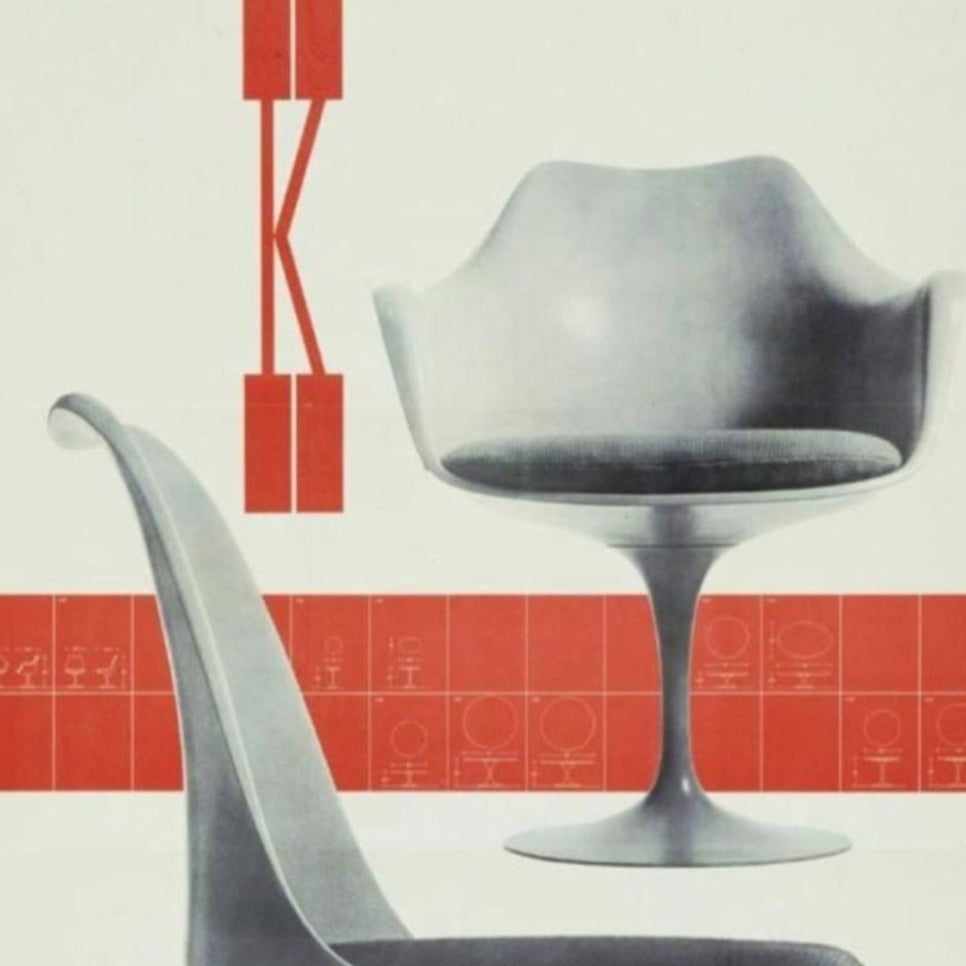
Mid-century modern design has become one of the most beloved styles in contemporary interiors, and for good reason. Its sinuous curves, innovative materials, and restrained color palettes transform any room into an instant gallery space. At the very heart of this movement sits one of its most recognizable works: the Knoll Tulip Chair, designed by Finnish-American architect Eero Saarinen.
This isn't just a chair—it's a sculpture that happens to be functional. Awarded a design prize by New York's Museum of Modern Art (MoMA) in 1969, the Tulip Chair remains a permanent fixture in museum collections worldwide and continues to captivate designers and homeowners alike.
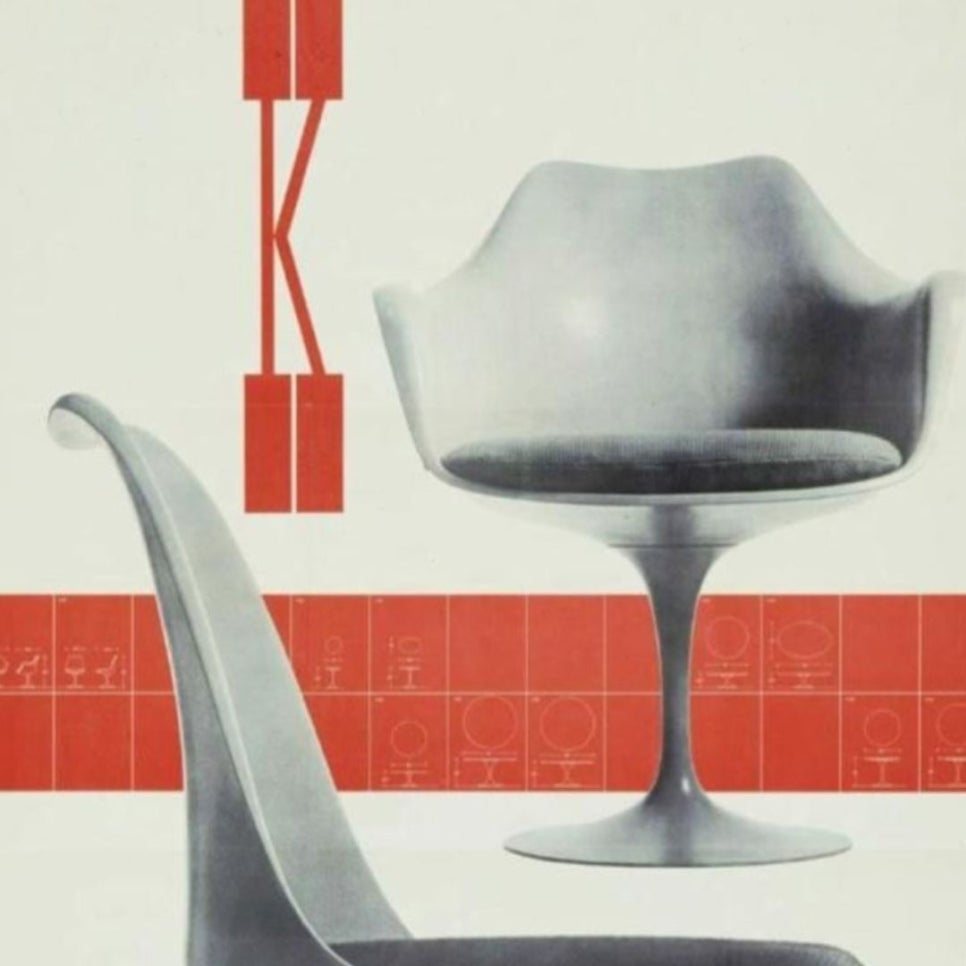
The Architect's Frustration: Eliminating the "Slum of Legs"
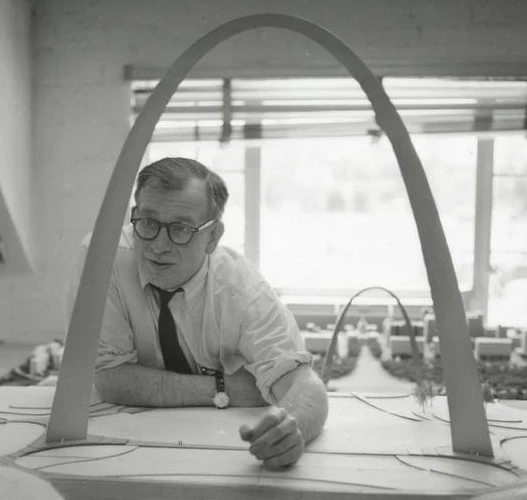
The Tulip Chair's origin story begins not with inspiration, but with irritation. Eero Saarinen, trained as both an architect and sculptor, felt a visceral discomfort every time he looked beneath a dining table. The tangle of table legs and chair legs struck him as visual chaos—an unorganized clutter he famously called the "slum of legs."
"The underside of typical chairs and tables makes a confusing, unrestful world. I wanted to clear up the slum of legs. I wanted to make the chair all one thing again."
— Eero Saarinen
Saarinen didn't approach this problem casually. He spent roughly five years in relentless exploration: hundreds of sketches, dollhouse-scale room mockups, and full-size clay models that he carved and refined with a sculptor's precision. He even installed prototypes in his own dining room, enlisting family and friends as test subjects to evaluate comfort and proportion in real-world use.
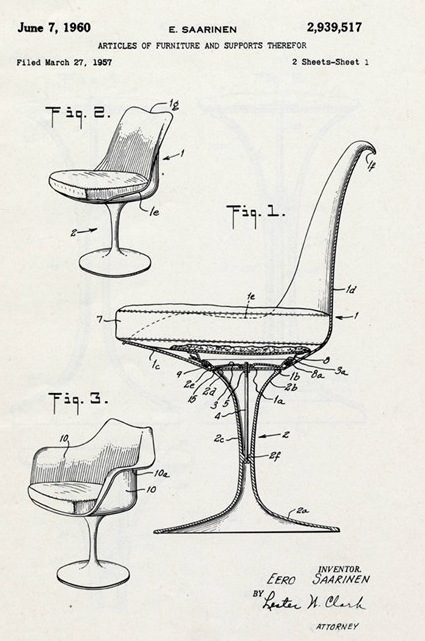
According to Knoll's archives, the design team's ambition was audacious: "There are four-legged chairs, three-legged chairs, even two-legged chairs. But no one has ever made a one-legged chair. So we will." The result was the world's first single-pedestal chair—initially known as the Pedestal Group, though its graceful, bloom-like form soon earned it the nickname we know today: the Tulip Chair.

The Beautiful Compromise: Why It's Not Really One Material
Here's where the Tulip Chair's story becomes even more fascinating. Many assume the chair is molded from a single, seamless piece of material. In truth, the elegant "unity" we see is the result of an ingenious compromise—one that reveals Saarinen's pragmatism alongside his perfectionism.
Saarinen's original vision was to cast the entire chair in fiberglass-reinforced plastic, creating a true monolithic form. But during testing, the lightweight fiberglass base couldn't support human weight reliably—prototypes kept breaking under load.
Rather than abandon the concept, Saarinen adapted. The seat shell and backrest remained fiberglass composite (light, ergonomic, easily molded), while the pedestal base was reengineered in cast aluminum for structural strength. To preserve the visual illusion of a single material, the aluminum base is coated with Rilsan (a durable polyamide finish) and color-matched precisely to the shell.
As the Metropolitan Museum of Art notes in its collection description: "Though it appears to be a single material, the seat is molded plastic while the sturdier base is aluminum." This "beautiful deception" is central to the chair's genius—what looks like a unified sculpture is actually a marriage of engineering and aesthetics, born from a dream the designer couldn't fully realize with 1950s technology.
Why the Tulip Chair Still Transforms Spaces Today
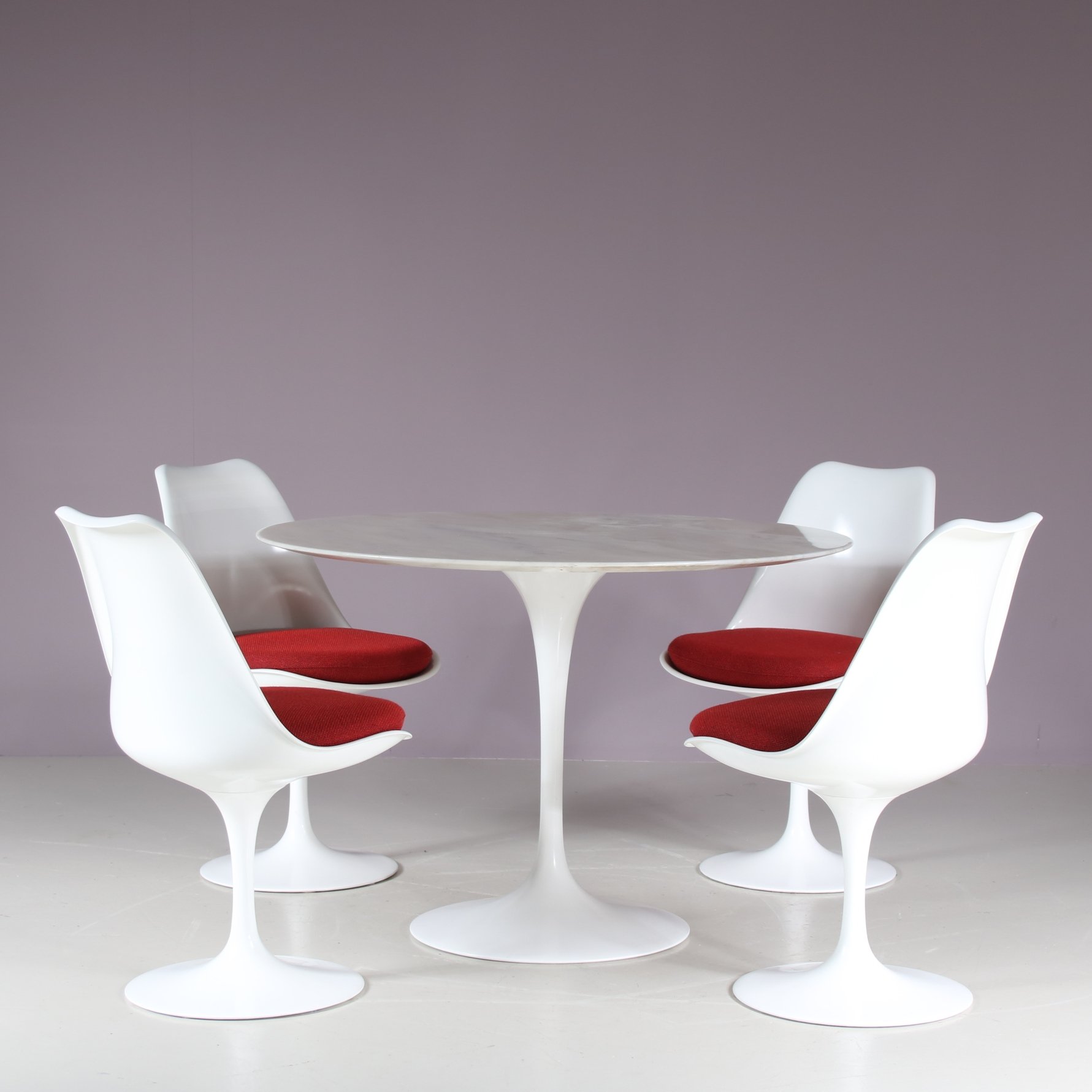
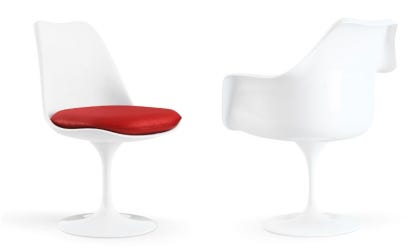
The Tulip Chair contains not a single straight line. Every surface is a continuous curve, lending it visual stability from any angle and allowing it to function as a sculptural object wherever it's placed. Its futuristic silhouette became synonymous with the Space Age aesthetic of the 1960s—and it remains timelessly modern today.
In the Dining Room
Pair Tulip Chairs with a round pedestal dining table (Saarinen also designed a matching Tulip Table), and the effect is transformative. The single-stem bases eliminate the visual clutter beneath the table, making the floor plane feel open and airy. This is exactly the clarity Saarinen sought—no more "slum of legs," just clean, uninterrupted space.
In Living Rooms and Studies
Even a single Tulip Chair in an empty corner, accented with a bold cushion in red, blue, or mustard, can anchor a room's design vocabulary. It's a shortcut to mid-century sophistication—an interior design "cheat code" for those who want instant style without fuss.
How to Spot an Authentic Knoll Tulip Chair
Because the Tulip Chair is so iconic, the market is flooded with knock-offs, replicas, and budget reproductions. Price differences are significant, so if authenticity matters to you—whether for resale value, build quality, or design integrity—here's what to check:
Authenticity Checklist
Signature and logo: Genuine Knoll Tulip Chairs have the Knoll logo and Eero Saarinen's signature embossed on the underside of the seat and/or the bottom of the base. No signature? Be skeptical.
Base weight: The authentic pedestal base is solid cast aluminum and feels substantial. Reproductions often use lightweight plastic or thin metal with plating.
Rilsan coating: The finish on a real Knoll base is thick, even, and durable. If the coating feels thin, uneven, or flakes easily, it's likely a copy.
Curve proportions: The transition from stem to seat—the tension and flow of that curve—is the hardest detail to replicate. It's subtle, but once you see an original in person, copies look "off."
These nuances are nearly impossible to judge from photos alone. The best way to verify authenticity—and to truly appreciate the chair's design—is to see it, sit in it, and handle it in person.
Final Thoughts: A Masterpiece That Rewards Close Inspection
The Knoll Tulip Chair is more than a piece of furniture. It's a distillation of mid-century modernism's core values: form follows function, simplicity is strength, and great design solves real problems. Saarinen didn't just want to make a pretty chair—he wanted to bring visual order to the everyday chaos beneath our tables.
What makes the Tulip Chair endure is not just its looks, but the story woven into its curves: a designer's frustration, years of iteration, a pragmatic compromise disguised as perfection, and a vision so strong it still feels contemporary more than 60 years later.
If you're drawn to mid-century modern design or simply want a statement piece that elevates your space effortlessly, the Tulip Chair remains one of the best investments you can make—especially if you choose the real thing.
Furniblog may earn a commission from links in this post, at no extra cost to you. See our affiliate disclosure.