Kokuyo Ing Cloud Review: The Office Chair Designed to Make You Forget You're Sitting
Eight years in development, this flagship chair redefines comfort with gravity-based gliding
By the Furniblog Editorial Team·July 13, 2026·7 min read
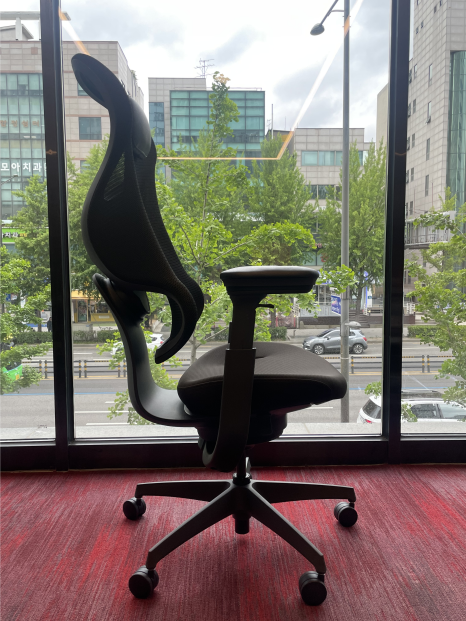
In late 2025, Japanese furniture giant Kokuyo released the flagship of its Ing series: the Ing Cloud, an office chair eight years in the making. Its stated mission? To make you forget the chair exists.
That might sound like marketing hyperbole, but according to Kokuyo's design team and early adopters, the Ing Cloud achieves something rare in the ergonomic seating category: a sense of weightlessness that comes not from aggressive lumbar support or complex adjustments, but from a fundamentally different approach to how a chair responds to the human body.
The Philosophy Behind the Ing Series
Kokuyo introduced the original Ing chair in 2017 under a radical premise: "liberate sitting." Where most office chairs are designed to lock the body into an ergonomically correct position, the Ing series does the opposite. It encourages movement.
The philosophy stems from human physiology. Our bodies have more than 360 joints and roughly 700 skeletal muscles—systems that are designed to move. Keeping them static, even in a "correct" posture, can inhibit circulation and reduce neural activity. The Ing was built to let your body shift naturally throughout the day, activating those systems rather than suppressing them.
The Ing Cloud, released in December 2025, represents the culmination of that vision. But it also reflects a pivot: rather than simply maximizing motion, the Cloud prioritizes the ability to relax into the chair—what Kokuyo calls "a sense of being enveloped rather than merely seated."
Eight Years of Iteration
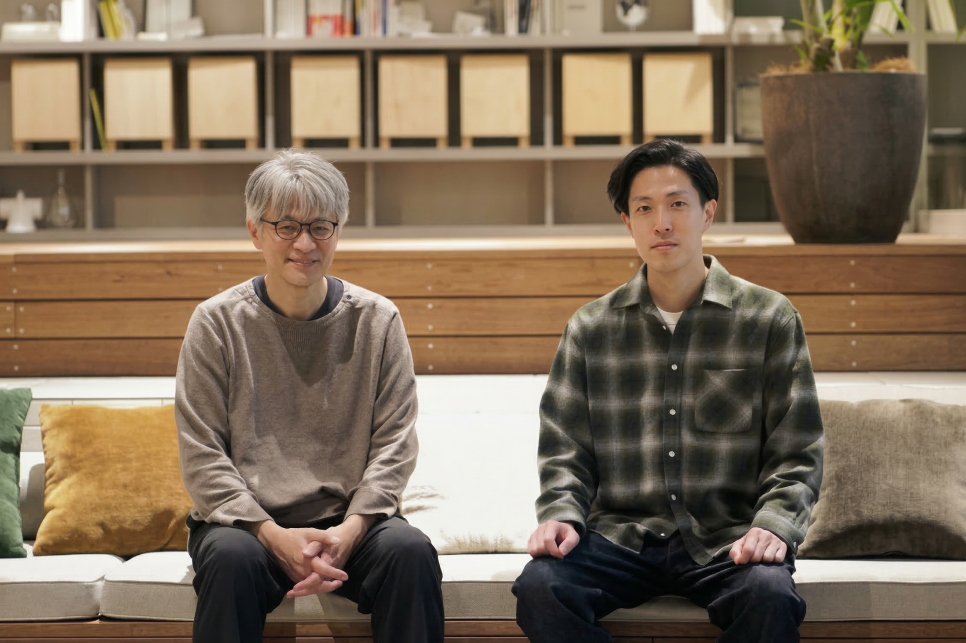
Lead designer Yojiro Kinoshita revealed that development on the Ing Cloud began almost immediately after the original Ing launched. The core challenge? Engineering a chair that balances the user's weight using gravity alone—no springs, no gas cylinders in the backrest—while maintaining stability across a wide range of body types and postures.
"Because the structure relies entirely on the body's center of gravity, changing one element affects everything else. A minor tweak to the seat pan shape would shift the balance point and destabilize the entire mechanism. We repeated micro-adjustments right up until the mold was finalized."
Then the COVID-19 pandemic changed everything. As remote work surged in 2020, Kokuyo gathered feedback from thousands of new work-from-home users. What they found was surprising: people didn't want a chair that moved more—they wanted a chair they could trust to support them all day without thinking about it.
That insight led to a design pivot. The Ing Cloud's development shifted from maximizing dynamic motion to maximizing comfort and body-conforming support. The result is a chair that moves with you, but never feels unstable or forced.
Core Technology: 3D Ultra Auto Fit
At the heart of the Ing Cloud is Kokuyo's proprietary 3D Ultra Auto Fit mechanism, a spring-free system that uses gravity and distributed pivot points to allow the chair to glide in three dimensions. It consists of three integrated systems:
Seat Gliding
The seat pan can tilt and shift 360 degrees in response to even subtle body movements. Unlike a traditional synchro-tilt, which pivots on a fixed axis, the Ing Cloud's seat follows your center of gravity fluidly.
Backrest Gliding
The backrest moves in tandem with the seat, shifting forward, backward, left, and right. This creates a sensation of the chair "following" your torso rather than pushing back against it.
Armrest Gliding
Each armrest can move independently in height and rotation, allowing your arms to rest naturally without restricting torso motion. The armrests themselves are cushioned with a soft, almost marshmallow-like padding—a rare touch in task seating.
All three systems work together without springs or resistance mechanisms. When you shift your weight, the chair glides. When you settle, it settles. The movement is intuitive and requires no conscious effort. A two-position lock is available if you prefer a stationary mode.
Frameless 3D Mesh Backrest
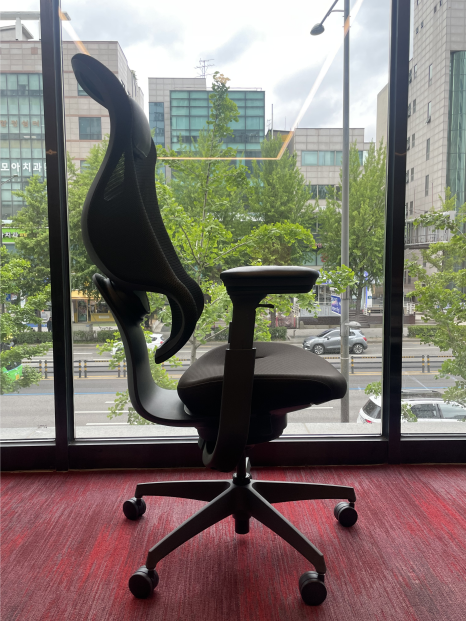
Traditional mesh office chairs stretch fabric across a rigid frame, often creating pressure points where the frame contacts your shoulders or sides. The Ing Cloud eliminates the side frame entirely.
Instead, the mesh is molded into a three-dimensional surface that curves inward at the center. Even before you sit down, the backrest has depth and shape—like a hammock suspended in air. When you lean back, your entire back is supported evenly across a broad, frameless surface.
The lower back area does have an underlying frame for pelvic stability, but your shoulders remain completely free. This design reduces the "caged" feeling common in heavily structured ergonomic chairs and allows for broader lateral movement.
Standout Design Features
Marshmallow Headrest
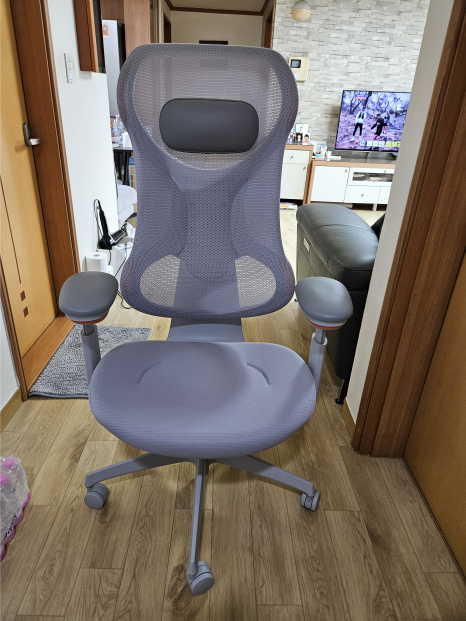
The headrest combines a thin cushion layer over mesh, creating a soft, memory foam-like feel that doesn't push your head forward. It adjusts vertically by 70mm and is one of the most comfortable headrests we've encountered on a task chair.
Wide, Short Seat Pan
The seat is wider than average but shorter front-to-back, eliminating pressure on the back of the knees (the popliteal area). This is especially helpful for users who experience leg numbness during long sitting sessions. The cushion itself is plush and breathable.
Forward Tilt Geometry
The seat pan has a slight forward tilt by design, encouraging the pelvis to rotate forward and the spine to maintain its natural S-curve. This is particularly beneficial when leaning toward a monitor or desk.
Soft, Adjustable Armrests
The armrests adjust in height and can rotate inward. More notably, the padding is exceptionally soft—far beyond the hard plastic or thin foam typical of office chairs. Resting your forearms here for hours is genuinely comfortable.
Who Should Consider the Ing Cloud?
Software developers and engineers: The Ing Cloud was designed with digital workers in mind—people who sit for 8–12 hours a day in front of screens.
Remote workers: If your home office chair causes fatigue or distraction, the Ing Cloud's unobtrusive comfort can significantly improve focus and endurance.
Users with back or neck pain: Kokuyo has stated that one of the motivations for this chair's development was hearing from a user whose prolonged sitting led to the need for a walking cane. The Ing Cloud's design reduces musculoskeletal strain.
Creatives and designers: The micro-movements enabled by the gliding mechanism keep your nervous system gently engaged, which can support sustained creative focus.
Real-World Impressions
One early adopter working from home over 10 hours a day described the experience as "honestly disorienting at first—it felt more like lying in a hammock than sitting in a chair." They noted that there was no hard lumbar support pressing into their back, no headrest pushing their neck forward, and no pressure behind the knees.
Another user highlighted the armrest padding: "Most chair armrests are hard or barely cushioned. These feel different the moment you rest your arms on them."
The overall sentiment? The chair's presence fades into the background. You stop noticing it—and that's the point.
Specifications
Feature | Details |
|---|---|
Manufacturer | Kokuyo, Japan |
Series | Ing Series, 3rd generation flagship |
Release Date | December 2025 |
Mechanism | 3D Ultra Auto Fit (gravity-based, spring-free) |
Gliding System | Triple gliding: seat, backrest, armrests |
Backrest | Frameless 3D molded mesh |
Headrest | Cushion + mesh hybrid, 70mm height adjustment |
Armrests | Height adjustable, inward rotation, soft padding |
Tilt Lock | 2-position gliding on/off switch |
Available Colors | Light Grey, Fit Grey × Sun Orange, Soft Grey, Black |
Headrest Option | With or without |
Awards | Good Design Award, German Design Award, Red Dot 2026 Best of the Best |
Final Thoughts
The Kokuyo Ing Cloud is not a chair you configure—it's a chair you sink into and forget about. There are no aggressive bolsters, no stiff lumbar plates, no hard edges. Instead, there's a kind of intelligent pliability: the chair learns your body, not the other way around.
If you've tried premium ergonomic chairs like the Herman Miller Aeron or Steelcase Gesture and found them too structured or clinical, the Ing Cloud offers a fundamentally different experience—one rooted in softness, movement, and trust.
It's a chair designed for people who sit so long they stop noticing they're sitting. And in that paradox lies its greatest strength.
Furniblog may earn a commission from links in this post, at no extra cost to you. See our affiliate disclosure.