Design Stories
Kokuyo Ing Cloud Review: The Zero-Gravity Office Chair Born from Eight Years of Engineering
How Kokuyo's flagship ergonomic chair eliminates physical noise to unlock deep focus
By the Furniblog Editorial Team·July 5, 2026·5 min read
The Painful Inspiration Behind the Ing Cloud
Great furniture design often begins with a troubling observation. For Kokuyo's design team, that moment came on a Tokyo street outside a high-rise office building, where they witnessed something alarming: young software engineers leaving work unable to stand upright, some leaning on walls, others using canes like elderly patients.
Designers Kinoshita and Maeda learned these engineers spent hours in a state of hyper-focus—coding without moving even a centimeter. During those sessions, their chairs weren't supporting the human body; they were effectively immobilizing it. The very tool designed for comfort had become an instrument of physical breakdown. This paradox became the painful genesis of the Kokuyo Ing Cloud.
Born to Move: 360 Joints, 700 Muscles
Kokuyo's response was rooted in human anatomy. The body contains 360 joints and over 700 muscles—a system engineered for movement, not stasis. Yet the average office worker sits for seven hours a day, and Japan ranks among the world's most sedentary nations. Prolonged static posture doesn't just stiffen muscles; it reduces blood flow and diminishes brain activity.
Kokuyo reframed the problem: good posture isn't a fixed position—it's continuous micro-movement. To achieve this required abandoning convention. Most office chairs use metal springs to support weight and return the backrest. But springs create resistance, a subtle but constant "noise" that tenses muscles and disrupts focus. Kokuyo set out to eliminate springs entirely, relying solely on gravity and body weight. It would take eight years.
Eight Years of Development: From Ing to Ing Cloud
Why It Took So Long
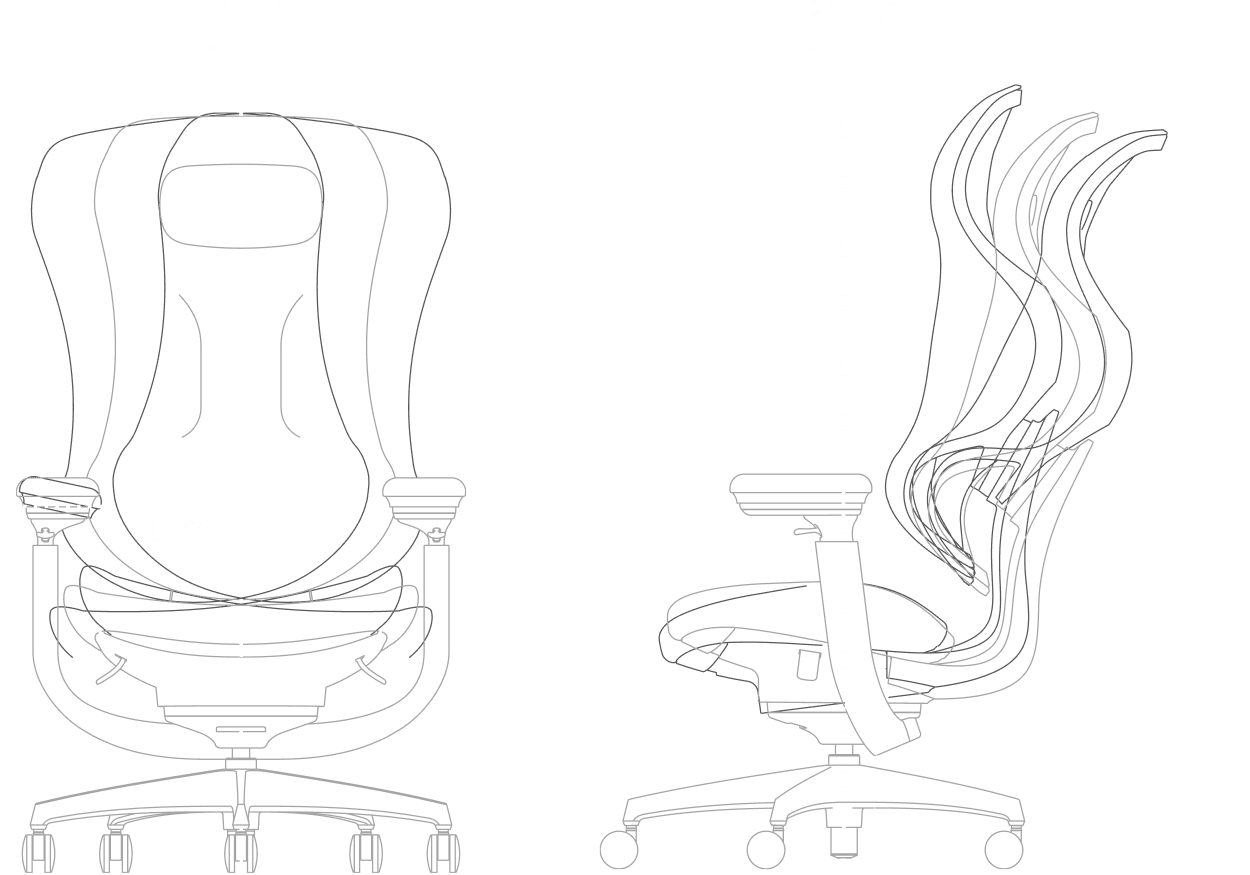
Eight years is extraordinary in furniture development. Kokuyo endured this marathon to perfect a spring-free gliding mechanism that responds to the user's slightest shift—even the expansion of the ribcage during breathing—without pushing back. Tens of thousands of simulations and prototypes later, the original Kokuyo Ing debuted in 2017.
The Evolution of the Ing Series
Kokuyo Ing (Office): Proved that simply sitting could burn calories equivalent to walking 1.5 kilometers, liberating office workers from postural rigidity.
Ing Life (Home): Extended healthy movement into living rooms and home offices as remote work blurred the line between professional and personal space.
These models validated the link between movement, creativity, and health. The Ing Cloud, launched in 2025, represents the flagship synthesis of all that research.
Why Now? The Pursuit of Immersion
User feedback revealed something unexpected: the freedom to move didn't just improve comfort—it deepened concentration. Kokuyo saw an opportunity to go further, erasing every trace of physical distraction to enable what they call "deep work." To do so, they redesigned the mechanism from scratch, culminating in the triple gliding system that tracks the body in 360 degrees.
Zero-Presence Engineering: The Technology Behind Weightlessness
Triple Gliding System
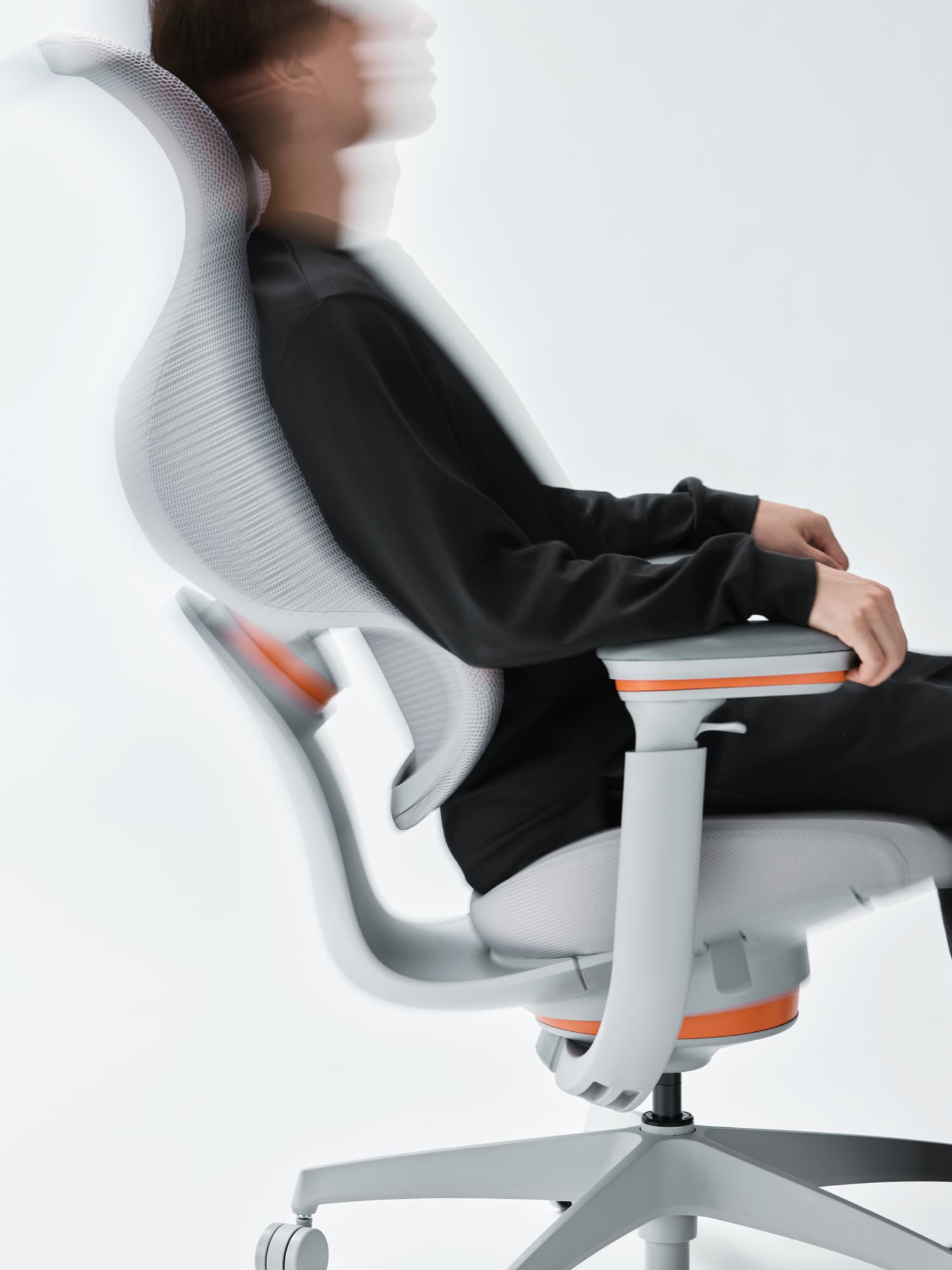
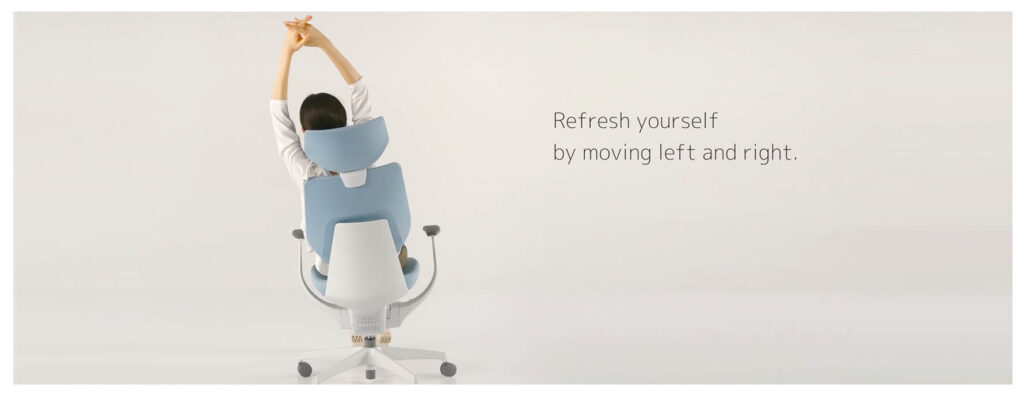
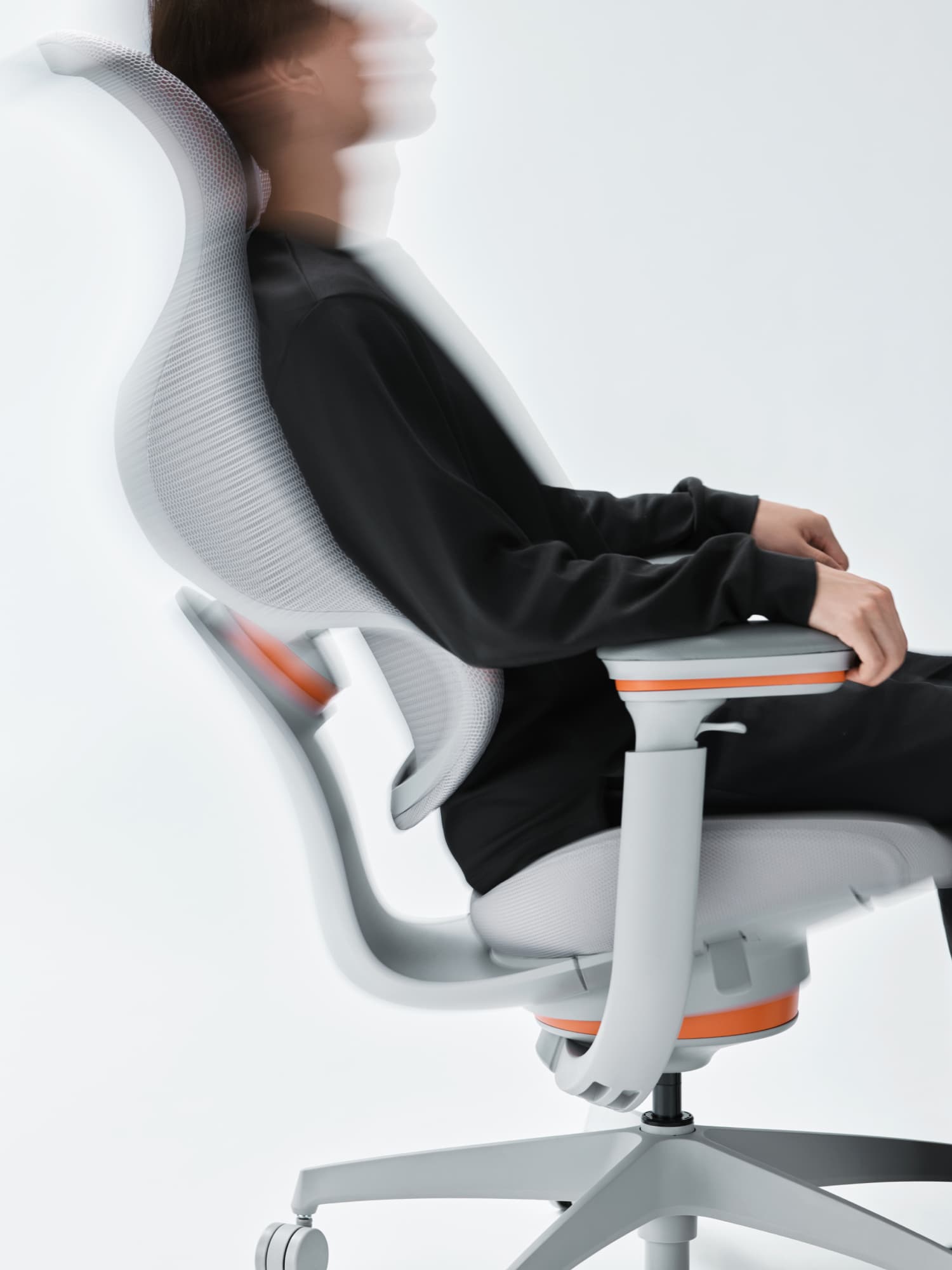
While the original Ing focused on gliding beneath the seat pan, the Ing Cloud adds synchronized motion at the backrest and armrests—three independent gliding zones working in concert. Lean forward toward your screen, and the seat tilts while the armrests follow your elbow angle; the backrest breathes with your torso. The chair becomes an extension of your skeleton, not a rigid platform.
Engineers tuned tolerances to within 0.1 millimeters to eliminate any perceptible lag or friction, creating seamless, unconscious support.
3D Hammock Mesh: Frameless Freedom
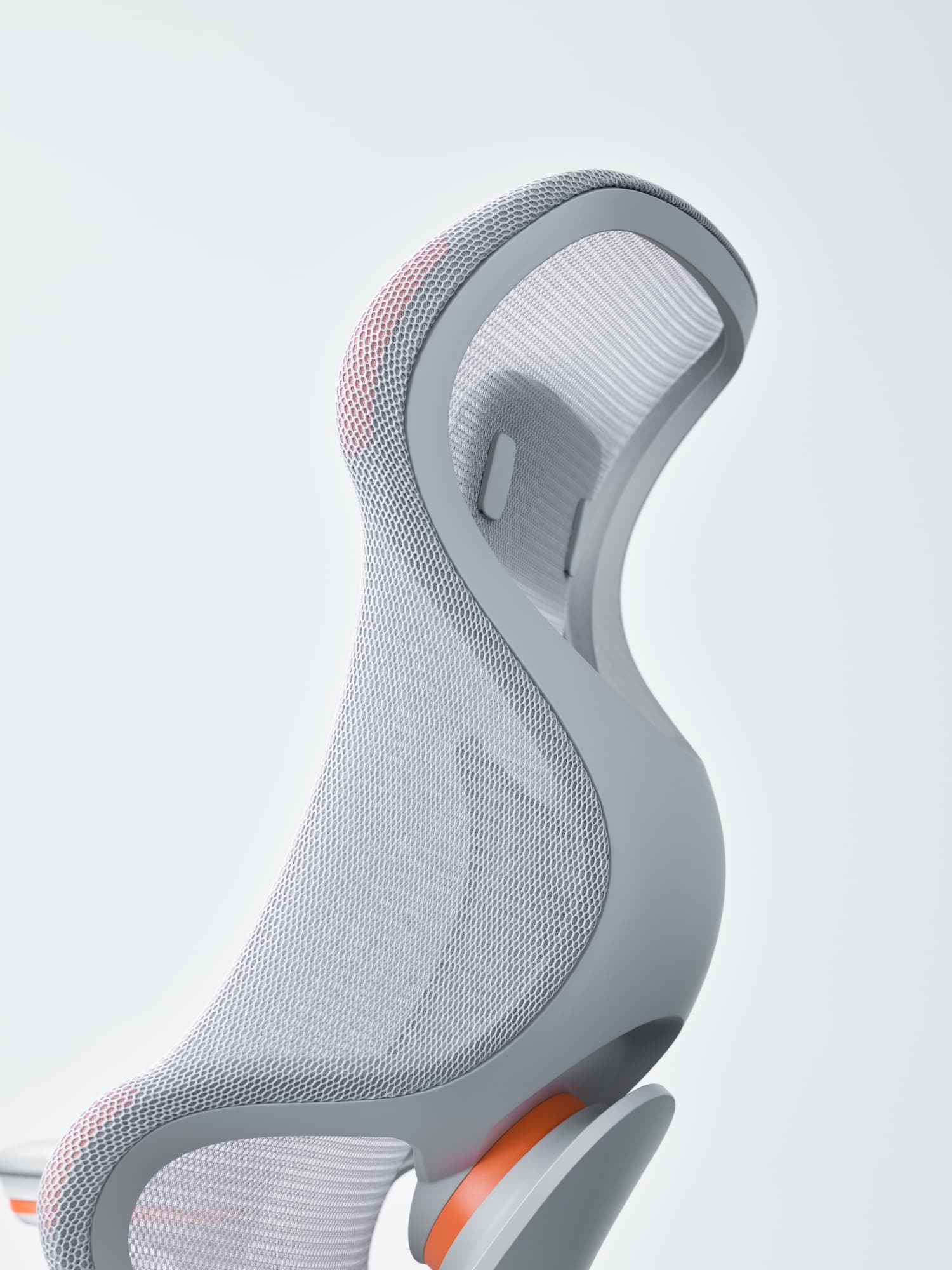
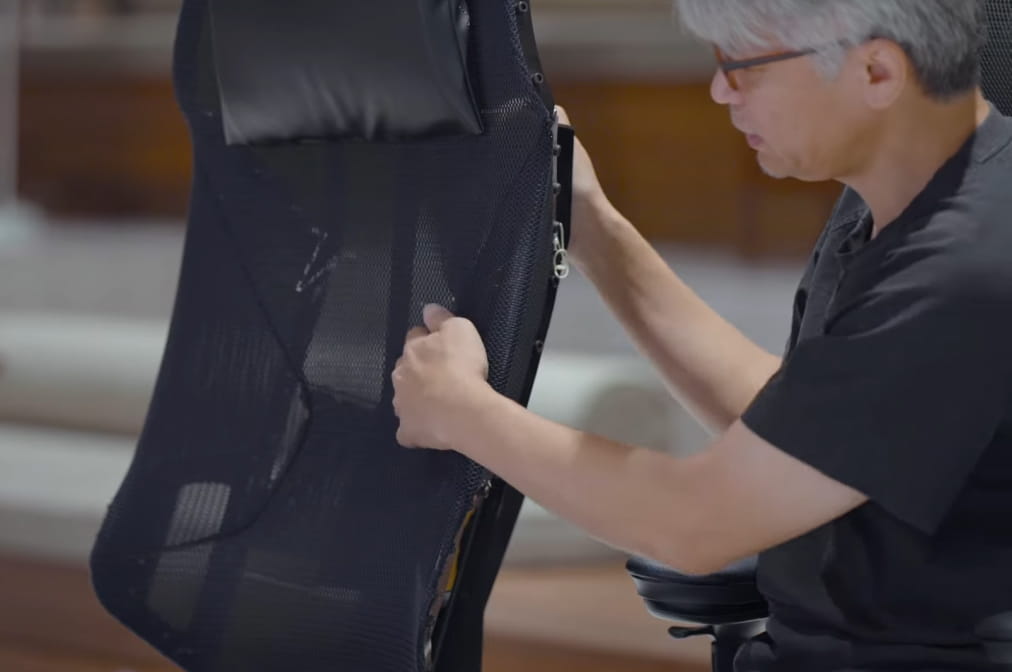
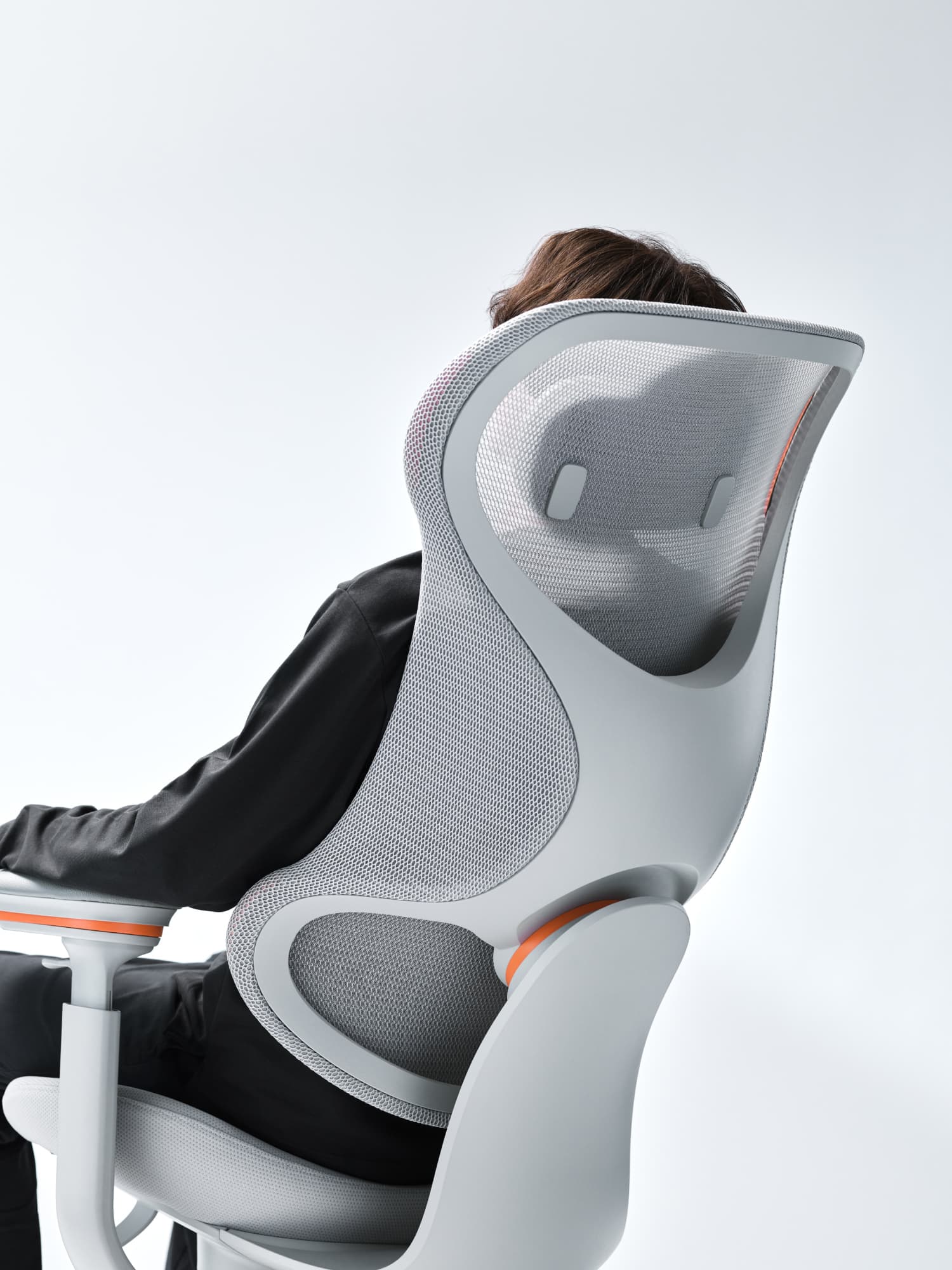
Most mesh chairs use a rigid left-right frame to tension the backrest fabric. But that frame can press into shoulders and restrict upper-body movement. The Ing Cloud boldly removes the side frames, replacing them with a 3D hammock mesh that wraps around the user's back like a suspended net.
Without the frame's interference, the backrest adapts three-dimensionally to each user's shape, delivering what Kokuyo calls a "floating" sensation. Lower lumbar support comes from carefully engineered tension at the base of the mesh, eliminating the need for separate adjustable lumbar pads.
Pressure Distribution: The Data
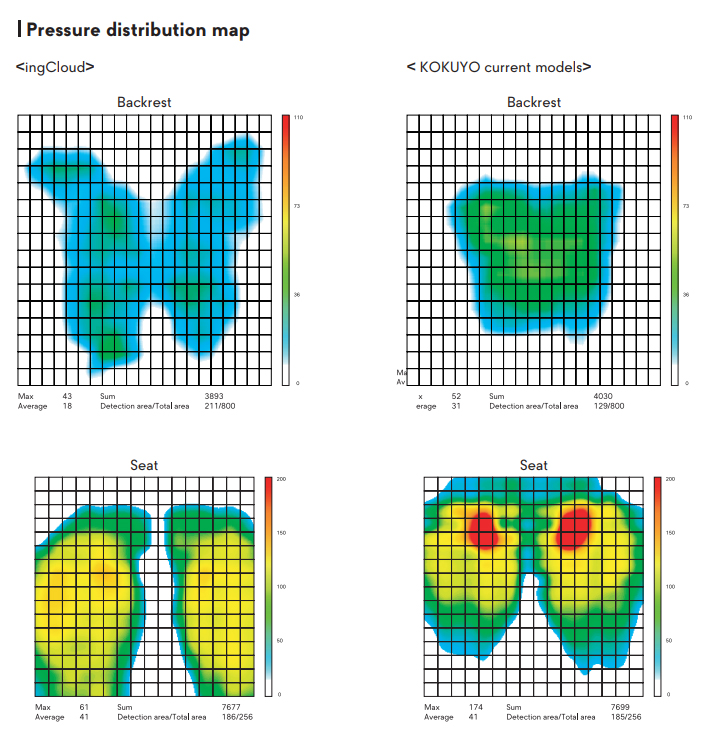
Kokuyo's lab testing measured contact pressure across the backrest. Traditional chairs registered peak values around 110 units; the Ing Cloud brought that down to 43—a 60% reduction. Pressure spreads evenly rather than concentrating in hot spots, producing a near-zero-gravity feel that frees the brain from constant low-level discomfort.
The User Experience: Wearing, Not Sitting
From Sitting to Wearing
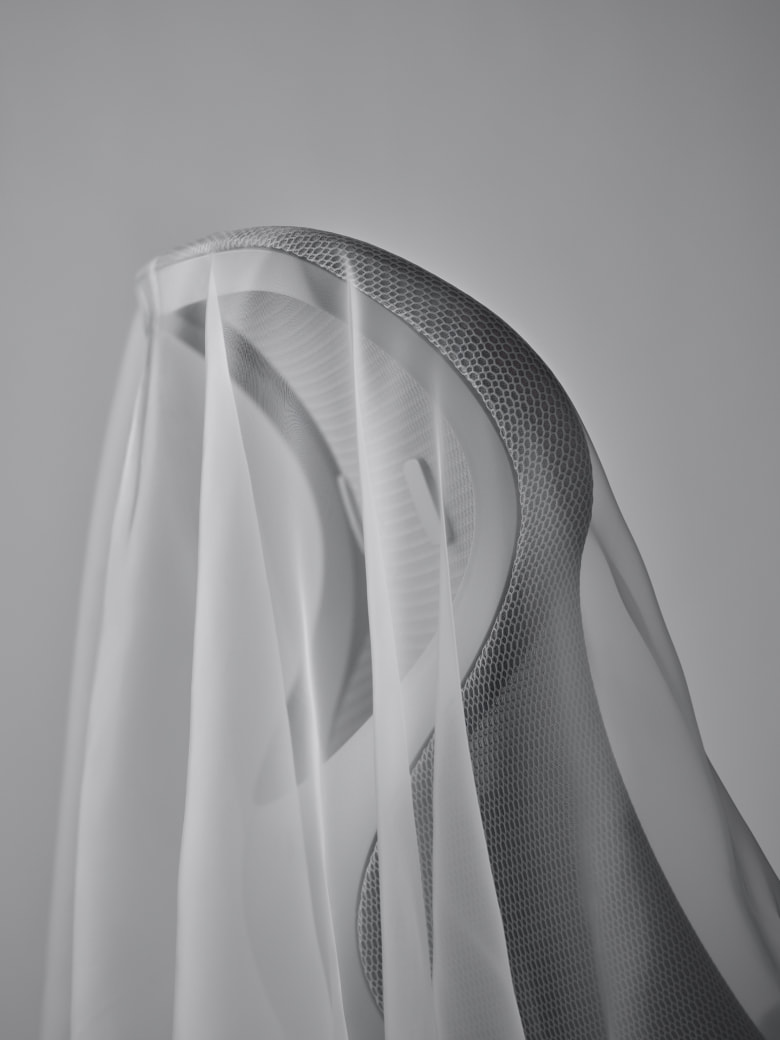
Kokuyo's designers describe the Ing Cloud experience as wearing rather than sitting. The chair doesn't demand that you conform to it; it conforms instantly and continuously to you. Like a tailored garment or a second skin, it vanishes from conscious awareness, leaving only thought and creativity.
Why Professionals Are Obsessed
For programmers, designers, and writers—users for whom a single lapse in focus can derail hours of work—the Ing Cloud's noise-free support is transformative. Whether hunched over a HHKB mechanical keyboard or leaning back to sketch ideas, the chair shadows every micro-adjustment without resistance, sustaining the flow state that defines deep work.
A Chair You Can't Leave Behind
Kokuyo's tagline is provocative: "You can't go back to other chairs." It's not marketing hyperbole. After experiencing eight years of gravitational research distilled into a single seat, the body adapts—and ordinary chairs feel restrictive, even punishing, by comparison.
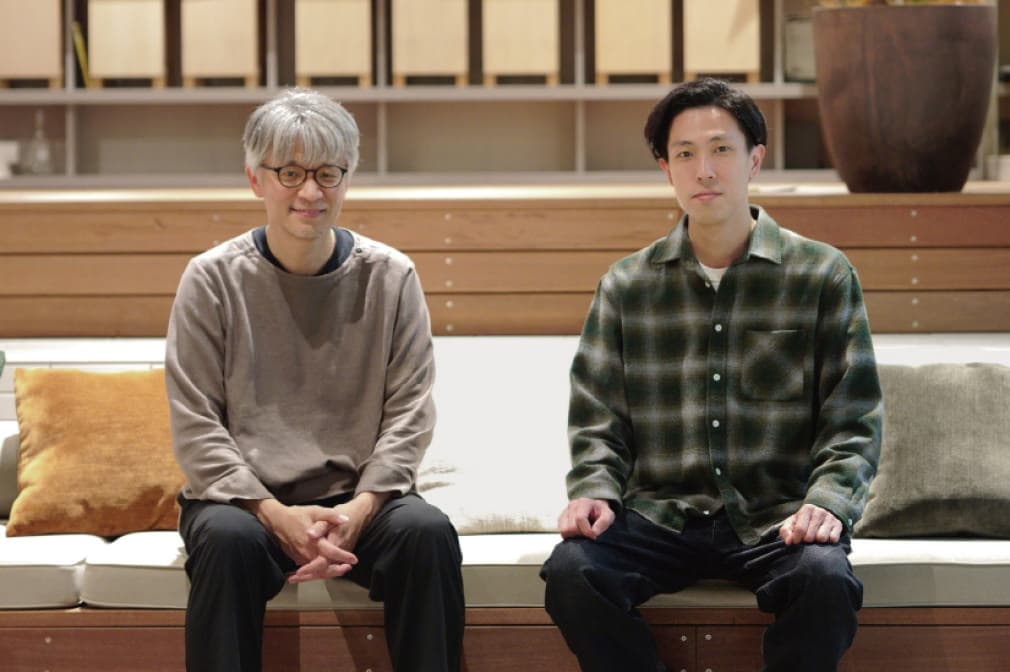
Kokuyo ing Cloud designers: Yojiro Kinoshita (left) / Ryoma Maeda (right)
Where Movement Meets Craftsmanship
The journey that began with engineers limping out of an office building has culminated in a chair that restores the body's natural rhythm. The Ing Cloud doesn't just support you—it disappears, leaving only your work, your ideas, and your uninterrupted immersion.
If you've struggled with back pain during long sessions, felt distracted by pressure points, or simply never found a chair that "gets out of the way," the Kokuyo Ing Cloud represents a fundamentally different approach: zero resistance, infinite adaptation, and the sensation of floating through your workday.
For those seeking similarly advanced ergonomic seating, consider exploring the Kokuyo Duora for dual-backrest support or the Okamura Sylphy for another Japanese take on adaptive movement.
Final Thoughts
The Kokuyo Ing Cloud isn't simply an office chair—it's the answer to a question most of us didn't know to ask: what if sitting could feel like nothing at all? Eight years of obsessive refinement, thousands of prototypes, and a commitment to eliminating every trace of mechanical resistance have produced a chair that moves with you, breathes with you, and ultimately vanishes beneath you.
In an era where knowledge workers spend more waking hours seated than standing, that disappearance isn't a luxury—it's a necessity for health, focus, and creative output. The young engineers who once needed canes now have a chair that lets them work as intensely as they want, without paying the physical price.
Welcome to weightless work.
Furniblog may earn a commission from links in this post, at no extra cost to you. See our affiliate disclosure.