Leather vs. Mesh Office Chairs: Maintenance Tips to Extend Their Lifespan
How to care for leather and mesh chairs so they stay comfortable and look new
By the Furniblog Editorial Team·July 7, 2026·5 min read
When shopping for an office chair, most of us focus first on design, comfort, and brand reputation. But after living with a chair for months or years, many people discover that the material plays a surprisingly large role in long-term satisfaction.
Because office chairs make contact with your body for hours every day, the upholstery material affects everything from perceived temperature and stain resistance to ease of maintenance. Two materials dominate the premium chair market: leather and mesh. Both have their strengths, but they require entirely different care approaches—and using the wrong cleaning method can actually shorten a chair's lifespan.
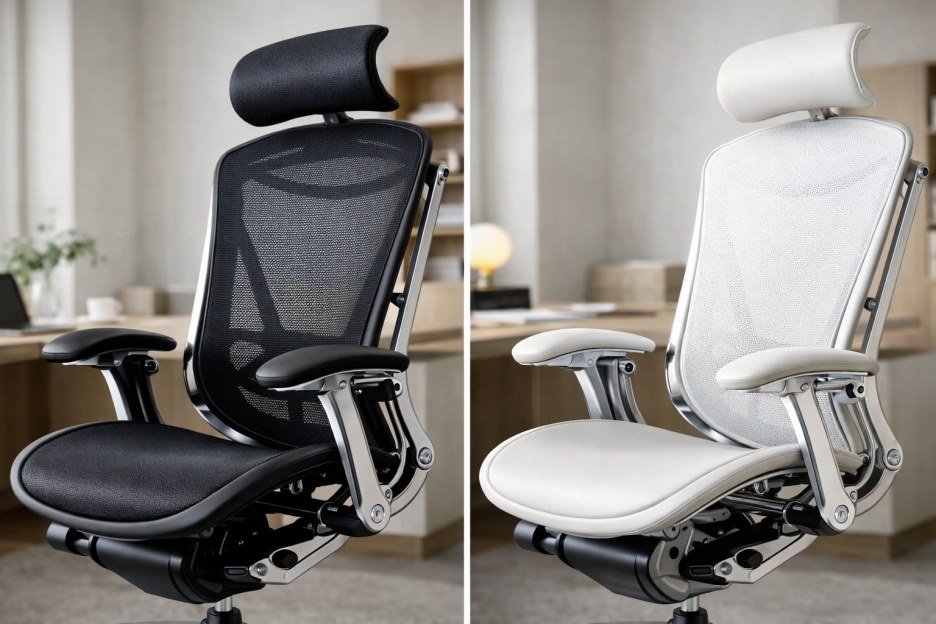
Leather Chairs: Luxurious, but Demanding
Leather chairs make an immediate visual impression. They convey sophistication and gravitas, lending a sense of order and polish to executive offices, home libraries, and high-end workspaces. That's why leather remains a staple in premium environments.
But the smooth surface of leather is deceptive—it's not inherently low-maintenance. In fact, because leather is in constant contact with skin, it's vulnerable to sweat, body oils, and friction. In summer heat or over-heated rooms, leather can dry out or, conversely, accumulate sticky oil residue.
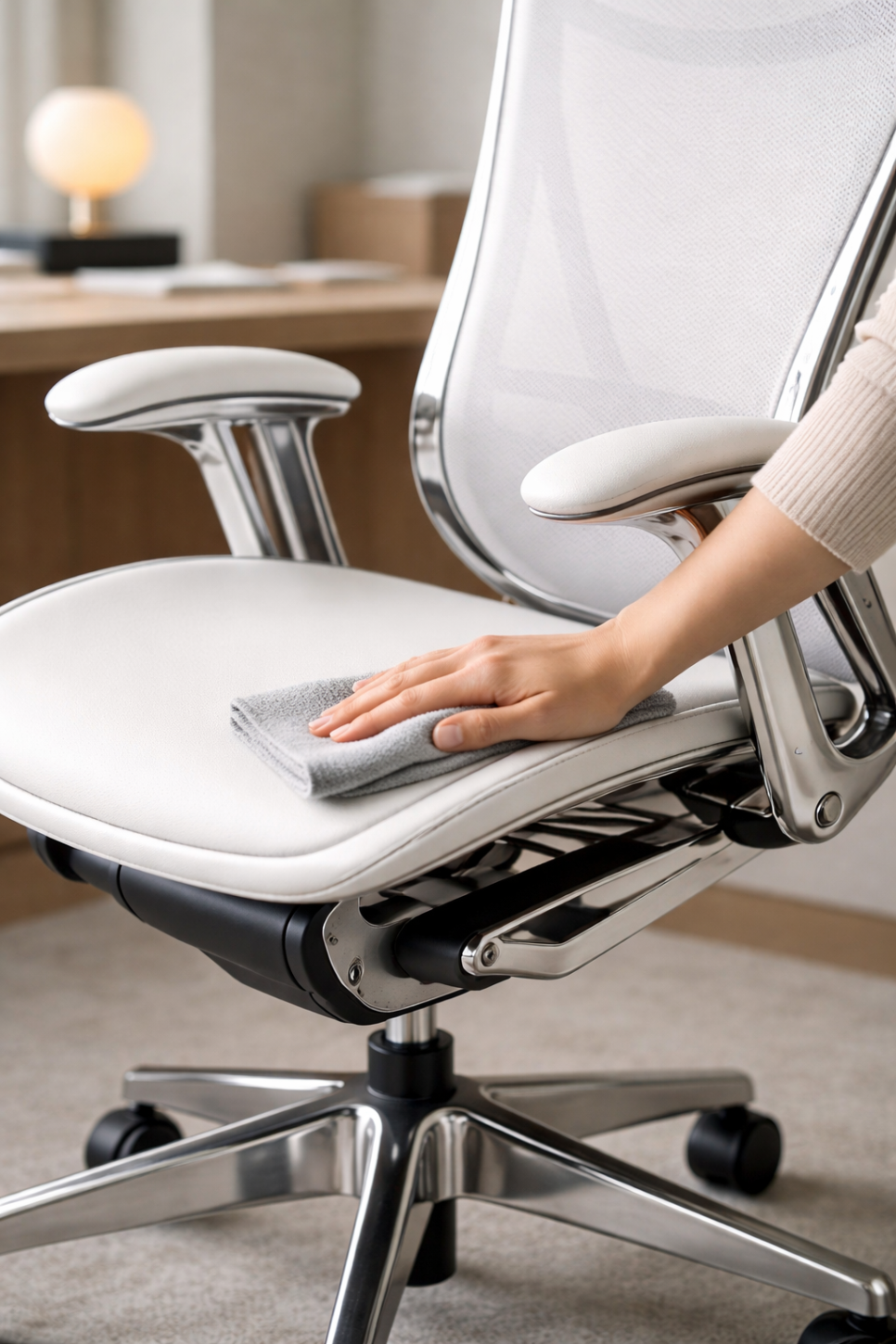
Common Problems with Leather Chairs
Oil buildup: Armrests and upper backrest areas accumulate skin oils over time
Dye transfer: Light-colored leather is prone to staining from denim and other clothing
Cracking and hardening: Prolonged exposure to direct sunlight and heat sources can degrade the surface
Coating damage: Harsh cleaners can strip protective finishes, especially on bonded or coated leathers
In short, leather is easy to wipe down—but easy to damage if you wipe it down incorrectly.
How to Care for Leather Chairs: Gentle and Frequent
The best approach to leather care is light, regular maintenance rather than occasional deep cleaning.
Dust removal: Start by wiping the surface with a dry microfiber cloth to remove dust. Rubbing while dust is present can cause micro-scratches.
Remove everyday marks: For fingerprints, light smudges, and oil marks, use a barely damp soft cloth—wring it out until it's just slightly moist. Never use a wet cloth, as excess moisture can seep into seams and damage padding.
Avoid harsh cleaners: Alcohol, bleach, and multipurpose sprays can strip leather coatings and cause discoloration or peeling, especially on faux leather and treated surfaces.
Keep out of direct sunlight: UV exposure causes fading and surface hardening. If your chair sits near a window, even a small repositioning can make a significant difference over time.
Use leather conditioner sparingly: For genuine leather, a specialized conditioner can help maintain suppleness—but not all leathers are the same. Check your chair's care instructions and test any product on an inconspicuous spot first. For bonded or coated leathers, conditioner may do more harm than good.
Leather requires a delicate balance: neglect leads to drying and cracking, while over-cleaning damages the finish. The sweet spot is frequent, gentle attention.
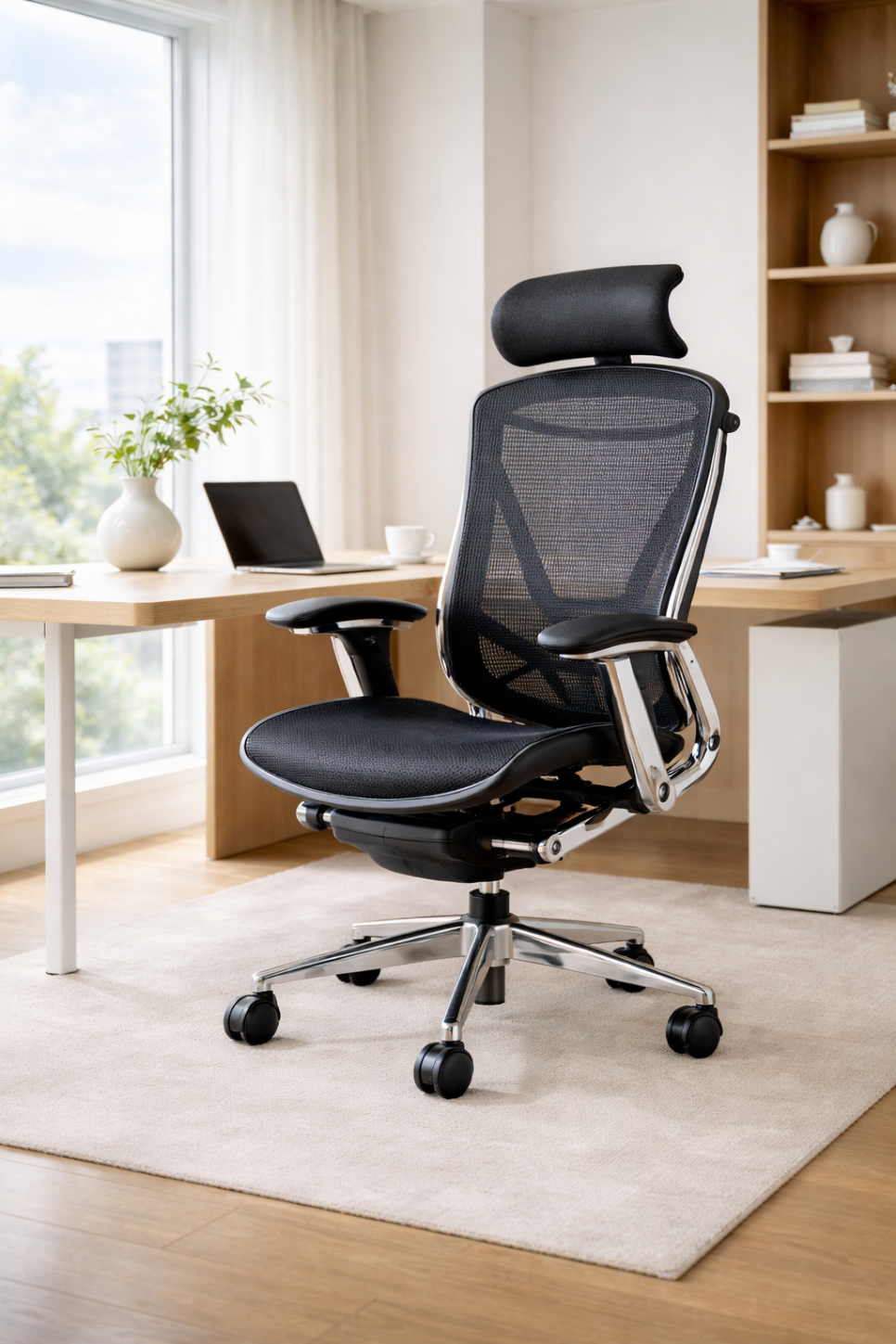
Mesh Chairs: Breathable, but Dust-Prone
Mesh chairs excel at airflow, making them ideal for people who run warm, work long hours, or live in hot climates. Mesh also has a light, modern aesthetic that suits contemporary offices and home workspaces.
The trade-off? Mesh's open weave structure traps dust, hair, skin cells, and fabric lint deep within its fibers. A mesh chair can look clean on the surface while harboring a surprising amount of debris inside.
Common Problems with Mesh Chairs
Dust accumulation: Fine particles settle between the weave and around the frame
Stain absorption: Spills and oils can soak into the mesh rather than sitting on the surface
Fiber damage: Sharp objects, belt buckles, and repeated pressure in one spot can fray or stretch the material
Dull appearance: Over time, embedded dirt can make mesh look faded or less breathable
In other words, mesh is comfortable and ventilated—but surface wiping alone won't keep it clean.
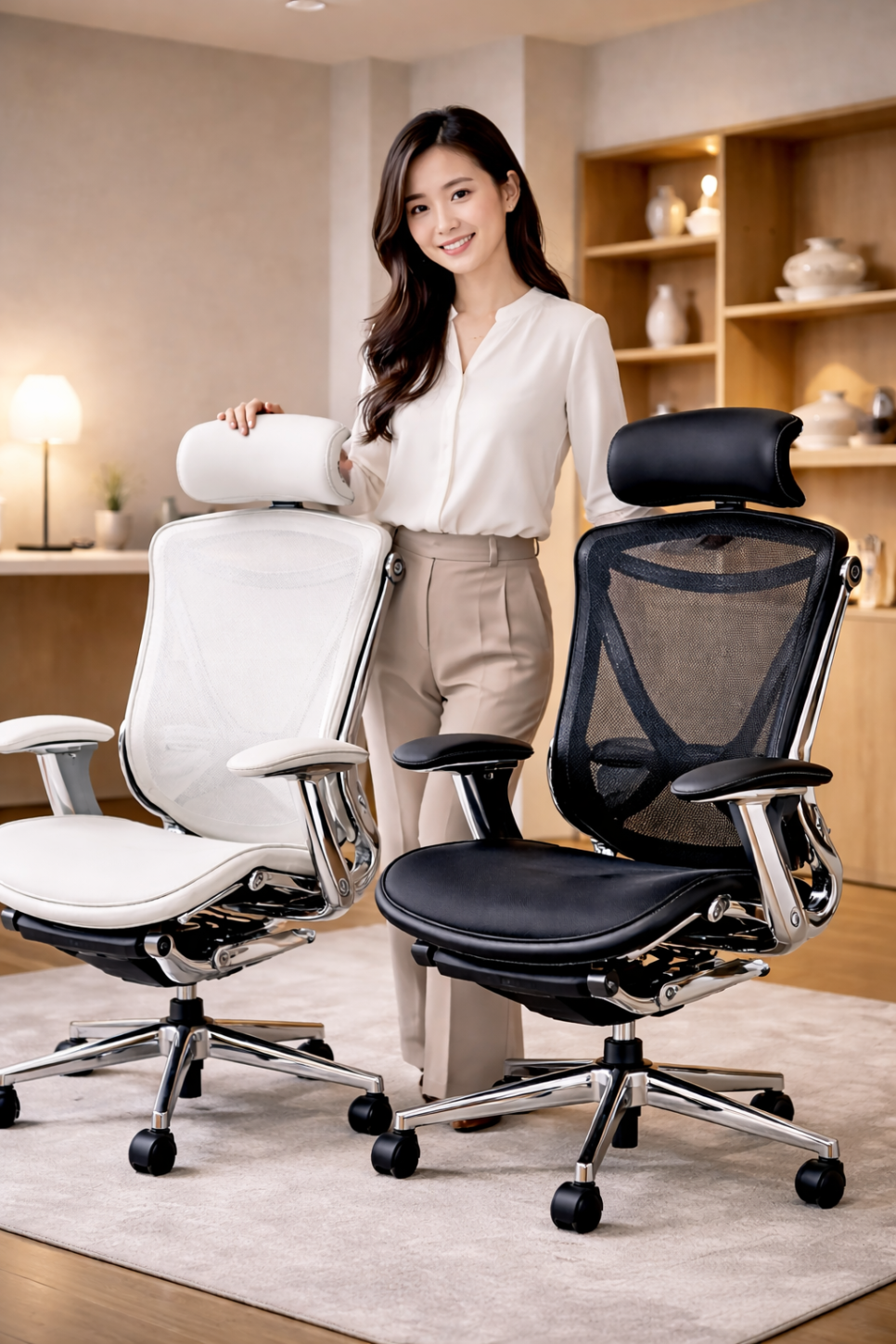
How to Care for Mesh Chairs: Focus on Dust Extraction
For mesh, the priority is removing debris from within the weave, not just wiping the top layer.
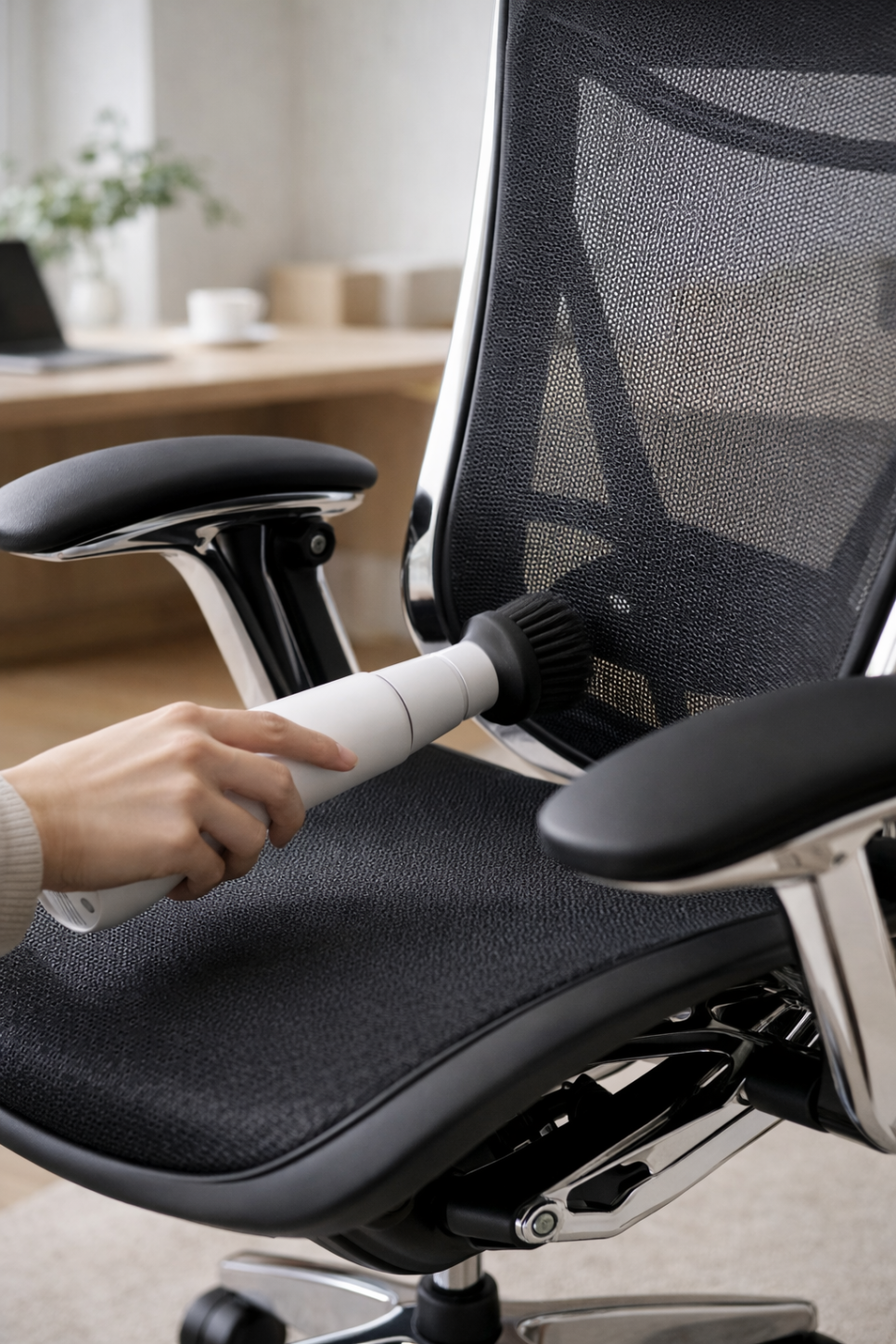
Vacuum regularly: Use a vacuum cleaner with a soft brush attachment every two weeks. Pay special attention to the backrest frame edges, seat perimeter, and lumbar support housing—these areas collect the most dust.
Treat spills immediately: Coffee, drinks, lotion, and makeup can penetrate deep into mesh fibers if left to sit. Blot (don't rub) the area with a cloth dampened with diluted mild detergent, then blot again with a dry cloth and allow to air-dry completely.
Don't scrub aggressively: Mesh has texture and structure; vigorous rubbing can fray the weave or cause pilling. Use a light, blotting motion instead.
Watch for snags: Metal belt buckles, sharp jewelry, coarse fabrics, and pet claws can all damage mesh. Even minor abrasion can make the material look worn over time.
Dry thoroughly before use: After spot-cleaning, let the chair air-dry fully. Mesh dries faster than foam or leather, but moisture can linger around joints and the frame, potentially causing odors or mildew.
The key to mesh longevity is managing what you can't see: the dust and oils embedded in the weave.
Universal Habits That Extend Any Chair's Life
Whether your chair is upholstered in leather, mesh, or fabric, a few core habits will help it last longer and stay cleaner:
Address stains and spills immediately—don't let them set
Keep chairs away from direct sunlight and heat sources
Clean lightly and often, rather than waiting for visible grime
Use only cleaners appropriate for the material
Prioritize high-contact areas: armrests, seat edges, and headrests
Choosing a Material You Can Actually Maintain
When you're investing in a quality office chair, price and comfort matter—but so does your willingness and ability to care for the material. Leather demands attention to oils, dryness, dye transfer, and heat. Mesh requires consistent dust management and careful handling to avoid snags.
A great chair isn't just one that feels good on day one—it's one that still looks and feels good a year later. That's why your choice should reflect not only your aesthetic preferences and sitting style, but also your daily habits and maintenance capacity.
Understand your material, treat it appropriately, and your chair will reward you with years of reliable comfort and a like-new appearance.

Furniblog may earn a commission from links in this post, at no extra cost to you. See our affiliate disclosure.