Mid-Century Modern Is Over: The Two Design Directions Shaping Deskscapes in 2026
How minimalist desks split into industrial steel setups and softer modernist curves
By the Furniblog Editorial Team·July 10, 2026·5 min read
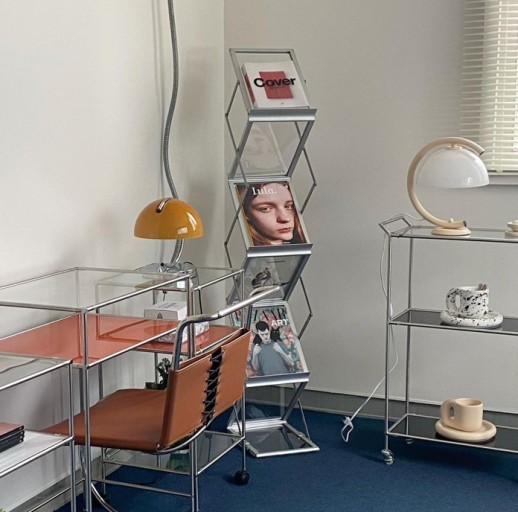
A walnut desk, an Eames shell chair, a brass desk lamp—sound familiar? You've probably seen this setup hundreds of times on Instagram over the past few years.
This aesthetic started gaining serious traction around 2019. It's now been six years. At first, it felt fresh and distinctive. But now, if you search the #deskscape hashtag, you'll see an endless scroll of nearly identical setups.
Mid-century modern is no longer a trend. It's become the default—and defaults don't offer differentiation. The real trendsetters have already moved on.
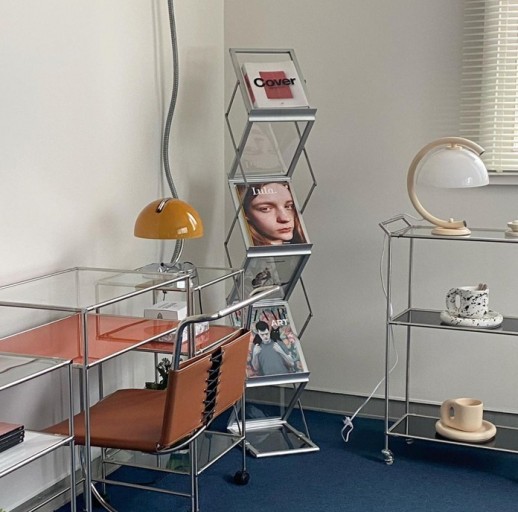
A Brief Timeline of Desk Design Trends
Let's quickly trace how we got here:
2019–2020: The Entry Phase. Walnut wood, Eames chairs, brass accents, and tapered legs exploded on Instagram. While these elements had been staples in the U.S. and Europe for decades, they were just beginning to captivate audiences in Korea and other markets.
2021–2022: Peak Saturation. Interior design influencers adopted the look en masse. The term "deskscape" became practically synonymous with mid-century modern.
2023: Fatigue Sets In. Complaints about "cookie-cutter desks" started appearing. As differentiation became harder, early adopters began exploring alternatives.
2024–2025: The Default Era. Mid-century modern shifted from "exciting trend" to "safe choice." The novelty vanished.
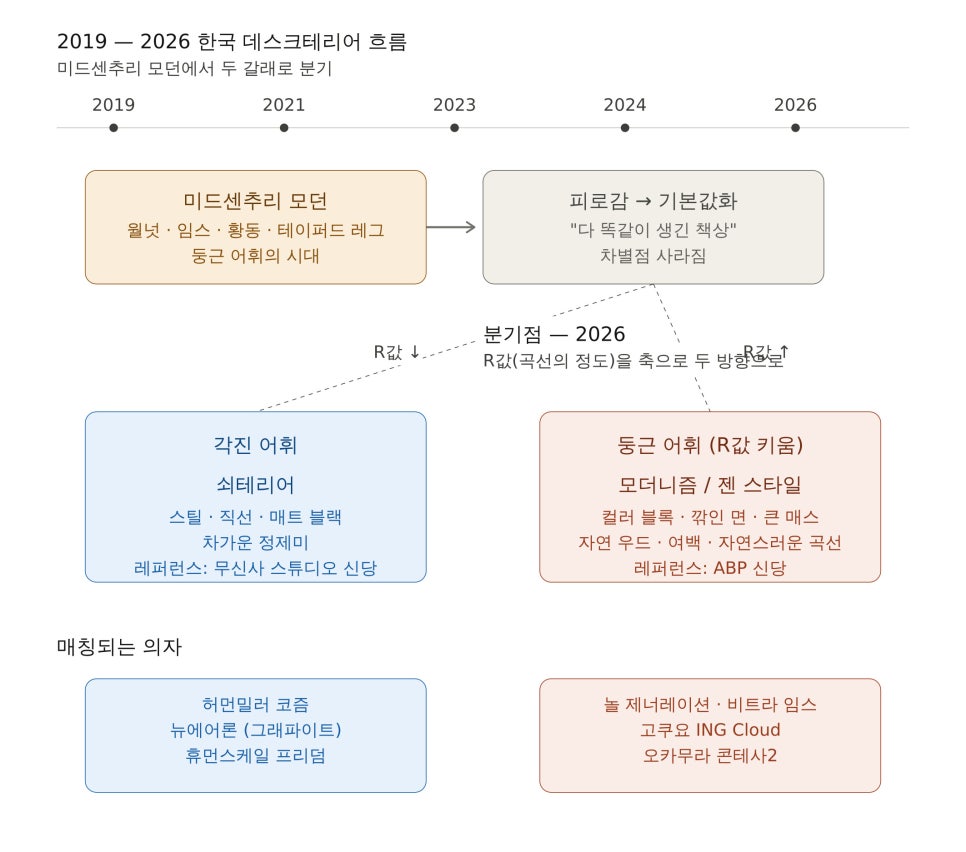
2026: The Split. Trendsetters are now moving in two distinct directions.
The Core of Mid-Century Modern: Rounded Vocabulary
At its heart, mid-century modern was all about rounded vocabulary—gentle curves on tapered legs, the organic shell forms of Eames chairs, softly beveled wood edges. Every detail incorporated what designers call an R-value: the curvature of rounded corners. The goal was warmth and approachability, a human-centered design language.
Now that this language feels overused, tastes have diverged in two opposite directions:
One group has eliminated curves entirely, embracing cold, linear precision.
The other has amplified curves, seeking bolder, more dramatic rounded forms.
These two paths are defining deskscapes in 2026.
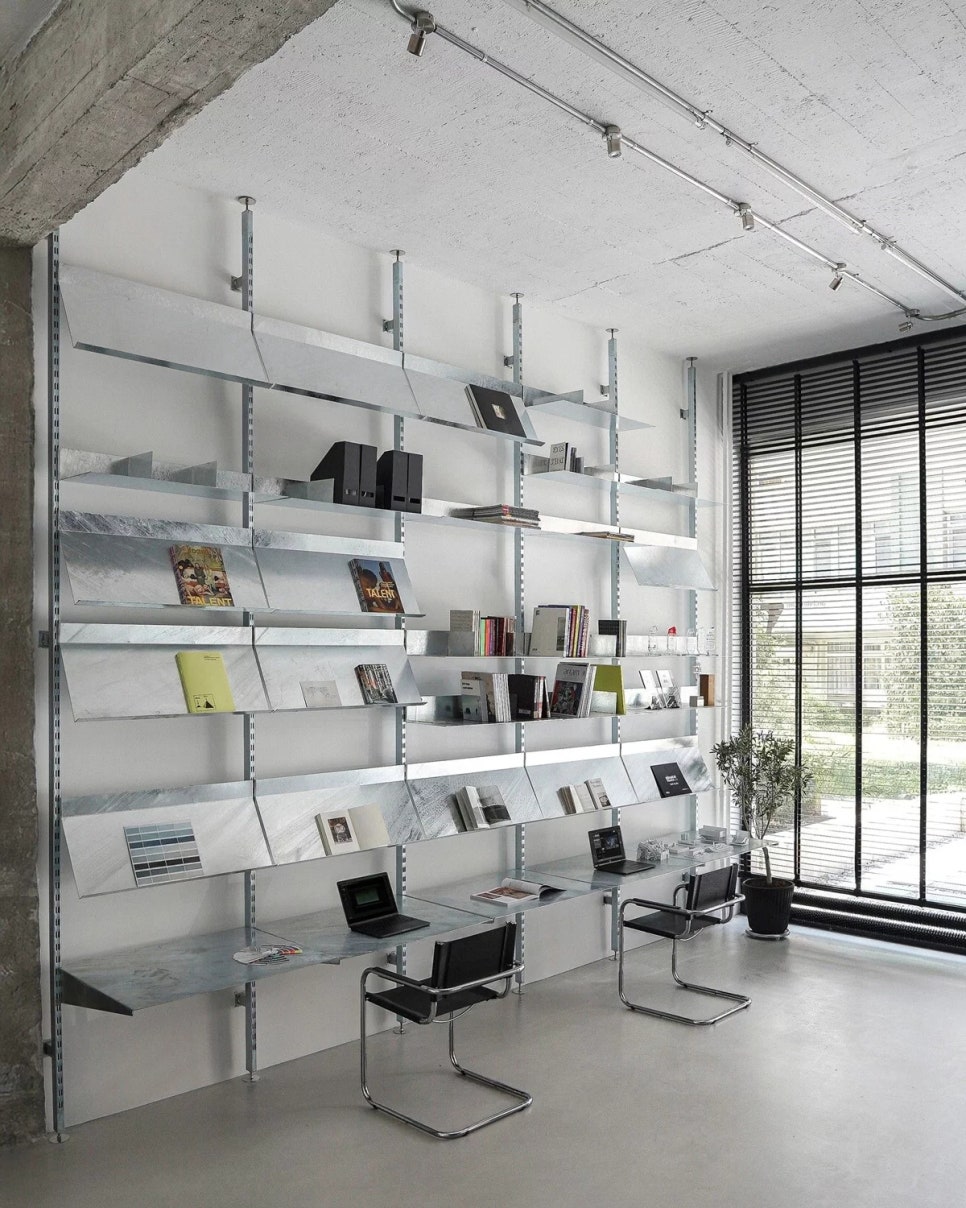
Direction One: Angular Vocabulary—The Industrial Steel Aesthetic
This is the camp that stripped away the R-value completely.
The "steel aesthetic" (or what some call "steel-terior") emphasizes metal construction—steel-frame desks, matte black finishes, aluminum details, and square-lined monitor arms. Soft curves are gone, replaced by sharp lines and precise angles.
The visual philosophy centers on unadorned precision: exposed concrete, matte black surfaces, and raw aluminum. People fatigued by warm mid-century tones gravitate here. This aesthetic is particularly strong among those in tech and design fields.
Chairs That Match the Industrial Aesthetic
Herman Miller Cosm. Unlike the Herman Miller Aeron's rigid posture enforcement, the Cosm features a continuous curved shell from backrest to seat. Its matte black finish integrates seamlessly into industrial setups.
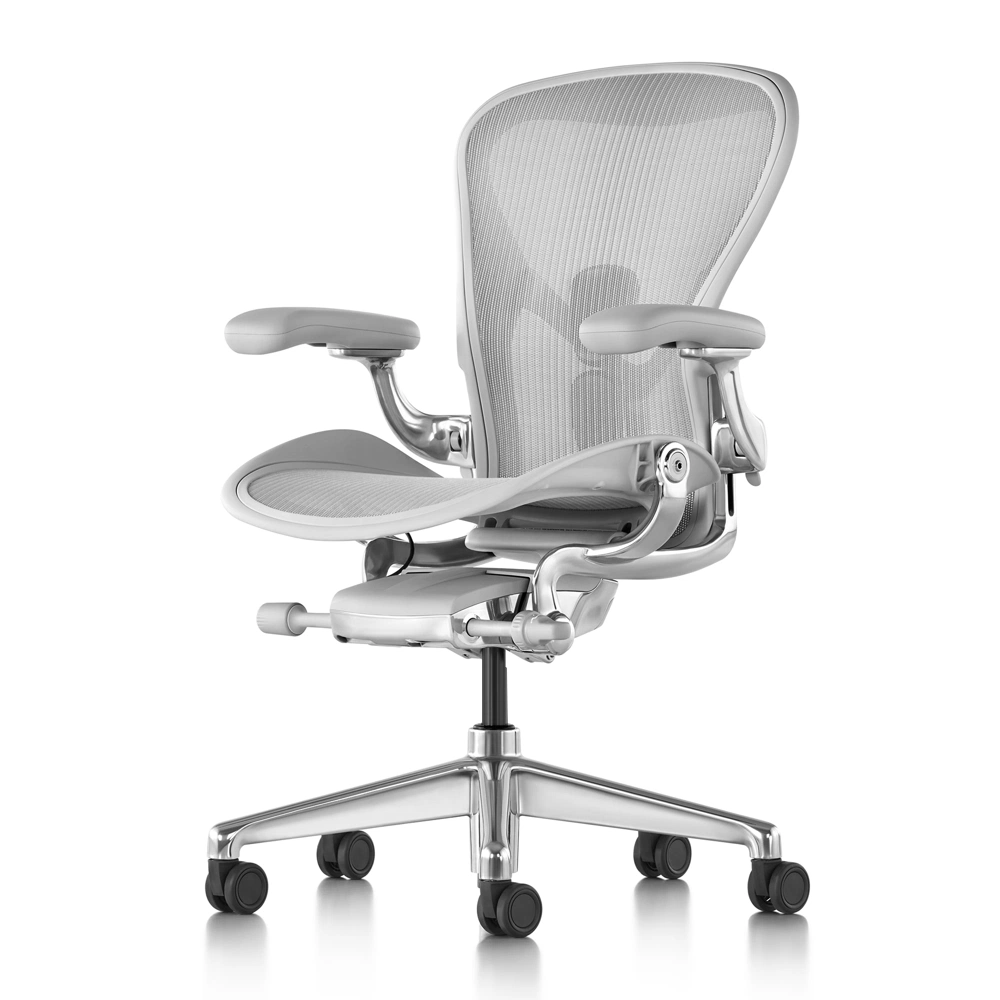
Herman Miller Aeron (new version). The icon of ergonomic seating. Its matte finishes and precision engineering align perfectly with the "refined linearity" of industrial deskscapes. The graphite colorway is particularly well-suited.
Humanscale Freedom. This chair minimizes manual adjustments—it auto-reclines based on your weight. Its clean lines don't compete visually with minimalist steel environments.
Direction Two: Amplified Curves—Modernism and Zen Styles
The opposite camp didn't abandon curves—they intensified them. This path splits into two sub-styles: bold modernism and natural zen.
Bold Modernism
Think of this as the revival of 1970s European modernism—the era of Verner Panton, Ettore Sottsass, and Joe Colombo.
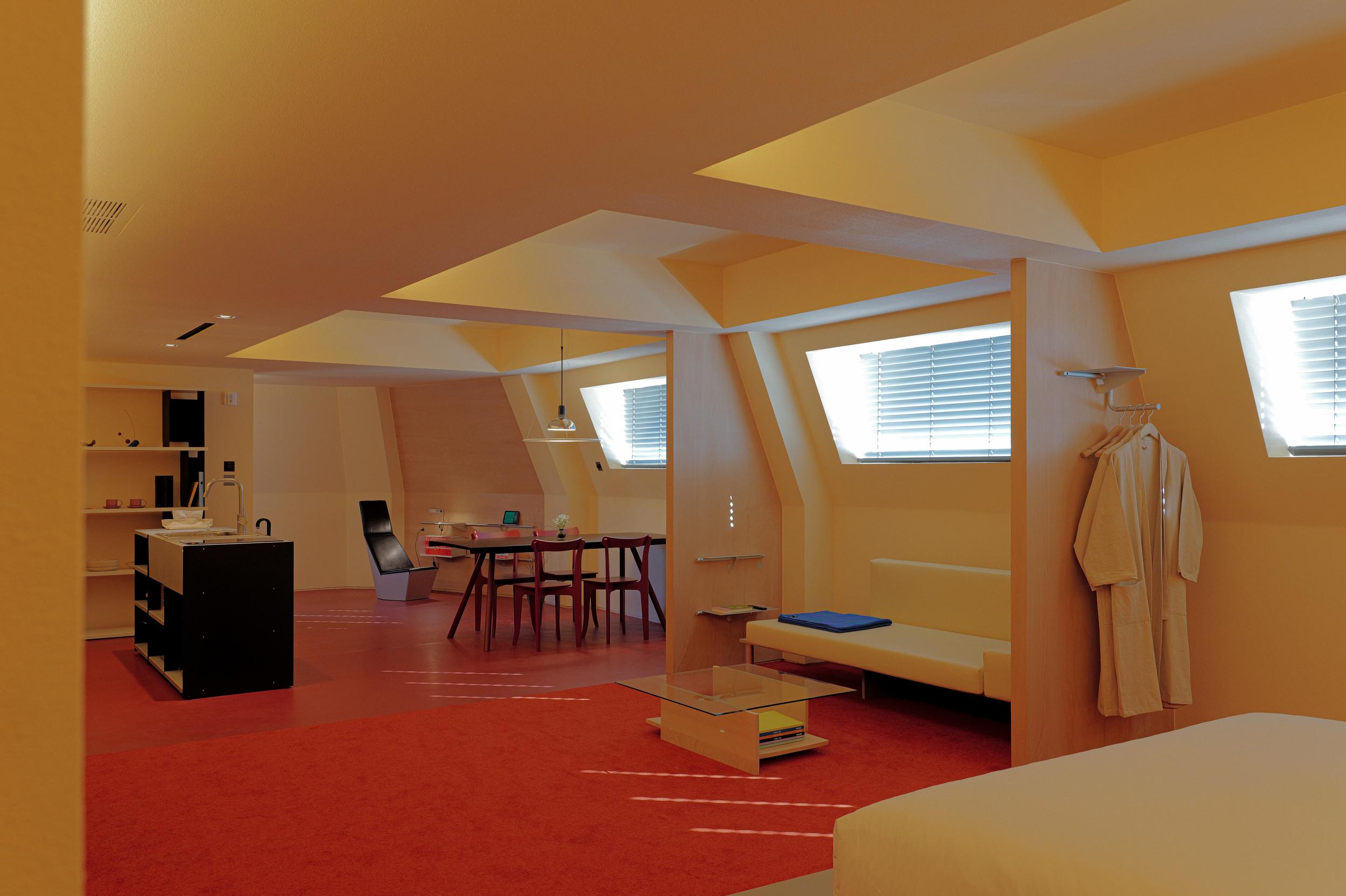
A prime example is the A Better Place (ABP) Sindang location in Seoul, designed by Useful Workshop. The space features ceilings cut at angles and painted in bold blocks of mustard yellow, tomato red, and maple wood. Walls, floors, and ceilings merge into a unified mass rather than separate elements.
The design vocabulary here is: color blocking + volumetric masses + carved geometry. Instead of mid-century's modest curves, entire planes bend and sweep. The R-value is amplified dramatically.
Chairs for Modernist Spaces
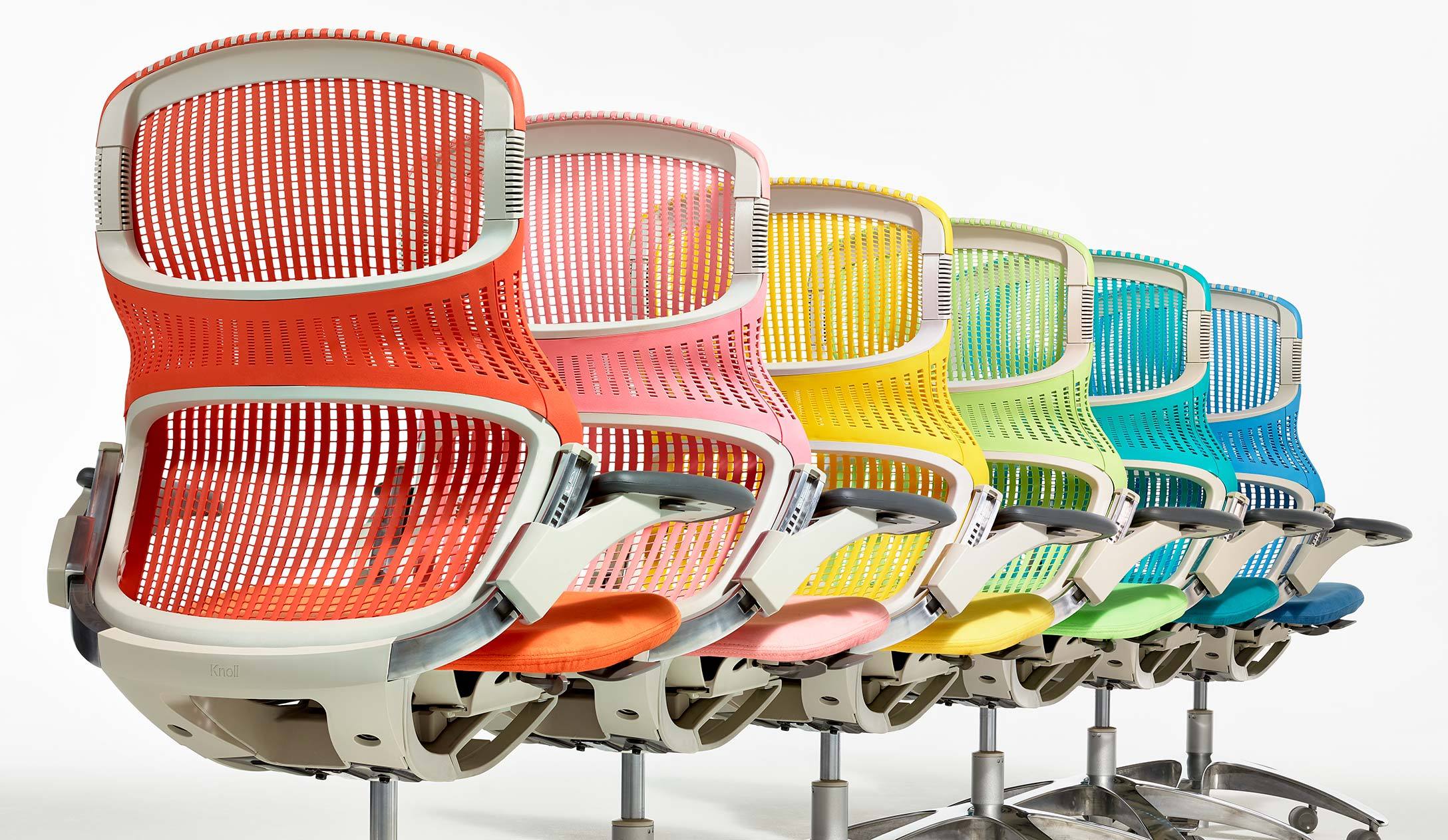
Generation by Knoll. The backrest flexes in multiple directions with an organic design. Its rich color options—especially reds, oranges, and yellows—harmonize beautifully with color-blocked modernist interiors.
Herman Miller Cosm. Its curved shell works equally well in modernist settings. A red Cosm in a space like ABP Sindang looks like it was designed for that exact room.
Vitra Eames Aluminium Group Chair. While rooted in mid-century design, in a modernist context it functions as a sculptural object. We recommend the Aluminium Group line over standard Eames shells for this aesthetic.
Zen Style
This approach also embraces rounded forms, but in a completely different spirit—one that draws from nature.
Zen-style deskscapes feature raw natural wood tones, paper and linen textures, low saturation palettes, asymmetric arrangements, and intentional negative space. It blends Japanese wabi-sabi with traditional Korean minimalism. Curves are present but subtle, almost incidental.
The core vocabulary: quietness, negative space, intentional incompleteness. Unlike mid-century's deliberate curves, zen curves feel unforced and organic.
Chairs for Zen Spaces
Kokuyo Ing Cloud. Its triple-gliding mechanism and 3D hammock mesh create a soft, cloud-like silhouette that feels weightless. It occupies space without disrupting the sense of openness.
Generation by Knoll. When spec'd with natural wood base colors, it fits beautifully into zen environments. The form is gentle yet orderly.
Okamura Contessa II. The full-mesh backrest offers a flexible curve that complements zen aesthetics. Choose greyish or beige tones for best results.
So Where Does That Leave You?
Mid-century modern, as a differentiating trend, is finished. After six years of ubiquity, it can no longer define a distinctive workspace.
Contemporary desk design has split into two clear directions:
Stripped curves—the industrial steel aesthetic. Cold, refined, linear.
Amplified curves—modernism and zen. Either bold color-blocked modernism or soft, nature-inspired zen.
Take a moment to consider which direction resonates with you. Once you've decided, the first piece of furniture you should change is your chair. It's the most visible object on your desk and the only piece of furniture your body actually touches for hours each day.
Start With the Chair
If you're building an industrial steel setup, consider the Herman Miller Cosm, the Aeron, or the Humanscale Freedom.
For a bold modernist space, look at Generation by Knoll or the Vitra Eames Aluminium Group.
For zen-inspired workspaces, the Kokuyo Ing Cloud and Okamura Contessa II are excellent starting points.
Seeing these chairs in photos is one thing—sitting in them is entirely different. If you have the opportunity to try before you buy, take it. Your chair isn't just part of your aesthetic; it's a tool that supports your health and productivity every single day.
Furniblog may earn a commission from links in this post, at no extra cost to you. See our affiliate disclosure.