Reviews
Modernica Basquiat Eiffel Shell Chair: Wearable Street Art Meets Midcentury Design
A licensed collaboration turns the iconic fiberglass shell into a 3D Basquiat canvas
By the Furniblog Editorial Team·July 5, 2026·12 min read
Overview
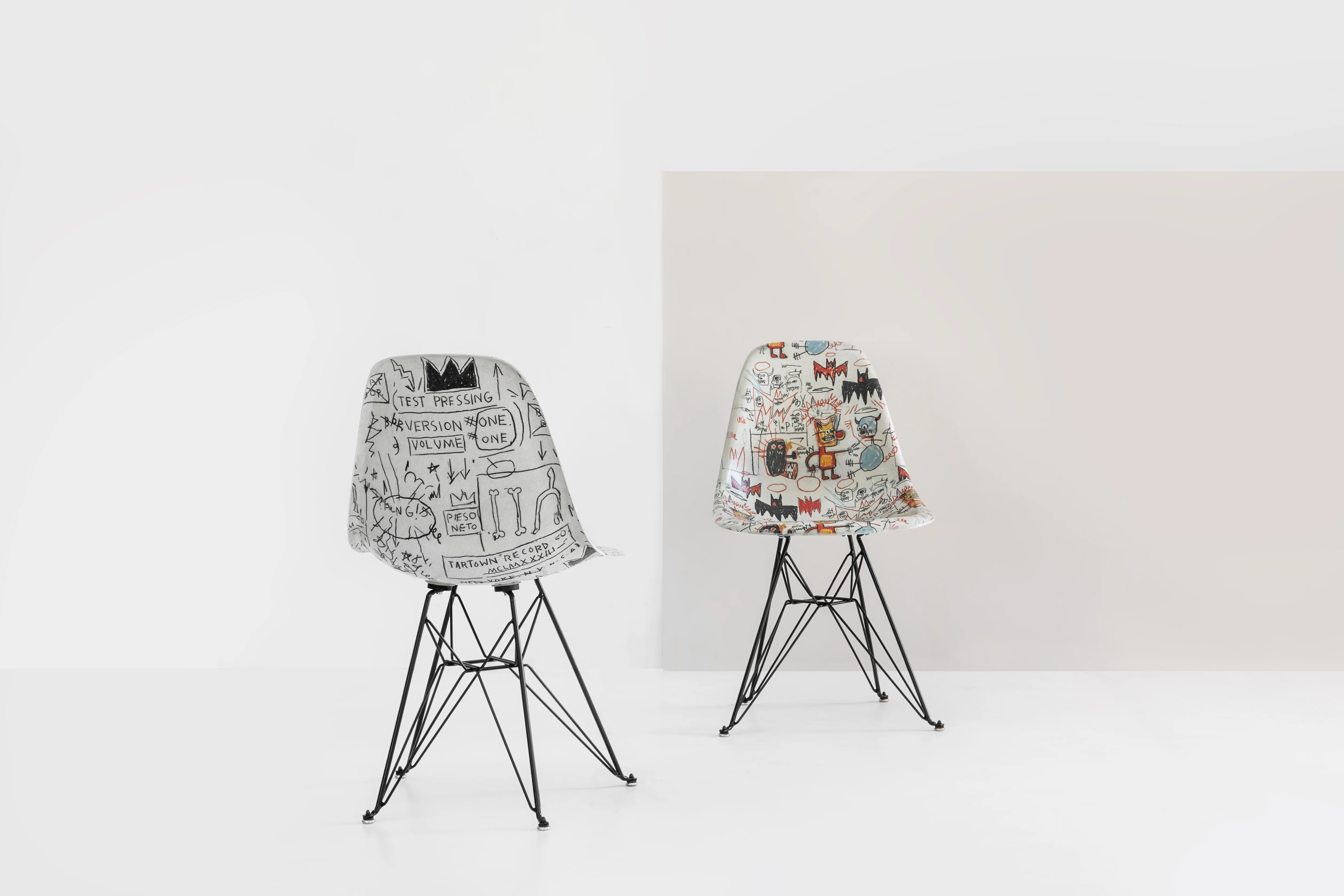
The Modernica Basquiat × Eiffel Shell Chair is a licensed collaboration between Los Angeles-based furniture maker Modernica and the Estate of Jean-Michel Basquiat. It takes the late artist's iconic neo-expressionist imagery and wraps it around a fiberglass shell chair originally designed for MoMA's 1948 International Design Competition. Launched during the 2018 Beyond the Streets exhibition in Los Angeles, the collaboration also included works by Keith Haring and Futura, covering entire pieces of furniture in bold, gallery-ready art.
This is not an ergonomic office chair in any conventional sense. It is a collectible design object that happens to be sittable—trading adjustability and lumbar support for art-world cachet and conversation-starting aesthetics. Modernica offers multiple Basquiat artwork editions including King, Bats, Record, Jackson, Per Capita, Warrior, and Connect the Dots, each priced at $650.
At a Glance
Brand | Modernica |
|---|---|
Designer | Charles & Ray Eames (1948 shell); Basquiat artwork licensed via Artestar |
Release Year | 2018 (collaboration launch) |
Materials | Hand-laid fiberglass shell; black powder-coated steel Eiffel base |
Adjustments | None (fixed-height side chair) |
Warranty | 12 months |
Price | $650 (mid-tier collectible; entry luxury) |
Packed Weight | 23 lbs |
The Brand and Its Philosophy
Modernica began by acquiring leftover stock from the original Eames production facility, then started manufacturing its own chairs using the original molds and processes. This Los Angeles maker has positioned itself as the keeper of the fiberglass flame after Herman Miller discontinued fiberglass production in 1983 in favor of molded plastic versions. Modernica purchased the press machinery and equipment from Herman Miller when it phased out fiberglass in 1989, opting instead for recyclable polypropylene.
The brand emphasizes partnerships with talented designers and cultural brands, devising innovative ways to cross boundaries and explore creative outlets. Beyond Basquiat, Modernica has collaborated with Takashi Murakami, Shepard Fairey, Keith Haring, KITH, and various streetwear labels—blurring the line between furniture manufacturer and cultural brand. Each fiberglass shell is hand-crafted one by one in Modernica's Los Angeles factory, a production method that underpins the brand's premium positioning.
Designer and Design Story
The fiberglass shell chair was originally designed by Charles Eames in 1948 for the Museum of Modern Art's International Design Competition, becoming one of the most enduring icons of 20th-century furniture. The Basquiat collaboration is a posthumous licensing deal; the chairs feature designs by Jean-Michel Basquiat (1960–1988), the New York graffiti artist turned painter whose raw, text-laden, symbol-filled canvases sell for tens of millions at auction.
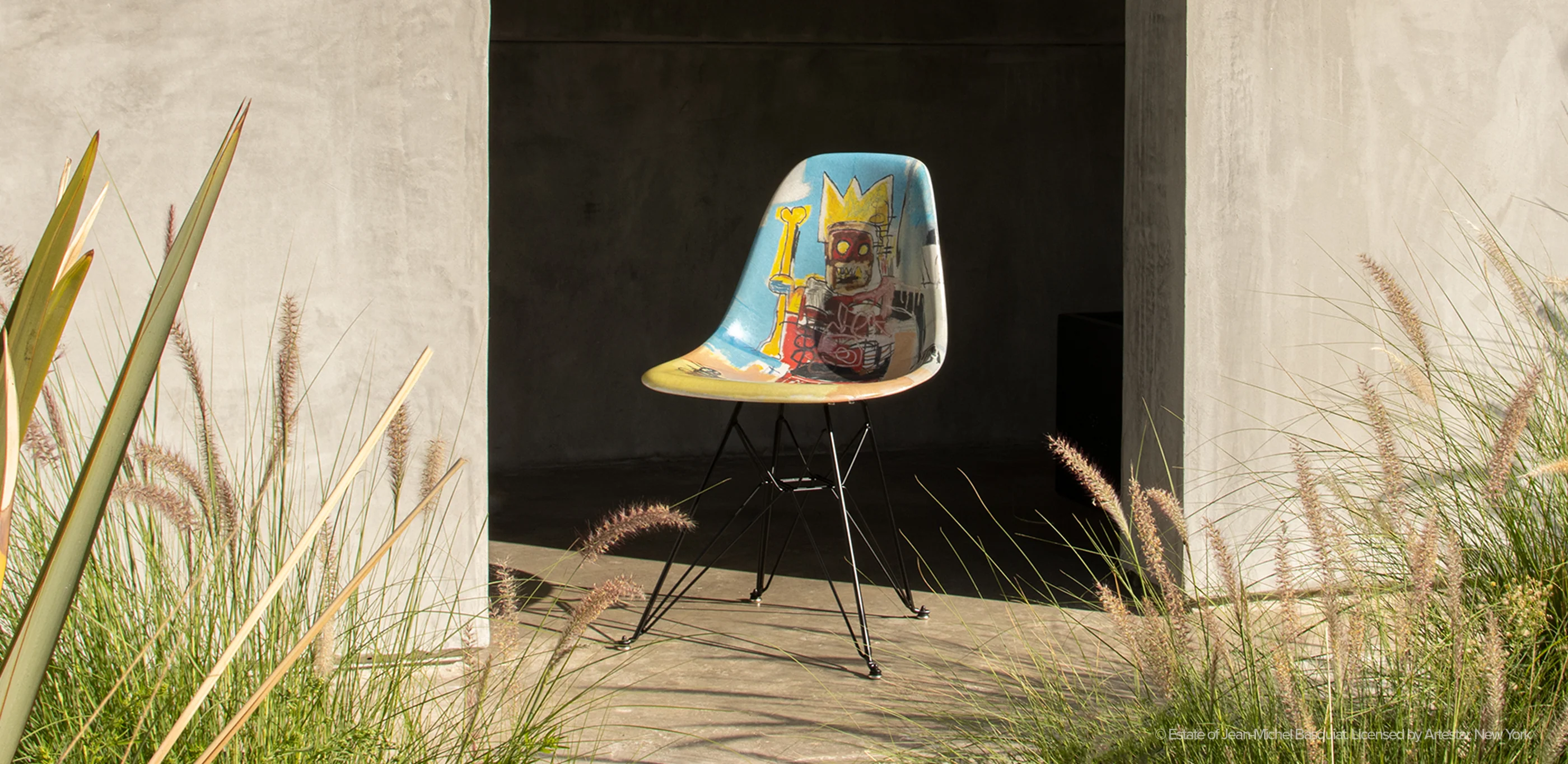
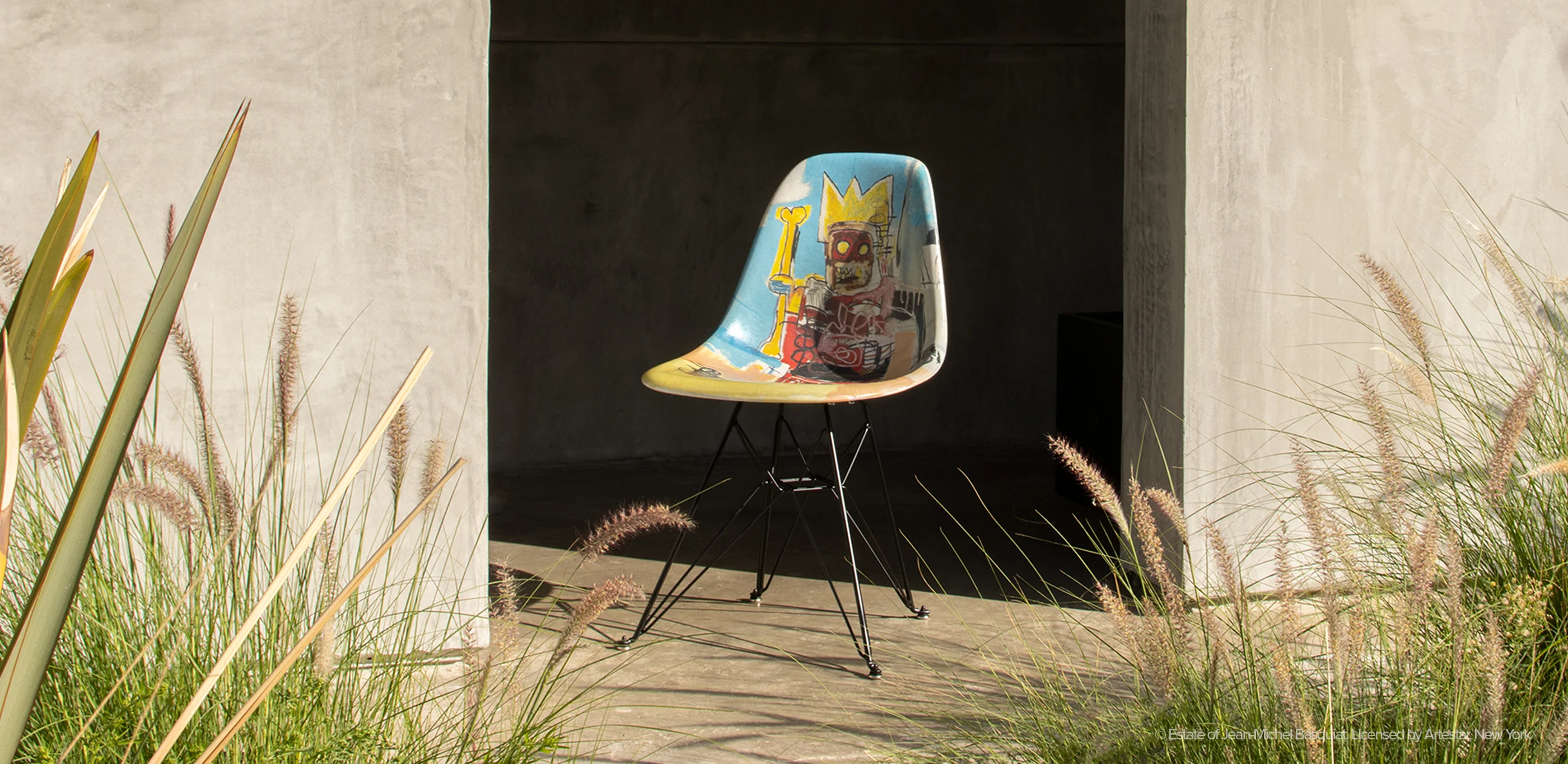
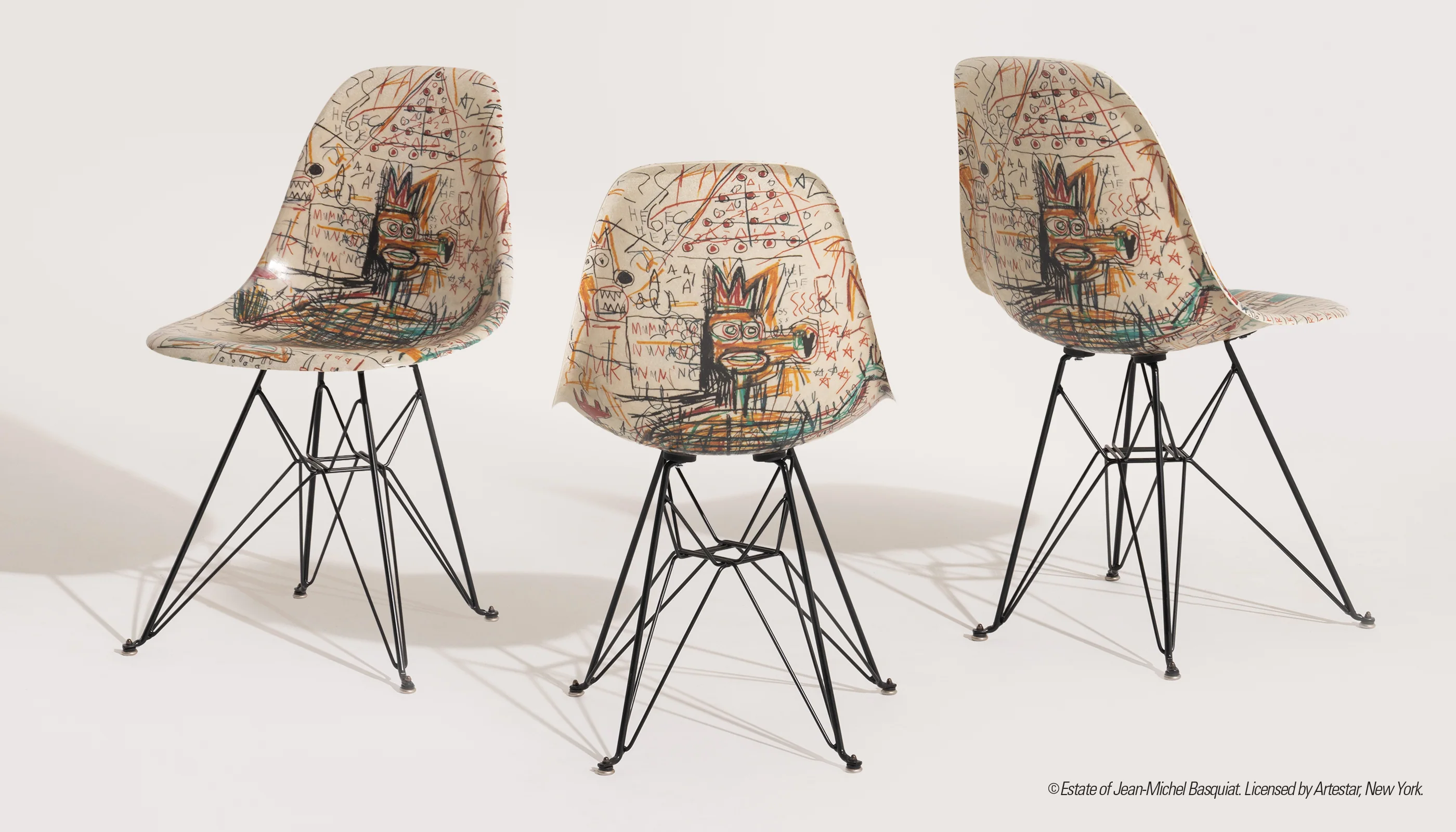
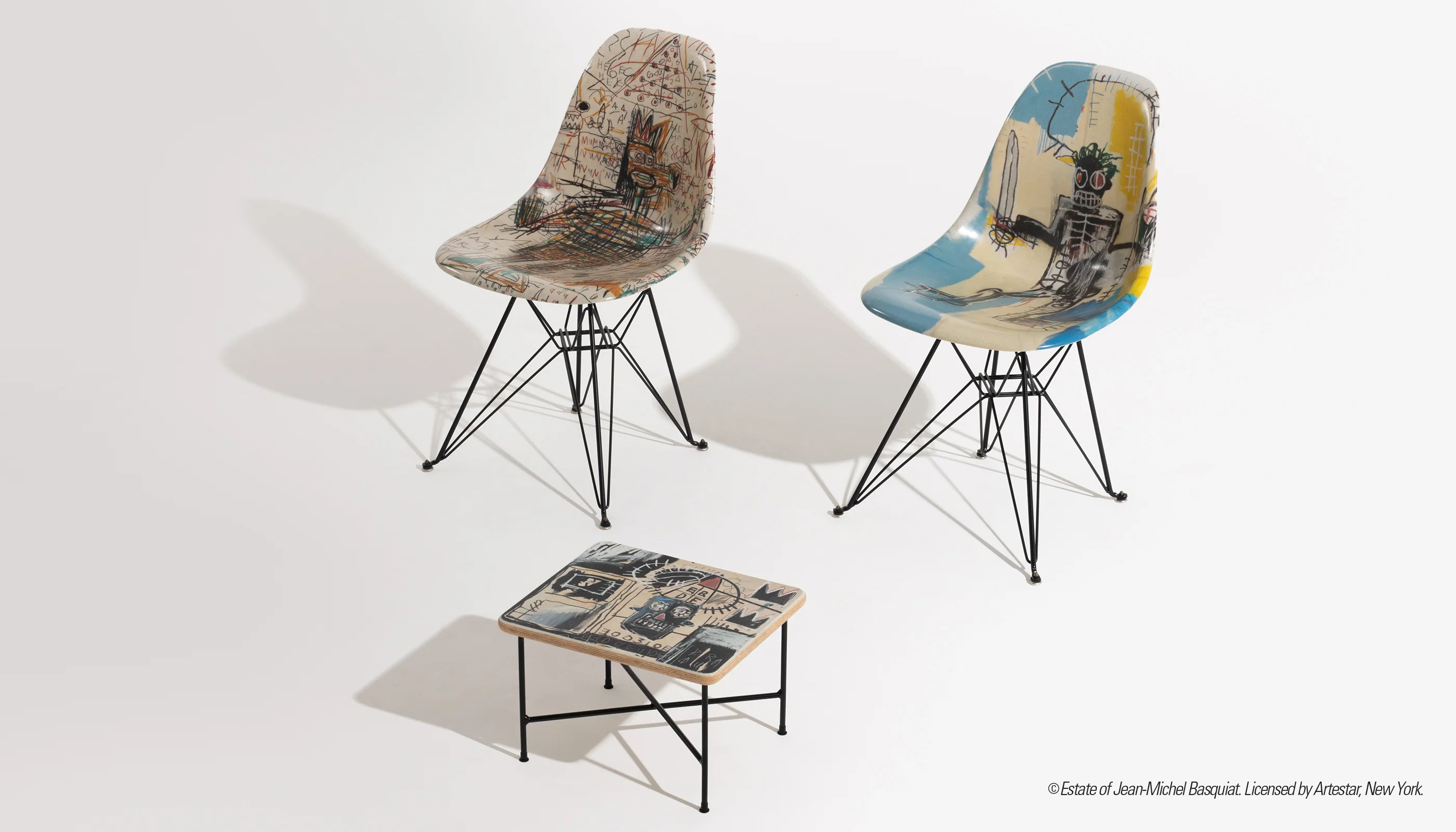
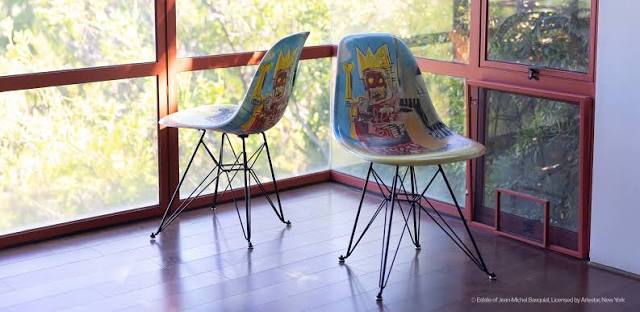
Through a partnership with Artestar, which represents prominent artists, photographers, designers, and creators, the estates of Jean-Michel Basquiat and Keith Haring each contributed two works from the vast portfolios of these American artists. These street-art-inspired custom shell designs were released in a limited run of 500 pieces as part of the Beyond the Streets contemporary street art exhibition in LA. The Basquiat editions wrap iconic paintings—crowns, skeletal figures, fragmented text—around the curved fiberglass, transforming an already-famous chair into wearable art print.
Design Language and Aesthetics
The base silhouette is pure midcentury orthodoxy: the iconic one-piece shell with waterfall edge, subtle lumbar curve, and gently scooped seat, perched atop a spindly black Eiffel-tower base. What sets the Basquiat edition apart is obvious: vibrant, all-over artwork silkscreened or applied directly to the shell surface. Depending on the edition, you'll see the artist's signature crown motif, scrawled text fragments, skeletal anatomy studies, or graffiti tags splattered in ochre, red, black, and electric blue.
This is maximalist art meeting minimalist form. The chair becomes a three-dimensional canvas, legible from across the room and nearly impossible to ignore. In a neutral Scandinavian interior, it reads as an intentional exclamation point; in a collector's loft hung with contemporary prints, it blends naturally as part of the gallery. Either way, subtlety is not the point. These chairs announce taste, budget, and cultural affiliation the moment a guest walks in.
Ergonomics and Body Support
The Eiffel side shell offers basic passive ergonomics: a waterfall front edge that reduces pressure behind the knees, a subtle lumbar hollow, and a seat-to-back angle that encourages upright posture. The shell is pre-molded and non-adjustable, so fit depends entirely on whether your body geometry matches the single molded profile. There is no lumbar dial, recline mechanism, or tilt tension. This is a dining chair or occasional side chair, not an eight-hour work throne.
The fiberglass structure is rigid; the shell does not flex or give under load the way a mesh or elastomer back would. You sit on the chair, not in it. For a meeting, a phone call, or an hour of laptop work at a café table, the Eiffel is comfortable enough. For all-day desk duty, most users will feel fatigue after two or three hours—there is no dynamic support or pressure redistribution. If ergonomic performance is the priority, this chair is the wrong choice.
Key Adjustments and Mechanisms
None. The Basquiat × Eiffel is a fixed-height, non-swiveling side chair. The Eiffel base includes no casters, gas lift, or tilt mechanism. Seat height is determined by the base geometry and cannot be changed. There are no adjustable armrests (because there are no armrests). This simplicity is intentional, part of the midcentury modern ethos—but it also means the chair cannot adapt to different users, desk heights, or tasks.
If you need height adjustment to match a standard desk setup, you'll either pair this chair with a height-adjustable desk or accept a mismatch. For dining or lounge use, the fixed height works fine. Just understand that "adjustment" here means moving the whole chair, not fine-tuning the sit.
Materials and Build Quality
The fiberglass shell chair is hand-crafted one by one using the original molds and processes from Charles Eames's 1948 design. Skilled artisans carefully craft each chair, ensuring strength and durability—every detail, from the smooth curves to subtle color variations, is a product of meticulous hand craftsmanship. The process of layering resin and fiberglass means each shell is slightly unique in finish and weight.
The Eiffel base is powder-coated steel wire in a classic black finish. Packaging dimensions are 20" L × 20" W × 24" H, packed weight is 23 lbs, and assembly is required. User reviews on enthusiast forums note that Modernica shells are made on the same machinery and presses as the original Herman Miller fiberglass shells, though some users mention that build quality is not quite as refined as vintage Herman Miller shells. The artwork application appears durable—likely UV-cured or baked into the finish—but long-term fade resistance under direct sunlight is not documented.
Sitting Experience — How It Actually Feels Day to Day
Sitting on the Basquiat Eiffel feels like sitting on any midcentury fiberglass shell: firm, supportive in upright posture, and unforgiving when you slouch or sit for hours. The shell's waterfall edge and lumbar hollow encourage good alignment for short sessions. The fiberglass is cool to the touch in winter, warm in summer, and offers zero cushion—some users add a thin seat pad for extended sitting.
The Eiffel base is stable on hard floors but can feel slightly tippy on thick carpet. The chair is light enough to slide easily but heavy enough not to topple. There is no give, flex, or bounce. The rigid shell and fixed base mean the sitting experience is static. For creative work, short tasks, or dining, this is perfectly adequate. For all-day desk work, fatigue sets in after two or three hours, especially in the lower back and sit bones.
The artwork itself doesn't affect comfort, but it profoundly affects context. You're always aware you're sitting on a $650 collectible, which can make the chair feel more like a precious object than a practical one.
Who This Chair Is For (and Who Should Skip It)
Best For:
Art collectors and design enthusiasts who want a functional piece that also serves as gallery-worthy decor
Creative professionals furnishing studios, agencies, or showrooms where brand and aesthetics matter as much as function
Dining or lounge use, where the chair will be used for an hour or two at a time
Admirers of Basquiat's work seeking an accessible entry point to owning licensed art (compared to prints or originals)
Skip If:
You need ergonomic adjustments (lumbar support, seat depth, armrests, recline) for long work sessions
You require a chair that adapts to multiple users or desk heights
You want maximum comfort for eight-hour workdays—a task chair from Steelcase, Herman Miller, or Haworth will be a far better choice
You prefer restrained, neutral aesthetics—the Basquiat artwork is bold and dominates any space visually
Key Competitors
Chair | Price | Construction | Adjustments | Best For |
|---|---|---|---|---|
MODERNICA Basquiat × Eiffel | $650 | Hand-laid fiberglass shell; steel Eiffel base | None (fixed side chair) | Collectible design object; dining/lounge |
Herman Miller Eames Molded Plastic Side Chair | ~$500–600 | Injection-molded recycled polypropylene | None (fixed) | Authentic licensed Eames; eco-friendly |
~$400–500 | Polypropylene; Eiffel base | None (fixed) | European Eames license; refined finishes | |
~$300–400 | Polypropylene shell; steel base | None (fixed) | Scandinavian minimalism; lower budget |
Herman Miller and Vitra chairs are direct form competitors but use polypropylene, not fiberglass. Enthusiast forums note that current plastic Herman Miller shells are "inferior" to fiberglass, and that polypropylene doesn't age as well as Modernica fiberglass. The Basquiat edition carries a premium for the licensed artwork—plain Modernica shells start at $390, so the artwork adds $260 to the base price. The HAY AAC series offers similar midcentury silhouettes at lower cost, but without the heritage pedigree or collectible appeal.
Size, Fit, and Configuration Options
The Basquiat × Eiffel is offered in one size and one base configuration: a standard side shell on a black Eiffel tower base. Modernica does not offer an armchair version of the Basquiat collaboration, nor alternative bases (dowel, rocker, swivel) in Basquiat finishes—those options exist for solid-color shells but not for the artist editions.
Seat height is fixed at approximately 17.5–18 inches from the floor (typical for an Eiffel base), suitable for standard dining tables (28–30" high). For use at a standard desk (28–30"), the fixed height will work fine for average-height users (5'4"–6'0"), but taller or shorter users may find the fixed height less than ideal. There is no way to customize fit other than adding an aftermarket seat cushion.
Modernica offers seven Basquiat artwork editions—King, Bats, Record, Jackson, Per Capita, Warrior, and Connect the Dots—each featuring a different painting. Some editions have sold out and are not restocked, adding to the collectible nature. Choose your artwork based on personal taste; all share the same shell geometry and base.
Sustainability and Certifications
Modernica does not publish third-party sustainability certifications (GREENGUARD, BIFMA LEVEL, Cradle to Cradle) for the Basquiat chair. The fiberglass construction is durable and long-lasting, which confers some sustainability through product lifespan, but fiberglass itself is not biodegradable or easily recyclable. The resin and fiberglass composite is energy-intensive to produce and typically ends up in landfill at end of life.
By contrast, Herman Miller's current Eames Molded Plastic chairs use recycled post-consumer polypropylene and are themselves recyclable—a more circular material strategy. Modernica's hand-layup process means low production volume and less automated waste, but without published environmental data, it's hard to assess net environmental footprint. Modernica's wire chairs come with a 12-month warranty and are crafted from materials that improve over time, suggesting a focus on durability over disposability.
If environmental credentials are a deciding factor, the Herman Miller or Vitra plastic shells have a clearer eco story. The Modernica Basquiat is a better choice if material authenticity and heirloom durability matter more to you than end-of-life recyclability.
Maintenance, Durability, and Warranty
Modernica offers a 12-month warranty on the Basquiat chair, covering defects in materials and workmanship—relatively short compared to the 5- to 12-year warranties common on ergonomic task chairs. The fiberglass shell is very durable and impact-resistant, but it can crack if dropped or struck hard. The artwork finish should be wiped with a damp cloth; avoid abrasive cleaners or solvents that could damage the print.
The powder-coated Eiffel base is scratch-resistant but can chip if dragged across rough surfaces. Glides are replaceable if they wear out. The chair ships flat-packed and requires assembly—attaching the shell to the base with screws and shock mounts. The process is straightforward but requires a Phillips screwdriver and 5–10 minutes.
Long-term durability is excellent: Styleforum users describe Modernica products as "solid and well-made," and vintage Eames shells from the 1950s are still in circulation in excellent condition, suggesting the construction method is proven. With care, you can expect decades of use—but the short warranty means repair costs after the first year are on you.
Pricing, Value, and Market Positioning
The Basquiat Eiffel chair sells for $650 per unit direct from Modernica, with similar pricing occasionally appearing in retail listings. For reference, a plain Modernica fiberglass Eiffel side chair starts at $390, so the Basquiat artwork adds $260—a 67% premium. Herman Miller's licensed Eames Molded Plastic Side Chair runs $500–600; Vitra's version is $400–500.
Is the Basquiat worth the premium? It depends entirely on how much you value licensed art and collectibility. As a chair, the Basquiat performs identically to a plain Modernica shell—no better ergonomics, no extra features. You're paying for cultural capital, visual impact, and the Artestar licensing fee. For an art collector or design-forward space, that premium is justified. For a pragmatic buyer focused on sitting comfort per dollar, a Herman Miller Aeron or Steelcase Series 1 offers far superior ergonomics at similar or lower cost.
The Basquiat and Keith Haring chairs are available for purchase on Modernica.net, with some editions marked as sold out, reinforcing the limited-edition positioning. Secondary-market prices for sold-out editions have risen, making these chairs behave more like art prints than furniture. From a value perspective, the Basquiat Eiffel is first and foremost a luxury collectible; the functional chair is secondary.
Verdict
The MODERNICA Basquiat × Eiffel is a brilliantly executed collision of street art and midcentury design—visually arresting, culturally loaded, and undeniably conversation-starting. Built using the original Eames molds and processes, it has genuine material pedigree, and the licensed Basquiat artwork transforms this iconic shell into a three-dimensional gallery piece. For collectors, design enthusiasts, and creative professionals furnishing brand-conscious spaces, it delivers exactly what it promises: a sculpture you can sit on.
But strip away the art and the licensing prestige, and you're left with a fixed-height side chair with zero adjustments, no ergonomic tuning, and a short warranty. For serious desk work, the Basquiat is outclassed by any modern task chair with lumbar support, recline, and seat-depth adjustment. The $650 price is reasonable if you view this as affordable art (Basquiat prints start much higher); judged purely as a seat, it's expensive.
Buy the Basquiat Eiffel if you want a collectible design object with functionality, the artwork speaks to you, and your sitting needs are light. Skip it if you need ergonomic performance, multi-user adaptability, or a chair that fades into the background. This is furniture as statement—and if you own it on those terms, it will reward you every day.
Furniblog may earn a commission from links in this post, at no extra cost to you. See our affiliate disclosure.