Premium Office Chair Buying Checklist: How to Avoid Expensive Mistakes
Why the right chair depends on fit, setup, and environment—not just brand or reviews
By the Furniblog Editorial Team·July 8, 2026·5 min read
High-end office chairs aren't products you should evaluate by price alone—they should be judged by fit. Even the most acclaimed model can disappoint if your body type, work posture, desk setup, or adjustment skills don't align. Based on years of experience working with premium chair buyers, we've identified the most common failure patterns that lead to returns, resales, and buyer's remorse. The key takeaway? A brief sit-test isn't enough. What you need is an environment-based trial with proper adjustments.
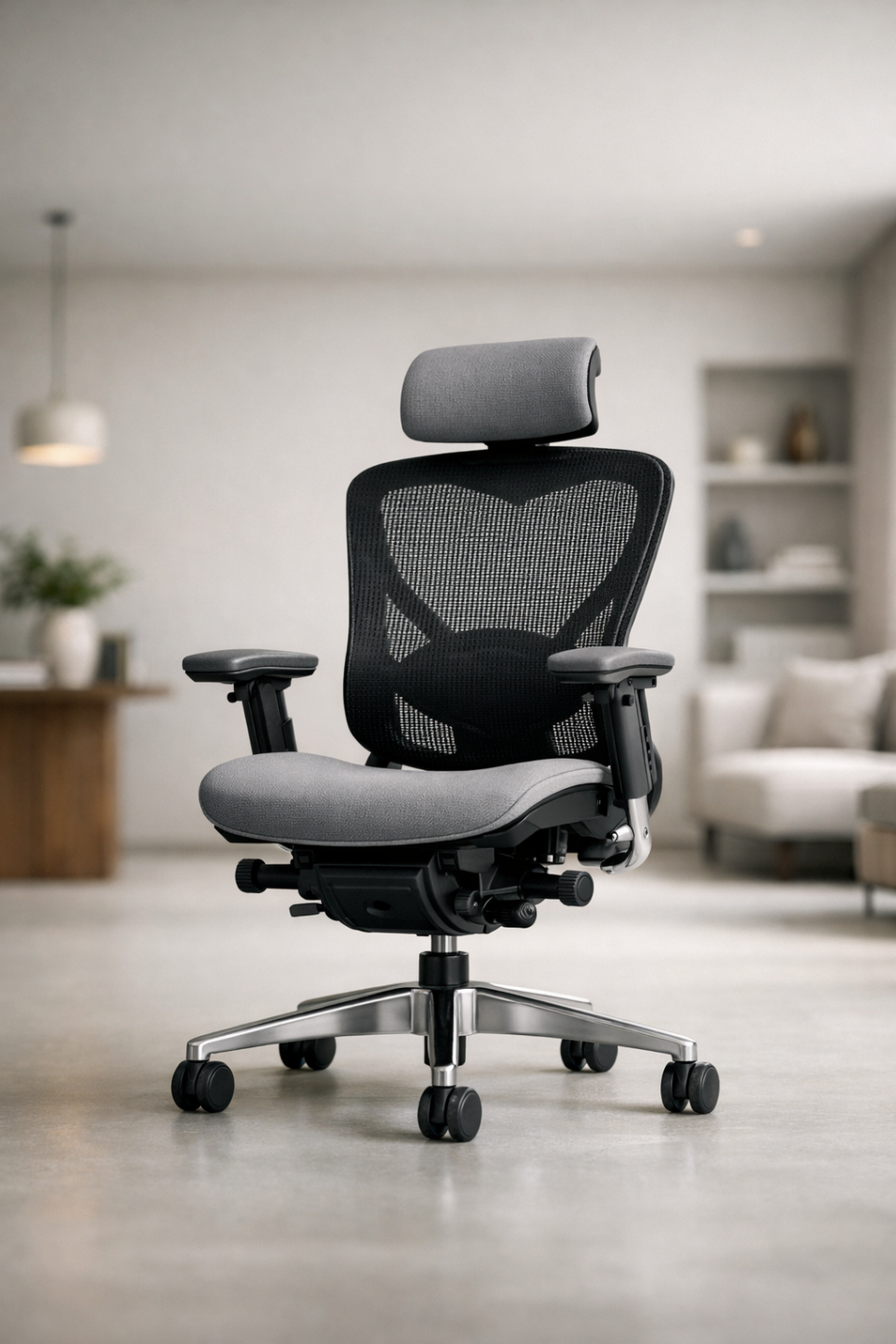
1. Assuming Other People's Reviews Apply to Your Body
The core issue: A "great chair" for someone else can be uncomfortable for you if your body type and workspace differ.
Common Failure Pattern
Buying based solely on forum rankings or YouTube recommendations
Making a decision after a 3-minute showroom trial
Finding the chair feels completely different at home due to desk height or monitor placement
Expert perspective: Chair satisfaction is determined by pressure distribution, joint angles, and support point alignment—not materials or brand prestige. When body dimensions or workspace conditions differ, support points shift out of alignment, turning comfort into discomfort instantly.

2. Confusing Comfort with Softness
The core issue: Lounge comfort and task support serve entirely different purposes.
Common Failure Pattern
Complaining "Why is it so firm?" or "The backrest pushes against me"
Mistaking initial firmness for a defect
Eventually disabling armrests and backrest features, using the chair as a static stool
Expert perspective: High-end task chairs are engineered for long-duration neutral posture maintenance. Their design priorities are pelvic stability, lumbar support, thoracic support, and upper-body load reduction—not sofa-like cushioning. If you're seeking enveloping softness, you may be looking at the wrong product category entirely.
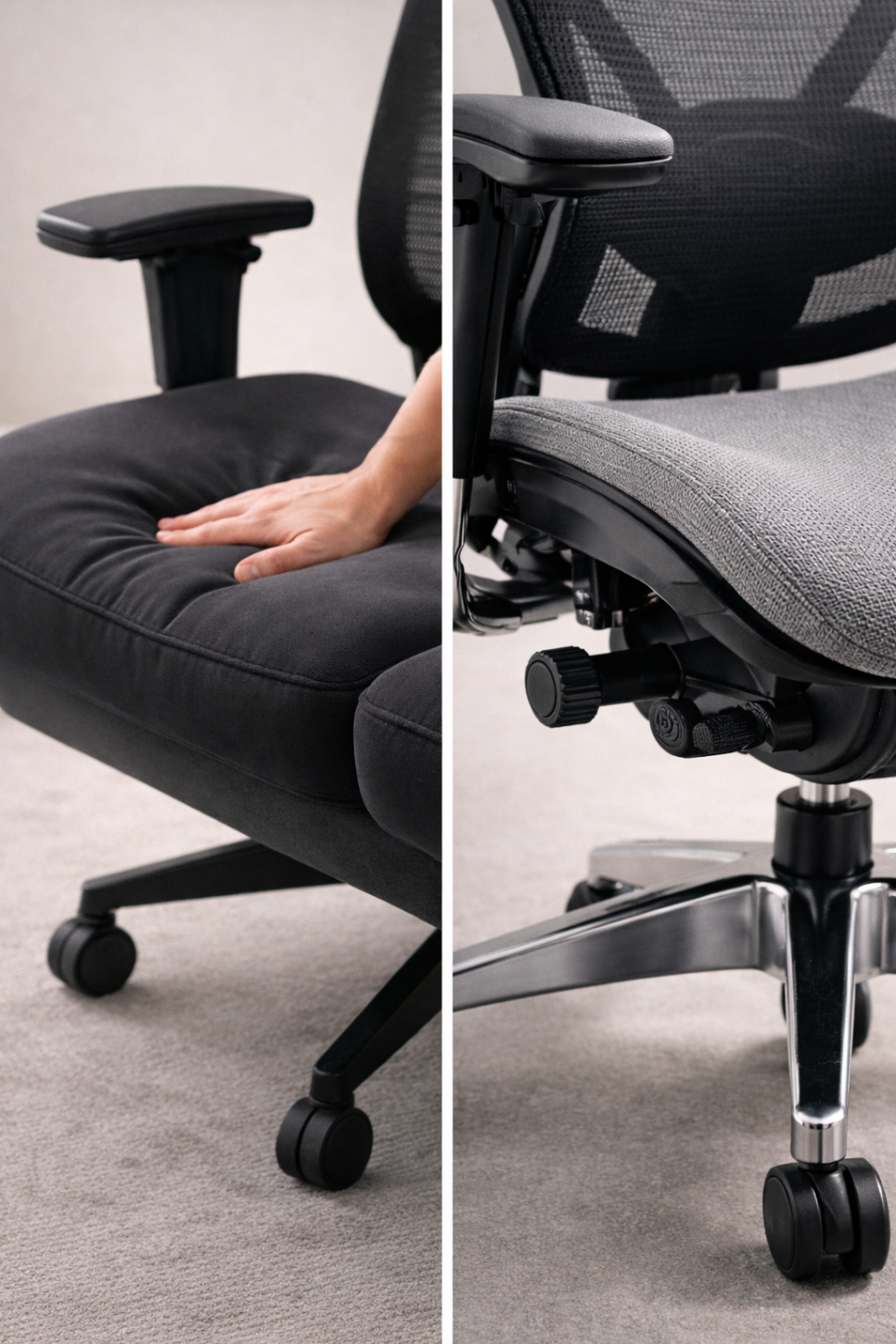
3. Avoiding Adjustments
The core issue: Factory default settings are not personalized to your body.
Common Failure Pattern
Feeling overwhelmed by multiple levers and dials, leaving everything untouched
Never adjusting seat height, depth, armrests, or lumbar support
Concluding "I don't notice any benefit"
Minimum Setup Checklist (These Four Alone Drastically Reduce Failure Rate)
Seat height: Feet flat on floor, knees at 90–110 degrees
Seat depth: Two to three fingers of clearance behind the knee
Armrest height: Elbows naturally supported with shoulders relaxed
Lumbar support: Support point aligned with the curve of your lower back
A premium chair only performs when adjusted. Without setup, it's just an expensive seat.
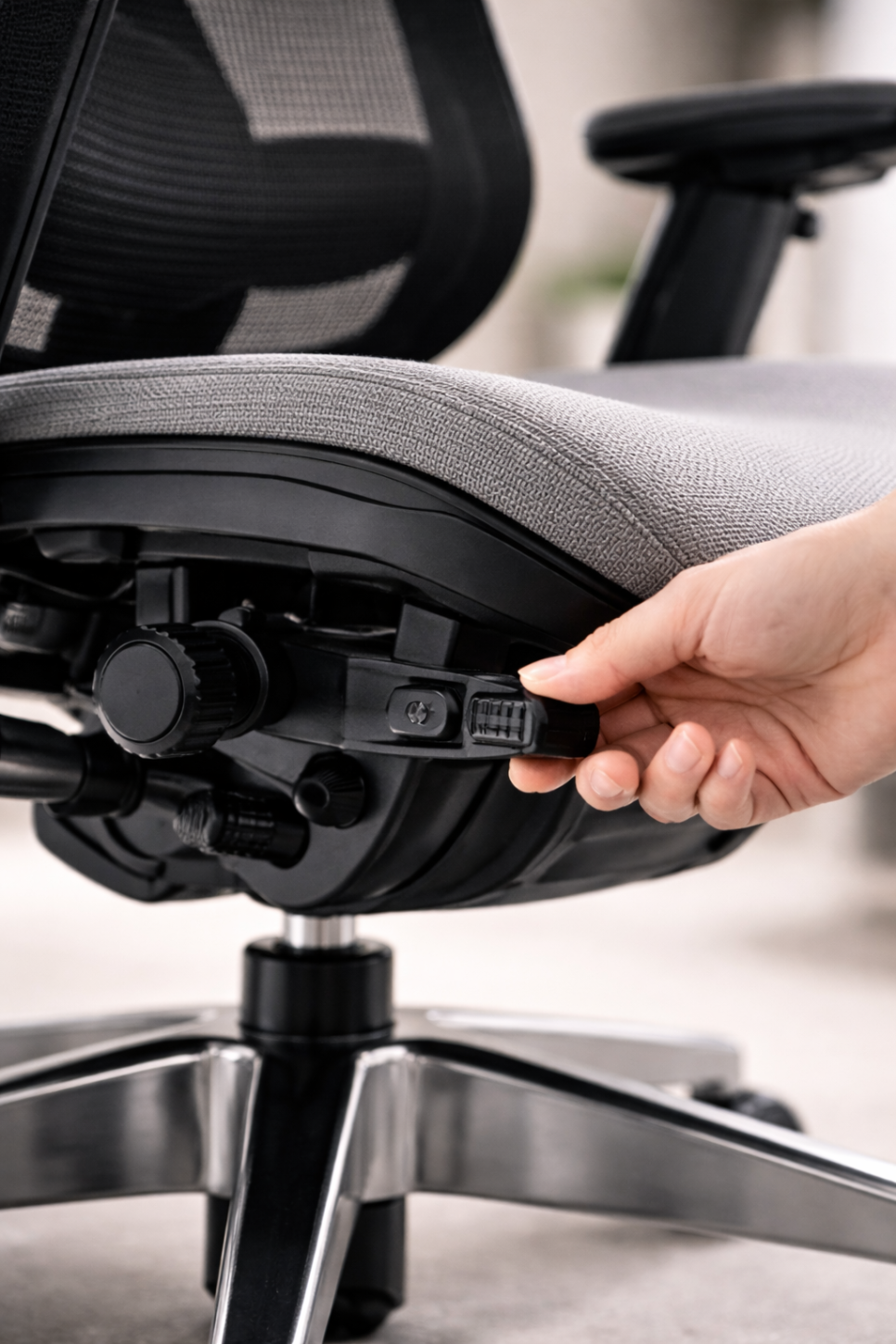
4. Using a Fixed, Static Posture
The core issue: High-end chairs are designed for dynamic sitting, not rigid stillness.
Common Failure Pattern
Remaining nearly motionless for 2–4 hours straight
Locking the tilt mechanism and never using recline
Concluding "I don't feel any difference"
Expert perspective: The best posture is the one that changes frequently. Tilt and recline aren't just for leaning back—they're designed to maintain spinal support even as you shift positions. If you sit rigidly, you're only accessing half the chair's functionality.

5. Changing Only the Chair When the Workspace Is the Problem
The core issue: Much neck and shoulder pain originates not from the chair, but from monitor height and input device placement.
Common Failure Pattern
Neck pain actually worsens after upgrading chairs
Trapezius muscles feel tighter than before
Armrests feel intrusive and end up unused
Frustration: "Why am I more tired after spending so much?"
Environmental Checkpoint
Is the top of your monitor at or near eye level?
Are your keyboard and mouse within comfortable reach?
Does your desk height allow proper armrest adjustment?
The chair stabilizes your lower body and torso. Upper-body and neck strain can only be resolved when your entire workspace is properly configured.

6. Ignoring Body Type Variables
The core issue: Assuming "premium" means "fits everyone."
Common Failure Pattern
Seat pan too long, compressing the back of the thighs
Lumbar support poorly positioned, causing lower back pain
Backrest curvature mismatched, leaving shoulders and mid-back unsupported
Three Key Body Variables
Leg proportions (thigh length): Determines seat depth comfort
Hip width: Affects seat stability and frame interference
Spinal curvature (lumbar and thoracic): Determines backrest fit
The same model can deliver "perfect support" to one person and "annoying pressure" to another.
7. Thinking About Warranty and Service After Purchase
The core issue: Premium chairs are long-term investments.
Common Failure Pattern
Buying without checking warranty duration or coverage
Discovering poor parts availability or long repair lead times only after something breaks
Experiencing steep depreciation when reselling
Key principle: After-sale support is part of the product's value. Reliable warranty coverage, accessible parts, and responsive service aren't extras—they're essential for a chair meant to last a decade or more.
The Most Realistic Way to Avoid Buying Mistakes
Most premium chair failures start with one mistake: making a decision after a brief sit-test.
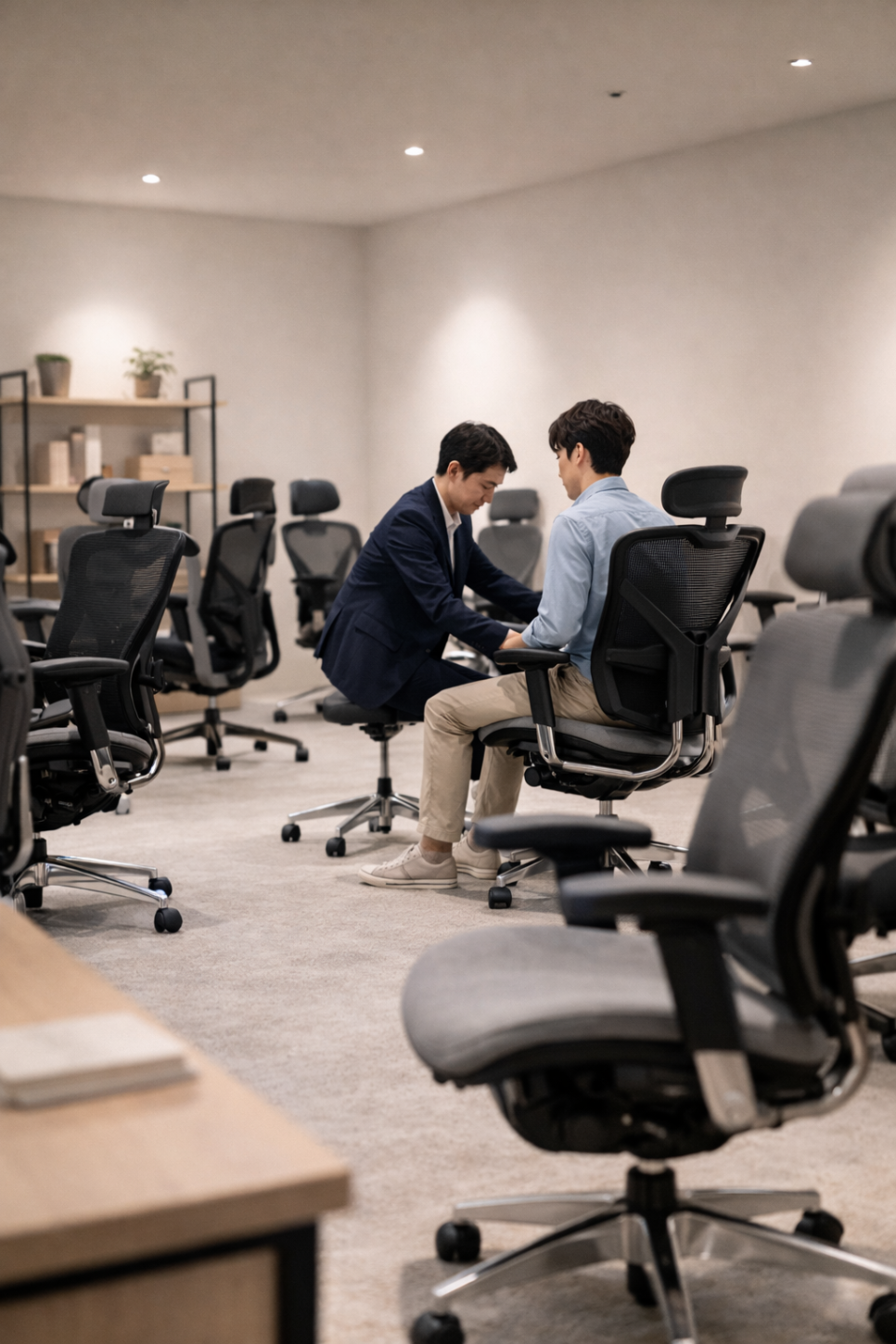
The solution isn't reading more reviews—it's experiencing the chair in conditions that replicate your actual use. If possible, test a chair for at least an hour in a posture and environment similar to your daily work. Bring a laptop, adjust the chair fully, and pay attention to how your body feels after sustained sitting, not just the first impression.
What to Evaluate During an Extended Trial
Your height and weight
How many hours per day you sit
Primary tasks (typing, design work, gaming, meetings, etc.)
The single most uncomfortable aspect of your current chair
Chairs like the Steelcase Gesture, Herman Miller Embody, Steelcase Leap V2, and Haworth Fern are all exceptional—but only when properly matched to your body and workspace. No single model is universally "best."
Investing in a premium chair is worthwhile, but only if you invest the time to ensure it actually fits. Take the guesswork out of the equation: test properly, adjust fully, and buy with confidence.

Furniblog may earn a commission from links in this post, at no extra cost to you. See our affiliate disclosure.