The Best Office Chair Materials for Pet Owners: A Complete Guide
How to choose scratch-resistant chairs when you share your home with cats and dogs
By the Furniblog Editorial Team·July 31, 2026·3 min read
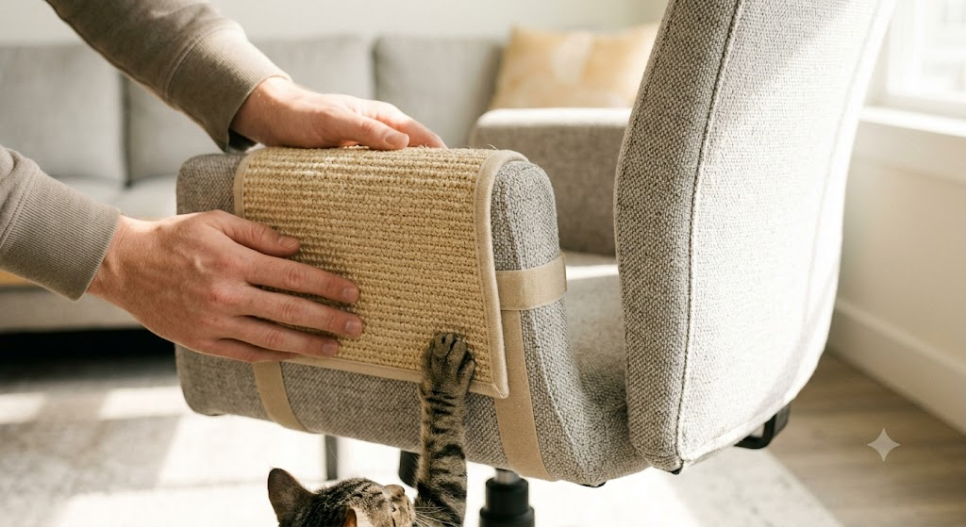
If you share your home with cats or dogs, choosing an office chair becomes a different game. It's not just about lumbar support and adjustability—you need to think about claws, jumping, scratching, and the wear and tear that comes with curious, energetic pets.
Whether you have a cat with a scratching habit or a dog that loves to leap onto furniture, the material of your chair makes a huge difference in how long it will last. Let's break down the three most common chair materials—mesh, fabric, and leather—and see how each stands up to life with pets.
1. Mesh: Breathable but Vulnerable
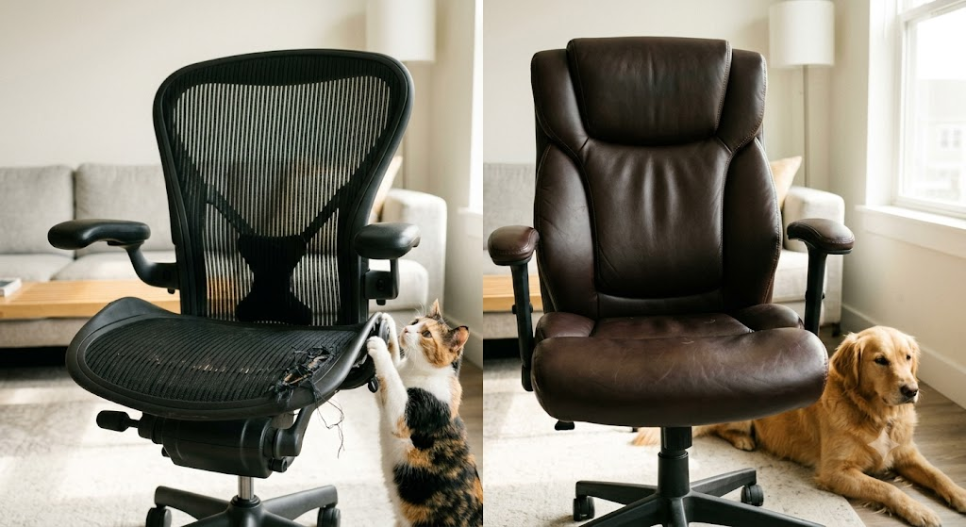
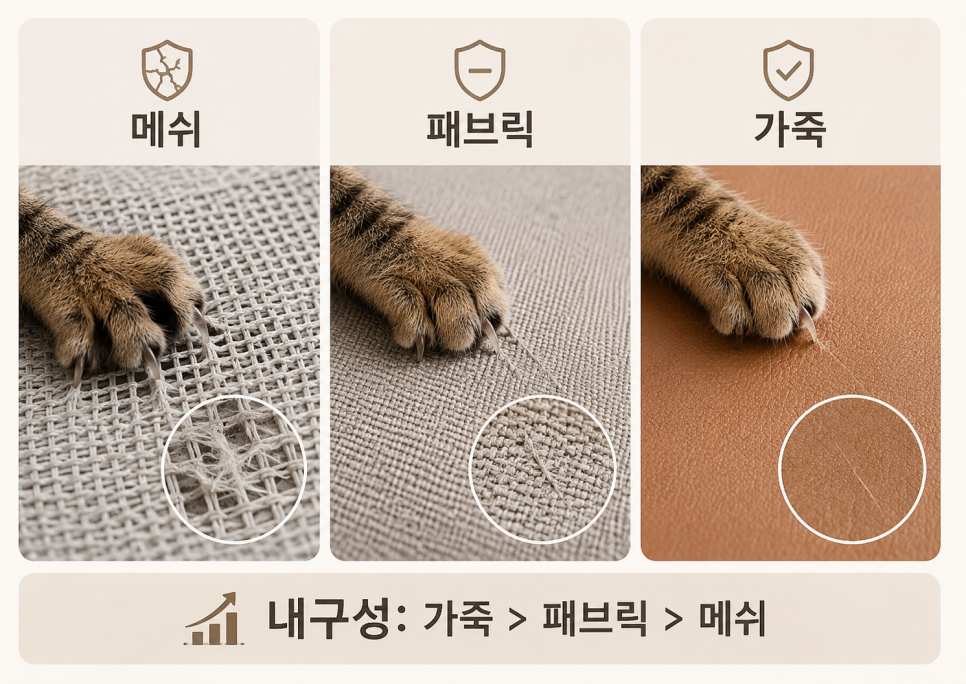
Mesh is a favorite for its breathability and modern look, but it's the least durable option when it comes to pet claws. The problem is structural: mesh is woven in a way that allows a single snag to unravel across a larger area. A small scratch from a cat's claw can quickly become a noticeable tear if left unaddressed.
Not recommended if your cat frequently jumps onto your chair
Damage is difficult to repair partially—often requires replacing the entire seat or backrest panel
If you already own a mesh chair, consider adding a scratch-resistant slipcover or protective mat
Mesh chairs like the Herman Miller Aeron and Steelcase Karman offer outstanding ergonomics, but pet owners should weigh the trade-off carefully.
2. Fabric: Mid-Range Durability
Fabric upholstery is more resilient than mesh, but not all fabrics are created equal. Tightly woven fabrics tend to resist snagging better, while looser, hairier textures are more prone to pulls and snags from claws.
Tightly woven fabrics (like twill or tight weaves) hold up reasonably well against scratching
Looser, textured fabrics are more vulnerable to claw damage
Stain resistance varies—look for treated or performance fabrics if spills are a concern
Quick Tip
If you go with a fabric chair, protect high-contact areas like the armrests and seat edges with small scratching mats or removable fabric covers. This simple step can significantly extend the life of your chair.
Chairs like the Steelcase Leap V2 and Haworth Fern are available in fabric; just pay attention to the weave density when ordering.
3. Leather: The Most Durable Choice
When it comes to scratch resistance, leather is your best bet—especially full-grain or top-grain leather with some thickness to it. Genuine leather can take minor scratches and often be treated with leather conditioner or cream to minimize their appearance. However, not all "leather" is the same.
Genuine leather: Most scratch-resistant; shallow marks can often be buffed out or treated with conditioning cream
Synthetic leather (faux leather, leatherette): More affordable, but once it tears, it's very hard to repair and tends to peel over time
Consider adding thin protective covers on high-contact zones if your pet has particularly sharp claws
Leather versions of chairs like the Herman Miller Embody or Herman Miller Eames Lounge Chair offer both elegance and resilience in pet-friendly homes.
Brand-Specific Considerations for Pet Owners
Brand | Pet Owner Notes |
|---|---|
Herman Miller | Leather options on models like the Embody and Cosm offer strong durability |
Okamura | Fabric lines tend to use tightly woven materials; mesh models require caution |
Kokuyo | Many models mix fabric and leather—check which material is used on high-contact areas |
Itoki | Proprietary materials like Respitech offer better durability than standard mesh |
Knoll | Leather upholstery options are easier to maintain and repair against scratches |
Bottom Line: Material Durability Ranking
If you live with pets, prioritize materials in this order:
Leather > Fabric > Mesh
That said, if you already own a mesh chair or prefer one for its breathability, don't worry—simple protective measures like scratch mats, slip covers, or training your pet to use a designated scratching post can go a long way in preserving your chair.
Choosing a chair is about balancing your ergonomic needs with the realities of your home. With a little foresight and the right material, you can enjoy both a comfortable workspace and a happy, active pet.

Furniblog may earn a commission from links in this post, at no extra cost to you. See our affiliate disclosure.