The Best Office Chairs for Larger Body Types: 4 Expert Recommendations
Finding the right ergonomic chair when standard sizes feel cramped
By the Furniblog Editorial Team·July 31, 2026·5 min read
High-end ergonomic chairs are typically designed around average Western body dimensions, which leads many to assume that standard sizes should fit larger users just fine. But the reality is more complex. When you're taller, heavier, or broader-shouldered, a chair that works for the "average" user can quickly become uncomfortable—or even unsafe.
Larger body types face specific challenges that go beyond simply needing a bigger seat. Weight capacity limits, concentrated pressure points, heat buildup during long sessions, and armrest width all become critical factors. This guide explores four common pain points for larger users and recommends a chair engineered to solve each one.
1. Weight Capacity: It's Not Just About Sizing Up
Many people assume that choosing a larger size means you simply get a bigger seat. In reality, when a manufacturer offers multiple size options, each variant is often engineered from the ground up with different frame thickness, spring tension, mechanism reinforcement, and maximum user weight ratings.
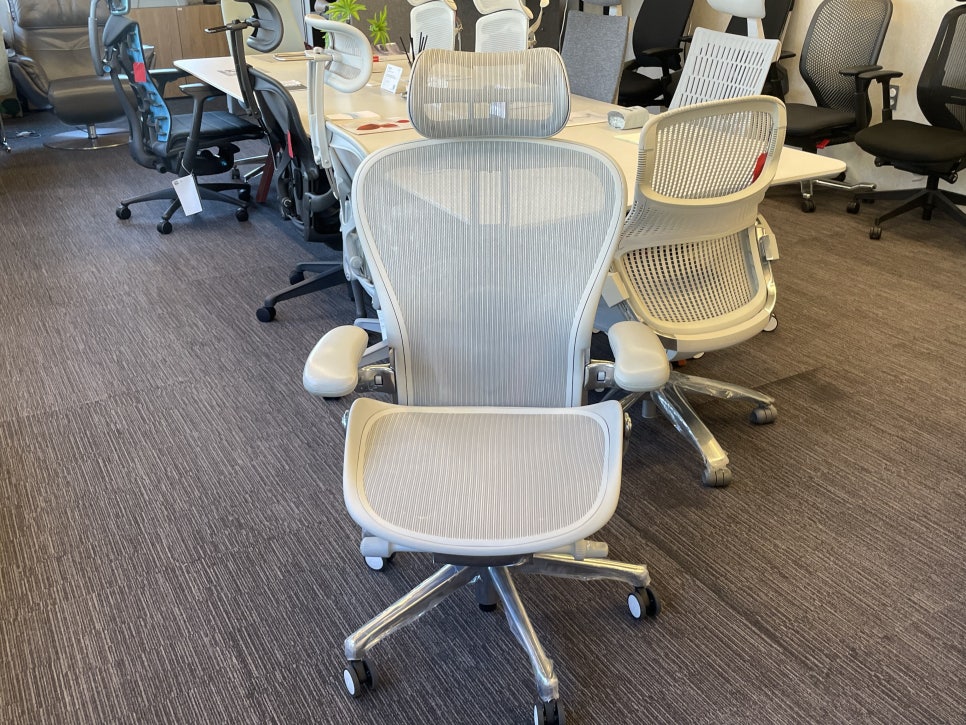
The Herman Miller Aeron is a prime example. Its three sizes—A, B, and C—don't just differ in seat dimensions; they're designed to support entirely different weight ranges:
Size | Max User Weight | Seat Depth |
|---|---|---|
A | ~300 lbs (136 kg) | ~16.4 in (41.6 cm) |
B | ~350 lbs (159 kg) | ~16.9 in (43 cm) |
C | ~400 lbs (181 kg) | ~18.9 in (48 cm) |
The C size isn't just wider—it features a reinforced frame and mechanism built to handle sustained use at higher weights. This is crucial for long-term safety and durability.
Recommended Solution: Herman Miller Aeron Size C
With the widest seat depth (approximately 18.9 inches) and the highest weight capacity (around 400 pounds), the Aeron Size C is purpose-built for larger frames. It's not simply an oversized version of the standard model—it's a separately engineered grade designed to provide stable, safe support day after day.
2. Pressure Distribution: Avoiding Concentrated Load Points
When you carry more weight, physics works against you on traditional chairs. Pressure equals force divided by area—so if a chair's seat pan is narrow or has a rigid frame edge, your weight concentrates on a smaller contact patch, dramatically increasing pressure on your sit bones and thighs.
Over time, this concentrated pressure restricts blood flow, leading to numbness, tingling, and discomfort. The solution isn't just a wider seat—it's a seat that actively redistributes pressure as you move.
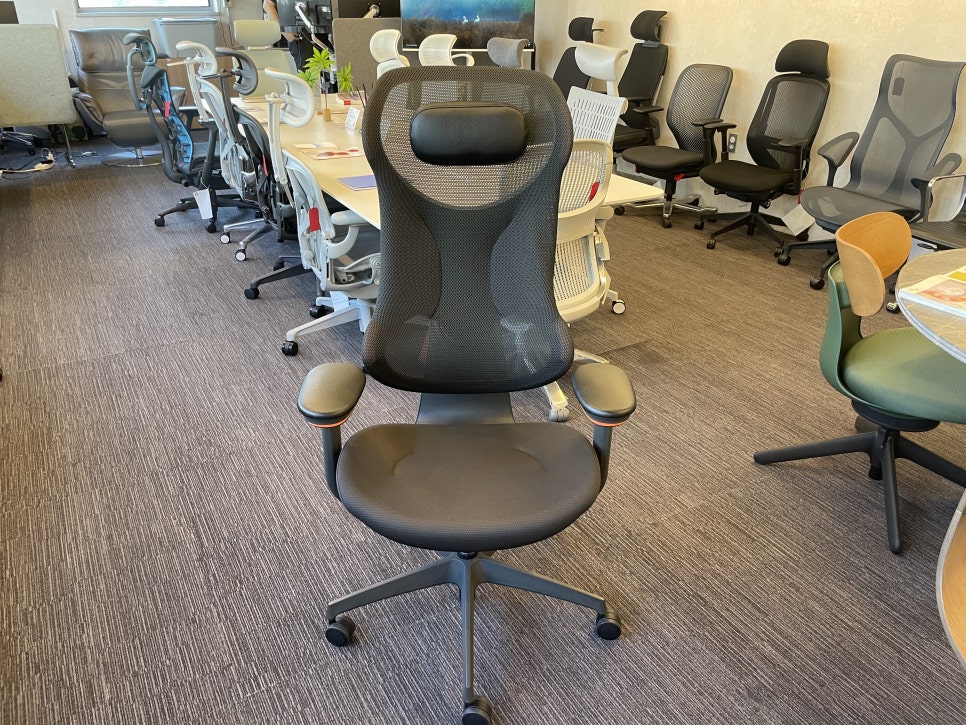
Recommended Solution: Kokuyo Ing Cloud
The Kokuyo Ing Cloud tackles pressure distribution with a frameless "3D hammock mesh" seat that wraps around your body rather than pushing back against it. Its "3D Ultra AutoFit" mechanism continuously adjusts as you shift your weight, spreading load across a wider surface area.
The seat width is a generous 28.3 inches (approximately 72 cm), and the front edge curves gently downward—eliminating the hard edge that can dig into the underside of your thighs. For users with thicker legs, this design allows comfortable seating without needing to manually adjust seat depth.
3. Heat Buildup and Recline: Staying Cool During Long Sessions
Larger body surface area and higher body mass generate more heat. When you're leaning back during a marathon gaming session or deep work, that heat has nowhere to go—it just builds up between your back and the chair.
Standard mesh provides airflow, but for serious heat management, you need materials that actively absorb and dissipate thermal energy, combined with a recline mechanism that supports your full weight at steep angles.
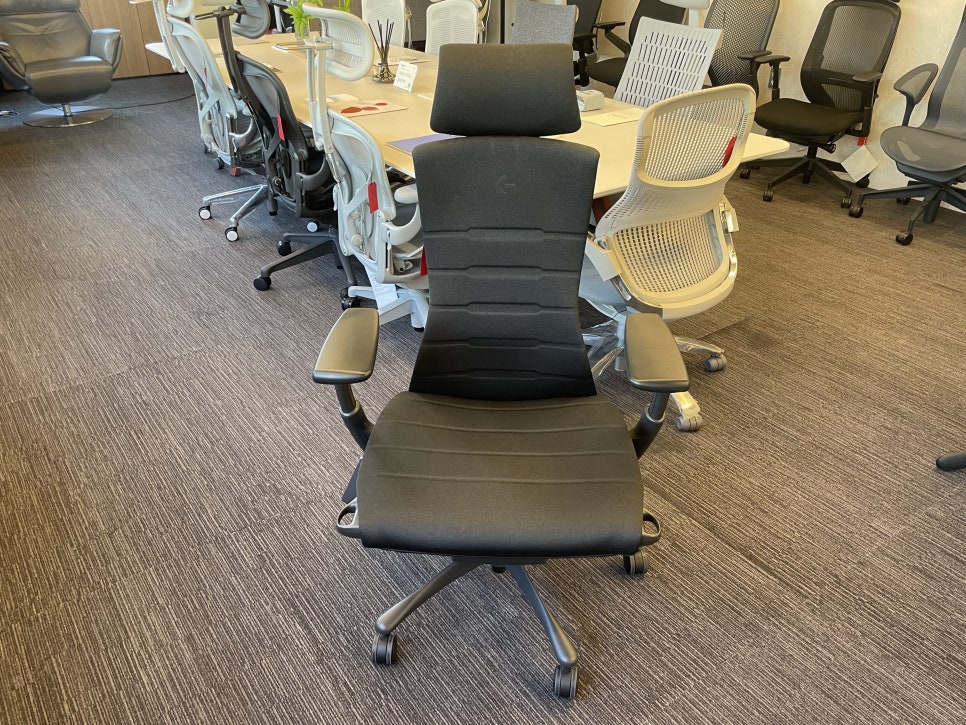
Recommended Solution: Herman Miller Embody Gaming Edition
The Herman Miller x Logitech G Embody Gaming Chair adds a copper-infused cooling foam layer to the standard Embody's already advanced BackFit system. This material absorbs heat during extended contact, keeping your back cooler over time.
The seat width is approximately 29.5 inches (75 cm), and if you opt for the extended-height cylinder, the seat height can reach up to 22 inches (56 cm)—ideal for taller, larger users. The BackFit adjustment lets you dial in the spine support curve to match your torso length, and the deep recline range ensures stable support even when you lean way back.
4. Armrest Width and Shoulder Clearance
If you have broad shoulders, standard armrests present a frustrating paradox: you need them wider apart to avoid hunching inward, but most 4D armrests only pivot 20–30 degrees from center—not nearly enough clearance.
When armrests force your elbows inward, your shoulders roll forward and your neck compensates, leading to chronic tension and pain. You need armrests that can swing outward and stay rock-solid under load.
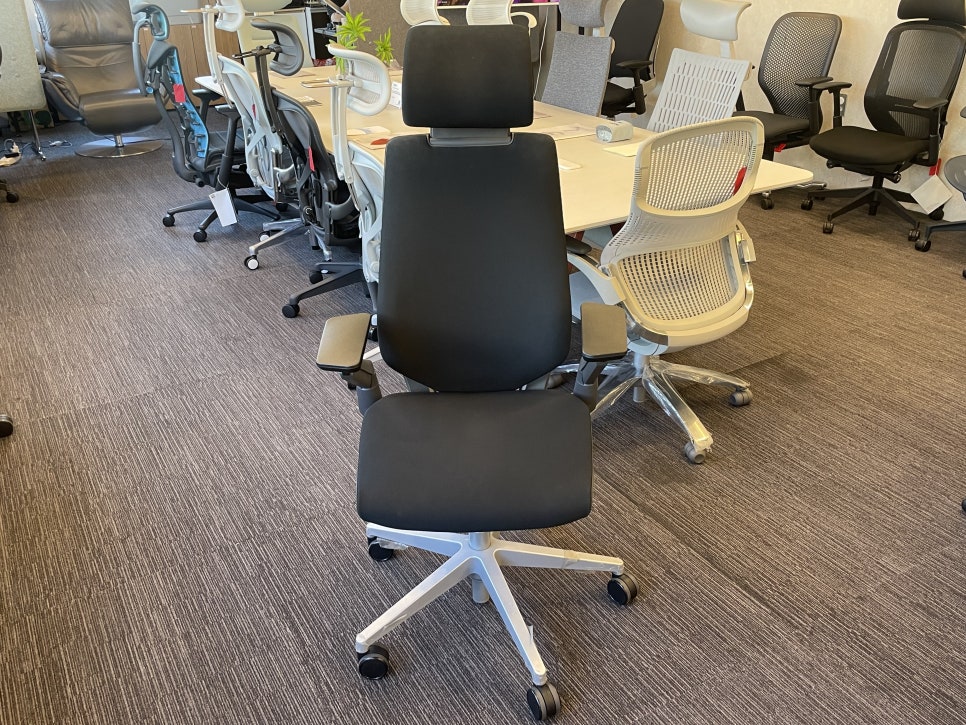
Recommended Solution: Steelcase Gesture
The Steelcase Gesture features 360-degree pivoting armrests that can swing far wider than typical 4D designs, giving broad-shouldered users the clearance they need. The backrest is approximately 16.1 inches (41 cm) wide, providing ample support for a wide upper back.
Gesture is rated for users up to 400 pounds (181 kg), and its synchronized tilt mechanism is backed by a 12-year warranty—proof of its engineering for sustained heavy use.
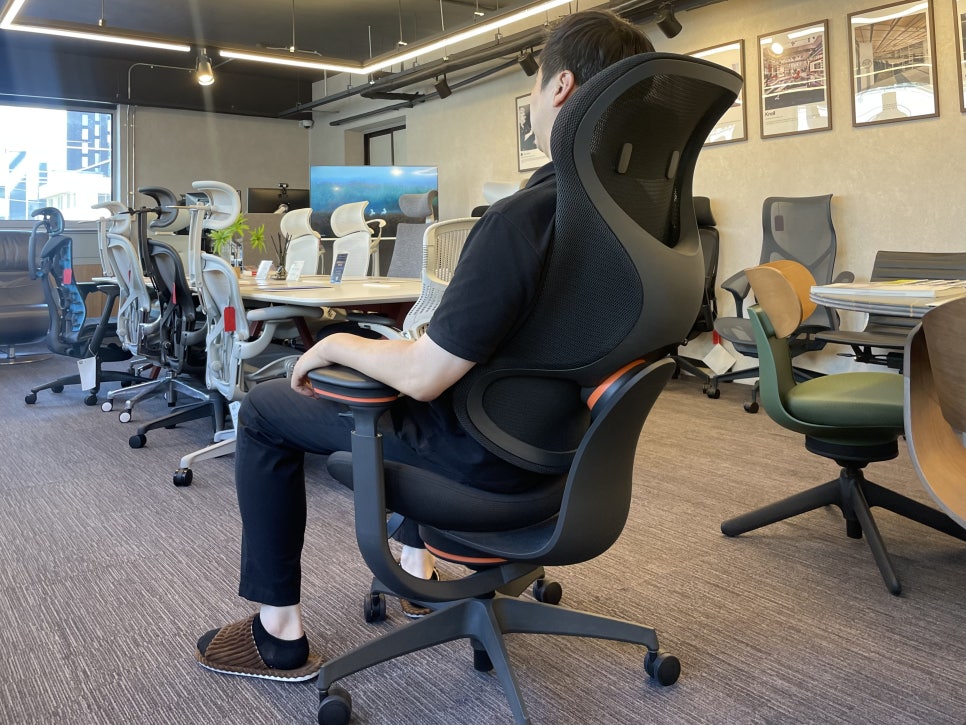
At a Glance: Matching Problems to Solutions
Weight Capacity & Durability: Herman Miller Aeron Size C – Reinforced frame and 400 lb capacity
Pressure Distribution: Kokuyo Ing Cloud – Frameless hammock mesh spreads load dynamically
Heat & Recline: Herman Miller Embody Gaming – Copper cooling foam and deep recline support
Armrest Width & Shoulders: Steelcase Gesture – 360° armrests and wide backrest
Final Thoughts
Choosing an office chair for a larger body type isn't about finding the "big and tall" version of a standard model. It's about identifying the specific ergonomic challenges your build presents—whether that's weight distribution, thermal comfort, or shoulder clearance—and selecting a chair engineered to address them.
Body proportions and sitting habits vary widely, so if possible, test these chairs in person. Pay attention not just to initial comfort, but to how the chair responds when you shift positions, recline, or spend an hour working. The right chair should feel like it was built around you—because in a sense, it was.

Furniblog may earn a commission from links in this post, at no extra cost to you. See our affiliate disclosure.