When War Comes, Eat Your Chair: 7 Designers Making Furniture from Chocolate, Mushrooms, and Tofu
From bread sofas to survival chocolate chairs—the wild material experiments redefining furniture design
By the Furniblog Editorial Team·July 10, 2026·9 min read
What If Your Chair Was Made to Be Eaten?
Right now, you're probably sitting on wood, leather, steel, or fabric—the conventional materials we've come to expect from furniture. But a radical group of designers around the world is running headlong in a completely different direction, asking provocative questions like: "Is this furniture or emergency rations?" and "Do I sit on it, or eat it?"
From sofas built entirely from real bread loaves, to survival chairs made from 24kg of white chocolate, to 3D-printed seats grown from living mushroom mycelium, these seven material experiments challenge everything we thought we knew about what furniture can be made from—and what it can become.
Seven Material Revolutions: Eat It, Grow It, or Let It Decompose
01. Gab Bois — Loafa Sofa: The Viral Bread Sofa That Broke the Internet
Origin: Montreal, Canada
Year: 2022
Medium: Visual art / Instagram phenomenon
Gab Bois, a Montreal-based visual artist who originally dreamed of becoming an elementary school teacher, started posting photos of food transformed into furniture on Instagram. When the response exploded, she dropped out of school to pursue art full-time.
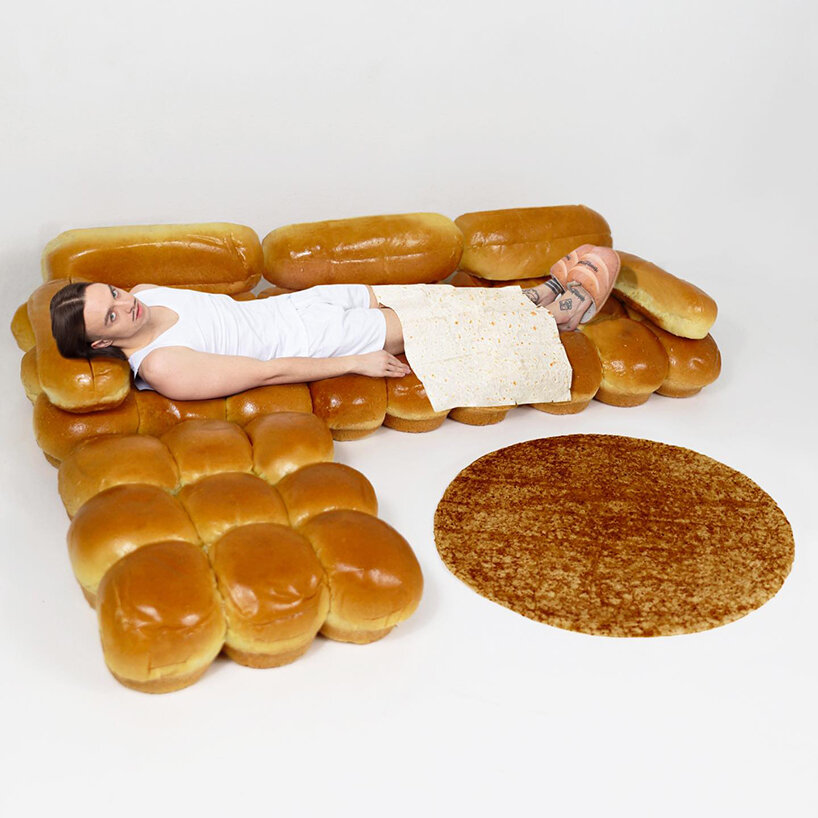
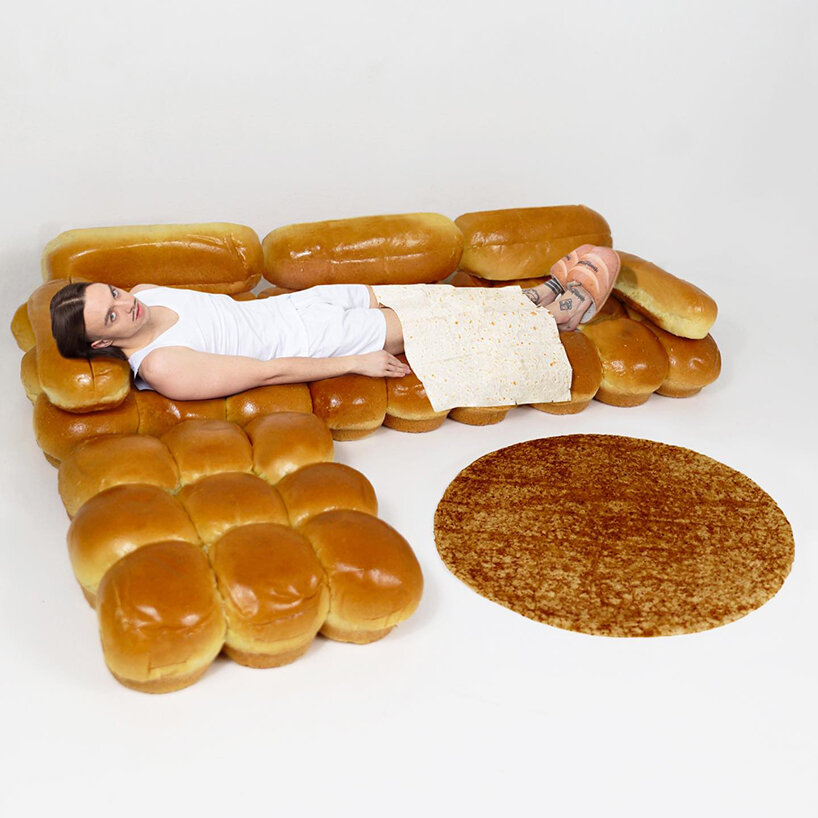
Her signature work, the Loafa Sofa, reimagines Mario Bellini's iconic 1970s Camaleonda sofa using more than 40 brioche buns stitched together. When hip-hop artist Tommy Cash posted on Instagram claiming IKEA would produce it if the post got 10,000 comments, the internet responded with over 12,000 comments in just days. Though IKEA later denied any official collaboration, the Loafa Sofa had already etched itself into design history.
Bois has since created dozens of food-furniture hybrids—popcorn armchairs, strawberry cake sofas, and pasta seat cushions—earning features in Vogue, Elle, and major design publications worldwide.
Key Facts:
Original inspiration: Mario Bellini's Camaleonda sofa (1970s)
Materials: 40+ brioche buns
Viral engagement: 12,000+ comments
Imaginary IKEA tag: "Do not iron. Do not dry clean. Do not eat."
02. Studio CoPain — T170: The Chair Baked in a Real Oven
Origin: Paris, France
Studio name meaning: CoPain = Co (collaboration) + Pain (bread in French)
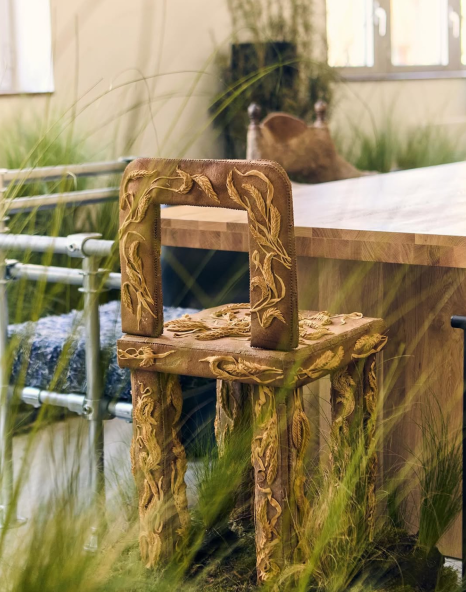
If Gab Bois experiments with what we see, Paris-based Studio CoPain experiments with what we can actually make. True to their punny name, they created a chair using only flour, yeast, and water—then baked it in an actual oven.
This isn't a model or a sculpture. It's a fully functional chair, baked like bread, that layers humanity's oldest food tradition onto one of our most essential pieces of furniture. The cultural symbolism of bread—survival, sharing, sustenance—overlaps with the everyday necessity of a chair, creating a poetic statement: eating is life, and sitting is living.
Key Facts:
Materials: Flour + yeast + water—100% real bread
Production method: Baked in a real oven
Concept: Cultural symbolism of bread meets the utility of furniture
03. Lanzavecchia + Wai — Chocolate Chair: Eat Your Cushion When the Crisis Hits
Origin: Italy × Singapore
Debut: Milan Salone del Mobile 2013
Series: Austerity—Furniture for Times of Crisis
Italian designer Francesca Lanzavecchia and Singaporean designer Hunn Wai shook the design world at the 2013 Milan Furniture Fair with their Austerity collection—a series of edible furniture pieces designed for economic collapse.
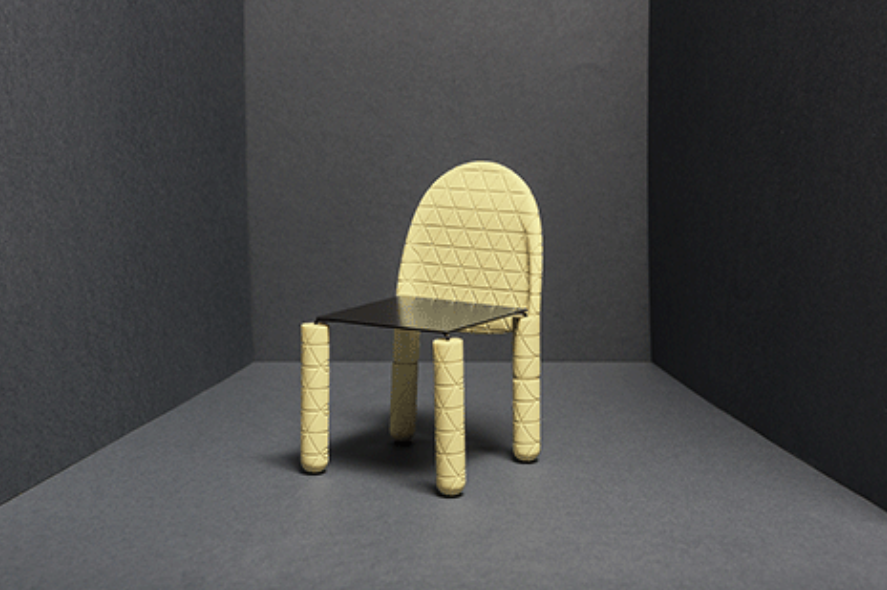
The Chocolate Chair features a minimal 2.7kg black iron frame, topped with 24kg of white chocolate (comprising 4.8kg cocoa butter, 3.6kg milk solids, 12kg sugar, 0.5L vanilla, and 0.4kg salt) forming the backrest and legs. In normal times, it's a stool. In a disaster or economic depression, you break off pieces of the seat and eat them to survive.
The designers describe it as "a work that makes us reconsider what the basic necessities really are." It's survival furniture with a message.
Key Facts:
Frame: 2.7kg black iron
Chocolate: 24kg white chocolate
Concept: Survival furniture for economic crisis
Debut: Milan Salone del Mobile 2013
04. Lanzavecchia + Wai — Grains Sofa: When You Cook Rice from Your Living Room
Series: Austerity (continued)
Materials: 195kg rice + 19.5kg dried beans
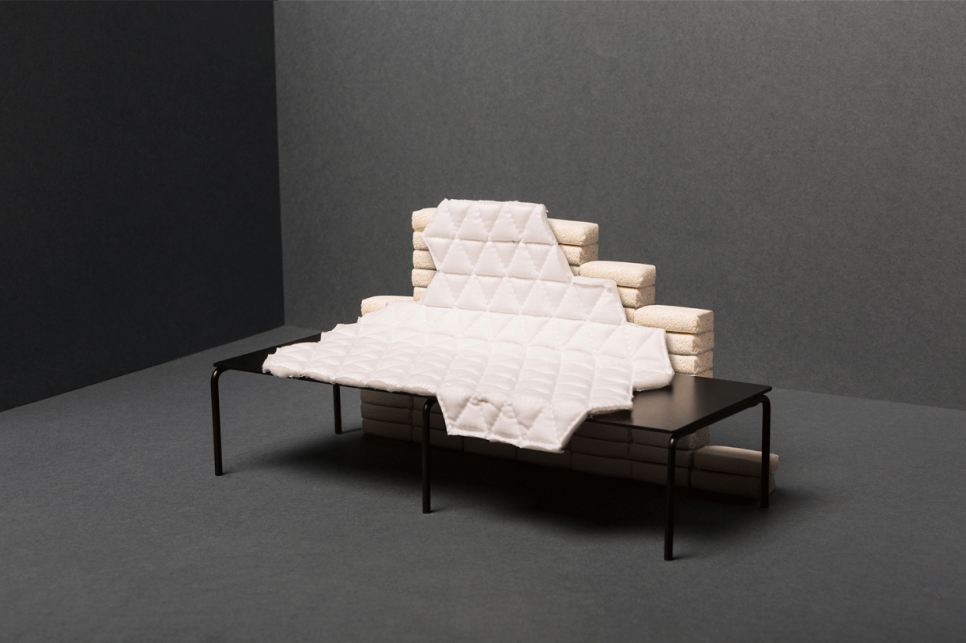
Another piece from the Austerity collection, the Grains Sofa takes the concept even further. Built on an 18.6kg black iron base, the backrest and armrests are constructed from 195 individual 1kg rice bricks adhered with starch paste. The cushion is a cotton quilt filled with 19.5kg of dried beans.
This work was a direct response to the 2012–2013 Eurozone financial crisis. The designers' statement: "In good times, we don't see the furniture. In crisis, only the essentials remain." The piece was re-exhibited at MaterialDistrict Rotterdam in 2019, reaffirming its relevance.
Key Facts:
Rice bricks: 195kg (195 × 1kg blocks, starch adhesive)
Bean cushion: 19.5kg dried beans + 3kg cotton
Context: Response to 2012–2013 Eurozone crisis
Later exhibition: MaterialDistrict Rotterdam 2019
05. Leonardo Talarico — Tofu Chair: Turning the Softest Food into a Structural Material
Origin: Milan, Italy
Designer: Born 1988, named one of Italy's top 15 talents under 35 at age 23
Leonardo Talarico studied at Central Saint Martins in London and IULM in Milan, and has collaborated with Cappellini, Tod's, and Mercedes-Benz. His Tofu Chair began with a simple question: "Can I make a chair from one of the softest foods in the world?"
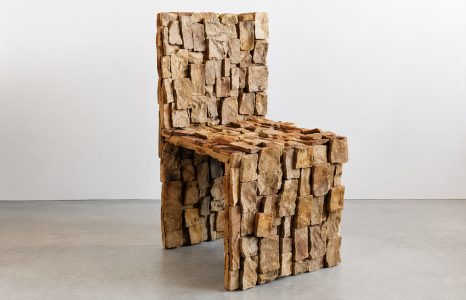
The answer involved completely dehydrating blocks of tofu, then subjecting them to thermal shock treatment to transform them into a rigid structural material. These hardened tofu blocks are stacked and assembled into a chair form, then finished with a natural color coating. The result is an exploration of the structural limits of food—reimagining something soft and fragile as load-bearing and durable.
Key Facts:
Material: Dehydrated, thermally shocked tofu blocks
Process: Drying → thermal shock → stacking → natural coating
Accolade: Italy's top 15 talents under 35 (Case da Abitare)
Concept: Exploring the structural potential of soft food materials
06. Eric Klarenbeek — Mycelium Chair: A Living Chair Grown from Mushroom Roots
Origin: Netherlands
Collaboration: Aachen University
Debut: Dutch Design Week 2013, Eindhoven
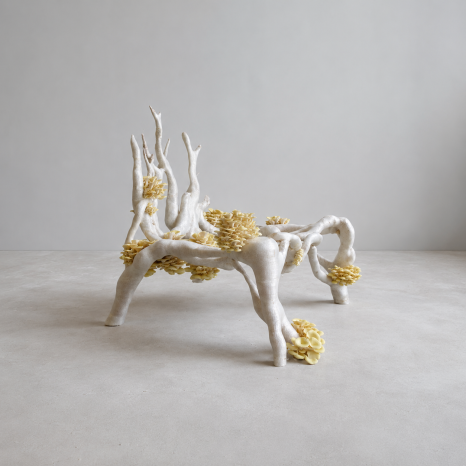
Dutch designer Eric Klarenbeek, working with scientists at Aachen University, developed the world's first technique to 3D-print living mycelium—the root structure of mushrooms. Unveiled at Dutch Design Week in 2013, this chair represents years of research dating back to 2011.
The process works like this: mushroom mycelium (thread-like fungal roots) is mixed with powdered agricultural waste straw and water to create a paste. This mixture is loaded into a custom-modified 3D printer and extruded layer by layer into a chair shape. After printing, the object is submerged in water for several days, during which the mycelium grows and binds the structure together naturally. Once dried to halt growth, the result is a lightweight, cork-like material. The outer shell is 3D-printed from bioplastic, and real mushrooms grow on the surface—making it a truly living chair.
When the chair reaches the end of its life, you can bury it in the ground. It will fully decompose and return nutrients to the soil, becoming compost for new plants.
Key Facts:
Materials: Mycelium + straw powder + water + bioplastic
Innovation: World's first living mycelium 3D printing
Carbon footprint: Negative (absorbs CO₂)
End of life: 100% compostable, fully biodegradable
Why Mycelium Matters: The Future of Architecture
Klarenbeek has stated, "This technology doesn't stop at chairs. We can make tables, entire interiors, even houses this way." In fact, mycelium-based materials are being researched by NASA for space habitat construction, and brands like Nike are investing in mycelium-based vegan leather. An experiment that started with a single chair is now transforming entire industries.
07. Aléa Studio — Dirty Chair N.8: Fashion Waste Meets Fungus
Origin: Paris, France
Materials: Discarded denim + mushroom mycelium + soil
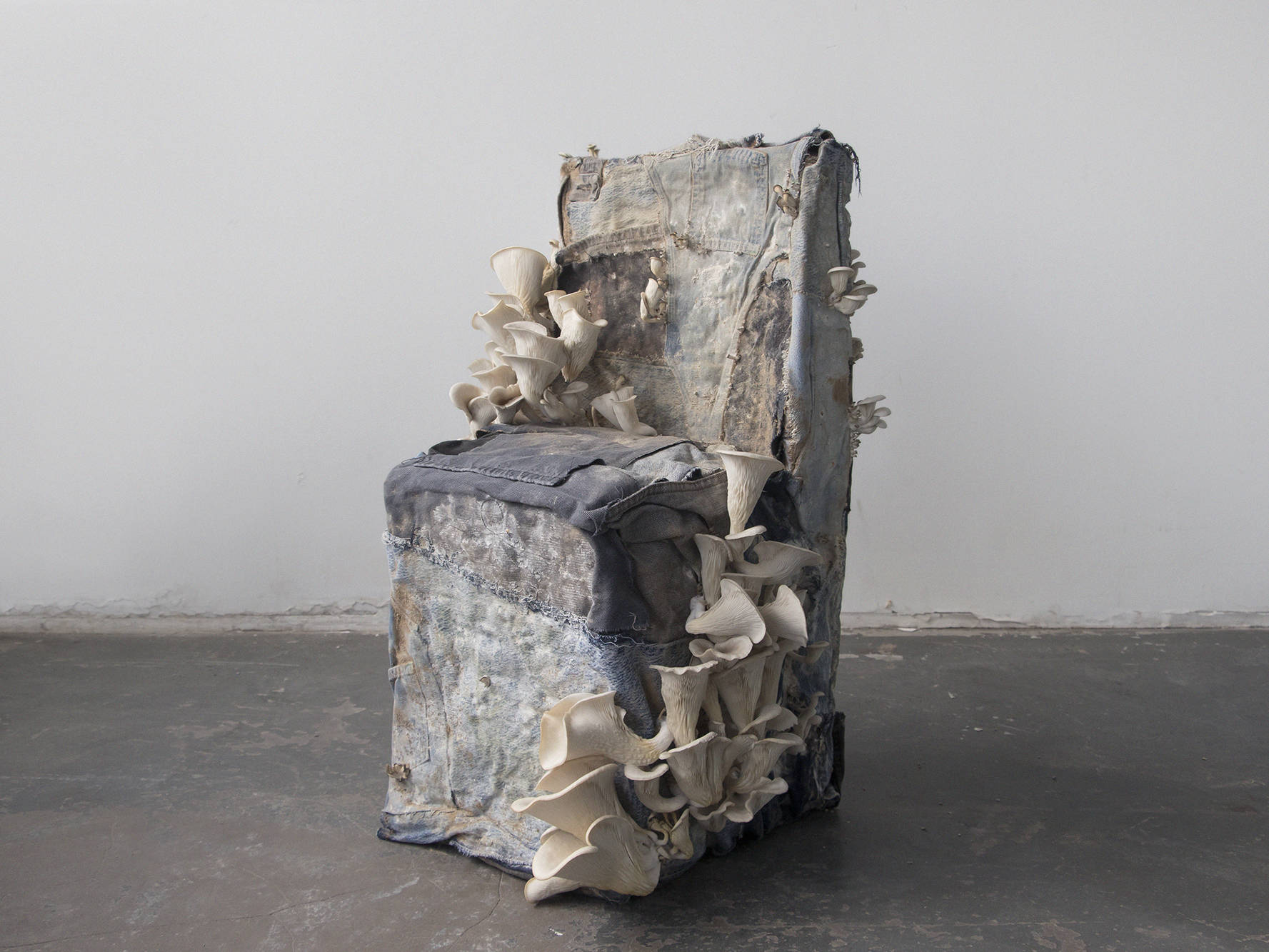
Paris-based bio-design studio Aléa turned its attention to the mountains of denim scraps discarded by the fashion industry every year. By placing these fabric remnants into a tank with soil and mushroom mycelium, the mycelium threads grow through the denim fibers, acting as a natural glue and forming a uniquely textured composite material.
The Dirty Chair N.8, made entirely using this method, contains no plaster or synthetic adhesive—just bio-materials. The vintage indigo blue of torn jeans combines with the organic texture of mycelium to create a surface that is one of a kind. It's a circular aesthetic: fashion waste becomes sittable art.
Key Facts:
Main material: Discarded denim scraps
Binder: Mushroom mycelium (no glue, fully bio-based)
Process: Tank cultivation / bio-growth
Result: One-of-a-kind indigo-blue texture
Why We Should Pay Attention: Today's "Crazy" Is Tomorrow's Masterpiece
If you're thinking, "These are interesting, but I can't actually sit on them at home," consider this: seventy years ago, the design world said the same thing.
In 1967, when Verner Panton proposed molding a single piece of plastic into a chair with no separate legs, manufacturers said it was impossible. In 1956, when Charles and Ray Eames adapted military plywood-molding technology to create a lounge chair, critics called it radical. In 1925, when Marcel Breuer bent steel bicycle tubing into a chair frame, the world had only ever known wood.
Today, those experiments are million-dollar original masterpieces housed in MoMA and museums worldwide. Some of today's mushroom chairs and tofu stools will inevitably join them.
Furniture is never just a tool. It is a synthesis of human imagination, technology, and the philosophy of its era—a total work of art.
The Legacy of Original Masterpieces
The seven works featured here remain largely at the conceptual or experimental stage. But the spirit they embody—an endless questioning and challenging of materials and structure—is the same spirit that gave birth to every high-end original design chair we can collect today.
Three Lessons from Radical Experiments
1. Visionary experiments lead to iconic furniture
Le Corbusier's chrome steel tube chairs (1928), the Eameses' molded plywood lounge chair (1956), Panton's single-piece plastic chair (1967)—all were considered outrageous in their time. Today's mycelium and tofu chairs belong to the same lineage.
2. Soulless copies cannot replicate this depth
Master designers invest years—sometimes decades—perfecting material research and structural philosophy. That precision, those proportions, that material integrity live only in the originals. Copies mimic the silhouette but never capture the essence.
3. True collectors know where to look
Original furniture appreciates over time, growing in rarity and cultural significance. Collecting it is not mere consumption—it's acquiring a piece of an era's philosophy. And it begins with the discernment to recognize the real thing.
Whether you're drawn to a classic like the Herman Miller Eames Lounge Chair, the engineered comfort of the Herman Miller Aeron, or the sculptural beauty of the Vitra Panton Chair, understanding the experimental spirit behind great design deepens your appreciation—and sharpens your eye for what will endure.
The designers featured here prove that the future of furniture may taste like chocolate, grow like a mushroom, or decompose like bread. And somewhere in that madness lies the next masterpiece.

Furniblog may earn a commission from links in this post, at no extra cost to you. See our affiliate disclosure.