Who Invented the First Office Chair? A Victorian Innovation Too Radical for Its Time
From Darwin's wheeled armchair to the Centripetal Spring Chair of 1849
By the Furniblog Editorial Team·July 9, 2026·5 min read
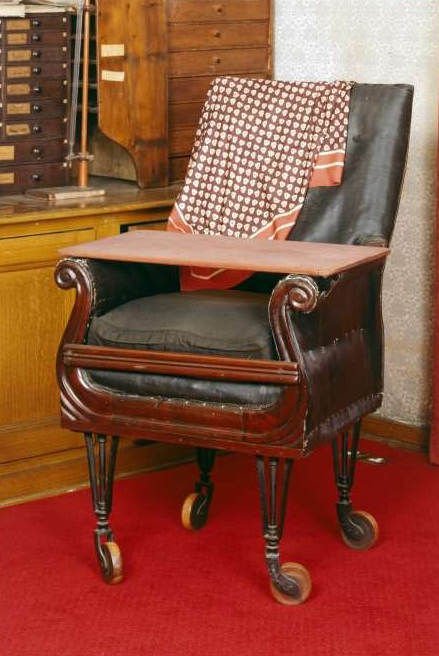
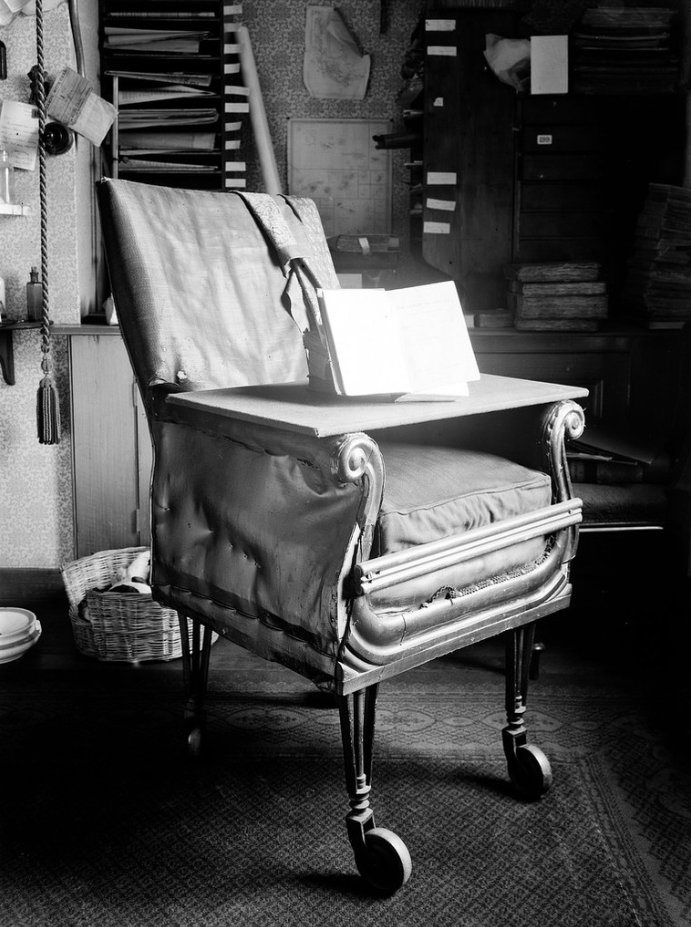
Darwin's Wheeled Chair: Ingenious, but Not the First Office Chair
When asked "Who invented the first office chair?" many people point to Charles Darwin. In the late 1830s, the naturalist famously attached casters to his armchair so he could roll between specimen cabinets in his study. It was a clever hack driven by personal need—but it was exactly that: a modification, not an invention.
Darwin's chair solved the problem of mobility, but it wasn't designed for office work or commercial production. To find the true origin of the office chair as we know it, we need to look a decade later—and across the Atlantic.
The Birth of the First Commercial Office Chair (1849)
The real office chair was born alongside the Industrial Revolution and the explosive growth of railroads in the mid-19th century. As corporations expanded rapidly, a new class of worker emerged: white-collar employees who spent entire days sitting indoors, managing correspondence, accounts, and logistics. For the first time in history, seated productivity became a business concern.
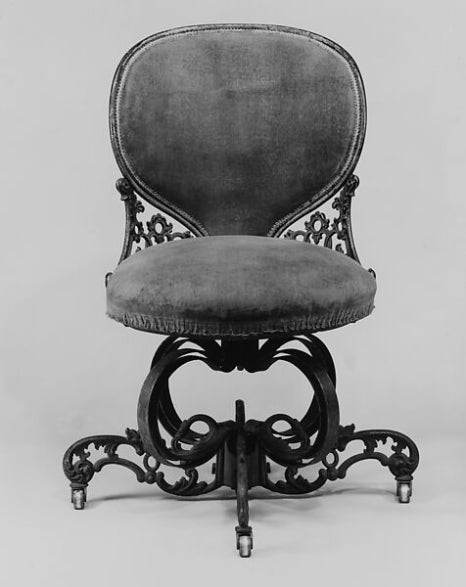
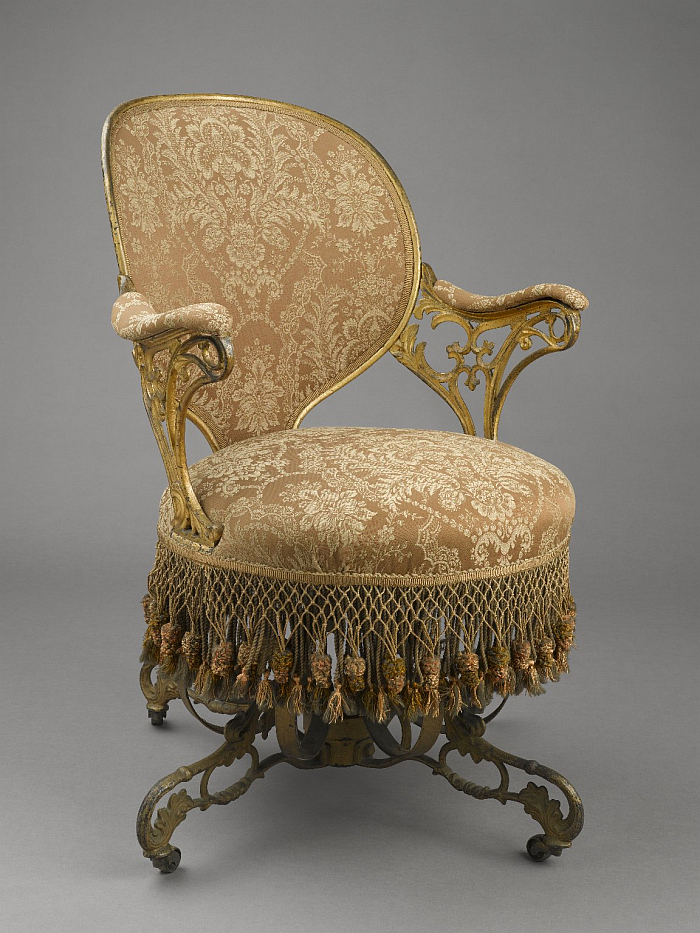
Enter Thomas E. Warren, an American inventor who responded to this new reality with a groundbreaking design. In 1849, Warren patented the Centripetal Spring Chair—the world's first commercially produced office chair.
The name "Centripetal" referred to the chair's ability to respond dynamically to the user's center of gravity, pivoting and tilting organically as the sitter moved. It was a mechanical marvel.
A Chair 150 Years Ahead of Its Time
What makes Warren's invention so remarkable is that it already incorporated nearly every feature we associate with high-end ergonomic chairs today:
Casters: wheels for free movement around the workspace
360-degree swivel: allowing the user to rotate and reach documents in all directions
Omnidirectional tilting: the seat could tilt forward, backward, and sideways in response to body movement
Spring suspension: eight concealed steel springs supported all this motion and absorbed the user's weight
The spring technology itself came from an unlikely source: railroad passenger cars. Trains of the era were notoriously uncomfortable, so engineers developed steel spring suspension systems to absorb shocks from rough tracks and reduce passenger fatigue on long journeys. Warren ingeniously adapted this cutting-edge railroad tech for the office, reasoning that if springs could cushion travelers, they could also support sedentary workers.
In a delicious irony, the railroad industry both created the problem (a new class of all-day seated workers) and provided the solution (the technology to keep them comfortable).
Too Comfortable to Be Moral: A Victorian Backlash
Despite its technical brilliance, the Centripetal Spring Chair flopped commercially. When Warren exhibited it at the 1851 Great Exhibition in London, it was met with skepticism and even scorn—not because it didn't work, but because it worked too well.
In Victorian Britain, comfort was viewed with suspicion. To recline, relax, or move freely in one's seat was considered a sign of laziness and moral weakness. Virtue meant sitting upright in a hard, rigid chair, demonstrating self-discipline and restraint.
Warren's chair, which actively encouraged users to lean back, shift their weight, and move dynamically, was seen as dangerously indulgent—even immoral. It was a design that anticipated 1970s ergonomics but collided head-on with 1850s puritanism. The chair was a century ahead of its time, and the world simply wasn't ready.
Rediscovery: From Museum Curiosity to Ergonomic Ancestor
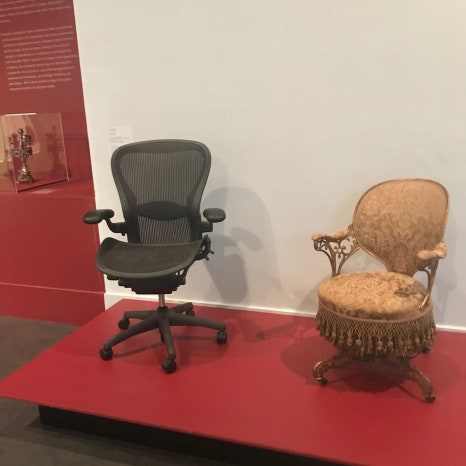
After Warren's chair faded into obscurity, it took more than a century for the concept of ergonomics to re-enter mainstream furniture design. Today, design museums including the Brooklyn Museum have given the Centripetal Spring Chair a second life, displaying it as a visionary artifact.
Intriguingly, it's often exhibited alongside the Herman Miller Aeron, one of the most iconic ergonomic chairs of the 20th century. Curators and design historians now recognize Warren's chair as the spiritual and technical ancestor of modern task seating—a prototype whose ideas finally blossomed 150 years later in chairs like the Aeron.
The Aeron Connection
The Aeron, introduced in 1994, revolutionized office seating with its breathable mesh, adjustable lumbar support, and advanced tilt mechanisms. While it didn't replicate Warren's omnidirectional tilt, it shared his core philosophy: that a chair should adapt to the human body, not the other way around.
The Spiritual Successor: Kokuyo Ing and 360-Degree Movement
But what about Warren's most radical idea—the concept of a chair that moves in all directions, not just forward and back?
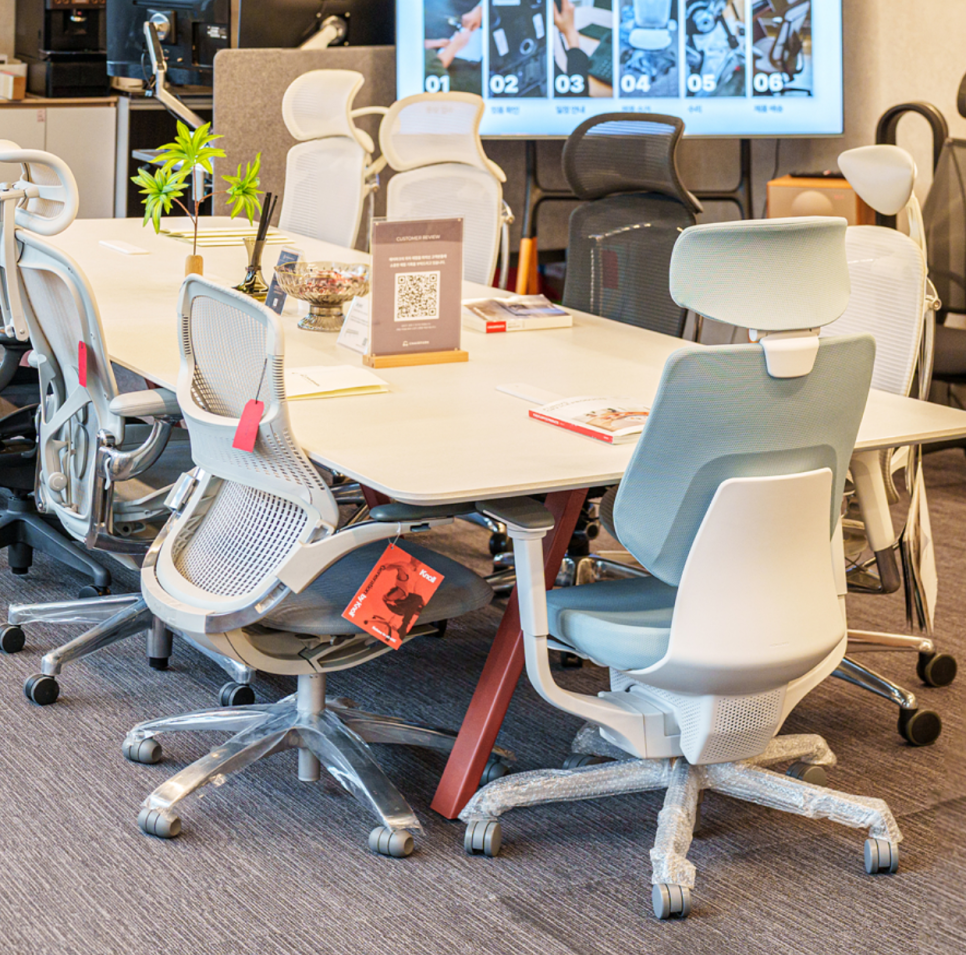
That vision lay dormant for even longer. It wasn't until the 21st century that a chair truly revisited the principle of omnidirectional movement. One standout example is the Kokuyo Ing, a Japanese design that embodies what Warren dreamed of in 1849.
The Ing chair is built around a "gliding" mechanism inspired by the movement of an exercise ball. Unlike conventional task chairs that tilt only forward and backward, the Ing's seat responds to the user's body in 360 degrees—front, back, left, right, and every angle in between. This encourages continuous micro-movements throughout the workday, a concept known as active sitting.
There's no documented evidence that Kokuyo's designers were directly inspired by Warren's 1849 patent. But the philosophical alignment is striking: both chairs reject static posture and instead invite the sitter to move freely and naturally. Warren used steel springs; Kokuyo uses a sophisticated gliding pivot. The technology differs, but the ideal is identical.
From Immoral to Essential: The Long Arc of Ergonomic Design
Thomas E. Warren's Centripetal Spring Chair was ridiculed in its day for being too comfortable, too indulgent, too permissive. Today, those same features—mobility, dynamic support, and user-responsive movement—are the hallmarks of premium ergonomic design.
It took 150 years, but Warren's vision has been vindicated. Chairs like the Herman Miller Aeron, Steelcase Gesture, and Kokuyo Ing prove that the future of seating isn't about sitting still—it's about sitting actively.
The office chair has come full circle. What was once deemed unthinkable is now indispensable. And somewhere in history, Thomas E. Warren deserves a tip of the hat—and perhaps a comfortable place to sit.
Furniblog may earn a commission from links in this post, at no extra cost to you. See our affiliate disclosure.