Who Invented the First Office Chair? The Surprising History of Workplace Seating
From Charles Darwin's wheeled armchair to the world's first commercial office chair
By the Furniblog Editorial Team·July 9, 2026·4 min read
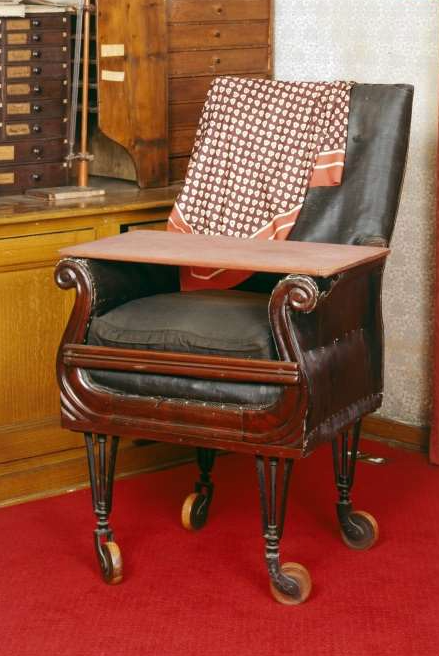
Did Charles Darwin Invent the Office Chair?
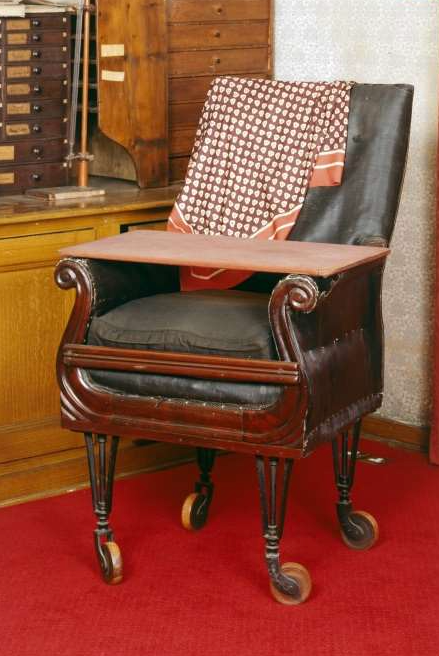
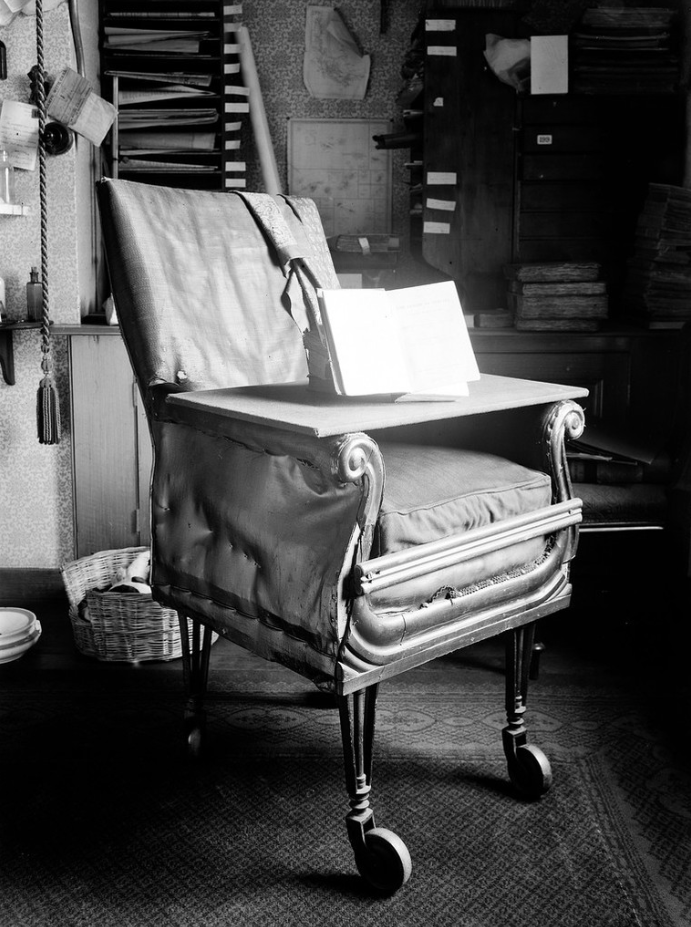
Ask most people who invented the first office chair, and many will point to Charles Darwin. In the late 1830s, the famous naturalist added wheels (casters) to his comfortable armchair so he could move easily between specimen cabinets in his study.
But while Darwin's modification was clever, it was exactly that—a personal modification, not an invention. His wheeled chair solved the problem of mobility in his private workspace, but it wasn't designed for the emerging world of office labor. It was never manufactured, never sold, and never intended for the new class of workers who would soon spend entire days sitting at desks.
The Birth of the True Office Chair (1849)
The real story of the office chair begins in the mid-19th century, during the explosion of industrialization and railroad expansion. As companies grew larger and more complex, a completely new type of worker emerged: the white-collar office employee who sat indoors all day managing correspondence, accounts, and logistics.
For the first time in history, worker productivity was directly tied to how long and how comfortably someone could remain seated. This created an urgent market need—and American inventor Thomas E. Warren answered it brilliantly.
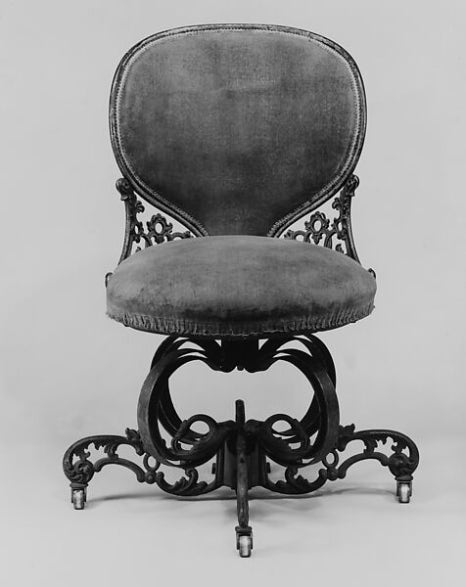
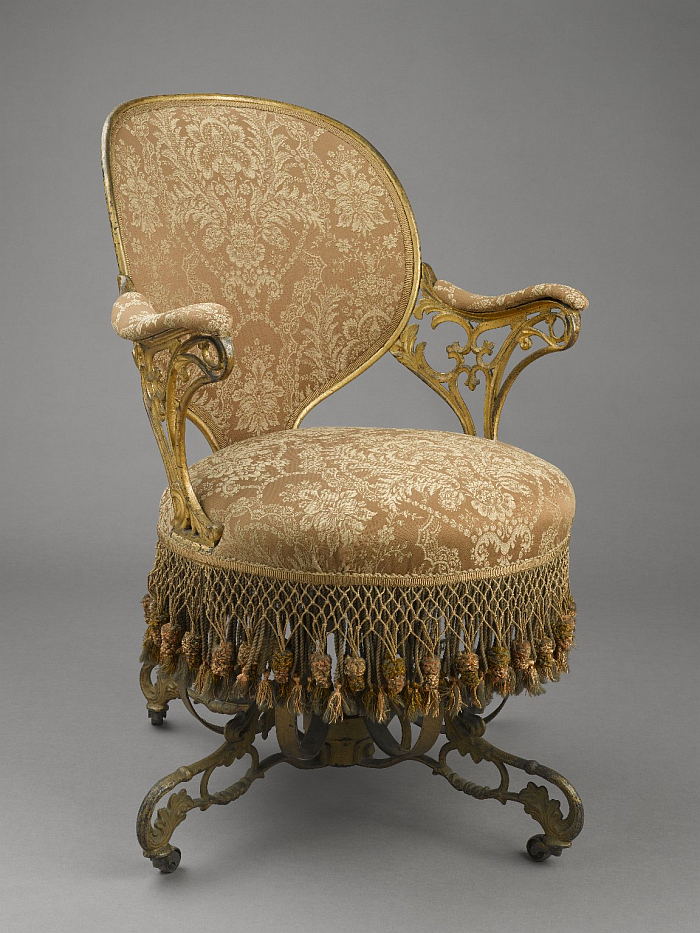
In 1849, Warren patented the Centripetal Spring Chair, the world's first commercially produced office chair. The name "centripetal" (meaning "directed toward the center") described the chair's remarkable ability to respond organically to the user's shifting center of gravity.
150 Years Ahead of Its Time
What makes Warren's invention so astonishing is that this chair—designed over 150 years ago—incorporated nearly every feature we associate with premium ergonomic seating today:
Casters (wheels): Enabled free movement around the workspace
360-degree swivel: Users could rotate to reach documents and tools in any direction
Omnidirectional tilting: The seat could tilt forward, backward, and side-to-side, following the user's movements
Spring suspension: Eight concealed steel springs underneath the seat supported all this dynamic motion
Railroad Technology Meets Office Design
The most fascinating aspect of Warren's design is where the technology came from: railroad passenger cars. In the 1840s, train travel was notoriously uncomfortable due to rough tracks and poor suspension. Engineers developed sophisticated steel spring systems to absorb shocks and reduce passenger fatigue on long journeys.
Warren recognized that the same technology could solve the discomfort of prolonged sitting in offices. Ironically, the railroad industry both created the problem (by spawning the white-collar workforce) and provided the solution (spring suspension technology).
Too Comfortable to Be Moral
Despite its technical brilliance, the Centripetal Spring Chair was a commercial disaster. When exhibited at the 1851 Great Exhibition in London, it was met with harsh criticism—not for any engineering flaw, but because of cultural resistance.
In Victorian England, comfort was viewed as synonymous with laziness and moral weakness. Virtue meant sitting upright in a rigid chair, demonstrating self-discipline and restraint. Warren's chair, which actively encouraged users to relax, recline, and move freely, was condemned as "too comfortable" and therefore immoral.
The invention was technologically visionary—anticipating 1970s ergonomic principles—but culturally unacceptable. It was simply too far ahead of its time.
The 150-Year Legacy: From Warren to Modern Ergonomics
After Warren's chair faded into obscurity, it took more than a century for ergonomic design to re-enter mainstream office furniture. Today, design museums including the Brooklyn Museum recognize the Centripetal Spring Chair as a pioneering achievement in workplace seating.
The Connection to Herman Miller Aeron
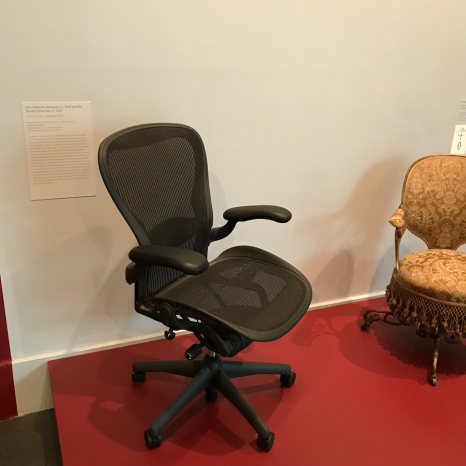
Museum curators and design historians often display Warren's chair alongside the iconic Herman Miller Aeron, recognizing the 1849 invention as the "technical ancestor" of modern ergonomic chairs. The Aeron, introduced in the 1990s, brought many of Warren's core principles—dynamic support, movement, and user-responsive design—into the contemporary office.
360-Degree Movement Reborn: The Kokuyo Ing Chair
While the Aeron perfected front-to-back tilting and mesh support, Warren's most revolutionary concept—a chair that moves in all directions with the user's center of gravity—took even longer to resurface.
That concept has been beautifully realized in the 21st century by the Kokuyo Ing chair. While there's no documented direct lineage between Warren's 1849 design and Kokuyo's development process, the philosophical parallel is striking.
The Ing chair features a unique 360-degree gliding mechanism inspired by the movement of a balance ball. Unlike conventional chairs that tilt only forward and backward, the Ing allows the seat to glide smoothly in all directions—forward, backward, left, right, and diagonally—responding to every subtle shift in the user's body.
This creates what ergonomists call "active sitting": continuous micro-movements that engage core muscles, improve circulation, and reduce the strain of static postures.
From Immoral to Essential
The journey from Thomas E. Warren's "too comfortable" chair to today's advanced ergonomic seating tells us something important about innovation: groundbreaking ideas often face resistance not because they don't work, but because they challenge prevailing cultural beliefs.
What Victorian society condemned as lazy and undisciplined, we now recognize as scientifically sound. Movement while sitting isn't a moral failing—it's a biological necessity.
Warren's vision, rejected 150 years ago, has finally found its place in the modern workplace. Whether through the precision engineering of the Aeron, the dynamic support of the Steelcase Gesture, or the omni-directional freedom of the Kokuyo Ing, today's best chairs embody the same principle Warren fought for: that comfort and productivity aren't enemies—they're partners.

Furniblog may earn a commission from links in this post, at no extra cost to you. See our affiliate disclosure.