Why Herman Miller Chairs Don't Come with Headrests—and When You Actually Need One
The design philosophy behind missing headrests on premium ergonomic chairs
By the Furniblog Editorial Team·July 31, 2026·4 min read
The $2,000 Chair Question: Where's the Headrest?
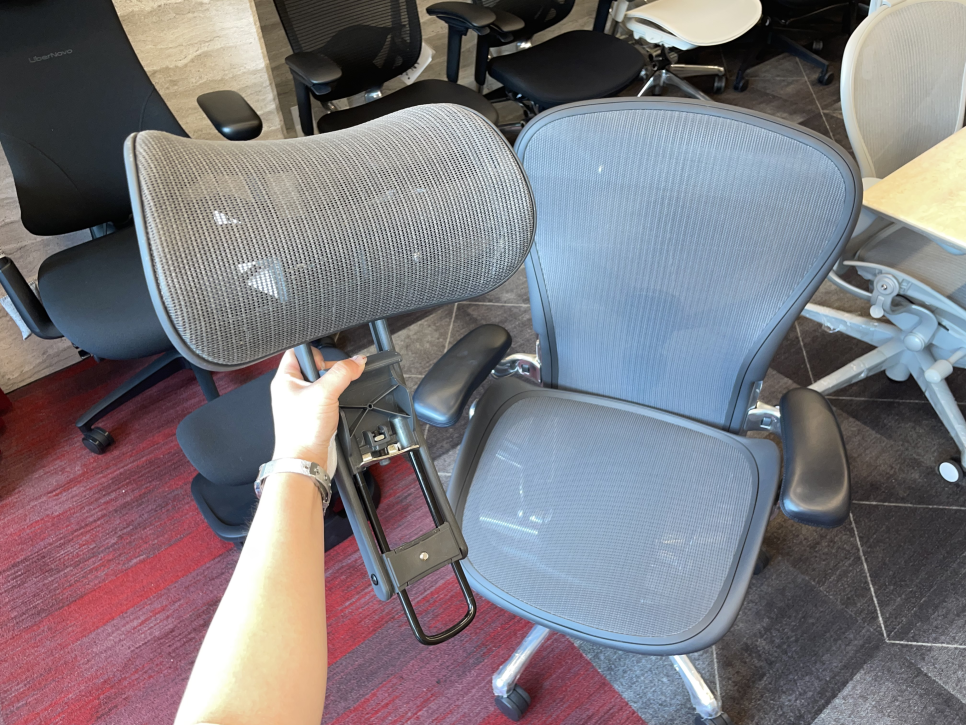
"Why doesn't my $2,000 chair have a headrest?" This question appears constantly in office chair forums, often tinged with disbelief. The short answer: it's not an oversight—it's intentional design philosophy.
Let's unpack the biomechanics behind this decision, and clarify when headrests are genuinely useful and when they're not solving the problem you think they are.
Fact Check: Does Forward Head Posture Really Need a Headrest?
The common belief that "forward head posture (tech neck) = need a headrest" is only half true.
Forward head posture develops primarily from looking down at monitors or craning your neck forward to view screens. In this position, your head rarely makes contact with a headrest during active work. Headrests support your head when you recline—they don't correct forward posture while you're leaning into your work.
The root cause of tech neck during work hours is monitor height and viewing angle, not the absence of a headrest. A headrest addresses rest positions, not the postural habits that create neck strain in the first place.
The Cascading Load of Forward Head Tilt
Research by spinal surgeon Kenneth Hansraj illustrates how quickly neck load escalates with forward tilt:
Head Angle (Forward Tilt) | Load on Cervical Spine |
|---|---|
0° (neutral posture) | ~10–12 lbs (4.5–5 kg) |
15° | ~27 lbs (12 kg) |
30° | ~40 lbs (18 kg) |
45° | ~49 lbs (22 kg) |
60° | ~60 lbs (27 kg) |
Even slight forward tilt multiplies neck stress several times over. While the precise measurements have been debated in follow-up studies, the trend is clear: forward head posture dramatically increases cervical load. A headrest won't reverse this—posture correction and monitor positioning will.
Herman Miller's Design Philosophy: Support from the Bottom Up
Herman Miller and similar high-end manufacturers design around a core principle: fix the pelvis, and the neck follows.
The spine is a kinetic chain—cervical (neck), thoracic (mid-back), and lumbar (lower back) regions form a connected S-curve. When the base of this chain—the sacrum and pelvis—is properly supported, the pelvis tilts slightly forward, the lumbar curve restores, the thoracic spine extends, and the head naturally repositions over the shoulders.
This is why the Herman Miller Aeron's PostureFit SL targets not just the lumbar region but the sacral area specifically—it anchors the entire spinal chain from the bottom up.
The Kinetic Chain in Action
Sacral support → pelvic alignment
Pelvic alignment → restored lumbar curve
Lumbar curve → thoracic extension (open chest)
Thoracic extension → cervical alignment (head over shoulders)
If the foundation is misaligned, propping up the top of the chain with a headrest won't restore proper posture. Worse, a poorly positioned headrest can push the head forward, reinforcing the very problem it's meant to solve.
When a Headrest Actually Matters
Design philosophy aside, real-world work varies. There are legitimate scenarios where a headrest provides tangible benefit:
1. Frequent Reclining During Calls or Meetings
If you spend significant time on phone calls or video meetings where you're not actively looking at a screen, you'll naturally recline. In these moments, head support is genuinely useful.
2. Short Rest Breaks Throughout the Day
If you habitually close your eyes and lean back for a few minutes between tasks, a headrest reduces neck strain during those micro-rests.
3. Existing Neck Pain or Cervical Issues
If you already experience chronic neck discomfort, a properly adjusted headrest can offer symptomatic relief. That said, persistent neck pain warrants a consultation with an orthopedic or spine specialist before relying on furniture alone.
Two Pathways: Aftermarket vs. Integrated Headrests
If you've determined a headrest would genuinely help your work style, you have two routes:
Third-Party Accessories
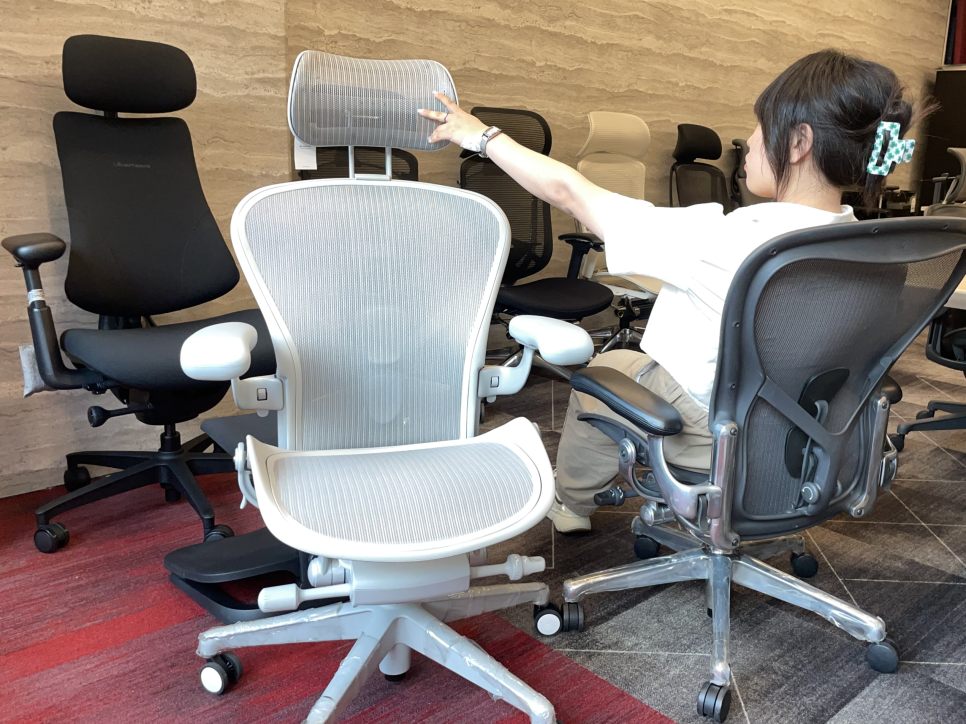
Aftermarket headrests like the Atlas clamp onto chairs such as the Aeron or Embody without drilling. They offer fine-tuned height and angle adjustment. The caveat: improper positioning can push your head forward instead of supporting it. Careful setup is critical.
Factory-Integrated Headrests
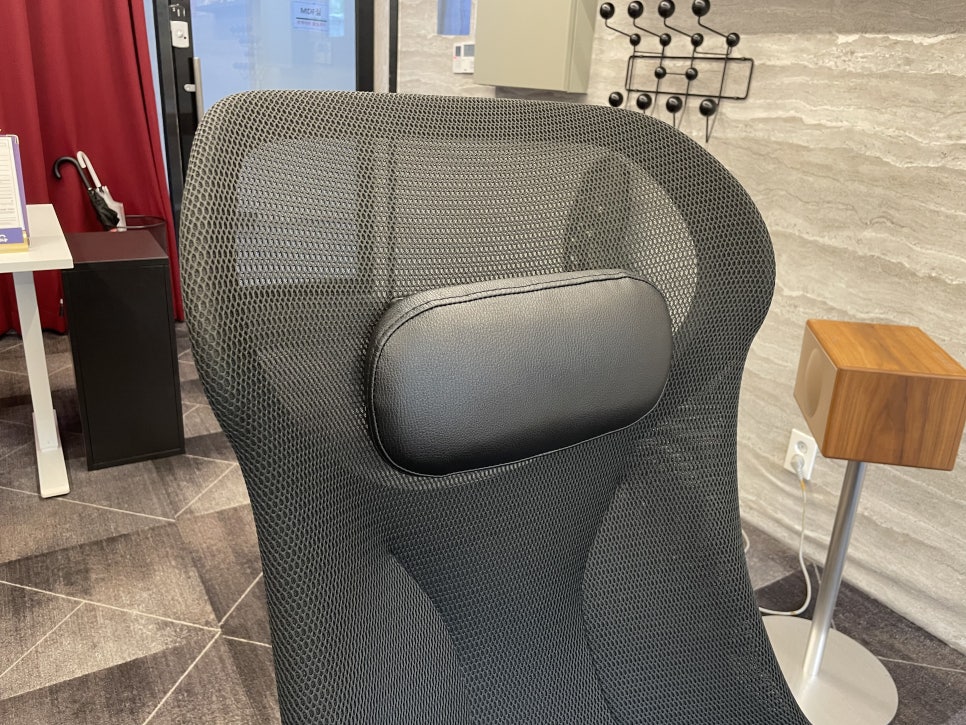
Chairs like the Kokuyo Ing Cloud, Okamura Contessa II, and Itoki ACT2 include optional headrests designed in tandem with the chair's recline and tilt mechanisms. Because they're engineered as part of the whole system, they tend to integrate more naturally with overall spinal alignment.
Positioning Matters
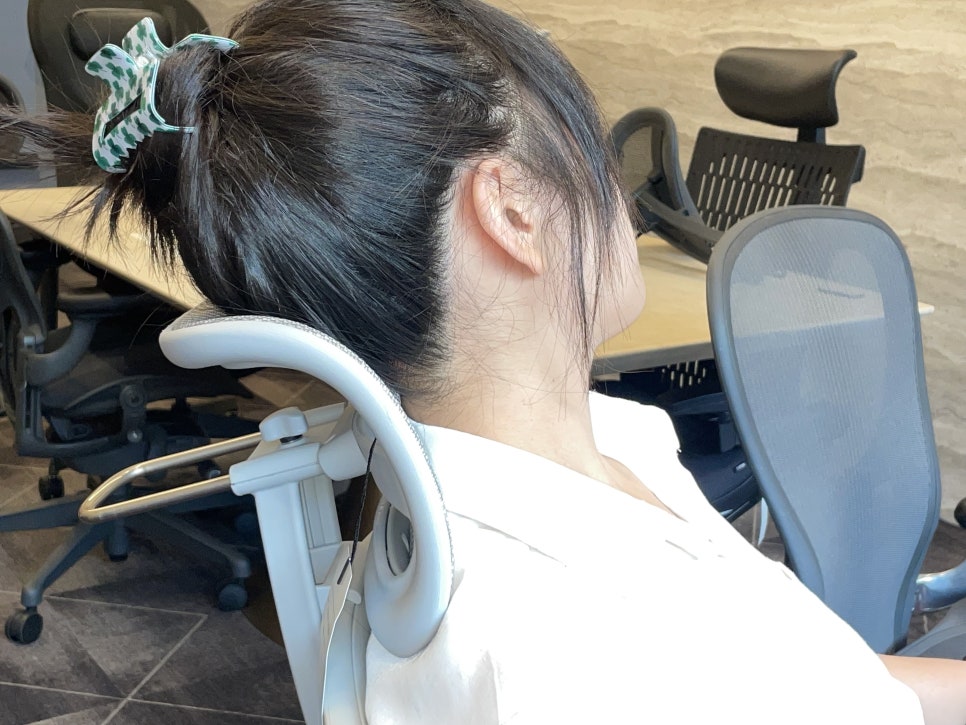
The headrest should contact the occiput (lower rear skull), not the neck itself. Positioned too low, it hyperextends the neck; too far forward, it pushes the head out of alignment. When you recline, your head should make light, natural contact—not press firmly or require you to reach backward.
That said, optimal positioning varies by individual body proportions and personal preference. Experiment to find what feels supportive without being intrusive.
The Bottom Line
Premium ergonomic chairs skip headrests not because of cost-cutting, but because their design priority is correcting posture from the pelvis up. For most users doing focused screen work, a headrest won't address the root causes of neck strain—monitor height, viewing angle, and forward head posture will.
But if your work rhythm includes frequent reclining, rest breaks, or you already have cervical discomfort, a well-positioned headrest—whether aftermarket or integrated—can offer real relief.
The key is understanding what a headrest can and cannot do, and choosing accordingly.

Disclaimer: This article provides general ergonomic information and is not a substitute for medical advice. If you experience persistent neck pain, consult an orthopedic or spine specialist.
Furniblog may earn a commission from links in this post, at no extra cost to you. See our affiliate disclosure.