Why "Perfect Posture" Is a Myth—and What Actually Matters for Your Spine
Spine research shows there's no single "correct" posture—but some positions are dangerous.
By the Furniblog Editorial Team·July 10, 2026·4 min read
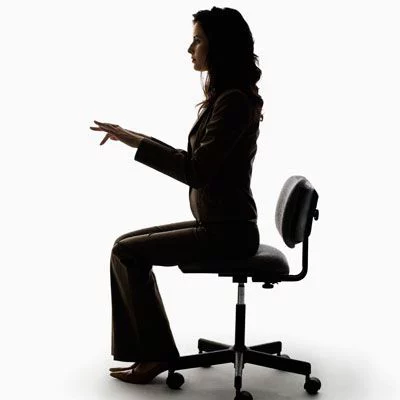
"Sit up straight." "Keep your back aligned." You've heard it countless times. But here's the truth: the "perfect posture" you've been taught doesn't exist—at least not according to spine biomechanics research.
More precisely, there is no single, universally ideal sitting posture that medical science can definitively point to. Today, we'll explore why the concept of "correct posture" is more myth than reality, and—more importantly—what you should actually focus on to protect your spine.
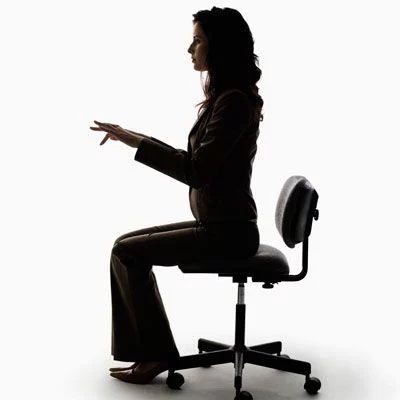
Why There's No Single "Correct" Posture
The relationship between posture and spinal load has been studied extensively for decades. Yet attempts to identify one optimal sitting position have consistently produced conflicting results.
A landmark 1999 study by Wilke and colleagues measured disc pressure over 24 hours and found that sitting posture could actually generate lower pressure than standing upright in some cases. Most importantly, the researchers concluded that continuously changing position mattered more than any single "ideal" posture.
A comprehensive 2023 review found that disc pressure differences between sitting and standing varied depending on whether discs were healthy or degenerated—results were inconsistent across studies.
Even Nachemson, the pioneering researcher who first measured intradiscal pressure in living humans, cautioned that lower pressure doesn't necessarily mean less pain, and that pressure measurements alone don't explain where pain originates.
The takeaway? Claims about "the perfect sitting angle" lack consistent scientific support. Trying to memorize and maintain one perfect posture is less meaningful than you might think.
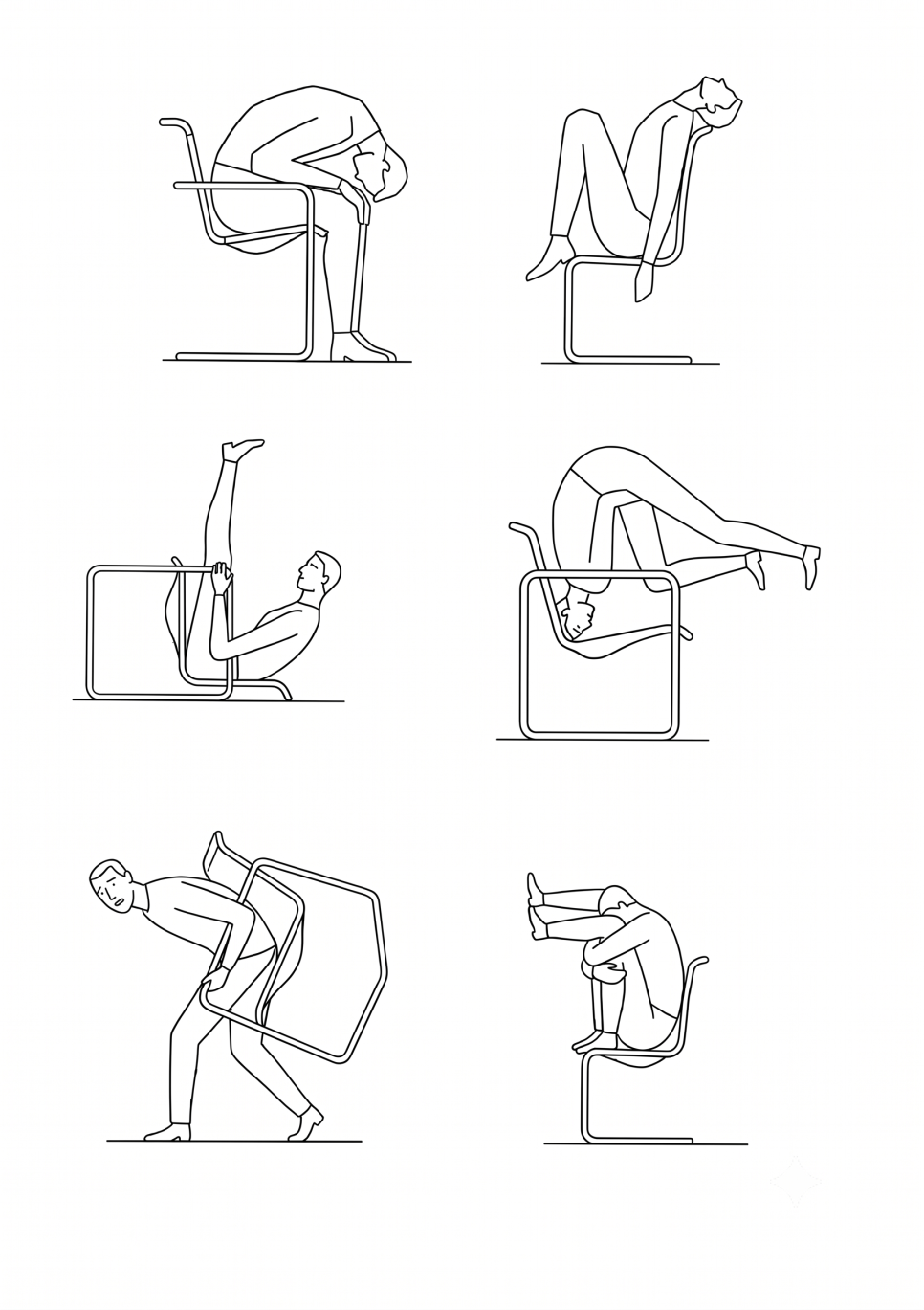
The Worst Postures Are Crystal Clear
Here's where it gets interesting. While the benefits of "good posture" are small and uncertain, the dangers of bad posture are large and consistent.
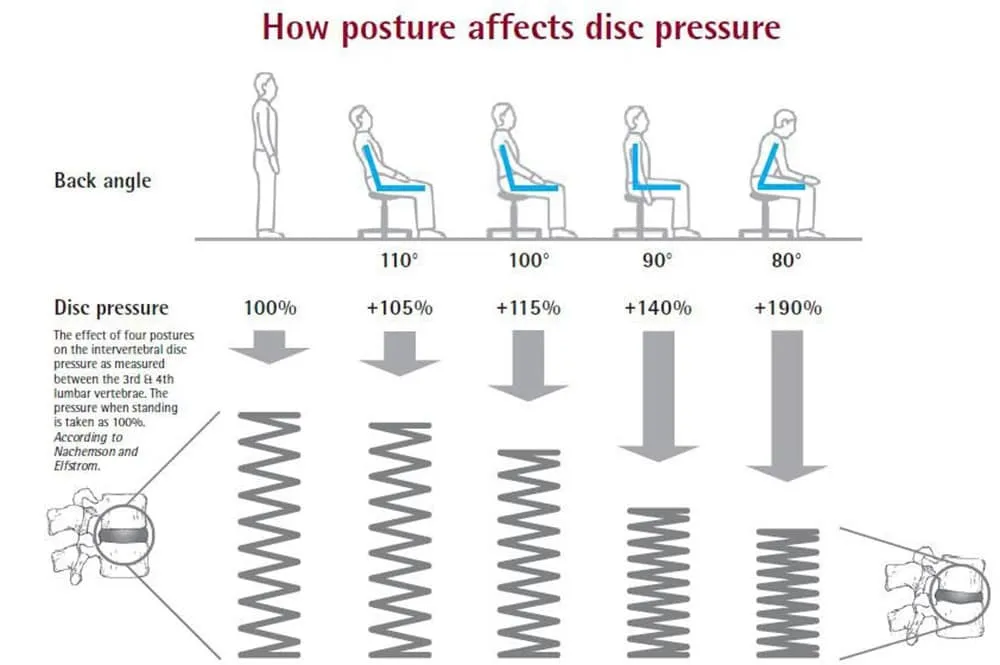
In groundbreaking studies where Nachemson's team inserted pressure sensors directly into human lumbar discs, they measured relative disc pressure across different postures (using standing upright as a baseline of 100):
Slouching without back support: approximately +40% pressure vs. standing
Bending forward or lifting objects: +100% or more
Bending forward while twisting: up to +400% pressure (the absolute worst)
So while the "ideal posture" remains fuzzy, the postures to avoid are remarkably clear. This shifts the fundamental question you should be asking:
Not "Is this posture correct?" but rather "Am I avoiding the worst postures right now?"
This Is Why Your Chair Actually Matters
This research reveals the true role of an ergonomic office chair. A good chair doesn't force you into one "correct" position. Instead, it prevents you from collapsing into the most dangerous positions.
Key Chair Features That Protect Your Spine
Lumbar support: Prevents your lower back from rounding into a slouched C-curve. Research by Andersson and colleagues showed that increasing backrest recline and adding lumbar support simultaneously reduced both disc pressure and back muscle load.
Recline capability: Allows you to shift positions regularly. This aligns perfectly with research showing that frequent postural variation matters more than holding any single "perfect" position.
Proper seat depth, armrest height, and monitor positioning: Reduces forward head posture and the tendency to lean forward with a rounded spine.
When evaluating office chairs, the question isn't "Will this chair make me sit perfectly?" but rather "How well does this chair prevent me from sitting dangerously?"
Four Positions to Avoid—That's All You Need to Remember
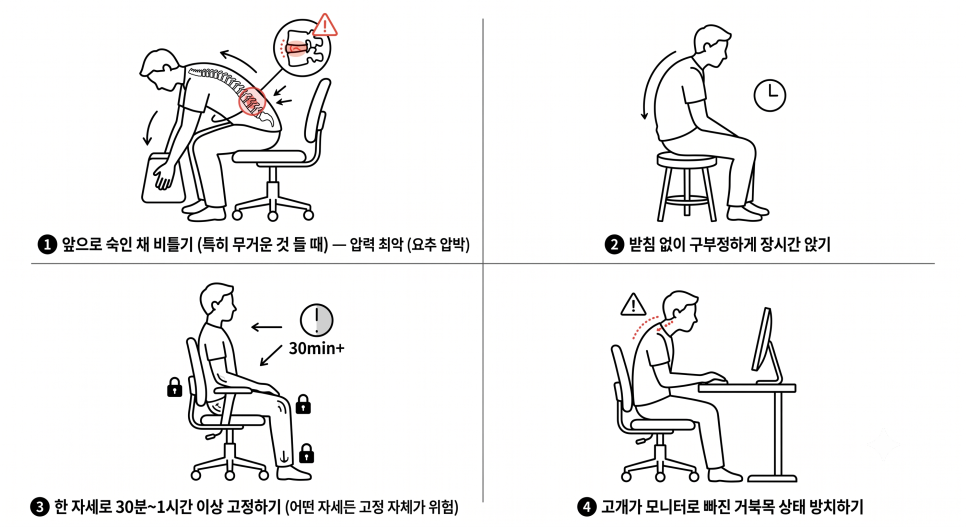
Forget memorizing complex posture rules. Simply avoid these four positions, and you'll eliminate most spinal stress:
Bending forward while twisting (especially when lifting anything heavy)—this generates maximum disc pressure
Prolonged slouching without back support
Holding any single position for 30–60+ minutes without movement (static posture itself is the problem, regardless of which posture)
Sustained forward head posture (neck craning toward your monitor)
A well-designed chair makes these four positions difficult to maintain. That's the real reason to invest in proper seating.
Key Takeaways
There is no scientifically validated "perfect posture." Stop trying to find one.
The worst postures, however, are well-documented. Focus on avoiding those.
The best chair isn't one that forces you into a rigid position—it's one that prevents dangerous postures while supporting varied, dynamic sitting.
Before you try to fix your posture, consider fixing your chair.
Want to Experience the Difference?
Understanding which positions collapse your spine requires hands-on testing. When shopping for an ergonomic chair with effective lumbar support and recline adjustments, consider models from proven manufacturers with strong biomechanics research backing their designs.
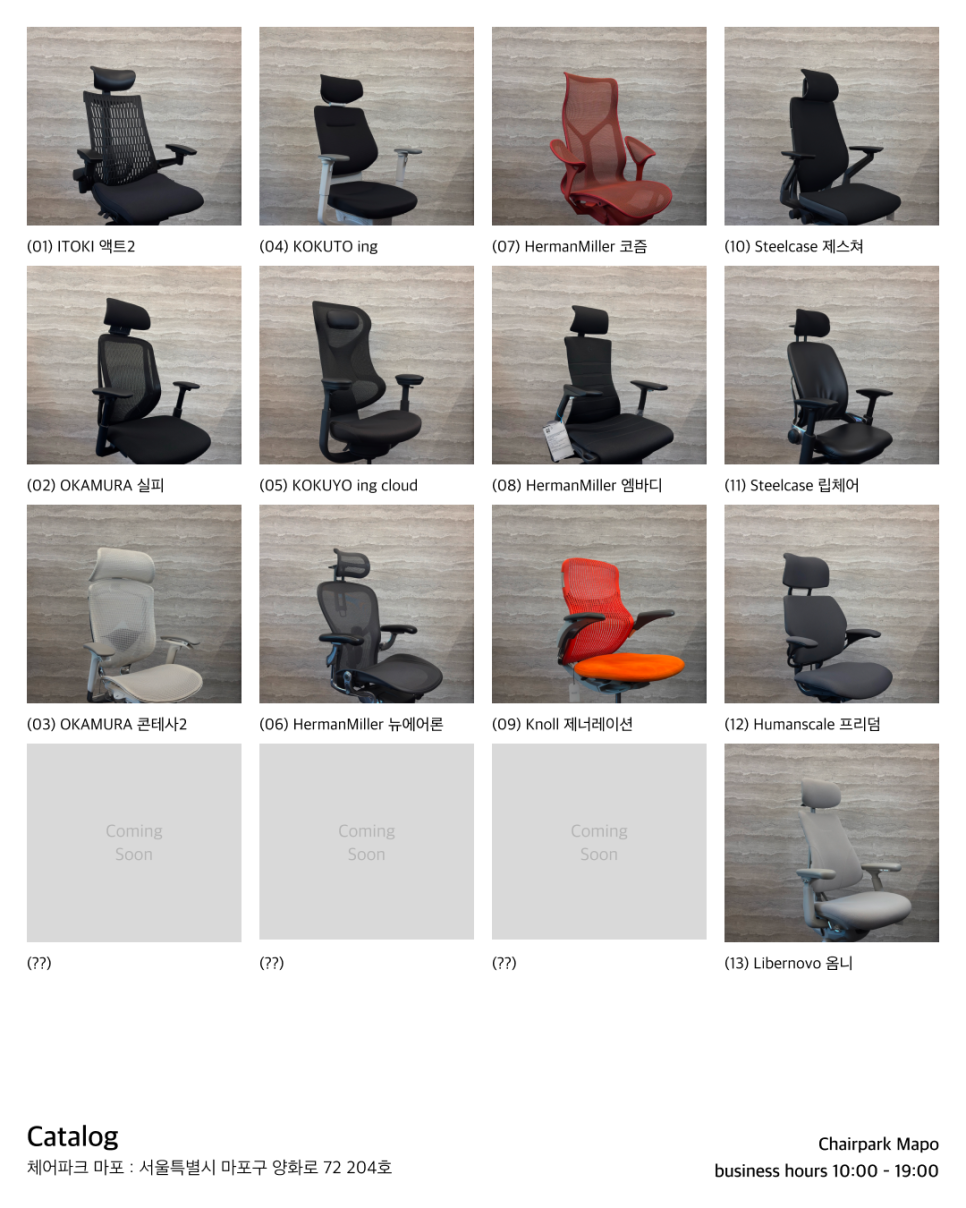
Popular research-backed options include chairs from Herman Miller, Steelcase, Humanscale, and premium Japanese manufacturers like Okamura.
Note: This article summarizes spine biomechanics research for educational purposes and is not a substitute for medical advice. If you experience persistent back or neck pain, consult an orthopedic specialist or physiatrist.
References
Wilke H-J, et al. (1999). New in vivo measurements of pressures in the intervertebral disc in daily life. Spine, 24(8), 755–762.
Nachemson A, Elfström G. (1970). Intravital dynamic pressure measurements in lumbar discs. Scandinavian Journal of Rehabilitation Medicine, Suppl. 1.
Andersson BJ, et al. (1977). Lumbar disc pressure and myoelectric back muscle activity during sitting. Scandinavian Journal of Rehabilitation Medicine, 3, 104–114.
Andersson BJ, Murphy RW, Örtengren R, Nachemson AL. (1979). The influence of backrest inclination and lumbar support on lumbar lordosis. Spine, 4(1), 52–58.
Roman-Liu D, Kamińska J, Tokarski T. (2023). Differences in lumbar spine intradiscal pressure between standing and sitting postures: a comprehensive literature review. PeerJ, 11:e16176.
Furniblog may earn a commission from links in this post, at no extra cost to you. See our affiliate disclosure.