Anthros V2 Chair
A clinically informed office chair engineered for posture, not just comfort
Overview
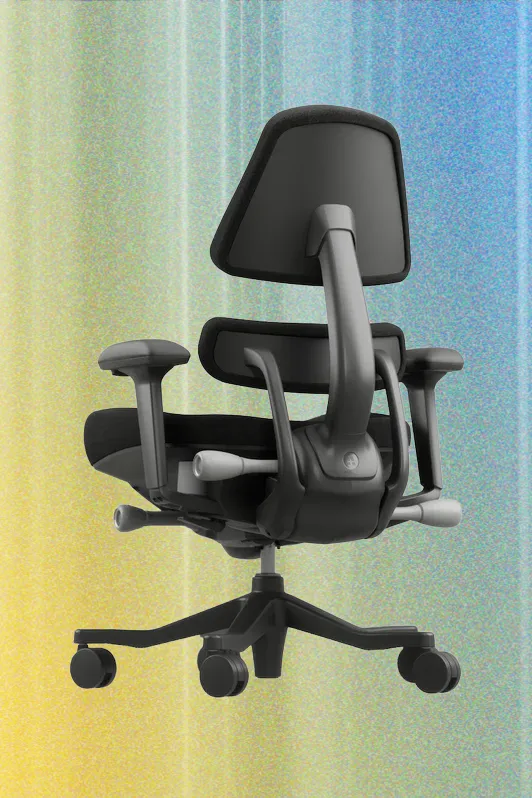
The Anthros V2 Chair is the second-generation flagship from a young American seating company founded by wheelchair-seating specialists. Its early V2 pressure mapping results rival the highest-end medical cushions on the market, delivering that same elite-level support in an ergonomic chair designed for daily life and work. Unlike traditional office chairs that focus on lumbar curves alone, the backrest is in two segments designed to promote an optimal S-curve of the spine by supporting the pelvis, both controlled individually with knobs underneath the seat. The brand markets it as the only FDA-registered office chair on the market, and the V2 iteration refines the original's aggressive sacral support with softer, thicker cushions and a wider lower pad for less intrusive posture correction. This is a chair built to change how you sit, not just where you sit.
At a glance
Brand | Anthros |
|---|---|
Designer(s) | Steven DuFresne (CEO / Chief Chair Designer) and in-house clinical team |
Year introduced | V2 launched 2024 |
Price tier | Premium (~$2,200 new, ~$1,950 open-box) |
Materials | Wood or carbon-fiber backrest shell, 3D-knit bouclé or Port eco-leather upholstery, Cloudfloat/Cloudtex cushion tech |
Key adjustments | Seat height, independent dual-back positioning (upper & lower sacral support), 4D arms (height/width/pivot/depth), tilt tension, tilt lock |
Warranty | 12 years (bumper-to-bumper) |
Weight capacity | 385 lb |
Seat-height range | 17.5″–21.5″ |
Certifications | BIFMA X5.11, FDA-registered orthotic device |
Made in | Grand Rapids, Michigan, USA |
The brand & its philosophy
A team of wheelchair seating experts—clinicians, product designers, and marketing executives—heard the same comment over and over at industry trade shows: "I wish my office chair felt like this!" These physical and occupational therapists, seating technicians, and assistive technology professionals got the team thinking about the millions of people sitting at desks all day, suffering with aches, discomfort, headaches, and pain. Founded by CEO Steven DuFresne and a team of professionals with more than 70 years of combined experience in the production of high-quality wheelchair seating products, Anthros can boast an origin story unlike many others.
Anthros is built on "Anthronomics," a unique blend of biomechanics, ergonomics, and anthropometrics. The Anthros Foundation is dedicated to improving mobility and quality of life for people in need; through the Anthros Foundation (501c3), the team is committed to supporting the global wheelchair community by raising funds that provide life-changing mobility equipment to individuals in developing countries. Most recently, the Anthros Foundation raised nearly $20,000 for Beeline Wheelchairs in Guatemala, where the team helped fit 57 children with custom wheelchairs. The brand's ethos is explicitly clinical—therapeutic results over marketing language.
The designer and the design story
Steven DuFresne, CEO and "Chief Chair Designer," boasts an impressive background working in the world of wheelchairs; co-founders DuFresne and CMO Eric Murphy have worked tirelessly to concoct the most comfortable, supportive office chair. The idea probably started seven-ish years ago when both were working for a company called The Comfort Company, responsible for making wheelchair seating, cushions, backs and head supports, arm pads that go on manual and power wheelchairs. The design process was driven by frustration with hollow "ergonomic" claims in the office market and a determination to apply evidence-based methods from medical seating. Anthros leveraged cutting-edge 3D human modeling software and collaborated with the Simuserv Human Modeling team for all human modeling design and analysis; Simuserv confirmed that disc pressure at L4-5 decreases with the properly adjusted Anthros two-part back system, and observed a significant reduction in L4-5 disc pressures when the two-part back system was used alongside the Anthros tilt feature.
The first iteration of the chair had a good backrest, but the lower sacral support had an aggressive approach because of its size and shape; overall, the pads on the V2's backrest's upper and lower sections were softened and given some additional thickness, which helped to soften the feel and filled in the large gap between the upper and lower portions of the backrest. The lower sacral support was widened out as well; this, in addition to the height change, makes it feel less intrusive and a lot more supportive for a larger area of the lower back. The V2 represents two years of iteration and user feedback folded back into the fundamentals.
Design language & aesthetics
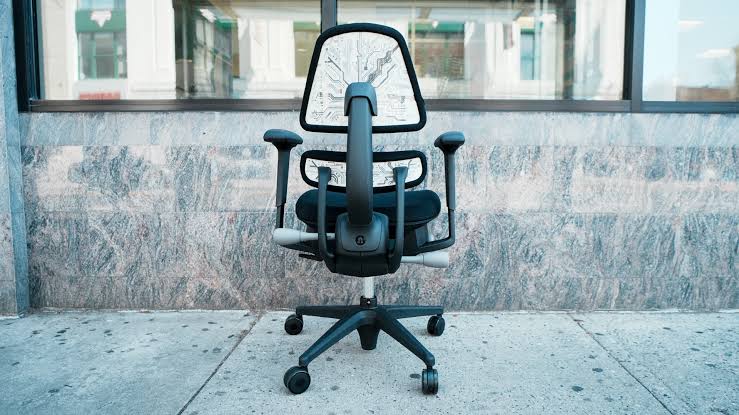
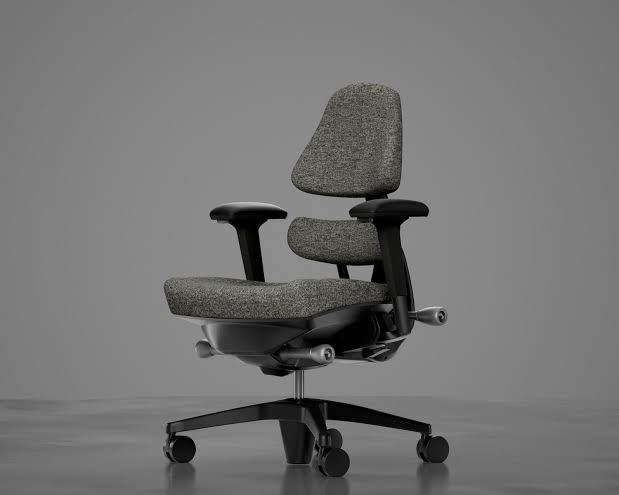
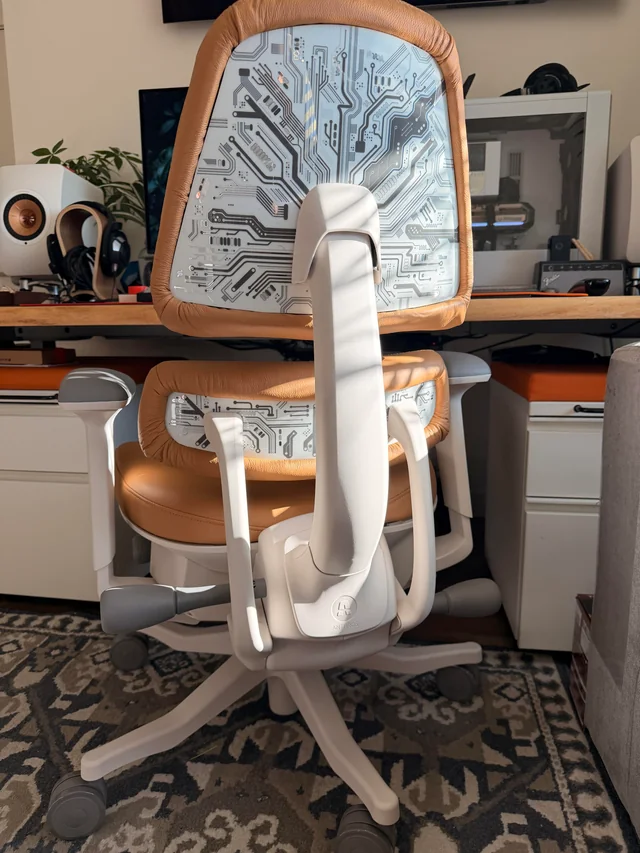
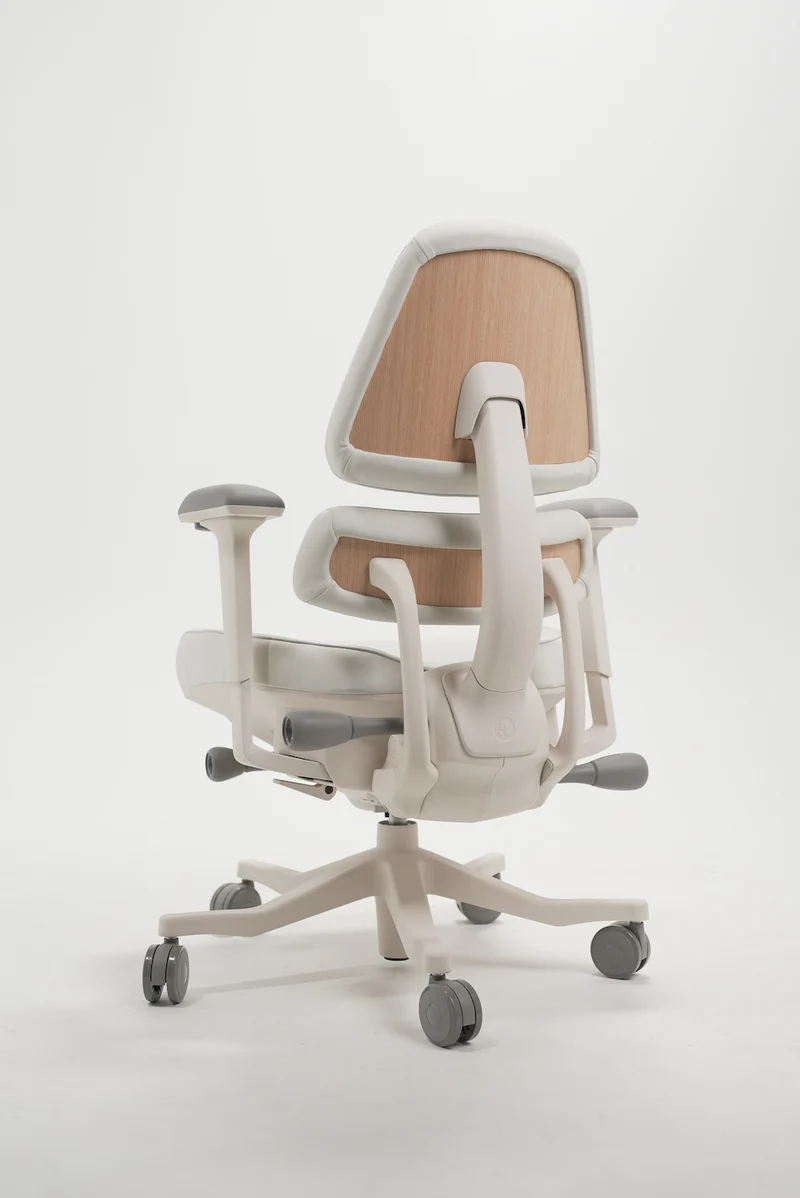
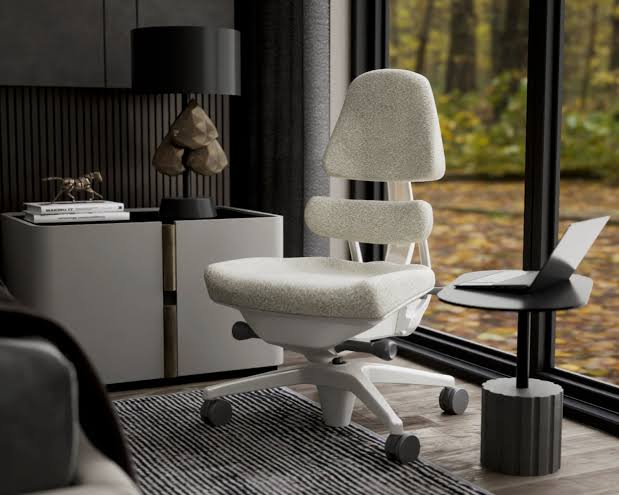
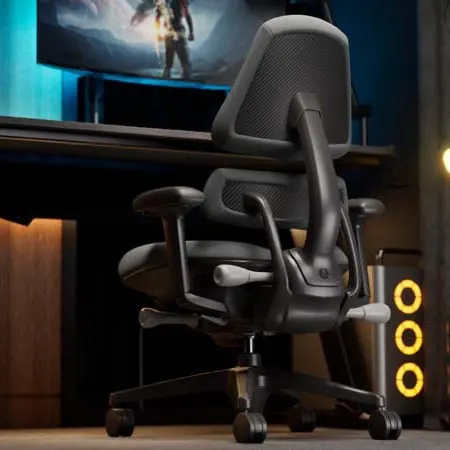
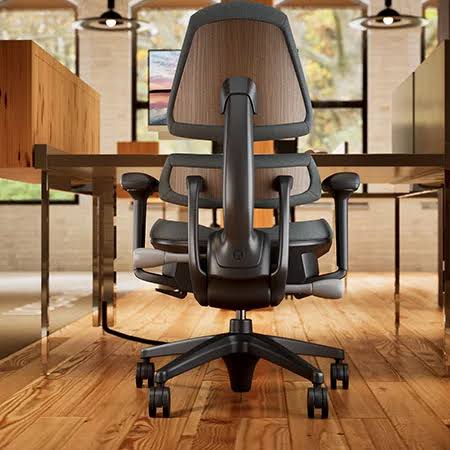
Visually, the Anthros V2 is an outlier in the premium-chair landscape—organic, almost furniture-like, and strikingly segmented. The two-piece backrest, separated by a visible gap, gives it a distinctive profile that reads as intentional rather than incomplete. The backrest of an Anthros chair is a masterpiece skillfully fashioned from authentic wood sourced from varieties such as Oak and Walnut; exuding a natural ambiance, every wooden component is thoughtfully selected and expertly shaped to seamlessly blend comfort and aesthetics within the design. Anthros chairs also introduce a groundbreaking feature by integrating genuine carbon fiber into their backrests as an option, guaranteeing both enhanced performance and visual appeal.
The cushions wear either a 3D-knit bouclé texture or a synthetic Port leather alternative, both with a softness that stands in deliberate contrast to the mesh-heavy aesthetic of its peers. The bouclé fabric is made of 60% polyester and 40% post-consumer recycled polyester and has multi-directional stretch properties; the 3D shaping process knits each cover to the exact dimensions of the cushion, resulting in a fabric that adapts seamlessly to the contours of the user's body and eliminates waste from cutting while providing a visually striking, seamless cover. Base options include a sleek four-spoke non-swivel (for stability-focused users) or a traditional five-spoke swivel. The overall aesthetic leans warm, architectural, and decidedly residential—more suited to a curated home office than a corporate cube farm.
Ergonomics & how it supports the body
Anthros stakes its entire value proposition on a single, bold claim: proper posture comes from pelvic positioning, not lumbar padding. The dual-back system is designed to promote an optimal S-curve of the spine by supporting the pelvis. Simuserv confirmed that disc pressure at L4-5 decreases with the properly adjusted Anthros two-part back system; Anthros in tilt shows a 40% decrease in disc pressure. Markedly, Anthros in tilt shows a 57% decrease in disc pressure from standard office chairs.
The FDA validated the hypothesis by registering the Anthros chair as an orthotic device #3021484401, which is used to improve posture; in legal terms, an orthotic device means an apparatus used to support, align, prevent, or correct deformities, or to improve the function of movable parts of the body. The chair makes you unable to slouch by keeping your spine upright; it'll feel slightly uncomfortable at first. This is a chair that trains rather than coddles—expect an adjustment period where the lower back pad pushes assertively into your sacrum. Over time, that pressure should recalibrate your default sitting posture.
Key adjustments & mechanisms
The seat height adjustment range changed on the newest version; a change in the shape of the actual seat pad lowered the range overall by about 1″, meaning the lowest point is 17.5″ up to 21.5″. The star of the show is the dual-knob back-adjustment system. The backrest is in two segments designed to promote an optimal S-curve of the spine by supporting the pelvis, both controlled individually with knobs underneath the seat so you can position them as you see fit. Rotating these knobs moves each pad independently up, down, forward, and back—critical for dialing in the sacral and lumbar curves to your anatomy.
The arm adjustments on the Anthros V2 remain the same, still offering height, depth, pivot, and width adjustment with the use of a locking lever found underneath the arm. Some reviewers wish the arm pads were less rounded; while the pads are soft, they feel too wide because of their shape. The tilt-back lockout only has one position; it'd be nice to have two more, one at a very slight tilt before the current, and one after for a deeper tilt lock. Recline tension is adjustable via a knob below the seat, and the chair offers a single lock position for fixed recline. No headrest is available—by design, the brand argues it encourages alertness and better posture.
Materials & build quality
The build quality on both of the Anthros chairs is the same; it is a very well-built chair, similar to the likes of other leading office seating manufacturers like Steelcase or Herman Miller, and it's backed with a full 12-year warranty to help you rest assured that it is guaranteed to stand the test of time. Each component of the Anthros chair was created for the Anthros chair only and cannot be found in a catalog; they have been crafted with durable and long-lasting materials that have been life-cycle tested to simulate 12+ years of use to withstand even the hardest of users. As one of the few office chair companies in America, Anthros is manufactured right in the heart of Grand Rapids, Michigan, where local craftsmen have decades of experience making high-quality furniture.
Port eco-friendly leather alternative is crafted from synthetic substances, produced without phthalates, flame retardant additives, biocides, and anti-microbials. The control knobs on the Anthros chair are ingeniously designed to mimic the human hand, ensuring effortless adjustments and significantly reducing the risk of carpal tunnel and wrist strain. One distinguishing feature is the meticulous decision to incorporate top-tier 0.75mm casters, ensuring an unparalleled level of ease of use and remarkable durability. Everything about the chair screams premium, though from the materials used to the build quality of every component.
Sitting experience — what it actually feels like day to day
One reviewer reported being extremely happy that this is by far the comfiest chair used for long periods, although didn't think that at first; it takes some getting used to because if you're using it correctly, you'll have the lower back section pushing into you, and if you let it shape your back, then over time, your posture should improve. By making the backrest feel a bit more like a backrest, the V2 allows for some more slouching positions, but reviewers still find the Anthros V2 wants to put them in an upright and ergonomic position. The only real downside to the additional padding was the heat generated from the backrest.
The seat cushion is revelatory. With 70+ years designing wheelchair seat cushions, the knowledge and expertise of caring for the most vulnerable sitting population was brought to the Anthros seat cushion; the design began using anthropometric data, then 3D human simulation was used to adjust the design to achieve the lowest peak pressures possible, starting with contours to match the human shape, then creating empty pressure relief cutouts in the area under the sit bones to see a drastic reduction of peak pressures. The chair was independently tested at two universities and achieved less slouching than a leading competitor and the lowest peak seat pressure of 11 leading office and gaming chairs. The Cloudfloat and Cloudtex layers create a floating, low-pressure feel—soft but not mushy. First-time users often report surprise at how plush and supportive it feels simultaneously, though the aggressive posture cues take days or weeks to accept.
Who it's for (and who should skip it)
Ideal for:
Chronic pain sufferers and posture-conscious professionals. Users with sciatica pain report the comfort of Anthros is the main reason they'd recommend the chair; one user described the seat as what you would imagine heaven to feel like.
All-day sitters willing to invest in therapeutic seating. The chair is designed for those who sit for long hours and are looking to prevent and eliminate sitting pain.
Users who want data-backed performance. The brand comes from a world where if they said their product did something, they had to prove that it did that thing; they thought there was an authentic way to communicate those things with actual data and actual science behind a design, which is what Anthros is rooted in.
Wide body-type range. One reviewer noted the chair's customizability and how it fits all body types, boasting a fairly unorthodox build at 6'5″ tall, and the chair was able to be adjusted seamlessly before it was readjusted to fit a 5'5″ coworker.
Skip if:
You want to lounge. The brand doesn't pretend that Anthros is for everyone in all instances; if you like to sit with poor posture, they say it's probably not the chair for you.
You need a headrest. There's no headrest on the Anthros V2 Chair, which some folks may find frustrating; it put one reviewer off at first, but after a while, you don't miss it—it's easier to stay awake and alert without a headrest.
You're on a budget. At over $2,000, this is one of the most expensive task chairs on the market.
You prefer breathable mesh. The padded upholstery runs warm, especially on the backrest.
Comparisons with key rivals
Chair | Price (approx.) | Seat/Back | Adjustments | Standout strength |
|---|---|---|---|---|
Anthros V2 | ~$2,200 | Cushion (Cloudfloat tech), dual-segment posture back | Independent dual-back, 4D arms, tilt, no headrest | Lowest tested peak pressure, FDA-registered orthotic posture system |
Herman Miller Embody | ~$1,900 | Pixelated suspension backrest, foam seat | BackFit spine alignment, arms, tilt limiter | Dynamic back support, breathable, iconic design |
Steelcase Leap V2 | ~$1,100 | Foam cushion, LiveBack flexible spine | Lower-lumbar adjust, arms, seat depth, natural glide recline | Proven corporate workhorse, highly adjustable, excellent value |
Haworth Fern | ~$1,200 | Wave suspension seat/back | 3D Zonal back, adjustable lumbar, arms | Elegant aesthetics, breathable mesh, sustainable build |
The Anthros V2 is far more expensive than the Herman Miller x Logitech Embody, and you could also buy three Branch Verve chairs for the same price. One extended reviewer settled on a top three of Anthros, Herman Embody, and Haworth Fern after two years of research; what really drew them toward the Anthros was the brand's honesty. One professional gamer reported the Anthros feels nicer than their Herman Miller Embody at home, which is their go-to chair for long sessions of gaming, but they feel this one could definitely replace it. The Anthros competes less on features or looks and more on therapeutic outcomes—pressure relief and posture training—areas where medical seating has always led office furniture.
Sizing, fit & configuration options
The seat height on the V2 ranges from a lowest point of 17.5″ up to 21.5″. This range accommodates users roughly 5'2″ to 6'5″, though the brand offers complimentary consultations with licensed physical and occupational therapists to assess fit. You can talk to the in-house licensed therapists—Stacey and Ashley—before you purchase; they'll help you find your perfect fit based on your body, setup, and goals (posture, pain relief, performance), and this expert support is 100% free with no purchase required.
Configuration choices include base type (four-spoke non-swivel or five-spoke swivel— the brand recommends the five-star; the four-star version does not swivel and makes the chair feel more locked in ), backrest finish (oak, walnut, or carbon fiber), and upholstery (Digital ShapeKnit bouclé in multiple colorways or Port eco-leather). Arms are standard. The design is modular, which allows you to replace the seat and back cushions. Open-box units occasionally appear at a slight discount (~$1,950), inspected and refurbished by the brand.
Sustainability & certifications
The chair features 12% recycled content and is 88% recyclable. The bouclé fabric is made of 60% polyester and 40% post-consumer recycled polyester. Anthros is BIFMA X5.11 tested for durability, designed to serve you for years before recycling. The FDA registered the Anthros chair as an orthotic device #3021484401, which is used to improve posture. No GREENGUARD or Cradle to Cradle certifications are publicly listed, but the modular cushion design encourages repair and part replacement rather than disposal.
As one of the few office chair companies in America, Anthros is manufactured right in the heart of Grand Rapids, Michigan; the brand is committed to fixing the world's sit while supporting the local economy and the American workforce. The Anthros Foundation channels a portion of proceeds to wheelchair distribution in developing countries, tying the commercial product directly to charitable impact.
Maintenance, durability & warranty
The brand offers a 12-year warranty, bumper to bumper. The chair is backed with a full 12-year warranty to help you rest assured that it is guaranteed to stand the test of time. Components have been life-cycle tested to simulate 12+ years of use to withstand even the hardest of users. The brand offers a 60-day money-back guarantee, and they mean it: love it or send it back at no cost to you.
Maintenance is straightforward. The 3D-knit covers can be spot-cleaned; the Port leather wipes down easily. The wood backrest shells may require occasional furniture polish to maintain luster. Casters and gas cylinders are replaceable. The design is modular, which allows you to replace the seat and back cushions, extending the chair's useful life well beyond the typical five-year corporate refresh cycle. Assembly is required but reportedly simple, guided by QR-linked video instructions.
Pricing, value & where it sits in the market
The new chair lists at $2,199. Open-box units list around $1,948. The brand states that Anthros isn't cheap because it isn't cheap; designing and manufacturing a first-of-its-kind office chair from the ground up, backed by science, is not a cheap endeavor. This is far more expensive than the current favorite premium pick, the Herman Miller x Logitech Embody, and you could also buy three Branch Verve chairs for the same price.
The Anthros chair qualifies as a specialized ergonomic chair and is eligible to be purchased with pre-tax funds. HSA/FSA eligibility varies by plan but is commonly approved with a letter of medical necessity. The brand offers 0% interest financing for up to 12 months with payments as low as $112. Anthros is well aware that purchasing such an expensive chair is an investment, so you're offered a video call with one of their on-staff therapists to learn more about the chair and how it can specifically help you.
Value is subjective. For users chasing therapeutic outcomes—demonstrable pressure reduction, posture correction, pain mitigation—the Anthros offers a clinical pedigree unmatched in the consumer market. For those seeking traditional task-chair versatility, mesh breathability, or a proven track record, the premium feels steep. This is a chair built for believers, not browsers.
Verdict — the bottom line
The Anthros V2 Chair is an uncompromising statement: posture is primary, comfort follows, and the two are not always the same. One reviewer could never bring themselves to spend this much money on a chair, but since they're at their desk for a minimum of eight hours every day, comfort and back support are essential—and they're not sure you're going to find it anywhere better than with the Anthros V2 Chair. It demands patience during the break-in window, a willingness to sit differently, and a budget that extends well past the mid-market. In return, it delivers lab-tested pressure relief, FDA-recognized orthotic support, American craftsmanship, and a 12-year promise of durability.
"This chair is not for everyone, but if it is for you it will be the best chair you will ever own."
After spending 30 days in the V2, one professional reviewer simply said: wow. The V2 refinements—softer, wider sacral support, thicker cushions, better gap-fill between the back segments—make the original's bold ideas more palatable without diluting the core thesis. If you're tired of chairs that claim ergonomic credentials but feel like polite suggestions, the Anthros V2 is a commanding alternative. It won't let you slouch. It won't let you forget your pelvis. And for a certain kind of pain-averse, posture-seeking sitter, that assertiveness is exactly the point.
Sources & references
Interested in the Anthros V2 Chair?
Check the price on Amazon