Haworth Fern
A mid-market ergonomic task chair with a sustainability edge
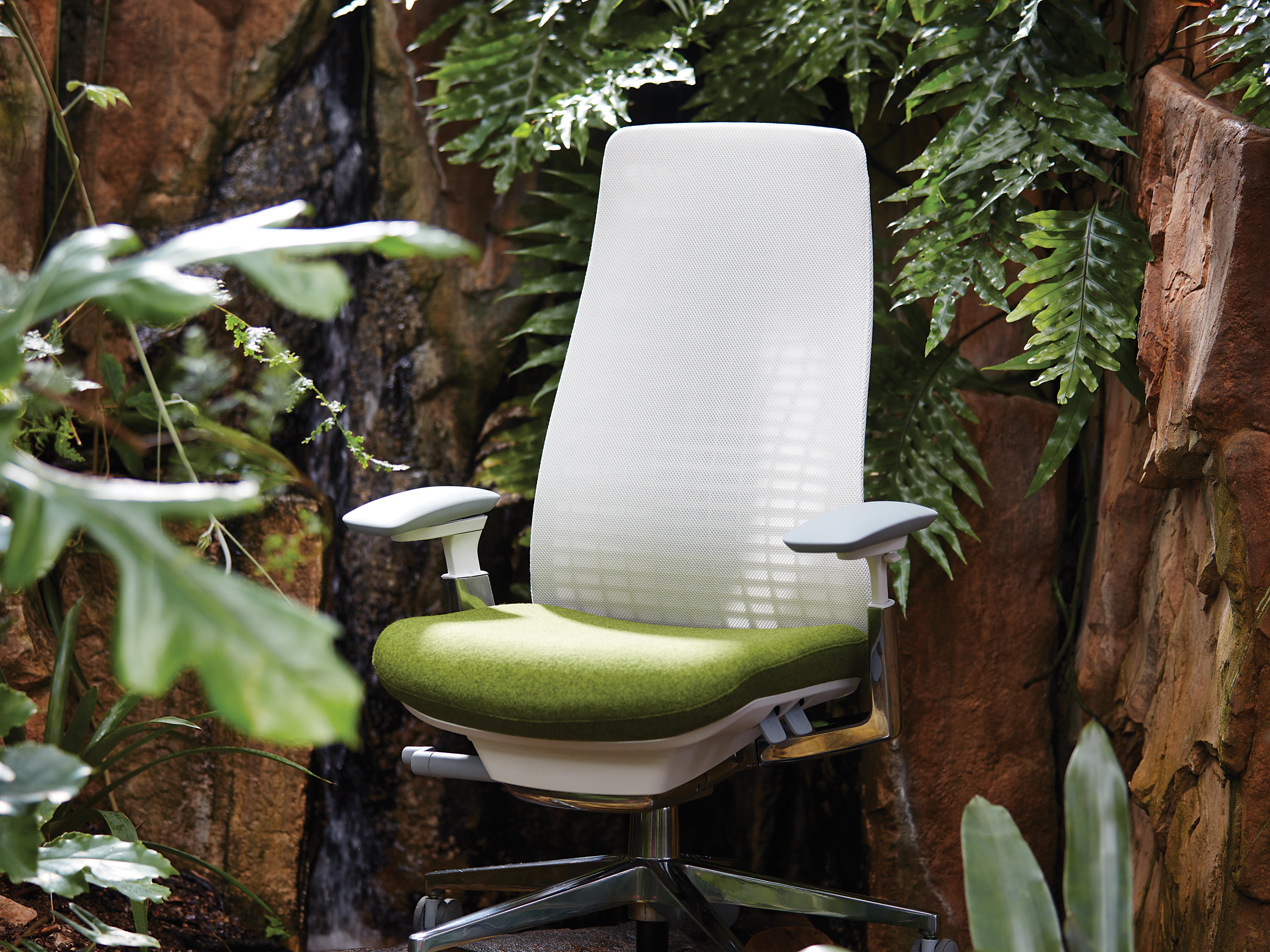
Overview
The Haworth Fern is a mid-tier ergonomic task chair that sits squarely in the professional office market, designed to deliver credible lumbar support, breathable mesh comfort, and a breadth of adjustments without crossing into the premium bracket occupied by the Steelcase Leap or Herman Miller Aeron. Launched in the early 2010s and refined over the decade that followed, the Fern represents Haworth's answer to the question many procurement managers and home-office buyers ask: what can you get for a step below flagship pricing? The chair's name nods to nature—a theme Haworth has leaned into across its portfolio—and the design carries a restrained, functional aesthetic that blends into corporate and home environments alike.
While it lacks the household name recognition of Steelcase or Herman Miller, the Fern has quietly accumulated a loyal following among office-furniture specifiers, facilities managers, and individual buyers who prize substance over brand cachet. It competes on ergonomics, sustainability credentials, and a warranty that signals Haworth's confidence in longevity. For many users, the Fern is the chair that does the job without fanfare—a workhorse that earns its keep over years of daily use.
At a glance
| Brand | Haworth |
|---|---|
| Designer | Haworth Design Studio (in-house team) |
| Year introduced | circa 2012–2013 |
| Materials | Mesh back, molded foam seat, recycled plastic and aluminum frame components |
| Key adjustments | Height, seat depth, lumbar height and depth, 4D arms, tilt tension, tilt lock, forward tilt |
| Warranty | 12 years (full warranty on all components) |
| Price tier | Mid-range ($650–$950 USD depending on configuration and dealer) |
| Weight capacity | 300 lbs (136 kg) |
| Certifications | BIFMA, GREENGUARD Gold, SCS Indoor Advantage Gold, Cradle to Cradle Silver |
The brand & its philosophy
Haworth is a century-old, family-founded furniture manufacturer headquartered in Holland, Michigan. Established in 1948 by G.W. Haworth as a small wood-products shop, the company evolved into a global contract-furniture powerhouse with a presence in over 120 countries and a portfolio that spans workstations, storage, and seating. Unlike the more consumer-facing Herman Miller, Haworth has historically focused on the B2B channel—corporate offices, universities, government—building its reputation on reliability, service, and a willingness to customize at scale.
Sustainability has become a cornerstone of Haworth's brand identity over the past two decades. The company was an early adopter of Cradle to Cradle design principles, published its first environmental product declarations in the mid-2000s, and has consistently earned GREENGUARD and other third-party certifications across its catalog. Haworth's messaging emphasizes "responsible design," a commitment to indoor air quality, recycled content, and end-of-life recyclability. This ethos permeates the Fern, which was engineered from the outset to meet strict environmental and health standards without compromising functional performance.
The designer and the design story
The Fern was developed by Haworth's in-house Design Studio rather than an external celebrity designer—a common approach for the brand, which maintains a large internal team of industrial designers, engineers, and ergonomists. This collaborative model allows Haworth to iterate quickly, integrate feedback from its contract clients, and keep manufacturing efficiencies front of mind. The Fern emerged during a period when Haworth was expanding its task-seating range to offer a more accessible alternative to its higher-end Zody chair, which had gained traction in the ergonomics-conscious market.
The design brief centered on a chair that could deliver credible ergonomic support, pass rigorous sustainability certifications, and hit a price point palatable to mid-market buyers and large-volume purchasers. The result is a chair that privileges function and modularity over signature flourishes. There is no singular "hero" designer attached to the Fern; instead, it bears the hallmarks of committee design in the best sense—thoughtful, tested, and refined through real-world deployment across thousands of workspaces. The chair's evolutionary updates over the years—tweaks to the lumbar mechanism, improvements to the mesh tension—reflect Haworth's iterative philosophy and close ties to its contract customer base.
Design language & aesthetics
The Fern's visual identity is understated and purposeful, eschewing the sculptural drama of an Embody or the biomorphic curves of a Zody in favor of clean lines, gentle radii, and a utilitarian confidence. The backrest is a lightly contoured mesh panel framed by a smooth plastic shell; the seat is a shallow-profile cushion wrapped in fabric or, optionally, mesh. The overall silhouette reads as contemporary without trying too hard—neutral enough to fade into a cubicle farm or a modern home office, yet detailed enough to signal quality on closer inspection.
Color and finish options are deliberately restrained. Standard configurations offer black, gray, and a handful of muted accent tones; the frame and arms are typically black or silver. This palette reinforces the chair's positioning as a professional tool rather than a lifestyle object. There are no flashy branding marks or conspicuous logos; the Haworth wordmark is discreetly placed, and the chair's identity is communicated through form and material rather than graphic flourish. For buyers who want a chair that won't clash with existing furniture or date quickly, the Fern's aesthetic conservatism is an asset.
Ergonomics & how it supports the body
The Fern's ergonomic architecture is built around a height-adjustable lumbar support that can be moved both vertically and horizontally—a feature more commonly found in chairs at higher price points. This dual-axis adjustment allows users to position the lumbar pad precisely against the curve of the lower back, accommodating a wide range of spinal shapes and sitting preferences. The mesh backrest is tensioned to provide a balance of give and resistance; it flexes under load but maintains enough structure to prevent the "hammock" effect that plagues some mesh designs.
Seat depth adjustment is standard, offering roughly two inches of travel to ensure that shorter users can achieve proper thigh support without the seat pan digging into the backs of their knees, while taller users can extend the pan to support more of the thigh. The seat cushion itself is a molded foam with a waterfall front edge to reduce pressure on the underside of the thighs and promote circulation. Armrests are four-dimensional—height, width, depth, and pivot—enabling users to bring the arms into alignment with their keyboard and mouse without shoulder elevation or abduction.
Recline is controlled by a synchro-tilt mechanism with adjustable tension and a multi-position tilt lock, plus an optional forward-tilt mode that some users find helpful for active, leaning-forward tasks. The mechanism's pivot point is slightly forward of center, so the feet stay grounded even when reclining—a detail that contributes to stability and confidence when leaning back. Overall, the Fern offers a comprehensive ergonomic toolkit that, when properly adjusted, can support healthy posture and reduce musculoskeletal strain across a typical workday.
Key adjustments & mechanisms
The Fern's adjustment suite is extensive, though not always immediately intuitive for first-time users. Seat height is controlled by a pneumatic lever under the right side of the seat—standard fare, smooth and responsive across the full range. Seat depth is adjusted via a paddle or lever (depending on the model year and spec) that unlocks the seat pan to slide forward or back; once positioned, it locks securely with no play or creep.
Lumbar support is the chair's standout control. A dial or lever on the lower back allows vertical positioning of the lumbar pad across several inches of travel, while a secondary knob adjusts the depth—how far the pad protrudes into the lower back. This two-axis system is more sophisticated than the fixed or single-axis lumbar found on many competitors at this price, and it's the Fern's clearest ergonomic advantage. Users report that dialing in the lumbar can take a few sessions of trial and error, but once set, the support is firm and consistent.
Armrests adjust via a series of buttons and levers on the underside and sides of the arm pads: push a button to raise or lower, squeeze a lever to slide forward or back, rotate the pads inward or outward, and adjust width by sliding the entire arm assembly along a track. The range is generous, accommodating both petite and broad-shouldered users, though the arm pads themselves are relatively narrow and firm—adequate for resting forearms but not plush. Recline tension is dialed in with a knob under the seat; turning clockwise increases resistance, counterclockwise decreases. The tension range is wide enough for both light and heavy users. A tilt-lock lever offers multiple locked positions across the recline arc, and a forward-tilt option (when specified) adds an extra degree of adjustment for users who prefer an anterior pelvic tilt.
Materials & build quality
The Fern's frame is a hybrid of molded reinforced nylon (a high-percentage recycled plastic) and die-cast aluminum components at key stress points—the cylinder mount, the mechanism housing, and the five-star base. This material mix balances weight, strength, and sustainability; the chair is lighter than all-steel designs but feels solid and rigid under load, with no flex or creak in the back frame or seat pan. The mesh is a durable synthetic weave, slightly coarser than the ultra-fine mesh of premium competitors but robust and resistant to sagging; Haworth rates it for long-term tension retention, and user reports over five-plus years bear this out.
Foam in the seat cushion is a medium-density molded polyurethane, CertiPUR-US certified and free of flame retardants that off-gas volatile organic compounds. The fabric upholstery options are typically contract-grade polyesters with high double-rub counts (30,000–50,000+ cycles), designed to withstand heavy commercial use. Stitching and seams are clean, with no loose threads or puckering on the units we examined. Casters are twin-wheel, dual-material designs (soft tread for hard floors, hard tread for carpet) that roll smoothly and lock into place when weight is applied.
Overall build quality is very good—this is a chair engineered for contract environments where downtime and warranty claims cost money. There are no overtly cheap details or corners cut in the name of price. That said, the Fern does not match the jewel-like fit and finish of a Steelcase Gesture or the aerospace-grade tolerances of a Herman Miller Aeron; panel gaps are slightly wider, plastic surfaces are matte and workmanlike rather than polished, and the overall impression is of a tool built to last rather than an object of design desire.
Sitting experience — what it actually feels like day to day
Sitting in the Fern for the first time, the immediate impression is one of firm, supportive neutrality. The mesh back is cooler and more breathable than foam or leather, making it a strong choice for warm offices or users who run hot. The lumbar support is palpable—once adjusted, it presses into the lower back with a firm, insistent presence that some users find reassuring and others find slightly aggressive. The seat cushion offers moderate give; it is neither plush nor hard, and it does not bottom out even after hours of sitting, though heavier users may wish for more depth of foam.
Over the course of a full workday, the Fern encourages an upright, slightly active posture. The backrest's tension and the lumbar's prominence discourage slouching, and the synchro-tilt mechanism rewards leaning back with a smooth, controlled recline that doesn't feel too loose or too stiff. The chair is particularly well-suited to users who spend long stretches typing or on video calls; the 4D arms can be positioned to support forearms at keyboard height, reducing shoulder and neck tension. However, users who prefer a more reclined, lounge-like posture may find the Fern less accommodating—the backrest does not recline as far as some competitors, and the lumbar support can feel intrusive when leaning back at steeper angles.
Noise and vibration are minimal; the mechanism is quiet, and there is no squeaking or rattling even after months of use. The chair's footprint is compact, and the relatively light weight (around 45–50 lbs depending on configuration) makes it easy to move and reposition. On balance, the day-to-day experience is one of reliable, no-drama functionality—the chair does its job, stays out of the way, and doesn't demand attention or fiddling once dialed in.
Who it's for (and who should skip it)
The Haworth Fern is ideally suited to a broad middle segment of the office-seating market: individual buyers upgrading from a big-box task chair, small-to-medium businesses outfitting teams, and facilities managers seeking a credible ergonomic option with strong sustainability credentials and a competitive price. It fits users who prioritize adjustability, breathability, and lumbar support, and who are willing to invest time in setting up the chair correctly. The Fern is also a strong choice for environmentally conscious buyers; the chair's certifications and recycled content are among the best in its class.
Who should consider the Fern:
- Mid-market buyers who want "most of" what a premium chair offers without crossing $1,000.
- Hot sleepers and warm-climate users who need a mesh back for breathability.
- Corporate and institutional buyers who value warranty length, sustainability documentation, and dealer support.
- Users with lower-back concerns who benefit from adjustable lumbar support.
Who should skip it:
- Luxury seekers who want best-in-class materials, fit-and-finish, and brand prestige—the Fern is competent but not aspirational.
- Very large or very small users—the weight capacity is 300 lbs, and the adjustment ranges, while good, are not as extreme as chairs explicitly designed for extended sizing.
- Recline enthusiasts who want a deep, lounge-like recline; the Fern is more task-focused.
- Buyers who need immediate, plug-and-play comfort—the Fern rewards adjustment and tuning, and some users find the initial setup fussy.
Comparisons with key rivals
| Chair | Price tier | Back / Seat | Key adjustments | Standout strength |
|---|---|---|---|---|
| Haworth Fern | $650–$950 | Mesh back, foam seat | 2-axis lumbar, 4D arms, seat depth, synchro-tilt | Sustainability certs, 12-year warranty, dual-axis lumbar at mid-market price |
| Steelcase Series 1 | $400–$650 | Mesh or upholstered back, foam seat | Basic lumbar, 2D arms, synchro-tilt | Lower entry price, Steelcase brand, simpler feature set |
| Herman Miller Aeron (remastered) | $1,400–$1,800 | Pellicle mesh back and seat | PostureFit SL, 4D arms, forward tilt, extensive sizing | Iconic design, best-in-class materials, three size options, premium fit-and-finish |
| Steelcase Leap V2 | $900–$1,200 | Upholstered or mesh back, foam seat | LiveBack tech, 4D arms, seat depth, natural glide | Dynamic back flex, deeper recline, broader size accommodation |
Against the Steelcase Series 1, the Fern offers more sophisticated lumbar control and a longer warranty, justifying the price premium for buyers who need those features. The Series 1 is a solid budget option, but its adjustment set is more basic. Against the Herman Miller Aeron, the Fern is a third to half the price and delivers much of the ergonomic functionality, but it lacks the Aeron's iconic design, three-size system, and ultra-premium materials. The Aeron is the chair you buy when budget is secondary to having the best; the Fern is the chair you buy when you want very good performance at a fair price.
The Steelcase Leap V2 is the Fern's closest direct rival—both are mid-to-upper-mid-tier task chairs with deep adjustment sets and strong ergonomic reputations. The Leap's LiveBack technology and broader sizing give it an edge in adaptability and comfort for a wider range of body types, but the Fern counters with superior sustainability certifications, a longer warranty, and often a lower street price. For buyers prioritizing environmental credentials and total cost of ownership, the Fern has the advantage; for those prioritizing comfort and flexibility across diverse users, the Leap may be worth the extra investment.
Sizing, fit & configuration options
The Fern is offered in a single size, designed to fit users roughly 5'2" to 6'4" and up to 300 lbs. This one-size-fits-most approach is both a strength and a limitation: it simplifies ordering and inventory, but it means the chair cannot be as precisely tailored to extremes of the size spectrum as chairs like the Aeron (three sizes) or the Leap (adjustable seat depth and back height ranges). In practice, the Fern's adjustment ranges are generous enough to accommodate the majority of users comfortably, but very petite users (under 5'2") may find the seat depth too long even at its shortest setting, and very tall or heavy users may wish for more seat width or back height.
Configuration options include choice of mesh or upholstered seat, armrest style (fixed, 2D, or 4D), and the inclusion or omission of features like forward tilt, adjustable lumbar, and headrest (available as an aftermarket or special-order add-on in some markets). Buyers can select from a range of fabric and mesh colors, though the palette is relatively conservative. The base and frame finish is typically black or metallic silver. Haworth's dealer network can also accommodate custom specifications for large contract orders—different casters, upgraded fabrics, or logo embroidery—but these are not readily available to individual retail buyers.
Sustainability & certifications
The Fern is one of the most comprehensively certified chairs in its price bracket, reflecting Haworth's long-standing commitment to environmental and health standards. The chair holds GREENGUARD Gold certification, which verifies low chemical emissions and suitability for sensitive environments like schools and healthcare facilities. It also carries SCS Indoor Advantage Gold, another stringent indoor air-quality standard, and has achieved Cradle to Cradle Silver certification, meaning it has been assessed for material health, recyclability, renewable energy use in manufacturing, water stewardship, and social fairness.
The frame incorporates recycled plastic content (typically 20–30% post-consumer recycled resin in the nylon components) and recycled aluminum. The chair is designed for disassembly, with clearly marked parts and minimal use of adhesives, making end-of-life recycling more feasible. Haworth publishes environmental product declarations (EPDs) for the Fern, offering transparency on lifecycle impacts including carbon footprint and resource use. The foam is free of flame retardants, and the fabrics are available in options that meet or exceed environmental textile standards.
For corporate buyers tracking LEED points, ESG metrics, or sustainability procurement goals, the Fern is a strong ally. The documentation is thorough, the certifications are current, and the chair's design genuinely reflects Haworth's broader environmental commitments rather than greenwashing or token gestures.
Maintenance, durability & warranty
The Fern is backed by a 12-year warranty covering all components—frame, mechanism, adjustments, upholstery, and casters. This is one of the longest warranties in the task-chair category and a signal of Haworth's confidence in the chair's durability. The warranty is straightforward: if a part fails under normal use, Haworth will repair or replace it at no cost. Warranty claims are handled through Haworth's dealer network, which can be faster and more responsive than direct-to-consumer service channels, especially for contract buyers with established accounts.
Day-to-day maintenance is minimal. The mesh back can be vacuumed or wiped down with a damp cloth; the upholstered seat (if specified) should be spot-cleaned with mild detergent and water. Casters should be inspected periodically for debris—hair, carpet fibers, and dust can accumulate and impede rolling—and can be popped off for cleaning or replacement. The mechanism does not require lubrication under normal conditions, and there are no user-serviceable parts beyond caster replacement and occasional tightening of screws or bolts if the chair sees heavy use or frequent moves.
Durability in real-world deployment is strong. Corporate clients report that Fern chairs remain functional and comfortable after five to seven years of multi-shift use, with minimal warranty claims and no widespread issues. The mesh holds its tension, the foam retains its shape, and the mechanism remains smooth and quiet. The chair's contract-grade construction is evident in its longevity; this is not a chair that will sag, squeak, or fall apart after a year or two of home-office use.
Pricing, value & where it sits in the market
The Haworth Fern typically retails in the range of $650 to $950 USD depending on configuration, dealer, and market. Base models with fewer adjustments can sometimes be found in the low-to-mid $600s, while fully loaded units with 4D arms, adjustable lumbar, and premium upholstery push toward $900 or slightly above. This places the Fern firmly in the mid-market segment: more expensive than entry-level mesh chairs from Hon or AmazonBasics, but substantially less than the $1,000-plus flagships from Steelcase and Herman Miller.
Value is strong. The combination of a 12-year warranty, comprehensive certifications, dual-axis lumbar support, and contract-grade build quality is difficult to match at this price point. The Fern is not the cheapest ergonomic chair on the market, but it is one of the most complete—buyers are not sacrificing key features or gambling on longevity to save a few hundred dollars. For individual buyers, the Fern represents a sensible step up from mass-market chairs without the sticker shock of premium models. For contract buyers, the total cost of ownership—initial price plus warranty coverage plus low failure rates—is compelling.
Where to buy: The Fern is sold primarily through Haworth's authorized dealer network, which includes regional office-furniture dealers, some national chains, and online authorized retailers. It is not widely available through mass-market channels like Amazon or big-box stores, which can make comparison shopping and test-sitting more challenging for individual buyers. However, many dealers offer trial periods, and Haworth's dealer locator tool on the company website can help buyers find local showrooms where the chair can be experienced in person.
Verdict — the bottom line
The Haworth Fern is a thoroughly competent, well-engineered task chair that delivers strong ergonomic performance, impressive sustainability credentials, and a long warranty at a fair price. It does not have the brand prestige or the design icon status of a Herman Miller Aeron, nor the dynamic flexibility of a Steelcase Leap, but it offers much of what those chairs provide for significantly less money. The dual-axis lumbar support is a standout feature in this price class, and the mesh back's breathability makes the chair a strong choice for warm environments and users who prioritize airflow.
The Fern's restraint—its lack of flashy design gestures, its utilitarian aesthetic, its dealer-only sales model—may limit its appeal to consumers who shop by brand or want an immediate online purchase. But for buyers who do their homework, value substance over style, and appreciate a chair that earns its keep through years of quiet, reliable service, the Fern is an excellent choice. It is the chair for the pragmatist, the sustainability-conscious buyer, and the facilities manager who wants to sleep well knowing the seating budget was spent wisely.
In a market crowded with compromises, the Haworth Fern is that rarest of things: a chair that undersells itself.
Sources & references
Interested in the Haworth Fern?
Check the price on Amazon