Herman Miller Eames Molded Plastic Armchair
The icon that launched a revolution in single-shell seating
Overview
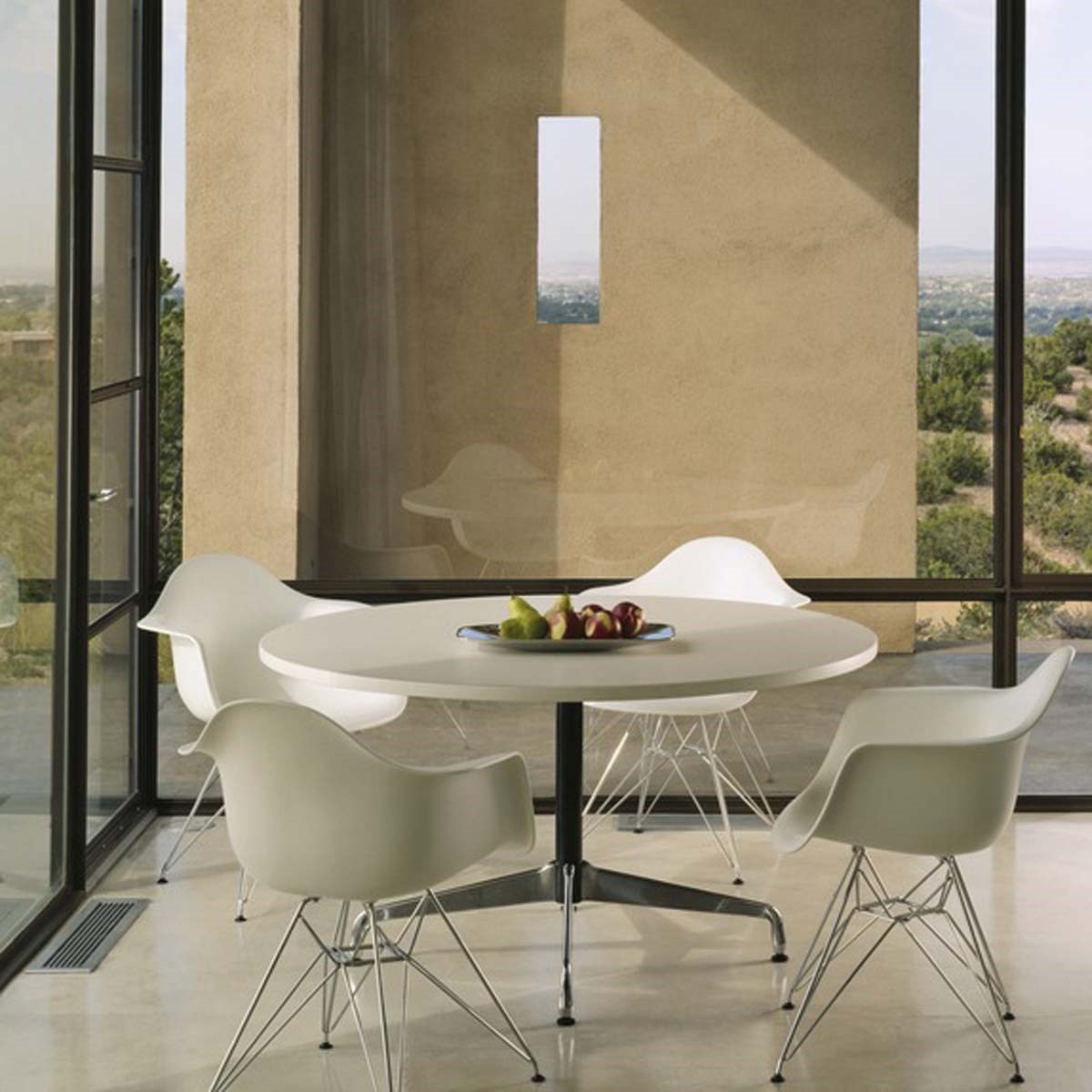
The Eames Molded Plastic Armchair, designed by Charles and Ray Eames, appeared on the market in 1950 as a watershed moment in modern furniture— the first one-piece plastic chair whose surface was left uncovered and not upholstered . What began as a prototype for MoMA's 1948 International Competition for Low-Cost Furniture Design became an instant icon, marrying organic curves with industrial-scale production. The Eames plastic armchair immediately became an iconic design, and it was eventually used in schools, airports, restaurants, and offices around the world . Today, Herman Miller reintroduced the chair in 2001 in recyclable polypropylene, and in 2022 enhanced it with 100 percent post-industrial recycled plastic , keeping faith with the Eameses' democratic ethos while answering modern sustainability demands.
At a glance
Brand | Herman Miller |
|---|---|
Designer | Charles and Ray Eames |
Original introduction | 1950 (fiberglass); 2001 (polypropylene); 2022 (recycled plastic) |
Shell material | Injection-molded recyclable polypropylene or 100% post-industrial recycled plastic |
Base options | 4-leg, dowel-leg, wire, rocker, task (pneumatic swivel) |
Adjustments | None (fixed shell; task base offers height adjustment and swivel) |
Warranty | 5 years |
Weight capacity | Not specified by manufacturer |
Price tier | Mid-to-premium: $445–$975+ depending on base and finish |
Certifications | GREENGUARD (Indoor Advantage Gold), 100% recyclable |
The brand & its philosophy
Herman Miller has, for more than 100 years, provided solutions that stand the test of time . The Michigan-based manufacturer built its modern reputation by recruiting visionary designers—George Nelson, Charles and Ray Eames, Alexander Girard—and trusting them to solve real problems at scale. The Eames partnership, which began in 1946, exemplified Herman Miller's democratic design mandate: quality, accessibility, and material innovation over status for its own sake.
Where other mid-century makers chased luxury markets, Herman Miller championed functional elegance for "the most, for the least." That ethos remains woven into the company's current sustainability commitments, transparent supply chains, and long product warranties—values that feel less like marketing and more like operational DNA.
The designer and the design story
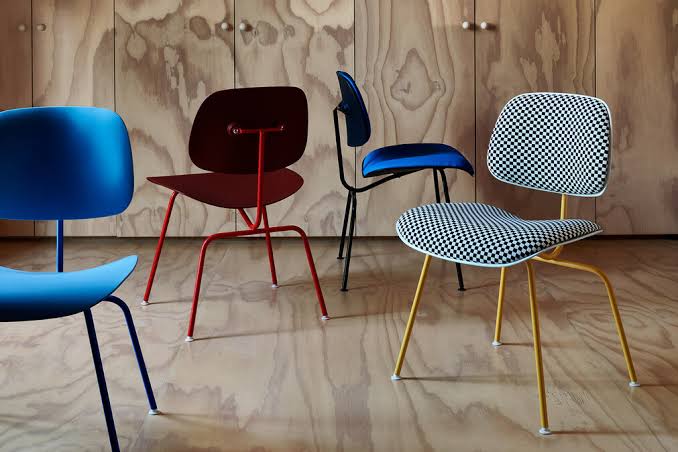
Charles Eames met and began working with Ray Kaiser in 1940; they married in 1941 and moved to California, where they established The Office of Charles and Ray Eames . Charles had been head of the experimental design department at Cranbrook Academy of Art, where he collaborated with Eero Saarinen on a formfitting shell chair that won first place in the Museum of Modern Art's 1940–41 Organic Design Competition . That early success with molded plywood set the trajectory for all their subsequent shell experiments.
The plastic armchair was intentionally designed for the International Competition for Low-Cost Furniture Design, sponsored by the Museum of Modern Art and motivated by the urgent need in the post-war period for low-cost housing and furnishing designs adaptable to small housing units . The office had experimented with plastic resins before submitting chair designs and prototype chairs of stamped metal to MoMA's competition in 1948 . When Herman Miller balked at spending $80,000 for a steel stamping press, Charles and Ray turned to fiberglass molding, a wartime technology restricted to military applications . The chairs were made using hydraulic press molds from shipbuilding by manufacturer Zenith Plastics, and Zenith began mass-producing the fiberglass shell armchairs for Herman Miller in 1950 .
Design language & aesthetics
The Molded Plastic Armchair speaks in the visual vernacular of mid-century optimism: a single fluid shell, organically contoured to cradle the human form, perched on spindly legs that seem to defy gravity. The shell's compound curves—gentle at the lumbar, more aggressive at the seat pan—represent a sculptural leap beyond rectilinear modernism. Charles Eames said, "The role of the designer is that of a very good, thoughtful host anticipating the needs of his guests," and the shell chair embodies a universal response to what everyone wants: a simple, gracious form that fits any body and every place .
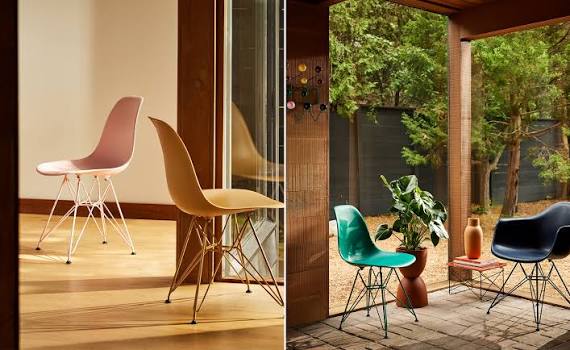
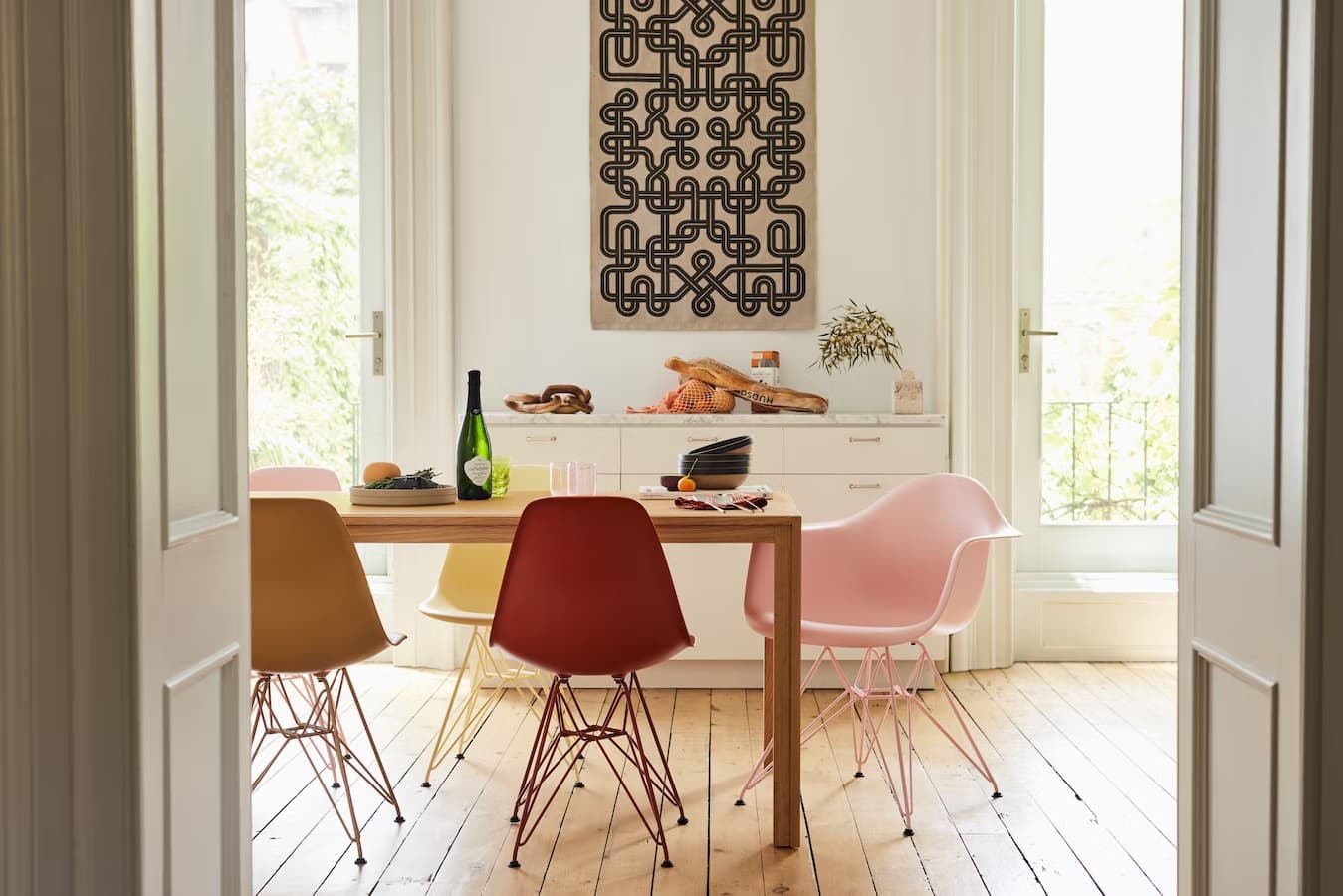
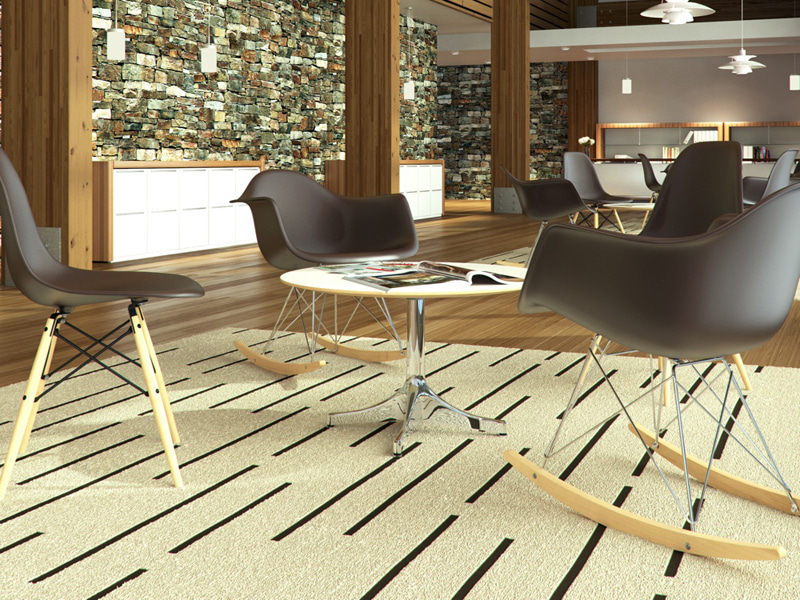
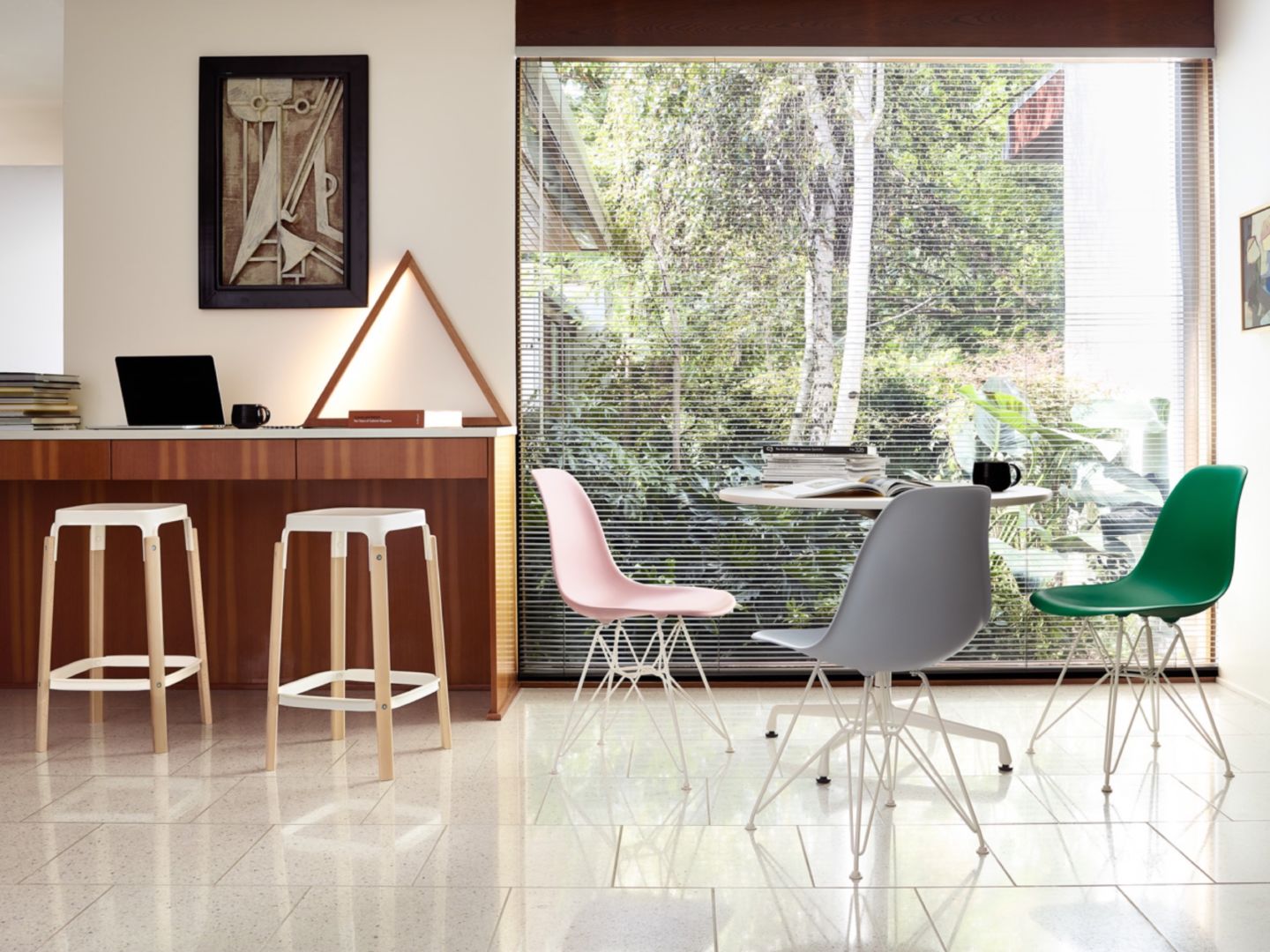
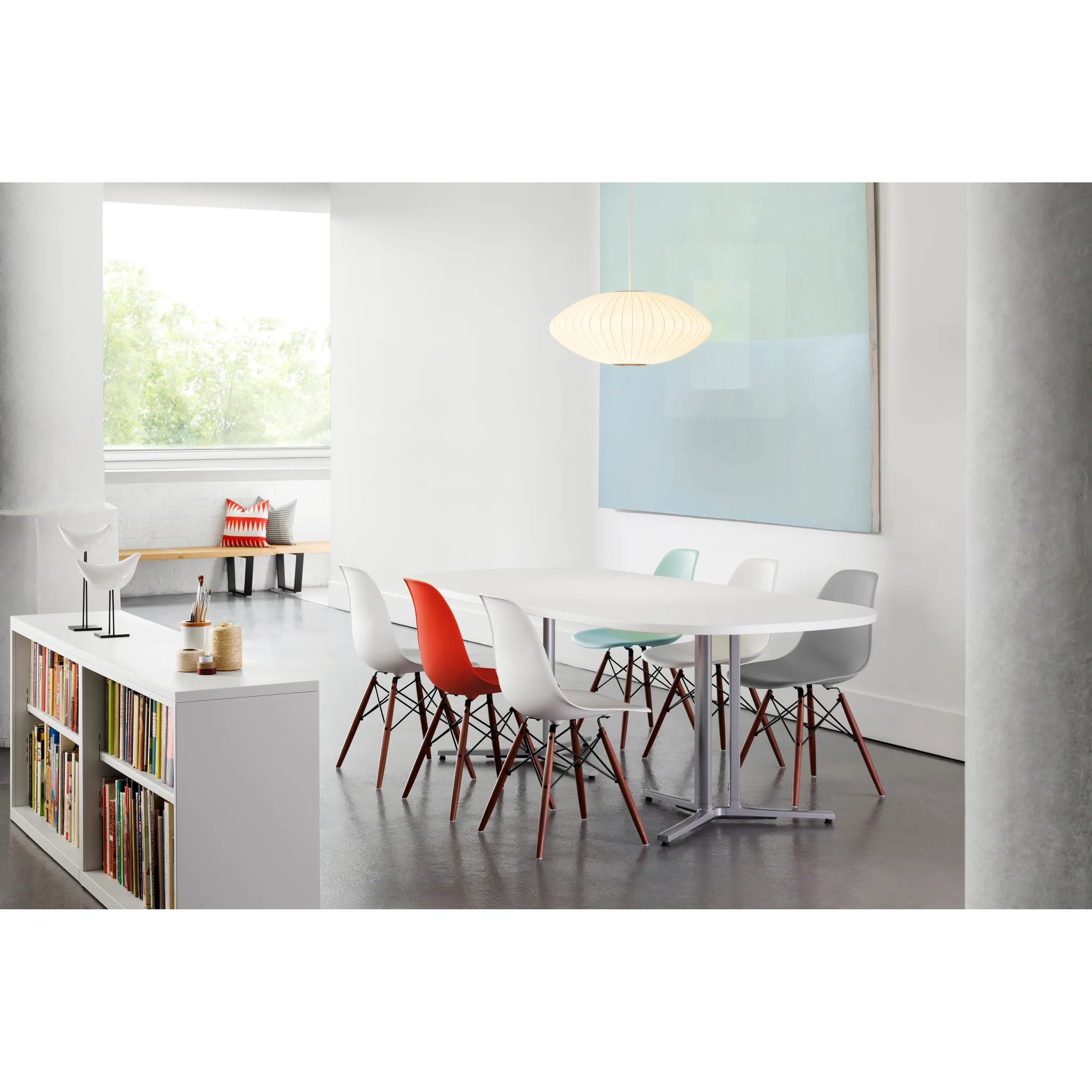
Available in over two dozen colours—from neutral greiges and parchment to vibrant reds, blues, and yellows—the chair adapts to any interior aesthetic without sacrificing its formal integrity. The matte texture of the plastic shell lends tactility and warmth, while the variety of base options (wire, dowel, four-leg, rocker) allows endless permutations. It's a chair that works as well stacked in a school cafeteria as it does flanking a Saarinen tulip table in a Tribeca loft.
Ergonomics & how it supports the body
The Eames shell pursues ergonomics through geometry rather than gadgetry. The conceptual backbone was the search for seat and back forms that comfortably support the human body, using three-dimensionally shaped surfaces instead of cushioned upholstery . The seat pan's waterfall edge— which reduces pressure on thighs —and the shell's lumbar scoop distribute load across a wider contact area than a flat surface ever could.
That said, this is not a task chair. There is no adjustable lumbar, no recline tension dial, no synchro-tilt. The shell is fixed; your body adapts to it, not the reverse. For users accustomed to the minutely tuneable ergonomics of an Aeron or Embody, the Plastic Armchair feels more like a well-designed dining chair than an eight-hour workstation seat. It excels in contexts where you sit for 30 minutes to two hours—conference rooms, break-out spaces, dining—rather than full-day desk marathons.
Key adjustments & mechanisms
In its standard dining and side-chair configurations, the Eames Molded Plastic Armchair offers zero adjustability. The shell is what it is; the base is fixed-height. If you opt for the task armchair variant, you gain a pneumatic height-adjustable, swiveling seat on a five-star base , but even then, the shell itself remains rigid—no tilt, no flex.
This simplicity is both strength and limitation. For buyers seeking plug-and-play seating that works across a range of body types without fiddling, the shell's proven geometry delivers. For users who demand personalized micro-adjustments, the chair will feel frustratingly static. The Eameses designed for "the average guest"; outliers at either anthropometric extreme may find the fit less forgiving.
Materials & build quality
The shell is injection-molded, batch-dyed, made with post-industrial recycled plastic or recyclable polypropylene, with chromed steel, powder-coated steel, or wood dowel bases . The subtle matte texture of the re-engineered plastic shell maintains the soft tactility of the original design , and the shell is dyed throughout so colors remain vibrant even after years of use . The polypropylene formulation is lighter and more impact-resistant than the original fiberglass, and it ages gracefully—no splintering, no surface cracking under normal use.
Base construction varies by model: wire bases are chromium-plated steel rod; dowel bases use solid maple or walnut; four-leg and rocker bases employ powder-coated or chrome-finished steel tube. All use rubber shock-mount connectors—originally developed by the Eameses in 1946—to attach shell to base, providing a small degree of resilience. Build quality is consistently high: joints are clean, finishes are even, and the chair ships fully assembled.
Sitting experience — what it actually feels like day to day
Sitting in an Eames Plastic Armchair feels like settling into a gentle palm. The shell wraps subtly around your hips and mid-back; the arms rest at a comfortable height for most users. The plastic surface is cool to the touch initially but warms quickly, and the matte finish prevents the clamminess you'd get from glossy polypropylene. For a café breakfast, a two-hour strategy session, or evening dinner, the chair is supremely pleasant—supportive without being intrusive.
After three or four hours, however, the lack of padding and adjustability becomes apparent. Your sit bones press into the hard shell; your lumbar craves a different curve. The chair doesn't adapt; you shift position, stand, stretch. It's a reminder that the Eameses designed this for versatility and multi-use contexts—homes, dining rooms, waiting areas—not the sedentary marathons of knowledge work. Pair it with a seat pad or upholstered version if all-day comfort is your goal.
Who it's for (and who should skip it)
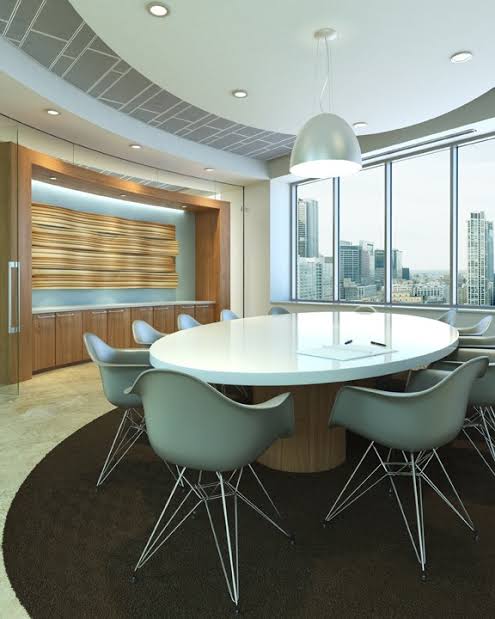
Ideal for: Design-conscious home offices, dining rooms, conference spaces, libraries, and hospitality settings where aesthetic coherence and easy maintenance matter as much as comfort. Perfect for users who value iconic form, sustainability credentials, and a chair that works in any room without visual clutter.
Also suited to: Hot-desking environments, co-working lounges, and creative studios where seating rotates frequently and where the chair's stackability (in four-leg versions) and cleanability are operational advantages.
Skip it if: You need a dedicated, all-day ergonomic task chair with lumbar adjustment, seat-depth tuning, and multi-position tilt. The Plastic Armchair is not an Aeron substitute. Also skip if you're significantly taller than 6'2" or shorter than 5'2"—the shell's proportions were designed for mid-percentile adults and may not accommodate extremes comfortably.
Not recommended for: Users with chronic lower-back conditions who require active lumbar support, or anyone expecting the plush, forgiving sit of an executive leather chair. This is a design object that happens to be a very good chair, not a chair engineered solely for prolonged sitting.
Comparisons with key rivals
Chair | Price range | Shell / structure | Adjustability | Standout strength |
|---|---|---|---|---|
Herman Miller Eames Plastic Armchair | $545–$975 | Molded polypropylene or recycled plastic single shell | None (task base: height only) | Iconic form, sustainability, timelessness |
Vitra Eames Fiberglass Armchair | ~$745–$1,075 | Fiberglass-reinforced shell (re-issued 2018) | None | Original material authenticity; Europe-market |
HAY About A Chair (AAC) | ~$350–$650 | Polypropylene shell, steel or wood base | None (swivel task versions available) | Contemporary aesthetic, lower price, lighter weight |
Knoll Bertoia Side Chair | ~$600–$900 | Welded steel wire frame | None | Sculptural transparency, industrial elegance |
The Eames shell sits at the intersection of historical significance, material innovation, and democratic design. The Vitra fiberglass version offers collectors the tactile authenticity of the original resin formulation but at a premium and with environmental trade-offs. The HAY About A Chair delivers similar single-shell comfort and Scandinavian restraint at a more accessible price but lacks the Eames provenance. The Bertoia wire chair is equally iconic but less forgiving on the body without a seat pad. For buyers prioritizing heritage, sustainability, and versatility, the Herman Miller Plastic Armchair remains the benchmark.
Sizing, fit & configuration options
Dimensions are approximately 24.5″ W × 23.5″ D × 31.75″ H , though exact measurements vary slightly by base type. The seat height on four-leg and dowel bases sits around 18 inches, suitable for standard dining and desk heights. Armrests provide about 7 inches of clearance and are fixed-width—narrow enough to slide under most tables but not adjustable for broader or narrower torsos.
The chair is available in 2 million configurations, with an extensive range of shell, base, color, upholstery, and finish options . Shell colours span vintage neutrals (greige, parchment, elephant hide grey) to bold contemporary tones (red, mustard, navy, forest green). Bases include four-leg tube steel (stackable, most affordable), dowel-leg wood (dining elegance), wire (mid-century sculptural), rocker (lounge), and task swivel. Upholstery options range from non-upholstered (easiest to clean) to seat pads to full upholstery in fabric or leather. Herman Miller's online configurator lets you preview combinations in real time; retailers like Design Within Reach stock popular pre-configured models.
Sustainability & certifications
The chair holds Indoor Advantage Gold Certification, SCS Global Services' highest level of indoor air quality performance, ensuring furniture products meet strict chemical emission limits for volatile organic compounds (VOCs) . Recycled chairs are made with 100% post-industrial recycled plastic, introduced in 2022 , and the Eames Molded Plastic Chairs are 100% recyclable .
Herman Miller does not publish BIFMA Level certifications for this specific model on its consumer-facing pages, though its manufacturing processes adhere to broader BIFMA standards for safety and performance. The shift from fiberglass (discontinued for environmental reasons in the 1990s) to polypropylene and now post-industrial recycled content demonstrates the brand's commitment to iterative sustainability—precisely the "continual advancements" ethos the Eameses championed. The chair qualifies for LEED credits in commercial projects and supports clients pursuing net-zero and circular-economy goals.
Maintenance, durability & warranty
Herman Miller backs the chair with a 5-year warranty covering materials and workmanship . The polypropylene shell is virtually indestructible in normal use—resistant to impacts, UV fade (though prolonged direct sunlight will eventually dull any plastic), and common cleaning agents. Wipe down with mild soap and water; avoid abrasive scouring pads that might scratch the matte finish. Bases require occasional tightening of mounting hardware, especially on wire and dowel models subjected to frequent moves.
The rubber shock mounts can harden or crack after a decade or more of heavy use, but they're user-replaceable and inexpensive. Upholstered versions demand more care—fabric can stain, leather can scuff—but the shell itself ages gracefully. Anecdotal owner reports (gleaned from design forums and retailer reviews) suggest chairs routinely survive 15–20 years of residential use and 8–12 years in high-traffic commercial settings. Herman Miller offers a 30-day return window , giving buyers a full month to evaluate fit and comfort.
Pricing, value & where it sits in the market
Direct from Herman Miller or Design Within Reach, the Eames Molded Plastic Armchair ranges from $545 (four-leg base, non-upholstered) to $975+ (dowel base, fully upholstered or rocker configurations) . Task bases and specialty finishes push prices higher. Vitra's European-market fiberglass versions start around $745 and climb past $1,075. Authorized retailers occasionally discount floor models or run seasonal promotions; grey-market and replica versions flood online marketplaces at $150–$400 but sacrifice material quality, certifications, and warranty.
Value is contextual. If you prize design provenance, sustainability, a five-year warranty, and a chair that will look current in 2050, the Herman Miller original is fairly priced relative to peers like the Knoll Bertoia or Vitra Panton. If you simply need stackable café seating and don't care about authenticity, replicas or the HAY AAC offer similar utility for half the cost. The Eames chair occupies the mid-to-premium tier—accessible to design-forward consumers but not a luxury splurge on par with a $1,500+ Eames Lounge Chair or $1,800 Aeron.
Verdict — the bottom line
The Herman Miller Eames Molded Plastic Armchair remains what it was in 1950: an elegant, democratic solution to the problem of seating many people comfortably, affordably, and beautifully. Its single-shell form is as visually arresting today as it was groundbreaking then, and the shift to recycled materials honours the Eameses' iterative, problem-solving ethos without compromising the chair's essential character.
This is not a high-adjustability ergonomic task chair. It is a design-forward, multi-context seat that works brilliantly for dining, conferencing, lounging, and light desk work—but not for eight-hour coding marathons. It rewards users who value timelessness, sustainability, and aesthetic coherence over feature lists and knobs. For those buyers, the Plastic Armchair is one of the rare pieces of furniture that earns its icon status through sheer utility, beauty, and endurance. It was made to last, and it does.
Sources & references
Interested in the Herman Miller Eames Executive Chair?
Check the price on Amazon