Humanscale Freedom Task Chair
The physics-powered chair that replaced a thousand knobs with elegance
Overview
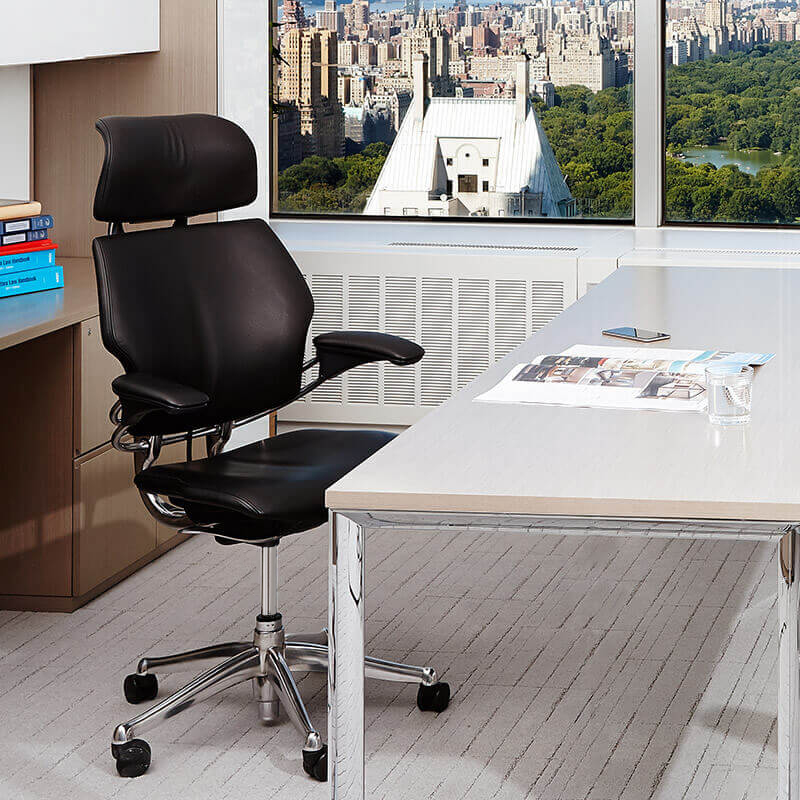
The Humanscale Freedom chair redefined ergonomic design when it was introduced in 1999 by visionary designer Niels Diffrient and Humanscale founder Bob King. At its core sits a radical proposition: what if a chair required no manual adjustments at all? Introduced in 1999, the Freedom was the first chair to remove the traditional manual knobs and levers and replace them with the sitter's body weight and the laws of physics, allowing users to move freely from posture to posture without thinking about it.
More than two decades later, the Freedom remains Humanscale's flagship and one of the industry's most recognizable silhouettes. The New York Times called it the "gold standard in office seating" , and it has won ten design awards to date—including the Design Distinction Award in the prestigious ID Design Review 2000 competition. Available with or without a headrest, in fabric or leather, the Freedom occupies a unique position in the premium task-chair landscape—more streamlined than the Aeron, more automatic than the Leap, and unapologetically focused on effortless movement over infinite adjustability.
At a glance
Brand | Humanscale |
|---|---|
Designer | Niels Diffrient |
Year introduced | 1999 |
Frame materials | Aluminum, steel, composite base |
Seat/back options | High-density foam or gel cushions; fabric or leather upholstery |
Key mechanism | Weight-sensitive counterbalance recline (automatic, no manual tension knob) |
Adjustments | Seat height, seat depth, back height, arm height (synchronous); headrest height (on headrest model) |
Height range | 5′0″ to 6′4″ |
Weight capacity | 300 lbs |
Warranty | 15-year, 24/7 on frame/mechanism; 5 years on upholstery and arm pads |
Price tier | Premium ($1,300–$3,000+ depending on configuration) |
Certifications | GREENGUARD Indoor Air Quality, GREENGUARD Gold, BIFMA level 2 ; vetted for over 20 harmful chemical classes, Declare Label |
Manufacturing | Made in the USA |
The brand & its philosophy
Humanscale was founded in 1983 by CEO Robert King and is headquartered in New York, with locations in more than 28 countries. The company is the leading designer and manufacturer of ergonomic products that improve the health and comfort of work life; its award-winning office solutions include self-adjusting seating, sit/stand desks, monitor arms and task lighting.
The Humanscale Design Studio, based in New York City, abides by the philosophy that good design achieves more with less; function, simplicity, longevity, and sustainability are at the core of all their designs. King has said the company's goal was to "start a company that made tools allowing you to adjust your work to your body, rather than adjust your body to your work."
That philosophy is realized at every level. In 2024, Humanscale earned B Corp certification, reinforcing its longstanding leadership in sustainability; it leads the charge as the only major brand in the commercial furniture industry in the US to be B Corp certified, joining the ranks of major brands like Patagonia and Allbirds. In 2022, Humanscale became the first and only furniture manufacturer to be awarded TRUE Gold and Silver certifications for all factories globally, helping facilities define, pursue, and achieve zero waste goals.
The designer and the design story
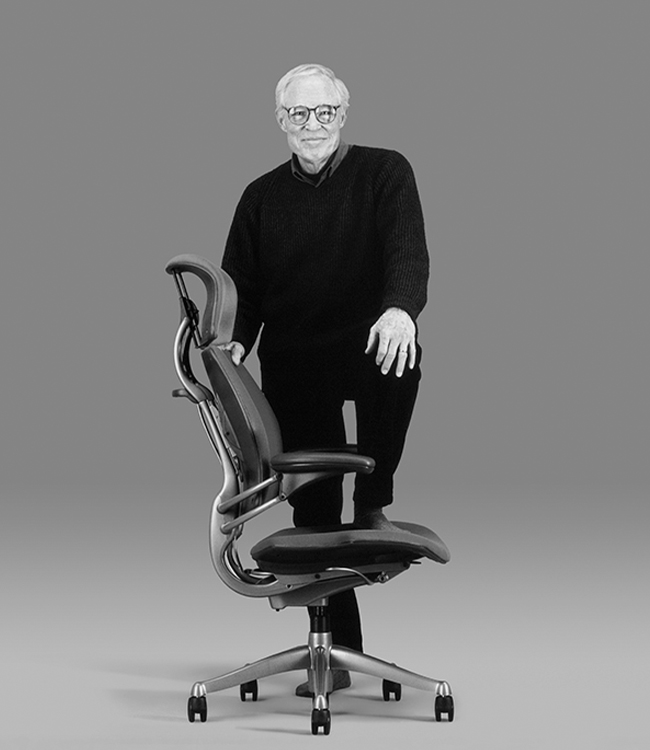
Niels Diffrient's partnership with Humanscale began in 1998, with the development of the Freedom chair, which set a new standard for ergonomic task chairs and changed the way people sit. But the chair's roots stretch back further. King approached Diffrient in 1997 to design a chair that's easy to use; shortly afterwards, Diffrient showed him a prototype of a chair he had been working on for seven years without a client.
Throughout his life, Diffrient was instrumental in the mid-century modern design movement, working with revered designers including Eero Saarinen, Ettore Sottsass, Charles Eames, Marco Zanuso and Henry Dreyfuss. Diffrient had more than 50 patents and 75 awards, including the 2002 National Design Award from the Smithsonian Cooper-Hewitt, National Design Museum and the 1996 Chrysler Design Award. All of his research was eventually distilled into a 3-volume work called Humanscale, published in 1974.
Diffrient was in his 70s when he invented the Freedom Chair, which eliminated the need to make several manual adjustments to height and pitch when someone sat in it; the chair automatically adjusted according to a person's weight. His design philosophy was unequivocal. As Diffrient said in a New York Times article, "Why would you design something if it didn't improve the human condition?" He revolutionized task seating by inventing a chair that adjusts to the sitter, rather than making the sitter adjust to the chair.
Design language & aesthetics
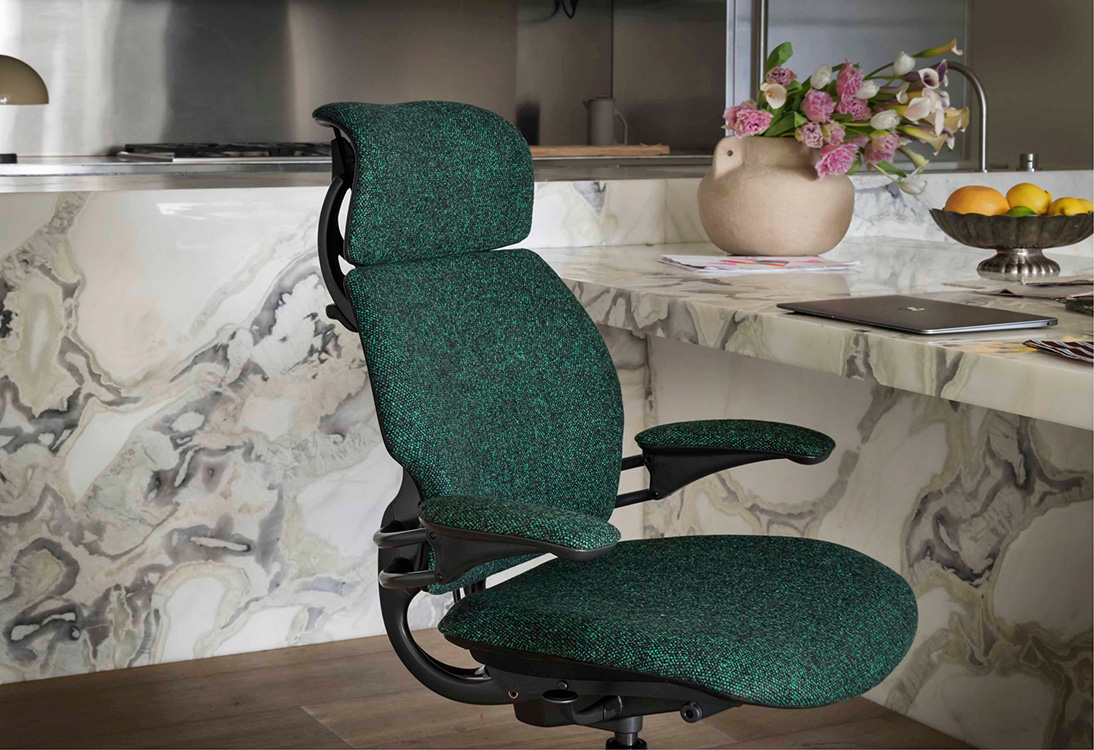
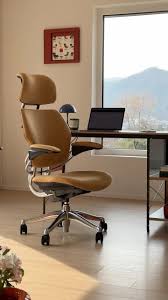
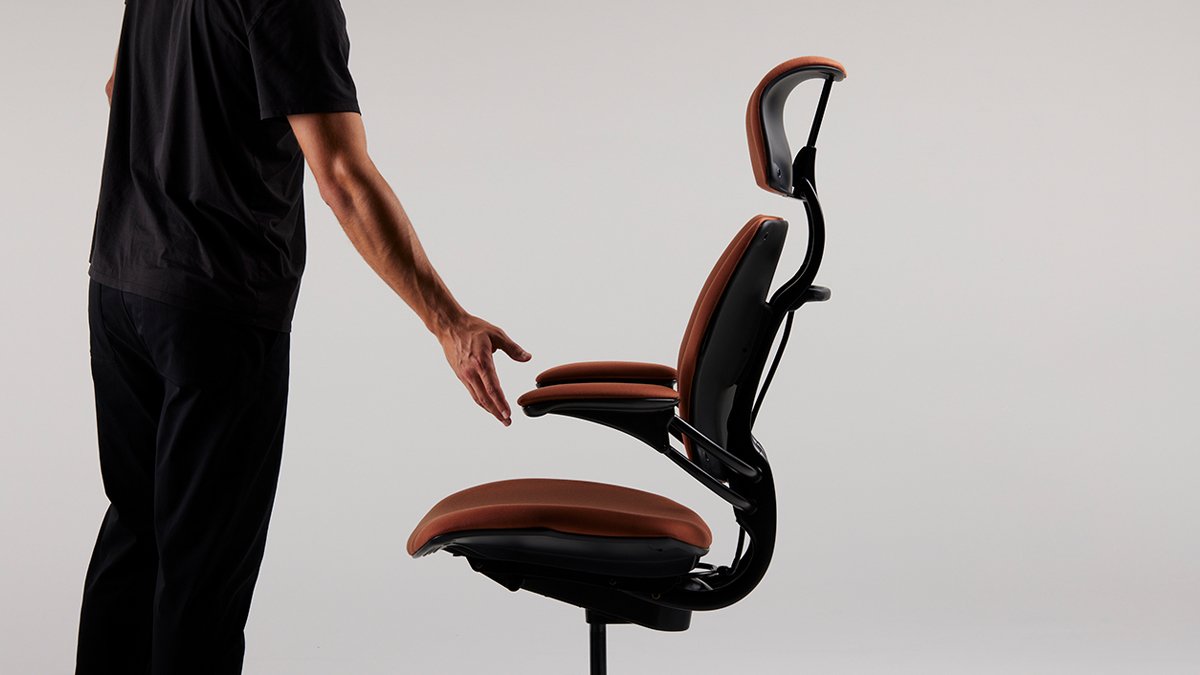
Humanscale's flagship office chair, the Freedom, is best known for its simplicity and high-end design; unlike many office chairs available, its unique look is rarely confused with another product. The silhouette is clean and sculptural—thick contoured cushions, an articulated back shell, synchronous armrests mounted to the backrest rather than the seat, and (on the headrest model) a distinctive pivoting headrest that extends forward on recline.
The aesthetic language is minimalist modern, not ergonomic sci-fi. The smooth, modern aesthetic brings design to any space—from your office to your home. Frame options include graphite and polished aluminum; the cushion and back shells are available in a spectrum of fabric or leather finishes. With 49 fabric upholstery options and 7 leather options, you should have no problem getting the perfect match for your space; the seven leather options are available with eight different colors of box stitching.
Build quality is immediately tangible. This is a superb office chair which is really well-built, and most importantly, very comfortable to sit in for long periods of time. The weight is modest— 38 lbs with arms / 34 lbs without arms —partly because aluminum features prominently in the structure, minimizing bulk without sacrificing robustness.
Ergonomics & how it supports the body
The Freedom's ergonomic approach is fundamentally different from the manual-adjustment chairs that dominate the category. In the 1990s, when ergonomic chairs were often complicated and intimidating, Diffrient saw an opportunity to simplify and create a solution that would adapt to each user, regardless of body type, without the need for complex adjustments; the chair would automatically adjust to the user, challenging the conventional wisdom of the time: chairs overrun with knobs and levers, which did not provide proper support and left people sitting in unhealthy postures.
The counterbalance mechanism supports users ranging in height from 5′0″ to 6′4″; recline averts pressure points by increasing the angle between torso and legs, while extra motion provided by the backrest during recline automatically adjusts to the needs of the spine. Dynamic movement provides up to 1″ of additional lumbar support.
The back and lumbar (lower back) support earned top ratings across all reviewers; the headrest was most noteworthy with multiple screen use or when leaning back. With an innovative recline that provides constant support and a pivoting backrest that automatically adjusts to the needs of the spine, the Freedom chair is exceptionally comfortable and promotes movement throughout the day; its refined and sculpted cushions were designed to mimic the body's natural contours and decrease pressure point loads for premium comfort.
Key adjustments & mechanisms (recline, lumbar, armrests, seat depth)
Recline mechanism: the counterbalance core
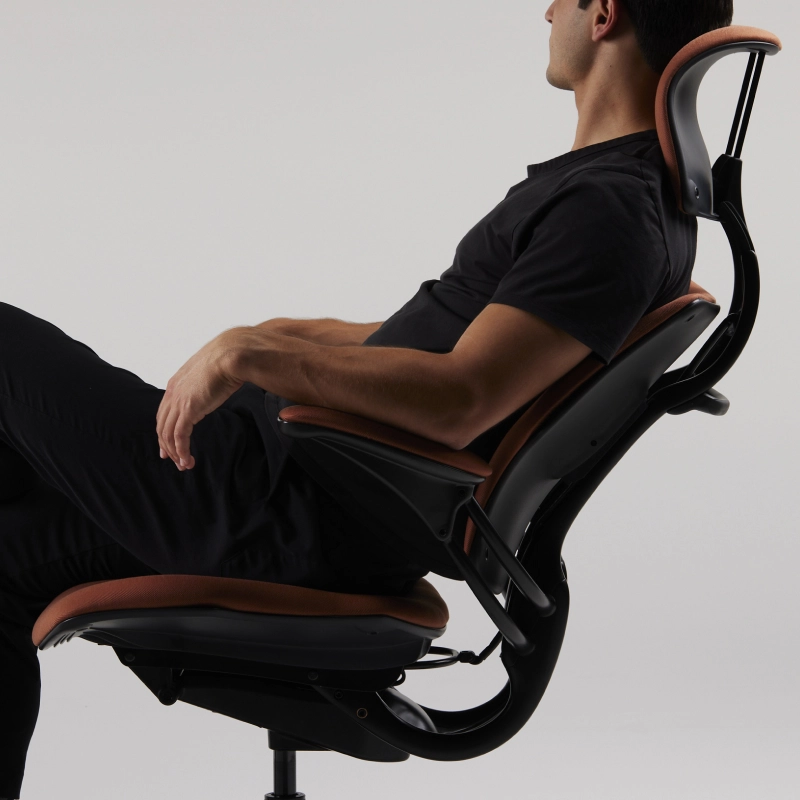
The result of Diffrient's vision was the Freedom Chair, a marvel of engineering that used the sitter's body weight to provide perfect recline and support; this self-adjusting 'Gravity' mechanism was groundbreaking. There is no tension knob, no tilt-lock lever. The recline function is probably the best feature of all: you simply push back in the chair and it begins to recline; stop pushing and the chair remains in place, and this works in any position without issues of the chair not holding in place.
Although there is no manual lock on the Freedom Chair, once you adjust the chair with your movement it holds you there until you "release" the lock by adjusting your weight enough to engage the mechanism again—this means you can get your chair in that perfect position and keep it there without having to think about it or fumble with knobs and levers. The Freedom's recline mechanism is the best reviewers have used in 13 years in this industry.
Headrest (on headrest model)
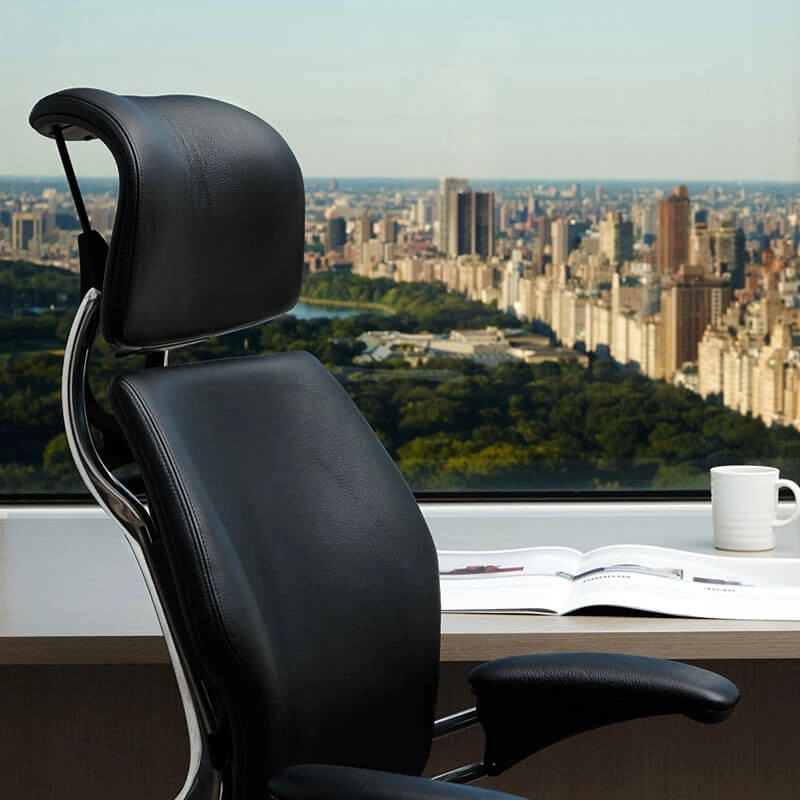
The Freedom Headrest office chair features a dynamic support that cradles the head and neck during recline, but remains neutral when in upright positions. The headrest is height adjustable (5″ vertical range)—you simply grab the headrest and slide it up or down; it moves automatically when you recline, providing head and neck support in all positions.
This is the Freedom's most distinctive feature: the articulating headrest supports your neck and head and keeps your eyes focused on the monitors as you recline, and reviewers found this genuinely usable for computing tasks at about 75% recline. It's a feature unmatched in the category.
Armrests
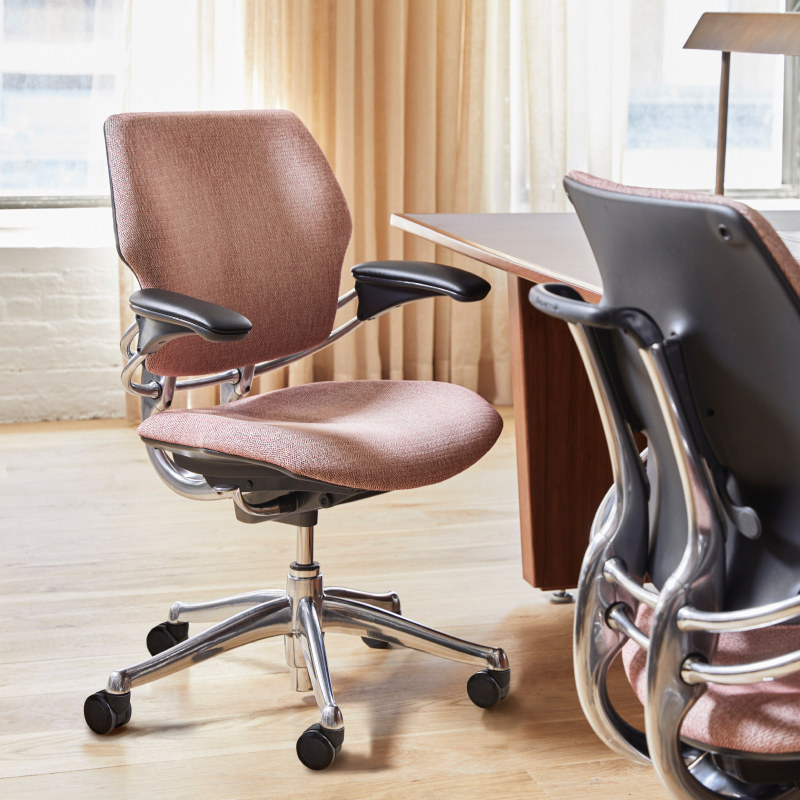
Unlike most chairs, the arms move in tandem for balanced support and are attached to the back of the chair, so they move with you during recline. Standard arms are height adjustable; advanced arms also pivot at the elbow and are 1.5″ longer for additional support.
Arm width is the one ergonomic constraint testers noted. The seat height range (16″–21″) fits most users from 5′0″+, but the minimum arm width is 18″ with the advanced Duron arms, or 19″ with the standard arms; for anyone with a narrow shoulder width, the arms will be too far apart at their narrowest setting.
Seat depth and back height
The back of the chair automatically tilts to your sitting position and is height adjustable, allowing you to get the best lumbar support; the seat depth adjusts by simply pressing a button under the seat and sliding forward or back. Once these static adjustments are set to your body, no further manual changes are required—the chair does the rest.
Materials & build quality
Materials include plastic, aluminum, steel, mesh, cotton, foam, polyurethane, and leather. The frame construction emphasizes aluminum to reduce weight and improve recyclability. The Freedom chair's lightweight design minimizes the environmental impact of its shipping, and its simple, modular design makes it easy to disassemble, recycle and maintain rather than replace the chair completely.
Upholstery options
Buyers can select from four-way stretch fabrics (including antimicrobial Lotus), faux suede made from recycled microfibers, or premium leathers. Ticino is a semi-aniline dyed leather available in a variety of rich colors inspired by nature; it is a top, corrected grain leather to create a more natural aesthetic and ensure the leather remains as unique as the hide itself. Corvara is a semi-aniline dyed leather that offers a smooth, silky feel and ultimate durability; it is a top, full grain leather that is embossed lightly for a consistent, uniform grain structure.
Seat cushions
All Freedom task chairs have a very high quality molded seat and back foam that is perfectly adequate for most sitters; you can also add a layer of non-compressible Technogel for increased comfort on the seat. Testing data suggests restraint: in nine-person testing, the standard pad performed significantly better than the gel upgrade—the gel scored 67/100 overall, with three of four women scoring it below 70, while other Humanscale chairs with standard pads scored 79 and 80; reviewers recommend standard unless you have specific reasons to prefer gel.
Sitting experience — what it actually feels like day to day
After ten days in the Freedom, it went from a chair reviewers never thought much about to one of their favorites; if you want solid lower lumbar support and the ability to recline and keep working, this is the best chair reviewers have found for it. The Humanscale Freedom is an art piece as much as it is an ergonomic chair—it's functional, comfortable, a technological marvel, and it comes with a price tag to match.
The sitting sensation is fluid. Because of the intuitive ergonomic design, you can move effortlessly from one position to another, making it feel as if the chair were custom-made for you or whoever happens to be sitting in it at any given moment. There's a learning curve—some users accustomed to manual locks find the automatic hold disorienting at first—but this chair is unique in both its feel and design, and takes some getting used to.
The Humanscale chair is more amenable to reclining easily while the Aeron is too upright; the Freedom is also a more intuitive chair and feels like a more upgraded one since the backrest can adjust to the weight of the user—it also allows for more range of movements, injecting micro movements within the day and yet feeling supported, giving it more general use than the Aeron.
Day-to-day comfort is high. Humanscale believes that in order for a chair to be ergonomically great, it has to be comfortable; because of the intuitive ergonomic design, you can move effortlessly from one position to another.
Who it's for (and who should skip it)
Ideal users
Recliners and multi-posture workers. The articulating headrest supports your neck and head and keeps your eyes focused on the monitors as you recline, and reviewers found this genuinely usable for computing tasks at about 75% recline—the Freedom's recline mechanism is the best reviewers have used in 13 years in this industry.
Simplicity seekers. If you want ergonomic support without learning a dozen controls, the Freedom delivers. Instead of being filled with a million different adjustments and other confusing mechanisms, the Freedom chair has just a few, located as intuitively as possible, combined with self-adjusting recline tension to accommodate anyone who sits in the chair; it's part of Humanscale's focus on simplicity and ease of operations, which is helpful for shared seating, whether for a family workstation or a conference room.
Sustainability-focused buyers. Net Positive certification means every Freedom manufactured offsets climate change; Freedom Headrest is Living Product Certified, meaning it is climate, water and energy positive—every time Humanscale makes these products the planet is better off, and over 60% of their products are certified net positive.
Executive and conference environments. The aesthetic is refined enough for boardrooms, and the lack of manual levers keeps the silhouette clean.
Consider alternatives if…
You prefer granular manual control. Diffrient's automatic adjustment philosophy doesn't work for everyone—some users prefer precise manual control over automatic mechanisms. The Steelcase Leap or Herman Miller Aeron offer more traditional dial-in adjustability.
You have narrow shoulders. The minimum arm width on the Freedom's Duron arms is 18″, which is too wide for users with narrower shoulder widths; testers with smaller frames consistently scored the armrests low because they couldn't get their arms close enough to the body.
You prioritize all-mesh breathability. The Freedom's cushioned seat and back (even in fabric) are less breathable than the Aeron's pellicle mesh. The Aeron offers a better mesh seat for users who run hot.
You're budget-constrained. The Freedom commands a significant premium. If you need similar philosophy at lower cost, Humanscale's own Diffrient World or Liberty chairs offer variants on the auto-adjust concept.
Comparisons with key rivals
Chair | Price tier | Seat/back | Recline philosophy | Standout strength |
|---|---|---|---|---|
Humanscale Freedom | $1,300–$3,000+ | Cushioned (foam/gel), fabric or leather | Weight-sensitive auto-recline, no tension knob | Articulating headrest keeps eyes on monitors during recline—genuinely usable for tasking at 75% recline |
Herman Miller Aeron Remastered | $1,500–$1,800 | All pellicle mesh | Manual tilt tension & lock, 4 tilt-lock positions | Better mesh seat; simple no-exclusions warranty ; iconic design pedigree |
Steelcase Leap V2 | $1,000–$1,400 | Fabric or leather cushion; optional mesh back | LiveBack with manual lumbar depth & height; 5 tilt-lock positions | Better lumbar adjustment range and more tilt lock positions ; Thermal Comfort slats for breathability |
The Aeron is the better chair for anyone who wants the best mesh seat and a simple no-exclusions warranty; the Freedom wins on ergonomic adjustability, upholstery options, and the ability to keep working while reclined. The Freedom chair has a position sensitive headrest that moves forward when you recline and out of the way when sitting upright—this unique feature keeps your head in perfect monitor viewing position, a feature you'll find in no other chair on the market.
Sizing, fit & configuration options
The chair is designed to fit 95% of the office population (5′0″ to 6′4″ height, 100 lbs to 300 lbs weight). Unlike the Aeron's A/B/C sizing, the Freedom is one-size-fits-most, relying on its range of adjustment and auto-calibration to accommodate different bodies.
Configuration options
Headrest or no headrest. The headrest model adds the articulating neck support and approximately $400–500 to the price.
Arm options. Standard (height-adjustable) or Advanced (height + pivot + 1.5″ longer). Arm pads in Duron (foam core, synthetic leather cover) or Technogel (softer gel layer). The arms are synchronous, which means they move together and will stay at the same level at all times.
Cylinder height. The standard is a 5″ tall cylinder; Humanscale also offers low, tall, high with footring, and return height options.
Casters. The Freedom chair offers four caster choices—standard casters for carpet floors or soft casters for hard floors; glides are perfect for a stationary chair, and the locking casters let the chair move around when no one is sitting down.
Frame finish. Freedom chairs can be configured with graphite frames or a polished base with graphite.
Seat cushion. Standard foam or Technogel (though testing data favor the standard for most users).
Sustainability & certifications
Freedom is vetted for over 20 harmful chemical classes to ensure it is safe over the course of its life cycle; it is free of all chemicals on the Living Future Institute's Red List and has received a Declare Label by third party auditors, verifying the impact of all materials that go into the product. The Freedom chair is GREENGUARD Indoor Air Quality, GREENGUARD Gold and BIFMA level 2 certified.
Freedom Headrest is Living Product Certified, meeting the most rigorous sustainable manufacturing criteria to date—this means that Freedom Headrest is climate, water and energy positive; every time Humanscale makes these products the planet is better off. Each Freedom Headrest has a net benefit of 6kg CO₂ eq, or what a car emits over 16 miles.
All Humanscale factories utilize solar power and rainwater harvesting, and all the plastic in their products is either recovered from the ocean or ocean bound; they also prioritize fair and safe working conditions for employees and give back to local communities. The brand is also incorporating the Freedom Chair into its Ocean Collection, with the new Freedom Ocean variation using two pounds of ocean-bound plastic, including reclaimed fish nets.
Maintenance, durability & warranty
Like all Humanscale chairs, the Freedom chair was designed to look and function like new after years of consistent use. Humanscale has been specially designed with parts and materials that have been meticulously tested for their hard-wearing qualities, including textiles which offer five times the industry standard. As the chair parts are not painted or treated there is also no risk of chipping or scratching over time.
Humanscale seating products come with a 15-year, 24/7 rating warranty on all seating components, including frames, cylinders, casters, and base; Humanscale upholstery, cushions and arm pads are covered for a period of five years—it is a single shift warranty on the upholstery, cushions and arm pads.
The modular design supports repair over replacement. Parts are available through authorized dealers, and the chair's lightweight aluminum construction makes disassembly straightforward. Humanscale also offers a Re-Freshed program: previously-owned chairs are restored with new casters, textiles, gas cylinders, and arm pads, and Re-Freshed Freedom Task chairs come with a 5-year, 24/7 warranty.
Pricing, value & where it sits in the market
The Freedom occupies the premium tier. Retail pricing starts as low as $1,341 for a fabric task chair without headrest , though most configurations land between $1,500 and $2,200. The Freedom Task Chair with Headrest in fabric starts at $1,786; in leather with headrest, pricing begins around $3,029. Custom configurations with advanced arms, gel seats, and premium leathers can push above $3,000.
Authorized dealer pricing is typically 10–20% below MSRP; street pricing fluctuates. List price (MSRP) for a basic configuration is cited around $1,385 , but online dealers frequently discount. Non-returnable policies are standard due to the made-to-order nature.
Value proposition depends on priority. The Freedom wins on upholstery options and the ability to keep working while reclined. If you'll use the recline-while-tasking feature regularly, the premium is justifiable. If you want mesh or fine-grained manual control, the Aeron or Leap deliver more for similar or lower cost. Some reviewers think the Freedom's design has been exceeded by subsequent Humanscale chairs—self-adjusting mechanisms can be great, but some of the future iterations on the main idea have included more comfortable backrests, smoother operations, and other useful changes.
Verdict — the bottom line
The Humanscale Freedom remains a landmark. Twenty-five years after launch, it still offers something genuinely distinct: physics-driven ergonomics that feel effortless once you trust the mechanism. Diffrient removed levers, knobs, dials, switches, and other controllers and created a chair that adjusts to your body naturally, along with any movement you make.
For reclining while working—reading, reviewing documents, even light typing—the articulating headrest is unmatched. The articulating headrest keeps your eyes focused on the monitors as you recline, and reviewers found this genuinely usable for computing tasks at about 75% recline—the Freedom's recline mechanism is the best they've used in 13 years in this industry. The aesthetic is cleaner and more residential-friendly than most task chairs, and the sustainability credentials are among the strongest in the category.
Trade-offs are real. Arm width won't suit petite users. The automatic recline takes trust and adjustment if you're used to manual locks. The gel seat upgrade underperforms. And the price is steep—often matching or exceeding the Aeron, without the same brand cachet or universal mesh appeal.
If you value movement, simplicity, and the ability to recline while staying productive, the Freedom delivers on a promise few chairs even attempt.
But if that promise aligns with how you work, the Freedom is one of the most thoughtfully realized task chairs ever made. As King said, it was "designed to improve the human condition" , and a quarter-century later, it still does exactly that—one weight-calibrated recline at a time.
Sources & references
Interested in the Humanscale Freedom?
Check the price on Amazon