Knoll Barcelona Chair
An icon of modernism—but not built for the daily grind
Overview
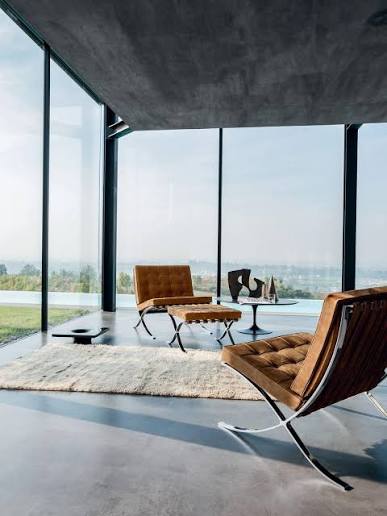
The Knoll Barcelona Chair is not an office chair. Designed by Ludwig Mies van der Rohe for the 1929 German Pavilion at the International Exhibition in Barcelona, it is one of the most recognized icons of the modern movement , a sculptural lounge piece that belongs in executive reception areas, residential living rooms, and museum collections—not behind a task desk. The chair was created by Ludwig Mies van der Rohe and Lilly Reich for the German Pavilion at the International Exposition of 1929 , intended as a resting place for royalty during ceremonial appearances. It offers zero ergonomic adjustments, no lumbar support mechanism, no recline control, and a low, fixed seating posture better suited to brief repose than the demands of computing, typing, or sustained focus.
This deep-dive will examine the Barcelona Chair honestly: its extraordinary design pedigree, its place in design history, what it feels like to sit in, and why—despite its prestige and beauty—it is fundamentally unsuited to the role of a daily-use office task chair. If you're shopping for a chair to work in for hours each day, look elsewhere. If you want a statement piece that signals taste, modernist sophistication, and a reverence for 20th-century design, read on.
At a glance
Brand | Knoll (exclusive manufacturer since 1953) |
|---|---|
Designer | Ludwig Mies van der Rohe and Lilly Reich |
Year | 1929 |
Chair type | Lounge / reception chair (not a task chair) |
Materials | Hand-buffed stainless steel or chrome frame; hand-tufted leather, suede, or fabric cushions; leather straps |
Adjustments | None—fixed frame, fixed cushion angle |
Dimensions (standard) | 30¼" H × 29½" W × 30" D; seat height 17" |
Weight capacity | Unofficial; commonly cited as 240–330 lbs |
Warranty | 5 years (Knoll) |
Price tier (new, authentic Knoll) | Luxury: ~$7,200–$12,200 depending on upholstery and frame finish |
Certifications | None specific to office ergonomics (no BIFMA level certification) |
The brand & its philosophy
Since 1938, Knoll has been recognized for creating modern furniture that inspires, evolves, and endures, steeped in the history of modernism . Founded by Hans Knoll in New York and later driven by Florence Knoll's visionary planning practice, the company became synonymous with bringing Bauhaus and mid-century masters—Mies, Saarinen, Bertoia—to the American contract and residential markets. Knoll's philosophy centers on the fusion of modern design, exceptional materials, and precise craftsmanship. The brand does not chase trends; it curates and manufactures a canon.
Mies van der Rohe formally granted Knoll the production rights to the Barcelona Chair and Stool in 1953, and the designs immediately became a signature of the Knoll brand, built to Mies's exacting standards ever since . Every authentic Barcelona Chair carries the KnollStudio stamp and Mies's facsimile signature on the frame, a mark of provenance and a deterrent to the rampant market of replicas.
The designer and the design story
Ludwig Mies van der Rohe was born in Germany in 1886, began his career at his father's stonemasonry business, and eventually established his own design office in Berlin in 1912 . He became a leading voice of the Bauhaus, director of the movement in its final years, and later—after fleeing Nazi Germany—a towering presence in American modernism as director of architecture at the Illinois Institute of Technology. His mantra, "less is more," is embodied in the Barcelona Chair more purely than in almost any other object.
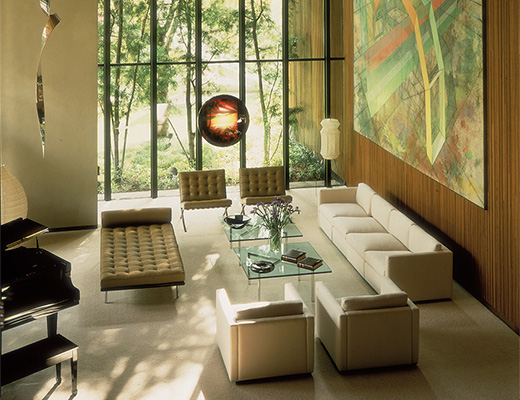
The chair was designed by Ludwig Mies van der Rohe and Lilly Reich for the German Pavilion at the International Exposition of 1929, hosted in Barcelona, Catalonia, Spain . Mies designed this chair for his German Pavilion at the Barcelona Exposition of 1929, where the inaugural ceremony for the German exhibits was to be presided over by the Spanish king. It had to be "an important chair, a very elegant chair," Mies said—"The chair had to be monumental. In those circumstances, you just couldn't use a kitchen chair." Inside, Mies included chairs and stools conceived as a resting place for the King and Queen of Spain, and is thought to have based the designs, with their signature crisscross frames, on the campaign chairs of Ancient Rome .
Recent scholarship has underscored Lilly Reich's role. The latest research indicates that the chair was designed in collaboration with Lilly Reich, partner and companion of Mies van der Rohe for 12 years, and today it is considered that Reich was the true architect of the design and that Mies contributed to shaping the structure; both worked on the design of the Pavilion, whose joint authorship is irrefutably proven . Mies's celebrity and post-war prominence meant his name became synonymous with the chair, but Reich's contribution to its interior detailing and upholstery was foundational.
Design language & aesthetics
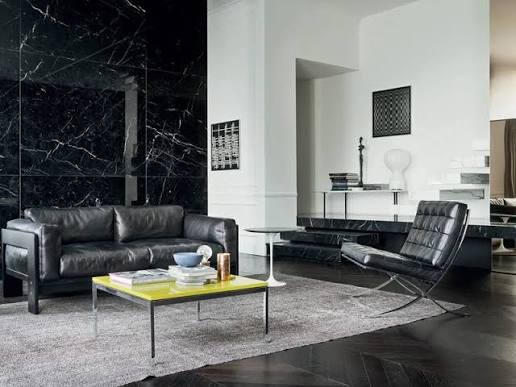
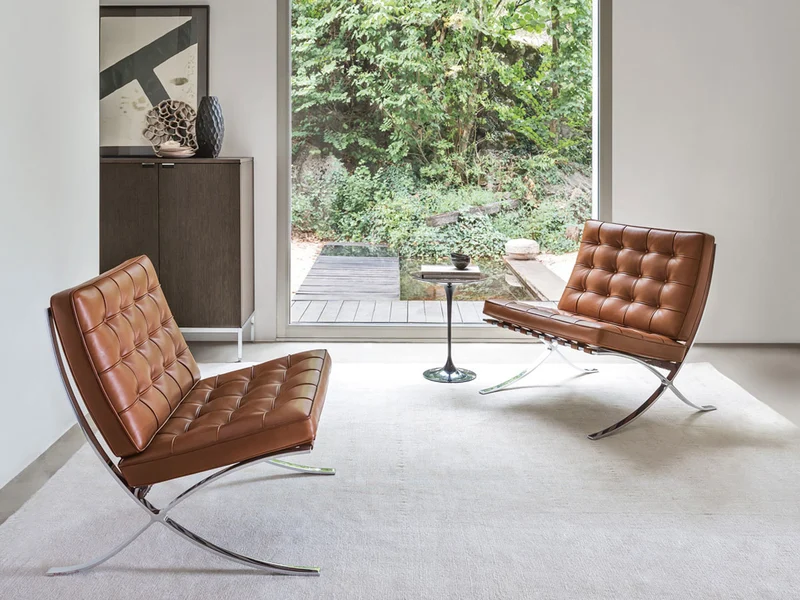
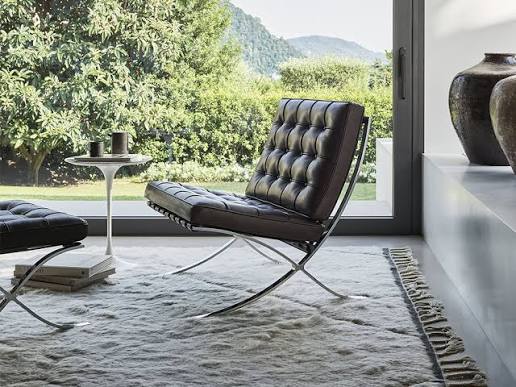
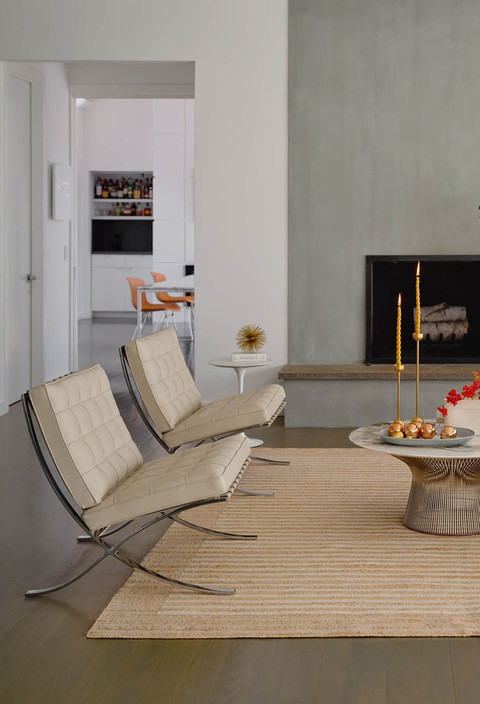
From the elegant crisscross frame to the individual upholstery squares expertly welted together by hand, each Barcelona Chair is a tribute to the marriage of modern design, exceptional craftsmanship, and meticulous attention to detail . The frame is an X-shaped cantilever of chrome-plated or stainless steel, hand-buffed to a mirror finish. It is supported on each side by two chrome-plated, flat steel bars; seen from the side, the single curve of the bar forming the chair's back and front legs crosses the S-curve of the bar forming the seat and back legs, making an intersection of the two .
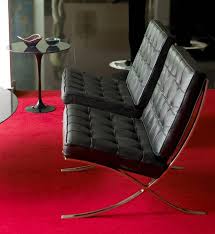
The chair is available in leather, suede, or fabric, with a polished chrome or ultra-matte onyx frame . To create the cushions, 40 individual squares of leather, suede, or fabric are hand-welted and hand-tufted with buttons . The tufted grid, the welted piping, and the leather straps securing the cushions to the frame are all artisanal details. The chair is architectural sculpture—severe, monumental, and utterly of its moment.
"Less is more." — Ludwig Mies van der Rohe
Ergonomics & how it supports the body
The Barcelona Chair does not support the body in the way an office task chair does. The Barcelona Chair is one of the greatest chairs of the twentieth century, but it was "not meant to be sat in for long periods of time" , according to design professor Mark Goetz. Architectural in form, the canted seat of the Barcelona Chair holds the sitter in a relaxed yet supported position —but that position is reclined, low to the ground (17-inch seat height), and entirely fixed.
Although it quickly achieved celebrity status due to its royal origins and stylistic silhouette, many argue that this chair and its design ignore the basic requirements, such as ergonomics and comfort, of the people using the chair . There is no adjustable lumbar support, no tilt mechanism, no ability to raise or lower the seat, and no armrests in the conventional sense. While visually stunning, the Barcelona Chair's comfort level may not appeal to everyone; its firm cushions and minimalist design prioritize form over plushness, which may not be ideal for those seeking a deeply comfortable lounge experience .
The chair's inherent design can impact ease of entry and exit; the low seat height and reclined posture may require more effort to stand up from, particularly for those with mobility issues, and while not a significant concern for younger, more agile users, this aspect should be considered by individuals with joint pain or limited mobility . For anyone typing, mousing, or focusing on a screen, the Barcelona Chair's posture is fundamentally wrong: too reclined, too low, and without the dynamic support modern ergonomics demand.
Key adjustments & mechanisms
None. The Barcelona Chair has no recline mechanism, no tilt tension, no lumbar adjustment, no seat-depth slider, no height adjustment, and no adjustable arms. The frame is fixed steel; the cushions are secured by leather straps. You sit where the chair places you, or you choose another chair. This is a lounge chair in the purest, most unapologetic sense—designed for composed repose, not for working.
Materials & build quality
According to Knoll Inc., despite its industrial appearance, the Barcelona chair requires much handcrafting; since 1964, Knoll Inc has manufactured the Barcelona chair in both chrome and stainless steel, and the chairs are almost entirely handcrafted, with each carrying a facsimile of van der Rohe's signature, stamped into its frame . The frame is made of chrome-plated, high-gloss and hand-polished flat spring steel, and the cushions are hand-sewn from 40 elements and a single skin, available in various Spinneybeck leathers and attached to the frame with cowhide leather straps .
The cushion has 40 individual squares of fabric or leather from a single cowhide that are cut, hand-welted, and hand-tufted with buttons; cushions are made of premium quality, highly resilient polyurethane foam with down-like Dacron polyester fiberfill, and a relaxed option offers soft density foam for a softer feel . Build quality on an authentic Knoll Barcelona is exceptional—museum-grade. Frame welds are invisible, polishing is flawless, leather is full-grain and supple. This is furniture built to last decades and to be reupholstered when needed.
Sitting experience—what it actually feels like day to day
One owner reported that the cushion is firm, but not too tight, and the leather is soft and supple, and that they can sit in the chair for hours on end and never feel uncomfortable or restless . Yet that experience is not universal. The chair's comfort level is subjective and largely dependent on individual preferences; the supple leather lounge chair cushions offer a degree of initial softness, a welcoming invitation to relax, and the gentle give of the leather and the slight bounce of the suspension straps create a sensation of being cradled, but the chair's minimalist design prioritizes form over extensive padding, and unlike some modern armchairs designed for hours of lounging, the Barcelona chair offers a firmer seating experience .
For brief meetings, waiting in a reception area, or sitting to read a magazine, the Barcelona Chair performs beautifully. For typing an email or editing a spreadsheet, it is actively unhelpful: you slump backward, your arms have nowhere comfortable to rest, and your spine adopts a curve that promotes passive relaxation, not active focus. The ergonomic considerations are also worth noting, as the chair's low back and fixed posture may not provide adequate support for extended periods of sitting .
Who it's for (and who should skip it)
Best for:
Design collectors and enthusiasts: Buying a Barcelona Chair is more than just purchasing furniture: it's acquiring a piece of design history, and authenticity is crucial, so Knoll's original pieces are stamped with the Knoll logo and the designer's signature, ensuring lifetime authentication; despite its premium price tag, the Barcelona Chair's combination of design excellence and historical significance makes it a worthy investment for collectors and connoisseurs alike .
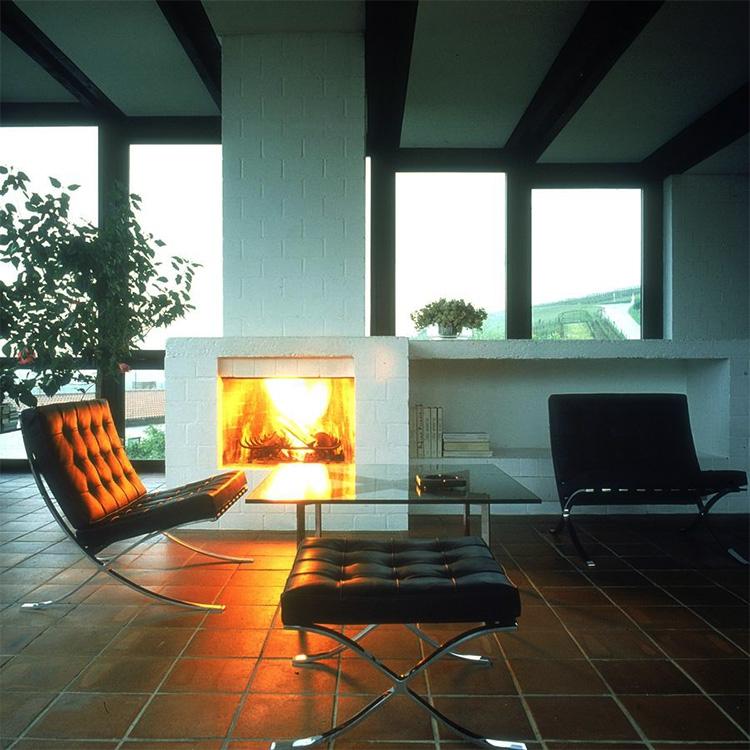
Executive reception and lounge spaces: The Barcelona Chair's professional aesthetic makes it an ideal choice for high-end office spaces and reception areas, offering comfort and style and creating a welcoming atmosphere for guests and clients .
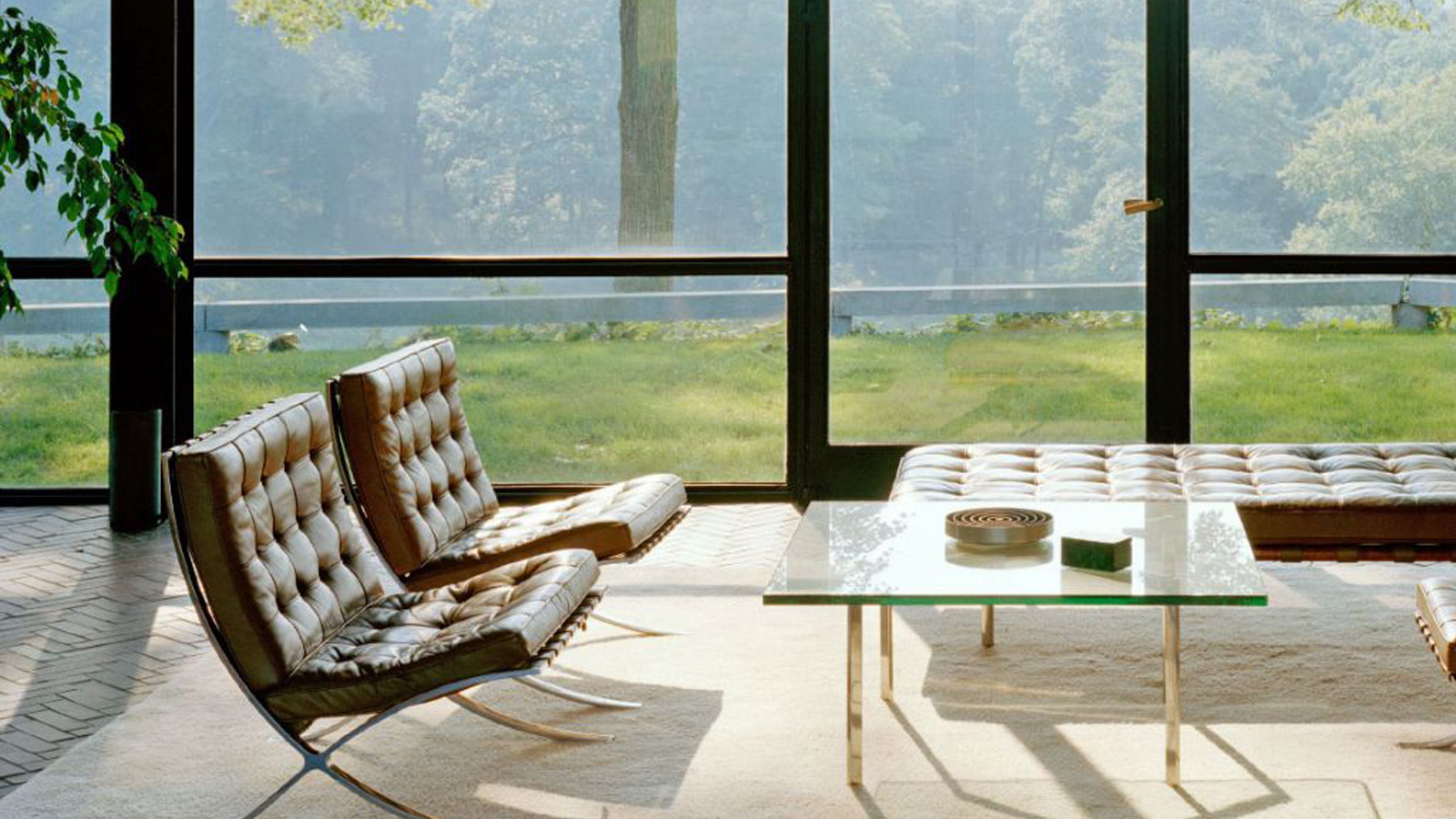
Residential living rooms: As a sculptural accent or conversation piece in a modernist interior.
Short-duration sitting: Waiting, greeting, or brief repose—not sustained work.
Skip it if:
You need an ergonomic task chair for computing, typing, or focus work lasting more than 30 minutes.
You have limited mobility or find low seats difficult to exit.
You want adjustable lumbar support, seat height, tilt, or armrests.
You're on a tight budget—authentic Knoll Barcelona Chairs start above $7,000.
Comparisons with key rivals
Chair | Type | Adjustments | Price tier | Best use |
|---|---|---|---|---|
Knoll Barcelona | Lounge/reception | None | $7,200–$12,200 | Design statement; brief sitting; reception areas |
Eames Lounge Chair | Lounge | None | ~$7,000–$9,000 | Residential lounging; reading; not desk work |
Knoll Womb Chair | Lounge | None | ~$6,500–$7,800 | Enveloping comfort; relaxation; not task seating |
Herman Miller Aeron | Task chair | Full (height, tilt, lumbar, arms, depth) | ~$1,700–$2,000 | All-day desk work; ergonomic computing |
The Barcelona Chair competes not with office task chairs but with other mid-century lounge icons. Against the Eames Lounge, it is more minimal, more formal, less enveloping. Against contemporary ergonomic office chairs like the Aeron, Leap, or Embody, it is not in the same category at all.
Sizing, fit & configuration options
Dimensions: Height 30¼ inches, Width 29½ inches, Depth 30 inches, Seat Height 17 inches, Seat Width 29½ inches; the Barcelona Chair comes in two distinct styles: Standard and Relaxed . The Standard cushion uses firmer, more resilient foam; the Relaxed version offers softer, more supple foam for a gentler sit. Both are one-size-fits-all and cannot be customized for height or proportion.
A common question is whether the Barcelona chair is good for plus-size users; the chair's dimensions, while generous, may not be ideal for everyone, and the width of the seat and the height of the backrest may feel restrictive for some larger individuals, potentially impacting comfort and overall experience . The genuine Barcelona Chair from Knoll International does not have an official maximum weight rating, though lounge chairs of this type are normally suitable for people weighing between 110 kg and 150 kg (approximately 240–330 lbs).
Upholstery is highly customizable: Knoll offers the chair in a wide range of Spinneybeck leathers, Edelman Brulée leather, and select fabrics. Frame finishes include polished chrome, stainless steel, and ultra-matte onyx. Each chair is essentially bespoke, hand-assembled to order.
Sustainability & certifications
Knoll provides limited public environmental data for the Barcelona Chair. Product certifications and materials information is available at Ecomedes , but the chair does not carry GREENGUARD, Cradle to Cradle, or BIFMA level certifications commonly seen on contract task seating. Because the Barcelona is a hand-crafted luxury piece built in relatively low volumes, it falls outside the high-volume contract furniture sustainability frameworks.
That said, the chair's longevity is its greatest sustainability credential. An authentic Knoll Barcelona can last 50+ years with proper care and occasional reupholstering. The frame is steel, fully recyclable; the leather is natural and can be replaced. This is not a chair designed for obsolescence.
Maintenance, durability & warranty
Knoll offers a 5-year warranty on the Barcelona Chair. Maintenance is straightforward but not trivial: leather should be conditioned periodically; the frame can be wiped down with a soft, damp cloth. New cushions cost approximately $1,000 per chair in good leather, and a set of straps will cost around $600, so if you are looking at a worn-out set, you are essentially buying the frames and should budget $1,500 per chair minimum for new straps and cushions .
Knoll and authorized dealers can refurbish vintage Barcelona Chairs. The secondary market is active—vintage examples in good condition typically sell for $3,000–$7,000 per chair on platforms like 1stDibs. Authenticity matters: check for the Knoll stamp and Mies signature on the frame to avoid replicas.
Pricing, value & where it sits in the market
Original price listed by Knoll was $2,609, with a current sale price of $2,087.20—20% off (for a lower-tier configuration); however, the Barcelona chair typically retails for $9,053 to $12,167 depending on upholstery grade and frame finish. Premium leather and stainless steel push the price into five figures. On the secondary market, a Knoll Barcelona chair can differ in price owing to various characteristics—the average selling price on 1stDibs is $6,800, while the lowest priced sells for $1,000 and the highest can go for as much as $22,173 .
This is emphatically not an "office chair" in terms of value proposition. You are paying for craft, provenance, and an object that belongs in the Museum of Modern Art's permanent collection (which it does). If you want a chair to work in, a Herman Miller Aeron Remastered at ~$1,800 is a fraction of the price and infinitely more functional. If you want a design icon that signals sophistication and modernist taste in a reception area or living room, the Barcelona delivers unmatched cachet.
Verdict—the bottom line
The Knoll Barcelona Chair is a masterpiece of 20th-century design—sculptural, historically significant, exquisitely crafted, and utterly unsuited to the ergonomic demands of office work. It has no adjustments, offers minimal lumbar support, places the sitter in a low, reclined posture incompatible with desk tasks, and costs as much as a used car. According to the museum, the Barcelona Chair helped pioneer ergonomics —but that claim refers to its 1929 context, not to modern office ergonomics.
Buy the Barcelona Chair because you love mid-century modernism, because you want an icon in your reception area, or because you are a collector. Do not buy it expecting to spend eight hours a day working comfortably at a computer. For that, look to contemporary task chairs with the adjustments, mesh, and dynamic support that daily work demands. The Barcelona Chair is art. It is history. It is not an office chair.
The Barcelona Chair is a monument to modernist restraint—just don't ask it to do the work of a task chair.
Sources & references
Interested in the Knoll Barcelona Chair?
Check the price on Amazon