Knoll Womb Chair
A mid-century lounge icon—but not an office chair
Overview
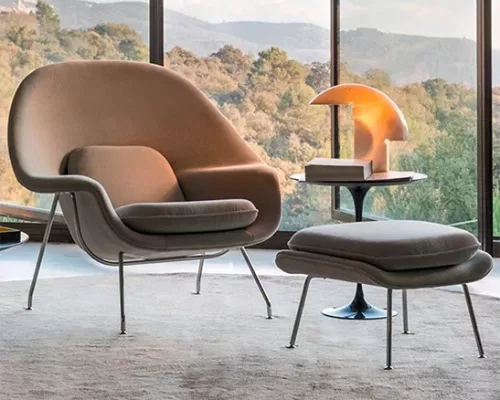
The Knoll Womb Chair was designed by Eero Saarinen in 1948 at Florence Knoll's request for a chair "like a basket full of pillows—something she could really curl up in." It is regarded as one of the icons of postwar American Modernism and the first piece of mass-produced furniture with an integrated fiberglass-reinforced plastic seat shell. But let's be clear from the start: the Womb Chair is a residential lounge chair, not an office task chair. It supports countless positions and offers a comforting oasis of calm —but it has zero ergonomic adjustments, no lumbar support mechanism, no height or tilt control, and a fixed, enveloping shell that actively discourages upright posture. If you're shopping for a chair to work at a desk eight hours a day, this is emphatically not it.
At a glance
Brand | Knoll |
|---|---|
Designer | Eero Saarinen |
Year introduced | 1948 |
Type | Residential lounge chair (not an office/task chair) |
Shell material | Reinforced fiberglass with plywood platform, polyester fiber padding, foam core |
Base | Tubular steel, polished chrome or black powdercoat |
Adjustments | None (fixed shell, no tilt, no height, no lumbar, fixed arms) |
Sizes | Standard (40″W × 34″D × 35.5″H, 16″ seat height) and Medium (35″W × 31″D × 31.25″H, 15″ seat height) |
Weight capacity | Not publicly specified by Knoll |
Warranty | 5-year warranty (retail purchases) ; Knoll's contract products carry a 12-year warranty |
Certifications | GREENGUARD indoor air quality certified |
Price tier | Premium (typically $5,000–$7,000+ depending on upholstery) |
The brand & its philosophy
Founded in 1938, Knoll has been recognized for creating residential and workplace furnishings that inspire, evolve, and endure, embracing the creative genius of the Bauhaus School and Cranbrook Academy of Art. Knoll's commitment to modern design and sustainability have yielded a unique portfolio of products , and the company has long held the exclusive rights to produce Saarinen's work. In 2021, Knoll was acquired by Herman Miller, creating the new company MillerKnoll , placing the Womb Chair and Eames Lounge—once rivals—under the same corporate roof.
The Womb Chair is produced at Knoll sites in North America and Italy. Every chair sold through official channels is an original, authentic Knoll product , with a stamped Knoll logo on the frame and consistent adherence to Saarinen's original specifications.
The designer and the design story
Born to architect Eliel Saarinen and textile artist Loja Saarinen, Eero Saarinen studied sculpture in Paris, architecture at Yale, and design at Cranbrook Academy of Art, where he and Florence Knoll became lifelong collaborators and friends. Florence Knoll brought him on to design for Knoll in the 1940s , and what followed were some of the most iconic pieces of mid-century modern furniture, including the Tulip Chair, the Saarinen Dining Table, and the Womb Chair.
After winning the Museum of Modern Art Organic Design Competition with Charles Eames in 1941, Saarinen was eager to explore comfort through shell shape rather than cushioning depth. He began with smaller task chairs, but Florence Knoll challenged him: "Why not take the bull by the horns and do the big one first? I want a chair that is like a basket full of pillows…something I can curl up in." Saarinen and Florence Knoll found a boat builder in New Jersey experimenting with fiberglass and resin to help develop manufacturing methods for the new chair. Florence recalled: "He was very skeptical. We just begged him. I guess we were so young and so enthusiastic he finally gave in and worked with us. We had lots of problems and failures until they finally got a chair that would work."
Saarinen concluded that "a great number of people have never really felt comfortable and secure since they left the womb. The chair is an attempt to rectify this maladjustment in our civilization." Upon its release, the designer remarked, "Now, more than ever, we need to relax."
Design language & aesthetics
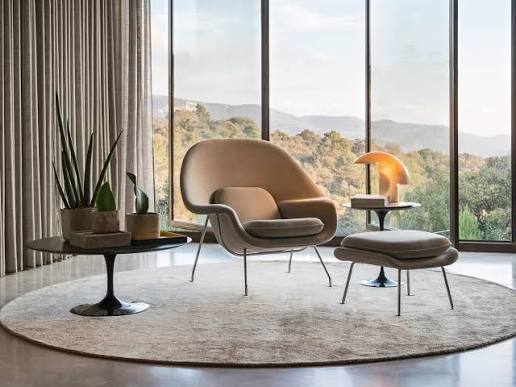
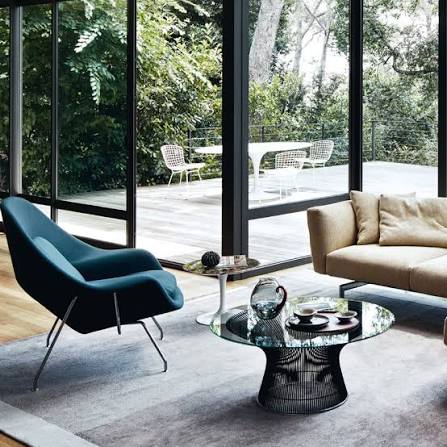
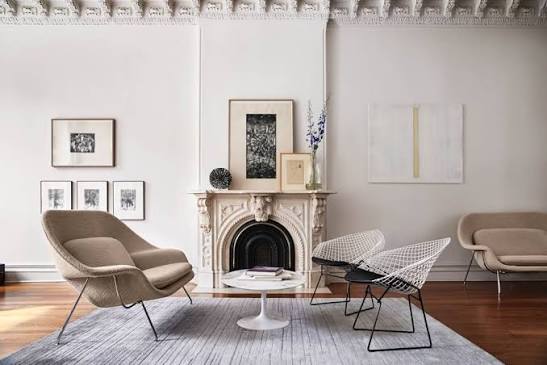
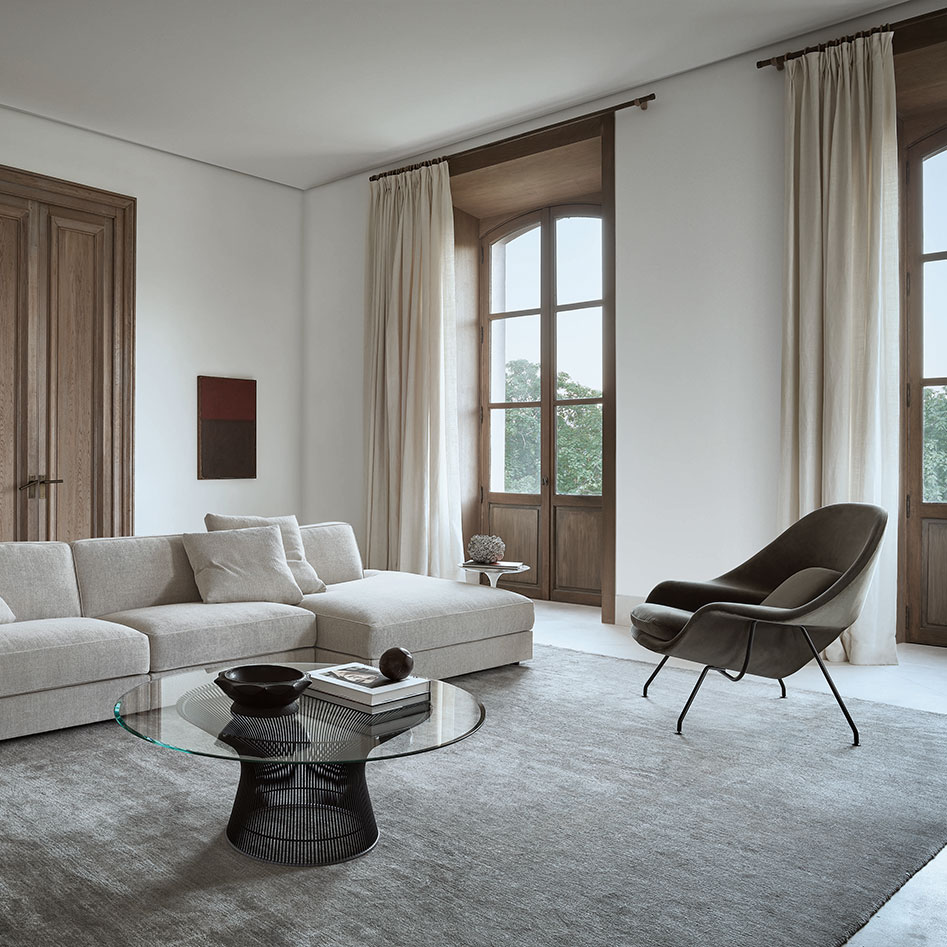
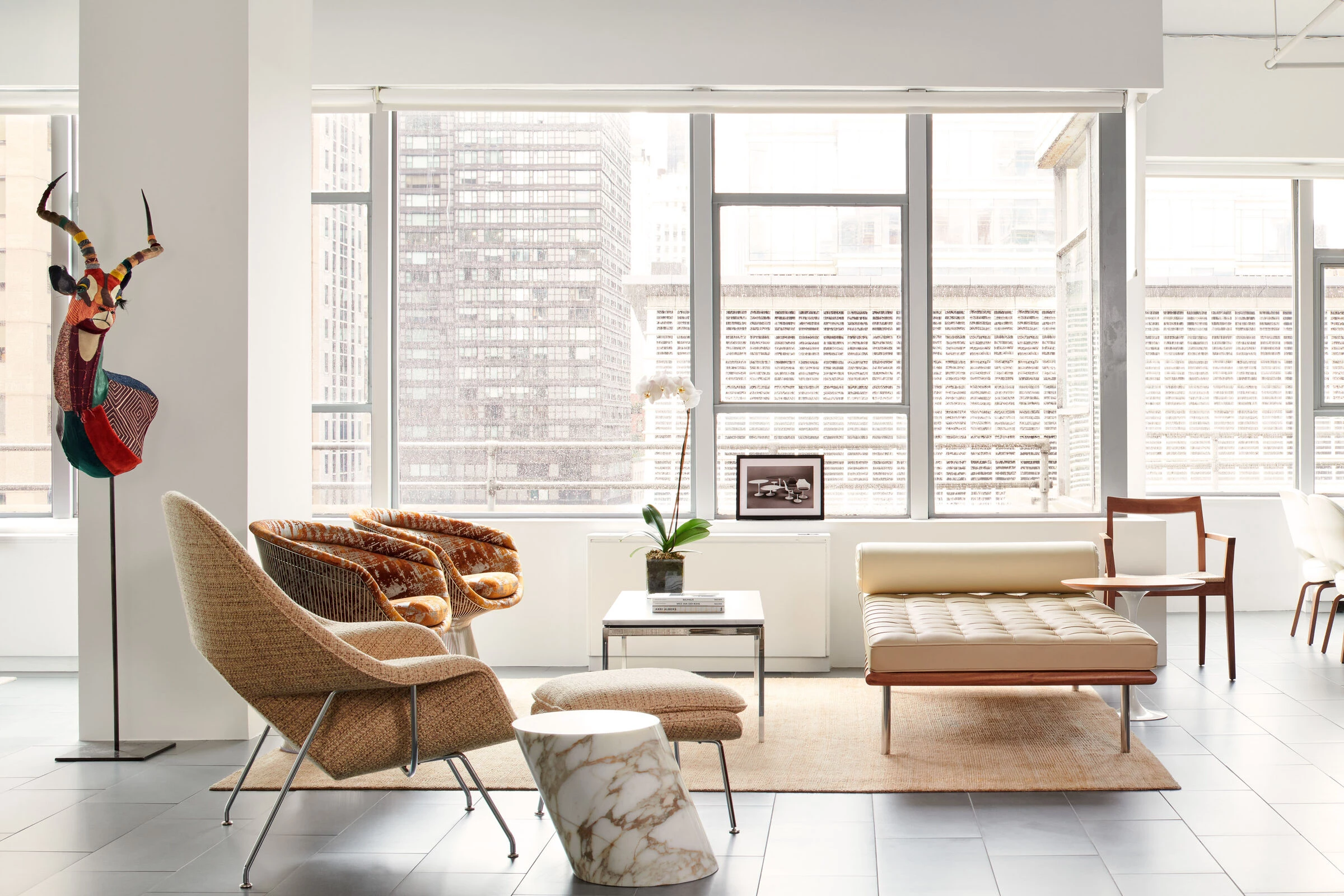
The Womb Chair has an enveloping form that continues to be one of the most celebrated and recognized representations of midcentury organic modernism. Its single-piece shell curves around the sitter in a sculptural, womb-like embrace, with integrated armrests that lie almost parallel to the floor. The Knoll armchair is available in a range of colors, forming a delightful contrast to the rather cool steel base.
The silhouette is unmistakable: expansive, soft, and cocoon-like. Upon its release in 1948, the organic form and liberating ease of the Womb Chair spurred a quick ascent to the cultural zeitgeist, and the idea behind its design—to answer our primal need for unbound comfort—continues to resonate across generations. The chair's aesthetic was revolutionary for its time, breaking from the rigid, upright lounge chairs of the 1940s to embrace a new vision of relaxed, informal living.
Ergonomics & how it supports the body
The Womb Chair was not designed with the biomechanics of prolonged desk work in mind. It was developed as a direct response to the lounge chairs of the 1940s, which were meant to support an upright sitter with ankles crossed and hands folded. Florence Knoll wanted "a chair I can sit sideways in or any other way I want," so Saarinen designed the Womb Chair to be supportive to the individual sitter, no matter their posture or position.
This means you can sit upright with your arms on the armrests or angle yourself so your legs are draped over the side—it was built to be the ultimate expression of playful style and serious comfort. That flexibility is wonderful for reading, lounging, or conversation, but it's the opposite of what an office chair should do. There is no lumbar curve to maintain neutral spine posture, no adjustable seat depth to support your thighs, and the low, fixed seat height (16 inches standard) is far below the 17–21-inch range most task chairs offer. The enveloping sides and high back actively encourage you to recline and tuck your legs—great for a novel, disastrous for typing.
Key adjustments & mechanisms
There are none. The Womb Chair is a completely static shell. No tilt, no recline lock, no lumbar dial, no seat-height cylinder, no adjustable armrests. The genuine Womb Chair features precise dimensions and proportions that have remained consistent since its design. What you see is what you get: a fixed fiberglass shell on a fixed steel base.
If you need to adjust anything about how you sit, you move your own body—the chair will not meet you halfway. This is by design; Saarinen intended the form itself to be the support. But for office work, where small postural tweaks over hours are essential, the lack of adjustability is a fundamental dealbreaker.
Materials & build quality
The shell is reinforced fiberglass with a plywood platform and polyester fiber padding with a foam core. Saarinen created a single-piece form by applying foam molded over a fiberglass shell. The seat shell is padded with high-quality foam and covered with high-quality textile, and the base is constructed from chrome-plated, seamlessly welded steel tubing.
Upholstery options include Acqua Leather (premium Spinneybeck, water-resistant and durable), Aegean (cotton-rayon-acrylic-polyester blend), Cato (iconic exaggerated-texture textile), and Classic Boucle (wool-cotton blend, naturally stain-resistant). Knoll offers over 100 color and material combinations. Build quality is excellent—authentic Knoll Womb Chairs are built to last decades, as evidenced by the robust vintage market. Small details like straps and fasteners to secure the seat and back cushions show exceptional quality.
Sitting experience — what it actually feels like day to day
Though ubiquitous, the Womb Lounge Chair has earned its esteem: "There is no armchair more comfortable to read in, socialize from, or cuddle on. It is an essential piece." One verified buyer reported, "big risk buying w/o sitting in one first but reviews around the web convinced me to take a chance. this chair is as comfy as i've heard!!!" The chair is loved by many for the sense of safety it conveys, and paired with an ottoman, you might even fall asleep on it.
But that's precisely the problem for office use. The Womb Chair invites you to relax, slouch, curl up, and settle in. Within an hour of desk work, your lower back will miss lumbar support, your thighs will protest the fixed seat depth, and you'll find yourself constantly shifting to relieve pressure. The enveloping sides are cozy but restrictive when you need to lean forward to type. This is a chair for unwinding, not for grinding through spreadsheets.
Who it's for (and who should skip it)
Perfect for:
Design collectors and mid-century enthusiasts who want an iconic, museum-quality statement piece.
Living rooms, reading nooks, and lounge spaces where comfort and aesthetics trump adjustability.
Anyone seeking a chair for true relaxation—conversation, reading, napping with an ottoman.
Spaces that celebrate organic modernism—the Womb Chair is as much sculpture as seating.
Skip it if:
You need a task chair for desk work. The Womb Chair has none of the ergonomic adjustments required for prolonged computer use.
You have a strict budget. Authentic Knoll Womb Chairs start around $5,000 and climb past $7,000 with premium upholstery.
You require lumbar support, adjustable height, or tilt. This chair offers exactly zero of those features.
You're shopping for a commercial office. Despite Knoll's workplace pedigree, the Womb Chair was never intended for task seating.
Comparisons with key rivals
Chair | Type | Price tier | Adjustability | Standout strength |
|---|---|---|---|---|
Knoll Womb Chair | Lounge | Premium ($5k–$7k+) | None (fixed shell) | Iconic mid-century design, museum-worthy aesthetic, exceptional comfort for relaxed postures |
Herman Miller Eames Lounge | Lounge | Premium ($6k–$9k+) | Fixed recline angle only | Luxurious leather and molded plywood, timeless modernist appeal, more structured than Womb |
Vitra Grand Repos | Lounge (recliner) | Premium ($4k–$6k) | Adjustable recline, headrest | Contemporary lounge with real tilt mechanics; more versatile than Womb for varied postures |
Herman Miller Aeron | Office task | Premium ($1.5k–$2k) | Full suite (height, tilt, lumbar, arms) | Purpose-built for 8+ hour desk work; incomparable ergonomics for office use—completely different category |
The Womb Chair and Eames Lounge are often compared as mid-century lounge icons. In 2021, Knoll's acquisition by Herman Miller made the Womb Chair and Eames Lounge siblings rather than rivals. As one Knoll designer noted, "You put those two chairs in a room together and it looks cool and it works, right? Obviously they're very different, but they share a sensibility and a DNA that aesthetically also works well." But neither is a substitute for a real task chair.
Sizing, fit & configuration options
The Standard Womb Chair measures 40″W × 34″D × 35.5″H, with a 16″ seat height; the Medium measures 35″W × 31″D × 31.25″H, with a 15″ seat height. The Medium is an 85% scaled version, perfect for a smaller space or person. The matching ottoman comes in Standard (25.5″W × 20″D × 16″H) and Medium (21″W × 17.5″D × 14.25″H) sizes.
Knoll offers extensive upholstery customization across fabrics, leathers, and suedes in over 100 colors. Frame finishes include polished chrome or black powdercoat. There is no "configuration" in the task-chair sense—no arm-height options, no lumbar modules, no headrests. You choose size, fabric, and frame finish, and that's it.
Sustainability & certifications
The Womb Chair is GREENGUARD indoor air quality certified , meeting low chemical-emission standards for healthier interiors. Knoll emphasizes design longevity and durable materials as core sustainability principles; a chair built to last 50+ years has an inherently lower lifecycle impact than disposable furniture.
The Womb Chair is produced at sites in North America and Italy, and Knoll ensures quality through carefully managed manufacturing processes, exquisite materials, and compliance with high environmental standards. Knoll does not widely advertise specific recycled-content percentages or carbon-offset programs for the Womb Chair, but the brand's emphasis on timeless design and repairability aligns with sustainability through longevity.
Maintenance, durability & warranty
Authentic Knoll Womb Chairs sold for residential use carry a 5-year warranty. Knoll's contract products sold in North America carry an industry-leading 12-year warranty, including parts and labor to repair. The warranty coverage depends on whether you purchase through residential or commercial channels.
Durability is exceptional. Vintage Womb Chairs from the 1950s and 1960s remain in circulation and often command high prices on the secondary market, a testament to the robustness of the fiberglass shell and steel frame. Upholstery will age depending on use and fabric choice; many owners eventually reupholster vintage examples, and Knoll dealers can assist with official reupholstery services. The chair's simple construction—no complex mechanisms to break—contributes to its longevity.
Pricing, value & where it sits in the market
A new Knoll Womb Chair starts around $5,000 for the Standard size in basic fabric and climbs past $7,000 with premium leathers and custom options. The ottoman typically adds $1,500–$2,500. Vintage examples vary widely—$2,000–$4,000 is common, depending on condition and provenance. This places the Womb Chair firmly in the premium residential furniture segment, alongside the Eames Lounge and other design-icon lounge chairs.
Is it worth it? One owner wrote, "I've sat on the rip off womb chairs at these other 'luxury modern' stores… and they are garbage. Nothing compared to the real thing. This chair beats the fakes in comfort and the materials used… This is a real investment and will hold its value for years." The Womb Chair holds value exceptionally well and is recognized worldwide as a design landmark. If you want a lounge chair for a living room and appreciate mid-century modernism, the investment makes sense. If you're trying to justify it as an office chair, it makes none.
Verdict — the bottom line
"Now, more than ever, we need to relax." — Eero Saarinen, 1948
The Knoll Womb Chair is a masterpiece of mid-century modern design—organic, enveloping, timeless, and beloved by collectors and design enthusiasts for good reason. It embodies a blend of comfort, architectural innovation, and timeless style, and owning a Knoll Womb Chair is synonymous with owning a piece of history. The quality, materials, and aesthetic are beyond reproach.
But it is emphatically not an office chair. It has no ergonomic adjustments, no lumbar support, no height control, and a form factor that encourages lounging, not sustained desk work. If you need a chair for working at a computer, look elsewhere—Herman Miller Aeron, Steelcase Leap, Haworth Fern, or any purpose-built task chair will serve you infinitely better. The Womb Chair is for curling up with a book, for conversation, for unwinding. Used in that context, it excels. Pressed into service at a desk, it will frustrate and fatigue you within hours. Know what you're buying, and buy it for the right reasons.
Sources & references
Interested in the Knoll Womb Chair?
Check the price on Amazon