Kokuyo ingCloud
Eight years in the making, Japan's most awarded ergonomic chair redefines "sitting"
Overview
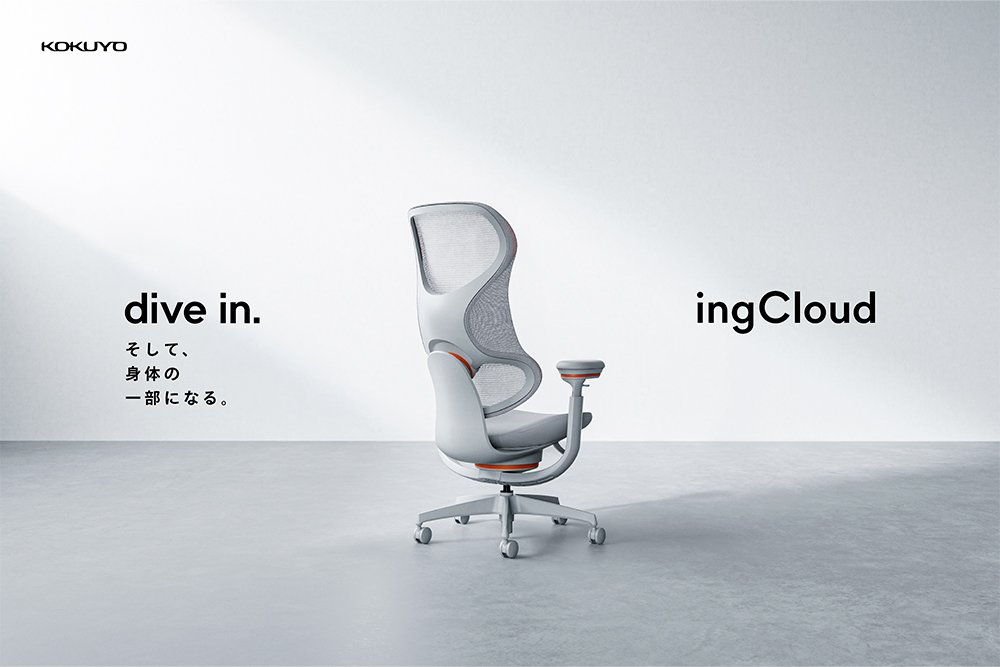
The ingCloud is described by Kokuyo as offering "an unprecedented seating experience, making users feel as if their body and the chair become one, more like wearing the chair than sitting in it." Designed to improve comfort and concentration for workers who spend long hours in front of screens, ingCloud is the third model in the ing series of office chairs, launched in 2017.
In June 2026, the ingCloud won two awards at the Red Dot Design Award 2026, including Best of the Best, the award's highest distinction, in both the Office Furniture and Office Chairs category and the Innovative Design category. It earned an exceptionally high score of 96 out of 100 in the Innovative Design category, marking the second Red Dot: Best of the Best award for the ing series, following the original ing's win in 2018. After eight years of development by Kokuyo's in-house team, the ingCloud represents the Japanese manufacturer's most ambitious attempt yet to solve the fundamental problem of prolonged sitting.
At a glance
Brand | Kokuyo |
|---|---|
Designer | Yojiro Kinoshita, Ryoma Maeda, Kazuo Oku (in-house team) |
Year launched | December 2025 |
Series | ing (third model) |
Key mechanism | 3D Ultra Auto-Fit (triple gliding + 3D hammock mesh) |
Back material | 3D hammock mesh |
Seat material | Cushion with mesh overlay |
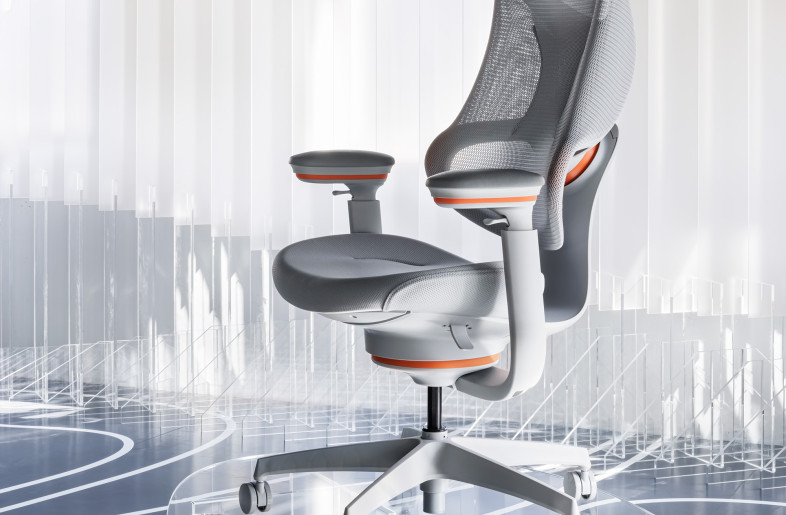
Adjustments | Height, 4D armrests (height, pivot, depth), headrest height (70mm), 2-stage recline lock, gliding on/off |
Configuration options | With/without headrest; Light Grey, Peat Grey frames; multiple accent colors |
Warranty | 1 year appearance/finish, 2 years mechanisms, 10 years structure (JOIFA standard) |
Price tier | Premium (estimated US$1,500–2,000 equivalent) |
Availability | Japan (December 2025); international TBC |
The brand & its philosophy
Kokuyo traces its history back to 1905, when Zentaro Kuroda opened a shop selling binders for Japanese-style ledgers (wacho); he later produced Western-style ledgers and, after Japan's period of high economic growth, launched the iconic Campus notebooks and office furniture including steel cabinets. With a history of over 100 years, Kokuyo's quest and perseverance on high-quality established its leading position in the office furniture market in Japan.
As Kuroda's company expanded, it remained true to its underlying ethos—Kuroda's belief in creating a positive social impact, encapsulated in his maxim that any business will succeed as long as it provides something useful; this ethos was incorporated into Kokuyo's code of conduct, which emphasized listening to customers and empathizing with their needs. Kokuyo defines its place in the world as that of a "WORK & LIFE STYLE Company," striving to create enriching ways of living. The founder's philosophy of contributing to society and pursuing a sustainable future has driven Kokuyo into a renowned brand with high environmental awareness, and the design philosophy of 'People + Design' stresses the balance between product design and functionality.
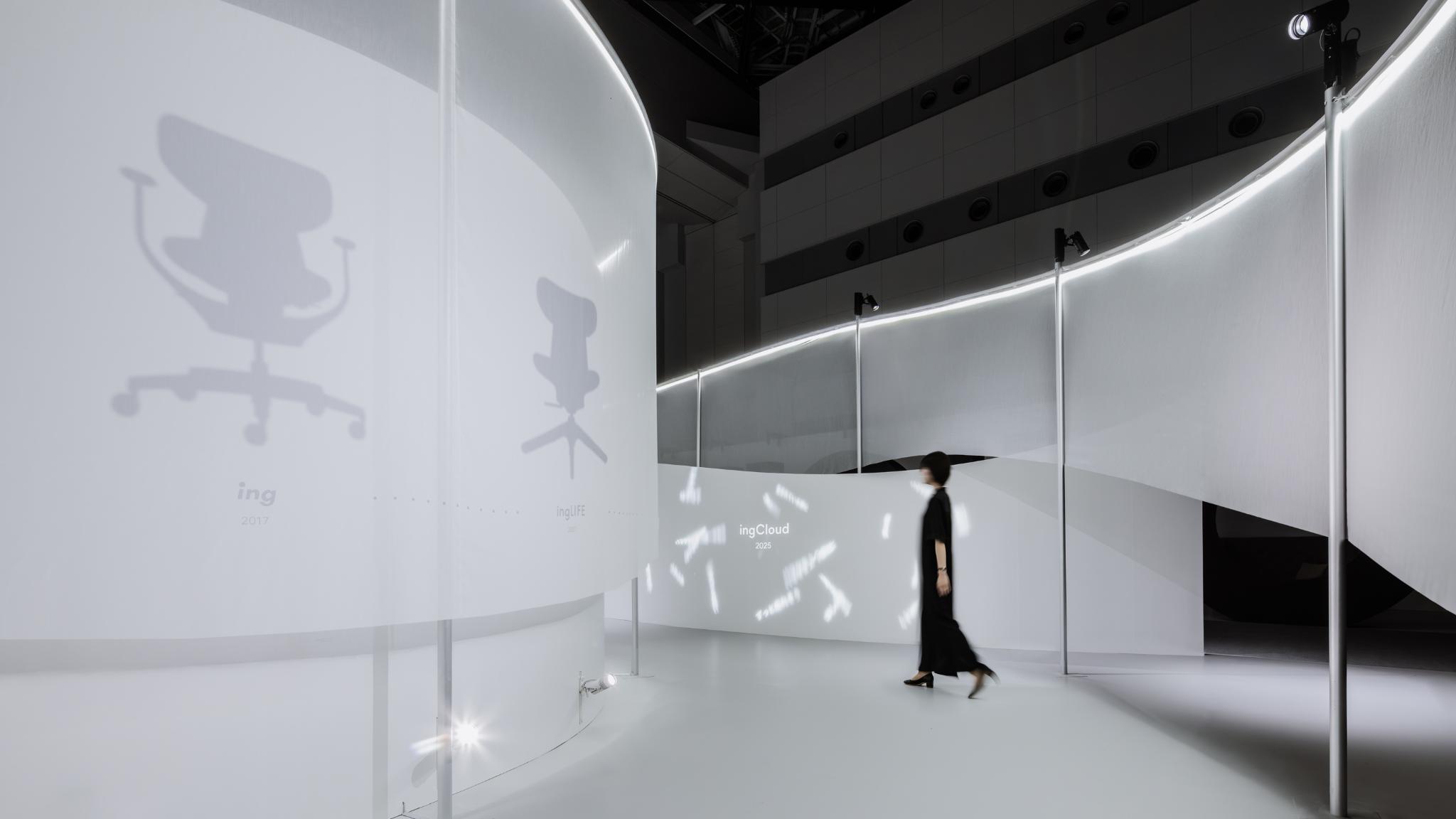
Kokuyo produced its first office chair, which featured a swivel mechanism, in 1966. Over the following decades, the company adopted a humanistic approach to furniture by putting users' needs—both tangible and intangible—at the centre of its product research, an ethos that culminated in the radical ing series.
The designer and the design story
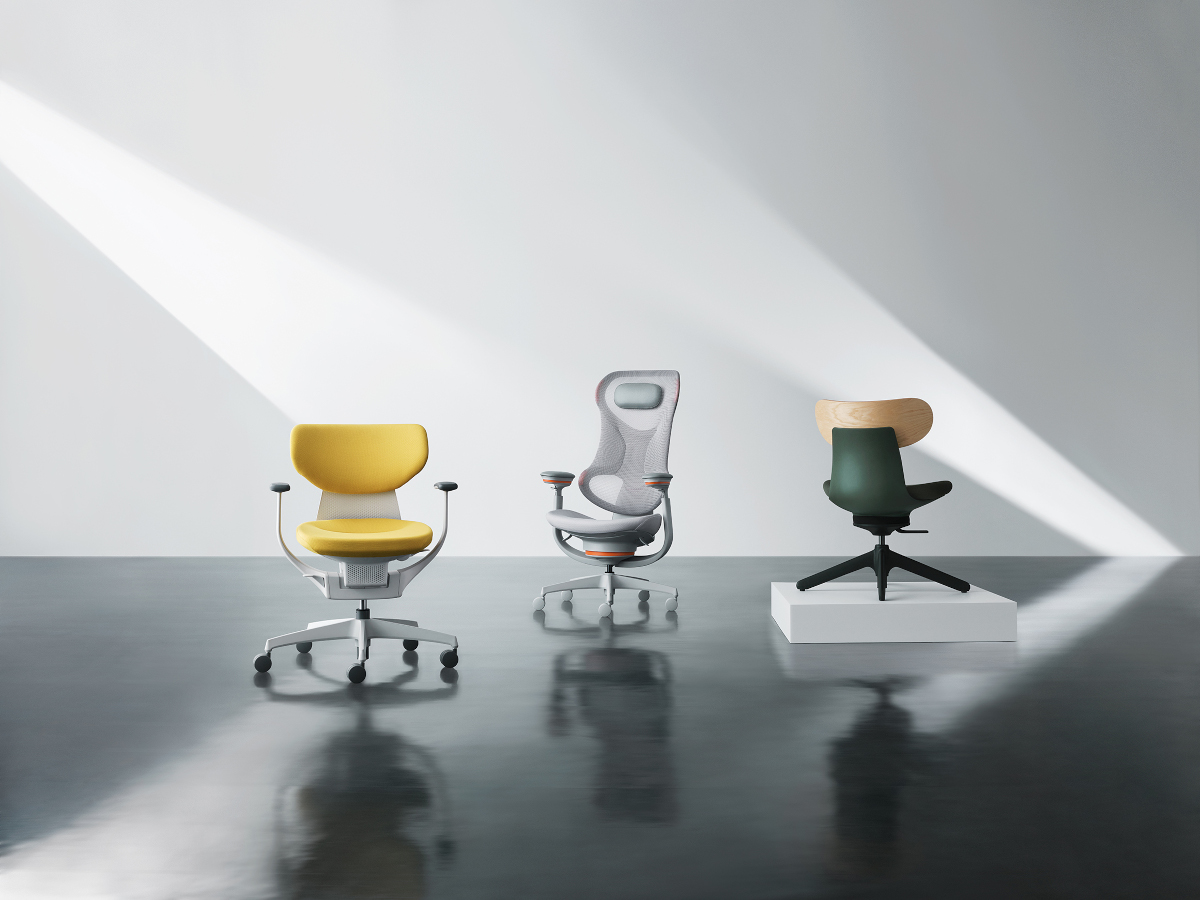
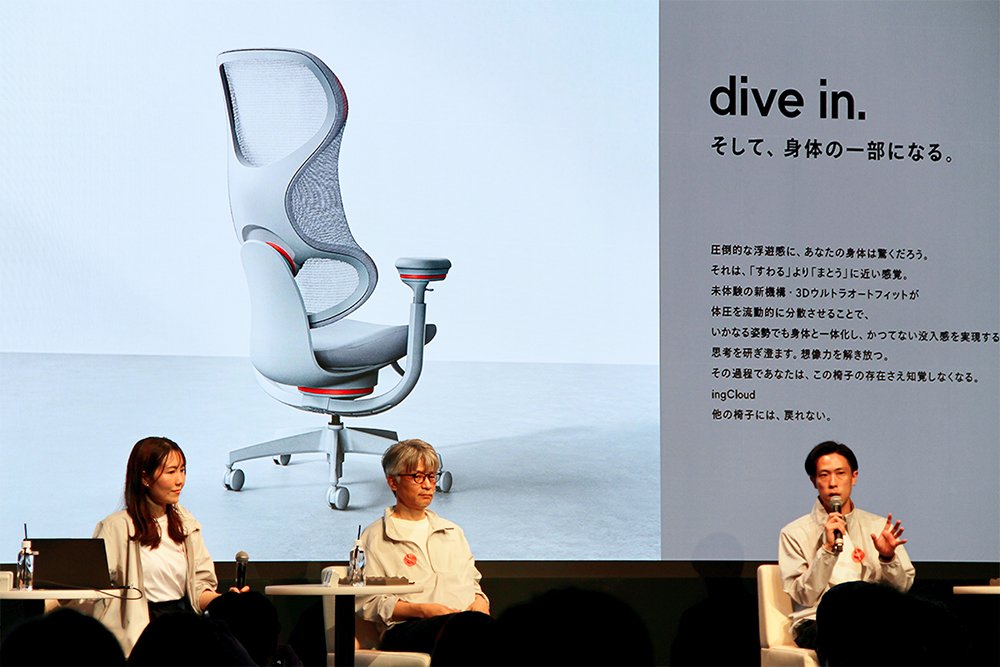
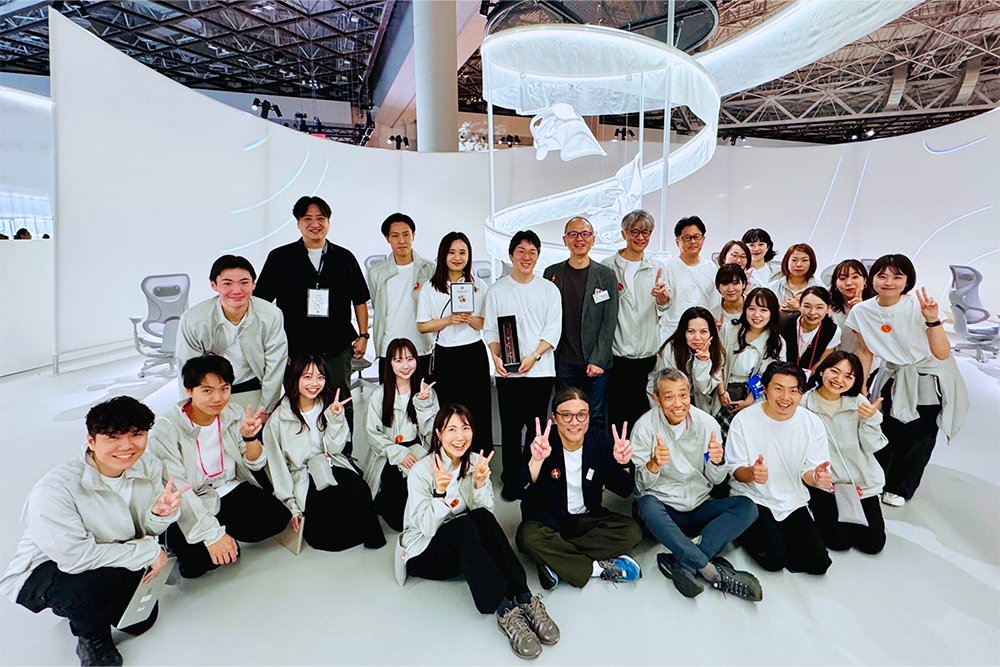
The ing series was designed by Kokuyo's in-house team: Kazuo Oku, Takayoshi Kano, Yojiro Kinoshita, and Kenta Asano. For ingCloud specifically, the lead designers were Yojiro Kinoshita and Ryoma Maeda, as documented in US design patent D1051624 filed December 2021 and granted November 2024. The pair are Kokuyo veterans who spent the better part of a decade refining the chair's signature mechanism.
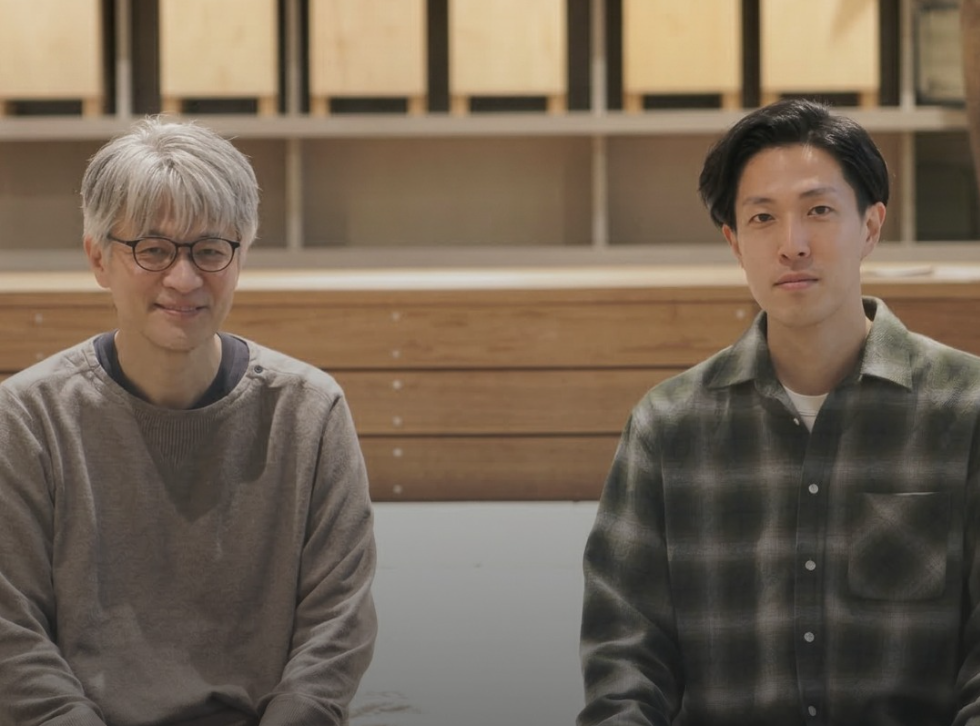
Kinoshita and Maeda describe the ingCloud development process as an exercise in "empathetic co-creation," Kokuyo's internal mantra for user-centered design. Rather than beginning with a list of features, the team started by observing how people actually sit during long work sessions—leaning, shifting, curling one leg under the other, stretching—and asked themselves how a chair could support all of those postures without forcing the user to adjust dials and levers constantly. Development took eight years, with the team iterating through numerous prototypes to refine the "cloud-like" sitting sensation.
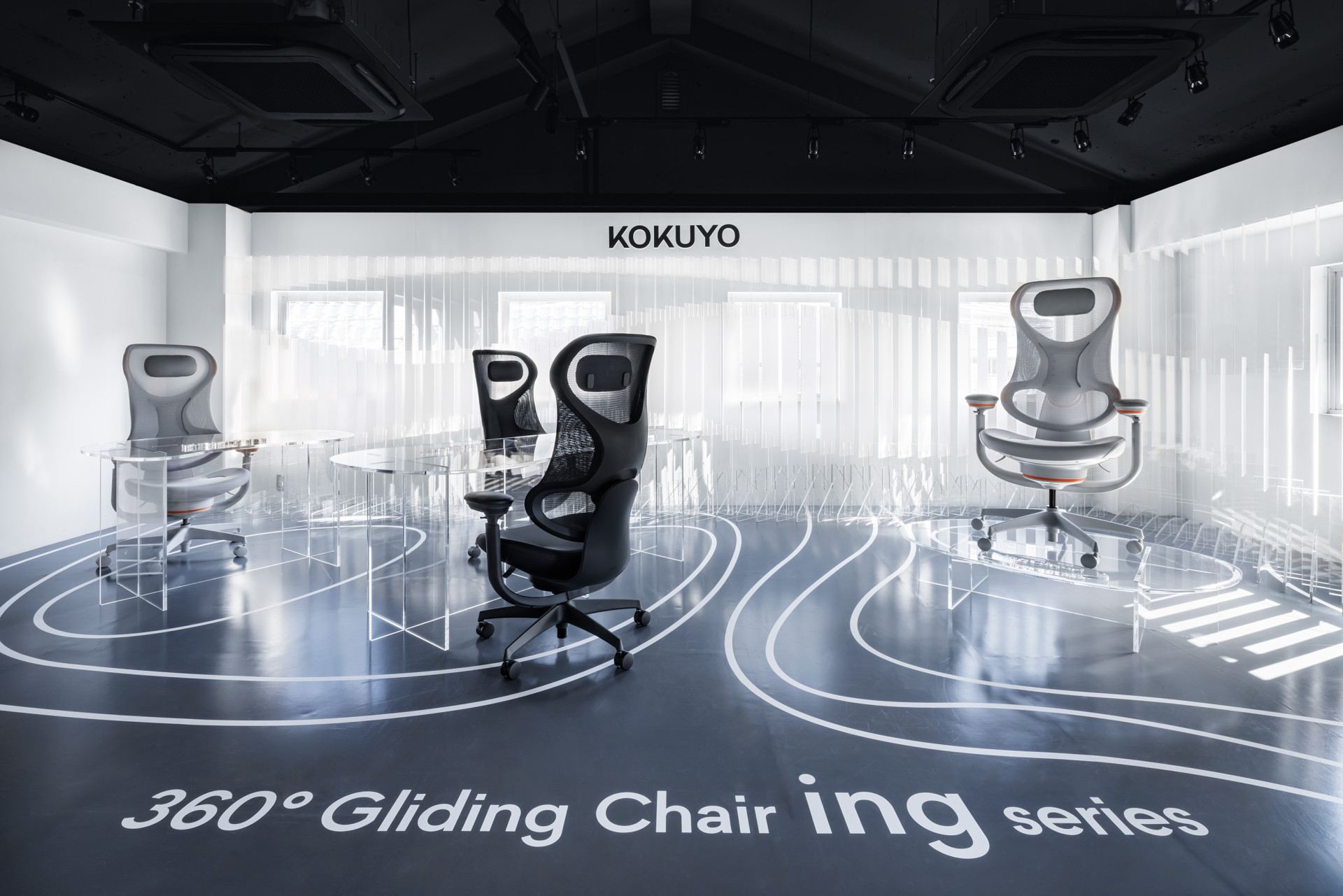
The breakthrough came when the designers combined two innovations: a frameless 3D hammock mesh backrest (eliminating the rigid side rails found on most mesh chairs) and a triple gliding mechanism that moves not just under the seat but also at the backrest and armrests. The result is a chair that conforms dynamically to micro-movements, distributing pressure across a wider surface area than conventional task chairs and creating what the brand describes as a floating, enveloping feel.
Design language & aesthetics
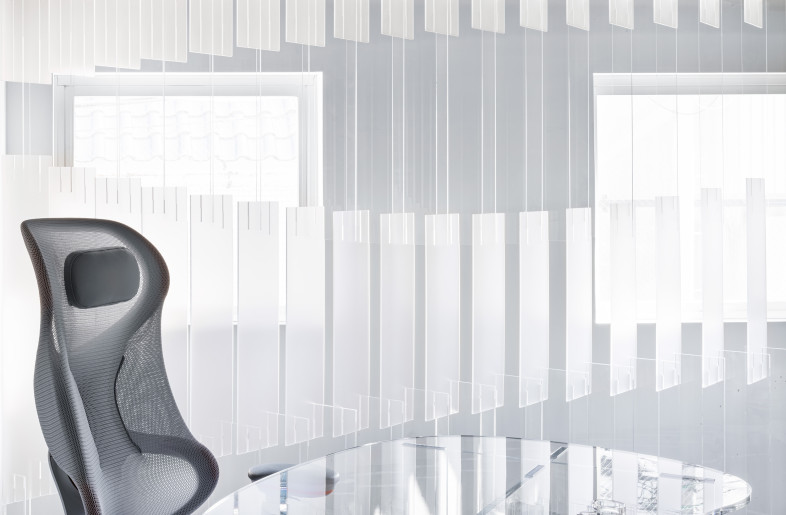
The ing chair promotes continuous movement and features an innovative ergonomic design; its elegant aesthetic coherently connects the base to the seat shell, and the structure appears complex, yet it has been skilfully reduced to the essentials. The ingCloud extends this minimalist philosophy but softens it considerably. Where the original ing featured angular lines and exposed gliding joints, ingCloud wraps everything in gentle curves and integrates the mechanism more seamlessly.
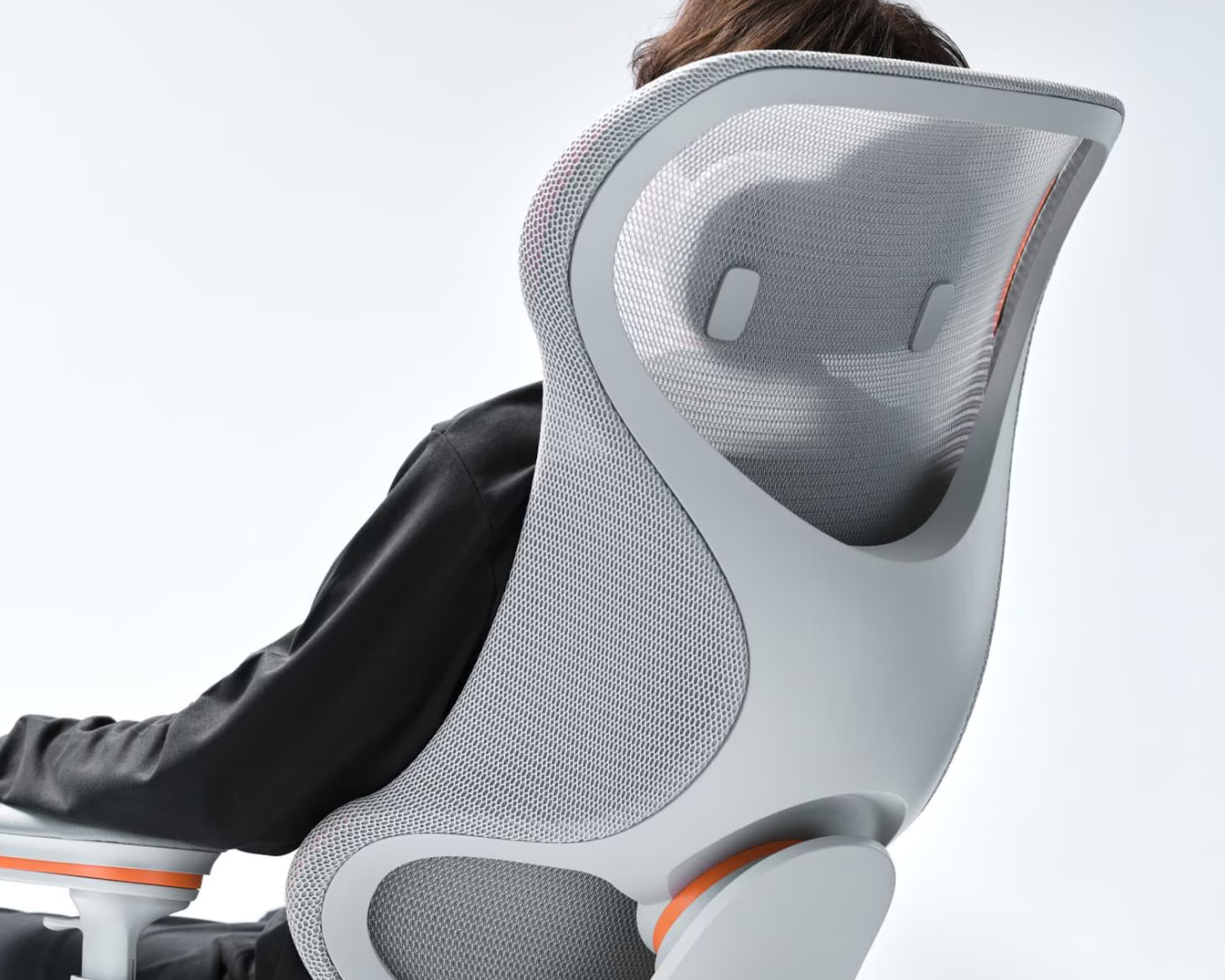
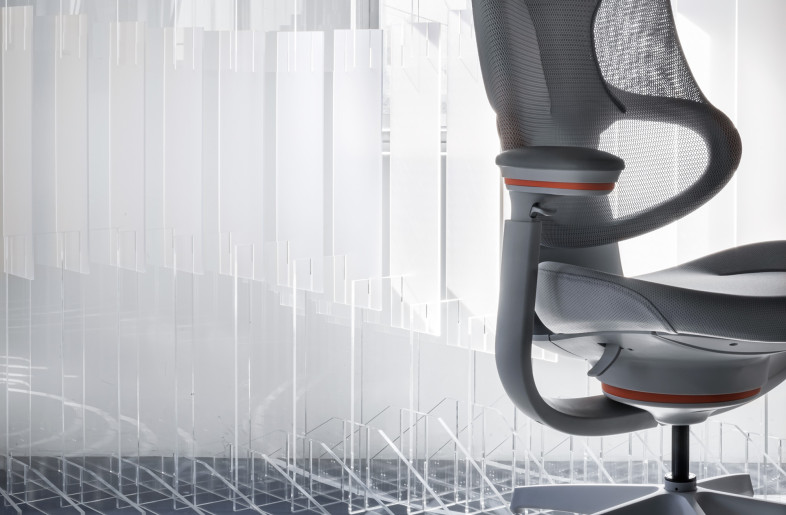
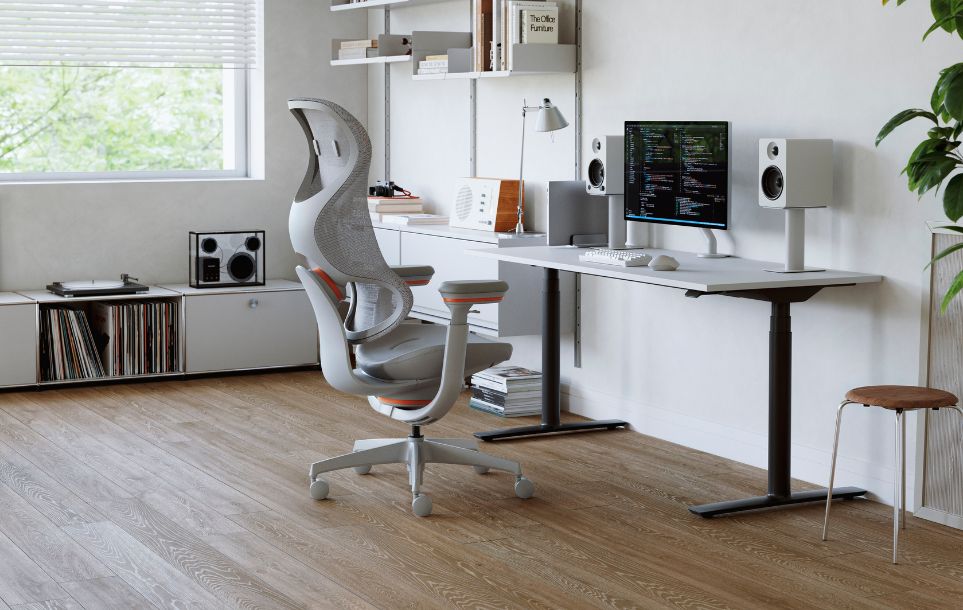
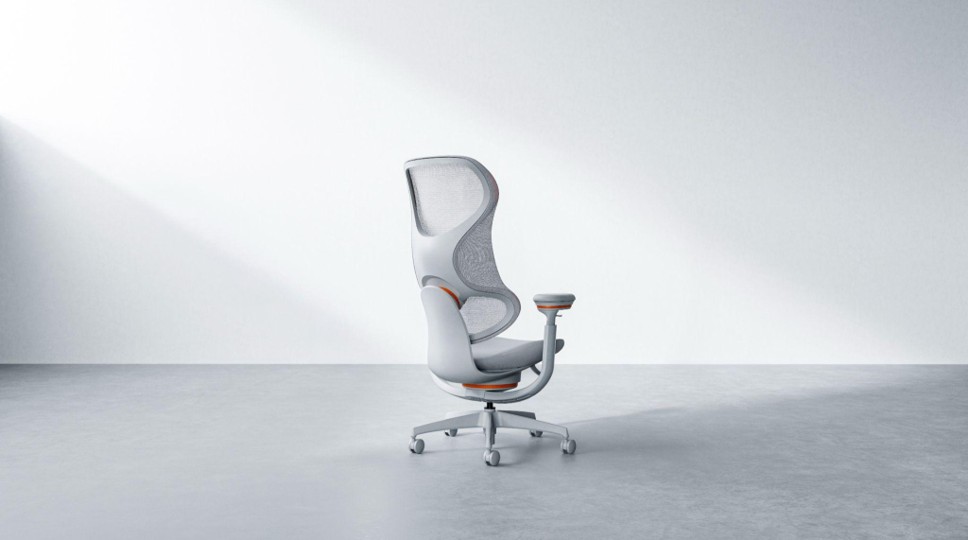
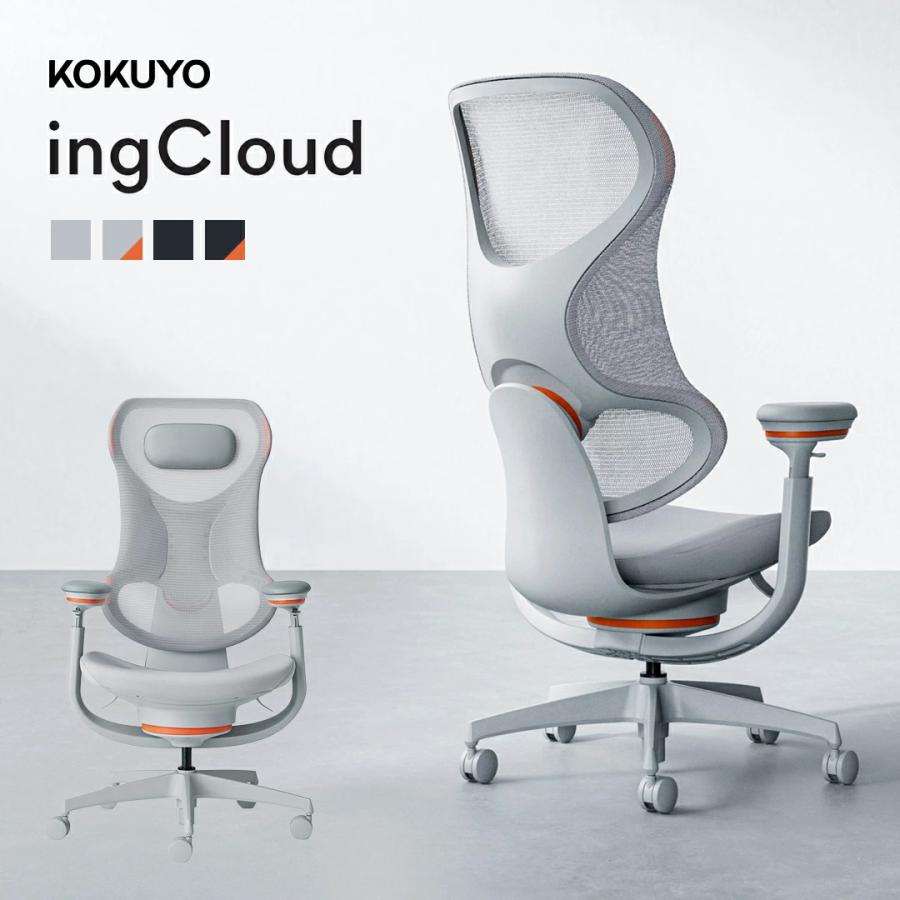
The 3D hammock mesh backrest is the most striking visual element: a taut, frameless expanse that lacks the usual left-right supports. From the side, the chair reads almost like a suspended net, which reinforces the "cloud" metaphor. The mesh is available in neutral tones (Light Grey, Peat Grey) with accent piping in brighter hues (Sun Orange, Soft Grey, Black). The seat pan is upholstered in matching fabric over high-density foam, and the five-star base is finished polypropylene with aluminum accents, keeping the overall silhouette light and unobtrusive.
Kokuyo offers two frame finishes—a lighter "basic" palette and a darker "premium" tone—and the optional height-adjustable headrest integrates into the mesh without visible bolts or clamps. Compared to the industrial aesthetic of Herman Miller's Aeron or the corporate polish of Steelcase's Gesture, the ingCloud projects a softer, almost residential vibe that fits equally well in a Tokyo startup or a Scandinavian home office.
Ergonomics & how it supports the body
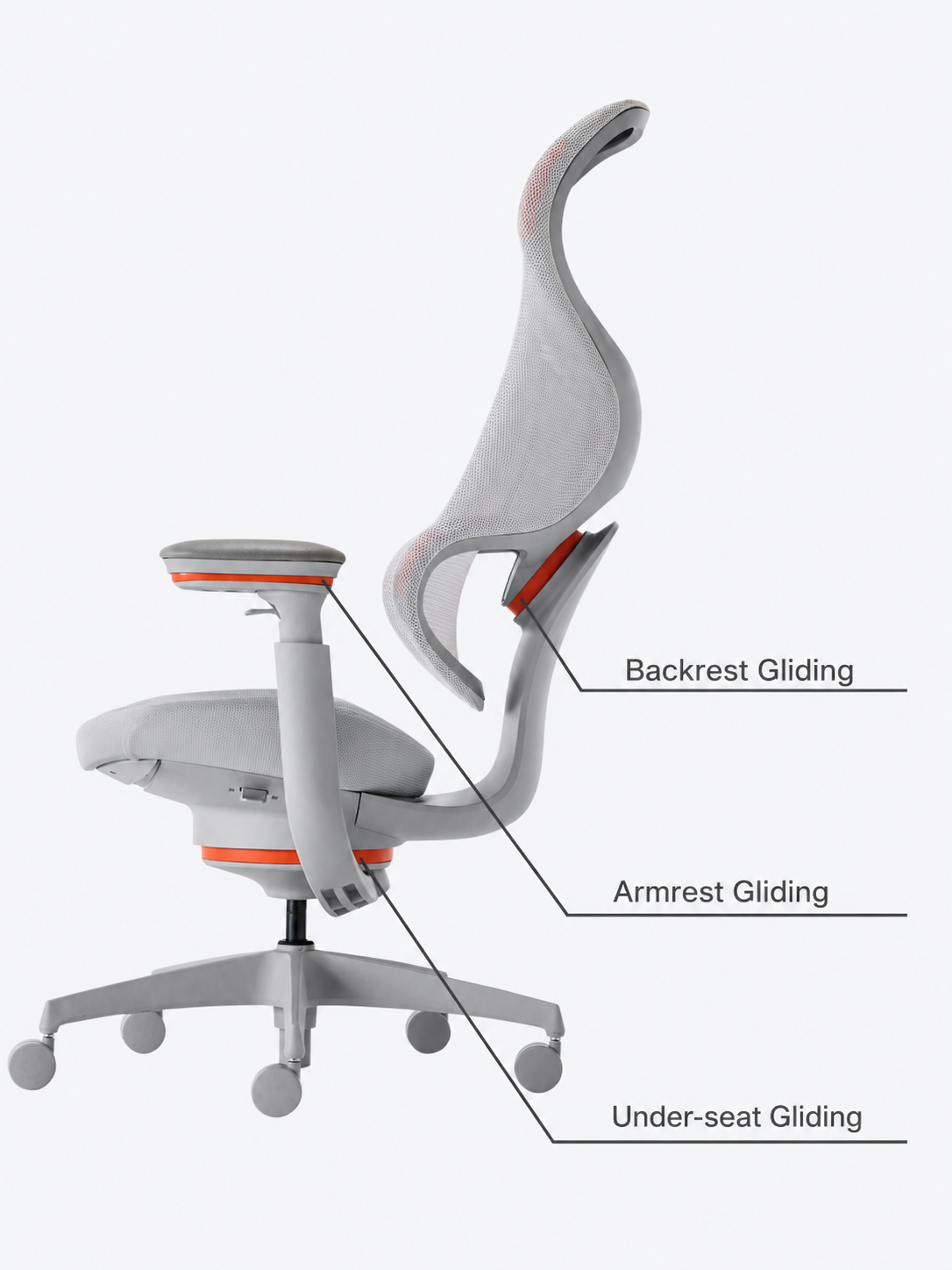
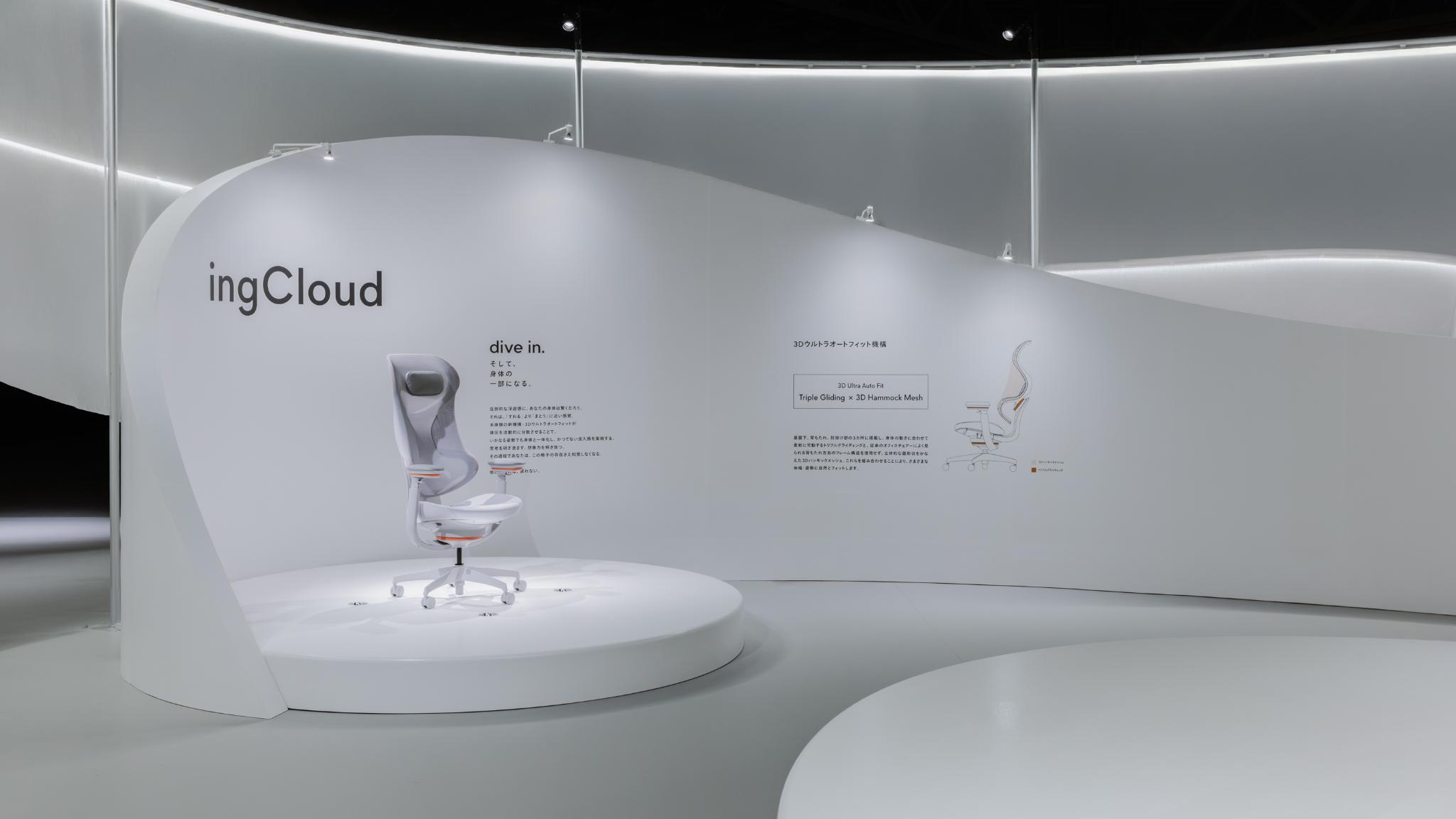
Through Kokuyo's proprietary 3D Ultra Auto-Fit Mechanism, which combines triple gliding and 3D hammock mesh, ingCloud delivers a soft, enveloping, floating seating experience. The mechanism uses gravity to disperse pressure dynamically and supports the user's posture. Rather than relying on springs or gas struts, the chair leverages the sitter's own weight to create a balanced, responsive motion.
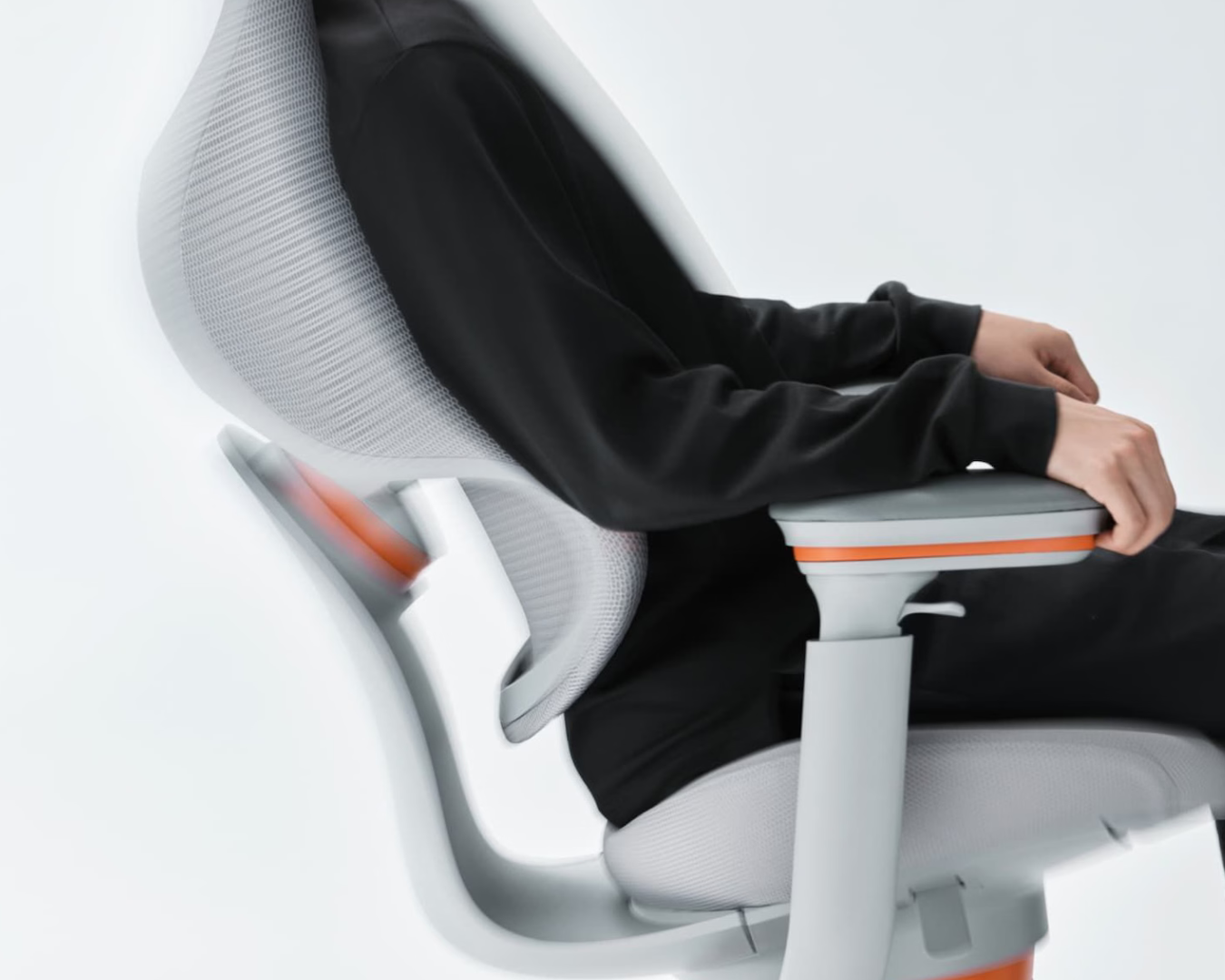
Three areas—beneath the seat, the backrest, and the armrests—are equipped with a triple gliding mechanism that moves flexibly with the body. This distributed motion means that when you lean forward to type, the seat pan tilts slightly forward, the backrest follows your spine, and the armrests track your forearms—all without manual adjustment. This technology keeps the muscles in the sitter's hips, waist and back active while seated, and its movement disperses up to 75 per cent of the sitter's body weight, providing superior support that reduces strain on the pelvic region.
The backrest features 3D hammock mesh, which achieves a three-dimensional surface shape. By eliminating the typical left-right frame structure of conventional office chairs, the 3D hammock mesh allows for a three-dimensional surface shape, and together with triple gliding under the seat, backrest, and armrests, the chair naturally fits various body types and postures. The absence of rigid side rails means the mesh can flex laterally, hugging your lower back when you twist or lean sideways—a freedom you don't get with framed mesh designs.
The gliding mechanism uses the sitter's body weight and movement, allowing it to fit any body type, and the chair does away with fussy levers and lumbar support, presenting a clean and friendly look. There is no traditional lumbar dial; instead, the lower mesh is slightly reinforced and cupped to provide passive lumbar support that adjusts as you move.
Key adjustments & mechanisms
Despite its "auto-fit" ethos, the ingCloud does offer manual controls where they matter. Seat height: pneumatic gas lift with a lever on the right underside. Recline: the backrest recline angle can be locked in two positions via a lever on the left underside. Gliding range: a two-stage toggle lets you reduce or disable the gliding motion if you prefer a more stable posture for tasks like video calls.
Armrests: the 4D arms adjust for height (80mm range), pivot inward to accommodate typing posture, and slide fore-aft. The gliding mechanism at the armrest pad allows it to smoothly track the typing position, ensuring continuous comfort and stability in any working posture. Unlike fixed arms that lock into discrete notches, these arms glide in concert with the seat, which feels remarkably organic once you get used to it.
Headrest: available as an optional extra, the headrest mounts to the top of the mesh and adjusts vertically across a 70mm stroke. It's upholstered in soft mesh rather than hard plastic, and because the backrest itself can tilt, the headrest tracks your head angle automatically—no need to fiddle with tilt or depth settings.
The ingCloud responds to both conscious, large movements and unconscious, subtle micro-movements; its spring-free mechanism provides a softness that is difficult to express numerically. The absence of springs means there's no "bounce-back" resistance; instead, the chair settles into position using gravity and friction damping, which feels smooth and silent.
Materials & build quality
Kokuyo has been building office furniture for more than a century, and the ingCloud reflects that institutional knowledge.
Backrest: the 3D hammock mesh is a proprietary knit—tighter and more structured than typical elastomeric mesh, with a subtle three-dimensional weave that creates small pockets to cradle your spine.
Seat: high-density molded foam over a polypropylene shell, upholstered in a durable polyester-blend fabric.
Frame and base: reinforced polypropylene with die-cast aluminum accents at load-bearing joints; five-star base with dual-wheel nylon casters (hard-floor and carpet options available).
According to the JOIFA (Japan Office and Institutional Furniture Association) guidelines applied to Kokuyo products, the warranty covers 1 year for appearance, surface finish, paint, and resin component discoloration and fading; 2 years for mechanism parts, moving parts, and lifting mechanisms; and 10 years for structural and strength-related damage. This tiered warranty structure is standard for Japanese office furniture and aligns with BIFMA durability norms in North America and Europe.
All components are designed for disassembly and recycling, in line with Kokuyo's sustainability commitments. The mesh uses no PVC, and the foam meets fire-retardant standards without halogenated additives. While Kokuyo has not published specific VOC emissions data or GREENGUARD certification for ingCloud yet, previous ing models have met stringent indoor air-quality benchmarks in Japan, and the ingCloud is expected to follow suit.
Sitting experience — what it actually feels like day to day
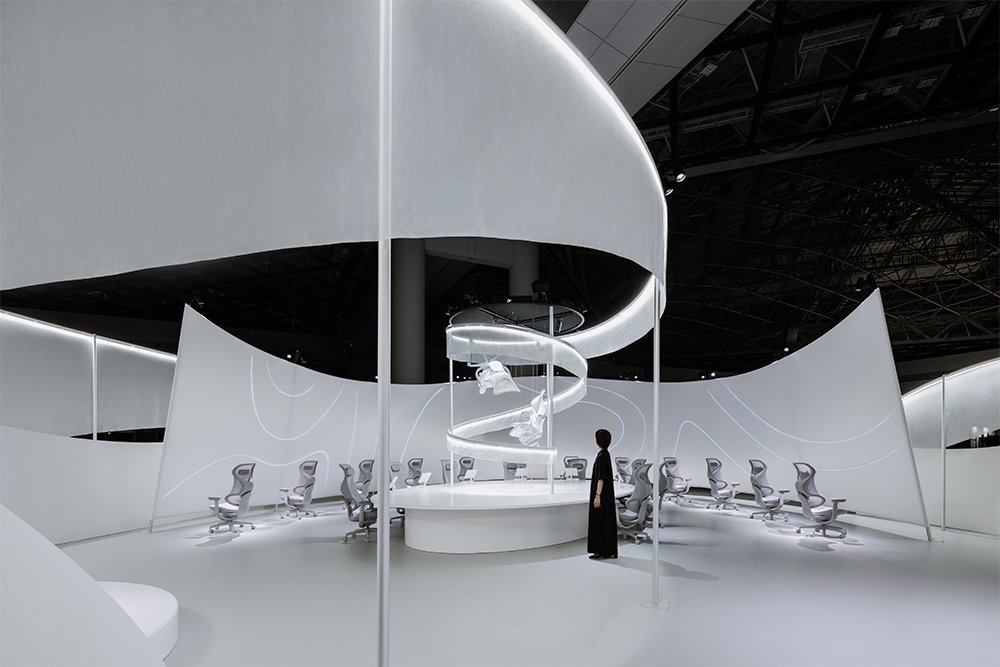
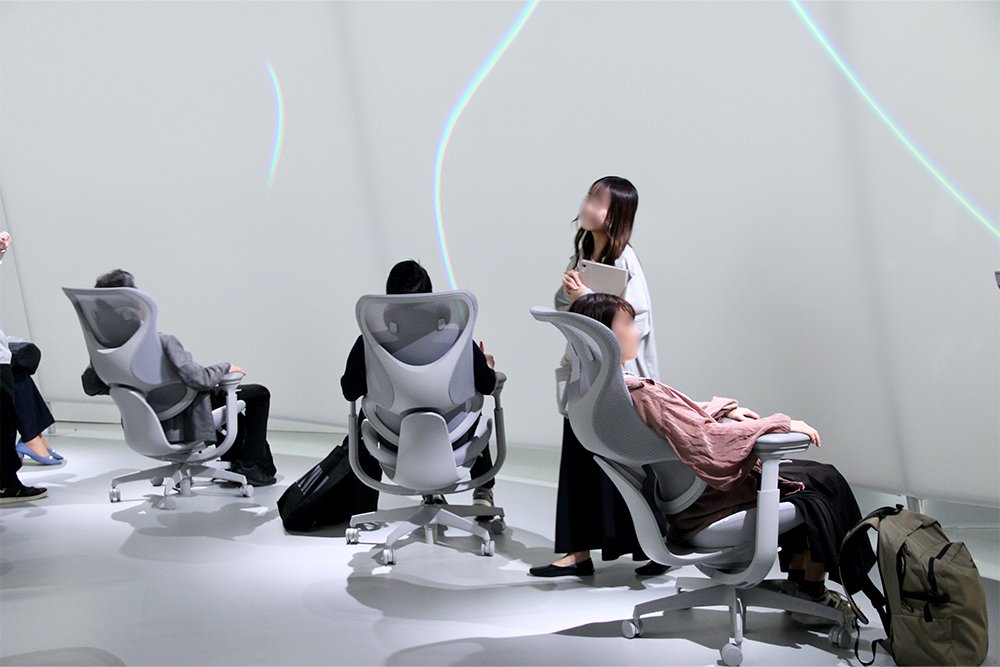
Users report experiencing "a unique sensation that feels like you're floating as the chair wraps around you and supports your posture in every position." The first impression is one of unusual compliance: sit down and the chair envelops you—not with soft foam (though the seat is comfortable), but with responsive motion. Lean forward and the whole assembly tips gently forward; lean back and it cradles your spine. There's almost no perceptible lag, and crucially, almost no noise.
For the first few hours, the constant micro-motion can feel disconcerting if you're used to a locked-upright task chair. You might find yourself tensing your core to "hold" a position, then realizing the chair is doing that work for you. By day two or three, that tension melts away, and the gliding becomes invisible—your body simply moves, and the chair moves with it. Kokuyo's internal research showed that calories consumed while sitting on the ing chair for four hours is equivalent to walking 1.5 km. Whether that figure translates to ingCloud is unconfirmed, but the active sitting principle is the same.
The 3D hammock mesh is firmer than you might expect—less "squishy net" and more "taut trampoline." It supports well across a wide contact area, and the frameless design means your shoulders and lats never bump into hard plastic when you twist. The lumbar curve is subtle but present; tall users (over 6 feet) may wish for a bit more pronounced support, though the chair's ability to tilt and follow helps compensate. The headrest, when fitted, is a genuine asset for reclined reading or video watching, though it's probably overkill for heads-down typing.
One quirk: the gliding can make you feel slightly seasick during the first week if you're prone to motion sensitivity. Kokuyo anticipated this and included the two-stage gliding lock. Most users report leaving it fully unlocked after the acclimation period, but the option is there.
Who it's for (and who should skip it)
Ideal candidates:
Long-session knowledge workers: programmers, writers, designers, researchers who sit for 6–10 hour stretches and need a chair that keeps blood flowing without conscious effort.
Fidgeters and posture shifters: if you habitually cross your legs, sit on one foot, or lean sideways while thinking, the ingCloud accommodates these habits rather than fighting them.
Home-office professionals seeking a softer aesthetic: the chair's residential styling and muted palette suit living spaces better than stark mesh task chairs.
Users who value movement over lockdown support: if your back feels better when you're allowed to move rather than when you're held rigidly upright, ingCloud's philosophy aligns with your needs.
Japanese or Asia-Pacific buyers: currently available only in Japan; regional availability may expand, but early adopters will need to import or wait.
Who should look elsewhere:
Users who need aggressive lumbar protrusion: the ingCloud's lumbar support is distributed and passive; if you require a hard knuckle pressing into L4-L5, a chair with an adjustable lumbar depth (Steelcase Leap, Herman Miller Embody) is a better bet.
Very heavy or very light users: the gliding mechanism is tuned for average adult weight (roughly 50–90 kg); outside that range, the motion may feel too stiff or too loose, and Kokuyo has not published weight-capacity specs or customization options for extreme sizes.
Budget-conscious buyers: premium Japanese ergonomics carry a premium price; if $500–800 is your ceiling, consider the original ing, Autonomous ErgoChair, or used Herman Miller Aeron instead.
Users who prefer plush, cushioned sitting: the mesh and gliding are optimized for support through motion, not through padding; if you want a "sink-in" feel, Steelcase's foam-based chairs or Herman Miller Cosm might suit you better.
Non-Japanese buyers in 2026: as of mid-2026, ingCloud is sold only in Japan, with no official international distribution confirmed; importing is possible but warranty and service become complicated.
Comparisons with key rivals
Chair | Price tier | Seat/back | Adjustability | Standout strength |
|---|---|---|---|---|
Kokuyo ingCloud | Premium (~$1,500–2,000) | Cushion seat, frameless 3D hammock mesh back | Height, 4D arms, headrest, 2-stage recline, gliding on/off | Triple gliding + gravity-based auto-fit; softest, most responsive motion |
Herman Miller Aeron (remastered) | Premium (~$1,400–1,800) | 8Z Pellicle mesh seat and back | Height, tilt tension/lock, lumbar depth, arms (2D or 4D), forward tilt | Iconic design, best-in-class breathability, size-specific fit (A/B/C) |
Steelcase Gesture | Premium (~$1,300–1,700) | Foam seat, foam or mesh back | Height, seat depth, lumbar firmness, 4D arms, tilt limiter, forward tilt | Most granular adjustability; armrests excel for multi-device use |
Herman Miller Embody | Premium (~$1,600–2,100) | Pixelated support layer, no traditional padding | Height, tilt tension/lock, backfit depth, arms (height + pivot) | Active spinal support via backfit; promotes micro-movement without gliding |
Herman Miller and Steelcase produce world-class ergonomic furniture; Herman Miller is the choice for those who value design, mesh breathability, and iconic status, while Steelcase is the better option for pure functionality, offering superior armrest adjustability and a flexible backrest that accommodates a wider range of sitting styles and body types. The ingCloud carves out a third path: less adjustability than Gesture, less structure than Aeron, but more organic, continuous motion than either. If Aeron is a finely tuned sports car and Gesture is a Swiss Army knife, ingCloud is a well-trained dance partner—responsive, intuitive, and forgiving.
Against the Herman Miller Embody, the ingCloud shares a philosophy of supporting movement rather than locking posture, but the Embody achieves this through pixelated backrest layers that flex independently, whereas ingCloud uses literal seat gliding. The Embody feels more "high-tech," the ingCloud more "natural." Price-wise, they're in the same bracket; the choice comes down to whether you prefer micro-flex (Embody) or macro-glide (ingCloud).
Sizing, fit & configuration options
Unlike the Herman Miller Aeron, which offers three distinct sizes (A, B, C) to match different body dimensions, the ingCloud is a one-size-fits-most design. Kokuyo's engineers assert that the gravity-based gliding mechanism adapts to a wide range of users, roughly 150cm to 185cm in height and 45kg to 100kg in weight. Anecdotally, testers at the extremes of that range report the fit is acceptable but not perfect: very tall users note the headrest doesn't rise quite high enough, and lighter users (<55kg) sometimes feel the gliding is a touch sluggish.
Configuration options include:
Headrest: with or without
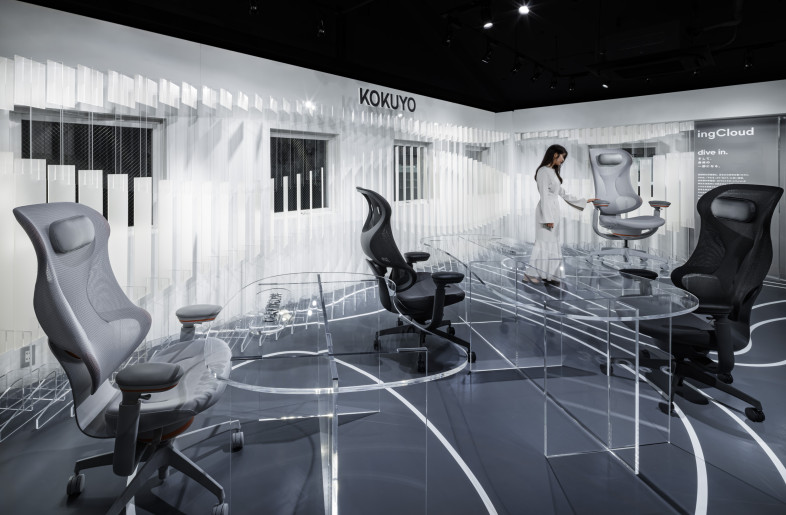
Frame color: Light Grey (basic) or Peat Grey (premium/dark)
Accent color: Sun Orange, Soft Grey, Black (affects mesh piping and seat fabric trim)
Caster type: nylon (hard floors) or urethane (carpet)
No options are offered for seat depth, back height, or alternative upholstery materials, which keeps the SKU count manageable but limits personalization. The lack of a "tall" or "petite" variant may frustrate users at the edges of the height range, and Kokuyo has not announced plans for expanded sizing.
Sustainability & certifications
The founder's philosophy of contributing to the society and pursuing a sustainable future has driven Kokuyo into a renowned brand with high degree of environmental awareness. The ingCloud continues this tradition: all plastics are labelled for recyclability, the mesh contains no PVC or brominated flame retardants, and the chair is designed for end-of-life disassembly—fasteners are mechanical rather than glued, and different material types separate cleanly.
Kokuyo publishes an environmental product declaration (EPD) for its major chair lines in Japan, covering carbon footprint, material sourcing, and manufacturing energy. As of mid-2026, the ingCloud-specific EPD has not been made publicly available in English, but the brand states the chair meets Japan's EcoMark Type II standards and complies with REACH and RoHS for chemical safety.
Certifications: ingCloud is manufactured to JOIFA (Japan Office and Institutional Furniture Association) standards, which align closely with BIFMA X5.1 (office seating safety and durability) in North America. However, as the chair is not yet sold in the US or EU, it has not undergone third-party BIFMA or GREENGUARD testing. If Kokuyo expands distribution westward, those certifications would likely follow. The chair's fire-retardant fabric meets Japanese TB117-2013 equivalent standards.
On the social side, Kokuyo is a signatory to the UN Global Compact and has committed to carbon neutrality across its Japanese manufacturing by 2030. The ingCloud is assembled at Kokuyo's Shiga plant, which uses on-site solar and sources renewable electricity for the majority of its energy needs.
Maintenance, durability & warranty
The ingCloud is engineered for low maintenance. Mesh care: vacuum or brush lightly; spot-clean with mild detergent and water; do not machine-wash or use solvents. Seat fabric: same protocol—blot spills promptly, avoid harsh cleaners. Mechanism: the triple gliding pivots are sealed bearings that require no lubrication; Kokuyo recommends an annual inspection for loose fasteners and worn casters, which can be done by the user or a service technician.
Based on JOIFA guidelines, the warranty covers 1 year for appearance and surface finish, 2 years for mechanism parts and moving parts, and 10 years for structural integrity. This is a strong warranty by global standards—on par with Steelcase (10-12 years) and Herman Miller (12 years)—and reflects Kokuyo's confidence in the chair's longevity. Warranty service is handled through Kokuyo's network of authorized dealers in Japan; international buyers would need to arrange their own service or ship the chair back, which is a significant hurdle.
Early user reports (YouTube reviews, Gizmodo coverage) note that the mesh and gliding joints show no visible wear after six months of daily use. The chair's build quality feels robust—no squeaks, no wobbles—though it's worth noting that the ingCloud has only been on the market since December 2025, so multi-year durability data is not yet available.
Pricing, value & where it sits in the market
Official pricing for the ingCloud in Japan starts at approximately ¥200,000 to ¥250,000 (roughly US$1,240 to $1,550 at June 2026 exchange rates), depending on configuration. The headrest-equipped, premium-frame model with delivery and assembly pushes toward ¥270,000 (~$1,670). For context, the original Kokuyo ing retails around ¥155,000 (~$960) and the home-oriented ingLIFE around ¥94,000 (~$580), so ingCloud commands a significant premium within Kokuyo's own lineup.
Positioned against Western flagships, ingCloud sits squarely in Herman Miller Aeron / Steelcase Gesture territory. It's more expensive than mid-tier ergonomic chairs (Autonomous, Branch, IKEA Markus) and less expensive than ultra-luxury models (Herman Miller Embody Gaming Edition, Vitra Physix). The value proposition hinges on how much you prize the ingCloud's unique motion system: if gliding and gravity-based auto-fit resonate with your body and work style, the chair delivers an experience you can't get elsewhere at any price. If you're indifferent to motion-based ergonomics, you might find equal comfort in a well-adjusted Gesture or Aeron for similar money—and with easier access to service and support outside Japan.
Currently, the ingCloud is sold exclusively through Kokuyo's official channels in Japan: the Kokuyo Workstyle Shop (online), THE CAMPUS showroom in Tokyo, and authorized office furniture dealers. International buyers can import via third-party logistics, but expect to pay additional freight (typically $200–400 USD), import duties, and face the complications of warranty claims. As of mid-2026, Kokuyo has not announced official distribution in North America, Europe, or other Asia-Pacific markets, though industry watchers expect a broader rollout if the Japanese launch proves successful.
Verdict — the bottom line
The ingCloud "offers an unprecedented seating experience, making users feel as if their body and the chair become one." After eight years in development, Kokuyo has delivered on that promise: this is a chair that moves with you so seamlessly you forget it's there, supporting your posture through gravity and geometry rather than springs and levers. With a Red Dot Design Award score of 96 out of 100 in Innovative Design, ingCloud stands as one of the most technically accomplished office chairs released in the past decade.
Is it perfect? No. The one-size-fits-most approach won't suit everyone, especially very tall or very light users. The lack of aggressive lumbar adjustment disappoints those who need firm lower-back support. And the Japan-only availability in 2026 means most readers will have to wait—or pay a steep import premium—to try it. But for the right user—someone who values intuitive, motion-based ergonomics over dial-intensive adjustability, who sits long hours and fidgets constantly, who appreciates understated Japanese design—the ingCloud is a revelation.
The ingCloud doesn't just support you; it dances with you. If your work demands stillness punctuated by bursts of creativity, this chair understands the rhythm.
In a market dominated by American and European giants, Kokuyo's ingCloud proves that Japan still has something distinctive to say about how we sit—and after 120 years, the conversation is far from over.
Sources & references
Interested in the Kokuyo Ing Cloud?
Check the price on Amazon