Okamura Leopard
Robot-inspired seating that cradles you like a human embrace
Overview
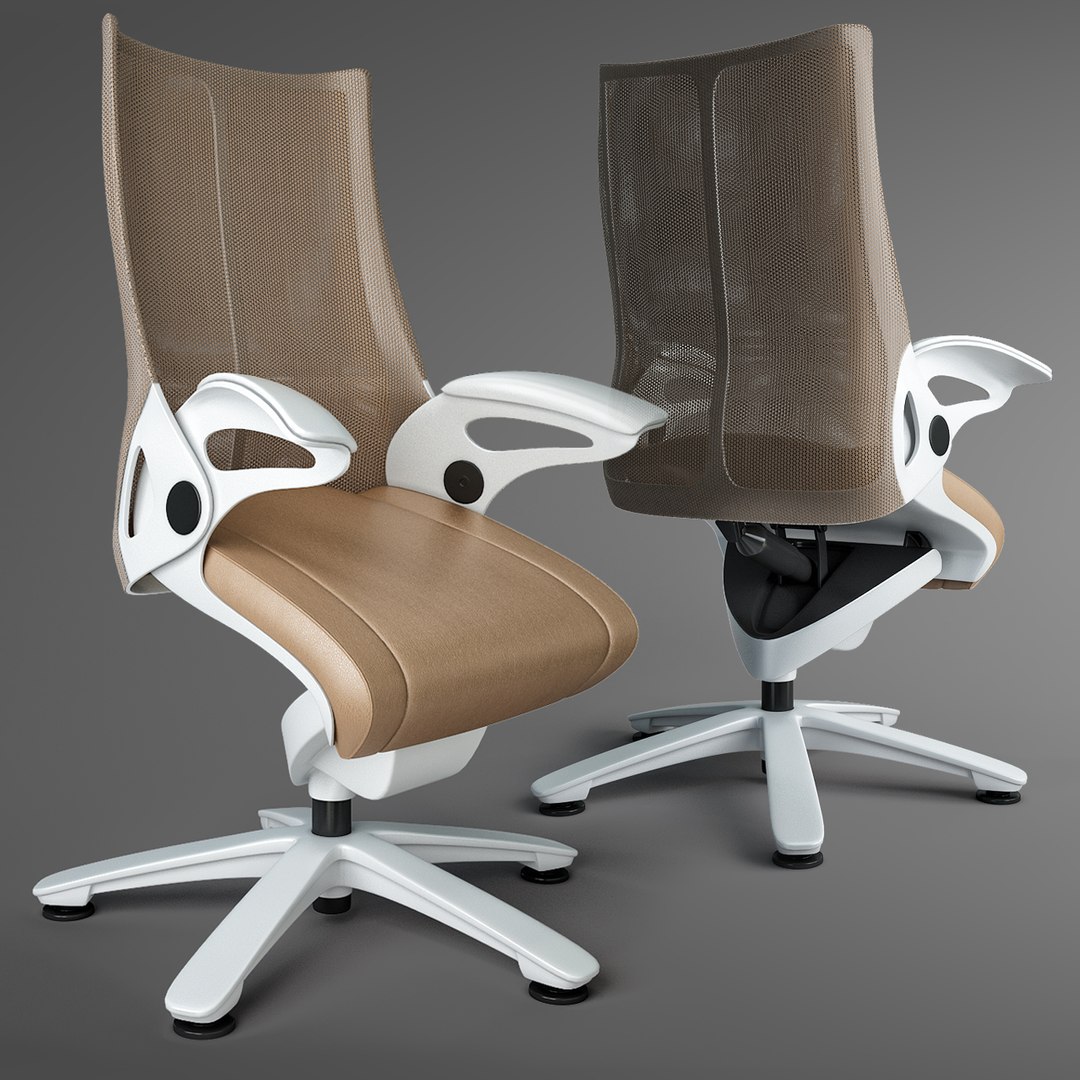
The Okamura Leopard is a conference and visitor chair that blurs the line between furniture and responsive technology. The Okamura Leopard chair is the product of joint development with Oki Electric Industry Co., Ltd. (Tokyo, Japan) , fusing decades of office seating expertise with robotic mechatronics to create what the brand calls "Seat Cradle Design"—a seating design that simulates the parent holding their child . The original Leopard, which was introduced in June 2009 , garnered immediate attention for its distinctive, sculptural silhouette and its self-adjusting mechanism that adapts to users of all sizes without manual controls. This is not a task chair in the traditional sense—it's a high-touch hospitality and meeting room solution designed to make sitting, reclining, and standing feel as natural as breathing.
At a glance
Brand | Okamura Corporation |
|---|---|
Year introduced | 2009 (High Back); 2010 (Mid Back) |
Primary use | Conference, reception, meeting rooms, executive offices |
Key materials | Double-layer mesh backrest, fabric or leather seat, aluminum/steel frame |
Key mechanism | Robot Leg technology with automatic weight-responsive recline (up to 27°) |
Base options | Ring base (with auto-return) or 5-star base with glides |
Frame colors | Black or white |
Adjustments | Seat height, reclining tension (Standard or Firm); no manual armrest or lumbar controls |
Certifications | FIRA Ergonomics Excellence Award (UK/EU standards), ISO14001 manufacturing |
Sustainability | 99% recyclable, 45% recycled content, designed for disassembly |
Price tier | Premium (~฿55,000 / ~$1,500–1,800 estimated; contract pricing varies by region) |
Awards | iF Product Design Award 2010, NeoCon Innovation Award |
The brand & its philosophy
Okamura Corporation, founded in 1945 and headquartered in Tokyo, is one of Japan's oldest and most technically rigorous office furniture manufacturers. The company built its reputation on a combination of precision engineering, materials science, and a research-driven approach to ergonomics—hallmarks of Japanese industrial design. Okamura's seating portfolio spans mass-market task chairs to ultra-premium executive lines, but the thread that runs through all of it is an obsession with measurable comfort and long-term durability.
The Leopard epitomizes Okamura's willingness to invest in R&D that pushes beyond incremental improvements. Okamura created the Leopard chair after a series of trials studying human movement to achieve the most comfortable chair. This involved the accumulated seating technology of Okamura and the robot technology of OKI being integrated for the first time . It's a statement piece as much as a functional one, aimed at clients who value innovation and are willing to pay for technology that operates invisibly.
The designer and the design story
The Leopard does not have a single credited industrial designer in the traditional sense; rather, it emerged from a joint engineering collaboration between Okamura's in-house seating technology division and Oki Electric Industry's mechatronics team. The driving concept behind its revolutionary "Seat Cradle Design" was to simulate the way a parent holds a child in their arms. This led Okamura Corporation to fuse their advanced seating technology with OKI's robot leg technology using mechatronics engineering to produce the Leopard . OKI's contribution—derived from research into bipedal robot locomotion and muscle-joint mechanics—gave the chair its adaptive, weight-sensitive recline system.
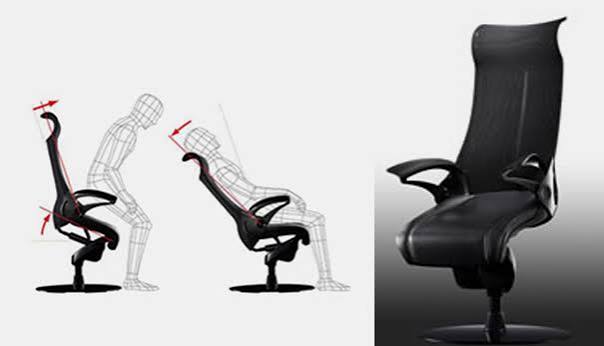
A new concept of "sit, relax, stand" reflects the series of movements required for the most natural position for maximum comfort and ease of use. The design welcomes your body, embraces gently and cradles you in comfort, then helps you rise and stand . This four-phase interaction was the north star for the development process, and it remains the Leopard's defining characteristic.
Design language & aesthetics
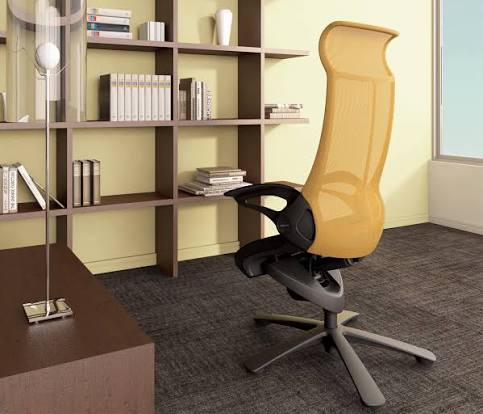
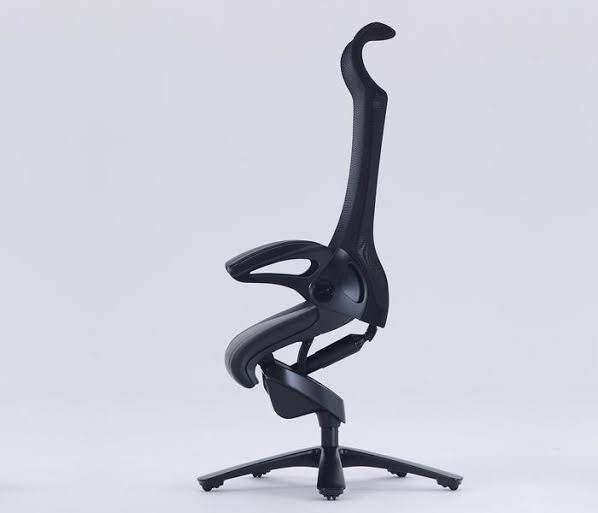
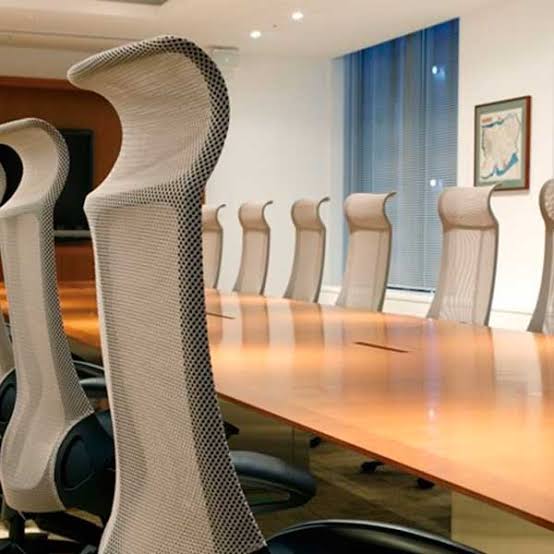
The Leopard is immediately recognizable: a tall, curved backrest that rises like a shell, a gently inclined seat pan, and a slender frame that somehow manages to look both organic and futuristic. Leopard's luxurious stature and unique curvature would appear to be entirely designed for aesthetics. Ironically, it's the innovative design that enhances comfort by emulating the human touch . The mesh backrest is double-layered and suspended, giving it a hammock-like appearance that visually communicates softness.
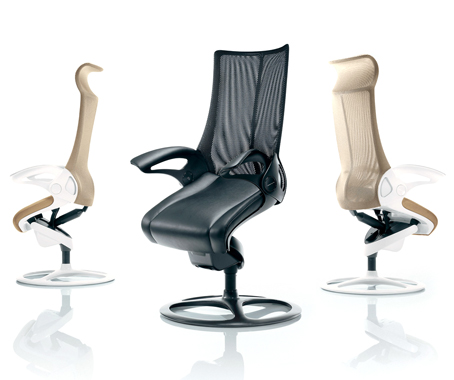
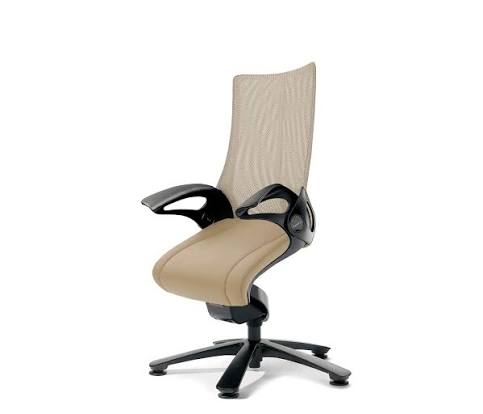
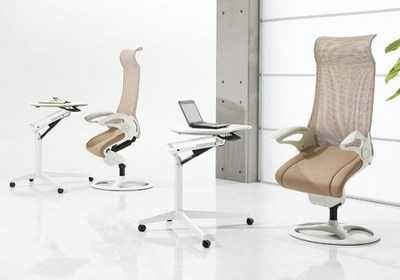
Available in black or white frames with a choice of fabric, leather, or mesh seat upholstery, the Leopard's aesthetic is high-concept but not austere—it feels more like sculpture than office equipment. The ring base version, with its circular footprint and cantilevered frame, is particularly striking in reception or lounge settings. The 5-star base with glides offers a more conventional profile but retains the chair's sculptural presence. It's the sort of chair that draws questions from visitors and elevates the perceived quality of a space.
Ergonomics & how it supports the body
The Leopard's ergonomic philosophy is radically different from most office chairs. Instead of giving users a bank of levers and knobs, it uses a passive, weight-responsive mechanism to provide tailored support. The Leopard chair integrates the philosophy, technology and expertise that Okamura has been incorporating into office seating with OKI's 'Robot Leg' technology that applies the supple movement of human muscles and joints, creating a seat with the most natural posture that has ever existed .
Muscle load of a user seated in the Leopard was measured against the benchmark of natural standing posture for the amount of activity in the Erector spinae, Rectus femoris and Tibialis anterior muscles. Lower muscle activity indicates lower muscle load . The mesh backrest cradles the spine without rigid lumbar support, and the seat's initial forward tilt reduces strain during the sit-to-stand transition. This is a chair designed for people who shift between postures frequently—executives in short meetings, guests waiting in a reception area, or managers conducting walk-in consultations.
Key adjustments & mechanisms
The Leopard is defined by what it doesn't require you to adjust. All Leopard chairs adapt to changes in body position using a myoelectric innovative recline function, which responds to the individual, providing comfort and support without the need for adjustment. Thanks to a newly developed mechanism, it is unnecessary to perform adjustments to account for differences in body type and weight . This is the Robot Leg technology at work: a mechanism that senses load and automatically modulates resistance.
As you lower your body the 25° incline and the backrest mesh gently supports you into the optimum seating position. You can recline the seat by 27° and when you do the even distribution of your body weight ensures pressure on the upper and lower back is reduced . The only manual controls are seat height adjustment (pneumatic) and a choice between Standard or Firm reclining tension at the time of order. The ring base version features an automatic return mechanism that brings the seat back to its starting position when you stand, while the 5-star base allows the chair to remain in the reclined position.
There are no adjustable armrests, no lumbar dial, and no seat-depth slider. This minimalism is intentional—the Leopard is betting that intelligent passive mechanics can outperform user-operated controls in environments where people don't have time to dial in their settings.
Materials & build quality
Okamura's manufacturing pedigree is evident throughout the Leopard. The frame is a combination of aluminum and steel, powder-coated in black or white, with a finish that feels dense and substantial. The double layered mesh backrest offers users ultimate comfort like a hammock , and it's tensioned precisely to provide support without sagging over time. The seat can be upholstered in Okamura's proprietary fabric (available in six mesh colors), or in leather (four colorways), with the white frame limited to specific combinations.
99% recyclable. Using 45% recycled material. Developed and manufactured through ISO14001 managed operation . Components are labeled for easy disassembly and sorting at end of life. The overall build quality is excellent—this is a chair engineered for commercial interiors where durability and low maintenance are non-negotiable. There's no squeaking, no wobbling, and the mechanism operates silently even after years of use.
Sitting experience—what it actually feels like day to day
Sitting in the Leopard is unlike any conventional task chair. The effect of sitting in Leopard is as if a hyper-responsive, cotton-gloved, body-sized hand were lightly bringing you down to earth . As you approach, the seat is slightly elevated and tilted forward; when you begin to sit, it gently descends and levels out, absorbing your weight without jarring. The backrest wraps around your torso—not with rigid bolsters, but with the soft, elastic tension of the mesh. Reclining happens intuitively: lean back, and the chair yields proportionally; lean forward, and it returns.
For short meetings or reception use, the Leopard is exceptional—it feels welcoming and supportive without demanding any setup. For extended task work, however, the lack of armrests and the seat's relatively high starting position may feel limiting. The mesh seat (rather than a cushioned pan) can also feel firm after a couple of hours. This is not a chair designed for eight-hour coding marathons; it's designed for people who are in and out frequently, or who value the ritual of sitting down in a beautifully crafted object.
Who it's for (and who should skip it)
Who should buy it:
Executive offices and private suites looking for a visitor chair that makes a design statement and delivers high comfort in short-to-medium sessions.
Reception and lounge areas in corporate, hospitality, or high-end residential settings where aesthetics and immediate comfort matter more than all-day ergonomics.
Conference and meeting rooms where users rotate frequently and don't want to fiddle with adjustments—the Leopard's auto-adapt mechanism shines here.
Design-conscious buyers who value innovation and are willing to invest in a chair that doubles as a conversation piece.
Who should skip it:
Full-time task seating users who need armrests, deep seat-depth adjustment, and robust lumbar controls for 6–8+ hour workdays.
Budget-conscious buyers—the Leopard sits at the premium end of the market and is not widely available at retail, meaning pricing and lead times can be challenging.
Home office users seeking versatility—if you need one chair for spreadsheets, Zoom calls, and gaming, look to Okamura's Contessa II or Sylphy instead.
Comparisons with key rivals
Chair | Price tier | Primary use | Signature feature | Standout strength |
|---|---|---|---|---|
Okamura Leopard | Premium ($1,500–1,800) | Conference/visitor | Robot Leg auto-adjust mechanism | Zero-adjustment adaptive comfort |
Knoll Generation | Premium ($1,200–1,500) | Conference/task hybrid | Flex Back Net with elastic suspension | More task-friendly, broader availability |
Vitra Pacific Chair | Premium ($1,400+) | Lounge/conference | Barber Osgerby design, sculptural form | Pure aesthetics, lighter touch ergonomics |
Haworth Very | Mid-premium ($900–1,200) | Task/conference | Pellicle mesh, extensive adjustability | Better for full-time task use, lower price |
The Leopard stands apart for its mechanism—no rival offers truly automatic, weight-responsive recline in this form factor. The Generation is more versatile as a task chair, the Pacific is more sculptural, and the Very offers better value for money, but none match the Leopard's hands-off ergonomic intelligence.
Sizing, fit & configuration options
The Leopard is available in two back heights: High Back (the original 2009 model, approximately 120 cm total height) and Mid Back (introduced 2010, approximately 114 cm). Seat height adjusts from 43.5 cm to 49.5 cm; total height ranges from 114 cm to 120 cm depending on configuration. The seat width is approximately 66.5 cm with a depth around 53 cm—generous by conference-chair standards but not adjustable.
Both back heights accommodate a wide range of body types, but taller users (over 6'2" / 188 cm) may find the High Back more supportive for the upper shoulders. The mechanism is designed to handle varying weights without adjustment, though Okamura offers Standard and Firm tension settings to accommodate very light or very heavy users. Base choice is purely functional and aesthetic: the ring base is more sculptural and suited to fixed lounge positions, while the 5-star glide base is better for mobility and cleaning access.
Sustainability & certifications
99% recyclable. Using 45% recycled material. Developed and manufactured through ISO14001 managed operation . Designed for disassembly. Reduction of substances with environmental load . Okamura labels principal components to simplify end-of-life sorting, and the chair's modular construction means worn parts can be replaced rather than discarding the entire unit.
Ergonomics Excellence Award is certified by FIRA of The United Kingdom (Furniture Industry Research Association) based on English and EU standards. It is awarded only to products which meet the highest ergonomic standards—it is the most prized Ergonomic Award in Europe . The Leopard also earned the NeoCon Innovation Award and the iF product design award , though these focus on design and innovation rather than environmental metrics. Okamura does not publish a full environmental product declaration (EPD) for the Leopard, and GREENGUARD or similar VOC certifications are not mentioned in available literature.
Maintenance, durability & warranty
The Leopard is built for the long haul. The mesh backrest is stain-resistant and requires only occasional vacuuming or damp-cloth cleaning. Leather seat options should be treated with a mild leather conditioner every 6–12 months; fabric seats can be spot-cleaned or professionally cleaned as needed. The frame's powder-coat finish resists scuffing, and the mechanism is sealed and requires no lubrication.
Okamura's standard commercial warranty varies by region but typically covers 5 years on the mechanism and structure, 2–3 years on upholstery and mesh. The chair is engineered for commercial interiors with high traffic, and anecdotal reports from facility managers suggest the Leopard holds up well even in demanding environments. Replacement parts are available through Okamura's dealer network, though lead times can be lengthy outside major markets.
Pricing, value & where it sits in the market
The Leopard ergonomic office chair starts at 55,000 baht in the Thai market (approximately $1,500–1,800 USD equivalent at time of writing, though pricing varies significantly by region and specification). This places it in the premium tier, above mass-market ergonomic task chairs but below ultra-luxury executive lines like the Okamura Legender or Herman Miller Eames Executive.
The Leopard is not widely stocked at retail; most sales are contract-based through Okamura's dealer network or direct project sales. This means pricing is often negotiated per project, and lead times can stretch 8–12 weeks. For North American and European buyers, expect to pay $1,600–2,000+ depending on frame, upholstery, and base options. The value proposition hinges on whether you prize the chair's unique mechanism and design language—if you're seeking pure ergonomic bang-for-buck for task seating, alternatives like the Haworth Zody or Okamura's own Contessa II deliver more adjustability for less money.
Verdict—the bottom line
The Okamura Leopard is a rare thing: a chair that takes a bet on intelligent passivity over user control, and mostly pulls it off. Its Robot Leg mechanism genuinely works—sit down in a room full of Leopards, and you'll see people of all sizes sink into them with identical ease, no lever-pulling required. The design is distinctive without being gimmicky, the build quality is impeccable, and the sustainability credentials are respectable for a premium commercial product.
But the Leopard is also uncompromising. It doesn't want to be your all-day task chair, and it won't bend to workflows that demand armrest adjustments or deep lumbar tweaking. It's best understood as a high-touch hospitality and meeting solution—a chair for moments of focus, conversation, and transition, not marathon spreadsheet sessions. If that fits your brief, and your budget can absorb the premium, the Leopard is one of the most thoughtfully engineered conference chairs on the market.
"The design welcomes your body, embraces gently and cradles you in comfort, then helps you rise and stand."
For design-conscious buyers, executive offices, and forward-thinking commercial interiors, the Leopard is a compelling statement piece. For everyone else, it's worth trying before committing—because once you've felt that automatic cradle, you may find conventional visitor chairs suddenly feel very ordinary indeed.