Okamura Sylphy
Japanese precision meets personalized fit in a mid-range workhorse
Overview
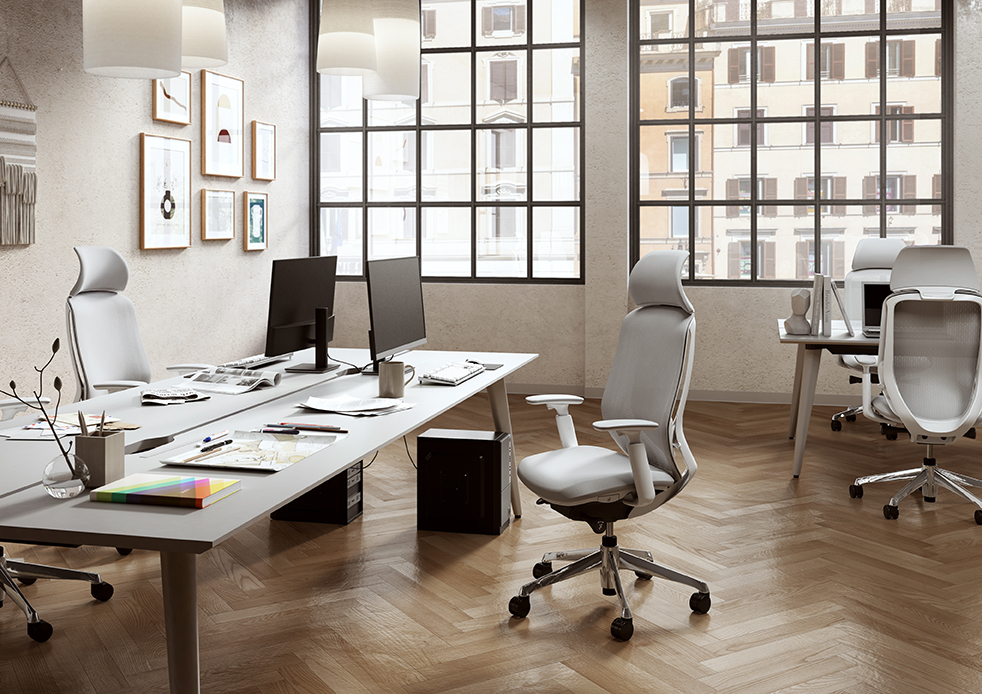
The Okamura Sylphy is an adjustable swivel task chair launched in 2014 , designed to solve a problem most shared-office furniture ignores: no two bodies are shaped alike. The chair is built around a "Back Curve Adjustment" mechanism that adapts the backrest curvature to suit various body types , allowing a single model to deliver personalized lumbar support across a diverse workforce. The Sylphy has stood since 2014 as a testament to Okamura's study of ergonomic variation , combining Japanese engineering rigor with a philosophy of quiet, intuitive innovation. It sits in the mid-tier of Okamura's lineup—below the flagship Contessa Seconda but offering far more adjustability than entry-level models—and has earned a Good Design Award in 2014 .
At a glance
Brand | Okamura Corporation |
|---|---|
Designer | Shoichi Izawa, Okamura Design Division |
Year introduced | 2014 |
Materials | Multi-density foam seat cushion; mesh or fabric backrest options ; resin or aluminum base |
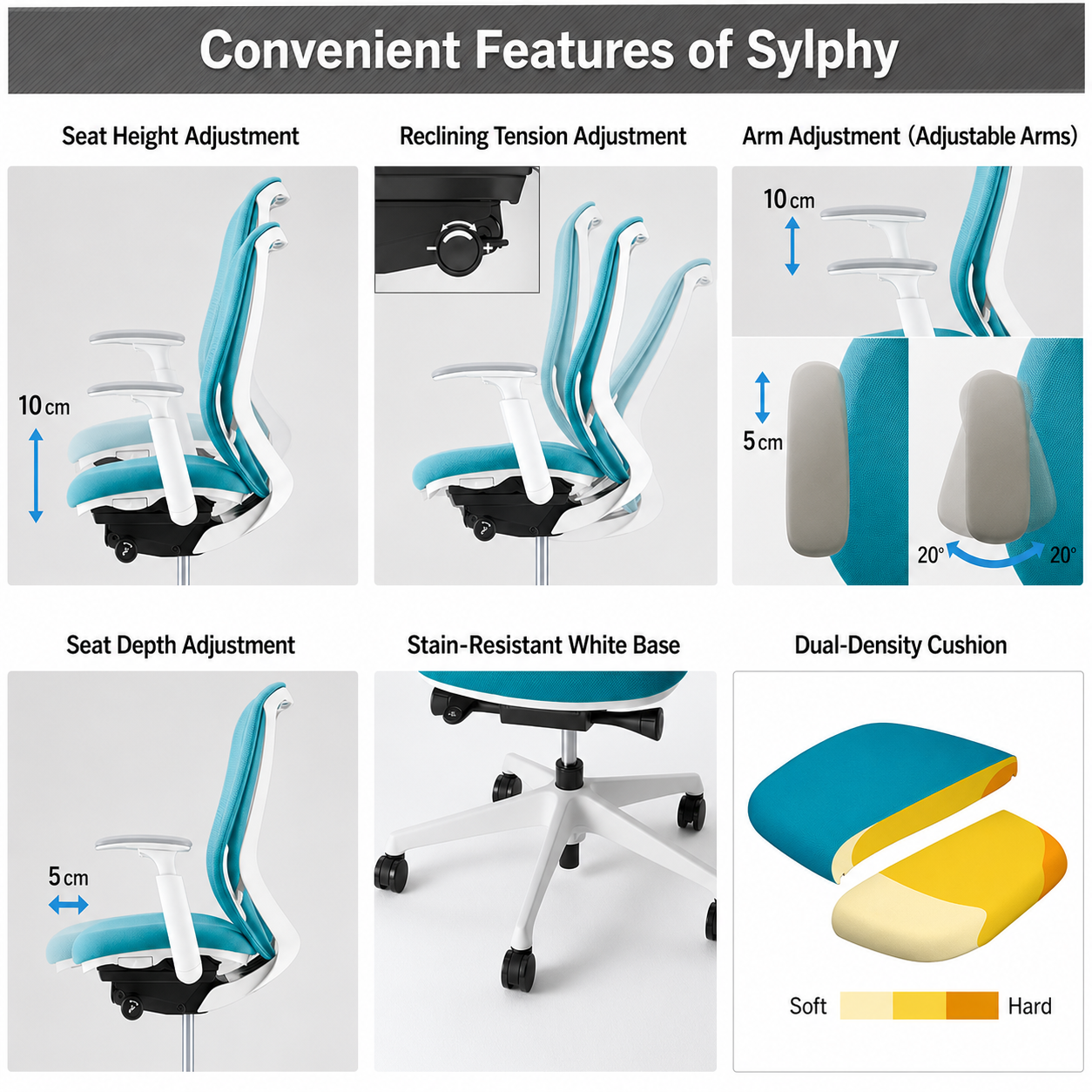
Key adjustments | Back-curve adjustment, seat height (130 mm range), seat depth (50 mm), recline tension, recline/tilt lock (up to 23° recline or 10° forward tilt) ; optional 3D armrests |
Weight capacity | 275 lbs (124 kg) |
Certifications | BIFMA X5.1 ; GREENGUARD (low chemical emission) |
Warranty | Covered under Okamura's global warranty (varies by region; typically multi-year on structural components) |
Price tier | Mid-range (varies by market and configuration) |
The brand & its philosophy
Okamura Corporation has been developing workplace furniture for over 75 years, building a reputation in Japan and globally for engineering-led design and rigorous quality control. Okamura's products and experiences are created with an "extraordinary level of sensitivity and precision," aiming for customers to experience "the quiet amazement of Okamura quality."
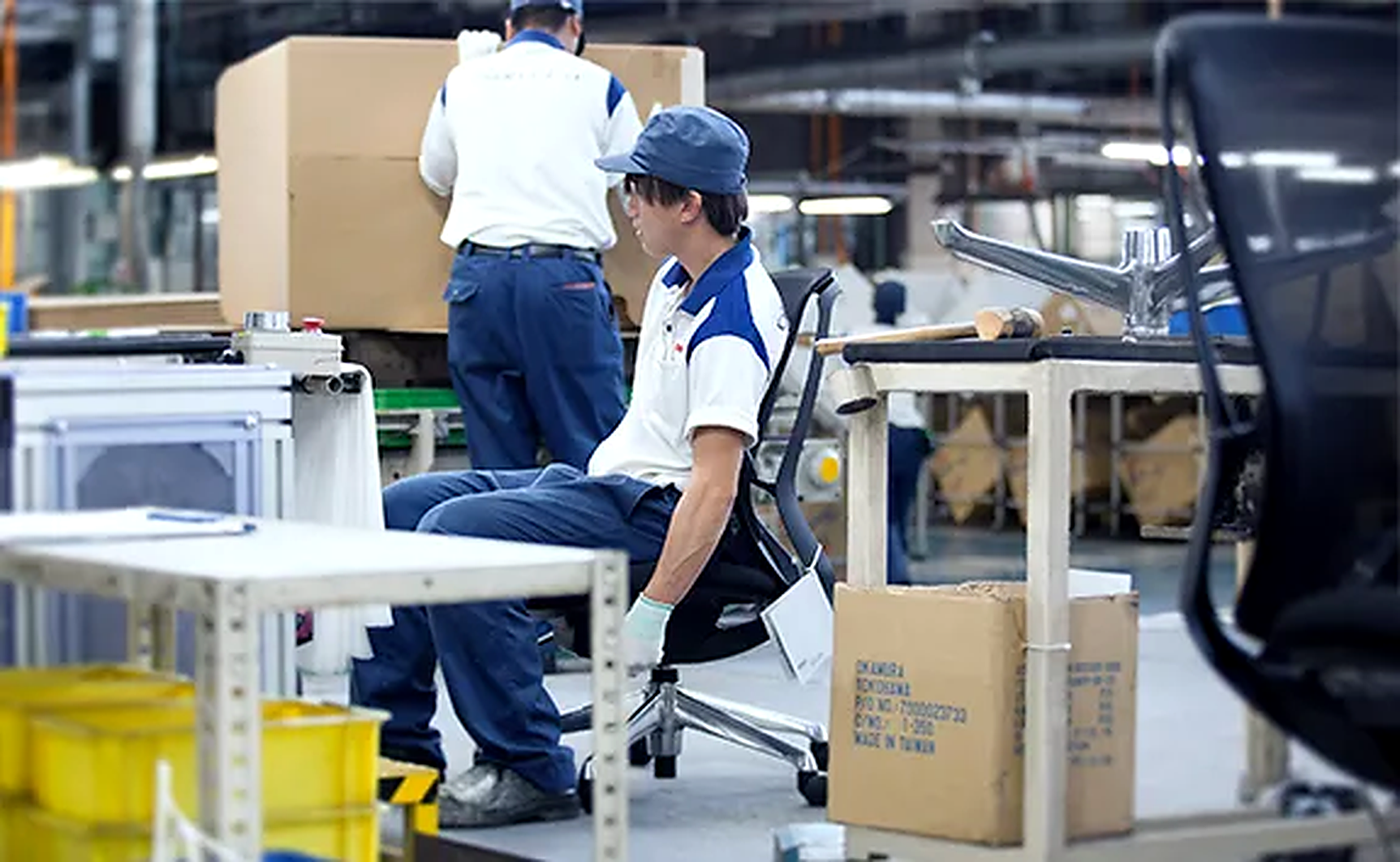
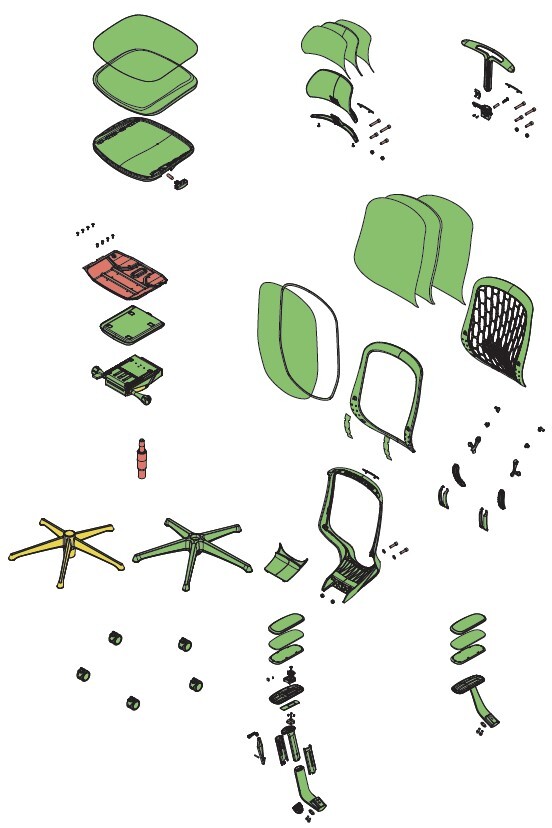
The brand's approach prioritizes longevity, modularity, and adaptability. Every part of the Sylphy chair is designed to be easily recycled after use, and each chair is assigned a unique identification number so that any part can be replaced in the event of wear or damage. This philosophy extends to the Sylphy's design brief: create a single chair model that fits everyone, rather than offering dozens of SKUs for different body types.
The designer and the design story
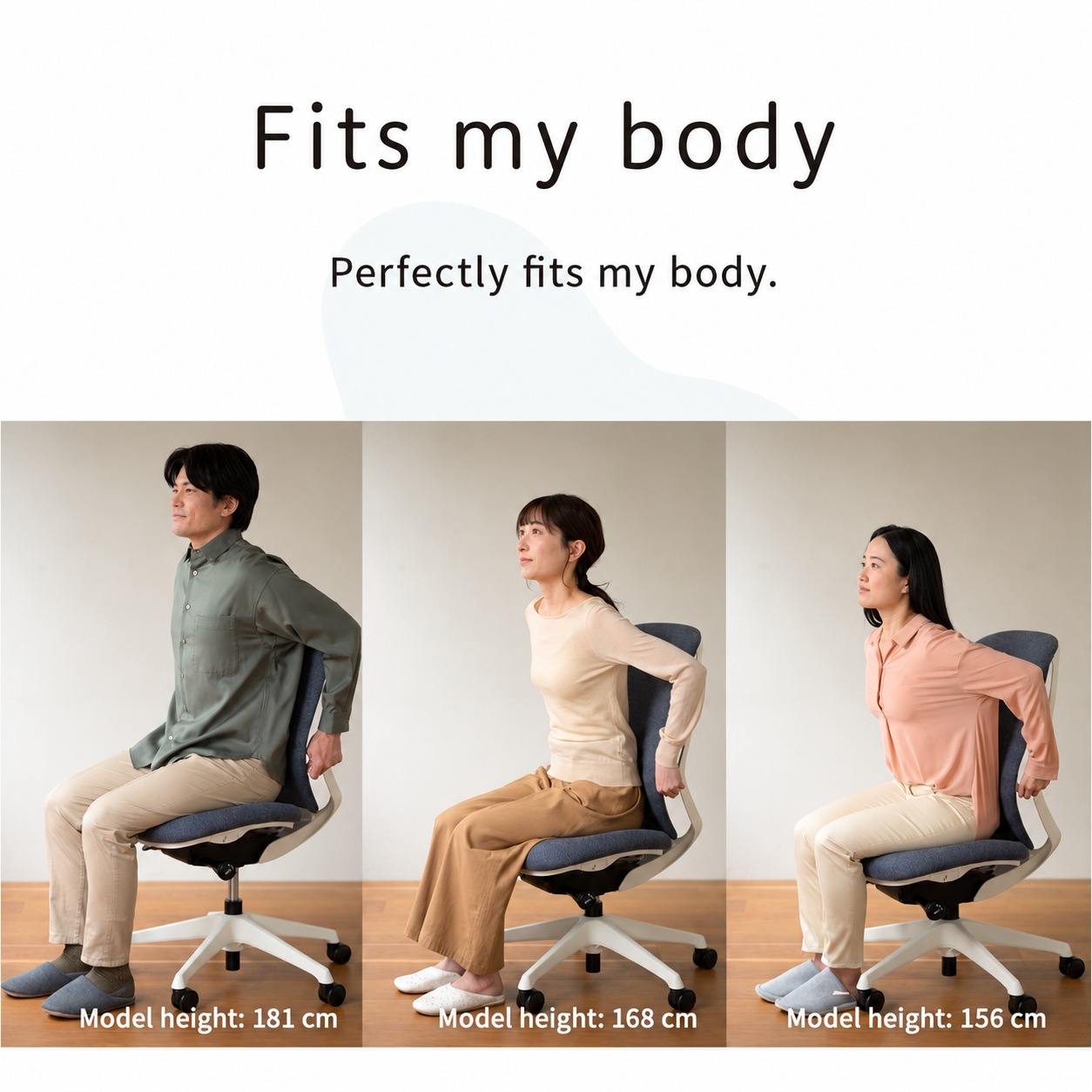
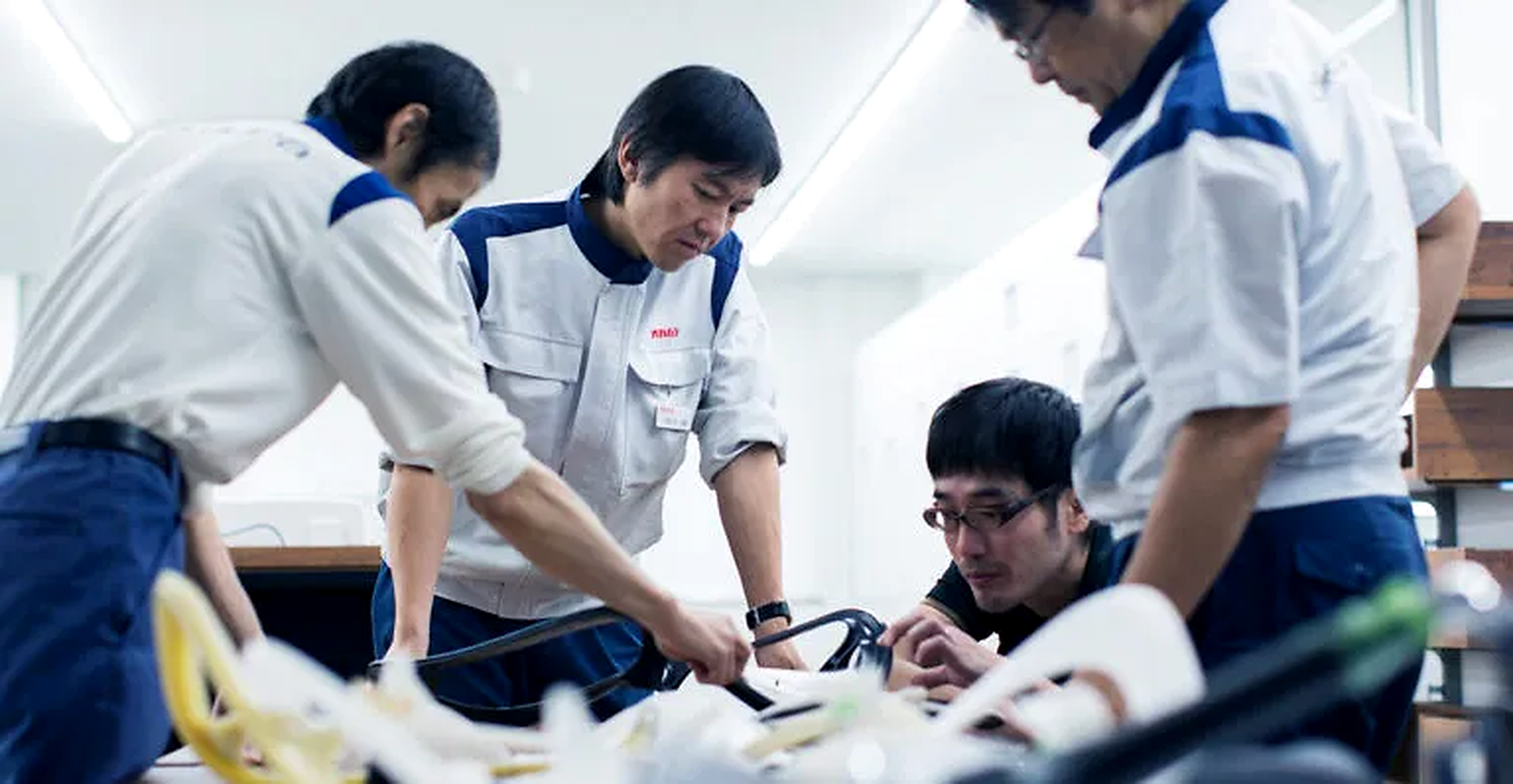
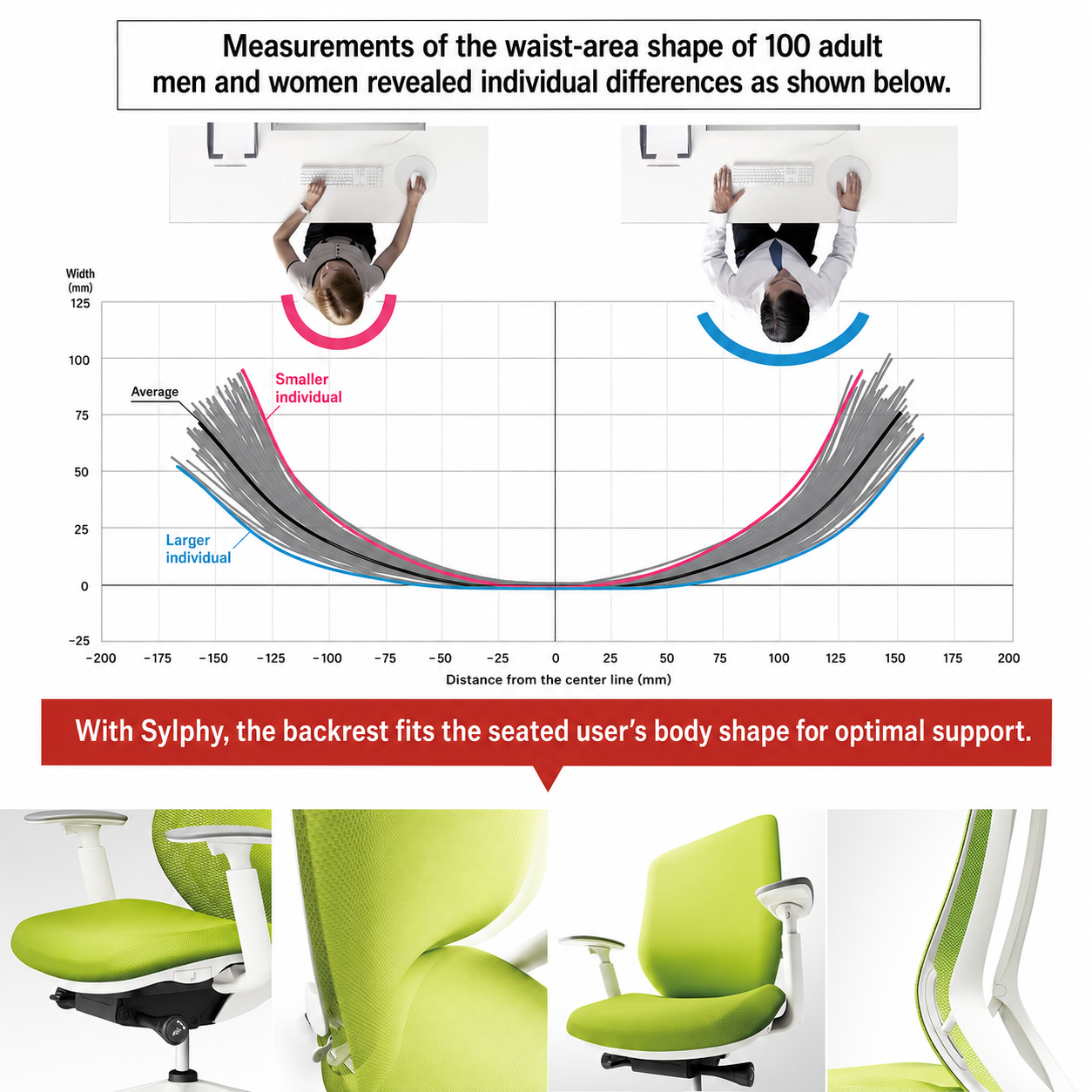
The Sylphy was designed by Shoichi Izawa of Okamura's in-house Design Division , working within the company's tradition of user-centered research and iterative prototyping. The design process involved measuring the waist circumference of 100 people to map the variance in torso shapes and lumbar curves across different builds.

The chair's design introduces a back-curve adjustment that synchronizes with the user's physical profile, reflecting Okamura's philosophy of "quiet innovation" —features that solve real problems without unnecessary complexity. The resulting mechanism is operated by simple side levers that can be adjusted in seconds, allowing each user to dial in their ideal fit without tools or guesswork.
Design language & aesthetics
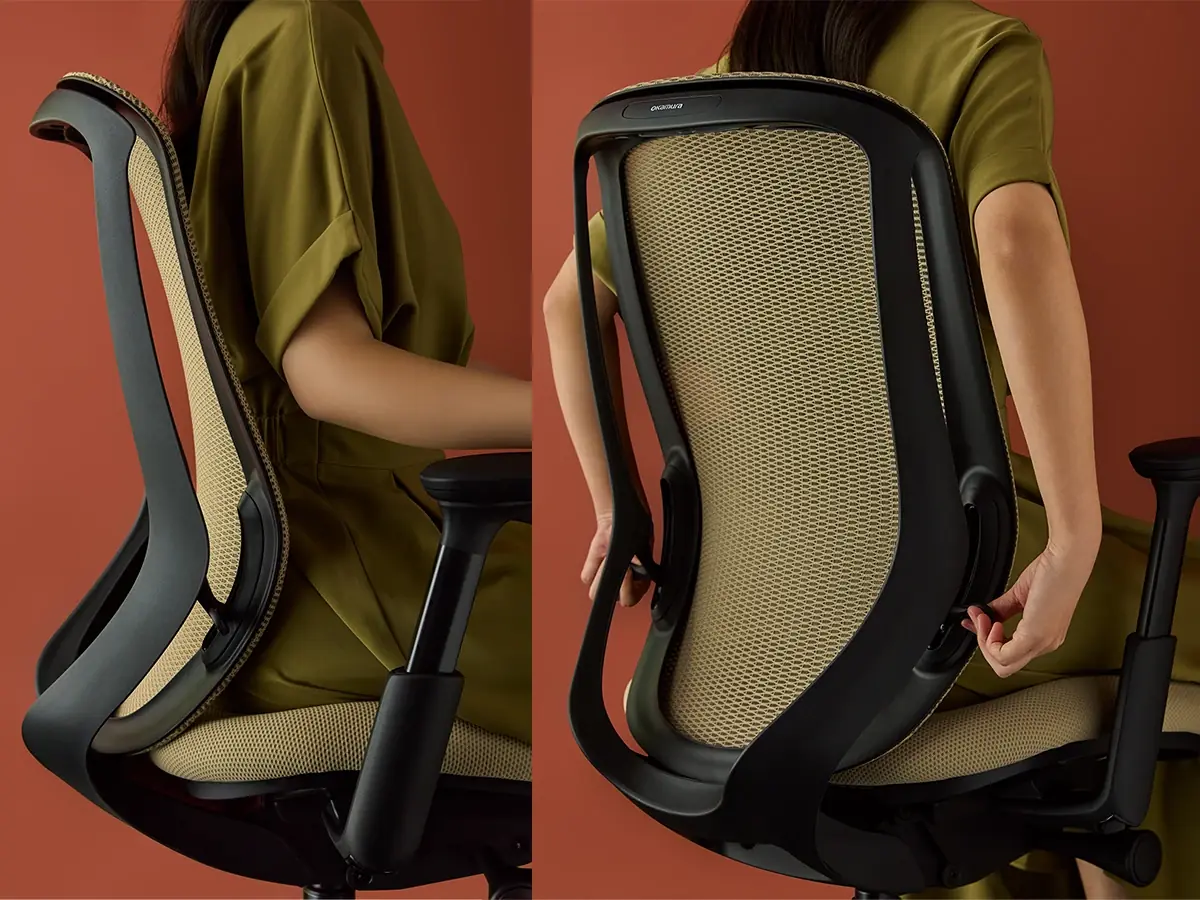
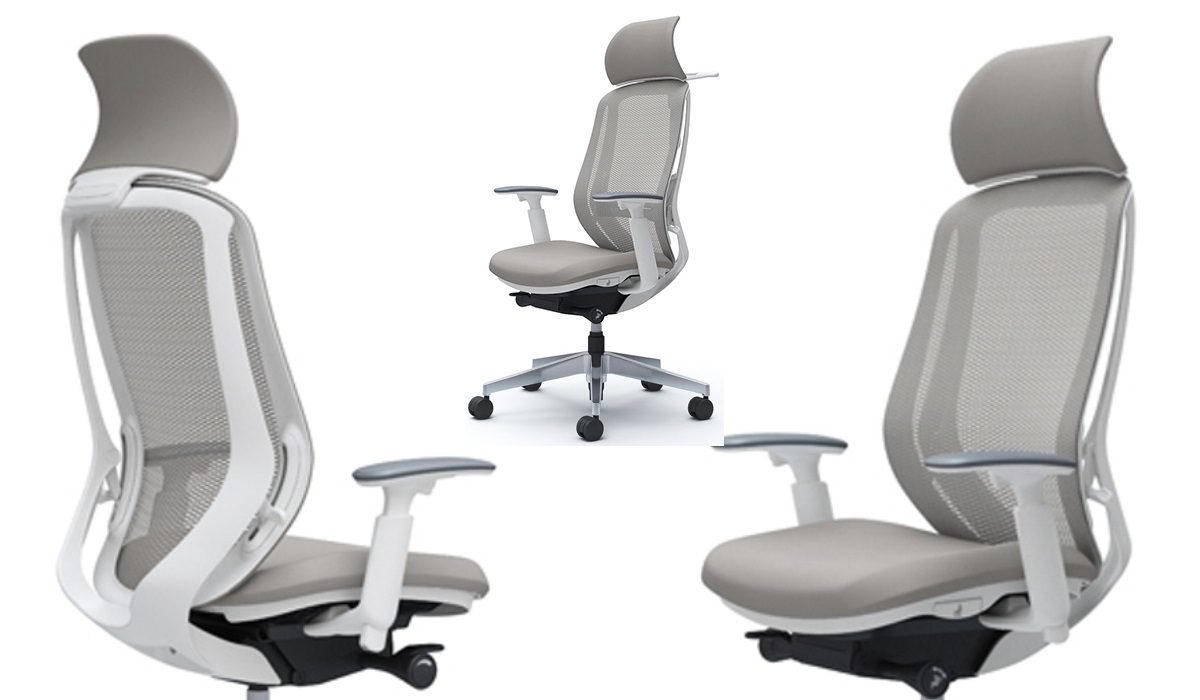
The Sylphy's aesthetic is understated and functional, with organic curves that mirror the human form. The backrest frame was designed to bend slightly with the motion of your body, achieved through a unique double-structured frame joined by minimal touchpoints; the supple inner frame contacts your back directly, while the outer frame provides structural durability and strength .
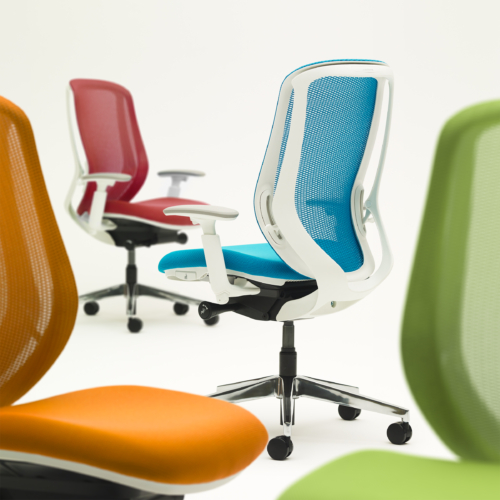
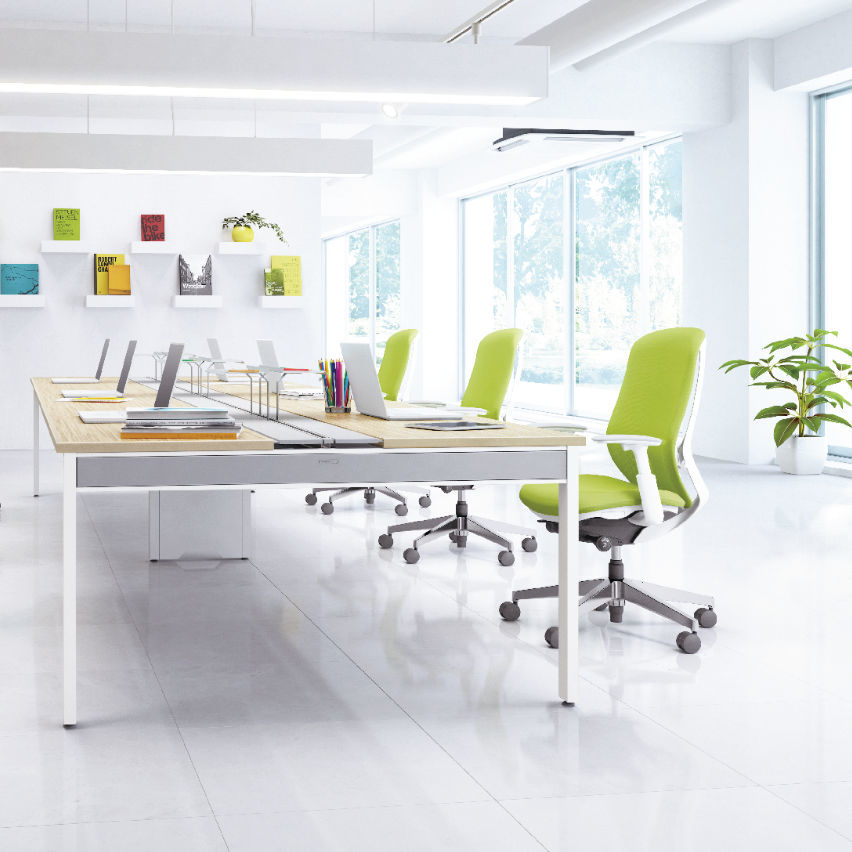
An extensive color lineup includes unobtrusive colors that blend quietly into their surroundings, ensuring that Sylphy fits in with different tastes and spaces —a deliberate choice for corporate environments where one chair model must serve many users. The overall silhouette is lighter and more approachable than Okamura's executive-tier Contessa line, with sculpted lines that balance visual softness and technical credibility.
Ergonomics & how it supports the body
The Sylphy's core ergonomic innovation is its Body Curve Adjustment, which takes just seconds to customize: pushing down the side levers broadens the curve for a more relaxed fit (ideal for larger builds), while pulling the levers up forms a narrower curve for a firmer fit (ideal for smaller builds) . This addresses a fundamental issue in shared seating: lumbar support that works for one person often feels too aggressive or too shallow for another.
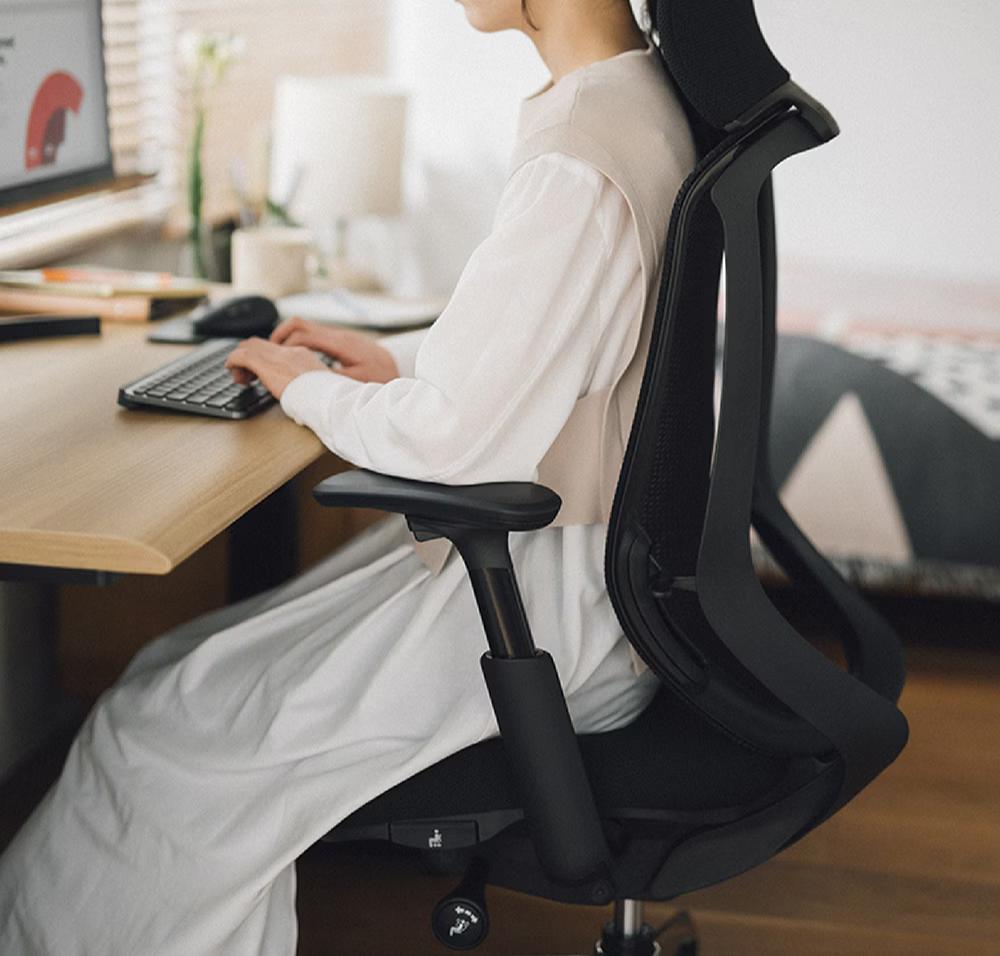
The S-shape back mimics your spine, and the multi-density foam seat cushion is softer in front (reducing pressure on the thighs) and firmer in back for enhanced hip support . The forward-tilt function tilts the pelvis up to maintain the natural S-curve of the spine, reducing lower back strain during prolonged focused work like writing or coding. By evenly distributing body pressure, the Sylphy limits the possibility of deep-vein thrombosis (DVT) during long sessions.
Key adjustments & mechanisms
The Sylphy offers a comprehensive suite of adjustments, all operated via intuitive levers and dials:
Back-curve adjustment: Side levers adjust the curve of the backrest for customized lumbar comfort .
Seat height: Adjustable within a 130 mm (5⅛") range via a lever under the seat .
Seat depth: Adjustable within a 50 mm (2") range via a lever on the left side of the seat .
Recline tension: A knob allows users to precisely control recline resistance .
Recline & tilt lock: A dial allows locking in recline of up to 23° or forward tilt of 10° .
Synchro-tilt: The mechanism moves the backrest and seat in sync for increased comfort and support, with both standard reclining and forward-tilt functions in free-flow or locked positions .
Armrests (optional): 3D-adjustable arms with height (100 mm range), depth (50 mm), and angle (up to 20°) adjustments .
Materials & build quality
The seat cushion uses three softness levels (three types of urethane with different density) for comfort over long periods , with the gradated foam designed to balance immediate softness and long-term postural support. The mesh backrest is tensioned across the double-frame structure, allowing flex without sagging.
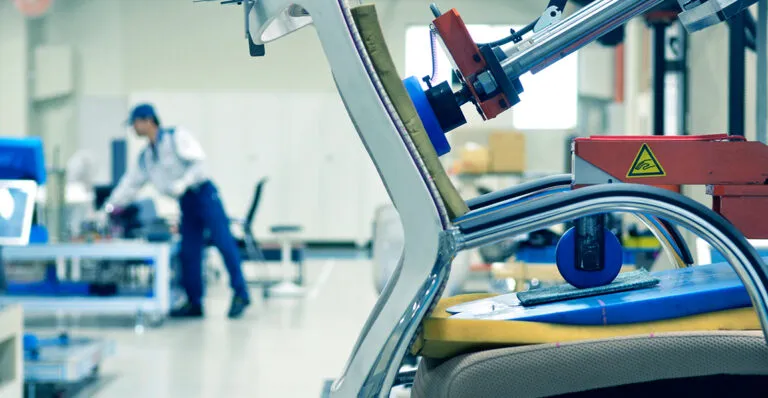
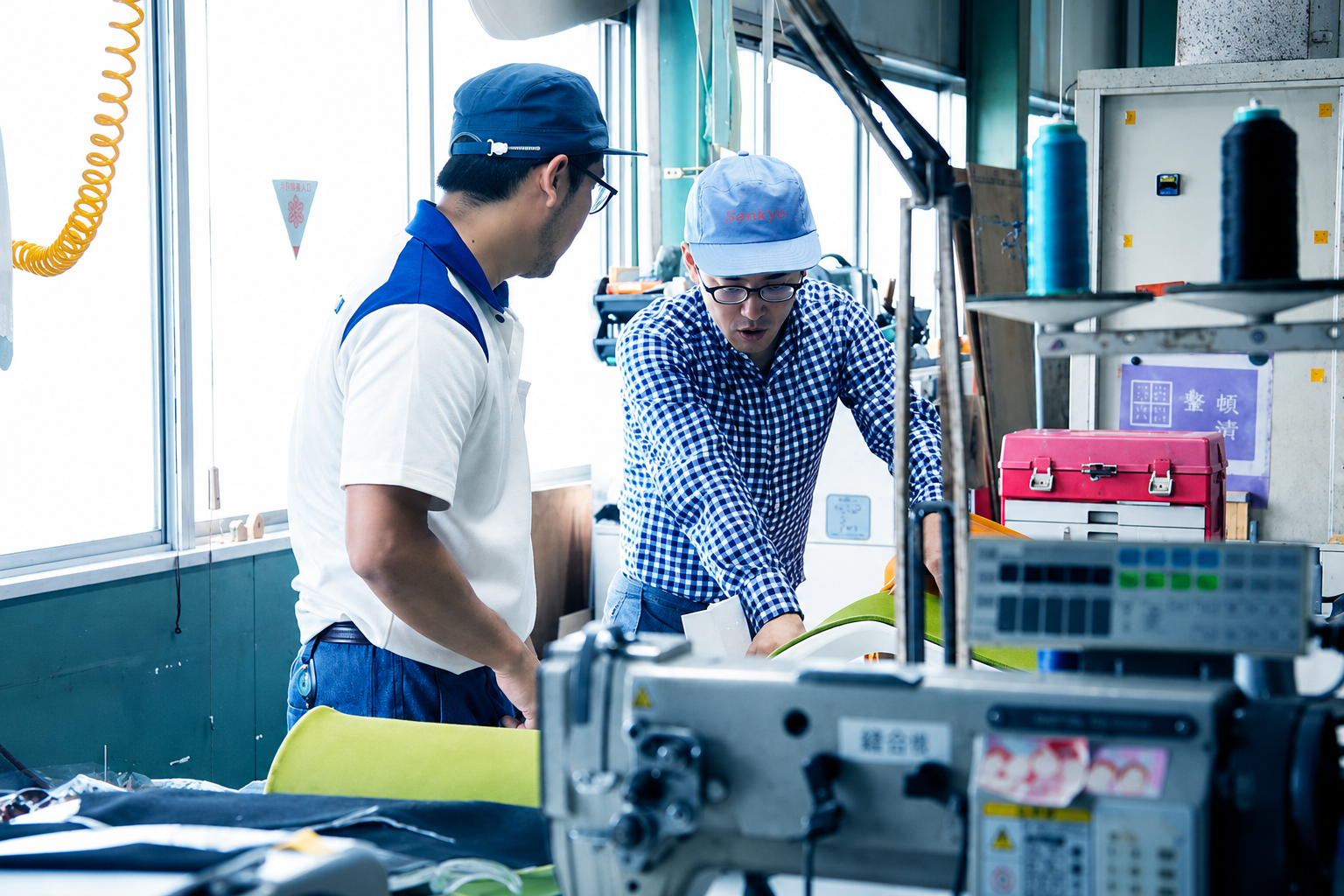
The chair is made up of 30% recycled materials in the aluminum and resin parts, and the entire chair is 100% recyclable . The 60 mm-diameter casters minimize resistance when moving while seated, reducing strain on the lower back; soft casters with floor-protecting rubber are suitable for hard flooring . Build quality reflects Okamura's manufacturing heritage, with tight tolerances and consistent finishing across units.
Sitting experience — what it actually feels like day to day
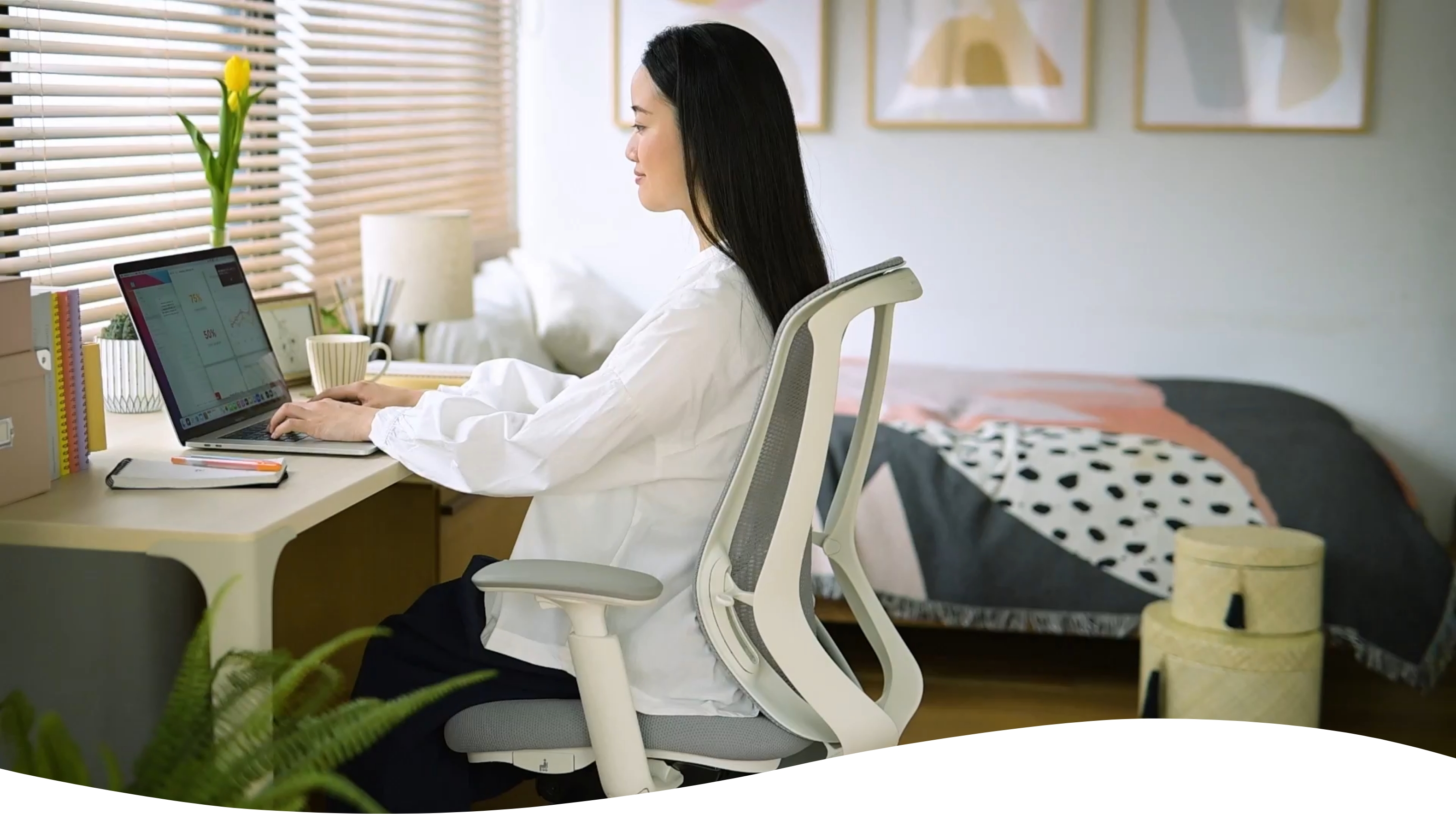
Users consistently report that the Sylphy feels approachable and intuitive from the first sit. One owner described the chair as offering "superb comfort, forward-leaning support, and an accessible price point, making it a great value" , noting that it provides good support for forward-leaning postures and is comfortable to sit on .
The back-curve adjustment is the standout tactile feature: it requires no tools and delivers immediate, noticeable change in lumbar contact. Users with wider torsos appreciate the ability to flatten the curve for a more enveloping feel, while smaller users can tighten the curve to prevent the sensation of "floating" away from the backrest. The forward-tilt function is particularly valued by those who lean into their work—writers, developers, illustrators—as it keeps the pelvis neutrally aligned even when hunching slightly forward. The multi-density seat feels plush initially but maintains support over 6–8 hour days without the foam "bottoming out."
Who it's for (and who should skip it)
Ideal for:
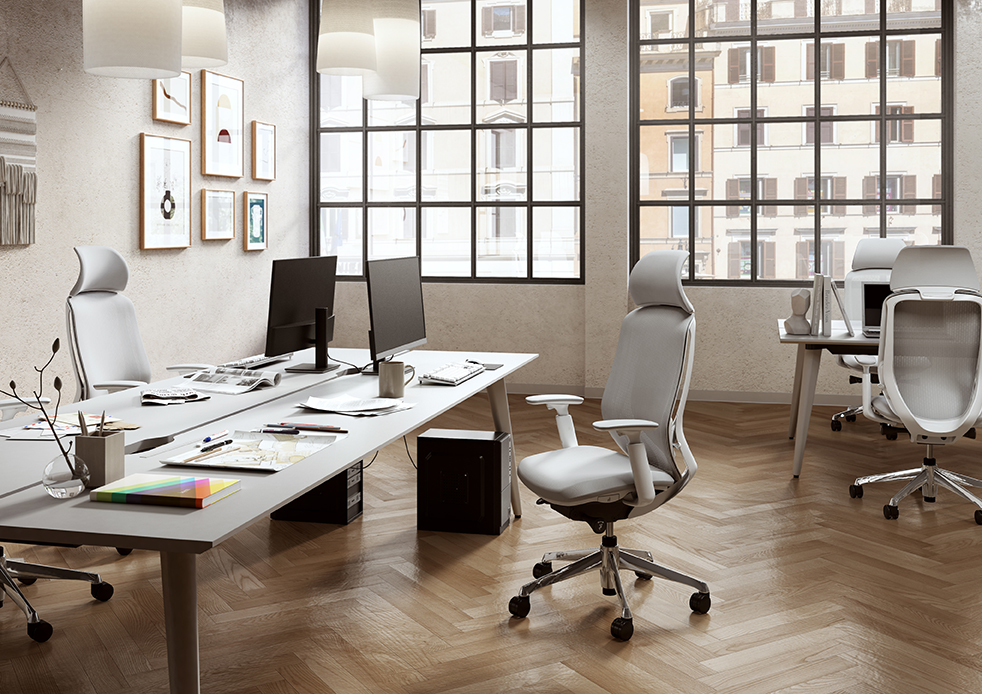
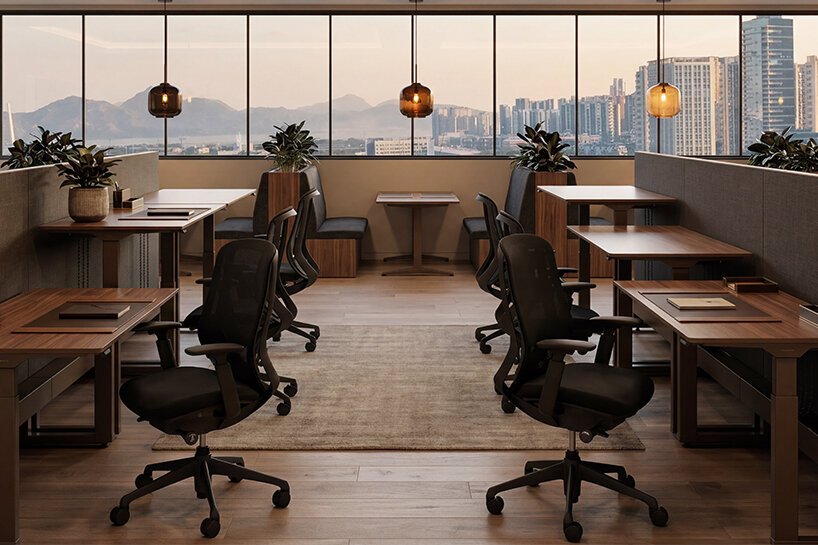
Shared workspaces and hot-desking environments where one chair model must accommodate diverse body types.
Forward-leaning workers (coders, writers, designers) who benefit from the 10° forward-tilt function.
Organizations prioritizing longevity, recyclability, and GREENGUARD certification for healthy indoor air quality.
Users who want comprehensive adjustability without the complexity (or price) of flagship executive chairs.
Skip it if:
You prefer all-mesh construction (the Sylphy's seat is foam, not mesh).
You need a headrest (it's an optional add-on, not standard).
You're seeking the absolute pinnacle of Okamura's engineering—the Contessa Seconda offers more refined mechanisms and materials, albeit at a significantly higher price.
Comparisons with key rivals
Chair | Price tier | Seat / Back | Key adjustments | Standout strength |
|---|---|---|---|---|
Okamura Sylphy | Mid-range | Multi-density foam / Mesh | Back-curve, forward tilt, synchro | Unique adjustable backrest curvature for diverse body types |
Herman Miller Aeron (remastered) | Premium | All-mesh (Pellicle) | PostureFit SL, 8Z Pellicle zones | Iconic design, breathable all-mesh, extensive size options (A/B/C) |
Steelcase Leap V2 | Premium | Foam seat / Mesh or fabric back | LiveBack, seat-edge flex, 4-way arms | Natural Glide recline, broad ergonomic research base |
Okamura Contessa Seconda | Premium | All-mesh or hybrid | SmartOperation, auto-balance | Italdesign pedigree, die-cast aluminum frame, refined aesthetics |
The Sylphy undercuts the Aeron and Leap on price while offering the unique back-curve adjustment neither rival provides. It lacks the Aeron's all-mesh breathability and the Leap's independent seat-edge flex, but it delivers more personalized lumbar shaping and a more accessible control interface.
Sizing, fit & configuration options
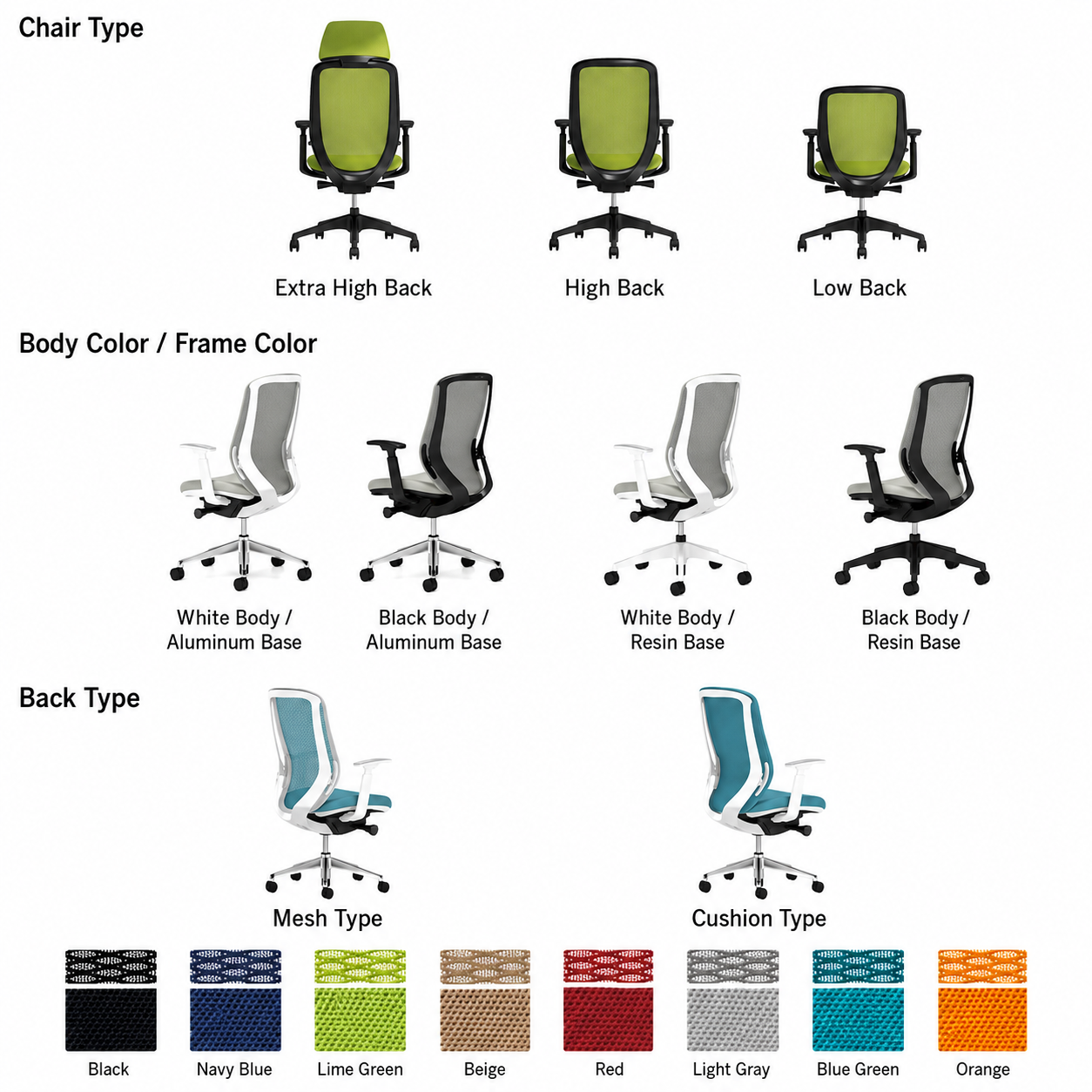
The Sylphy is offered in a single size with broad adjustability to accommodate different body types—a deliberate design choice. Backrest heights available include Low (46.4 cm), High (53.4 cm), and Extra High (72.7 cm); seat height adjusts from 42.6 to 55.6 cm, and seat depth from 41 to 46 cm .
Configuration options include mesh or fabric backrest materials, resin or aluminum base finishes, fixed or 3D-adjustable armrests, and hard or soft casters depending on flooring type. An optional movable headrest is available for high-back and extra-high-back models. Color options span neutral blacks, grays, and whites designed to integrate quietly into corporate environments.
Sustainability & certifications
The Sylphy is made up of 30% recycled materials in the aluminum and resin parts, and the chair is 100% recyclable . It carries a GREENGUARD certification for low chemical emission , making it suitable for LEED-certified buildings and health-conscious workplaces.
The chair has passed third-party testing in accordance with BIFMA X5.1 standards , the North American benchmark for commercial seating safety and durability. Each chair is assigned a unique identification number, and any part can be easily replaced , extending product life and reducing waste. Okamura's commitment to modularity and repairability aligns with circular-economy principles.
Maintenance, durability & warranty
The Sylphy is built for commercial use and requires minimal maintenance beyond periodic wipe-downs and occasional caster cleaning. The Sylphy is covered under Okamura's global warranty , which varies by region but typically includes multi-year coverage on structural components and mechanisms. If Okamura finds the product defective, it will repair, replace, or readjust the defective parts for free when returned; if replacement with the same model is not possible, the product may be replaced with other products of equal or better performance .
User reports suggest the chair holds up well over years of daily use, with the mesh backrest maintaining tension and the foam seat retaining shape. The modular design and numbered parts simplify servicing and replacement, a practical advantage in fleet deployments.
Pricing, value & where it sits in the market
Pricing varies by market and configuration, but the Sylphy typically sits in the mid-range tier—notably below the Herman Miller Aeron, Steelcase Leap, and Okamura's own Contessa Seconda. One Japanese user noted that the flagship Contessa Seconda was priced around 200,000 yen (beyond their budget), and the Sylphy was the next most comfortable option , offering strong value for focused work.
The chair represents a strategic middle ground: it delivers advanced ergonomic features (adjustable back curve, forward tilt, synchro-tilt) without the premium finish and price of executive models. For organizations outfitting shared workspaces or individuals seeking Okamura engineering on a tighter budget, the Sylphy offers strong return on investment.
Verdict — the bottom line
The Okamura Sylphy succeeds at a difficult brief: creating one chair that genuinely fits diverse body types without resorting to multiple size SKUs. The adjustable back-curve mechanism is more than a gimmick—it delivers real, perceptible improvement in lumbar contact and comfort, and the forward-tilt function serves forward-leaning workers better than most rivals at this price point.
It won't dazzle aesthetically the way the Contessa Seconda does, and it lacks the all-mesh breathability of the Aeron. But it offers thoughtful, intuitive adjustability, solid Japanese build quality, and strong sustainability credentials at a price that undercuts the premium tier. For shared offices, hot-desking environments, and users who value personalized fit over brand cachet, the Sylphy is a quiet, confident choice.
A chair that fits everyone rarely fits anyone perfectly—but the Sylphy comes closer than most, and does so without fuss.
Sources & references
Interested in the Okamura Sylphy?
Check the price on Amazon