Steelcase Leap V2
Two decades of proven ergonomic excellence in one highly adjustable chair
Overview
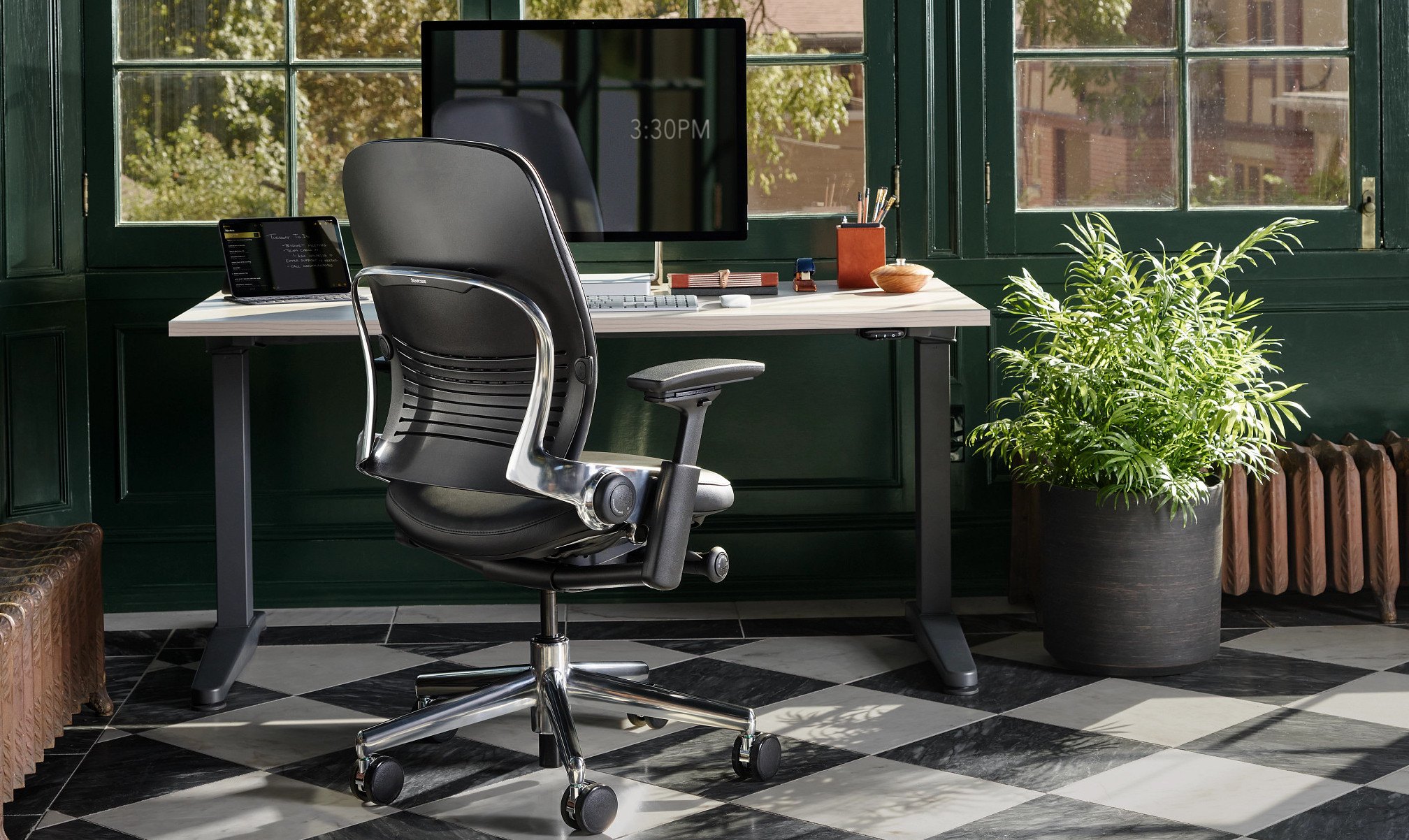
The Steelcase Leap chair launched in 1999 and quickly became Steelcase's most popular chair. In 2006, Steelcase released the improved Leap v2. Nearly twenty years later, the Leap V2 has been one of the top-ranked ergonomic chairs since 2006 , and it remains a benchmark against which all task chairs are measured. The Leap V2 is Steelcase's answer to a deceptively simple question: what if one chair could adjust to fit 95% of users, accommodate nearly every working posture, and do it all without requiring a degree in mechanical engineering?
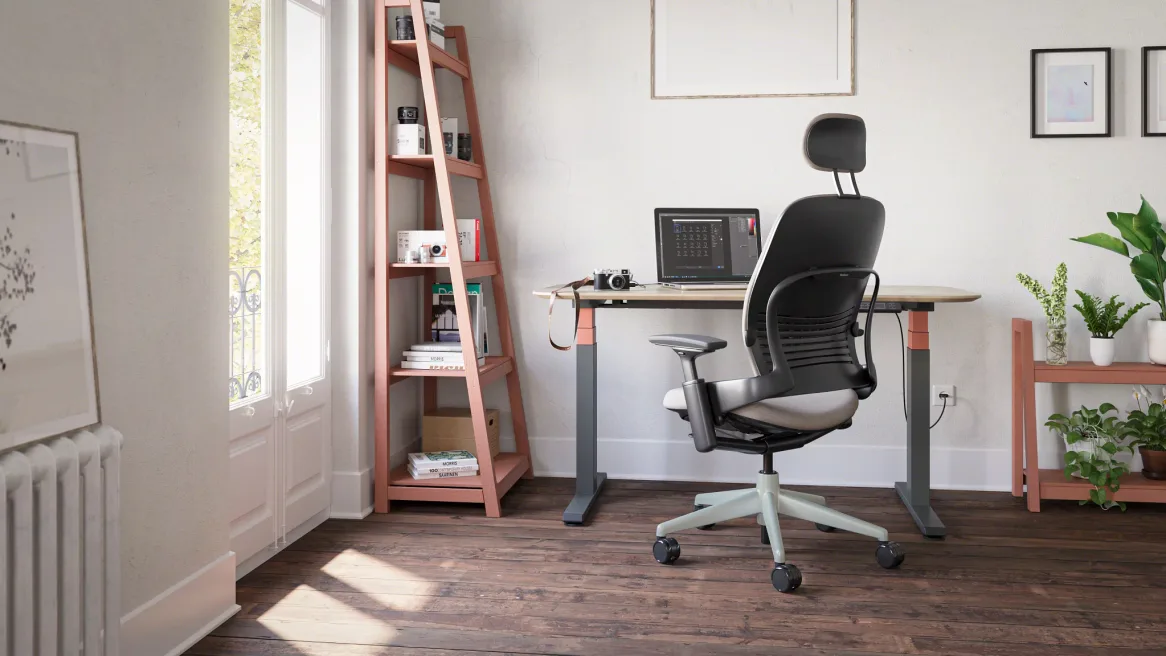
The chair was designed with LiveBack® technology which allows the back to contour and adapt to mimic and support the natural movement of your spine. Pair that with adjustable lumbar height and firmness, seat depth control, 4D arms, and a Natural Glide recline that keeps you close to your desk, and you have a chair that has sold in the millions to corporations, government agencies, and home offices alike. It's not flashy. It won't turn heads. But the Leap V2 does the hard, unglamorous work of keeping your spine supported through eight-hour days, year after year.
At a glance
Brand | Steelcase |
|---|---|
Model | Leap V2 (also known simply as "Leap") |
Year released | 2006 (original Leap: 1999) |
Designer | Steelcase Design Studio (in-house) |
Frame materials | Reinforced nylon, steel mechanism, aluminum or nylon base options |
Seat & back | Molded foam with flexible edge, upholstered fabric or leather; optional 3D knit mesh back |
Key adjustments | Seat height, seat depth, recline tension, 5-position tilt lock, lumbar height, lumbar firmness, 4D arms (height, width, depth, pivot) |
Signature tech | LiveBack® (dynamic spine support), Natural Glide™ recline |
Weight capacity | 400 lbs (standard); 500 lbs (Leap Plus variant) |
Warranty | 12 years (24/7 use) |
Price tier | Premium: ~$980–$1,400 new (base to fully loaded); ~$400–$650 refurbished |
Certifications | BIFMA, GREENGUARD, up to 30% recycled content, up to 98% recyclable by weight, CarbonNeutral® product certification |
The brand & its philosophy
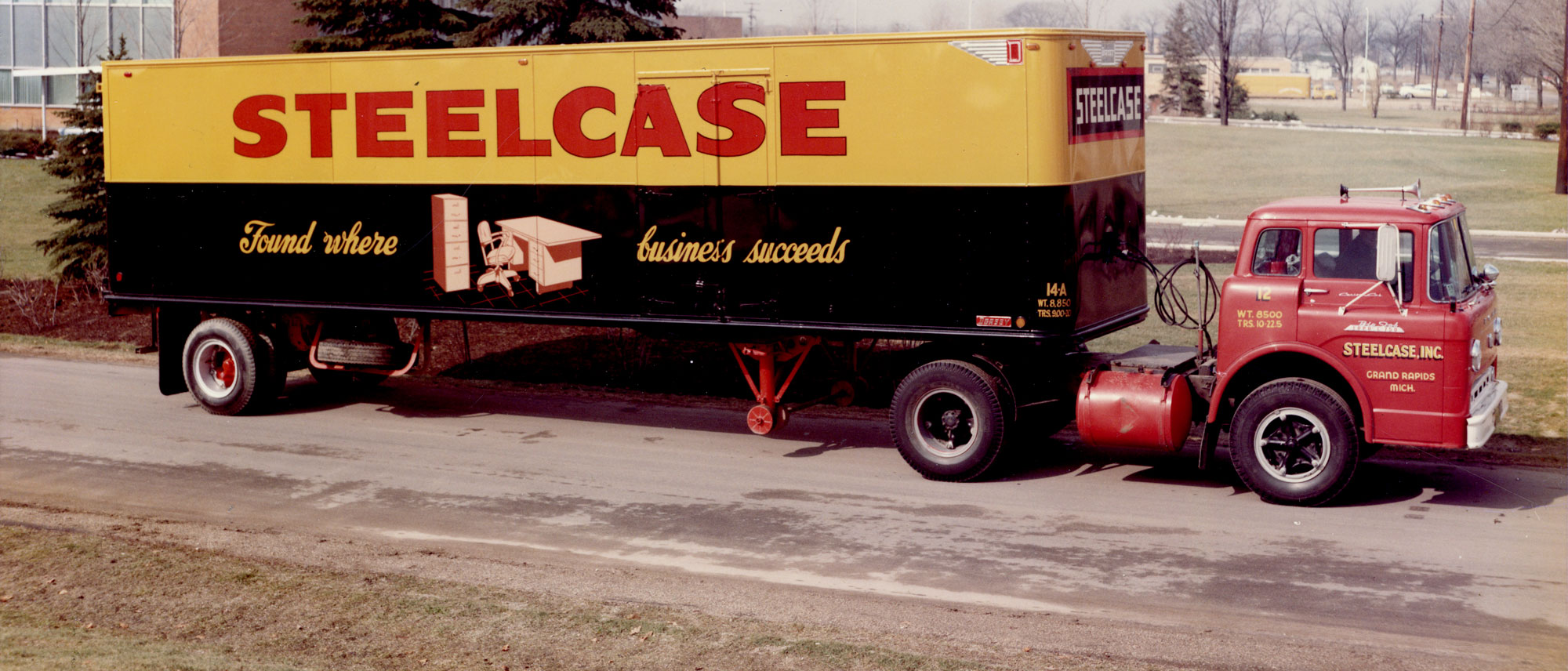
Steelcase was founded in Grand Rapids, Michigan, in 1912 as the Metal Office Furniture Company, promoting steel desks and other furnishings as safer, fireproof alternatives to wooden pieces at a time when smoking in the workplace was common. Over the past century, Steelcase has grown into the world's largest office furniture manufacturer, driven by a philosophy that good design must be grounded in research, not just aesthetics.
Steelcase focuses greatly in research on materials, ergonomics, technology and manufacturing processes, which is maybe why the company was among the first to develop ergonomic office chairs, utilizing all that knowledge gained through research to enhance worker productivity. In 1975 Steelcase brought out the Sensor chair, the first office chair to sense and support the body's movements according to the occupant's height, weight, and preference. That biomechanics-first approach would reach its apex with the Leap.
Steelcase's philosophy is pragmatic: furniture should solve problems, adapt to people (not the reverse), and last long enough to justify its cost. The Leap embodies that ethos—no gimmicks, just serious engineering wrapped in a design that quietly does its job.
The designer and the design story
The Leap was designed in-house by the Steelcase Design Studio in collaboration with external consultants. Leap was four years in development; the company partnered with four universities, 27 different scientists and 11 studies including 732 participants , examining how the spine moves during prolonged computer work. When under development, the Steelcase seating development team took a fresh look at biomechanics and the impact increased computer use was having on workers who could be tethered to their computers for up to nine years of their life.
LiveBack technology allows the upper and lower parts of the backrest to function independently. This was the breakthrough: rather than forcing the spine into a static "correct" posture, the Leap would move with the user. The Steelcase Design Studio and the design consultant that Steelcase with on the Leap Chair design used hand sketching, Graphite and Vectorworks 2D drawing programs, Rhino and ultimately ProE to develop ideas in virtual 3D , though Steelcase's most valuable tool for testing and validating design concepts is physical modeling. To see a chair in full scale, in detail as a real three dimensional object, to walk around it and touch it… is the ultimate test.
It was also reported that Steelcase invested as much as 35 million into the research and development of their flagship chair. The result was the development of the Leap chair, protected by more than 40 issued U.S. utility patents and more than 15 design patents , and a product that has been licensed for use in airline seating and automotive applications. In 2006 (seven years after the original), Steelcase released the Leap V2.
Design language & aesthetics
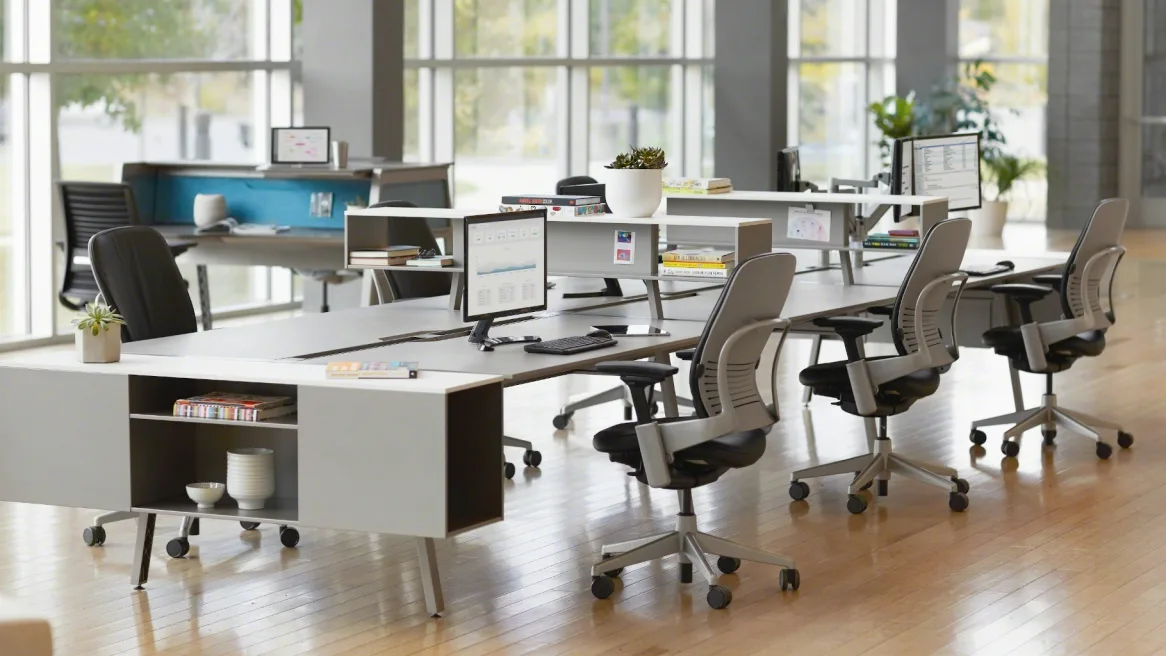
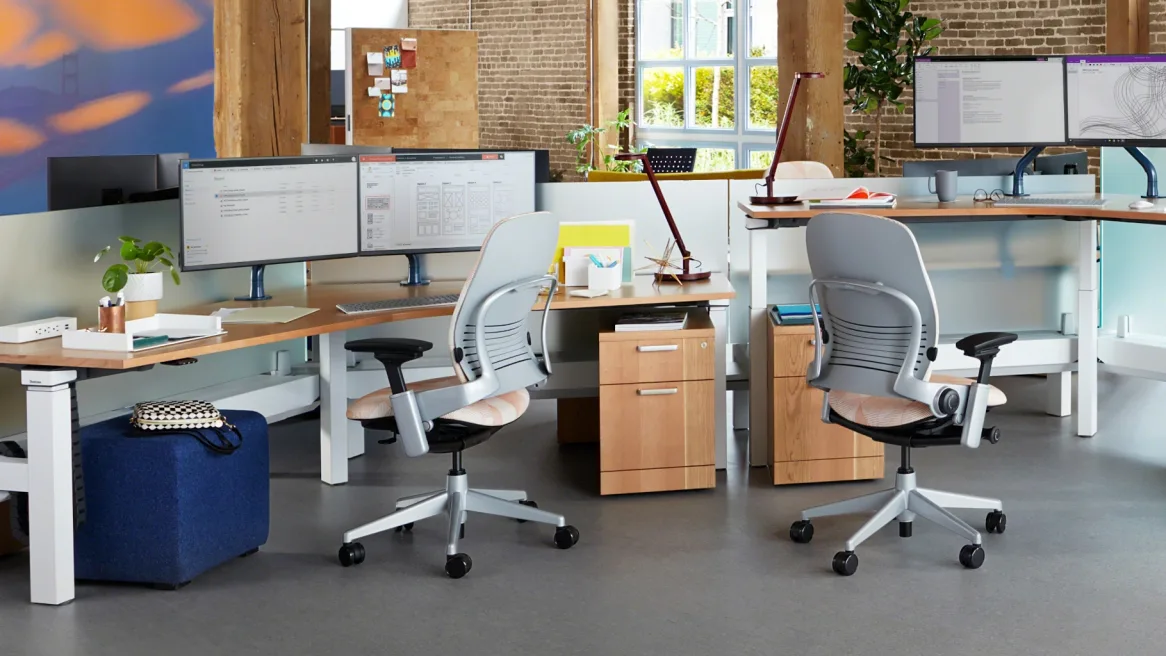
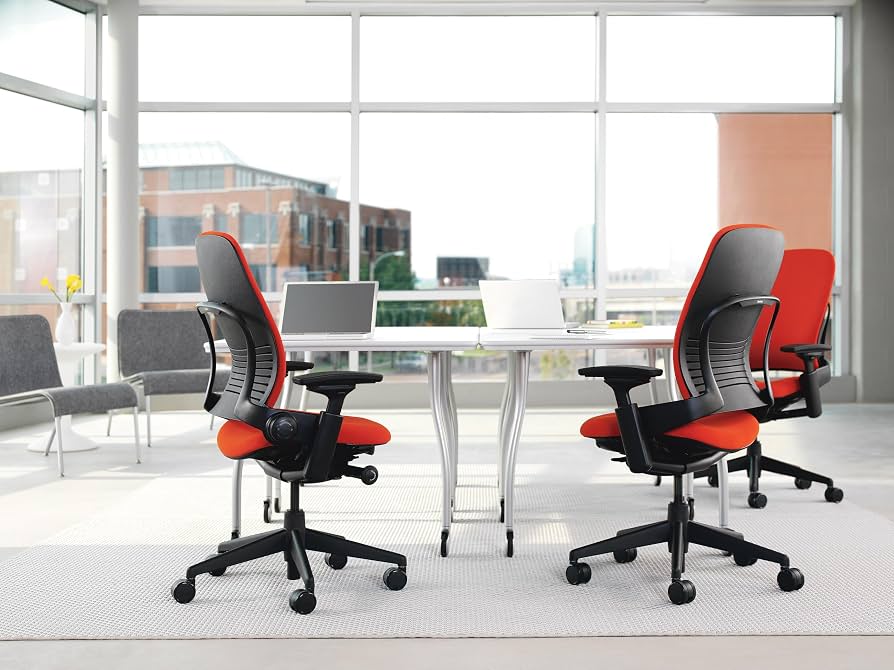
The Leap V2 is not a design object in the Herman Miller Aeron sense—it will not appear in a museum. Its language is corporate-modern: clean lines, understated curves, and a deliberate avoidance of ostentation. While both chairs are modern and professional in appearance, the Gesture leans toward a more minimalist, tech-forward aesthetic. The Leap V2 has a slightly more traditional ergonomic chair look, but still fits beautifully in a clean, contemporary workspace.
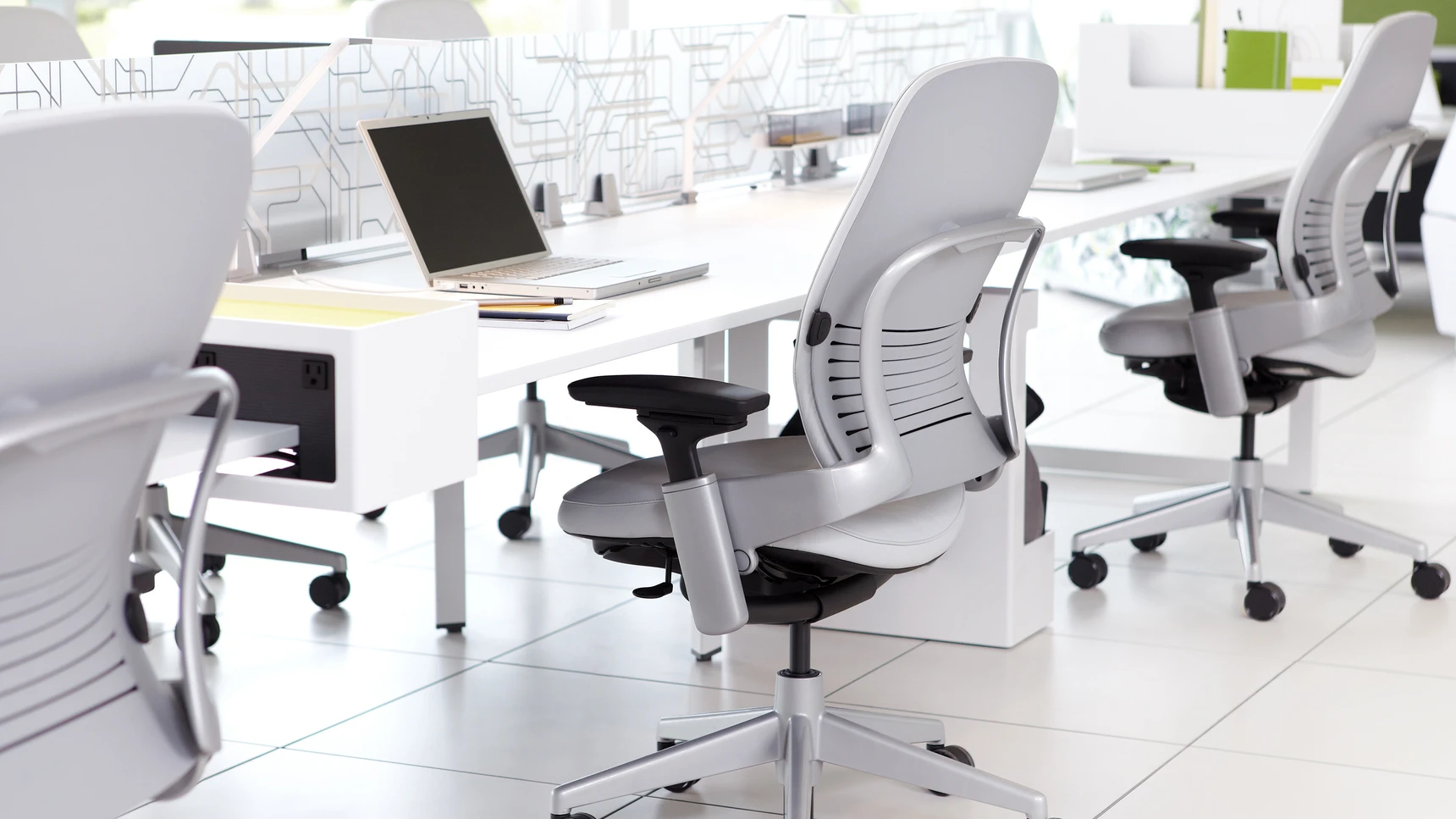
Available in a wide array of Steelcase and Designtex fabrics, leather, vinyl, or optional 3D knit mesh back, the Leap V2 can be spec'd to suit nearly any environment, from startup to law firm. The frame comes in black or platinum, and the upholstered back offers a softer, more approachable presence than all-mesh competitors. It reads "serious work chair" without the sci-fi edge of an Aeron or the sculptural confidence of a Gesture.
Dimensionally, seat size is 19.25" W x 15.75" D, seat height ranges 16" - 20.5" H, back size is 18" W x 25" H, armrest height adjusts 7" - 11" H, and overall size is 24.75" D x 27" W x 38.5" - 43.5" H. It's a one-size-fits-most design that accommodates a broad user range without the sizing tiers required by the Aeron.
Ergonomics & how it supports the body
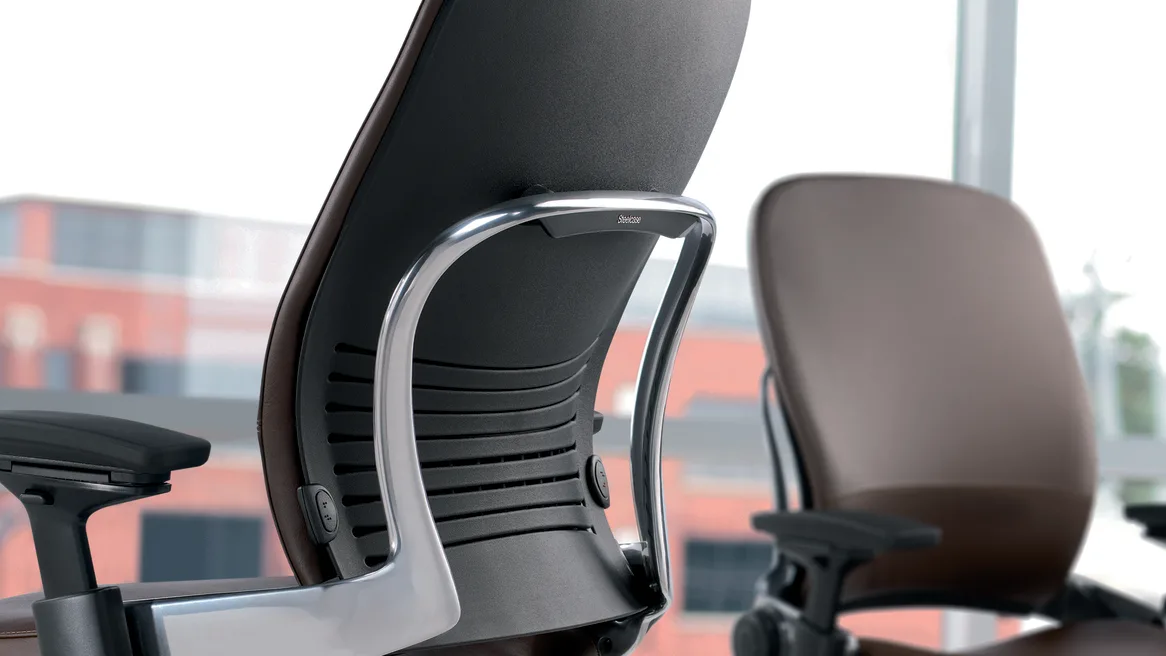
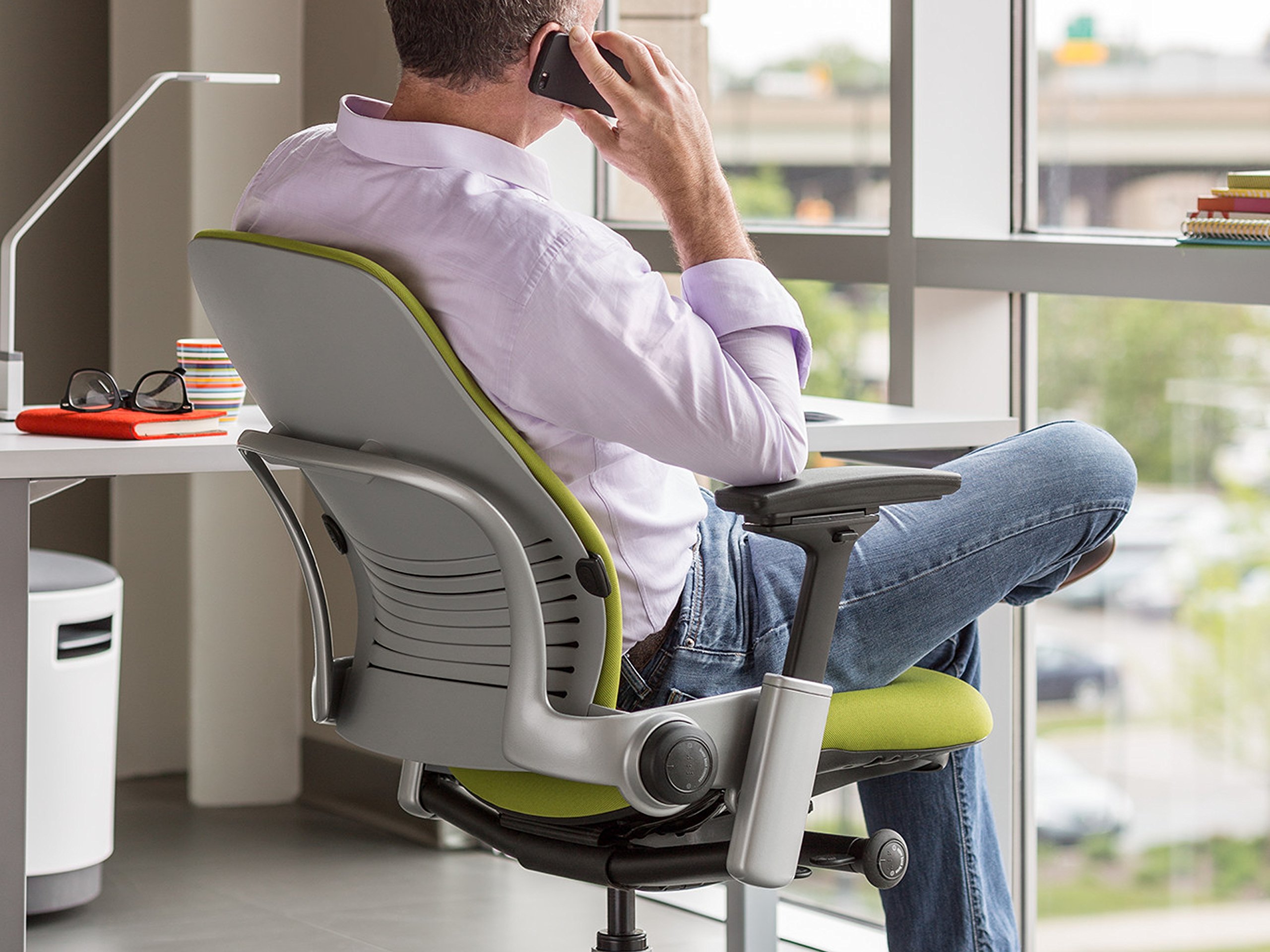
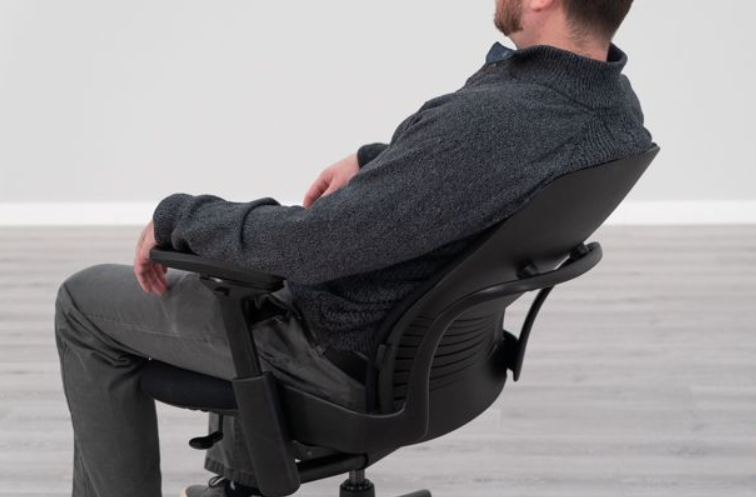
The Leap V2's ergonomic foundation is LiveBack, a patented system in which the upper and lower backrest flex independently to mirror spinal movement. Leap is designed with LiveBack® technology to encourage movement while keeping your full spine supported. When you recline, your upper spine moves backward and your lower spine arches forward. Even for people of identical size, age, and gender, each spine moves differently. The backrest responds dynamically rather than forcing you into a fixed posture.
The Leap v2 is equipped with an adjustable lumbar slide with tension control, allowing users to fine-tune the lumbar pressure to meet their specific needs. A sliding mechanism lets you move the lumbar pad up or down to target the exact point on your lower back that needs support. A separate firmness dial controls how much pressure the pad applies. This combination is the Leap V2's single biggest advantage over the Embody (no adjustable lumbar height) and the Aeron (less positional flexibility). If targeted lower back support is a priority, no other chair in this class comes close.
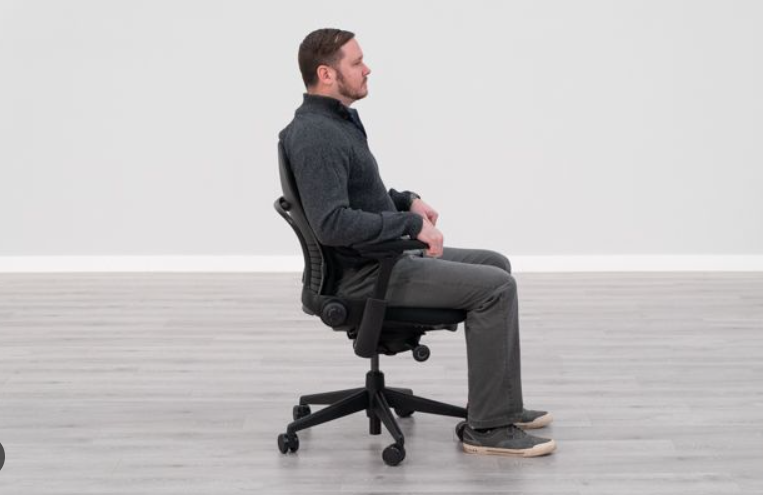
The seat itself features built in air pockets that conform to your body and flexible edges that relieve pressure points under your thighs. Steelcase incorporated a flexible seat pan on both chairs. This allows for the front portion of the seat pan to move with you as you change posture throughout the day. This flexible edge is particularly accommodating for users who sit cross-legged or shift leg position frequently—something the Aeron's rigid frame cannot offer.
In fact, in an independent health and productivity study, we saw a 17.8% increase in productivity for one group after a year. Whether that translates universally is debatable, but it speaks to Steelcase's confidence in the chair's biomechanical pedigree.
Key adjustments & mechanisms
The Steelcase Leap v2 has six main adjustment systems: seat height, seat depth, tilt angle (5 positions), recline tension, lumbar height and tension, and full 3D armrest adjustment. Here's how they work:
Seat height: Pneumatic lever on the right side; standard range for most users.
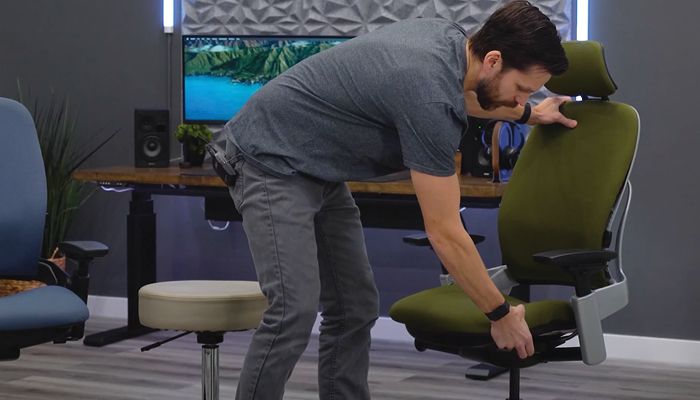
Seat depth: Lift the lever and slide the seat forward or backward to find your optimal seating position. Range of approximately 3 inches to accommodate different leg lengths.
Recline tension: Twist the knob on the front right side of your seat. Turn it clockwise to tighten the recline and counterclockwise to loosen. This controls how much resistance you feel when leaning back.
Tilt lock: Use the paddle to set your preferred recline level with five different positions, ensuring your chair leans back just the way you like it. You can lock upright, at four intermediate angles, or leave it free-float.
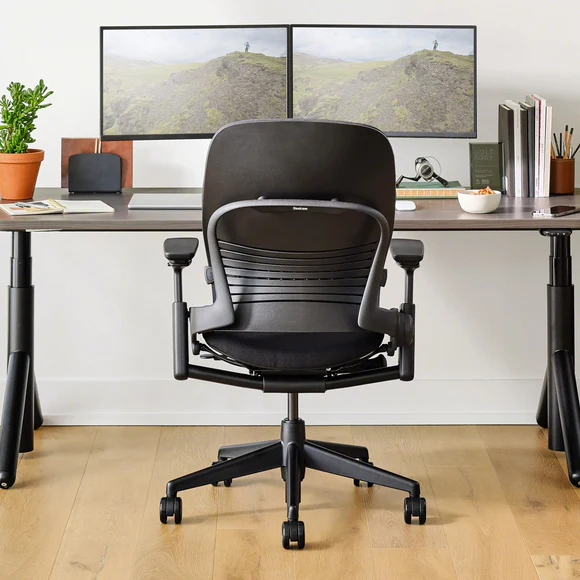
Lumbar height & firmness: Slide the two handles located on the back of your chair up or down, so it fits comfortably with the curve of your lower back. To adjust the tension of your lumbar support, use the adjustment on the right side of your chair frame. Twisting clockwise will tighten the tension and counterclockwise will loosen the tension.
4D armrests: Fully adjustable armrests raise up and down, pivot in and out, shift forward and back and side to side, to provide steady support for your arms so your shoulders can remain in a relaxed position. Button-activated height, push/pull depth, slide width, pivot angle.
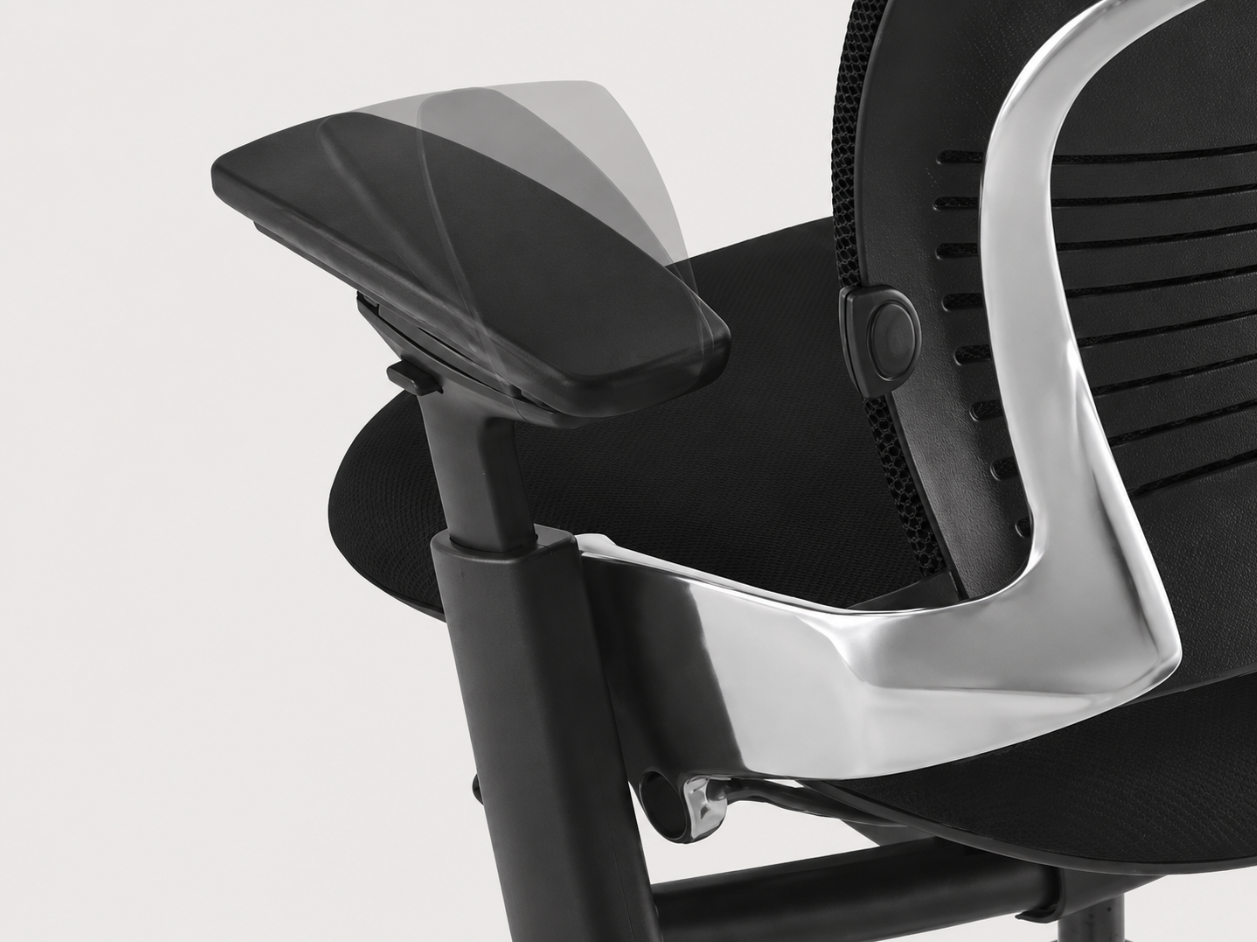
Leap's patented Natural Glide™ adjustment allows the seat to glide forward so you can recline without leaving your optimal zone for seeing and reaching your work. When you recline in most chairs, you move away from your desk. The Natural Glide System slides the seat forward as you recline, keeping your body oriented toward your work surface. You can lean back comfortably without pulling away from your keyboard or losing your sight line to the monitor. When sitting down in the chair, you'll notice that the seat slides forward a little bit as you recline back and then slides forward as you lean forward. As this happens, the back of the seat doesn't sink down a ton — it mostly just goes forward — meaning you're not going to get a rocking motion. Users coming from synchro-tilt chairs may find this takes getting used to, but it's intentional and ergonomically sound.
Materials & build quality
The Leap V2 is built around a steel mechanism housed in a reinforced nylon frame and outer shell. Even though both chairs were built in Mexico, we found the fit and finish to be impeccable. Both the Leap and Gesture were made with a lot of plastics, which was by design. With a focus on the user being able to move throughout the day, high-quality plastics are required to allow for flexing in seats and backrests. Each chair featured some of the best looking plastic components of any chairs tested.
The seat cushion uses molded, high-density foam with flexible edges. Every chair gets a brand new, never sat in, foam seat pad. Our new seat pad is made in the USA of a same high-density molded foam material as the Steelcase OEM pads, but with an added 3/4″ thickness for extra comfort. (This describes Crandall's refurbished process, but gives insight into OEM foam specs.) Some users find the stock Leap seat firmer than competitors; while some users found it to be firm, the seat on this chair still tested as one of the most comfortable in the office. It should only be a deal breaker for those looking for a thick, plush, padded seat.
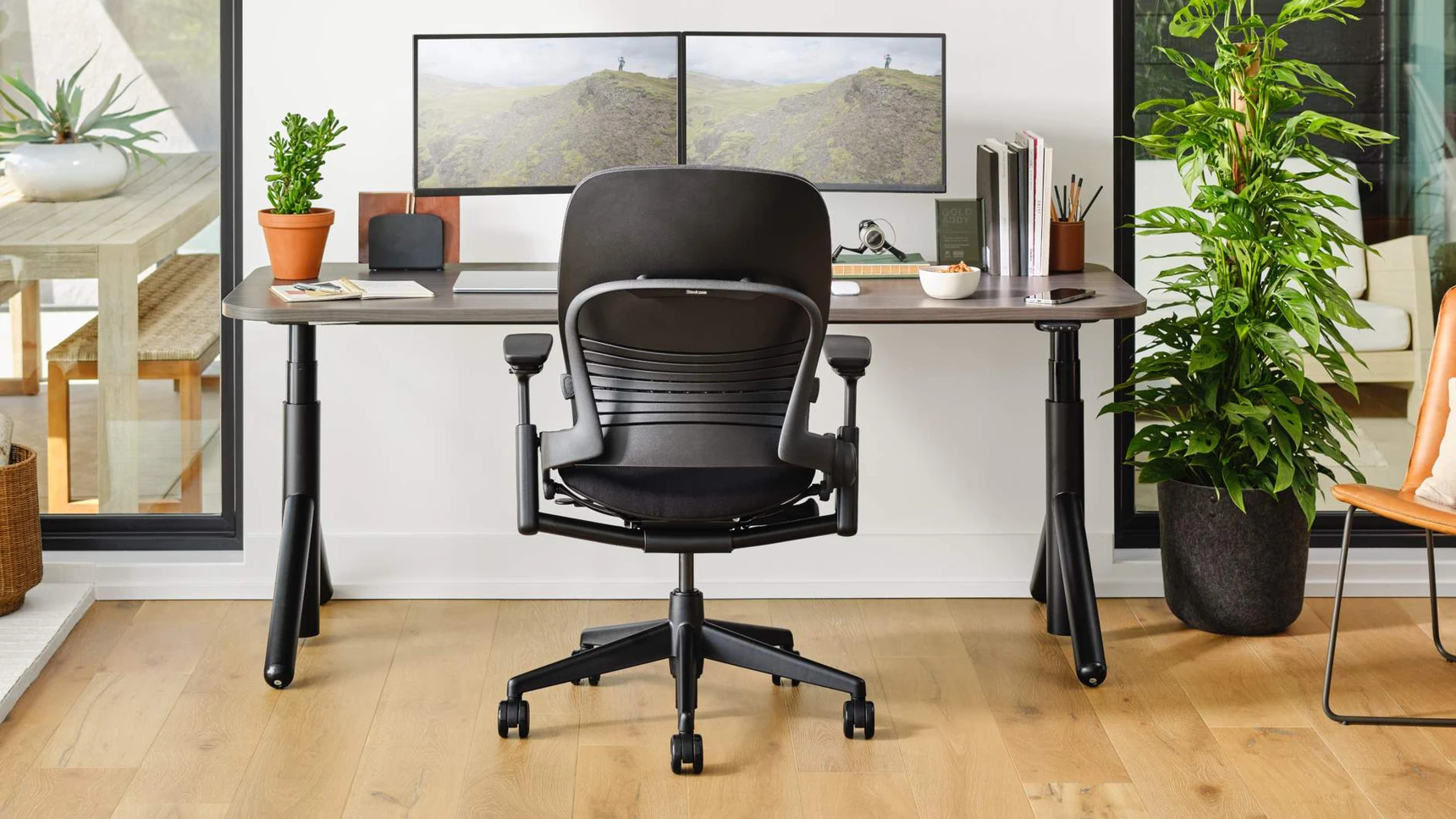
Upholstery options include Steelcase and Designtex commercial-grade fabrics, leather, vinyl, and 3D knit mesh for the backrest. All are specified for contract use and wear well under intensive daily use. The gas cylinder, casters, and arm pads are all replaceable; factory and aftermarket replacement parts are abundantly available.
The chair carries a 400-pound weight capacity and handles 24/7 usage in corporate environments, open offices, and home setups equally well. Refurbished units from 2006—nearly two decades old—still function after remanufacturing. Steelcase backs it with a 12-year warranty, but real-world evidence suggests significantly longer. BTOD regularly receives Leap V2 chairs from 2006 in working condition. Meaning 15–20 years of functional life is entirely realistic with normal office use.
Sitting experience—what it actually feels like day to day
The Leap V2 rewards patience. Out of the box, it may feel neutral—even underwhelming—compared to the immediate cushiness of a gaming chair or the striking mesh suspension of an Aeron. But once you dial in the lumbar height, seat depth, recline tension, and arm position, the chair begins to make sense. The ergonomics of Leap's design is evident through extended use. A comfortable seat mixed with high adjustability allow you to dial the chair to what feel is best.
The Leap chair was our second-ranked overall for back support. Its LiveBack Technology in the backrest allowed for some flexibility, which was nice as you move in the chair. The backrest never feels rigid or punishing; it gives when you shift, then gently returns. The Natural Glide recline keeps your eyeline to the monitor stable, which is invaluable for focused work.
The seat is firm but not hard; I wish Steelcase would experiment with other materials like gels or foams, or at least make the seatpan padding thinner. If the Amia can get away with less foam without feeling less comfy, why can't the Leap? (This is a dissenting opinion from one reviewer.) Most users adapt within a week. The flexible front edge prevents the thigh pressure common to fixed-pan chairs.
Breathability is a known compromise. My back gets fairly warm on the leap v2. Foam and fabric trap more heat than mesh; if you run hot or work in a warm climate, this is a real consideration. The optional 3D knit back helps, but it's not equivalent to full Pellicle mesh.
The headrest on the Leap was an afterthought from Steelcase. The chair wasn't designed with a headrest, which is probably why it doesn't feel as comfortable as other Steelcase chairs like the Steelcase Gesture, which had a headrest come out when the chair was designed. Aftermarket headrests (like the Atlas x Crandall) exist and work reasonably well, but they're band-aids.
Who it's for (and who should skip it)
Buy the Leap V2 if you:
Work long desk sessions (6+ hours daily) and value adjustability over simplicity.
Need precise lumbar control—height and firmness—to address specific lower back pain.
Prefer a cushioned seat and back to mesh suspension.
Want a chair that accommodates varied postures (upright typing, relaxed reading, leaning into Zoom calls).
Value proven longevity and a deep refurbished market.
Sit in a moderate climate or don't overheat easily.
Skip the Leap V2 if you:
Run hot and prioritize breathability above all—go Aeron or another full-mesh chair.
Need a built-in, well-integrated headrest for daily use—consider the Gesture or add an aftermarket solution.
Prefer a plush, soft seat—the Leap is firm and supportive, not squishy.
Want a "set and forget" chair with minimal adjustment—the Leap's strength is also its complexity.
Sit fewer than 4 hours a day—you're paying for adjustability you may not fully exploit.
Want the safest all-around ergonomic chair for long desk days? Choose the Steelcase Leap V2.
Comparisons with key rivals
Feature | Leap V2 | Herman Miller Aeron | Steelcase Gesture |
|---|---|---|---|
Price (new, typical) | ~$1,000–$1,400 | ~$1,700–$2,100+ | ~$1,200–$1,600 |
Seat/Back material | Foam cushion, fabric/leather | Pellicle mesh (full suspension) | Foam cushion, fabric/leather |
Lumbar support | Height + firmness adjustable | PostureFit SL (sacral/lumbar, fixed height) | Firmness adjustable only (no height) |
Armrests | 4D (height, width, depth, pivot) | 3D (height, width, depth) | 360° (height, width, depth, pivot, rotation) |
Sizing | One-size-fits-most | Three sizes (A, B, C) | One-size-fits-most |
Standout strength | Maximum lumbar adjustability, Natural Glide recline | Breathability, iconic design, mesh suspension | 360° arms, integrated headrest option, modern aesthetic |
Warranty | 12 years | 12 years | 12 years |
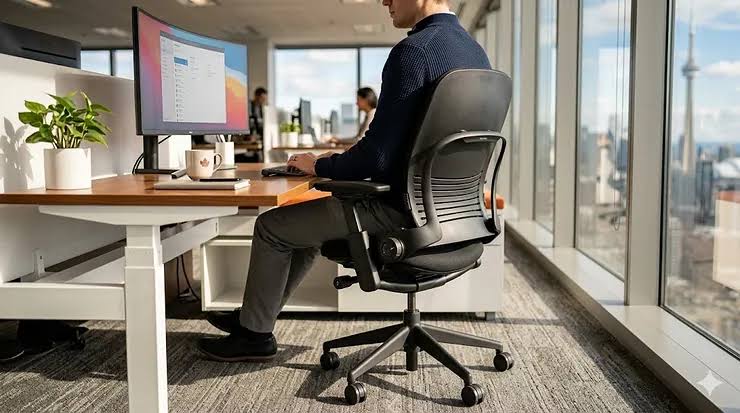
Over the past three years, I have spent countless hours in both the Leap and the Aeron and ultimately, the Leap is the chair for me. (BTOD reviewer.) The Aeron is going to be about $2,100+ fully loaded, compared to the Leap, which is about $1,600 (refurbished for $649), so quite a difference. The biggest difference between the Aeron and the Leap V2 is the seat base. Leap's seat flexes.
Both chairs ranked first and second overall. Get the Leap for seat comfort, easier arm adjustment, and a lower starting price. Get the Gesture for the seat depth dial, wider arm adjustment, and the headrest option. The Gesture's 360° arms are unmatched if you work across devices (laptop, tablet, phone); the Leap's lumbar is unmatched if you need precise lower back tuning.
Sizing, fit & configuration options
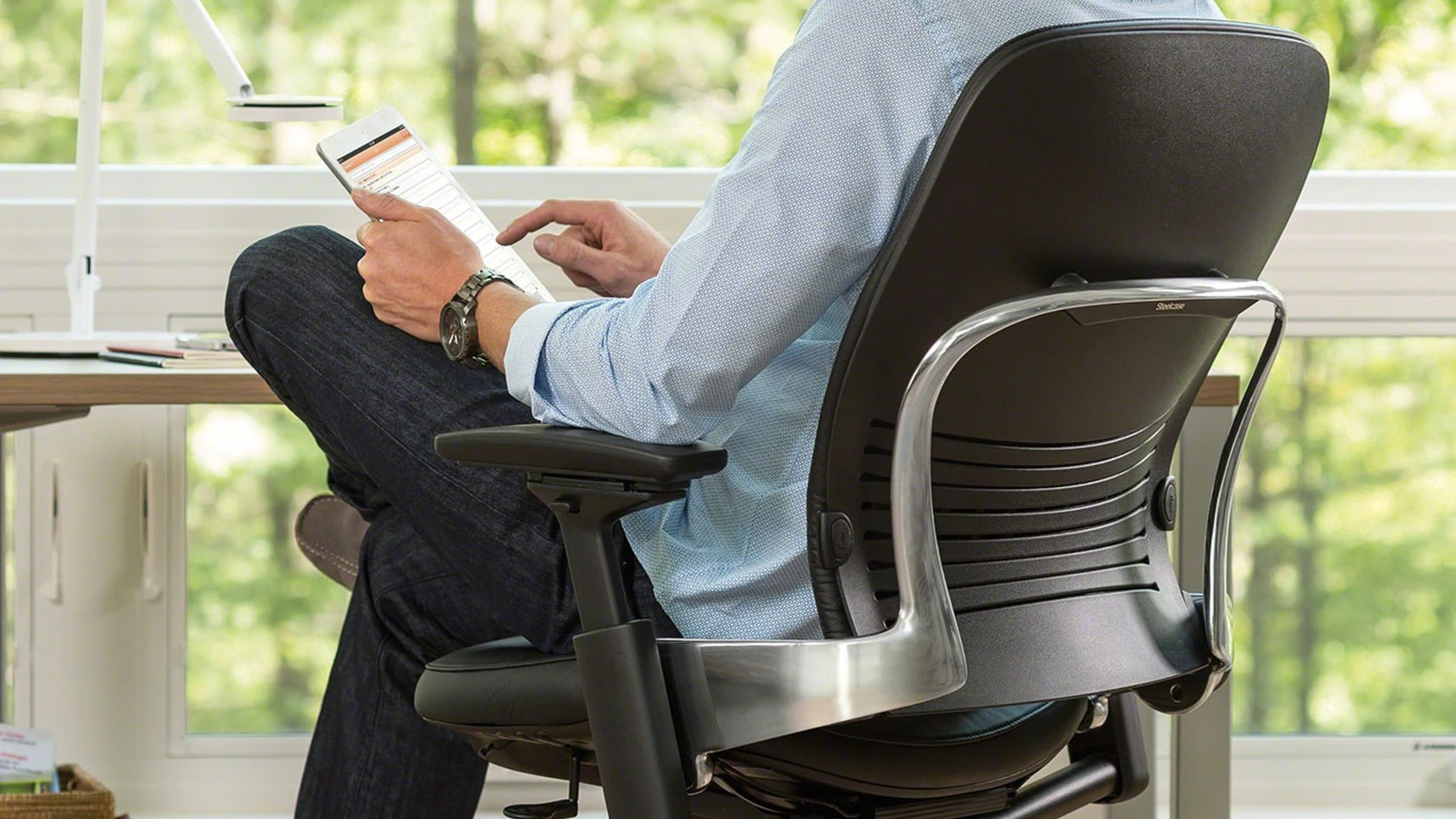
The Leap V2 is a one-size-fits-most design. The Leap v2 accommodates a wide range of body types with its adjustable seat depth and flexible backrest, making it a versatile choice for users of varying heights and weights. Weight Rating: 400 lbs. For users above that threshold, Leap Plus offers the same benefits, aesthetic appeal, and functionality of Leap with support for users up to 500 lbs.
Seat depth adjusts roughly 3 inches (15.75" to 18.75"), which suits most leg lengths from about 5'2" to 6'4". Taller users (6'5"+) report the back height is adequate but not generous; shorter users (under 5'2") may find the seat depth at minimum still slightly long. The adjustable lumbar helps compensate across a wide height range.
Configuration options include:
Frame color: black or platinum
Upholstery: Steelcase/Designtex fabric (dozens of colors), leather, vinyl, or 3D knit mesh back
Arms: height-adjustable only (base) or 4D adjustable (recommended; +$65)
Lumbar: standard lower-back firmness control or height-adjustable lumbar (+$41)
Casters: carpet (standard) or hard floor (+$18)
Headrest: optional factory-installed (+$166); cannot be added post-purchase without aftermarket solutions
Base style: standard task chair or stool (drafting height, +$165)
The chair ships fully assembled from Steelcase; refurbished units typically arrive in three pieces (base, cylinder, seat) and take under 10 minutes to assemble.
Sustainability & certifications
The Leap V2 carries BIFMA and GREENGUARD certification. Designed with the planet in mind and is up to 98% recyclable by weight and made of up to 30% recycled content , the chair meets or exceeds indoor air quality and structural safety standards for commercial furniture. The chairs you love, now with CarbonNeutral® product certification. Organizations that choose this chair offset its full lifecycle of carbon emissions through projects around the world verified by Climate Impact Partners to reduce or avoid carbon emissions.
Our commitment to a net-zero future includes choosing and using materials responsibly through sustainable design that includes more recycled content in our products while maintaining their sustainability certifications. Steelcase has published an Environmental Product Declaration (EPD) for the Leap, detailing lifecycle impacts from raw material extraction through end-of-life.
Through Circular by Steelcase: Remade, your used or damaged versions of Gesture®, Leap®, Think®, Amia® and Criterion chairs can be remade to be like new, allowing you to enjoy them longer with nearly half the carbon emissions and a high landfill diversion. The robust refurbished market for the Leap V2 (driven by companies like Crandall Office, BTOD, and others) extends product life and reduces waste—arguably the chair's greatest sustainability credential.
Maintenance, durability & warranty
12-YEAR WARRANTY. 24/7-365 Full coverage against defects under normal use. Same as if purchased new. The BTOD Refurbished Leap v2 warranty covers everything for 12 years of usage at 400 lbs. capacity for a 40-hour work week. The Leap v2 from Steelcase warranty covers everything for 12 years of usage at a 400 lb. capacity 24/7. (Refurbished warranties vary by seller; factory warranty is 24/7.)
Routine maintenance is minimal. Clean with water based cleaning agents, foam or pure, water free solvents. May also be disinfected with hydrogen peroxide, alcohol, and quaternary ammonium (quat) based cleaners. Vacuuming or light brushing is recommended to prevent dust and soil buildup. Do not use bleach on fabric. Mechanisms rarely require service; if the gas cylinder loses pressure or casters wear, replacement parts are inexpensive and widely available.
Durability is exceptional. Steelcase backs it with a 12-year warranty, but real-world evidence suggests significantly longer. BTOD regularly receives Leap V2 chairs from 2006 in working condition. Meaning 15–20 years of functional life is entirely realistic with normal office use. The chair's design is modular; most components can be replaced individually, extending lifespan indefinitely if you're willing to invest in upkeep.
Pricing, value & where it sits in the market
The Base Steelcase Leap V2 has an MSRP of $998. With 4-way adjustable arms, height-adjustable lumbar support, and standard casters — the configuration we recommend — the Leap V2 now retails for around $1,399 on the Steelcase website. Add leather, a headrest, or specialty casters, and you can push past $1,600.
Refurbished units offer extraordinary value. You can purchase a fully refurbished Steelcase Leap for $640.99 at BTOD — about half the price of new. Crandall Office, OfficeLogix, and Madison Seating all sell remanufactured Leap V2 chairs in the $400–$650 range with 5- to 12-year warranties. Enjoy like-new comfort with a refurbished Steelcase Leap v2 for less than half the cost of new. Upgraded upholstery, arm pads, casters, and cylinder, plus deep cleaning and full inspection. Backed by a 12-year warranty and 60-day free returns!
At remanufactured pricing, the value case is strong regardless of budget. For something you sit in 8 hours a day, 250 days a year, that is a reasonable investment in physical comfort and long-term posture. Best value path: A remanufactured Leap V2 from Crandall Office gets you the full chair with updated components and a dealer warranty.
In the premium ergonomic market, the Leap V2 sits between Steelcase's own Series 2 (~$588) and the Gesture (~$1,200–$1,600). It undercuts the Aeron (~$1,700–$2,100+) while offering comparable ergonomics and superior lumbar adjustability. Steelcase's Leap V2 sits at an interesting intersection: genuinely excellent engineering paired with a price tag that demands scrutiny. At $679 on Amazon, this chair becomes a legitimate investment in workplace comfort. (Prices vary by retailer and sale.)
Verdict—the bottom line
Like all great ergo chairs, it doesn't come cheap but is well worth the investment: the Steelcase Leap V2 is excellent. Two decades after its release, the Leap V2 remains the adjustability standard against which all task chairs are measured. It offers more points of adjustment than any other chair in this class: lumbar height, lumbar firmness, seat depth, tilt range (5 positions), tilt tension, and full 4D arms. The LiveBack and Natural Glide systems are not marketing—they're genuine biomechanical innovations that improve daily comfort.
The Leap V2 is not perfect. It runs warm. The headrest is an afterthought. The seat is firm. The recline is forward-gliding, not rocking, which takes adjustment. But for users who sit long hours, change postures frequently, and need precise lumbar control, the Leap v2's adjustability often makes it the safer bet for a wider range of people.
The Leap V2 remains one of the best ergonomic chairs on the market three years in, but the thin seat pad might not be the best option if you prefer a thick padded seat. If that's not a dealbreaker, and you value engineering over aesthetics, the Leap V2 is a buy-it-for-life proposition—especially at refurbished pricing.
For dynamic sitters who want maximum adjustability in a foam-seat chair: yes. The LiveBack and Natural Glide are genuinely among the best mechanisms available.
Twenty years of field testing have proven the platform. Tens of thousands of corporations, governments, and home offices trust the Leap V2 because it works, lasts, and adapts. That's not hype. It's the unglamorous truth of a chair that does exactly what it was designed to do: support you, hour after hour, year after year.
Sources & references
Interested in the Steelcase Leap V2?
Check the price on Amazon