Vitra Heart Cone Chair
Verner Panton's bold 1959 icon where geometry meets emotion
Overview
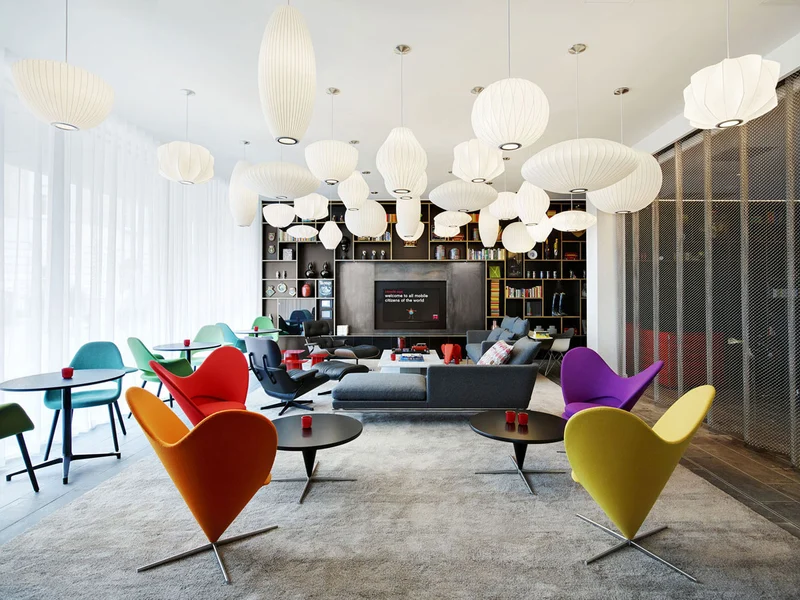
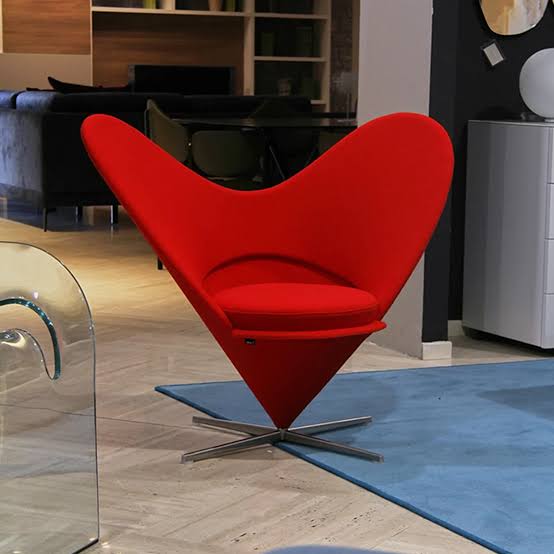
The Vitra Heart Cone Chair is not an office chair, but a sculptural lounge icon with a fascinating place in mid-century design history. Designed by Verner Panton in the late 1950s, the chair combines a comfortably upholstered seat with an understated, elegant base made of satin stainless steel. The Heart Cone Chair takes its name from the expressive, heart-shaped silhouette of its seat shell. Born out of a total-design commission for a Danish restaurant and refined shortly after the original Cone Chair debuted, this piece is a bold evolution of the cone concept—wider, more enveloping, and immediately recognizable. It embodies Panton's push to liberate furniture from tradition, using new materials and geometric forms to create emotional impact.
At a glance
Brand | Vitra |
|---|---|
Designer | Verner Panton |
Year designed | 1958–59 |
Category | Lounge / occasional chair |
Shell construction | Glass-fibre reinforced plastic laminate |
Upholstery | Polyurethane foam padding; fabric (Tonus, Cosy 2, Volo, Cento, Hola) or Leather Premium cover |
Base | Cruciform stainless steel (satin-brushed or powder-coated), swivel-mounted |
Dimensions (H × W × D) | 35″ × 40.5″ × 24.5″ (89 × 103 × 62 cm) |
Seat height | 15.75″ (40 cm) |
Adjustments | 360° swivel; no height / tilt / armrest adjustments |
Warranty | 10-year limited manufacturer warranty (Vitra, if registered) |
Price tier | Premium / luxury (~£3,600–3,800 / €3,300–3,700 / $3,700–4,000) |
The brand & its philosophy
Vitra is a Swiss company dedicated to improving the quality of life through the power of design. A central goal of Vitra is sustainable development. Founded in 1950, the family-owned manufacturer has become one of the world's most respected furniture houses, working with a roster of legendary designers—from Charles and Ray Eames to Isamu Noguchi, George Nelson, and of course Verner Panton. Vitra's philosophy centers on longevity: designs are chosen not for short-term trends but for their timeless quality and lasting relevance. Trendy styling is avoided in favor of classic pieces that can be used for decades.
In the early 1960s, Vitra began collaborating with Verner Panton to develop and realise his idea for a cantilever chair made from a single material and formed in one piece — the revolutionary Panton Chair. This partnership continues to this day: Vitra maintains a close relationship with the Panton family and, in cooperation with the rights holder Verner Panton Design AG, is dedicated to preserving and further developing selected works by the visionary designer. The Cone Chair, the Cone Stool and the Heart Cone Chair have been manufactured by Vitra since 2004.
The designer and the design story
Verner Panton was an influential figure in the world of design during the 1960s and 1970s. After moving to Switzerland in the early 1960s, the Danish-born architect and designer became known for his bold and inventive concepts for interiors, furnishings, lighting and textiles. The masterful use of colour was a defining hallmark of his work. In the mid-1950's, Verner panton converted a Volkswagen bus into a mobile studio and travelled across Europe. In 1958 he returned to Denmark full of unconventional ideas... one of which evolved into the iconic Heart Cone Chair.
In 1957, Danish architect and designer Verner Panton was commissioned by his father to design an extension to the restaurant Kom Igen in Denmark's Langesø Park. Granted complete creative freedom, Panton conceived every element of the interior – from textiles, carpets, lighting and furniture to staff uniforms and menus. The furnishings for the project also included a chair: the Cone Chair, shaped like an inverted cone. Shortly thereafter, Panton developed this concept further with the Heart Cone Chair. Its expansive heart-shaped backrest ensures comfort and ease of movement combined with an iconic silhouette. The design exemplifies Panton's fascination with geometry and his aim to unite functionality with emotional impact. The Cone Chair and the Heart Cone Chair soon became icons of modern design, embodying Panton's distinctive aesthetic language.
On its market launch, the chair caused a national and international sensation. The success of this design, along with the reliability of serial production methods, opened up further possibilities for Verner Panton in his continued work with the cone shape. The first addition was the Cone Stool, a backless version, followed a year later by the now iconic Heart Cone Chair, famed for its inviting, heart-shaped backrest.
Design language & aesthetics
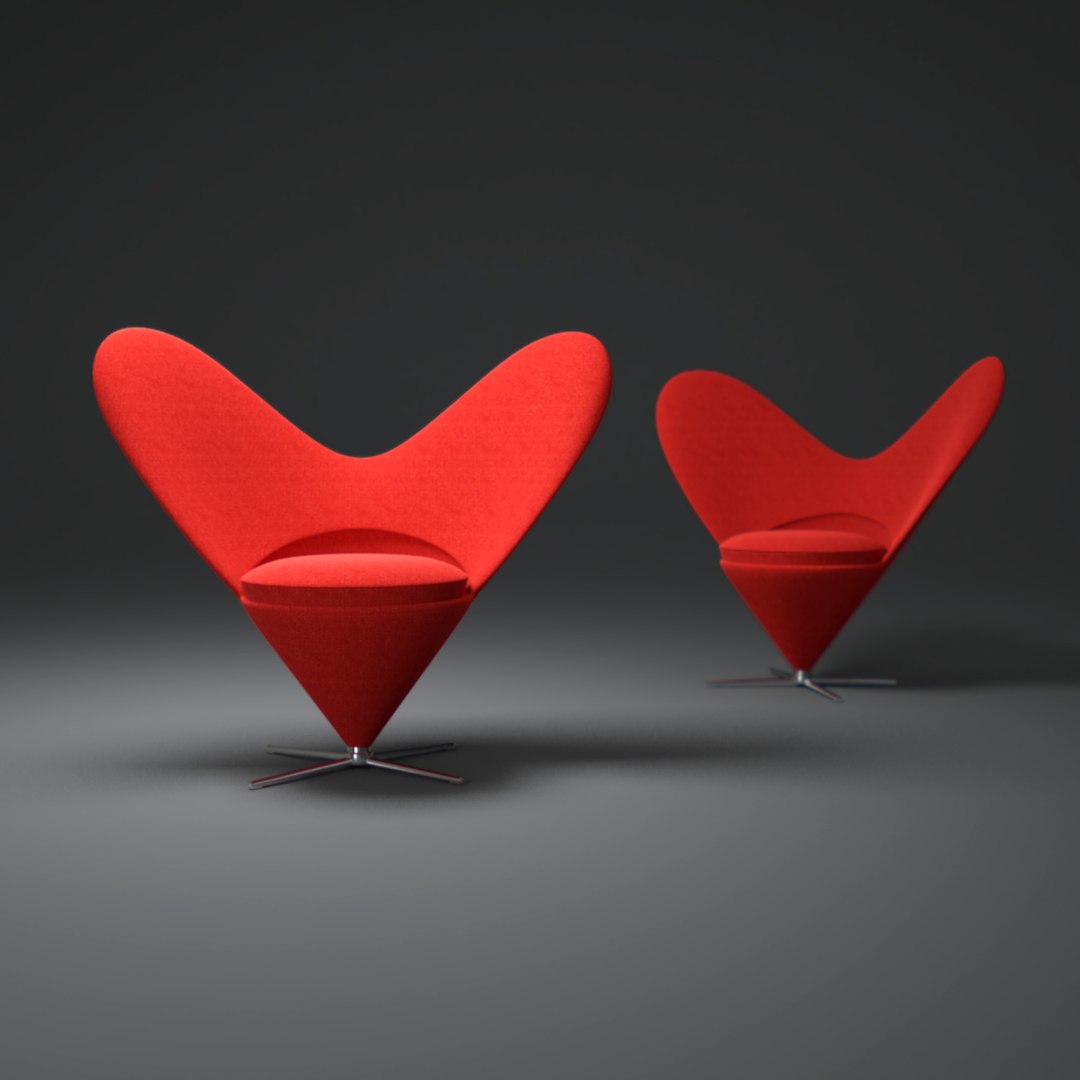
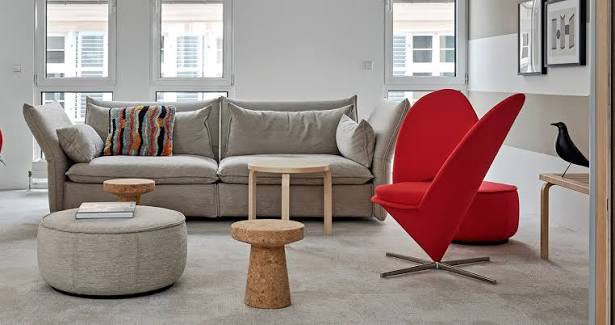
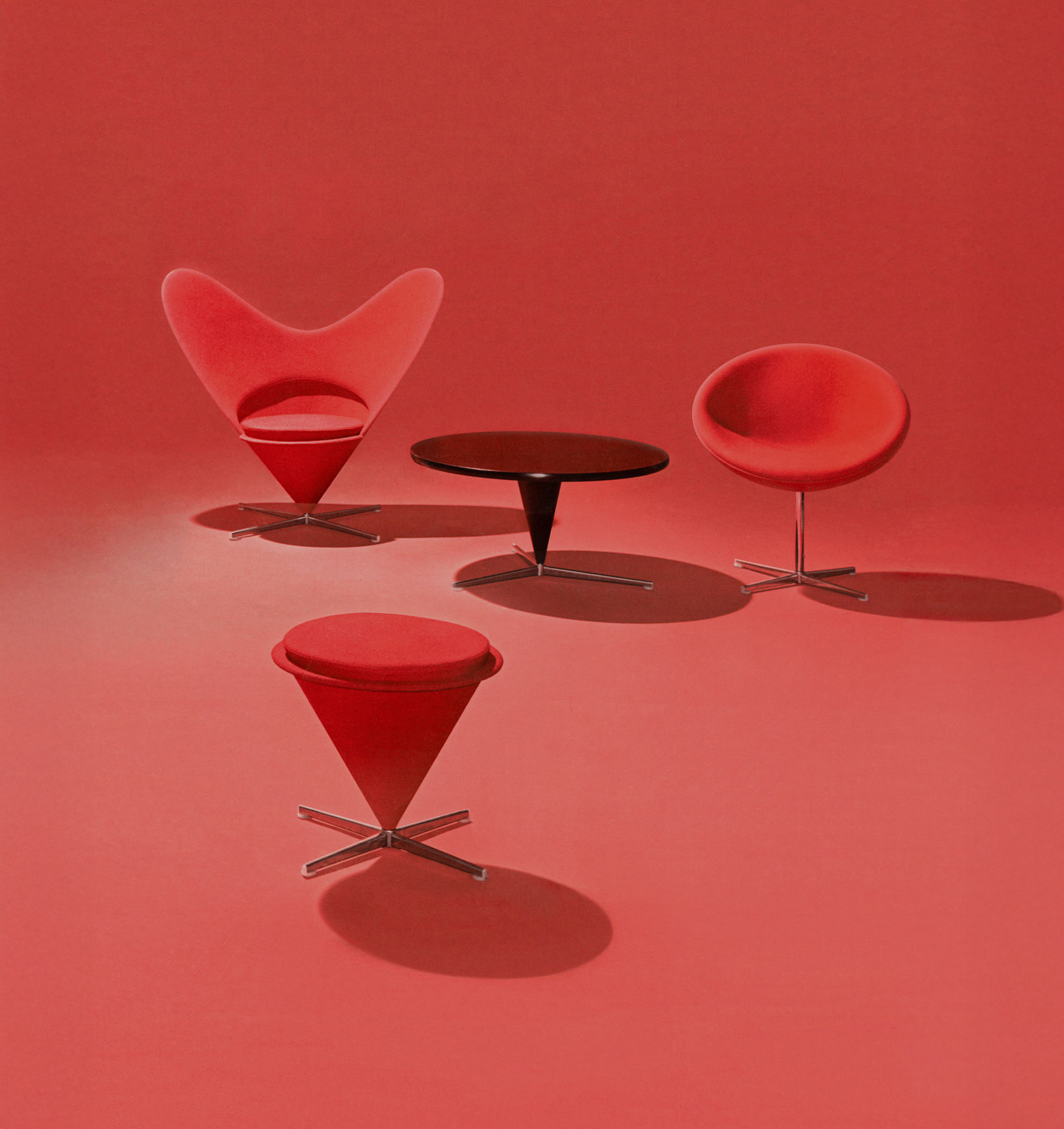
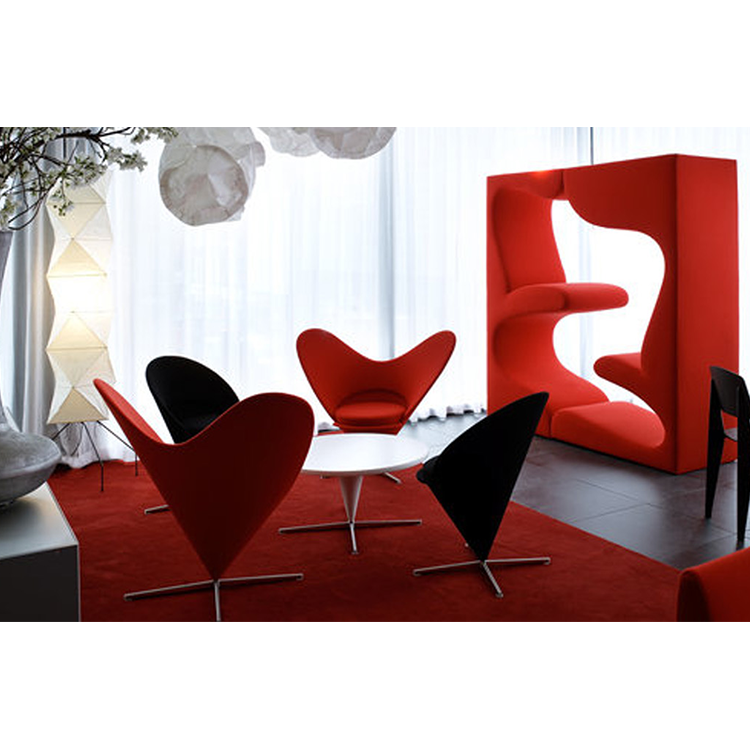
The Heart Cone Chair is pure sculptural drama. Its form is instantly recognizable: a padded, inverted cone opens into wide, sweeping wings that rise to form a high, embracing backrest. The Heart Cone Chair owes its name to its curvaceous silhouette, with large, projecting wings along its backrest - a contemporary take on the classic wing chair. The silhouette has been likened to Mickey Mouse ears, but it reads more elegantly as a modernist bergère—classical comfort reimagined through geometric abstraction.
It was not until the fifties that young designers like Verner Panton began to use the formal possibilities created by innovative technologies in order to liberate furniture from the constraints of tradition. With the Heart Cone Chair and the Cone Chair Verner Panton neatly anticipated the transfer of Pop Art into domestic settings. The entire shell is upholstered, concealing the structure beneath and presenting an unbroken, monolithic form. The chair sits on a slender four-star base of brushed or powder-coated stainless steel, giving it a light, almost balletic stance despite its generous proportions. Depending on fabric choice—rich Tonus wool, supple Leather Premium, or bold colour—the Heart Cone Chair shifts character from mid-century restraint to pop-art exuberance.
"Most people spend their lives living in dreary, beige conformity, mortally afraid of using colors. The main purpose of my work is to provoke people into using their imagination and make their surroundings more exciting." — Verner Panton
Ergonomics & how it supports the body
This is a lounge chair, not an ergonomic task seat. The Heart Cone Chair prioritizes enveloping comfort over adjustable lumbar support or active-sitting biomechanics. Its expansive heart-shaped backrest ensures comfort and ease of movement combined with an iconic silhouette. The curved shell wraps around the sitter, offering lateral support and a sense of cocooning enclosure—excellent for reading, conversation, or occasional desk breaks, but unsuitable for eight-hour typing marathons.
Glass-fibre reinforced shell with laminated plastic with light upholstery and seat cushion. The laminated body of the Vitra chair meanwhile features polyurethane foam padding, thus ensuring a high degree of sitting comfort. The padding is relatively thin, emphasizing form over deep sink-in softness. The fixed seat height of approximately 15.75 inches is suited to most adults, and the swiveling base allows easy repositioning. The generous width accommodates a range of postures—cross-legged, perched forward, or leaned fully back into the wings.
Key adjustments & mechanisms
The Heart Cone Chair offers virtually no adjustability, by design. The stability to the chair is guaranteed by the brushed stainless steel star base, a base which is also equipped with plastic sliders. The chair swivels 360 degrees on its central mount, allowing easy conversation pivots and repositioning, but there is no height adjustment, no tilt mechanism, no recline lock, and no movable armrests (the wings of the shell serve as fixed arm supports).
This fixed architecture is part of the chair's timeless appeal: no mechanisms to break, no complexity to date the design. You sit in it as Panton intended, accepting the singular posture the form affords. For a lounge or reception chair, this simplicity is an asset. For all-day office work, it's a deal-breaker.
Materials & build quality
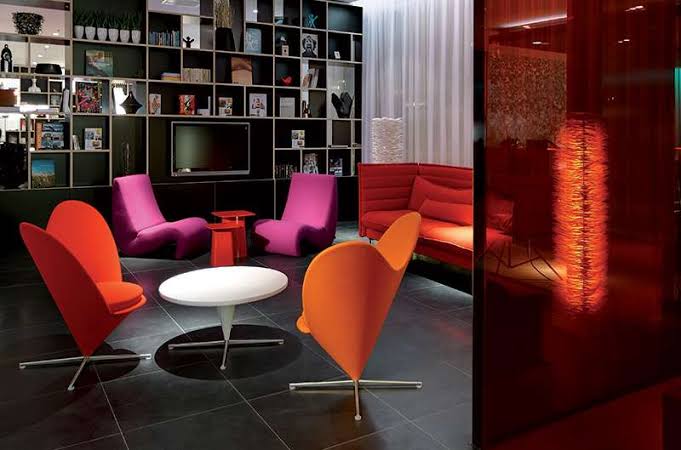
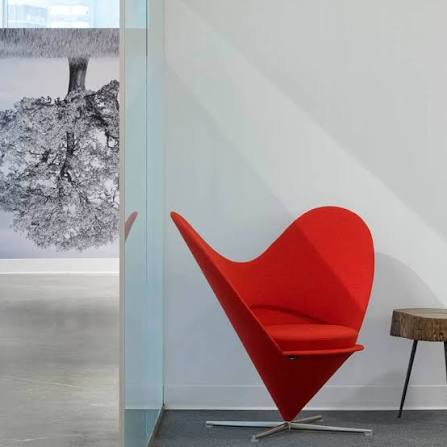
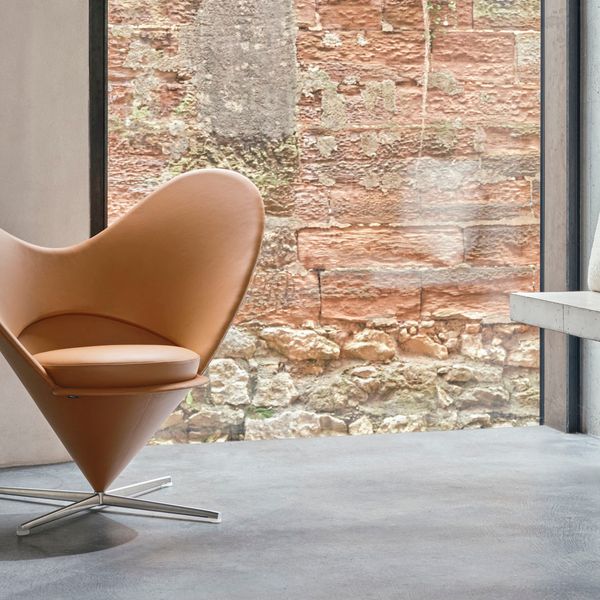
Glass-fibre reinforced shell with laminated plastic with light upholstery and seat cushion. The shell is robust, rigid, and built to last decades; Vitra's manufacturing standards are exacting, and the Heart Cone Chair benefits from the same production rigor as the company's office portfolio. In addition to the existing Tonus fabric, the Heart Cone Chair is now also available with covers in Cosy 2, Volo, Cento and Hola or in Leather Premium. Depending on the choice of cover and colour, the chair takes on a very different character and can be integrated in a wide variety of settings and interiors – including public spaces, thanks to the new durable fabrics.
The stainless-steel base is available in satin-brushed or powder-coated finishes. The powder-coat adds color flexibility (black, white, red) and scratch resistance; the brushed steel offers a timeless, neutral elegance. Upholstery is fully tailored and stitched to the shell, with clean seams and careful pattern alignment on patterned fabrics. Build quality is unimpeachable: tight tolerances, smooth swivel action, stable footing, and a solid, reassuring heft.
Sitting experience — what it actually feels like day to day
Sitting in the Heart Cone Chair is an experience of enclosure and statement. The high, enveloping wings create a sense of shelter—especially welcome in open-plan spaces or noisy environments. You feel held by the chair rather than merely perched on it. The swivel base makes repositioning effortless; you can spin to grab a book or shift to catch the light without standing. The upholstery is firm but welcoming; there's no deep cushioning, so you rest *on* the chair rather than sinking *into* it.
For short stints—30 to 90 minutes—the Heart Cone Chair is wonderfully comfortable. You can curl up, drape an arm over the wing, or sit upright with good posture support from the backrest curve. For all-day sitting, however, the fixed height, lack of lumbar adjustment, and absence of forward tilt become limiting. This is fundamentally a lounge, conversation, or accent chair—one that turns heads and invites lingering, but not one engineered for productivity marathons. A comfortable club chair for everyday use, Vitra has faithfully re-issued this classic in close collaboration with the Panton estate.
Who it's for (and who should skip it)
Best suited for:
Design enthusiasts and collectors who want an icon—a piece of furniture with museum-level provenance and sculptural presence.
Home offices with lounge zones where the chair serves as a reading or phone-call seat rather than the primary task chair.
Hospitality, reception, and creative studios where visual impact and brand statement matter as much as function.
Smaller-framed sitters who appreciate a high backrest and lateral wrap without needing deep cushioning or adjustable ergonomics.
Admirers of mid-century modernism and Scandinavian Pop who value the narrative and craftsmanship behind every curve.
Who should skip it:
Anyone needing a true ergonomic office chair with lumbar support, height range, tilt, and armrest adjustments.
Budget-conscious buyers; at nearly £3,600–4,000, this is a luxury purchase.
Users requiring mobility aids or who struggle with low, fixed-height seating (the 15.75″ seat is lower than standard office chairs).
Minimalists seeking understated, neutral furniture—the Heart Cone Chair commands attention.
Comparisons with key rivals
Chair | Price tier | Category | Adjustability | Standout strength |
|---|---|---|---|---|
Vitra Heart Cone Chair | ~£3,600–3,800 | Lounge / icon | Swivel only | Sculptural form, design heritage, enveloping comfort |
Vitra Grand Repos | ~£3,000–4,500 | Lounge recliner | Multi-position recline | Advanced ergonomics, deep cushioning, broader appeal |
Fritz Hansen Egg Chair | ~£5,500–7,500 | Lounge / icon | Swivel, tilt | Arne Jacobsen pedigree, organic curves, higher price |
Knoll Womb Chair | ~£3,500–5,000 | Lounge / icon | Fixed or swivel base | Eero Saarinen design, deep cradling form, timeless prestige |
The Heart Cone sits firmly in the lounge-icon tier alongside the Egg and Womb, offering comparable visual impact and designer cachet at a slightly lower entry price than the Egg. It's bolder and more geometric than the Womb, less organically curvaceous than the Egg, and more compact than the Grand Repos. If you prioritize Panton's Pop-Modernist aesthetic and the cultural story of the Cone family, the Heart Cone is unmatched.
Sizing, fit & configuration options
The Heart Cone Chair is a one-size design. 35" h | 40.5" w | 24.5" d | seat: 15.75" h The generous 40.5-inch width accommodates most body types comfortably, but the fixed 15.75-inch seat height may feel low for taller users accustomed to standard office-chair heights (typically 17–21 inches adjustable).
Configuration choices center on upholstery and base finish. Vitra offers the chair in a range of fabrics—Tonus (a hardwearing Kvadrat wool), Cosy 2, Volo, Cento, and Hola—as well as Leather Premium. Base options include satin-brushed stainless steel (classic, neutral) or powder-coated finishes in black, white, or red. A limited-edition Anniversary version celebrates Panton's centenary with a duo-tone blue finish. Buyers work with authorized Vitra dealers to select fabric swatches and finishes; lead times can stretch 8–12 weeks for made-to-order configurations.
Sustainability & certifications
Vitra is a Swiss company dedicated to improving the quality of life through the power of design. A central goal of Vitra is sustainable development. The Heart Cone Chair reflects this ethos through longevity-first design: no planned obsolescence, no trend-chasing, and a structure engineered to last decades. The shell is durable fiberglass composite; the steel base is recyclable; and many fabric options come from mills (like Kvadrat) with strong environmental credentials.
Vitra does not explicitly advertise BIFMA or GREENGUARD certification for the Heart Cone Chair, as it is positioned as a residential / lounge piece rather than a contract office chair. However, the company's broader commitment to sustainability—carbon-neutral production at its German facilities, responsible material sourcing, and long product lifecycles—applies across the portfolio. The chair qualifies for Vitra's extended warranty program, reinforcing its build-to-last philosophy.
Maintenance, durability & warranty
The Heart Cone Chair is built to endure. The fiberglass shell is impact-resistant and structurally stable; the stainless-steel base resists corrosion and wear. The stability to the chair is guaranteed by the brushed stainless steel star base, a base which is also equipped with plastic sliders. Fabric upholstery will show wear over time—particularly on armrests and seat edges—but can be professionally cleaned or, in some cases, re-covered by authorized service centers. Leather versions develop a patina but are easier to wipe clean.
The Vitra original selection offers a 10-year warranty. Vitra guarantees the longevity of selected products with a limited manufacturer warranty of ten to thirty years as per the warranty terms (terms and conditions) listed below. The Vitra Product Warranty is part of our company's commitment to sustainability. Registration within six months of purchase via my.vitra.com is required. The warranty covers manufacturing defects in materials and workmanship but excludes normal wear, misuse, or unauthorized modifications. Given the chair's heritage status and Vitra's reputation, parts availability and service support are excellent.
Pricing, value & where it sits in the market
Expect to pay approximately £3,600–3,800 in the UK, €3,300–3,700 in Europe, or $3,700–4,000 in the US, depending on fabric and finish. Usually ships in 8-12 weeks for custom configurations. This places the Heart Cone Chair firmly in the luxury / investment tier—roughly on par with a high-spec Herman Miller Eames Lounge Chair or a mid-range Fritz Hansen Egg, and well above mass-market lounge seating.
Is it good value? That depends on what you're buying. As a task chair, the Heart Cone is wildly impractical and overpriced. As a design object—a sculptural statement piece with 65+ years of cultural cachet, museum-quality provenance, and heirloom build quality—it offers compelling value to collectors and design-led buyers. You're paying for Panton's vision, Vitra's craftsmanship, and a piece of furniture that will never go out of style. Resale value on the secondary market is strong, and well-maintained examples appreciate over time.
Verdict — the bottom line
The Vitra Heart Cone Chair is not for everyone, and it doesn't try to be. It's a bold, unapologetically sculptural lounge chair that prizes form, story, and emotional impact over ergonomic versatility. If you're seeking an adjustable, all-day task chair, look elsewhere. But if you want a design icon that transforms a room, offers cocooning comfort for short stints, and carries the DNA of one of the 20th century's most visionary designers, the Heart Cone delivers in spades.
It's expensive, uncompromising, and utterly charismatic—a chair that rewards those who understand and value its place in design history. A comfortable club chair for everyday use, Vitra has faithfully re-issued this classic in close collaboration with the Panton estate. For the right buyer—the design enthusiast, the collector, the creative professional building a lounge worth lingering in—the Heart Cone Chair is one of the most rewarding purchases you can make.
A sculptural masterpiece that wraps you in mid-century magic—but buy it for the story and the silhouette, not the ergonomics.