Walter Knoll Modern Icons: FK Chair
A 1967 Scandinavian shell-seat icon, reborn in uncompromising black
Overview
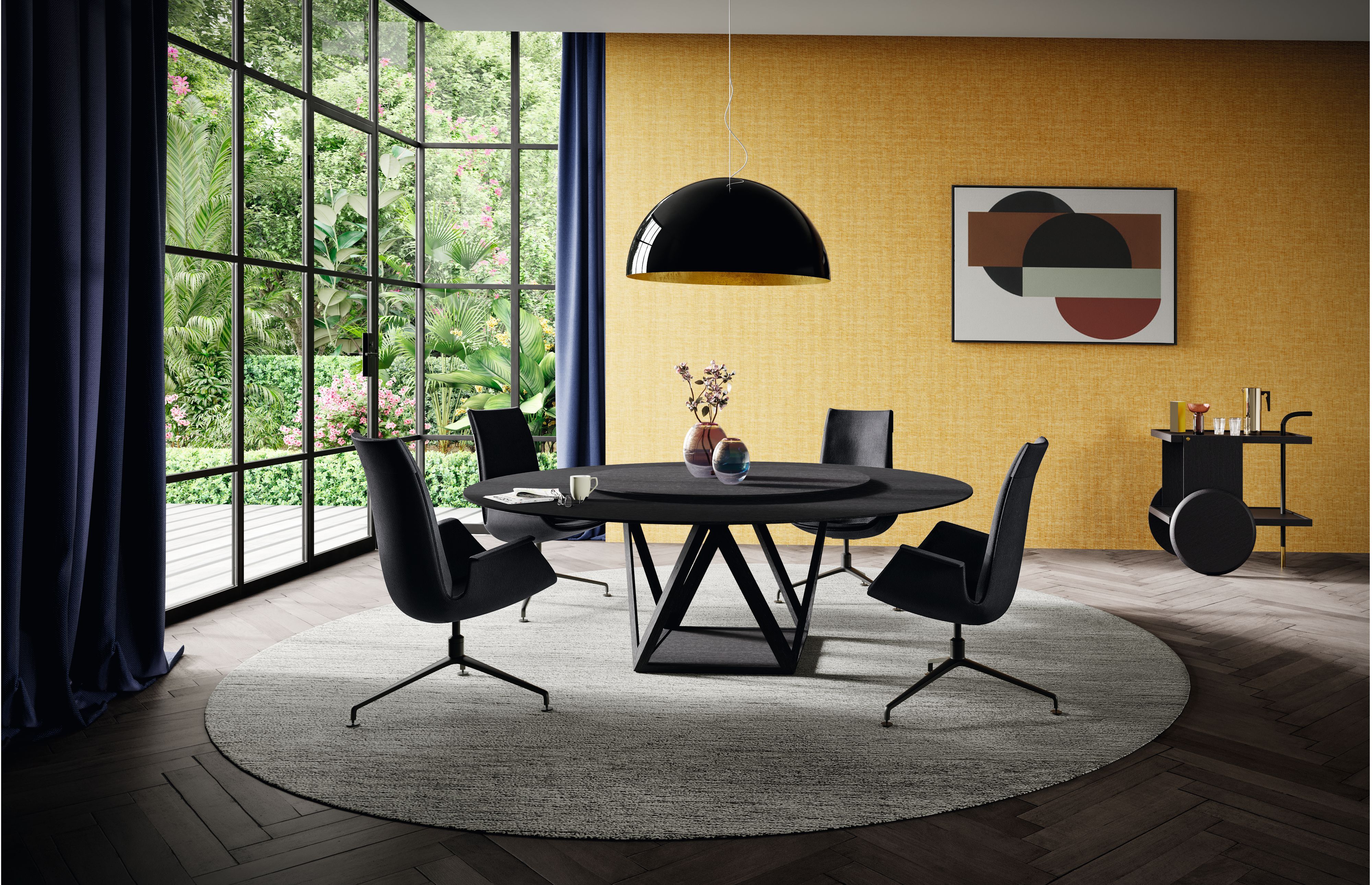
The FK Chair is a signpost of minimalism: emblematic of a new design language, this shell chair became a symbol of modern design and signaled an evolution of modernism. Conceptualized by interior designers Preben Fabricius and Jørgen Kastholm for Walter Knoll, the chair was designed in 1967, when bucket chairs were becoming increasingly popular, and has since become a design classic. The Modern Icons: FK Chair edition presented here is part of Walter Knoll's Black Edition—a curated collection that brings together iconic pieces from different eras, all rendered in uncompromising black with glove-soft nappa leather upholstery and a matt-black shell.
At a glance
Brand | Walter Knoll |
|---|---|
Designers | Preben Fabricius & Jørgen Kastholm |
Year designed | 1967 |
Shell material | Fiberglass with soft upholstered seat pad |
Upholstery | Nappa leather ('Classic' grade in Black Edition) |
Base | Aluminium three-star swivel base |
Adjustments | 360° swivel; no height or tilt adjustment |
Configuration options | 3-star, 4-star, or 5-star base; with or without castors |
Warranty | Varies by region; Walter Knoll standard terms apply |
Price tier | Premium/luxury (secondary market $980–$18,844; avg ~$3,100) |
The brand & its philosophy
Inspired by the Bauhaus—founded in 1919 by Walter Gropius—Walter Knoll decided to bet big on modernism and launched his eponymous German furniture maker in 1925, and the company has been going strong ever since. Headquartered in Herrenberg, near Stuttgart, Walter Knoll has built its reputation on functional modernism, impeccable craftsmanship, and collaborations with world-class designers. In 1927, Walter Knoll furnished five apartments designed by Ludwig Mies van der Rohe for the Weissenhof Estate, 21 prototypes of "workers' housing of the future" constructed as part of an exhibition in Stuttgart.
Today, Walter Knoll occupies a distinct position in the design world—separate from the better-known American Knoll (founded by Walter's son Hans in 1941)—serving corporate, hospitality, and residential clients with pieces that blend German engineering discipline with Scandinavian and Bauhaus influences. The brand emphasizes natural materials, climate-neutral production in Germany, and timeless design that transcends short-lived trends.
The designer and the design story
Preben Fabricius counts alongside Jørgen Kastholm as one of the most important representatives of Danish design, and Danish modernism in particular. Preben Fabricius, born in 1931, passed away in 1984 at only 52 years of age; after training as a carpenter in Copenhagen, he studied under interior designer Finn Juhl, and it was at this point that he met Jørgen Kastholm, with whom he developed the FK chair, now an icon in design history and part of Walter Knoll's Classic Edition. In 1961, they founded a studio together that became a birthplace of a number of iconic designs in furnishing history.
The Danish interior designers Preben Fabricius and Jørgen Kastholm dedicated themselves to the optimization of form, material, and ergonomics. Inspired by the functionalism and consistency of Scandinavian design, the two Danish interior designers committed to optimizing form, material and ergonomics, and they were also influenced by the Bauhaus. The concise name is a reference to the initials of its creators. In the 1960s this shell chair pointed the way to a new stylistic idiom and became emblematic of modern design; in 1969 it was honored as the first recipient of the Federal Award for Good Form.
Design language & aesthetics
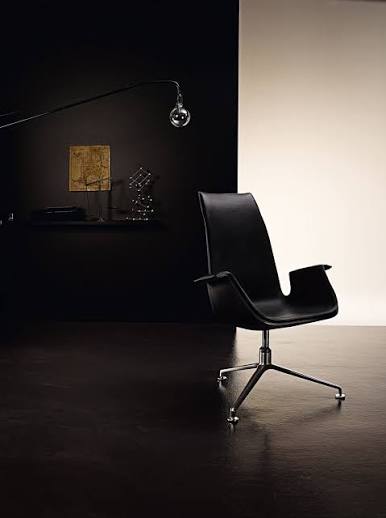
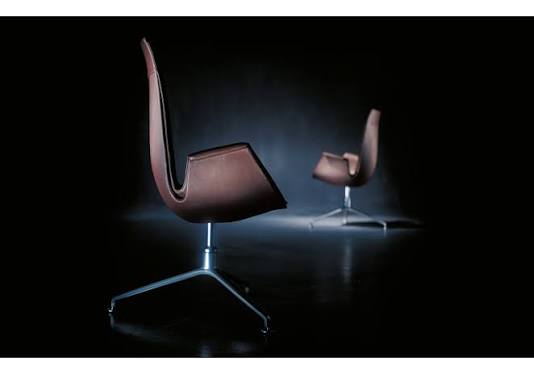
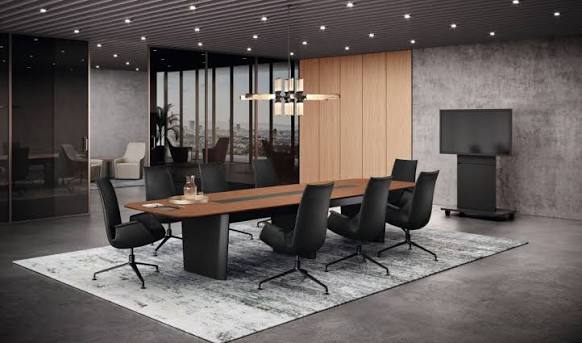
Fine lines, clear contours—a graphic silhouette presenting volume and lightness on a three-pointed crossed base; at the time, completely new materials made the shell technically possible. The FK's form is dominated by a sculptural bucket seat that wraps around the sitter, creating an enveloping profile that feels both protective and open. Every line is intentional, every curve calculated: the shell reads as a single gesture, a piece of molded sculpture elevated on a minimalist tripod base.
Part of the Black Edition of modern originals: the FK chair in a glove-soft nappa leather named 'Classic' with a matt-black back shell and soft seat pad; the chair is part of the Black Edition of icons from different eras—from the 1950s to the beginning of the new millennium. The monochrome treatment amplifies the chair's graphic discipline, removing color distraction and letting form speak. It's a chair that looks equally at home in a corporate boardroom, a residential study, or a museum permanent collection—a testament to its versatility and timelessness.
Ergonomics & how it supports the body
The FK is not an ergonomic task chair in the contemporary sense—it offers no lumbar adjustment, no synchro-tilt, no slider mechanisms. Instead, it delivers passive, sculptural ergonomics: the shell's generous width and enveloping contours cradle the body in a semi-reclined posture, distributing weight across a broad contact area. In the spacious seating shell it is highly comfortable; the high backrest and the armrests resulting from the shell round off the seating comfort perfectly.
The bucket design encourages a relaxed, slightly reclined posture—ideal for conversation, thinking, or short-duration work, but not optimized for eight-hour heads-down computing. The upholstered seat pad softens the hard shell, but the chair's ethos is architectural restraint rather than plush accommodation. It supports the body through geometry and material choice, not through active adjustability.
Key adjustments & mechanisms
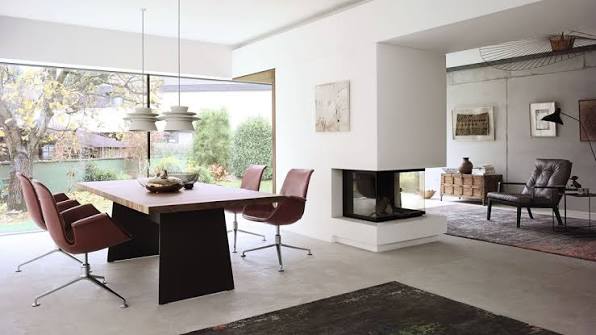
The Modern Icons: FK Chair is deliberately minimal in its adjustment repertoire. FK designed by Preben Fabricius & Jørgen Kastholm for Walter Knoll is a beautiful chair with aluminium swivel base and upholstery available in multiple leathers. The standard three-star base allows full 360° rotation, and the chair is available with glides or castors depending on configuration. There is no seat height adjustment, no tilt or recline mechanism, no lumbar dial, no armrest width or height control.
This is a fixed-height, fixed-posture chair. Other production variants number from 6725-6729 and also have been produced in a 3 leg (3G), 4 leg (4G) or 5 star (5R) base and with or without castors; the original chair was produced with a fixed seat and base, but later versions had a rotating seat—and later still a 4 star and 5 star base with both a tilting and rotating seat. Buyers seeking a dynamic, adjustable executive chair should look elsewhere; those who prize purity of form and accept the trade-offs will find the FK's restraint refreshing.
Materials & build quality
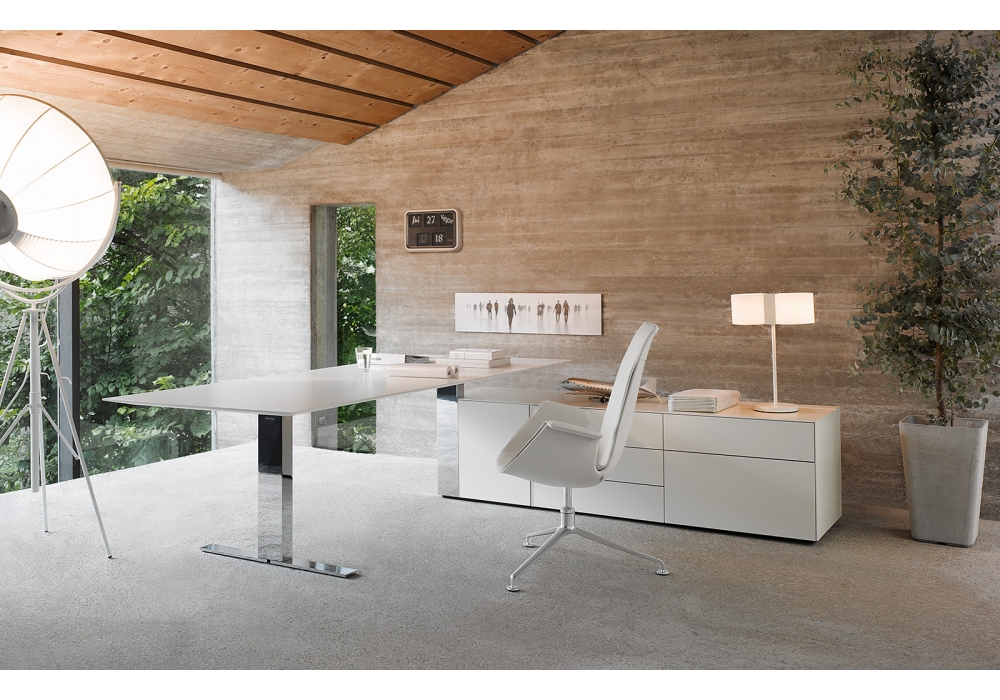
The FK's materiality is pure mid-century modernism: a molded fiberglass shell (originally a cutting-edge material in the 1960s), upholstered internally with cold foam and wrapped in full-grain leather. The armchair, designed by Preben Fabricius and Jorgen Kastholm, is generously upholstered with cold foam and covered with fine leather; the leather cover is Nappa leather, a slightly pigmented semi-aniline leather with fine grain. The Black Edition specifies 'Classic' nappa leather—supple, matte, and richly textured.
The base is polished or satin-finish aluminium, precision-cast and robust. Walter Knoll stands for natural materials, a climate-neutral production in Germany, photovoltaic systems and a heating which requires 40% less energy. Build quality is unimpeachable: tight tolerances, smooth swivel action, and a weight and heft that signal longevity. This is furniture built to last decades, not years, and to age gracefully as the leather patinas and the aluminium develops character.
Sitting experience — what it actually feels like day to day
Sitting in the FK is an event, not a utility. The bucket seat embraces you, and the shell's rigid structure provides a firm, supportive perch—not a sink-in lounge. The upholstered pad adds just enough cushioning to soften the experience without sacrificing the chair's architectural clarity. The leather feels cool and smooth at first, warming and conforming subtly over time.
The fixed height and lack of recline mean you adopt the chair's posture, not the other way around. For meetings, focused reading, or design review sessions, this posture is ideal—alert, engaged, leaning forward slightly. For long typing sessions or heads-down coding, the lack of active lumbar and the fixed backrest angle will feel limiting. The swivel is smooth and satisfying, and the chair's visual presence lends gravitas to any space it inhabits. You don't just sit in the FK; you occupy an icon.
Who it's for (and who should skip it)
Best for:
Design collectors and modernist purists who value iconic form and historical pedigree over feature lists.
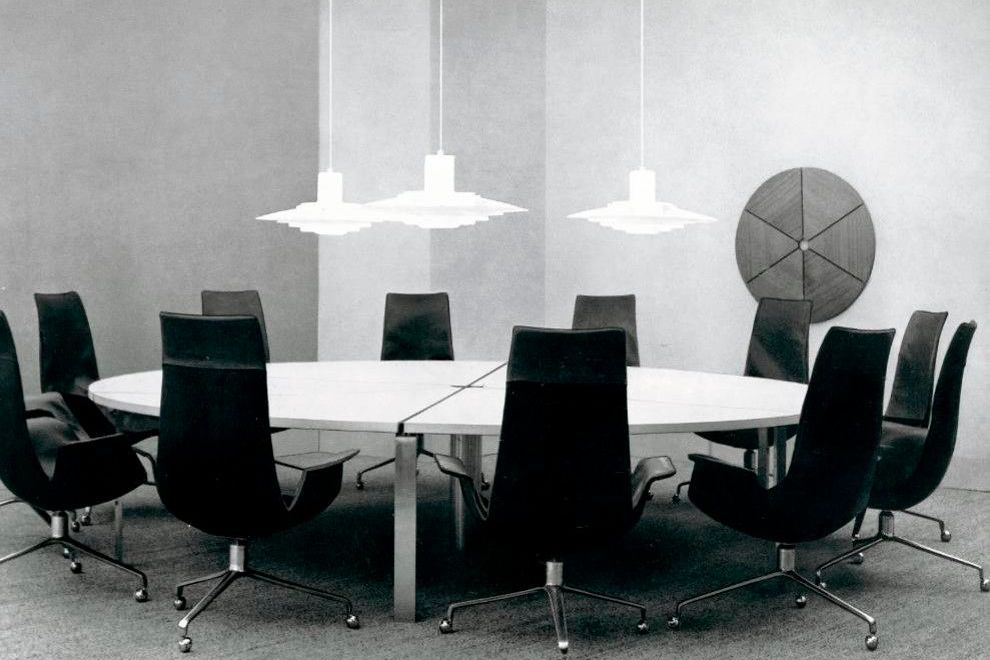
Executive and hospitality settings where visual impact, brand positioning, and statement-making matter—conference rooms, executive lounges, luxury retail.
Residential buyers with dedicated home offices or studies who want a piece that doubles as art and aren't sitting for eight uninterrupted hours.
Architects and designers specifying for clients who appreciate craft, heritage, and the Walter Knoll / Fabricius-Kastholm legacy.
Skip it if:
You need active ergonomic adjustments—lumbar support, synchro-tilt, seat depth slider—for all-day computing.
You're on a constrained budget; this is a premium luxury piece with pricing to match.
You prefer soft, plush seating; the FK's firm shell and disciplined geometry won't coddle you.
You need a chair that accommodates a wide range of body sizes and postures; the fixed form suits some better than others.
Comparisons with key rivals
Model | Price tier | Seat/back | Adjustments | Standout strength |
|---|---|---|---|---|
Walter Knoll FK Chair | Premium/luxury | Fixed fiberglass shell, leather pad | Swivel only | Iconic 1960s design, museum-grade pedigree, Black Edition exclusivity |
Eames Aluminum Group Executive Chair | Premium | Mesh or leather, aluminum frame | Swivel, tilt | Timeless mid-century classic, slightly more flexible seating |
Vitra Eames Plastic Armchair (PACC) | Mid/premium | Molded shell, swivel base | Swivel, some tilt options | Similar shell aesthetic, more accessible price, less executive gravitas |
Fritz Hansen Egg Chair (office swivel) | Premium/luxury | Upholstered shell, foam core | Swivel, tilt | Arne Jacobsen icon, softer sit, more enveloping form |
Sizing, fit & configuration options
The FK is offered in multiple configurations across Walter Knoll's catalog. The Modern Icons: FK Chair in the Black Edition comes with a three-star base as standard, but the broader FK family includes four- and five-star bases, options with or without castors, and a lounge chair variant with lower seat height. Designed in 1967, dimensions for the lounge version are approximately 32" W, 30" D, 33" H with seat height around 16.3".
The bucket seat is generously proportioned—wider and deeper than many contemporary task chairs—and accommodates a range of body sizes comfortably up to a point, but taller or larger users may find the fixed shell constraining. There are no size variants (small/medium/large), so fit is determined by the single shell geometry. Buyers should ideally test-sit before committing, or consult with a Walter Knoll dealer to confirm fit, especially given the investment.
Sustainability & certifications
Walter Knoll stands for natural materials, a climate-neutral production in Germany, photovoltaic systems and a heating which requires 40% less energy. The company emphasizes domestic manufacturing, which reduces transport emissions and ensures adherence to German labor and environmental standards. The FK's core materials—aluminium, fiberglass, leather, foam—are durable and designed for longevity, which is itself a sustainability strategy: a chair that lasts 30–50 years has far lower lifetime impact than disposable seating replaced every few years.
Walter Knoll does not prominently advertise third-party certifications like GREENGUARD or BIFMA for the FK Chair, and I found no verified references to such credentials in available materials. Buyers prioritizing certified low-VOC emissions or third-party sustainability validation should contact Walter Knoll directly to request documentation. The brand's sustainability story leans heavily on durability, local production, and material quality rather than third-party eco-labels.
Maintenance, durability & warranty
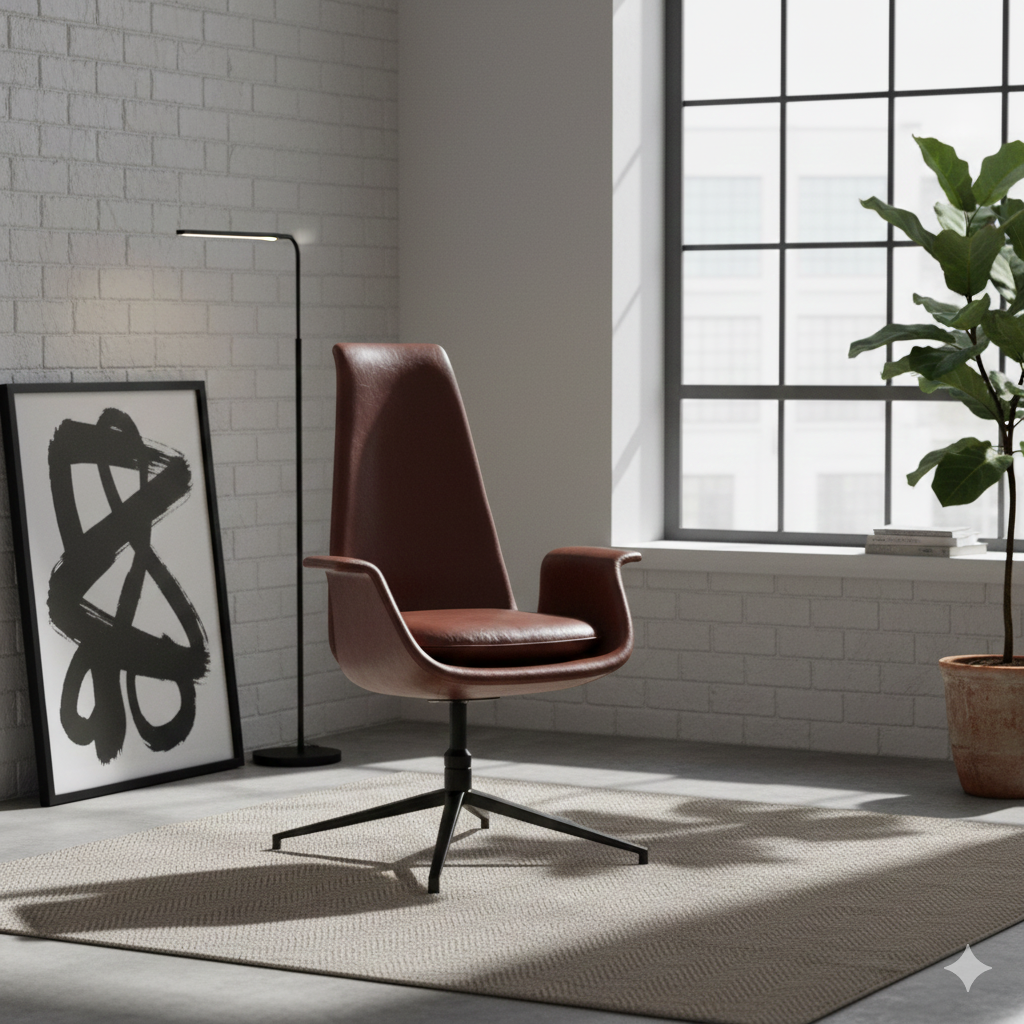
The FK is built to endure. The fiberglass shell is virtually indestructible under normal use; the aluminium base resists corrosion and maintains smooth swivel action for decades. The leather upholstery will develop patina and require periodic conditioning—Walter Knoll recommends specific leather care products and routine cleaning to preserve suppleness and color.
Warranty terms vary by region and retailer. Walter Knoll's standard warranty in Germany and Europe typically covers manufacturing defects; specific duration and terms should be confirmed at point of purchase. The chair's simplicity—few moving parts, no complex mechanisms—reduces the risk of mechanical failure. Replacement leather pads and refinishing services are available through Walter Knoll's service network, ensuring the chair can be restored rather than discarded when wear eventually occurs.
Pricing, value & where it sits in the market
The FK Chair occupies the premium-to-luxury tier. Prices for a knoll fk chair start at $980 and top out at $18,844 with the average selling for $3,131. These figures reflect secondary market pricing; new retail pricing for the Modern Icons: FK Chair in the Black Edition is not publicly listed on Walter Knoll's site and requires direct dealer consultation, but expect a figure in the mid-four-figure range or higher for a new unit in premium leather.
This is emphatically not a chair for the budget-conscious. You are paying for design pedigree, museum-collection provenance, German manufacturing, and a piece of furniture history. In 1969, the FK Chair was awarded the first federal style prize for "Gute Form" (Good Shape) and became an icon of minimalism in design. Value here is subjective: if you view furniture as investment art and appreciate the cultural cachet of owning an icon, the FK delivers. If you measure value strictly in ergonomic features per dollar, there are far more rational choices.
Verdict — the bottom line
The Walter Knoll Modern Icons: FK Chair is not a task chair; it is a statement. It is a piece of design history you can sit in—a 1967 masterwork by two Danish masters, reborn in Walter Knoll's disciplined Black Edition. The form is flawless, the materials impeccable, the provenance unimpeachable. It delivers passive, sculptural comfort and commands attention in any room it occupies.
But it is uncompromising. There are no adjustments, no concessions to contemporary ergonomic orthodoxy, no attempt to be all things to all sitters. If you spend long days typing, coding, or in deep screen work, the FK will frustrate you. If you value iconic design, appreciate mid-century modernism, and use seating for meetings, reading, or contemplation rather than marathon computing sessions, the FK is sublime. It is not for everyone—and that, in its own way, is the point.
A chair that won the first Federal Award for Good Form in 1969 and remains timelessly relevant today is not a purchase; it is an acquisition.
Sources & references
Interested in the Walter Knoll FK Chair?
Check the price on Amazon