HÅG Capisco Puls vs Steelcase Gesture: Which Should You Buy?
Scandinavian saddle-seat minimalism vs American full-featured ergonomics
Specs, reviews & details
Specs, reviews & details
Introduction
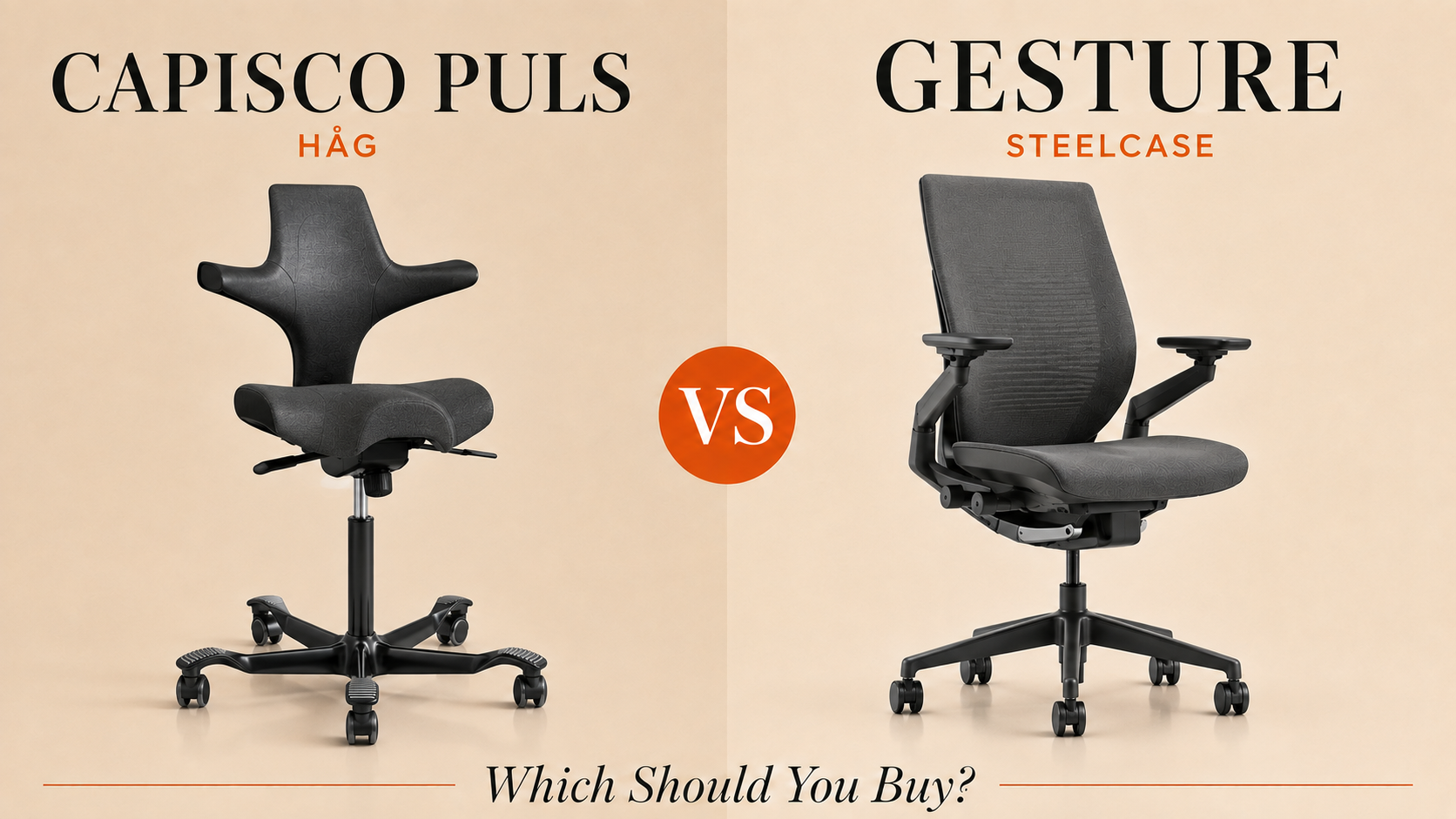
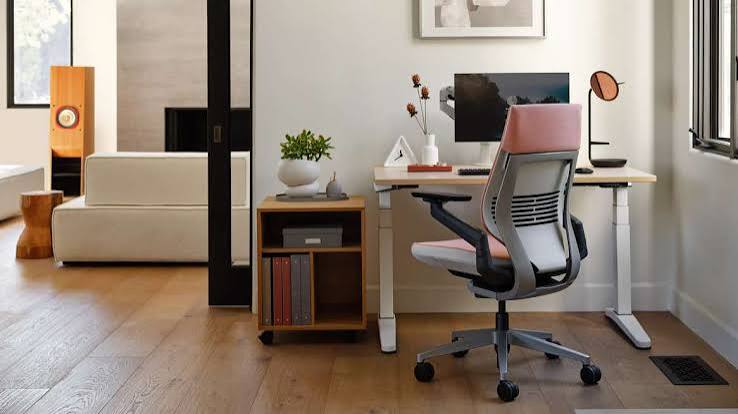
The HÅG Capisco Puls and Steelcase Gesture represent fundamentally different approaches to office seating. The $730 Capisco Puls is a plastic-shell saddle seat designed for workshops, labs, and sit-stand workstations—a stripped-down variant of HÅG's iconic Capisco line. The $1,499 Gesture is Steelcase's flagship multi-posture chair, engineered with 360-degree arms and comprehensive adjustability for device-heavy workflows. One prioritizes movement and standing-desk compatibility; the other delivers traditional ergonomic control. Both earned modest ratings (3.2 and 3.8 respectively from 12 reviews each), but for very different reasons.
At a glance
Spec | HÅG Capisco Puls | Steelcase Gesture |
|---|---|---|
Price | $730 | $1,499 |
Category | Saddle seat / sit-stand | Traditional ergonomic office |
Armrests | None | 4D adjustable |
Lumbar support | No | Yes |
Recline range | 0° | 125° |
Seat depth | 35 cm (fixed) | 43 cm (adjustable) |
Seat width | 40 cm | 51 cm |
Weight capacity | 120 kg | 159 kg |
Warranty | 7 years | 12 years |
Rating | 3.2/5 (12 reviews) | 3.8/5 (12 reviews) |
HÅG Capisco Puls — strengths & weaknesses
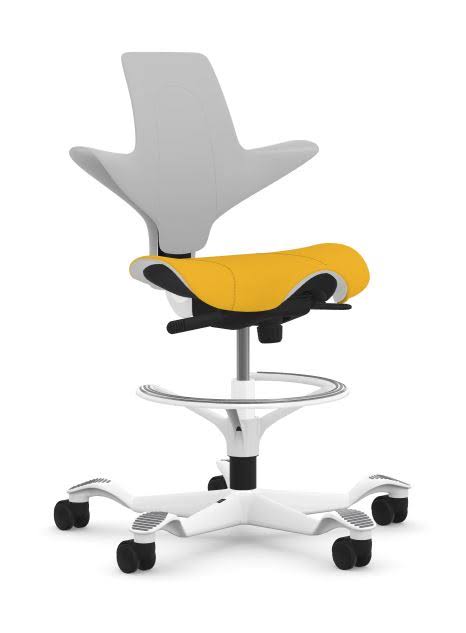
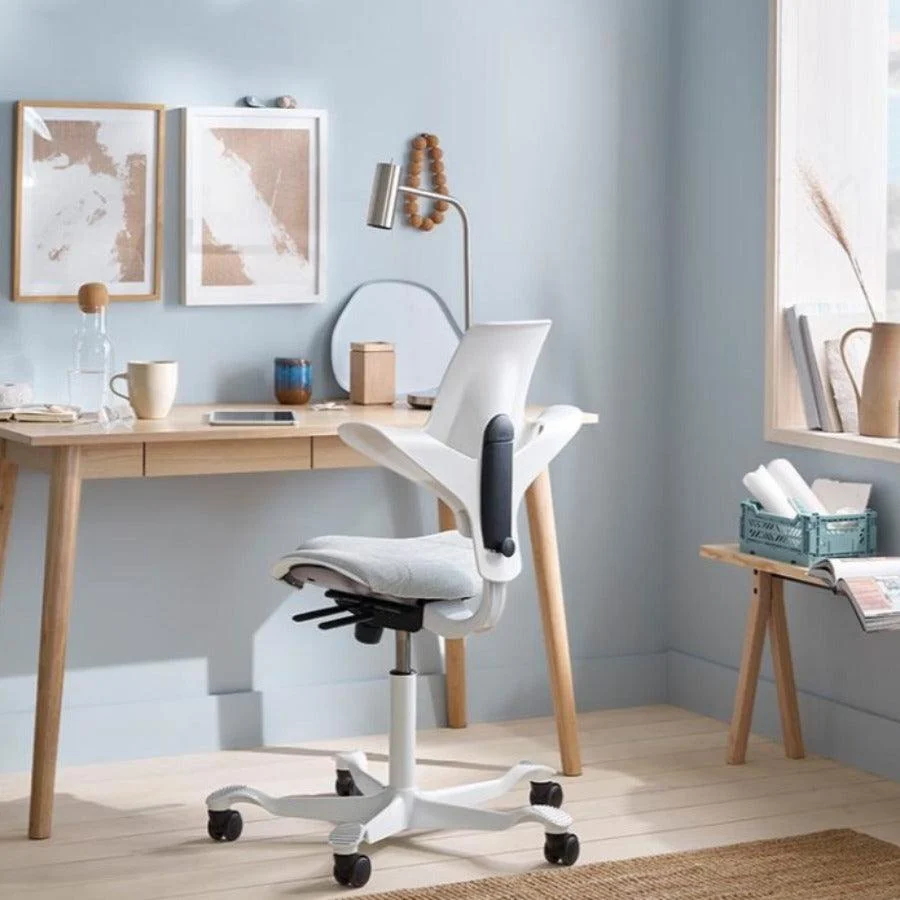
Strengths: The Capisco Puls excels at what it's designed for: active sit-stand workflows. Reviewers highlight its ergonomic design that prevents leg crossing and reduces knee issues, with one user experiencing relief from knee problems. Multiple users report sustained satisfaction, including one who remained "very satisfied" after more than two years of daily use with a standing desk. The saddle design promotes healthy posture and is compatible with height-adjustable desks, allowing users to maintain consistent desk height whether sitting or standing. An optional extra cushion adds comfort for those who need it.
Weaknesses: This chair is not for marathon sitters. Reviews explicitly note it's "not suitable for sitting 10 hours or long work sessions." Some users eventually crave a more traditional chair design, suggesting the unconventional saddle position isn't for everyone. The seating position preferences don't suit all body types. Reviewers also note difficulty finding unbiased reviews due to sponsored content, and that hard floor use requires specific wheels for optimal performance. The plastic backrest and materials mark it clearly as the budget variant of the Capisco family.
Steelcase Gesture — strengths & weaknesses
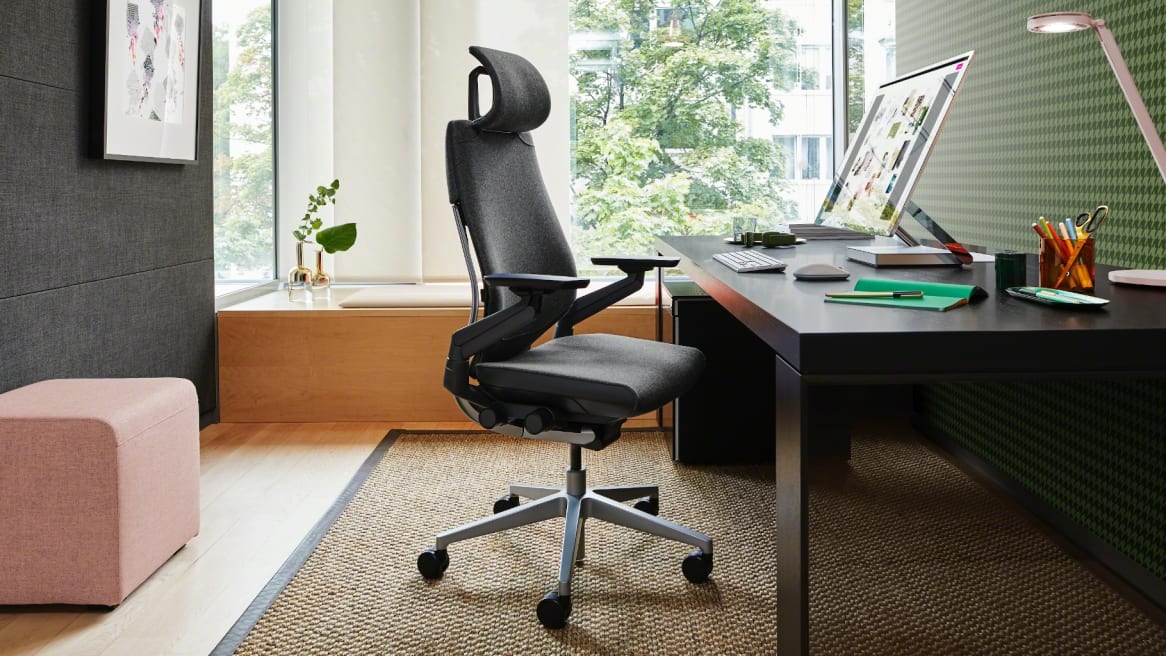
Strengths: The Gesture delivers comprehensive ergonomic adjustability across all major parameters: height, seat depth, lumbar support, 4D armrests, and a 125-degree recline range. A certified ergonomics expert praised its complete adjustment coverage and detailed tilt mechanism. The narrower backrest allows shoulder and back freedom without a claustrophobic feeling, which proved decisive for one reviewer with spinal stenosis and trapezius tension. For users transitioning from gaming chairs, the Gesture forces better posture with what one reviewer described as an "auto-correction feel." Reviews note its ability to support various sitting positions for extended periods and quiet wheels.
Weaknesses: Long-term durability emerges as a significant concern. One user who purchased four Gesture chairs reported that all four units experienced breakdown issues after three years, creating "extreme buyer's regret" despite strong initial performance. Another reviewer noted the chair "looks cheap and budget-like despite high price point." While initially comfortable, the forced upright posture isn't immediately pleasant for everyone—one user described still "adjusting to optimal lumbar settings" and noted the seat "feels like it pushes user into upright position." Some reviews lacked specific performance ratings or long-term comfort assessment.
How they differ
These chairs solve different problems. The Capisco Puls has no armrests, no lumbar support, and no recline—it's a perch for active workers who move between sitting and standing throughout the day. The Gesture is a fully-loaded traditional task chair with 4D arms, adjustable lumbar, and a wide recline range for users who stay seated but shift between devices and postures.
The seat dimensions tell the story: the Capisco Puls is narrower (40 cm vs 51 cm) and shallower (35 cm vs 43 cm), reflecting its saddle design. The Gesture accommodates larger users with a 159 kg capacity versus 120 kg. The Gesture's seat height range (40-57 cm) suits conventional desks, while the Capisco Puls rises much higher (50-70 cm) for standing-desk integration.
Price and warranty show a premium gap: the Gesture costs more than double and carries a 12-year warranty versus 7 years. Yet durability reviews suggest that warranty may be necessary—while no Capisco Puls reviews mentioned breakdowns, the Gesture's three-year failure pattern is troubling.
Daily use experience diverges completely. Capisco Puls users report satisfaction with sit-stand workflows but acknowledge it's not suitable for all-day sitting. Gesture users appreciate the adjustment range but face a comfort learning curve and question the value proposition when durability falters.
Who should buy which
Buy the HÅG Capisco Puls if:
You use a height-adjustable or standing desk and alternate positions frequently throughout the day
You work in a workshop, lab, or industrial environment where a plastic shell suits your needs
You want to prevent leg crossing and improve circulation through saddle-seat ergonomics
You work sessions shorter than full 8-10 hour days, or take frequent breaks
You prefer minimal, no-frills design and don't need armrests or lumbar support
You're comfortable with unconventional seating positions
Buy the Steelcase Gesture if:
You sit for extended periods (8+ hours) at a traditional fixed-height desk
You shift between keyboard work, tablet use, and other device-based tasks
You need comprehensive adjustment controls including 4D armrests and lumbar support
You have shoulder tension or spinal issues that benefit from a narrower, freedom-allowing backrest
You prefer traditional seating and want postural correction built into the chair
You can accept potential durability trade-offs for maximum adjustability
The verdict
If you run a sit-stand workflow, the Capisco Puls is purpose-built for your needs at half the price—but accept that it's a specialist tool, not an all-day sitting solution. Long-term users remain satisfied, and the saddle ergonomics deliver real benefits for circulation and posture during active work sessions.
If you're a committed sitter who juggles devices and needs every ergonomic lever at your disposal, the Gesture provides unmatched adjustability and that narrow-backrest shoulder freedom. Just know you're paying premium dollars for a chair with documented three-year durability concerns—that 12-year warranty may prove essential. The Gesture earns its higher rating through sheer feature depth, but the Capisco Puls delivers more focused value for the sit-stand user.
For most office workers at fixed desks, the Gesture remains the conventional choice despite its cost and durability questions. For active workers with standing desks who move throughout the day, the Capisco Puls is the clear winner—assuming you're buying it for what it actually is: a sit-stand perch, not a marathon sitting chair.
Frequently asked
- Is the Steelcase Gesture worth twice the price of the HÅG Capisco Puls?
- The Gesture offers far more adjustability (4D arms, lumbar support, 125° recline, seat depth adjustment) and higher weight capacity, but reviews cite durability concerns. The Capisco Puls is purpose-built for sit-stand use with standing desks and has satisfied long-term users over 2+ years.
- Can you use the HÅG Capisco Puls for 10-hour workdays?
- No. Reviews specifically note the Capisco Puls is not suitable for sitting 10 hours or long work sessions. It's designed for active sit-stand use with height-adjustable desks, not all-day seated work.
- Which chair has better long-term durability?
- The Capisco Puls has a 7-year warranty and users report satisfaction after 2+ years. The Gesture has a 12-year warranty but one long-term review reported all four purchased units breaking down after 3 years, creating significant buyer's regret despite initial performance.
Specs, reviews & details
Specs, reviews & details