HÅG Capisco vs Okamura Contessa II: Which Should You Buy?
Scandinavian saddle-seat innovation meets Japanese executive precision
Specs, reviews & details
Specs, reviews & details
Introduction
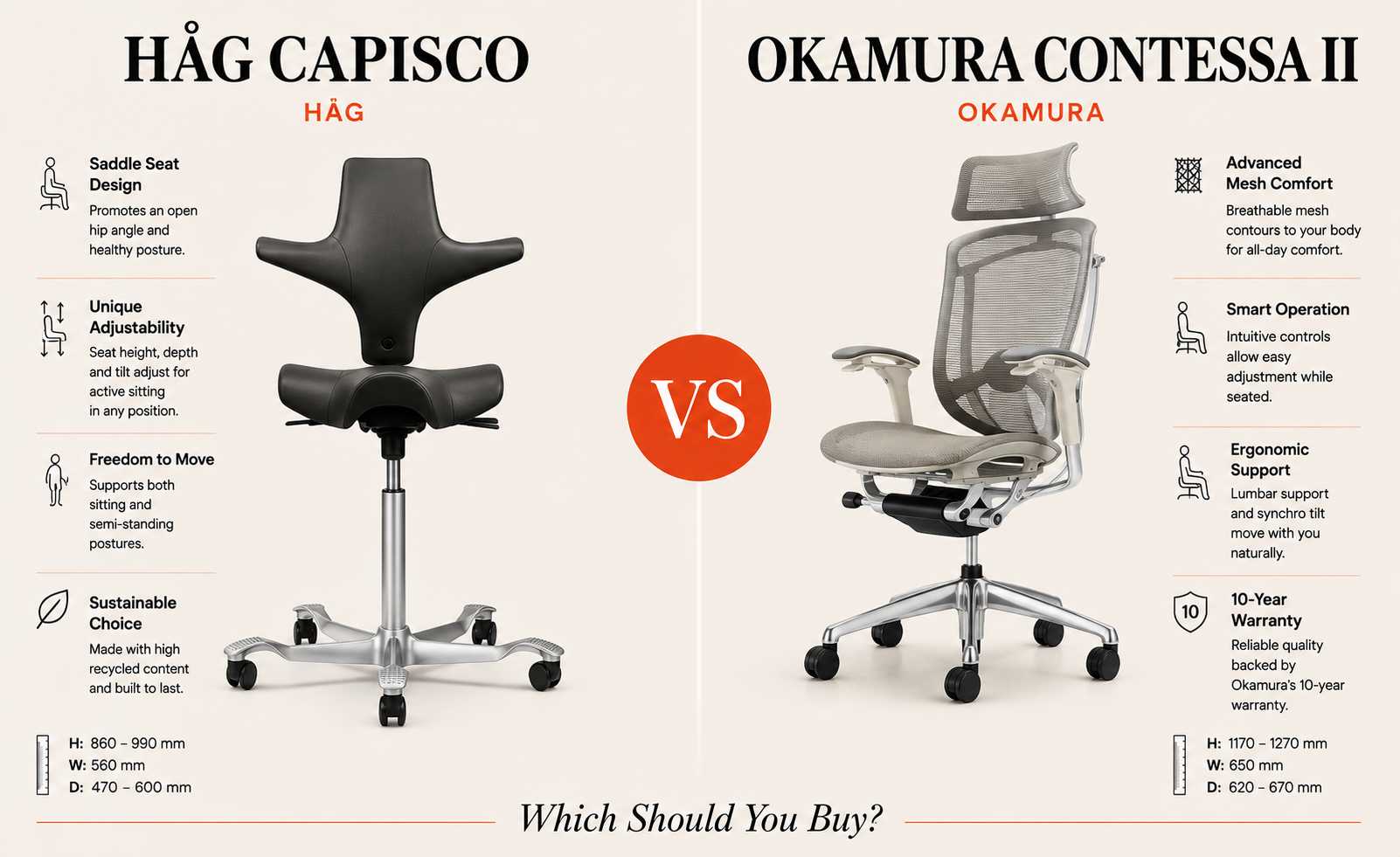
The HÅG Capisco and Okamura Contessa II represent starkly different philosophies in premium seating. The Capisco is a Scandinavian iconoclast: a saddle-style chair with no armrests or lumbar support, designed to encourage movement and perching at sit-stand desks. The Contessa II is a Japanese flagship executive chair with every adjustment you'd expect—4D arms, headrest, lumbar support, and a 130-degree recline. At $939 versus $2,040, they also occupy different price tiers. This is less about choosing the better chair than identifying which design philosophy fits your work style.
At a glance
Spec | HÅG Capisco | Okamura Contessa II |
|---|---|---|
Price | $939 | $2,040 |
Category | Office | Office |
Seat dimensions (W × D cm) | 40 × 35 | 52 × 45 |
Seat height range (cm) | 50–70 | 42–55 |
Armrests | None | 4D adjustable |
Headrest | No | Yes |
Lumbar support | No | Yes |
Recline range | 0° | 130° |
Weight capacity (kg) | 120 | 150 |
Warranty (years) | 7 | 10 |
Aggregate rating | 3.1 / 12 reviews | 3.8 / 12 reviews |
HÅG Capisco — strengths & weaknesses
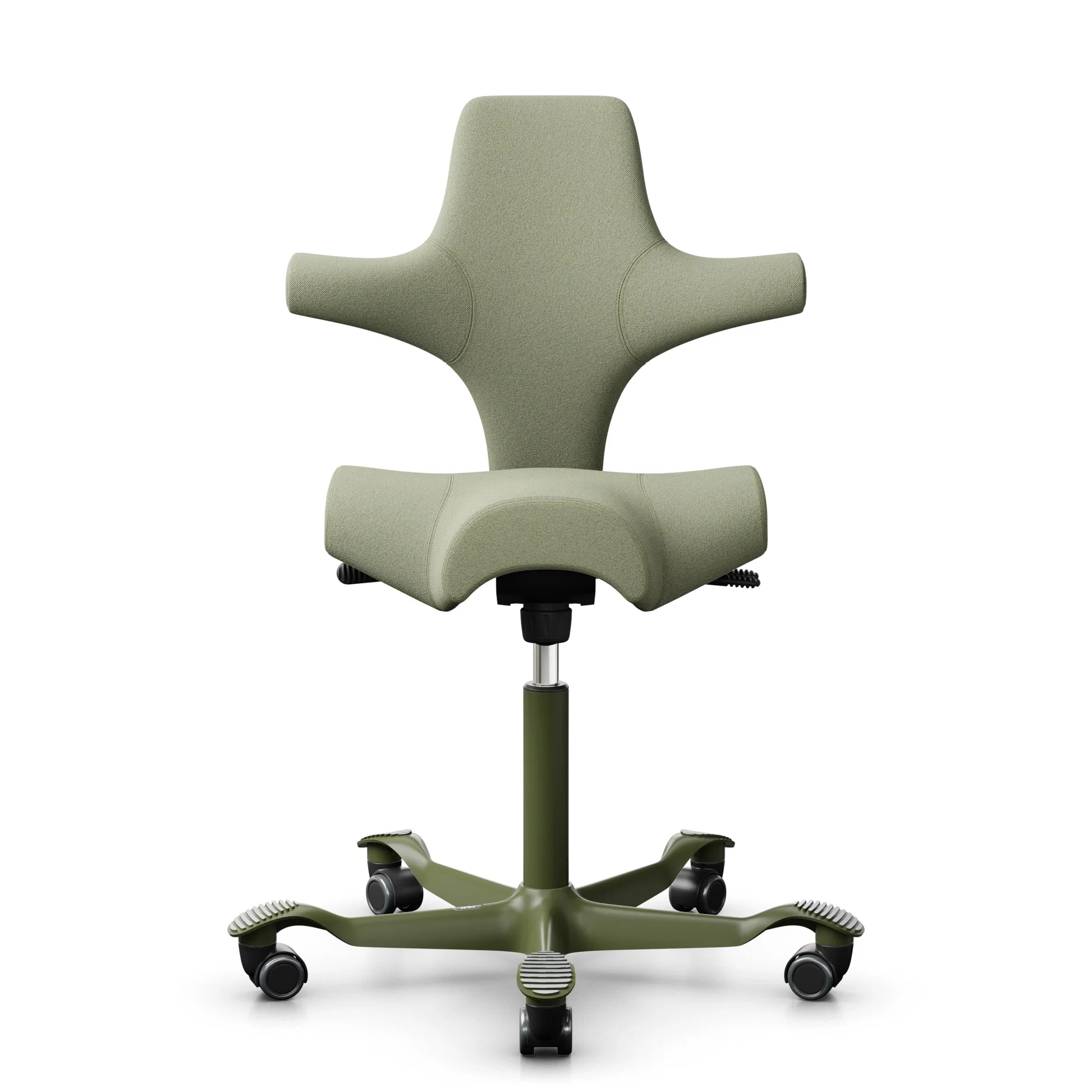
Strengths: The Capisco's saddle seat is its defining feature. Reviewers say it takes pressure off the lower back and encourages an open hip angle, which promotes healthy blood flow. It pairs naturally with standing desks thanks to its extended height range (up to 70 cm seat height). One reviewer noted increased productivity and comfort throughout the workday. The chair offers multiple adjustment points—seat height, depth, backrest height, and tilt—despite its minimalist appearance. Eco-conscious buyers will appreciate that it's made from recycled materials. Its vivid color options can serve as a design accent in an office.
Weaknesses: The unconventional design requires time to understand and adapt to, and at least one reviewer didn't continue using it long-term. The lack of armrests, headrest, and lumbar support won't suit everyone. One buyer mentioned difficulty finding honest reviews due to promotional review units, and another had logistical problems with direct shipping that nearly prevented delivery. At 3.1 stars, the aggregate rating trails the Contessa II, though the small sample size (12 reviews) limits confidence.
Okamura Contessa II — strengths & weaknesses
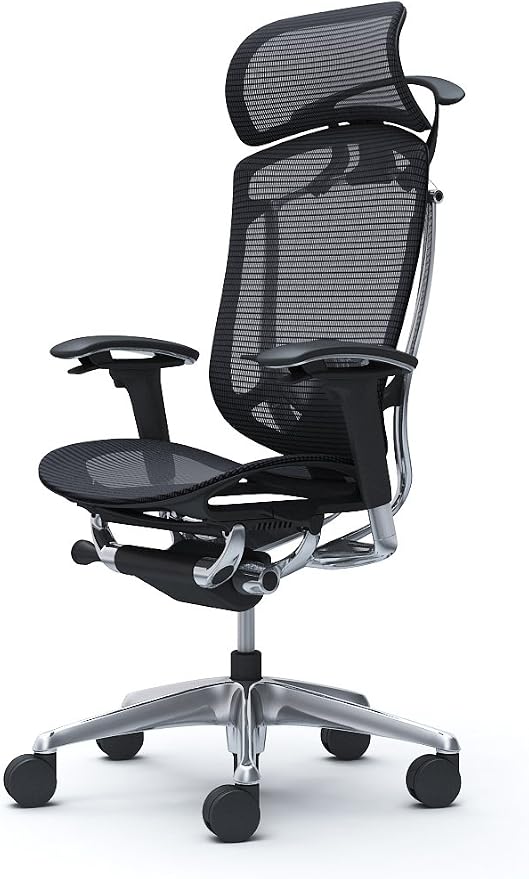
Strengths: Reviewers consistently praise the Contessa II's comfort and support. One user switching from a 15-year-old Aeron reported dramatically improved blood circulation and a refreshing feeling after sitting, with better posture support. Another highlighted the excellent lumbar support that allowed extended sitting without strain. A designer with chronic neck disc issues found it particularly well-suited for her needs and considered it a necessary health investment. The armrest-mounted controls let you adjust backrest lock and height while seated—a convenient design touch. It's available in three material options (mesh, fabric, leather) and backed by a 10-year warranty.
Weaknesses: Limited online reviews made research difficult for some buyers. One user upgrading from a problematic chair (T80) noted that the Aeron felt as uncomfortable as their old chair during showroom testing, raising questions about individual fit. Another mentioned lower body pressure and unusual pain when raising seat height on their previous chair, though it's unclear if this persisted with the Contessa II. At over twice the price of the Capisco, the value proposition depends heavily on whether you need—and will use—all the executive features.
How they differ
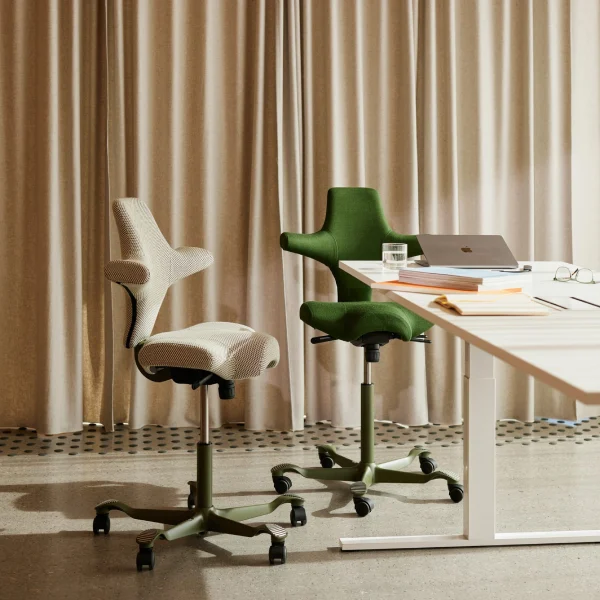
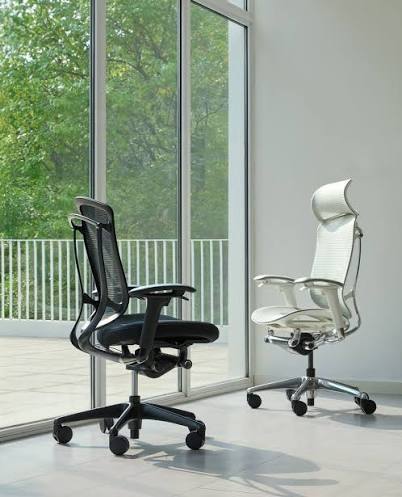
The Capisco is a movement chair; the Contessa II is a destination chair. The Capisco's saddle seat and 50–70 cm height range encourage perching, standing, and shifting positions throughout the day. It has no armrests, no headrest, no lumbar support, and no recline. The Contessa II is designed for long, focused sits: 4D armrests, integrated lumbar support, a headrest, and a 130-degree recline turn it into a command center for your spine.
Dimensions tell the story. The Contessa II's seat is 30% wider and deeper (52 × 45 cm vs. 40 × 35 cm), with a taller backrest (62 cm vs. 45 cm) and nearly double the weight (28 kg vs. 14 kg). The Capisco weighs less than many gaming chairs; the Contessa II is a substantial piece of furniture.
User feedback diverges along predictable lines. Capisco buyers value the chair's uniqueness and compatibility with sit-stand workflows but acknowledge an adaptation period. Contessa II owners emphasize circulation, posture support, and lumbar comfort—classic ergonomic benefits. The Contessa II's 3.8 rating edges the Capisco's 3.1, though both are modest.
Who should buy which
Choose the HÅG Capisco if: You use a sit-stand desk and want a chair that supports perching at intermediate heights. You value movement and position changes over static lumbar support. You're comfortable without armrests and prefer a minimalist aesthetic. You're between 160–195 cm tall and under 120 kg. You want to spend under $1,000 on a distinctive, eco-friendly design backed by a 7-year warranty.
Choose the Okamura Contessa II if: You sit for long stretches and need comprehensive support—lumbar, headrest, and 4D armrests. You want a traditional executive chair with a deep recline (130 degrees) and precise adjustments. You're between 168–198 cm tall and under 150 kg. You're willing to invest $2,040 for a 10-year warranty and a chair that reviewers say improves circulation and posture. You prefer a larger, more enveloping seat (52 × 45 cm).
The verdict
This isn't a close contest because these chairs serve different masters. The HÅG Capisco is the better buy for active sit-stand users who value movement, minimalism, and a sub-$1,000 price. Its saddle design and extended height range solve a specific problem: comfortable perching between sitting and standing. The Okamura Contessa II is the better buy for traditional desk workers who spend hours in one position and need the full ergonomic toolkit—lumbar support, 4D arms, headrest, and recline. Reviewers confirm it delivers on circulation and posture, though at a premium price. If your desk moves, buy the Capisco. If you don't, and your budget allows, the Contessa II is the more complete chair.
Frequently asked
- Is the Okamura Contessa II worth twice the price of the HÅG Capisco?
- The Contessa II offers traditional executive features—4D armrests, headrest, lumbar support, 130-degree recline, and higher ratings (3.8 vs 3.1). The Capisco's saddle design serves a different purpose: perching at sit-stand desks with no arms or lumbar.
- Which chair is better for standing desk users?
- The HÅG Capisco is specifically designed for sit-stand workflows with its saddle seat and extended height range (50–70 cm). Reviews confirm it works well with standing desks and encourages movement. The Contessa II is a traditional seated executive chair.
- Do either of these chairs work well for petite users?
- The Okamura Contessa II is better suited for smaller frames, with a minimum seat height of 42 cm and recommended minimum user height of 168 cm. The Capisco starts at 50 cm seat height and is recommended for users 160 cm and taller.
Specs, reviews & details
Specs, reviews & details