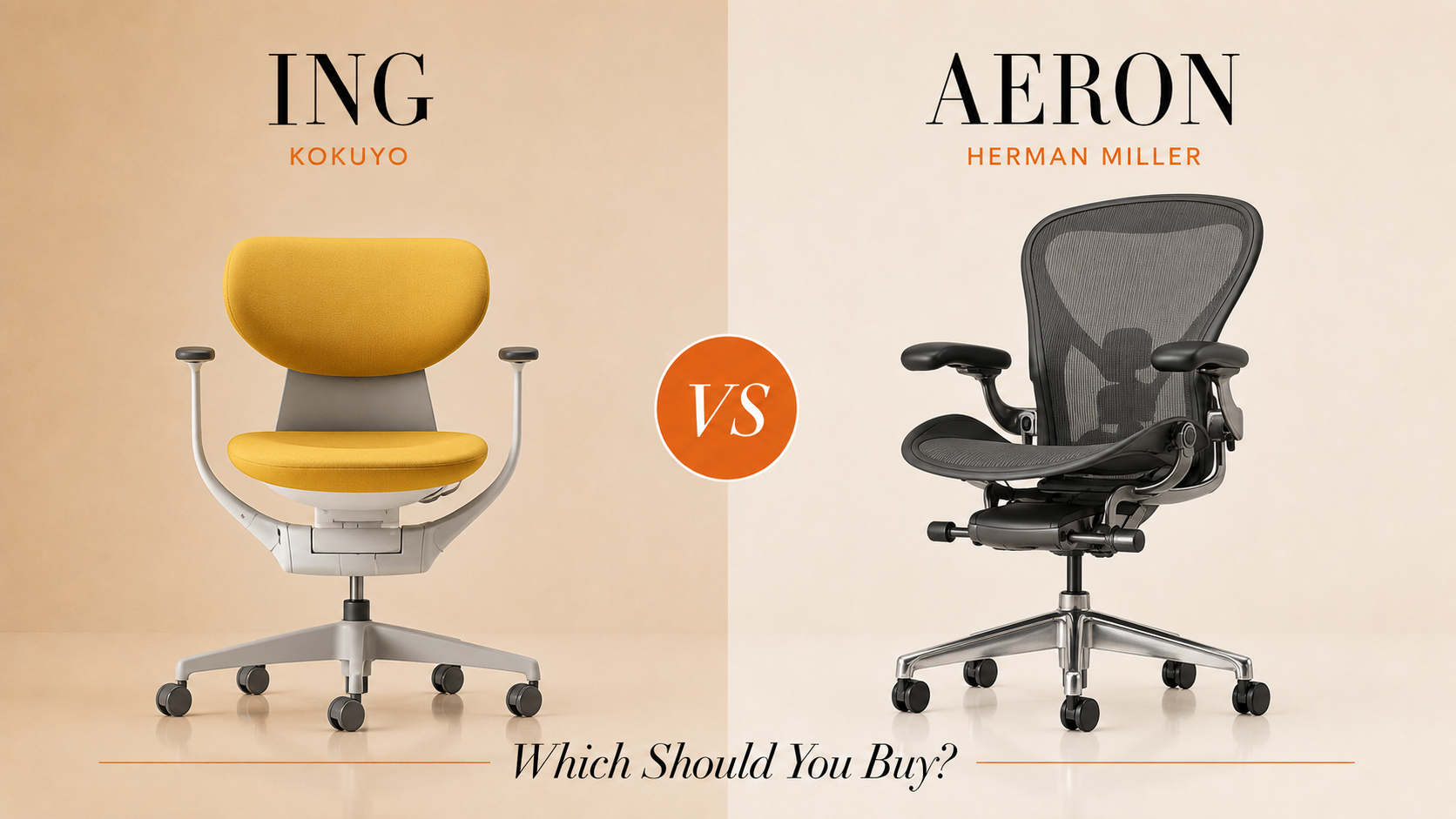
Herman Miller Aeron vs Kokuyo Ing: Which Should You Buy?
Two premium ergonomic chairs at different price points—how to choose
Specs, reviews & details
Specs, reviews & details
Introduction
The Herman Miller Aeron and Kokuyo Ing occupy the same premium ergonomic territory, with remarkably similar specs but divergent design philosophies. The Aeron at $1,521 is an iconic mesh task chair built around ventilation and static support, while the $1,100 Ing emphasizes dynamic movement through its signature 360-degree gliding mechanism. Both carry 12-year warranties and nearly identical adjustment ranges, making the choice less about features and more about how you want to sit.
At a glance
Spec | Herman Miller Aeron | Kokuyo Ing |
|---|---|---|
Price | $1,521 | $1,100 |
Category | Office | Office |
Armrest Type | 4D | 4D |
Recline Range | 125° | 125° |
Seat Dimensions (W×D) | 51 cm × 43 cm | 51 cm × 43 cm |
Height Range | 40–57 cm | 40–57 cm |
Recommended User Height | 165–180 cm | 165–195 cm |
Weight Capacity | 159 kg | 159 kg |
Warranty | 12 years | 12 years |
Aggregate Rating | 3.5 / 5 (12 reviews) | 3.2 / 5 (12 reviews) |
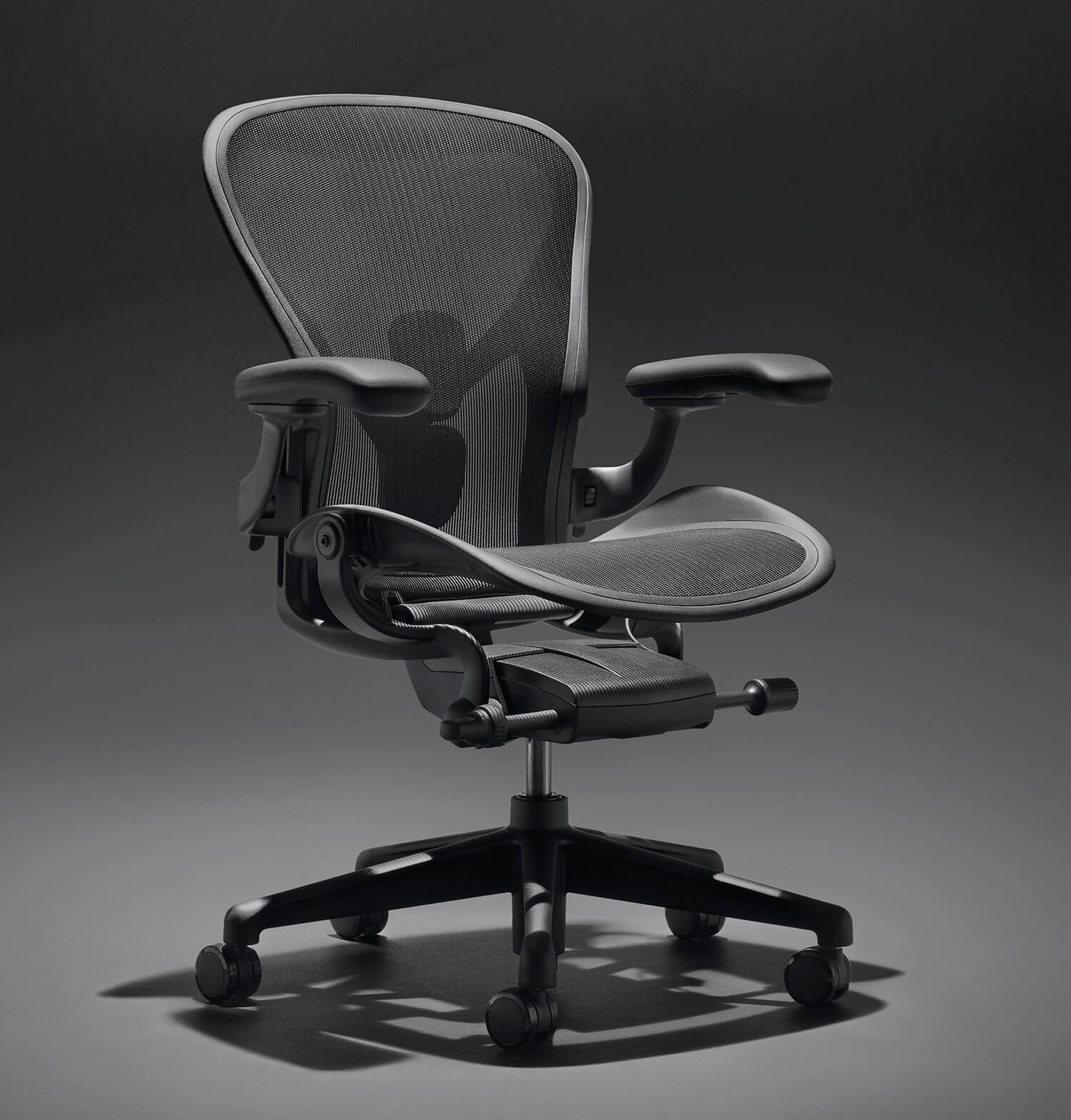
Herman Miller Aeron — strengths & weaknesses
Strengths: The Aeron's hallmark is its Pellicle mesh and 8Z ventilation zones, with users describing the experience as "sitting on a cloud." Its exceptional resale value stands out—reviewers report buying used units for $300–400 and reselling them years later at the same price, making total cost of ownership competitive with budget chairs. The PostureFit SL lumbar support works well for users with back, hip, and knee issues. Official Herman Miller documentation and parts availability make long-term ownership straightforward.
Weaknesses: At $1,521, the upfront cost is steep. One long-term reviewer struggled to fully embrace it as a daily driver even after three years, and another noted the seat pan "digs too deep" into the bottom. The chair is explicitly not suitable for everyone, and sizing (A, B, or C) requires careful attention to avoid buyer's remorse. The 165–180 cm height recommendation excludes taller users.
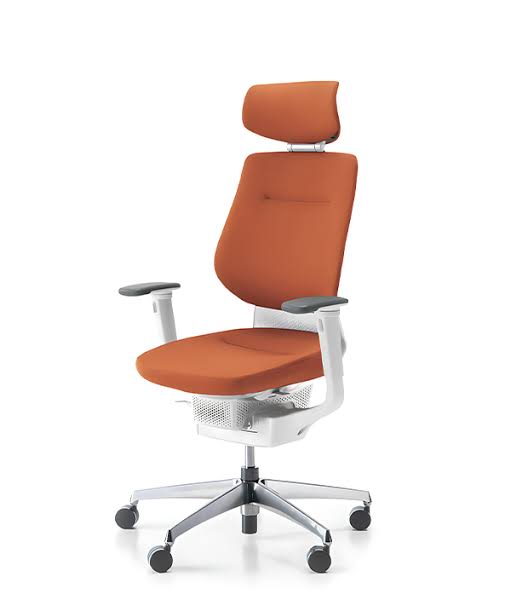
Kokuyo Ing — strengths & weaknesses
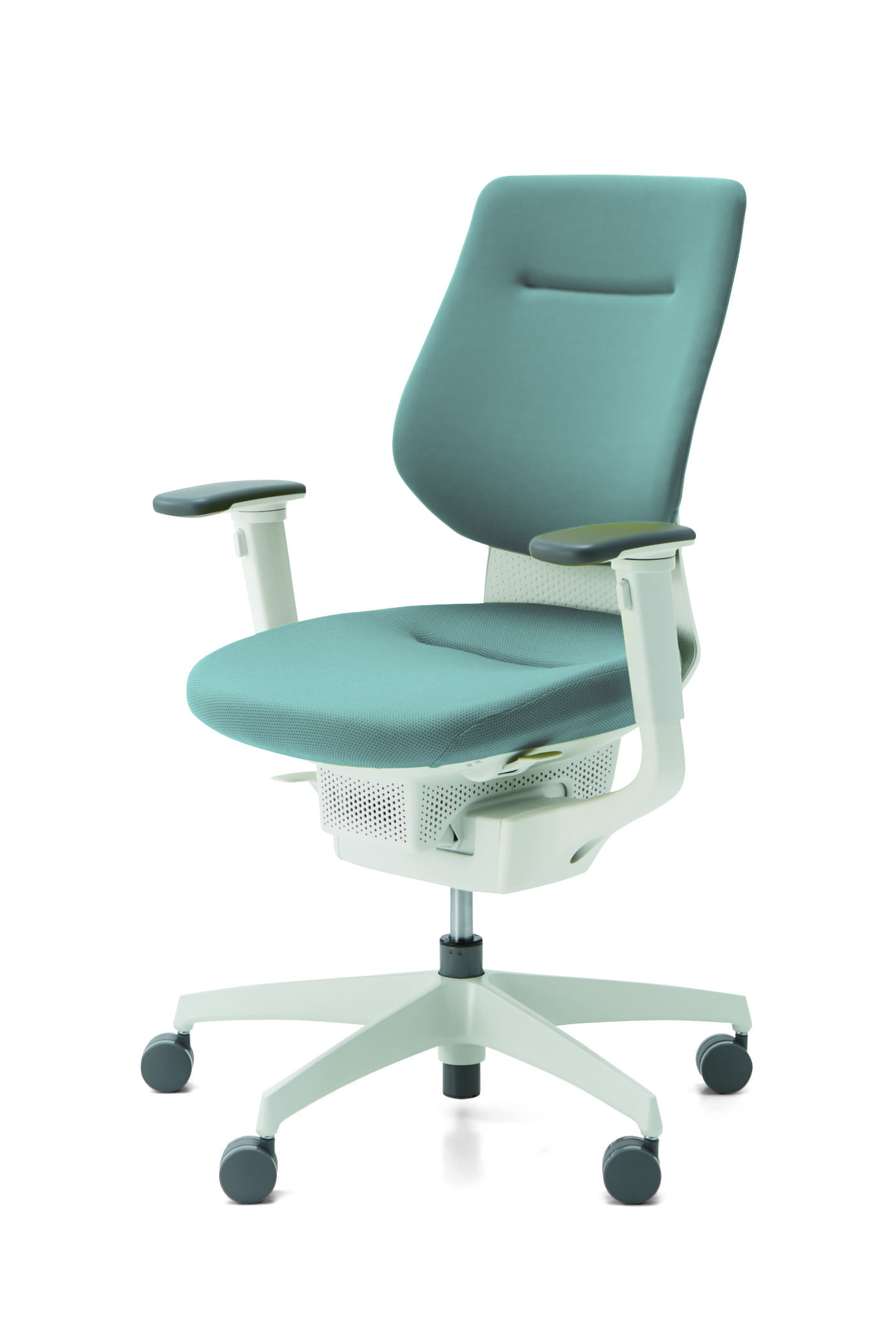
Strengths: The Ing's 360-degree gliding mechanism is its defining feature, allowing free movement in all directions to support natural posture shifts. Research cited in reviews claims sitting for four hours burns energy equivalent to walking 1.5 kilometers and increases creativity by 13 percent through stimulated brain activity. It won the Good Design Award 2019. One reviewer preferred the Ing Cloud variant over competing models. At $1,100, it's $421 less expensive than the Aeron while offering a taller height range (up to 195 cm).
Weaknesses: Reviewers noted the chair's functions weren't well explained, leaving them unsure whether they'd discovered all adjustments. Assembly is physically demanding. Some users raised concerns about the tilting seat bucket potentially causing knee pain. Funding or pre-order delays were mentioned, suggesting possible supply issues. Review data also included promotional content, making it harder to assess genuine long-term satisfaction.
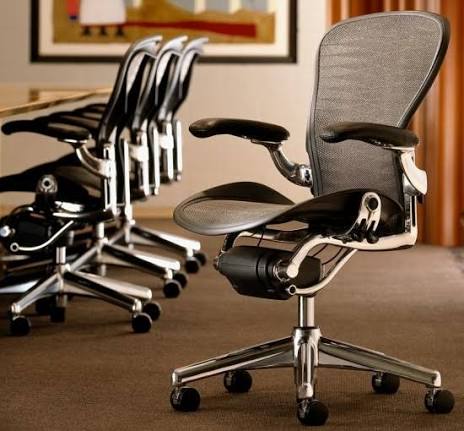
How they differ
The core trade-off is static support versus dynamic movement. The Aeron anchors you in place with mesh ventilation and targeted lumbar support—ideal if you value a stable, breathable seat for focused desk work. The Ing encourages micro-movements through its gliding base, betting that fidgeting improves circulation and focus.
Height accommodation is another key divider. The Aeron's 165–180 cm range suits medium builds, while the Ing stretches to 195 cm, making it the only option here for taller users.
Resale economics favor the Aeron. Its strong secondary market means you can recoup much of your investment; no such data exists for the Ing. However, the Ing's $421 lower entry price and strong local service network (via Chairpark, per the editorial description) may appeal to buyers prioritizing upfront savings and support access.
Both share identical seat dimensions, weight capacity, warranty length, and 4D armrests, so day-to-day adjustability is a wash.
Who should buy which
Buy the Herman Miller Aeron if:
You're 165–180 cm tall and want a chair sized specifically for medium builds
Ventilation and breathability matter (hot climates, long sessions)
You value resale liquidity and want to minimize long-term cost
You prefer a stable, anchored sitting position over dynamic movement
You have back, hip, or knee issues that respond well to targeted lumbar support
Buy the Kokuyo Ing if:
You're taller than 180 cm (up to 195 cm)
You believe in active sitting and want to fidget while you work
You prefer to save $421 upfront
You value access to a strong local service network
You're drawn to award-winning design focused on movement and creativity
The verdict
The Aeron is the safer pick for medium-height buyers who prioritize proven comfort, resale value, and static support. Its higher price is softened by exceptional depreciation resistance. The Ing makes sense for taller users, active-sitting believers, and those who want to spend less now—but be prepared for a demanding assembly and a learning curve around its movement-first design. If you're under 180 cm and plan to keep the chair long-term, the Aeron's track record edges it ahead. If you're over 180 cm, the Ing is your only realistic choice here.
Frequently asked
- Is the Herman Miller Aeron worth $400 more than the Kokuyo Ing?
- The Aeron's resale value is exceptional—buyers report selling used units for the same price years later, which may offset the higher upfront cost. The Ing costs less initially but resale data is not available.
- Which chair is better for taller users?
- The Kokuyo Ing accommodates users up to 195 cm tall, while the Aeron is recommended only up to 180 cm. If you're over 180 cm, the Ing is the better choice.
- Do both chairs encourage movement while sitting?
- The Kokuyo Ing features a 360-degree gliding mechanism designed specifically to promote movement and won a 2019 Good Design Award for this feature. The Aeron focuses on static support with PostureFit SL lumbar and Pellicle mesh zones.
Specs, reviews & details
Specs, reviews & details