Herman Miller Embody vs Herman Miller Aeron: Which Should You Buy?
Two iconic ergonomic chairs from the same maker—here's how to choose
Specs, reviews & details
Specs, reviews & details
Introduction
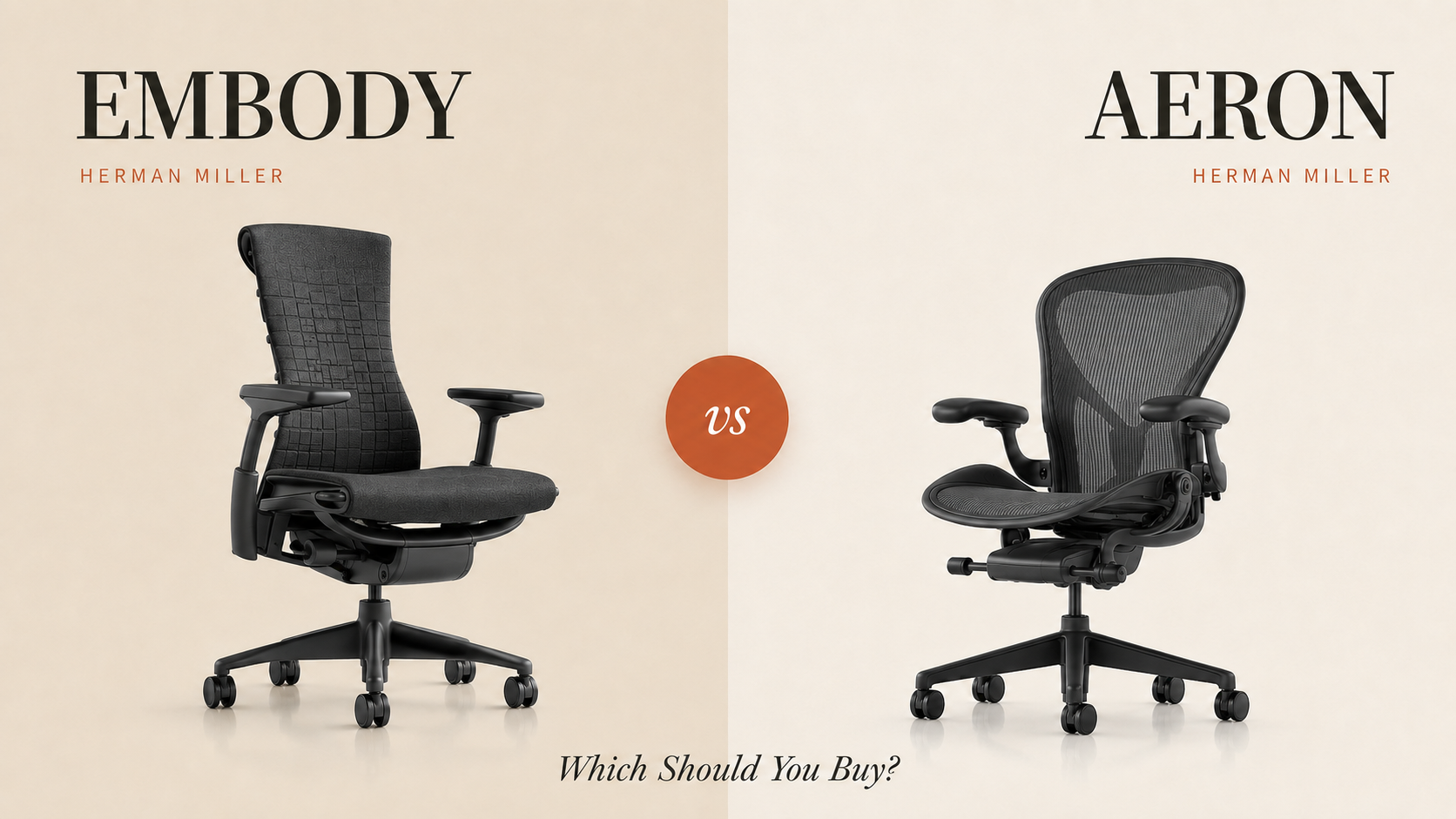
The Herman Miller Embody and Aeron represent two different philosophies in premium ergonomic seating. The Embody, designed by Bill Stumpf and Jeff Weber in 2009, uses a pixelated Backfit matrix to promote micro-movement and spinal support. The Aeron, an iconic mesh design with PostureFit SL lumbar and 8Z Pellicle zones, prioritizes breathability and all-day ventilation. Both carry 12-year warranties and command four-figure prices, but they deliver comfort in distinctly different ways. This comparison will help you decide which fits your body, budget, and work style.
At a glance
Spec | Herman Miller Embody | Herman Miller Aeron |
|---|---|---|
Price | $1,700 | $1,521 |
Category | Office | Office |
Armrest Type | 4D | 4D |
Recline Range | 130° | 125° |
Seat Height Range | 39–52 cm | 40–57 cm |
Weight Capacity | 136 kg | 159 kg |
Recommended Height | 160–190 cm | 165–180 cm |
Chair Weight | 24 kg | 19 kg |
Warranty | 12 years | 12 years |
Aggregate Rating | 3.8 / 5 (12 reviews) | 3.5 / 5 (12 reviews) |
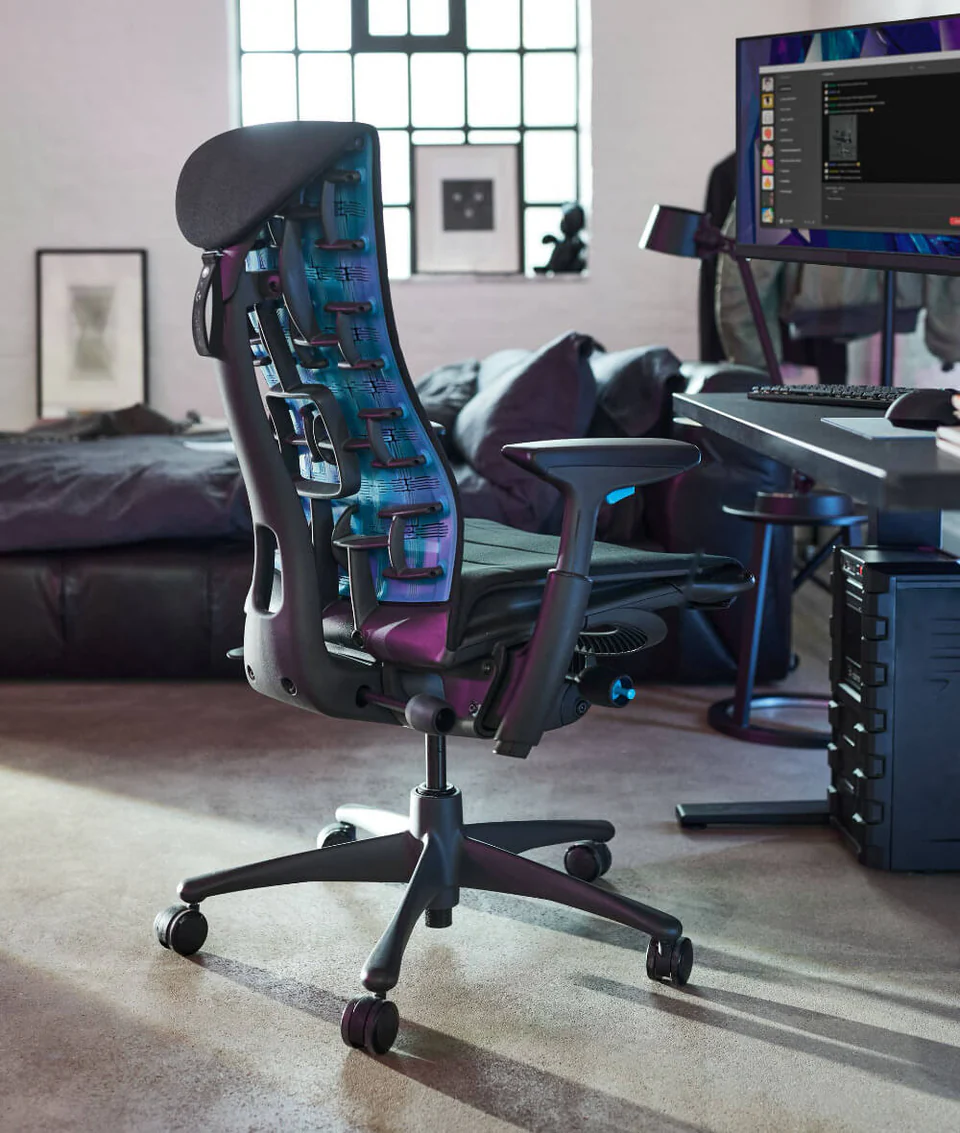
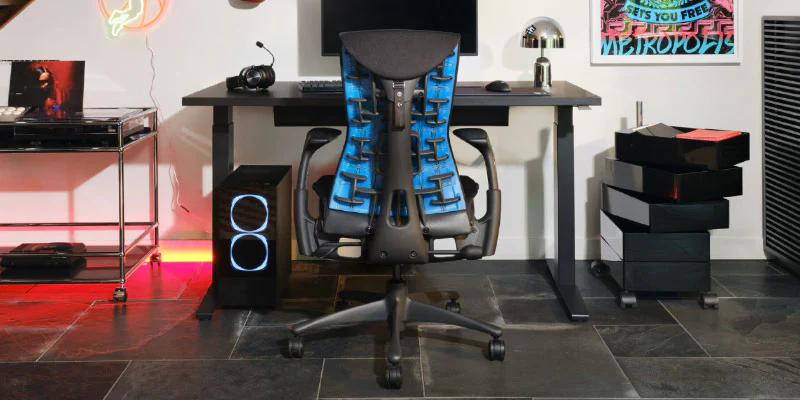
Herman Miller Embody — strengths & weaknesses
What reviewers love: The Embody earns consistent praise for encouraging good posture naturally. Users report it helps prevent bad sitting positions and corrects posture issues developed from years in cheap chairs. One long-term owner rated it 9.5/10, calling it "god tier comfort" especially when a headrest is added. Multiple reviewers highlight excellent back support and versatility—it works well for both focused office work and relaxing at home.
Where it falls short: The chair is "far from perfect out of the box," according to one detailed review that tested multiple aftermarket upgrades. The recline function can be difficult to adjust, and the armrest adjustment mechanism isn't intuitive. Some units creak during use. Several reviewers note the chair requires additional purchases to optimize comfort, which frustrates buyers already spending $1,700. Opinions are mixed overall—while many praise it as superior to the Aeron, others found it uncomfortable or even harmful to their back, underscoring the importance of trying before buying.
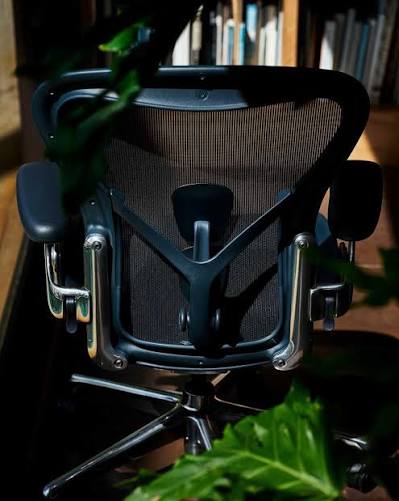
Herman Miller Aeron — strengths & weaknesses
What reviewers love: The Aeron is described as "sitting on a cloud" and earns strong marks for resale value—one owner bought used for $300–400 and sold it for the same price five years later. Reviewers emphasize superior total cost of ownership compared to IKEA or OfficeMax alternatives. User comments indicate it works well for people with back, hip, and knee issues, and the breathable mesh delivers the ventilation Herman Miller promises.
Where it falls short: One three-year reviewer admitted struggling to fully embrace it as a daily driver despite long-term use, noting the seat pan "feels like it digs too deep into bottom." The chair is "not suitable for everyone," and the high price point remains a barrier. Some of the available content is promotional or technical (replacement guides), making it harder to gauge real-world long-term satisfaction compared to the Embody's richer review set.
How they differ
Support philosophy: The Embody uses a segmented, pixelated back that flexes with your spine to distribute weight and promote micro-movement. The Aeron relies on a taut mesh Pellicle surface and PostureFit SL lumbar. If you want active, dynamic support that adapts as you shift, the Embody is engineered for that. If you prefer breathable, tension-based support, the Aeron delivers.
Sizing and fit: The Aeron is sized for medium builds (165–180 cm recommended height) and supports up to 159 kg. The Embody accommodates a taller range (160–190 cm) but has a lower weight capacity (136 kg) and is 5 kg heavier. The Aeron also offers more seat-height adjustment at the top end (57 cm vs 52 cm).
Comfort and adjustability: Both have 4D armrests and lumbar support, but the Embody's recline goes 5° further (130° vs 125°). Reviewers report the Embody's adjustments are less intuitive, while the Aeron's mesh can feel intrusive on the underside for some users.
Price and value: The Aeron costs $179 less and has documented excellent resale value. The Embody often requires accessory purchases (headrests, cushions, armpads) to reach its full potential, adding to the total investment.

Who should buy which
Buy the Embody if: You prioritize posture correction and dynamic back support. You're between 160–190 cm tall and want a chair that encourages micro-movement throughout the day. You're willing to fine-tune with accessories and don't mind spending extra to dial in perfect comfort. You work long hours and want a chair equally suited to focused tasks and leaning back to relax.
Buy the Aeron if: You run hot and need maximum breathability. You value resale flexibility and want a chair with proven long-term cost-effectiveness. You're between 165–180 cm and prefer a lighter chair (19 kg vs 24 kg). You want a more predictable, out-of-the-box experience without needing aftermarket mods. You have existing back, hip, or knee issues and want a chair with a strong track record in that area.
Try before you buy: Both chairs have vocal fans and detractors. Given the investment and the mixed experiences reported—especially with the Embody—sit in both at a showroom if possible.
The verdict
The Embody edges ahead on aggregate rating (3.8 vs 3.5) and delivers more innovative posture technology, but the Aeron wins on upfront cost, resale value, weight capacity, and breathability. If you want the most advanced spinal support and don't mind tinkering, the Embody is worth the premium. If you want an icon that works well out of the box, costs less, and holds its value, the Aeron is the smarter buy. Neither is a universal solution—your body and work habits will make the final call.
Frequently asked
- Is the Herman Miller Embody better than the Aeron?
- The Embody scores higher (3.8 vs 3.5) and excels at posture correction with its pixelated back support, but the Aeron offers better resale value, superior ventilation, and higher weight capacity. Neither is universally better—it depends on your priorities.
- Which Herman Miller chair has better back support?
- The Embody's Backfit matrix is specifically praised for excellent back support that corrects posture, while the Aeron's PostureFit SL lumbar works well for users with back issues. The Embody is more focused on dynamic spinal support.
- Is the Aeron or Embody a better value?
- The Aeron costs $179 less upfront ($1,521 vs $1,700) and has exceptional resale value—users report selling it for the same price after 5 years. The Embody may require accessory purchases to optimize comfort, increasing total cost.
Specs, reviews & details
Specs, reviews & details