Humanscale Diffrient World vs Steelcase Gesture: Which Should You Buy?
Two premium ergonomic chairs with different philosophies and a $450 price gap
Specs, reviews & details
Specs, reviews & details
Introduction
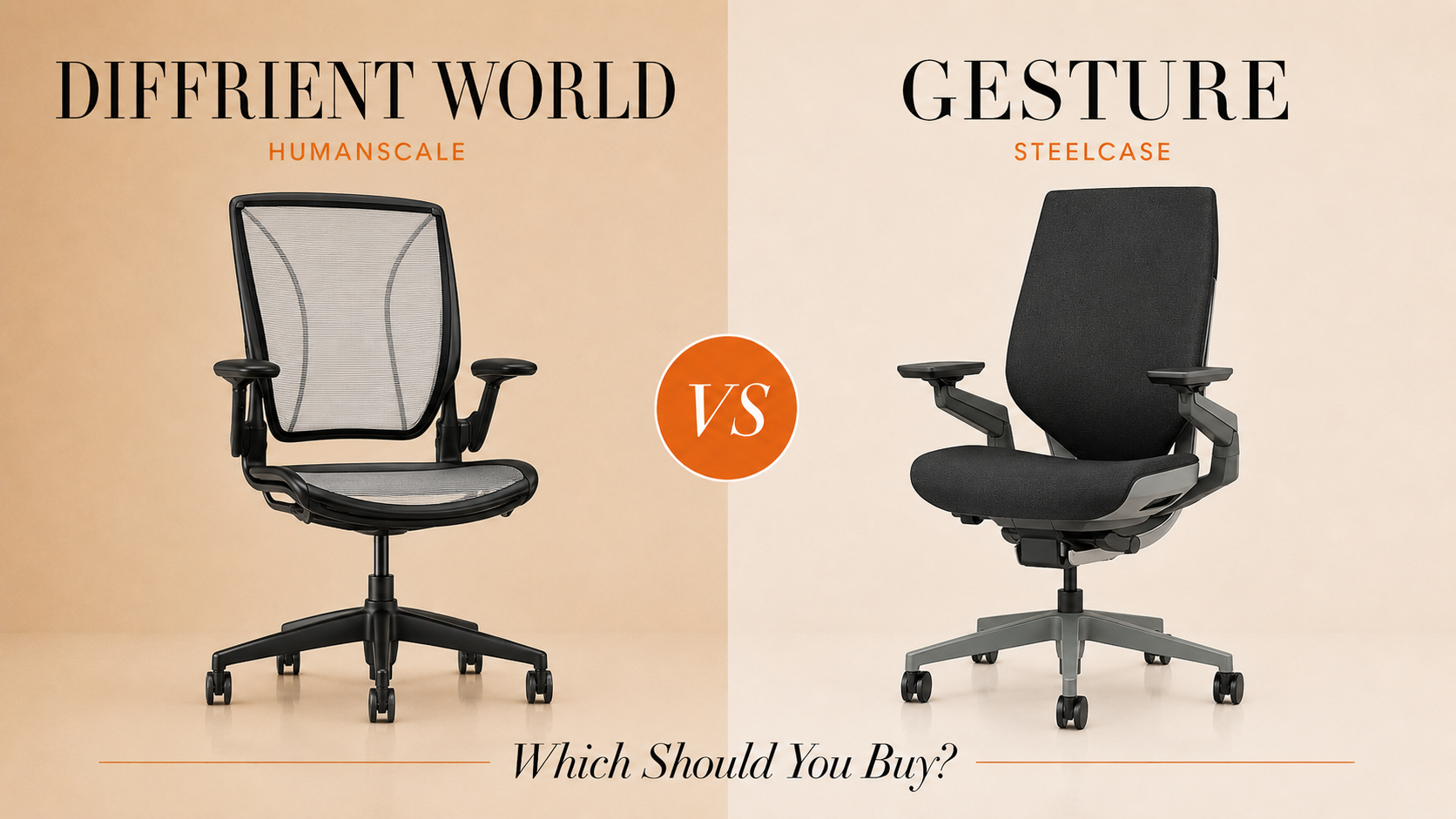
The Humanscale Diffrient World and Steelcase Gesture represent two distinct approaches to premium ergonomic seating. The Diffrient World at $1045 champions simplicity with its automatic recline mechanism and all-mesh construction, while the Steelcase Gesture at $1499 delivers comprehensive manual adjustments and 360-degree arms designed for multi-device work. Both share identical specs on paper—same dimensions, weight capacity, and 12-year warranty—but their philosophies and real-world performance differ significantly.
At a glance
Spec | Humanscale Diffrient World | Steelcase Gesture |
|---|---|---|
Price | $1,045 | $1,499 |
Aggregate Rating | 3.3 / 5 (12 reviews) | 3.8 / 5 (12 reviews) |
Adjustment Philosophy | Automatic recline, minimal manual controls | Comprehensive manual adjustments |
Armrests | 4D (limited adjustability noted) | 4D (360-degree, device-adaptive) |
Construction | All-mesh seat and back | Not specified |
Headrest | No | No |
Weight Capacity | 159 kg | 159 kg |
Warranty | 12 years | 12 years |
Recommended Height Range | 165–195 cm | 165–195 cm |
Humanscale Diffrient World — strengths & weaknesses
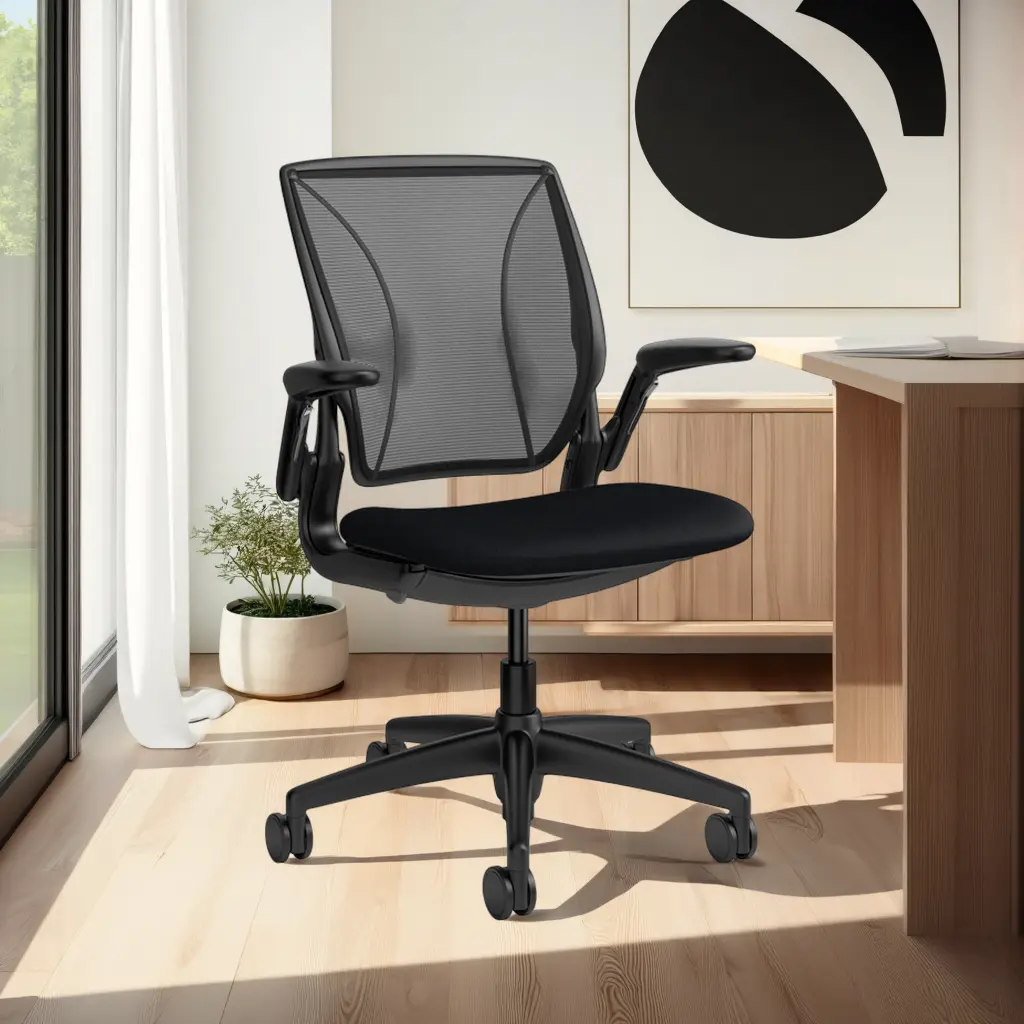
Strengths: The Diffrient World's all-mesh design provides optimal airflow and keeps users cool during extended sitting sessions. Its automatic recline mechanism intuitively adapts to your sitting position without requiring manual adjustments—a significant advantage for users who want ergonomics without complexity. The lightweight construction (19 kg) makes it easy to move and reconfigure. Reviewers praised the chair's ability to encourage movement and noted excellent mesh seat comfort and back support scores in third-party testing.
Weaknesses: Limited adjustability is the most significant drawback, with reviewers noting that armrests are not adjustable and overall width options are limited compared to alternatives. Quality issues have been reported in reviews, raising durability concerns. The lack of a headrest is a notable omission for users who want to recline while watching content. With a 3.3 aggregate rating from 12 reviews, it trails the Gesture in user satisfaction.
Steelcase Gesture — strengths & weaknesses
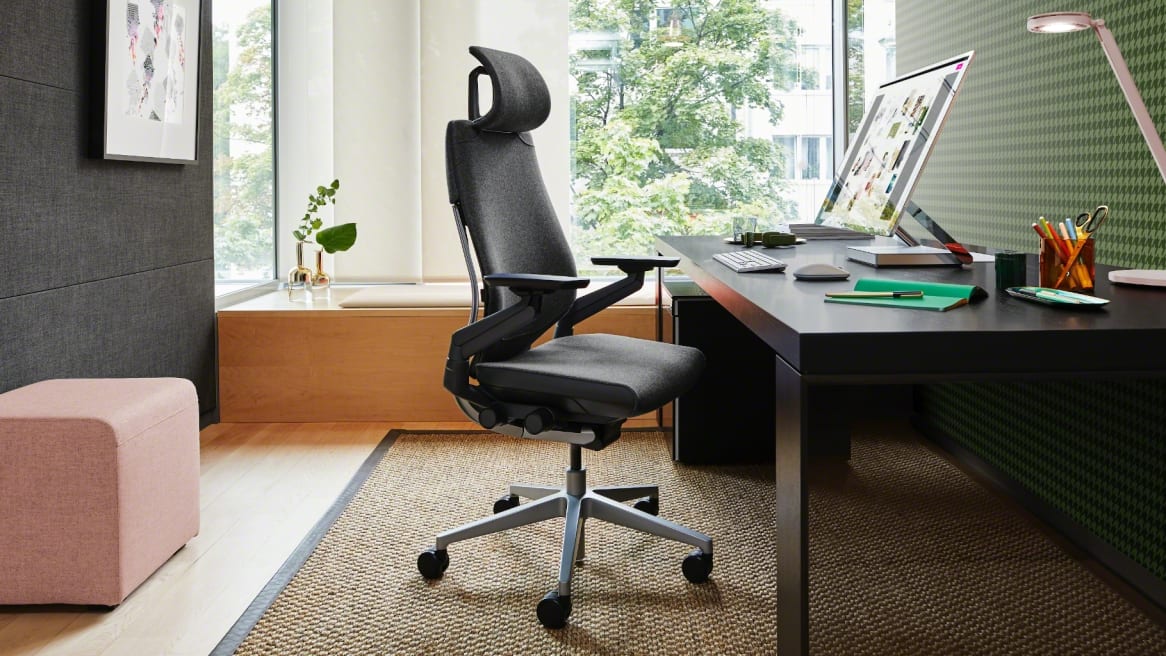
Strengths: The Gesture delivers comprehensive adjustment options covering all major ergonomic parameters, evaluated positively by a certified ergonomics expert. Its 360-degree arms are designed to follow device use from keyboard to tablet, and the narrow backrest allows shoulder and back freedom without a claustrophobic feeling—a feature specifically praised by users with spinal issues. The core interface mimics the spine for multi-posture work. Several reviewers noted it initially performed very well and forced better posture with an auto-correction feel.
Weaknesses: Long-term durability emerges as a serious concern. One reviewer reported that all four Gesture chairs purchased experienced breakdown issues after three years, leading to "extreme buyer's regret." Another noted the chair "looks cheap and budget-like despite high price point." The comprehensive adjustments require more setup time and experimentation—one user noted they were "still adjusting to optimal lumbar settings" after switching. Like the Diffrient World, it lacks a headrest.
How they differ
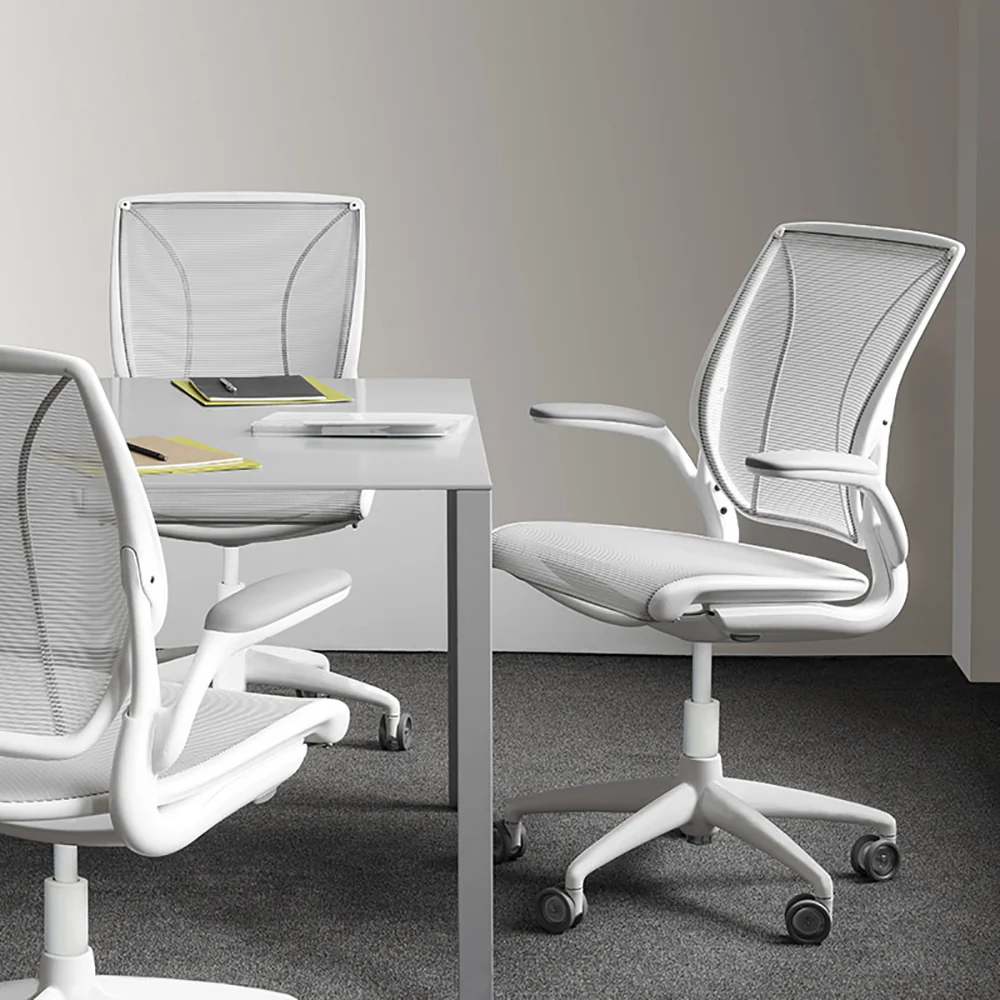
The fundamental difference is control versus simplicity. The Steelcase Gesture hands you the reins with detailed tilt mechanisms, lumbar controls, and highly articulated armrests designed for multi-device workflows. The Humanscale Diffrient World automates recline and strips away complexity, banking on its automatic mechanism to adapt to your body.
Material choice matters here: the Diffrient World's all-mesh construction excels at breathability, while the Gesture's upholstery type isn't specified in the data but appears to prioritize structure and posture correction over cooling.
The $454 price gap is substantial. The Gesture's higher rating (3.8 vs 3.3) suggests better initial satisfaction, but the durability complaints—multiple chairs breaking down after three years—cast doubt on long-term value. The Diffrient World's quality issues are mentioned but less detailed.
Both share identical specs for dimensions, weight capacity, recline range, and warranty, but their real-world performance diverges sharply based on user priorities.
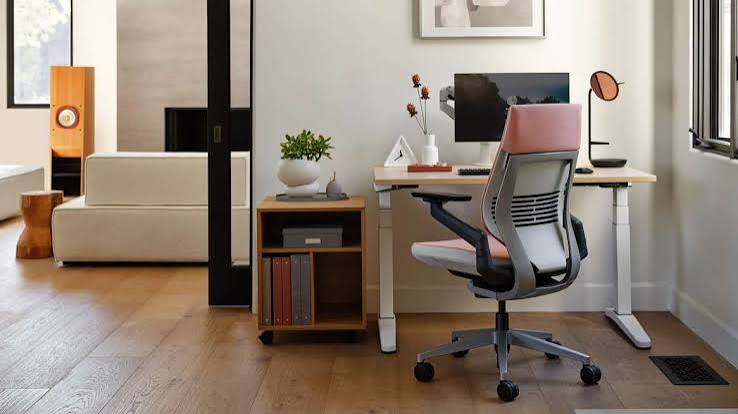
Who should buy which
Choose the Humanscale Diffrient World if: You prioritize cooling and airflow during long work sessions, prefer a chair that adapts automatically without fiddling with controls, need something lightweight you can easily reposition, or want to save $454. It's best suited to users who trust automatic ergonomics and value breathability over granular adjustability.
Choose the Steelcase Gesture if: You work across multiple devices (keyboard, tablet, phone) and need arms that adapt to varied postures, prefer comprehensive manual control over every ergonomic parameter, have spinal issues that benefit from the narrow backrest design, or want a chair certified by professional ergonomics experts. Be prepared to invest time in dialing in the perfect settings—and consider the durability reports a caution flag.
Skip both if: You need a headrest for reclining or media consumption. Neither chair offers this feature.
The verdict
The Humanscale Diffrient World wins on value, breathability, and simplicity. At $1045 with automatic recline and all-mesh cooling, it's the smarter choice for straightforward, breathable ergonomics—though its 3.3 rating and limited adjustability signal compromises.
The Steelcase Gesture justifies its $1499 price tag if you genuinely need its multi-posture flexibility and 360-degree arms. The 3.8 rating and ergonomics expert endorsement support its premium positioning, but the reported three-year durability failures are a red flag that's hard to ignore at this price point.
For most buyers, the Diffrient World offers better value unless your workflow absolutely demands the Gesture's device-adaptive design. But keep expectations realistic: neither chair has stellar ratings, and both carry durability concerns that warrant attention before committing over $1000.
Frequently asked
- Is the Steelcase Gesture worth $450 more than the Humanscale Diffrient World?
- The Gesture offers comprehensive manual adjustments and scored higher in reviews (3.8 vs 3.3), but long-term durability concerns have been reported. The Diffrient World's automatic recline and all-mesh design appeal to users who prefer simplicity and airflow.
- Which chair has better adjustability?
- The Steelcase Gesture provides comprehensive adjustment options covering all major ergonomic parameters including manual tilt and lumbar controls. The Humanscale Diffrient World uses automatic recline that adapts intuitively without manual adjustments, trading control for simplicity.
- Do either of these chairs come with a headrest?
- Neither the Humanscale Diffrient World nor the Steelcase Gesture includes a headrest in their standard configuration, which reviewers noted as a limitation for users who want to recline while watching content.
Specs, reviews & details
Specs, reviews & details