Humanscale Liberty vs Steelcase Gesture: Which Should You Buy?
Two premium mesh chairs, same specs—wildly different philosophies
Specs, reviews & details
Specs, reviews & details
Introduction
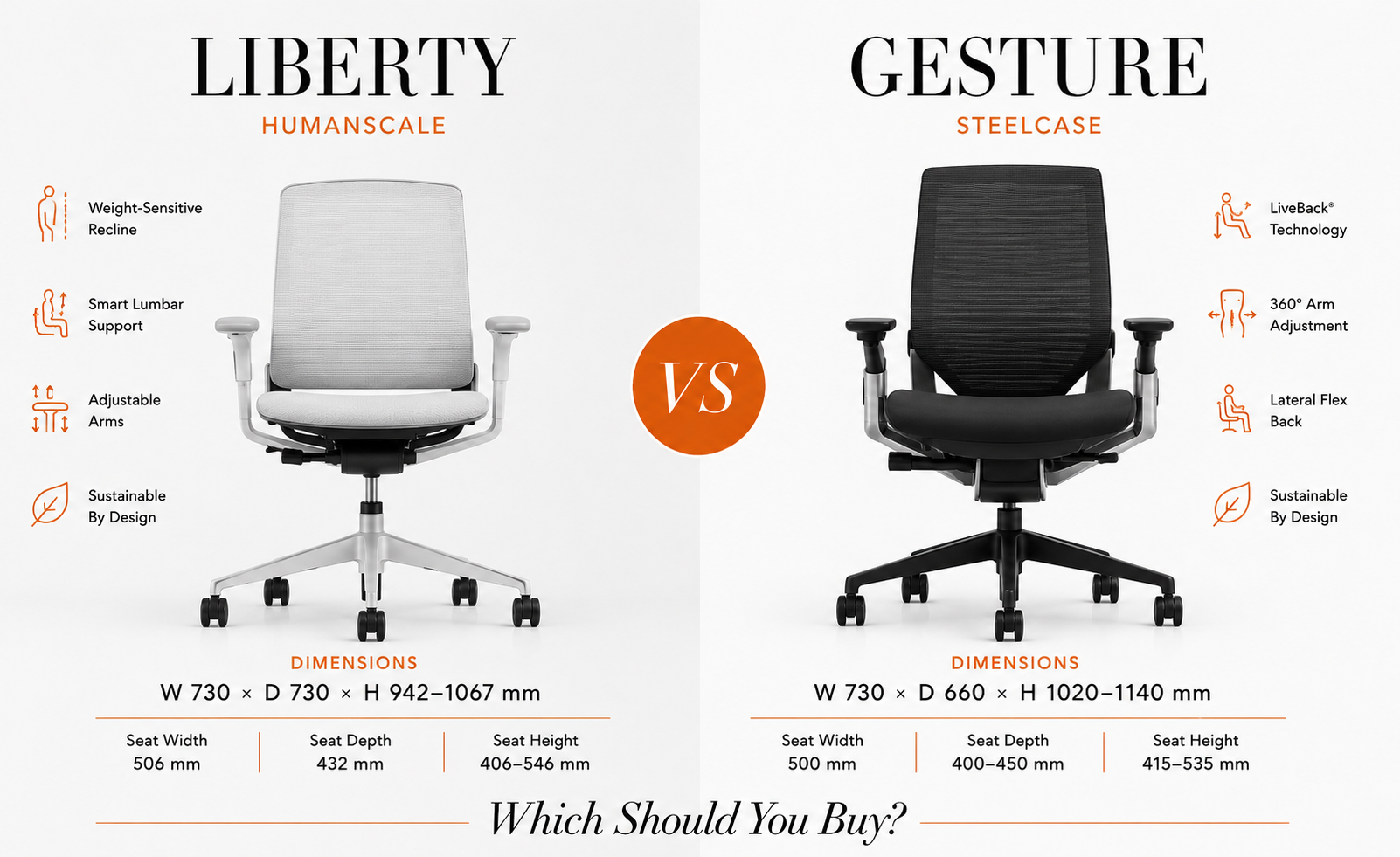
The Humanscale Liberty and Steelcase Gesture represent two conflicting design philosophies at nearly identical price points. Both are premium mesh-back office chairs with the same specs on paper—seat dimensions, weight capacity, warranty—but diverge sharply in execution. The Liberty banks on automatic, intuitive adjustments that respond to body weight, while the Gesture offers comprehensive manual controls for multi-posture work. With the Liberty at $1,204 and the Gesture at $1,499, the $295 difference buys you either simplicity or granular control, depending on how you look at it.
At a glance
Spec | Humanscale Liberty | Steelcase Gesture |
|---|---|---|
Price | $1,204 | $1,499 |
Aggregate Rating | 3.3 / 5 (12 reviews) | 3.8 / 5 (12 reviews) |
Seat Width × Depth | 51 cm × 43 cm | 51 cm × 43 cm |
Seat Height Range | 40–57 cm | 40–57 cm |
Backrest Height | 58 cm | 58 cm |
Armrests | 4D | 4D (360-degree) |
Lumbar Support | Yes (automatic) | Yes (adjustable) |
Headrest | No (optional) | No |
Recline Range | 125° | 125° |
Weight Capacity | 159 kg | 159 kg |
Recommended Height | 165–195 cm | 165–195 cm |
Warranty | 12 years | 12 years |
Chair Weight | 19 kg | 19 kg |
Humanscale Liberty — strengths & weaknesses
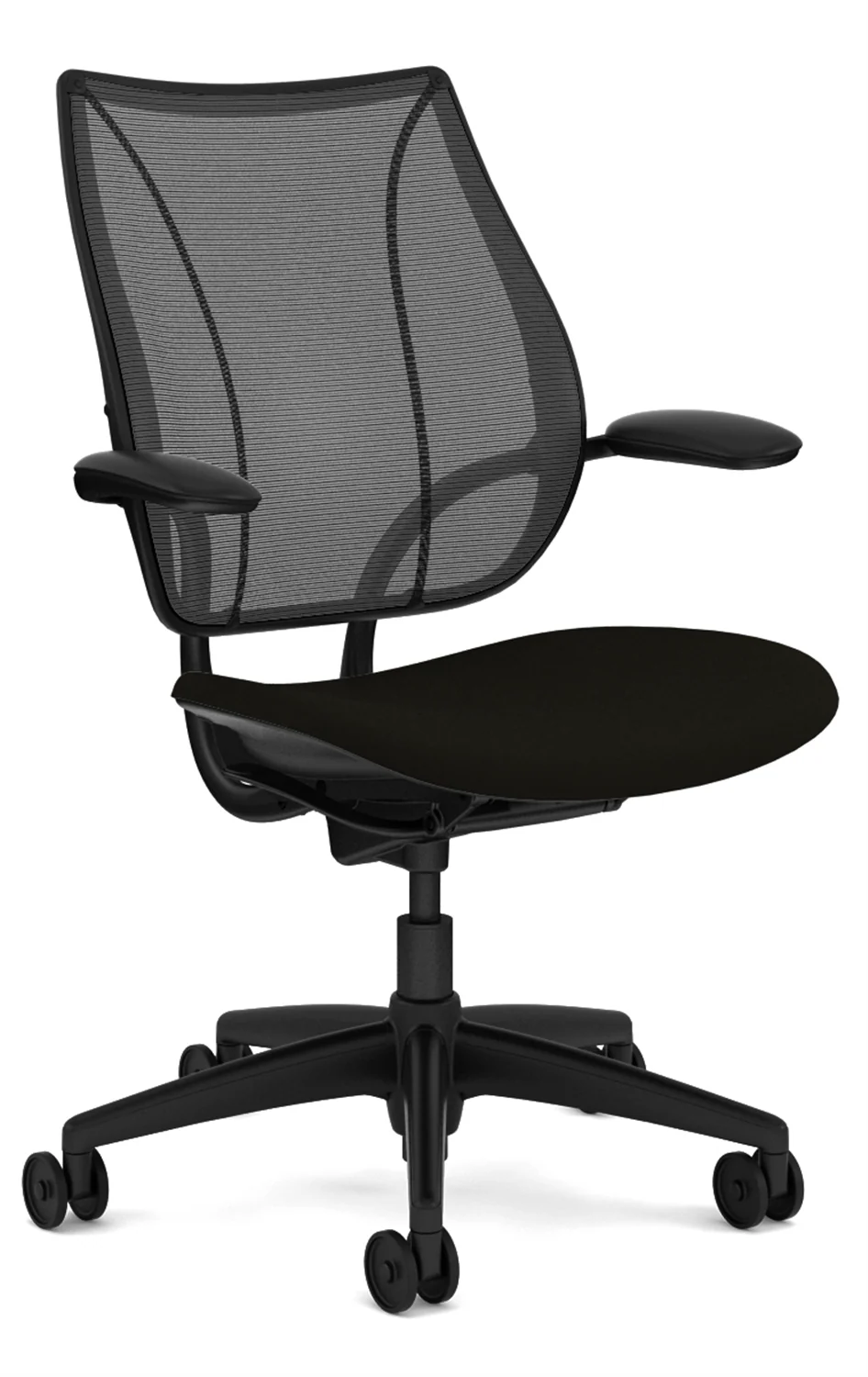
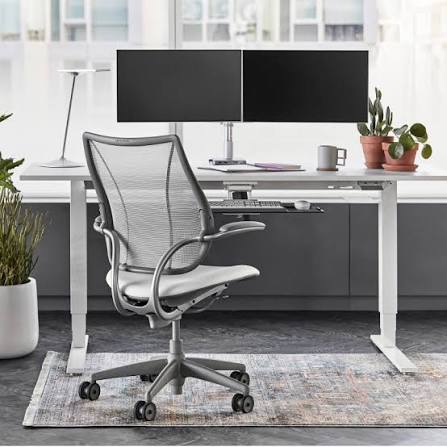
Strengths: The Liberty earns passionate praise from tall and larger users. A 6'5" IT developer lauded its all-day comfort, and multiple reviewers noted it works exceptionally well for bigger people who struggle to find suitable chairs. The tri-panel mesh back wraps around the body in a way users describe as incomparable to other chairs, delivering what one owner called an "excellent relaxing and healing experience." The automatic recline responds to body weight without fiddling with levers, making it intuitive for users who want support without manual adjustments.
Weaknesses: Shorter and smaller users report significant fit issues. The seat depth is too deep for petite users, and lumbar support is reportedly insufficient for shorter heights. The mesh backrest can lose firmness over time—one user reported it becoming loose after 3.5 years of part-time use, compounded by poor warranty service. The chair lacks a built-in headrest, forcing some users to retrofit aftermarket solutions. Multiple reviews note a lack of adjustability features, particularly for seat depth, making it less versatile for varied body types or work styles.
Steelcase Gesture — strengths & weaknesses
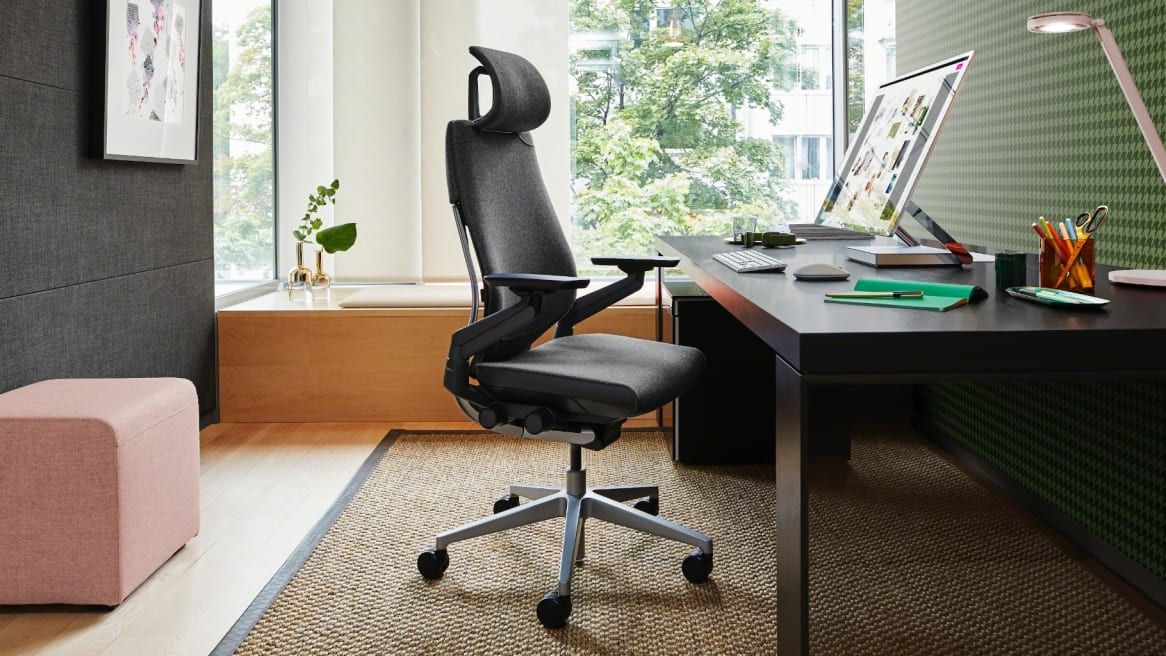
Strengths: The Gesture delivers comprehensive adjustment options covering all major ergonomic parameters, earning it a detailed professional review by a certified ergonomics expert. Its narrower backrest allows shoulder and back freedom without the claustrophobic feeling some users experience in wider chairs. The 360-degree armrests adapt to different device usage—from keyboard to tablet—supporting multi-posture work. Several reviewers noted the chair performed well initially, with one user choosing it after trying six different chairs in two months for spinal stenosis and trapezius tension.
Weaknesses: Long-term durability is a major concern. One owner reported extreme buyer's regret after all four purchased units experienced breakdown issues within three years. Despite the premium price, some users felt the chair looks cheap and budget-like. The chair's posture-correcting design isn't immediately comfortable; one reviewer noted it "pushes user into upright position" with an "auto-correction feel," requiring an adjustment period to find optimal lumbar settings. The comprehensive adjustability that some users praise also means more time spent tweaking settings.
How they differ
The core trade-off is automatic simplicity versus manual control. The Liberty uses body weight to drive recline and support, offering minimal levers and dials. The Gesture hands you granular control over every parameter but demands you actually use those controls to find your fit.
User fit diverges sharply by body type. The Liberty is emphatically a tall-person chair, with smaller users reporting deal-breaking fit issues. The Gesture's narrower backrest and adjustable lumbar offer more flexibility, though both chairs share identical recommended height ranges on paper.
Durability complaints plague both, but differently. Liberty users report mesh degradation and poor warranty support. Gesture owners report structural breakdown across multiple units. Neither inspires confidence for long-term investment, despite 12-year warranties.
The $295 price gap buys you the Gesture's adjustment range and slightly higher user rating (3.8 vs 3.3), but you sacrifice the Liberty's wraparound mesh comfort that tall users rave about.
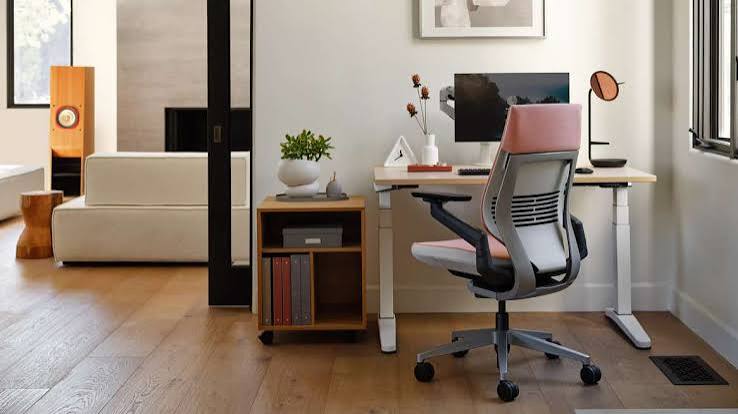
Who should buy which
Buy the Humanscale Liberty if: You're tall (over 6 feet), larger-framed, and want a chair that just works without adjustment fiddling. You prioritize that wraparound mesh feeling and plan to use the chair primarily for relaxing or leaning back during focused work. You're comfortable adding an aftermarket headrest if needed.
Buy the Steelcase Gesture if: You work across multiple postures—leaning forward for keyboard work, sitting back with a tablet, shifting throughout the day. You're willing to spend time dialing in adjustments and prefer manual control over automatic response. You have spinal issues that require precise lumbar positioning and shoulder freedom matters to you.
Consider neither if: You're petite or significantly shorter than 165 cm. You need proven long-term durability with responsive warranty support. You want immediate comfort without an adjustment period.
The verdict
These chairs tie on specs but deliver opposite experiences. The Liberty wins for tall users seeking effortless, enveloping support and don't mind limited adjustability. The Gesture wins for multi-posture workers who need granular control and can tolerate a break-in period. Both stumble on durability and price-to-value ratio given their middling ratings.
If you're 6'2" and want to sink into mesh that adapts automatically, save $295 and buy the Liberty. If you switch between devices all day and need armrests that follow, spend up for the Gesture. Just know that in either case, you're gambling on longevity despite the premium price and 12-year warranty. Neither chair has earned the reliability scores their price tags suggest they should command.
Frequently asked
- Is the Humanscale Liberty better than the Steelcase Gesture?
- The Liberty excels for tall users seeking automatic recline and wraparound support, while the Gesture offers more manual adjustments and suits multi-posture workers. The Gesture has a slightly higher rating (3.8 vs 3.3) but both face durability concerns.
- Which chair has better long-term durability?
- Both chairs show durability issues in reviews. Liberty users report mesh loosening after 3.5 years and poor warranty service, while Gesture owners report multiple units breaking down after 3 years. Neither has a clear durability advantage.
- Are these chairs good for shorter users?
- Neither is ideal for petite users. The Liberty's seat depth is reportedly too deep for shorter people with insufficient lumbar support for their height. The Gesture shares identical seat depth specs (43 cm), and both recommend heights between 165-195 cm.
Specs, reviews & details
Specs, reviews & details