KI Ruckus vs Herman Miller Aeron: Which Should You Buy?
Educational flexibility meets iconic ergonomics
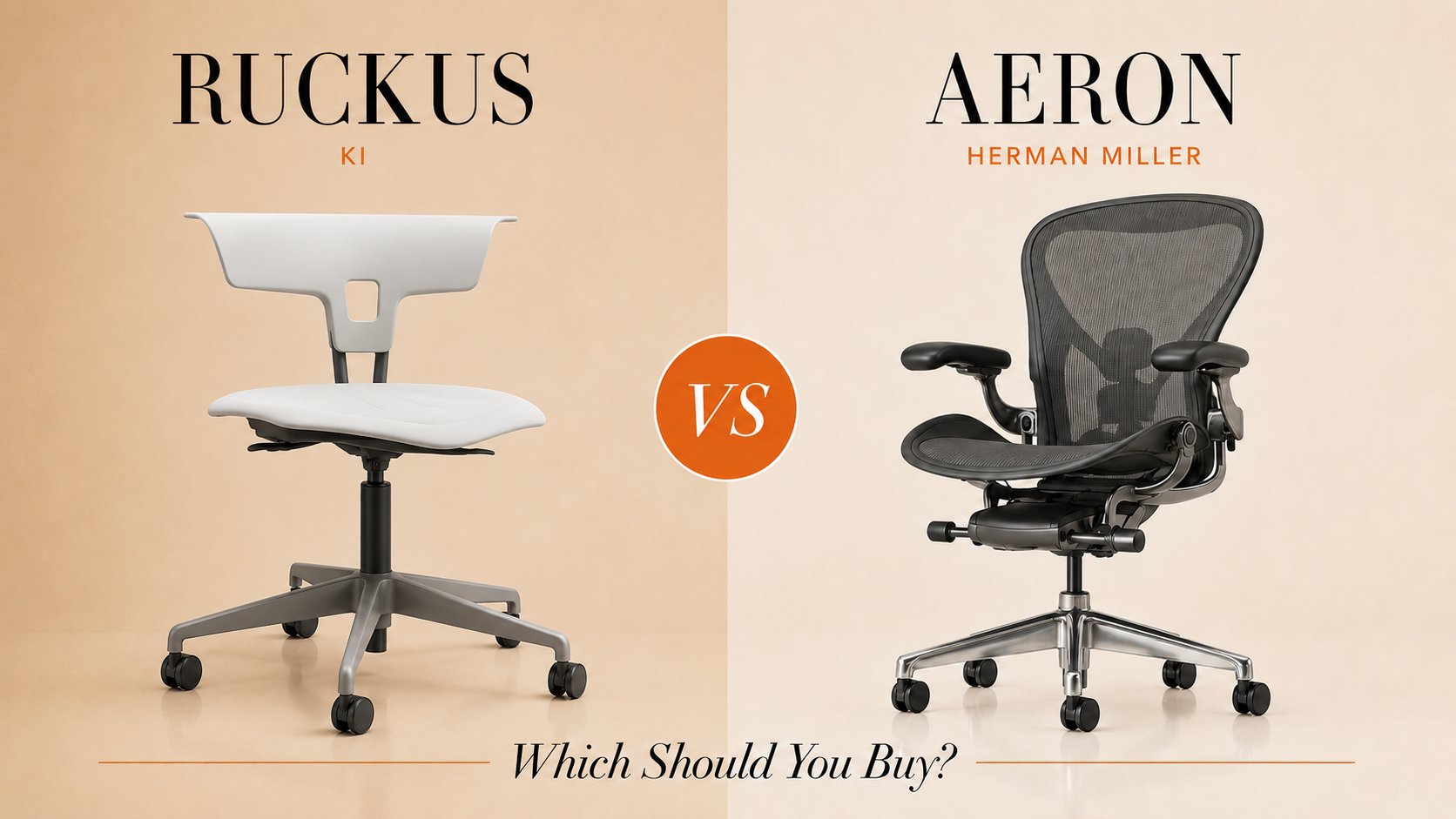
Specs, reviews & details
Specs, reviews & details
Introduction
The KI Ruckus and Herman Miller Aeron represent fundamentally different philosophies. The Ruckus is a budget-friendly task chair built for classrooms, collaborative spaces, and active environments where flexibility matters more than granular adjustment. The Aeron is an icon of office ergonomics, engineered for all-day desk work with premium mesh, precise adjustability, and a 12-year warranty. If you're choosing between them, you're likely weighing context: dynamic learning or education spaces versus traditional focused desk work.
At a glance
Spec | KI Ruckus | Herman Miller Aeron |
|---|---|---|
Price | $ | $1,521 |
Category | Office / Education | Office |
Armrests | Not specified | 4D adjustable |
Lumbar support | Not specified | Yes (PostureFit SL) |
Recline range | Not specified | 125° |
Weight capacity | Not specified | 159 kg |
Warranty | Not specified | 12 years |
Aggregate rating | 4.0 (2 reviews) | 3.5 (12 reviews) |
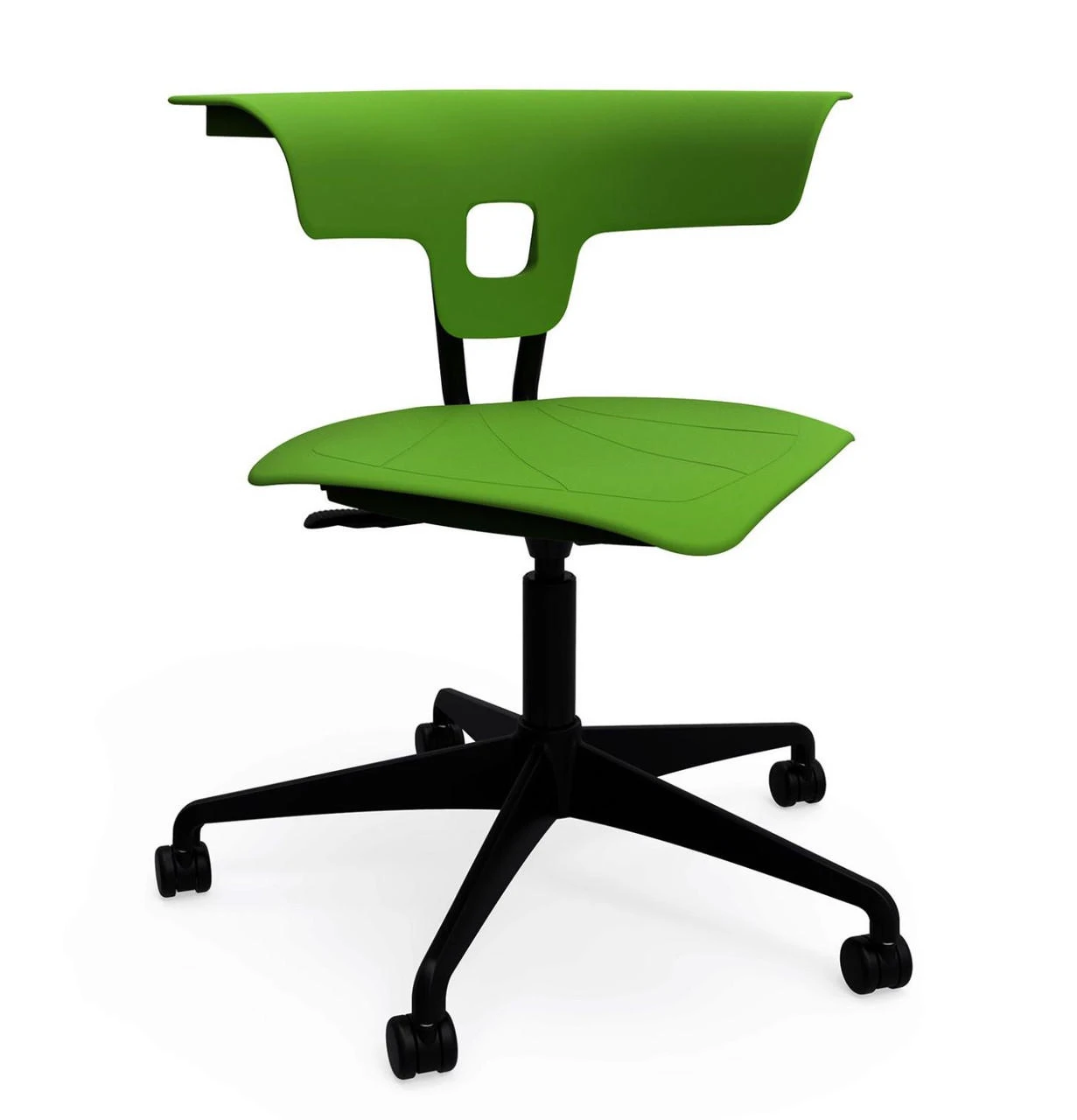
KI Ruckus — strengths and weaknesses
Strengths: The Ruckus shines in educational and collaborative environments. A Buffalo Grove High School study found it increased student engagement from 40% to 95%, with teachers and students praising its flexibility and ease of reconfiguration. The flexing back encourages movement, multiple seating positions support different learning styles, and built-in storage features add practical value. Teachers reported better mobility and the ability to engage more directly with students. It's lightweight, easy to rearrange, and purpose-built for active spaces.
Weaknesses: Review data is thin—only two reviews, both focused on educational settings. One user suggested adding slots on the back for backpack straps, a small usability tweak. There's no detail on armrests, lumbar support, weight capacity, or warranty, so buyers seeking granular ergonomic specs will be left guessing. It's not positioned as a premium desk chair for focused, all-day computer work.
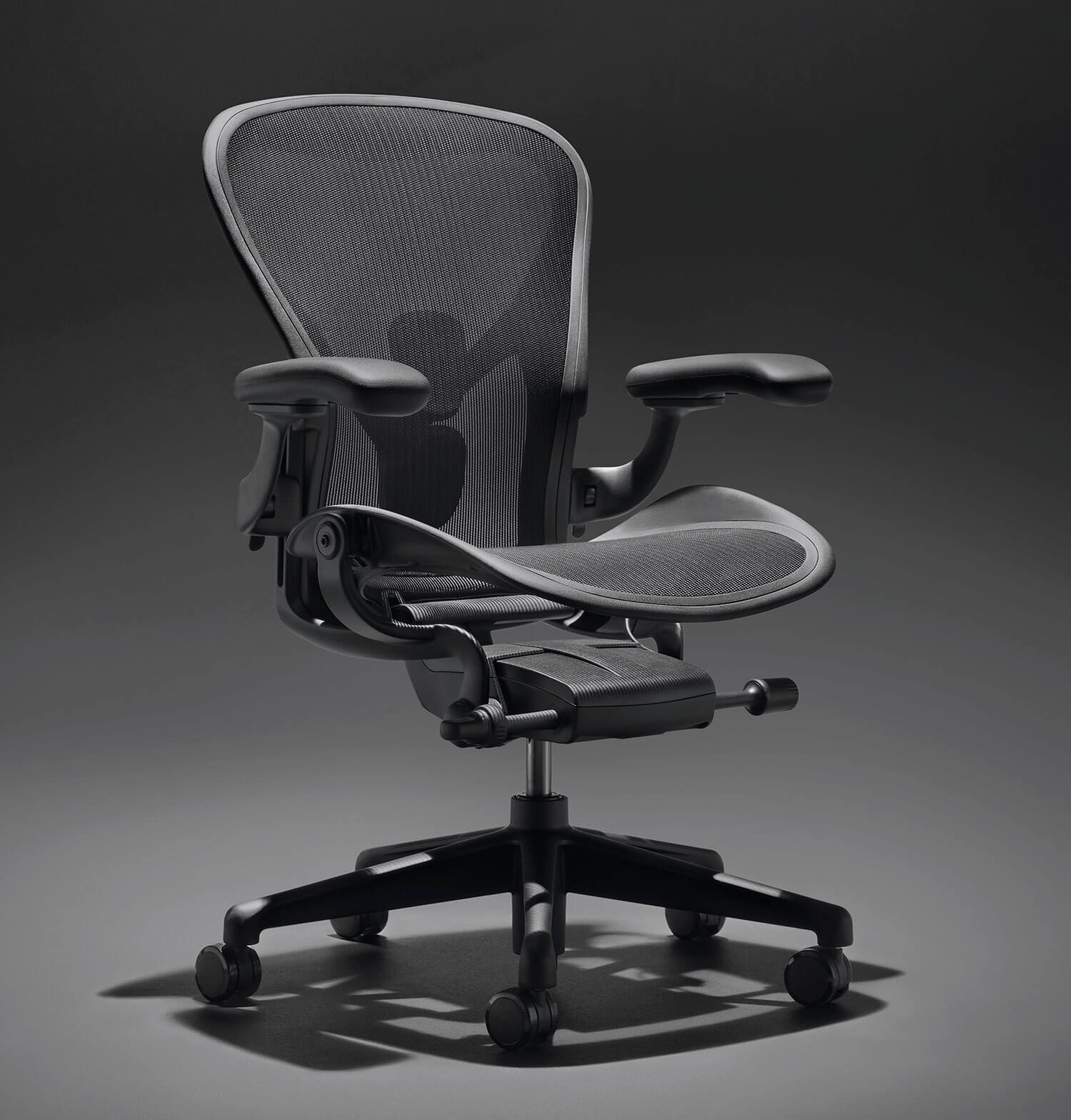
Herman Miller Aeron — strengths and weaknesses
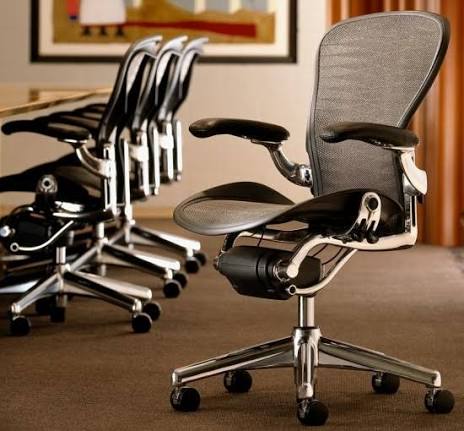
Strengths: The Aeron is a proven workhorse for desk-bound professionals. Its Pellicle mesh provides exceptional ventilation, and the PostureFit SL lumbar system and 8Z zones deliver targeted support. Reviewers praised its cloud-like comfort and highlighted its remarkable resale value—one noted buying used for $300–400 and reselling years later for the same price, making total cost of ownership competitive with budget chairs. The 12-year warranty, 4D armrests, and 125-degree recline speak to serious ergonomic engineering. It suits medium builds (165–180 cm recommended height) and handles up to 159 kg.
Weaknesses: At $1,521, the Aeron is a significant investment, and reviews acknowledge it's not universally loved. One long-term user struggled to fully embrace it as a daily driver over three years, and another mentioned the seat pan can dig uncomfortably. The 3.5 rating from 12 reviews suggests polarized opinions—it works exceptionally well for some body types and less so for others. Sizing (A, B, or C) is critical and can be confusing, especially when buying used.
How they differ
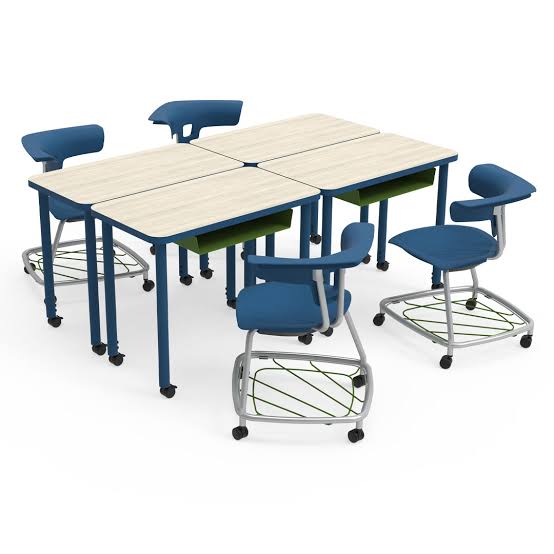
The core trade-off is context versus precision. The Ruckus is designed for movement, collaboration, and reconfiguration—ideal for classrooms, coworking areas, or any space where chairs get shuffled frequently. It doesn't offer the adjustability or ergonomic depth of a premium task chair, but that's not its mission. The Aeron is the opposite: a stationary throne engineered for 8-plus-hour desk sessions, with mesh that breathes, lumbar that adapts, and adjustments that dial in fit. It's overkill for a classroom and underkill for a flexible learning environment.
Price is another chasm. The Ruckus sits at the budget end; the Aeron commands a premium. However, Aeron's resale value and 12-year warranty can soften the blow for long-term buyers. The Ruckus has virtually no second-hand market data, but its durability in hard-use educational settings suggests it can take a beating.
Who should buy which
Buy the KI Ruckus if: You're outfitting a classroom, makerspace, library, or collaborative office where chairs need to move constantly. You value flexibility, student or team engagement, and a budget-friendly price. You don't need advanced lumbar support or 4D armrests, and your users won't sit in one position for eight straight hours.
Buy the Herman Miller Aeron if: You're a remote worker, developer, designer, or anyone spending full days at a desk. You want proven ergonomic support, excellent ventilation, and the peace of mind that comes with a 12-year warranty. You're comfortable with the upfront cost (or hunting the used market) and you've confirmed your size (B is most common for medium builds).
The verdict
These chairs rarely compete in the same purchase decision, and that's the point. The KI Ruckus wins in dynamic, collaborative, or educational spaces where movement and flexibility drive outcomes—the Buffalo Grove study's engagement leap from 40% to 95% speaks volumes. The Herman Miller Aeron wins for focused, all-day desk work where ergonomic precision and long-term durability justify the investment. If you're a solo knowledge worker, the Aeron is the safe, well-documented choice. If you're furnishing a classroom or agile workspace, the Ruckus delivers proven results at a fraction of the cost. Pick the tool that matches the job.
Frequently asked
- Is the KI Ruckus or Herman Miller Aeron better for classroom use?
- The KI Ruckus is purpose-built for education and collaborative spaces, with studies showing it increased student engagement from 40% to 95%. The Aeron is designed for traditional desk work.
- Why is the Herman Miller Aeron so much more expensive?
- At $1,521, the Aeron offers premium features including 4D armrests, PostureFit SL lumbar support, 12-year warranty, and 159kg weight capacity. However, reviews note strong resale value offsets the high initial cost.
- Which chair is more adjustable?
- The Aeron provides precise ergonomic adjustments (4D arms, lumbar support, 125-degree recline) for individual desk workers. The Ruckus prioritizes flexible movement and repositioning for dynamic, collaborative environments.
Specs, reviews & details
Specs, reviews & details