Okamura Baron vs Herman Miller Aeron: Which Should You Buy?
Japanese engineering meets American icon—$890 vs $1,521
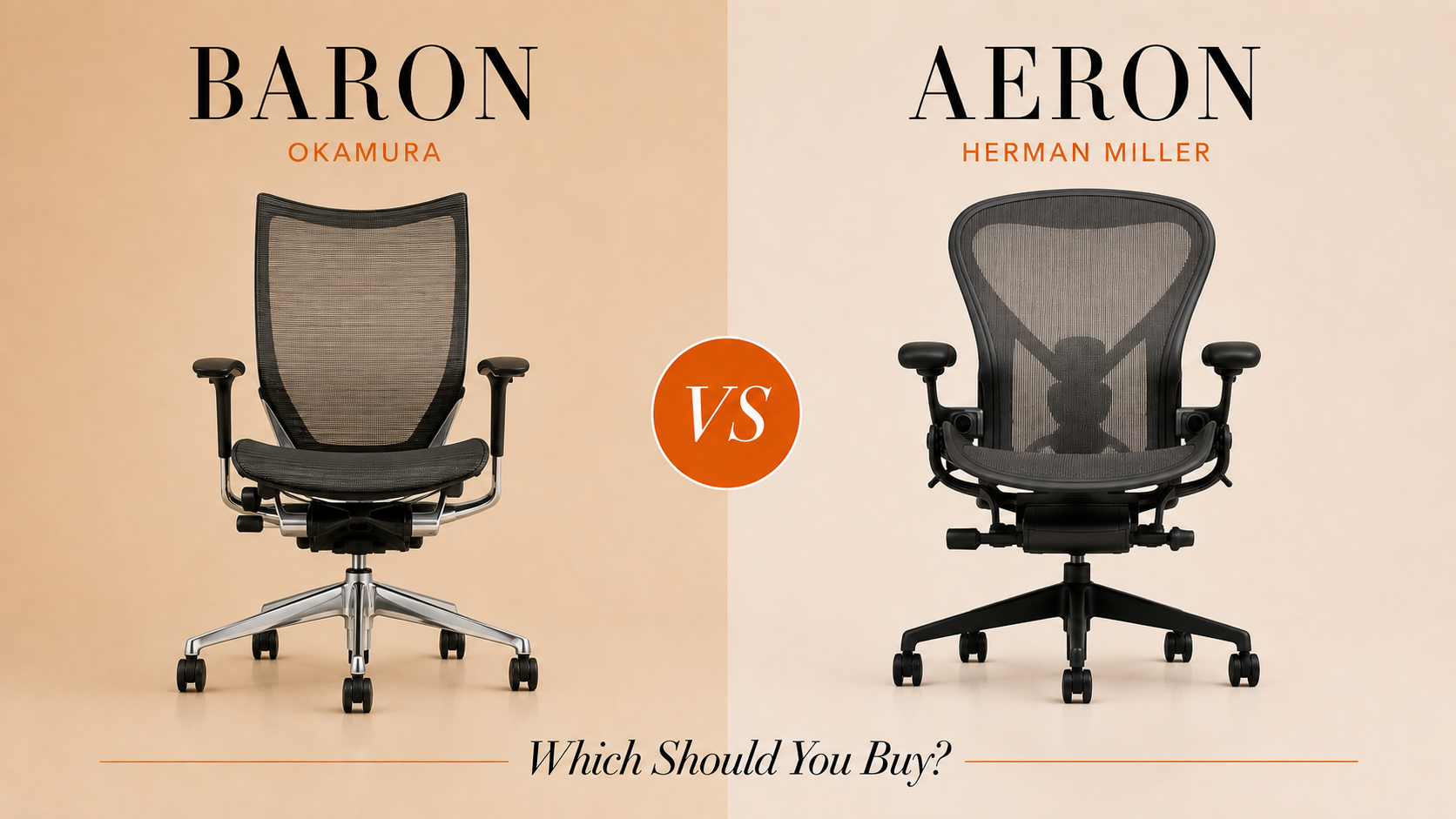
Specs, reviews & details
Specs, reviews & details
Introduction
The Okamura Baron and Herman Miller Aeron represent two different philosophies in premium office seating. At $890, the Baron delivers Japanese engineering with an adjustable headrest and broad height accommodation. The $1,521 Aeron is an American design icon known for its Pellicle mesh and remarkable resale value. Both share identical core specifications—same seat dimensions, weight capacity, and 12-year warranty—but differ sharply in price, headrest availability, and user experience. If you're choosing between mid-premium Japanese craftsmanship and a proven ergonomic legend, this comparison cuts through the marketing.
At a glance
Spec | Okamura Baron | Herman Miller Aeron |
|---|---|---|
Price | $890 | $1,521 |
Category | Office task chair | Office task chair |
Headrest | Yes, adjustable | No |
Lumbar support | Yes, adjustable | Yes, PostureFit SL |
Armrests | 4D | 4D |
Recline range | 125° | 125° |
Weight capacity | 159 kg | 159 kg |
Recommended height | 165–195 cm | 165–180 cm |
Warranty | 12 years | 12 years |
Aggregate rating | 3.6 / 5 (10 reviews) | 3.5 / 5 (12 reviews) |
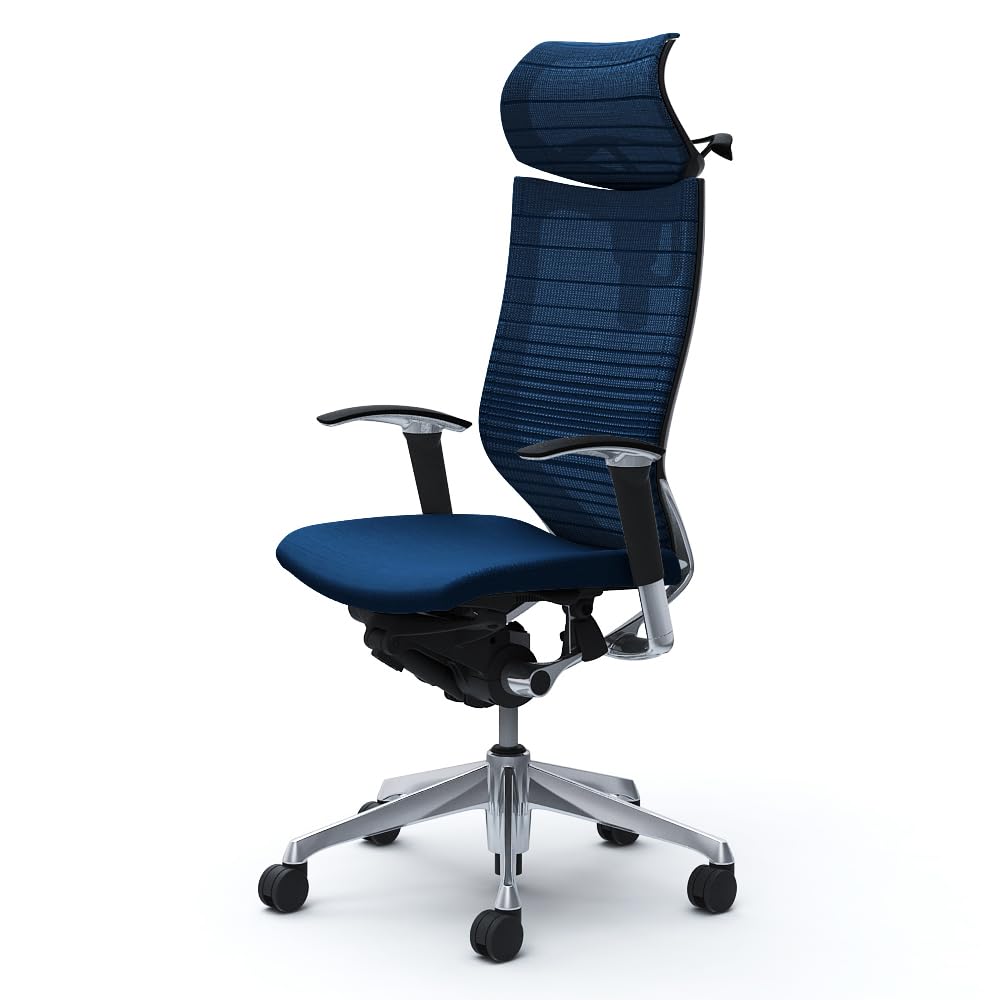
Okamura Baron — strengths & weaknesses
Strengths: The Baron's adjustable headrest is its standout feature. Multiple reviewers cite it as a major advantage over Okamura's own Contessa model, with one noting the headrest adjustment mechanism makes the Baron "much more attractive" despite the Contessa's more premium appearance. Reviewers appreciate the mesh breathability and solid build quality typical of premium chairs. One user praised it as a chair that "can transform your workspace" with excellent value for money. The Baron also impressed with exceptional forward-tilt angle adjustment.
Weaknesses: Several reviewers raised concerns about the Baron's mesh stretching too much and not conforming well to the body, leading to questions about overall value. One 182cm tall user with a long torso found Okamura chairs (including the Baron) didn't fit well. Another reviewer noted that the thigh-to-hip area felt stiff and uncomfortable on larger Okamura models. Importantly, one long-term user concluded that even expensive chairs like the Baron don't eliminate back pain for those with pre-existing issues, emphasizing that regular stretching matters more than chair choice.
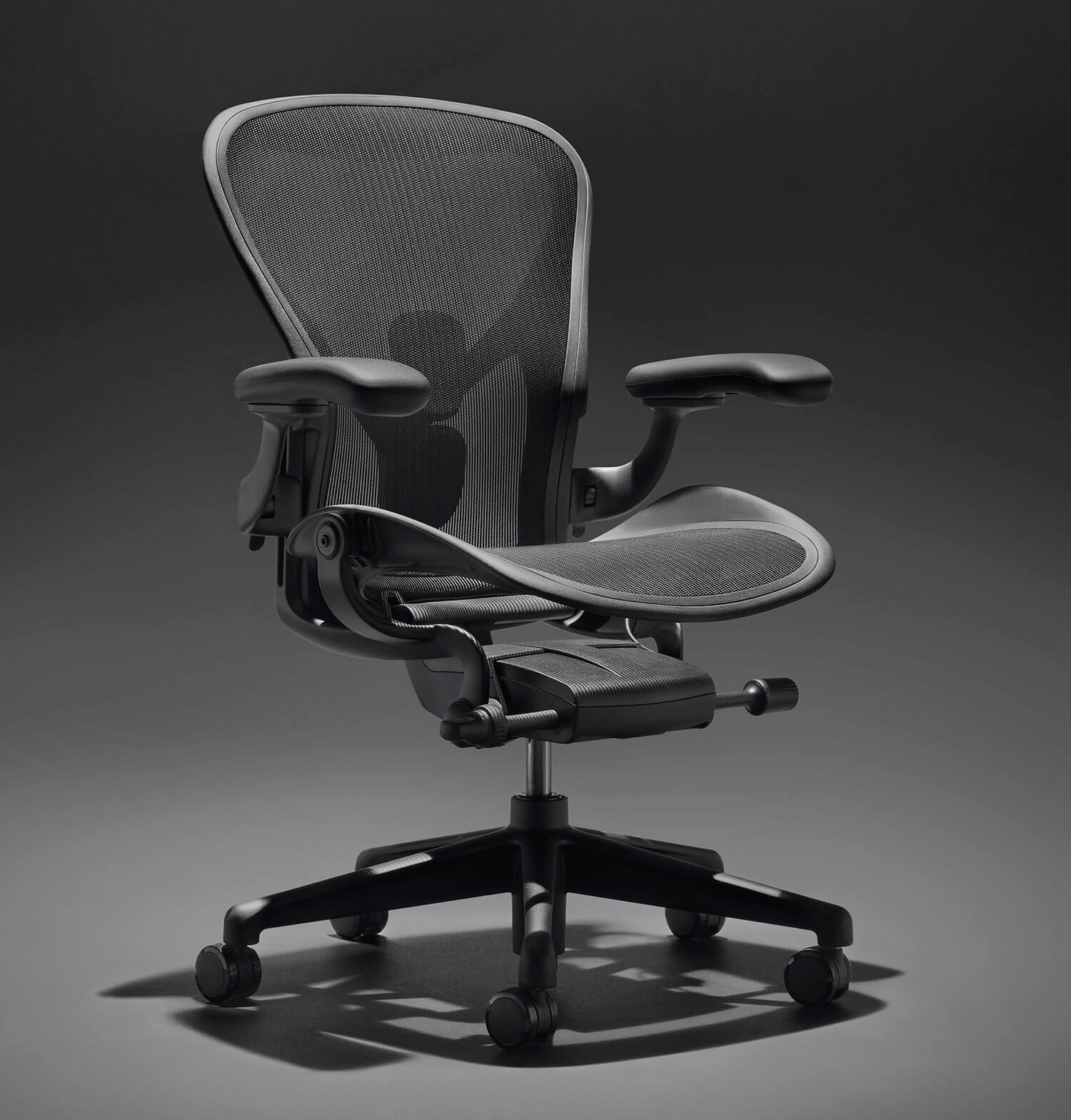
Herman Miller Aeron — strengths & weaknesses
Strengths: The Aeron's resale value is exceptional. One reviewer noted you can buy a used Aeron for $300–400 on Craigslist and resell it years later for the same price, making the total cost of ownership competitive with budget chairs. Early impressions describe it as "sitting on a cloud," and user comments indicate it works well for people with back, hip, and knee issues. The chair offers superior comfort compared to cheaper alternatives, and replacement parts documentation is readily available. One reviewer successfully downsized from size C to size B after weight loss, highlighting the sizing options.
Weaknesses: Despite a three-year ownership period, one reviewer struggled to fully embrace the Aeron as a daily driver, suggesting it's "not suitable for everyone." The high $1,521 price point is a significant barrier. One user noted the seat pan "feels like it digs too deep into bottom," indicating comfort isn't universal. A 182cm tall user testing premium chairs found the Aeron "too posture-rigid for mixed gaming/work use," suggesting it enforces a specific sitting position that won't suit everyone. The lack of a headrest is a clear limitation for those who want head support.
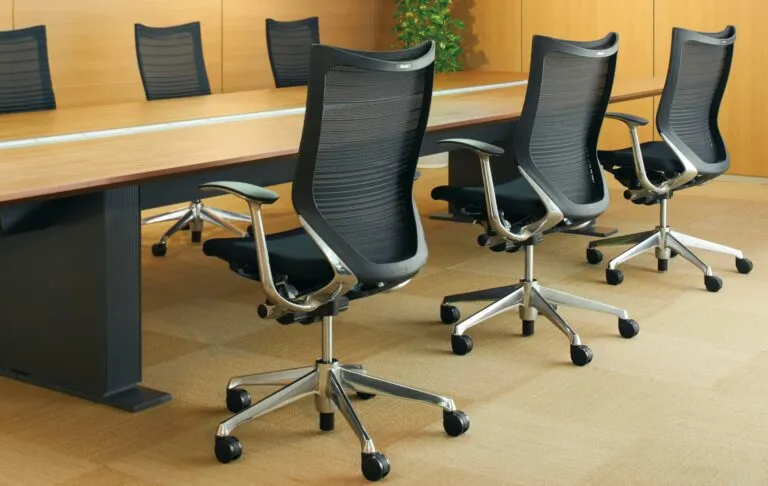
How they differ
Price and value proposition: The $631 gap is substantial. The Baron costs 58% of the Aeron's price, making it the clear budget winner if upfront cost matters. However, the Aeron's documented resale value—retaining purchase price even after five years—changes the long-term math considerably, especially if buying used.
Headrest availability: This is the sharpest dividing line. The Baron includes an adjustable headrest that reviewers consistently praise. The Aeron offers no headrest option. If you recline frequently or want head support, the Baron wins by default.
Height accommodation: The Baron officially supports users up to 195cm, while the Aeron stops at 180cm. Taller buyers have a clearer choice on paper, though real-world fit experiences varied, with one 182cm reviewer finding neither Okamura nor Aeron ideal.
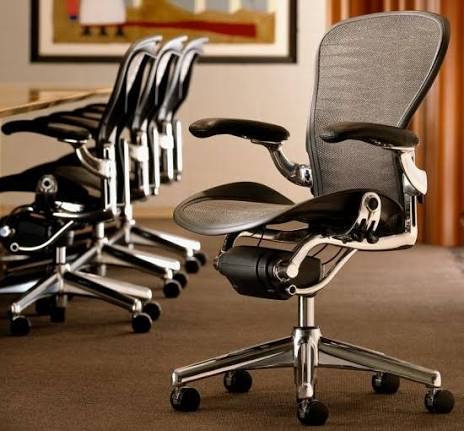
Mesh characteristics: Reviewers noted the Baron's mesh stretches considerably and may not conform well to body contours. The Aeron's Pellicle mesh is engineered into eight zones for targeted support. One Baron reviewer questioned the value due to mesh performance, while Aeron users praised the cloud-like feel—though others found the seat pan uncomfortable.
Posture philosophy: The Aeron enforces a more rigid, ergonomically correct posture, which one reviewer found unsuitable for mixed gaming and work. The Baron appears more forgiving but raised concerns about long-term support due to mesh stretch.
Who should buy which
Buy the Okamura Baron if:
You need an adjustable headrest for reclining or head support
You're taller than 180cm (up to 195cm recommended height)
Upfront cost matters more than resale value
You want Japanese build quality at a mid-premium price
You prefer a less posture-rigid sitting experience
Buy the Herman Miller Aeron if:
You're between 165–180cm and the sizing matches your build
Resale value matters—you can recoup most of your investment
You're buying used and can find one for $300–400
You want an engineered mesh with zoned support rather than uniform stretch
You have back, hip, or knee issues and need structured ergonomic support
You value an iconic design with extensive parts availability
Consider alternatives if: You're over 182cm with a long torso (reviewers noted fit issues with both), you have severe pre-existing back pain (one reviewer concluded no chair eliminates this), or you need a headrest but want Aeron-caliber engineering (neither satisfies both requirements).
The verdict
The Okamura Baron wins on upfront value and headrest functionality, making it the smarter choice for taller users or anyone who needs head support. At $890, it delivers premium features without the luxury tax. The Herman Miller Aeron justifies its $1,521 price through exceptional resale value and proven ergonomic engineering, but only if you fit its sizing, don't need a headrest, and can tolerate its posture-enforcing design. For most buyers prioritizing cost and versatility, the Baron edges ahead. For those buying used Aerons under $450 or needing structured support for specific back issues, the Aeron remains compelling despite its limitations. Neither is a universal solution—both earned middling ratings around 3.5–3.6 stars—but the Baron offers fewer compromises for $631 less.
Frequently asked
- Does the Okamura Baron have a headrest while the Aeron doesn't?
- Yes, the Baron includes an adjustable headrest that reviewers praise highly, while the Aeron does not offer a headrest option.
- Is the Herman Miller Aeron worth the extra $631 over the Okamura Baron?
- The Aeron costs $1,521 vs the Baron's $890. Reviewers note the Aeron's excellent resale value and can be resold for similar price years later, potentially offsetting the premium. The Baron offers better value upfront, especially if you need a headrest.
- Which chair is better for tall users?
- The Baron accommodates users up to 195cm tall, while the Aeron is recommended for heights up to 180cm. Taller users should choose the Baron, though one reviewer noted Okamura chairs didn't fit well for their 182cm frame.
Specs, reviews & details
Specs, reviews & details