Sidiz T80 vs Steelcase Gesture: Which Should You Buy?
A $650 mesh contender versus a $1,499 premium icon—what you actually get
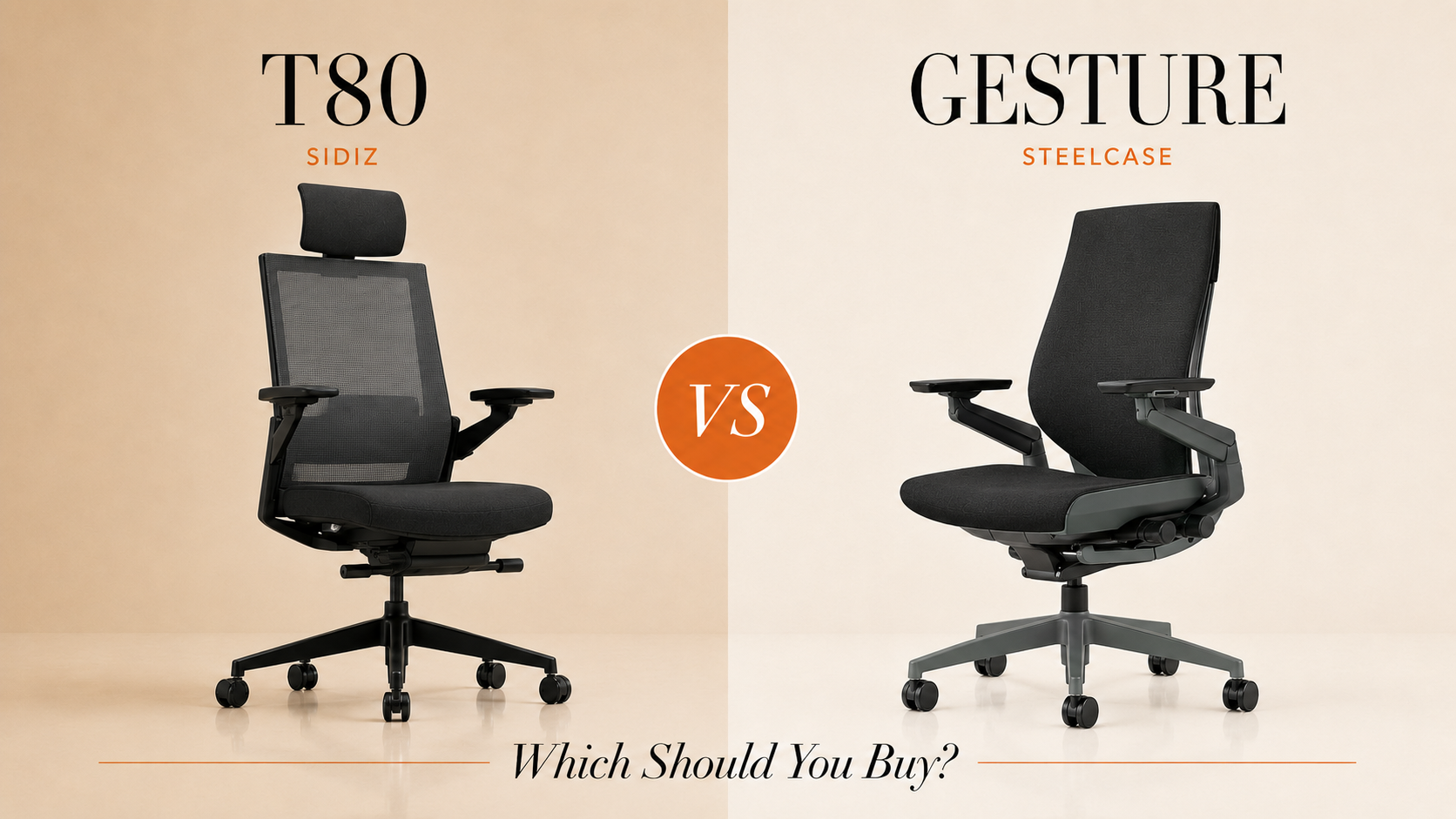
Specs, reviews & details
Specs, reviews & details
Introduction
The Sidiz T80 and Steelcase Gesture represent two distinct approaches to the premium office chair market. At $650, the T80 positions itself as an accessible ergonomic solution with mesh breathability and extensive adjustments. The Steelcase Gesture commands $1,499 with its signature 360-degree arms designed for modern device use and multi-posture sitting. Both chairs share identical specs on paper—same seat dimensions, weight capacity, recline range, and 12-year warranty—making real-world performance and value the deciding factors.
At a glance
Spec | Sidiz T80 | Steelcase Gesture |
|---|---|---|
Price | $650 | $1,499 |
Category | Office | Office |
Aggregate rating | 3.3 (12 reviews) | 3.8 (12 reviews) |
Armrest type | 4D | 4D |
Headrest | No | No |
Lumbar support | Yes | Yes |
Recline range | 125° | 125° |
Seat dimensions (W×D) | 51 × 43 cm | 51 × 43 cm |
Height range | 40–57 cm | 40–57 cm |
Weight capacity | 159 kg | 159 kg |
Recommended height | 165–195 cm | 165–195 cm |
Warranty | 12 years | 12 years |
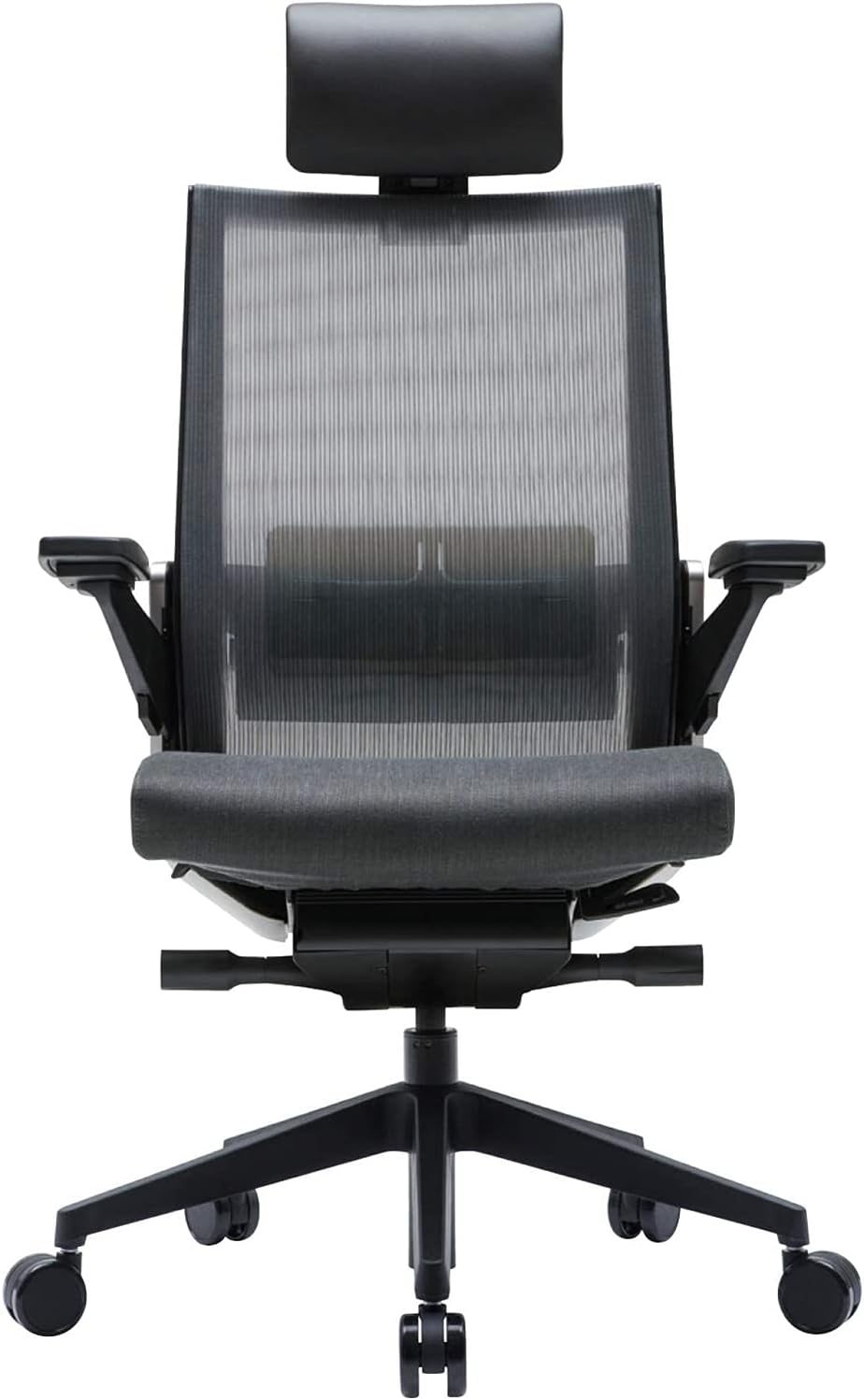
Sidiz T80—strengths & weaknesses
Strengths: The T80's German Ultimate Sync Mechanism earns praise for comfort, and its ventilated mesh back delivers genuine breathability. Reviewers highlight seat slide and slope adjustments that go beyond basic ergonomics. One user who switched from an older chair noted the T80 "naturally supports the upper body" and dramatically reduced neck strain during dual-monitor work. The chair's comprehensive adjustability—3D arms, lumbar support, and multiple seat tweaks—makes it versatile for various body types and work styles.
Weaknesses: The 3.3-star rating reflects mixed experiences. Multiple reviews note the T80 may be too small for taller users around 180cm, despite specs claiming suitability up to 195cm. One significant limitation is the lack of lumbar depth adjustment, which restricts fine-tuning for lower back support. Review data skews heavily promotional, with limited long-term durability feedback, making it harder to assess performance beyond the first months of ownership.
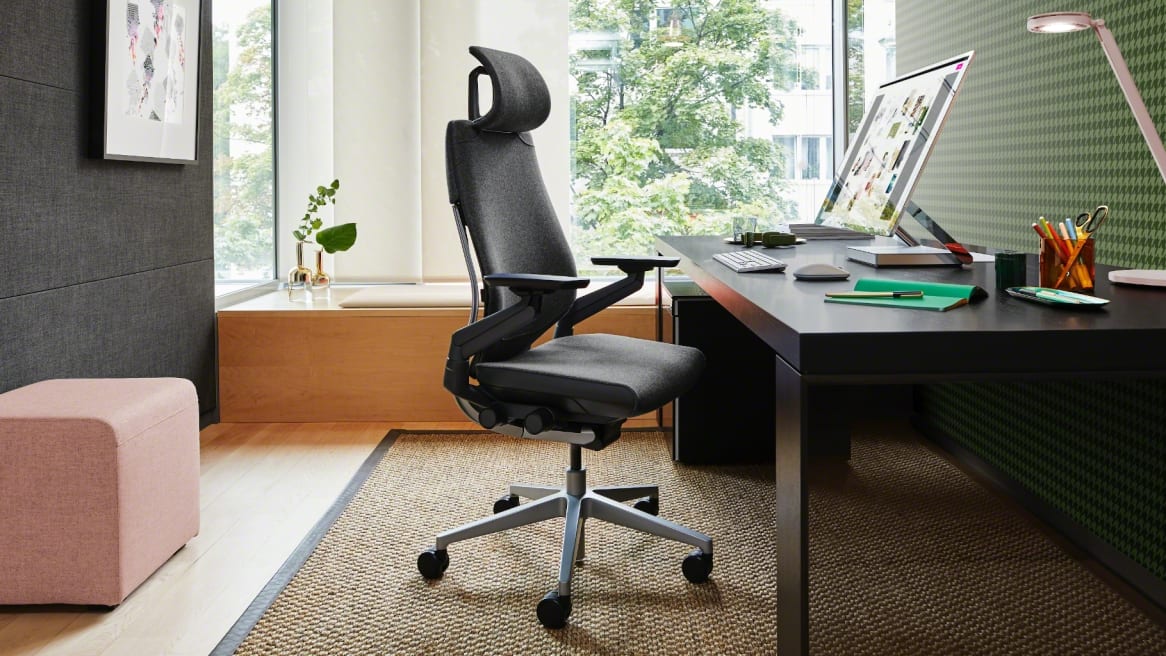
Steelcase Gesture—strengths & weaknesses
Strengths: The Gesture's defining feature is its exceptional armrest system, repeatedly cited as a standout. Its narrow backrest design provides shoulder and back freedom without a claustrophobic feeling, which one reviewer with spinal stenosis preferred after testing six competing chairs. The chair supports multiple sitting positions well and forces better posture with what one user described as an "auto-correction feel." A certified ergonomics expert provided detailed independent validation of its comprehensive adjustment range.
Weaknesses: Durability concerns dominate negative reviews. One long-term owner reported "extreme buyer's regret" after all four purchased Gesture chairs broke down within three years. Another review bluntly states the chair "looks cheap and budget-like despite high price point." The forced-upright posture isn't immediately comfortable for everyone—one user noted still "adjusting to optimal lumbar settings" after switching from a gaming chair. At $1,499, these durability failures represent a serious value problem.
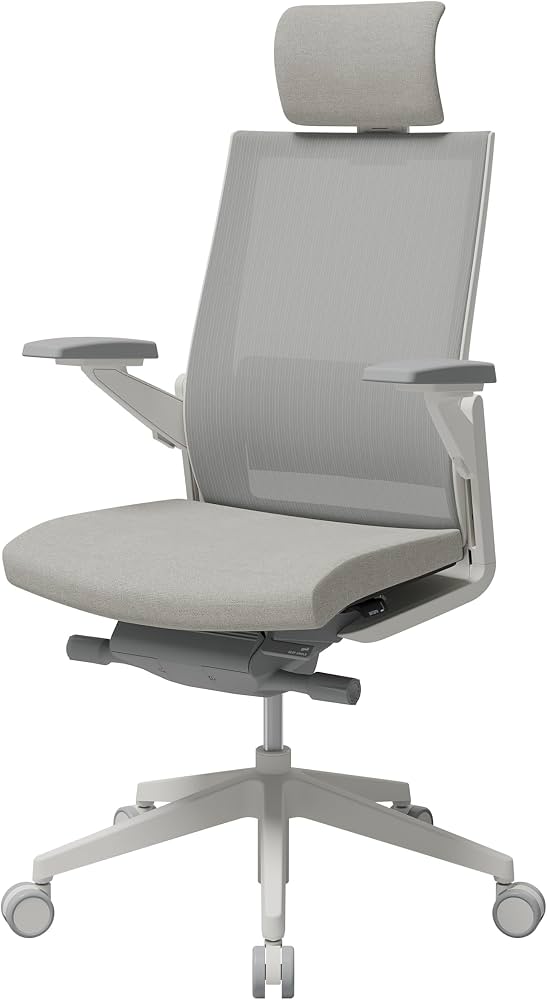
How they differ
Despite identical spec sheets, real-world differentiation emerges clearly. The price gap of $849 is the most obvious divide—you're paying 130% more for the Gesture.
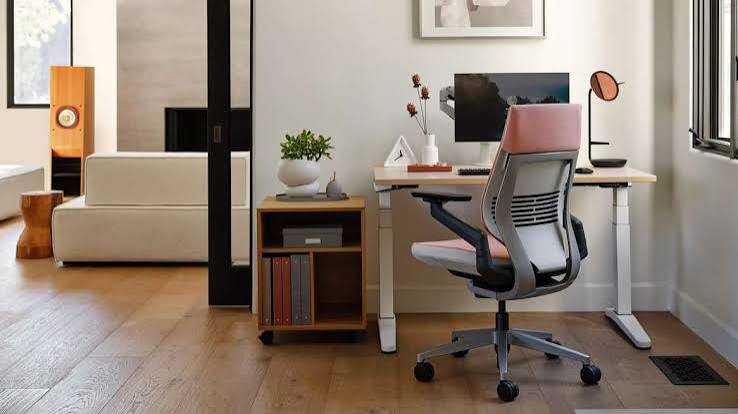
The Gesture's armrests are genuinely superior, designed specifically to follow arm positions across keyboards, tablets, and phones with 360-degree movement. The T80 offers standard 4D arms that adjust in four directions but lack the Gesture's device-focused engineering.
Material and aesthetics differ substantially: the T80 uses ventilated mesh for breathability, while the Gesture typically features upholstered backs. Reviewers note the Gesture's narrow backrest profile versus the T80's more traditional width.
The durability picture is concerning for the Gesture—multiple units failing after three years—while the T80 lacks sufficient long-term data. Neither has established a clear reliability advantage based on available reviews.
Sizing feedback diverges: T80 users around 180cm report fit issues, while Gesture users with medical conditions (spinal stenosis, severe trapezius tension) found its narrow design liberating. Both claim the same 165–195cm height range, but real-world experiences differ.
Who should buy which
Buy the Sidiz T80 if:
Your budget caps at $700 and you need serious ergonomics without compromise
You prioritize mesh breathability for hot climates or long sitting sessions
You're under 175cm tall and want extensive adjustability
You primarily use traditional keyboard-and-monitor setups
You're willing to accept a middle-tier rating (3.3★) for substantial savings
Buy the Steelcase Gesture if:
You constantly shift between devices (laptop, tablet, phone) and need armrests that adapt
You have shoulder mobility concerns or prefer a narrow, open backrest feel
You value the Steelcase brand and design language for professional environments
You need forced-upright posture correction and can tolerate the adjustment period
You're prepared for potential 3-year durability risks at the premium price point
The verdict
The Sidiz T80 offers the better value proposition for most office workers. At $650, it delivers 90% of the ergonomic functionality at 43% of the cost, with mesh breathability the Gesture lacks. Its 3.3-star rating is adequate rather than inspiring, but no durability disasters appear in reviews.
The Steelcase Gesture justifies its $1,499 price only if you specifically need its signature armrests for multi-device workflows or its narrow backrest solves a body-fit issue other chairs create. The 3.8-star rating is higher but undermined by credible reports of multiple units failing after three years—unacceptable at this price tier.
For most buyers, the T80 wins on rational grounds. The Gesture remains a specialty tool for specific use cases, not a universally superior chair despite costing twice as much.
Frequently asked
- Is the Steelcase Gesture worth twice the price of the Sidiz T80?
- The Gesture costs $1,499 versus the T80's $650 but shares identical specs on paper. Reviews show the Gesture offers superior armrests and multi-posture support, but suffers durability complaints after 3 years. The T80 delivers strong ergonomics and mesh breathability at less than half the cost.
- Which chair is better for tall users?
- Both chairs have identical recommended height ranges (165-195cm), but T80 reviews note it may be too small for users around 180cm. The Gesture's narrow backrest provides shoulder freedom that some tall users prefer, though neither is specifically praised for accommodating taller frames.
- Do both chairs have headrests?
- Neither the Sidiz T80 nor the Steelcase Gesture includes a headrest according to specifications, though some T80 review snippets mention headrest adjustability, suggesting possible configuration variants not reflected in the base specs provided.
Specs, reviews & details
Specs, reviews & details