Steelcase Leap V2 vs Steelcase Amia: Which Should You Buy?
Two Steelcase task chairs with a $399 price gap—and very different user reviews
Specs, reviews & details
Specs, reviews & details
Introduction
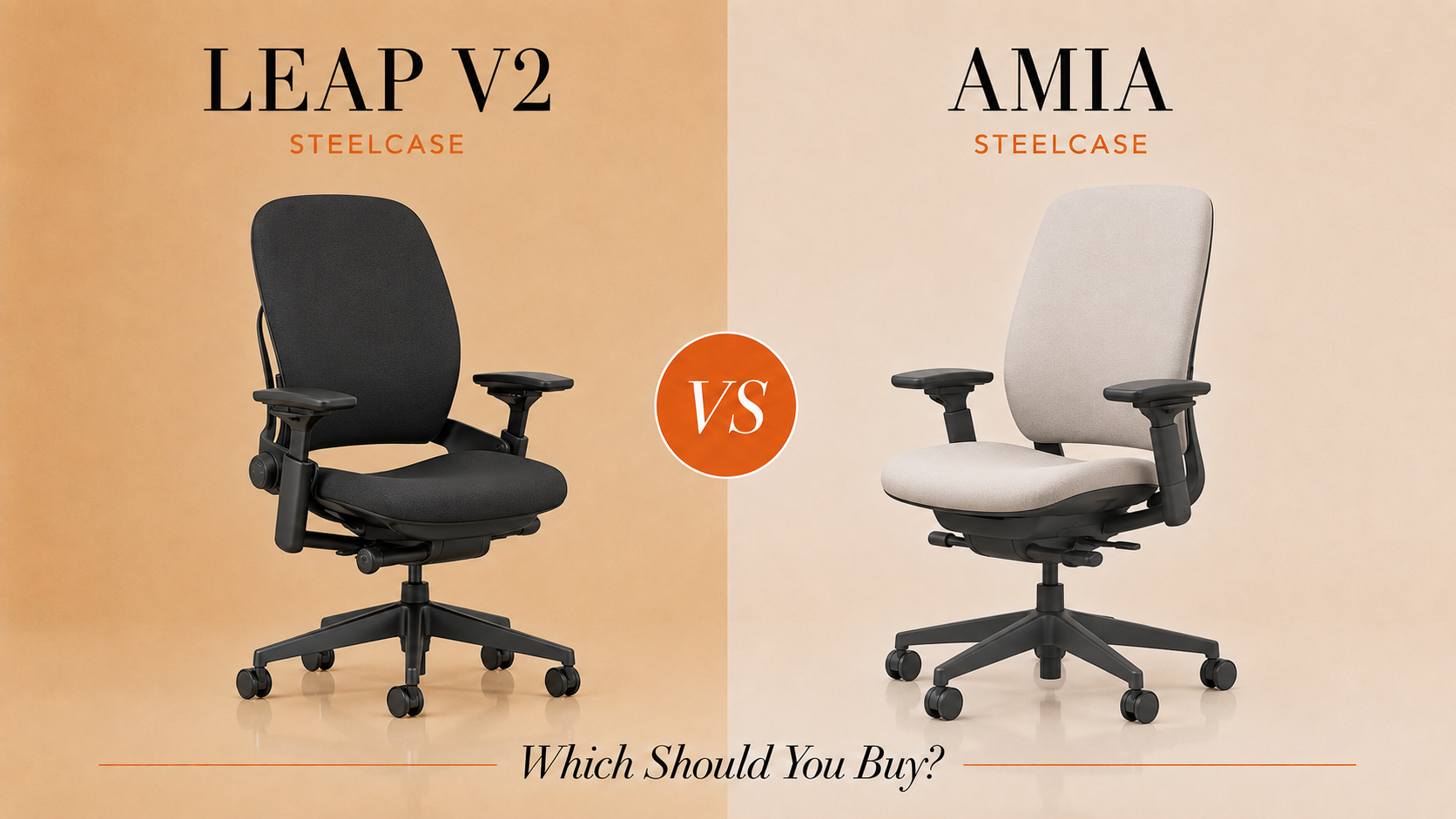
The Steelcase Leap V2 and Steelcase Amia represent two points on the same manufacturer's task chair spectrum, separated by nearly $400. The Leap V2 commands premium pricing with its LiveBack technology and extensive research pedigree, while the Amia positions itself as Steelcase's accessible entry point with LiveLumbar support. User reviews tell a surprising story: the more expensive chair suffers from serious comfort complaints, while the budget option consistently earns praise for all-day sitting. Here's how they compare.
At a glance
Spec | Steelcase Leap V2 | Steelcase Amia |
|---|---|---|
Price | $1,399 | $1,000 |
Category | Office task chair | Office task chair |
Seat dimensions | 51cm W × 48cm D | 50cm W × 42cm D |
Armrests | 4D | 4D |
Lumbar support | Yes | Yes (LiveLumbar) |
Recline range | 120° | 120° |
Weight capacity | 159 kg | 136 kg |
Height range | 40–57 cm | 39–52 cm |
Recommended user height | 165–195 cm | 160–190 cm |
Warranty | 12 years | 12 years |
Aggregate rating | 2.2/5 (12 reviews) | 4.0/5 (12 reviews) |
Steelcase Leap V2 — strengths & weaknesses
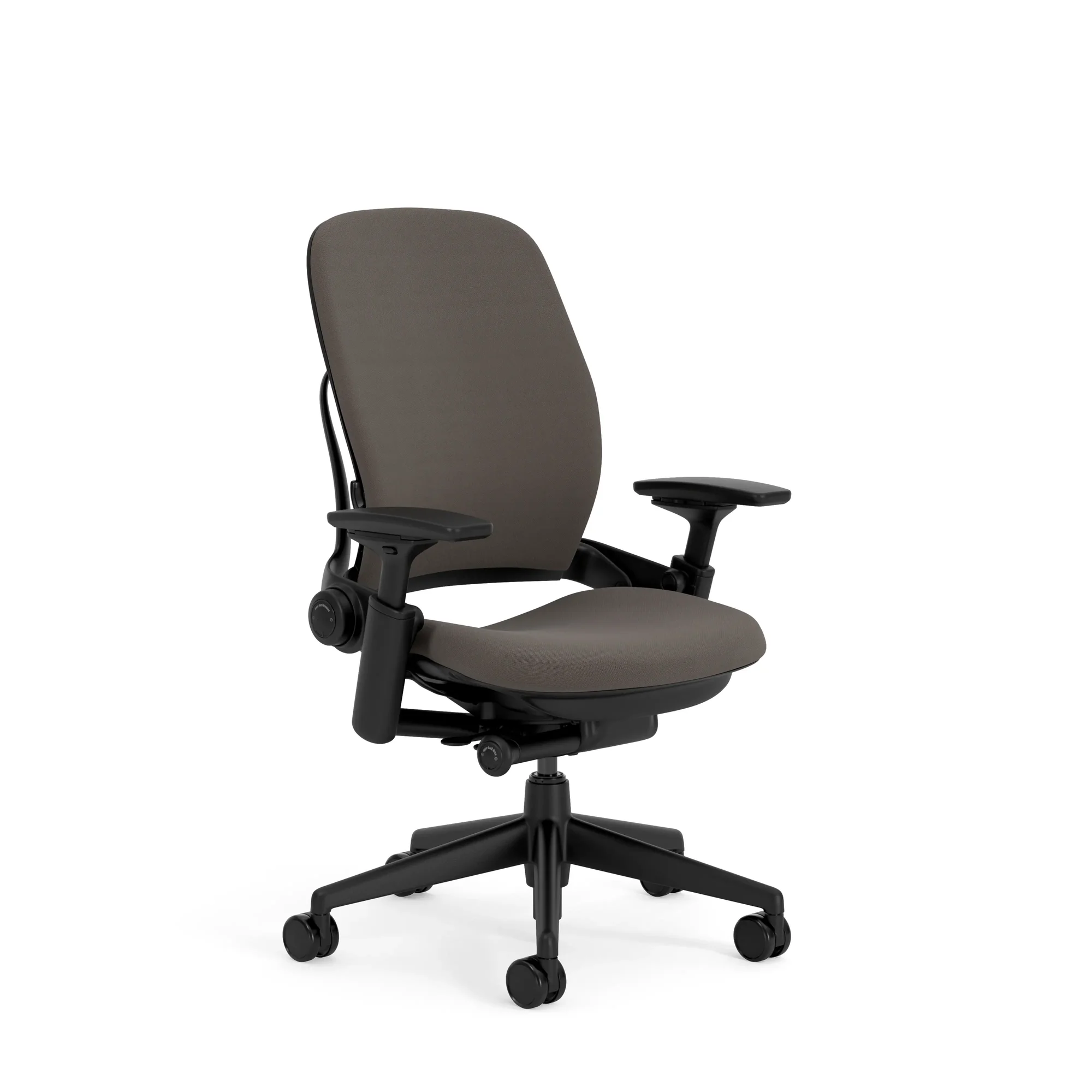
Strengths: Users appreciated the Leap V2 during initial in-store testing, often finding it the most comfortable option on showroom floors. The chair offers extensive adjustment options for personalized fit, and many buyers have successfully sourced used units at attractive prices. For upgrading from cheap chairs, the initial impression is often positive. The LiveBack technology and Natural Glide recline system represent genuine engineering innovation.
Weaknesses: The fatal flaw emerges after purchase. Multiple reviewers report severe seat discomfort that begins within 30 minutes and worsens over time. One user found the chair unbearable after a year of progressive discomfort; another experienced pain after just 10 minutes despite comfort in other seating. The seat is described as having "virtually no cushioning." Adjustments and added cushions failed to resolve the issue—cushions actually ruined the ergonomics further. At $1,399, reviewers felt cheated by the poor value proposition.
Purchased a new Steelcase Leap V2 at discount but found the seat uncomfortable from day one. Discomfort progressively worsened over a year, becoming unbearable after only 30 minutes of sitting. Adjustments and cushions did not help, leaving them disappointed with the expensive purchase.
Steelcase Amia — strengths & weaknesses
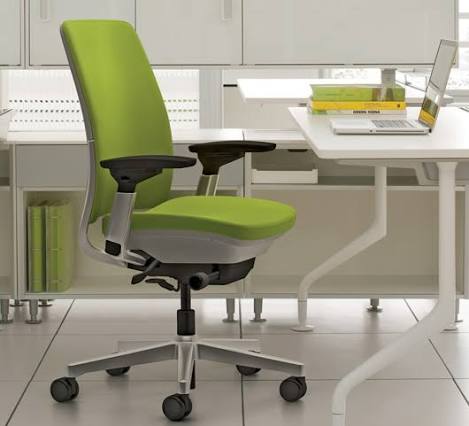
Strengths: The Amia earns consistent praise for all-day comfort during 8-10 hour sessions. Users report excellent durability after 5-6 years of daily use, with solid construction and no wobbling. One reviewer called it "the most underrated chair in the industry." Critically, it proved suitable for users with serious back issues, including one post-herniated disc surgery patient who found it one of the few chairs comfortable enough to use. When purchased refurbished, buyers felt it offered substantially better value than competitors. The chair is described as "tier-1" quality that "suits everyone regardless of age or gender."
Weaknesses: Upper back support receives mixed feedback—some users find it too cupped or not supportive enough. The LiveLumbar support, while effective, can feel too sharp and noticeable for certain body types. The backrest tilts quite far back without an adjustable limiter, which bothers some users. The design won't win aesthetic awards. At over $1,000 retail, some question whether it justifies the full price, though refurbished units clearly offer better value.
The Steelcase Amia is described as the most underrated chair in the industry, with users praising its comfort for long work sessions and durability over several years. One user found it particularly helpful after herniated disc surgery, noting it was one of the few chairs they could actually sit in comfortably.
How they differ
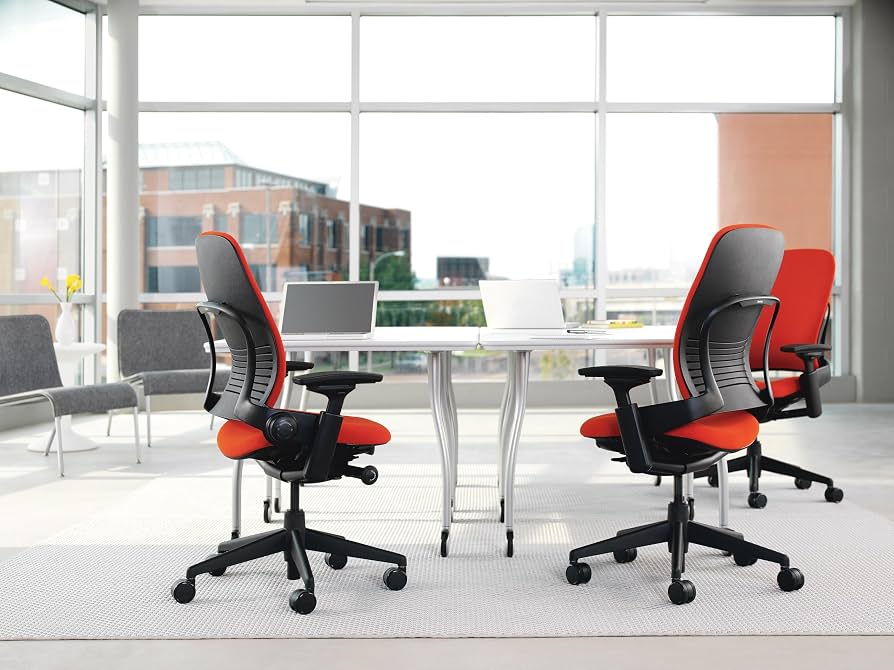
The core difference is comfort reliability versus adjustability ceiling. The Leap V2 offers 6cm more seat depth (48cm vs 42cm), higher weight capacity, and taller maximum height—advantages for larger users or those over 190cm. Its LiveBack technology is more sophisticated than the Amia's LiveLumbar system, and the Natural Glide recline mechanism is a signature feature.
But user experience diverges sharply. The Leap V2's seat design creates a comfort lottery: some find it acceptable, but many report progressive discomfort that becomes debilitating. The Amia delivers predictable, consistent comfort across a wider range of body types and sitting durations. One chair has a 2.2 rating; the other, 4.0.
The $399 price gap compounds the issue. The Amia costs 28% less while actually outperforming its premium sibling in real-world satisfaction. Both share the same 12-year warranty, 4D arms, and 120° recline range, making the Leap V2's premium harder to justify on features alone.
Who should buy which
Choose the Steelcase Leap V2 if: You're over 190cm tall and need the extra seat height and depth. You require the 159kg weight capacity. You've tested the specific unit you're buying for at least 2-3 hours and confirmed seat comfort. You're buying used at a significant discount (under $600) and understand you're taking a comfort gamble. You cannot find the Amia and must stay within the Steelcase ecosystem.
Choose the Steelcase Amia if: You work 8-10 hour days and need proven all-day comfort. You have back issues or previous injuries. You want a Steelcase chair with consistently positive user reviews. You're 160-190cm tall (the chair's sweet spot). You can find a refurbished unit to maximize value. You prioritize comfort reliability over maximum adjustability. You fit the 136kg weight capacity and 39-52cm height range.
Buy neither if: You need a headrest. You're outside the recommended height ranges for both chairs. You require seat depth beyond 48cm.
The verdict
The Steelcase Amia wins this matchup decisively. Its 4.0 rating versus the Leap V2's 2.2 tells the essential story: real users find it comfortable for the long sessions that matter, while the Leap V2's more advanced engineering paradoxically produces worse real-world results. The seat comfort complaints haunting the Leap V2 are too consistent and severe to dismiss, especially at $1,399.
Save $399, get better reviews, and enjoy proven all-day comfort. The Amia delivers what an office chair must: reliable support you can forget about. The Leap V2 may impress in a showroom, but showrooms don't simulate month six of daily use. Unless you specifically need the Leap's greater dimensions or weight capacity—and have personally tested that exact seat for hours—the Amia is the smarter buy. Consider refurbished units to drive the value proposition even higher.
Frequently asked
- Is the Steelcase Leap V2 worth $399 more than the Amia?
- User reviews suggest no—the Leap V2 scores just 2.2/5 with frequent seat comfort complaints, while the Amia earns 4/5 and praise for all-day comfort at $1,000.
- Which chair is better for long sitting sessions?
- The Amia receives consistent praise for 8-10 hour daily use and post-surgery comfort, while Leap V2 users report discomfort after just 30 minutes to an hour.
- Do both chairs have the same warranty and adjustments?
- Both offer 12-year warranties, 4D arms, and lumbar support. The Leap V2 has greater seat depth (48cm vs 42cm) and higher weight capacity (159kg vs 136kg), but similar recline range.
Specs, reviews & details
Specs, reviews & details